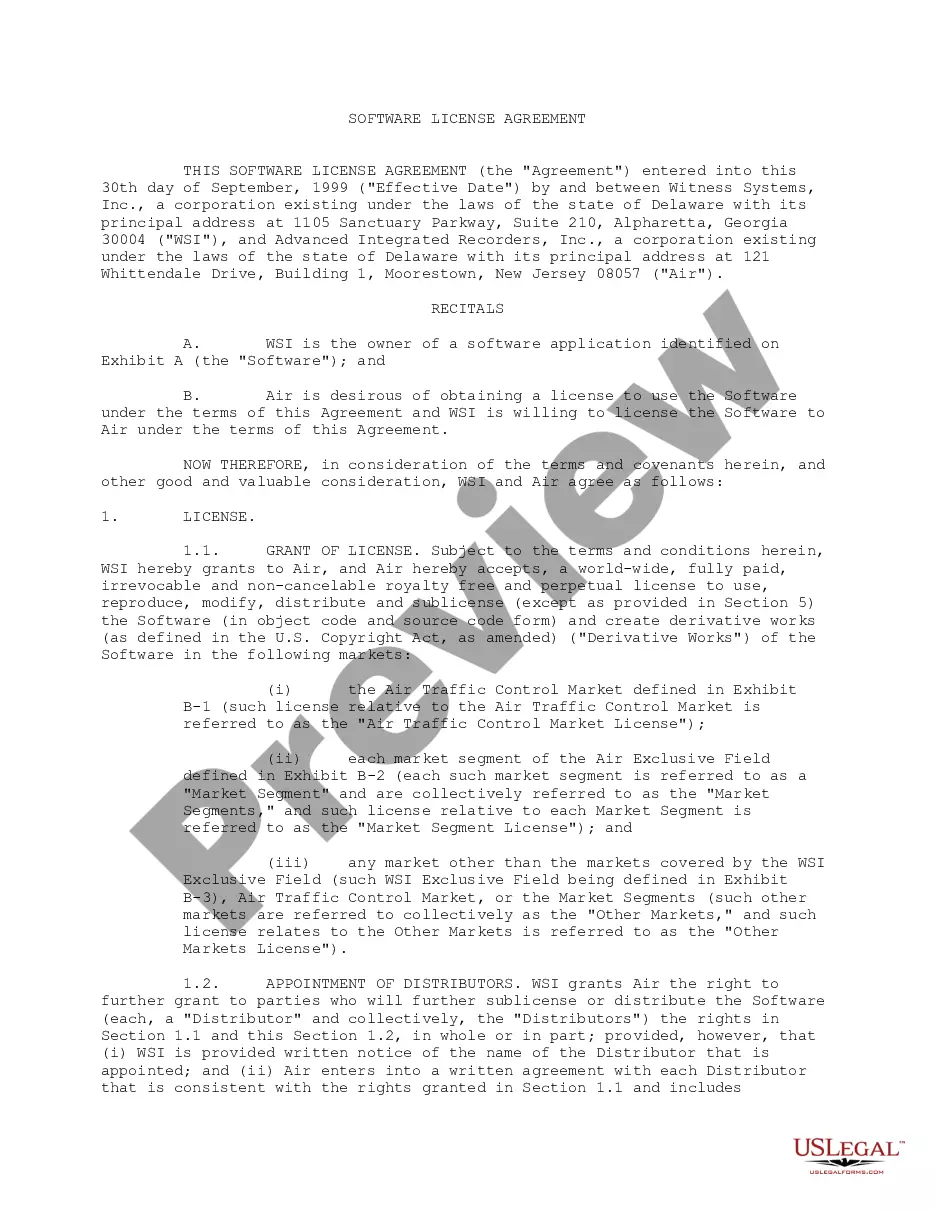
Minnesota Stipulated Confidentiality Order
What is this form?
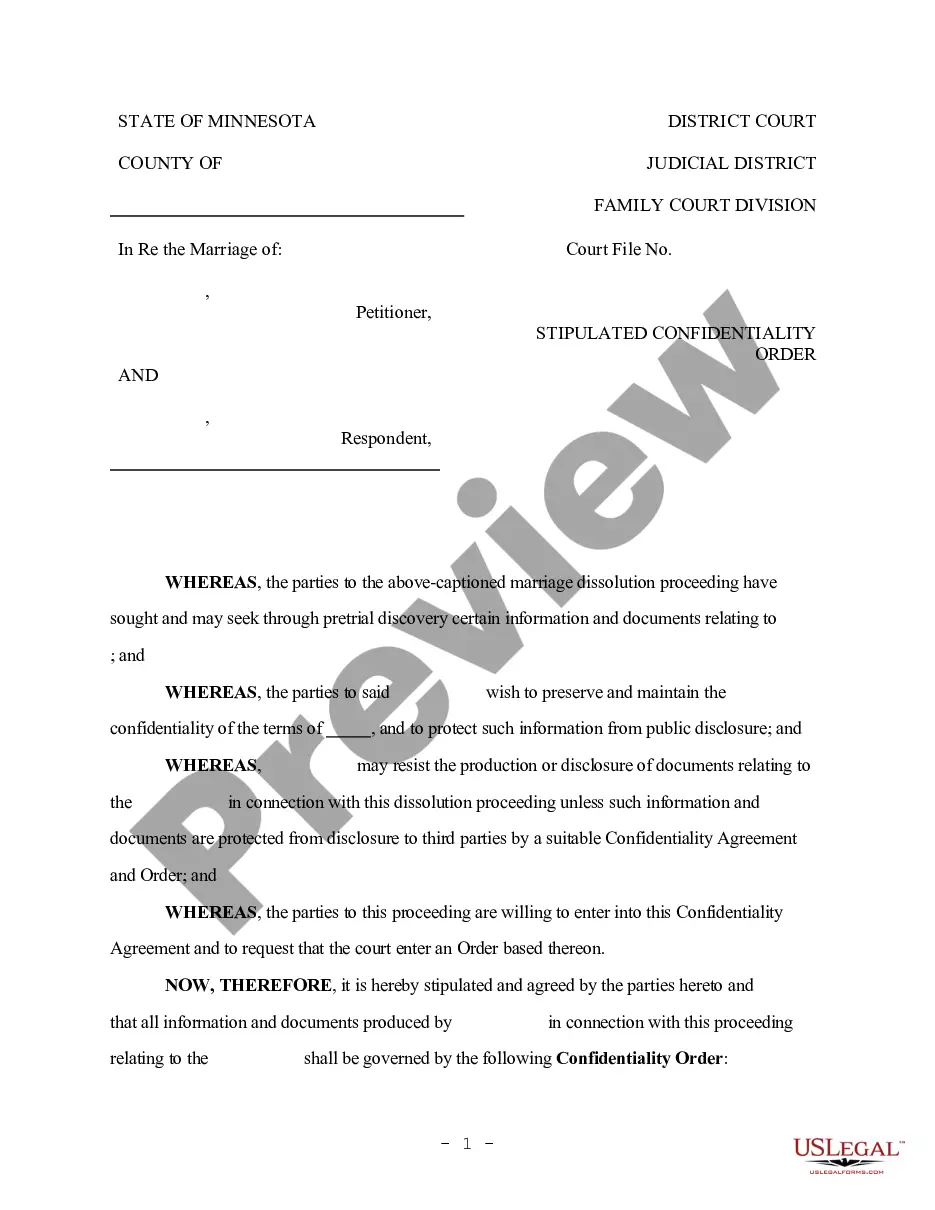
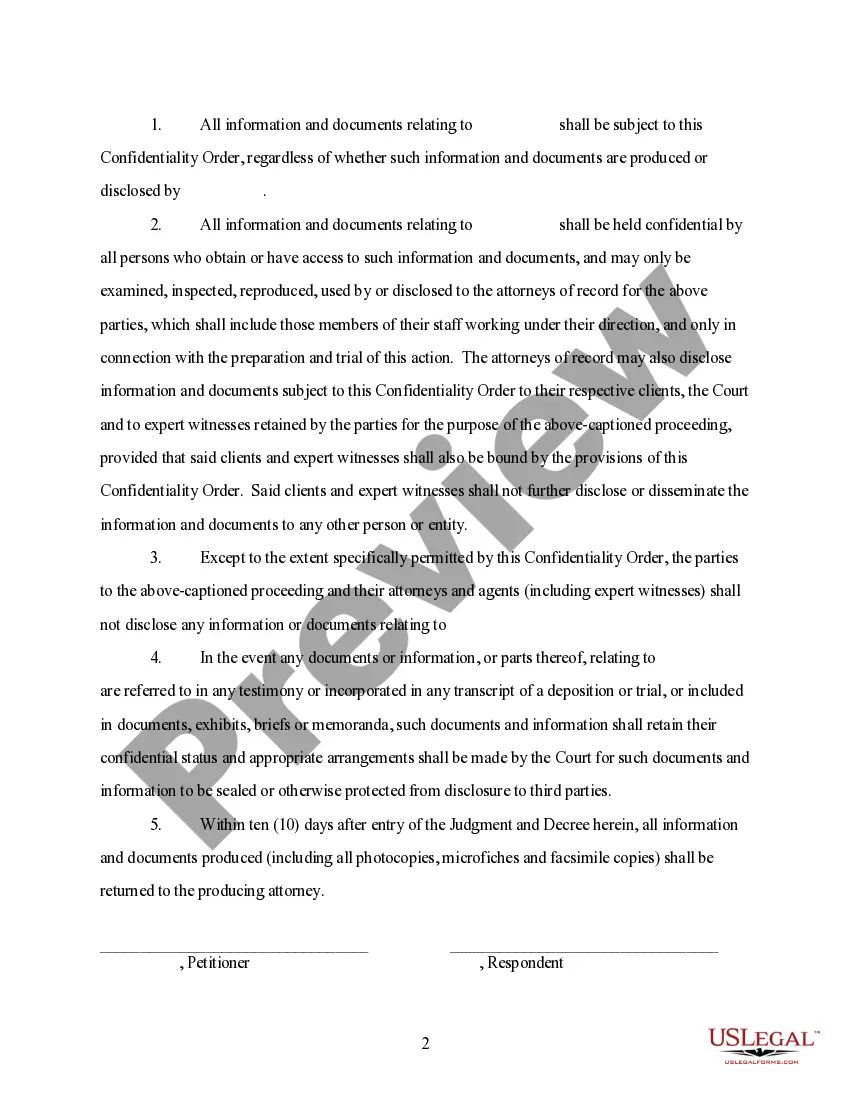
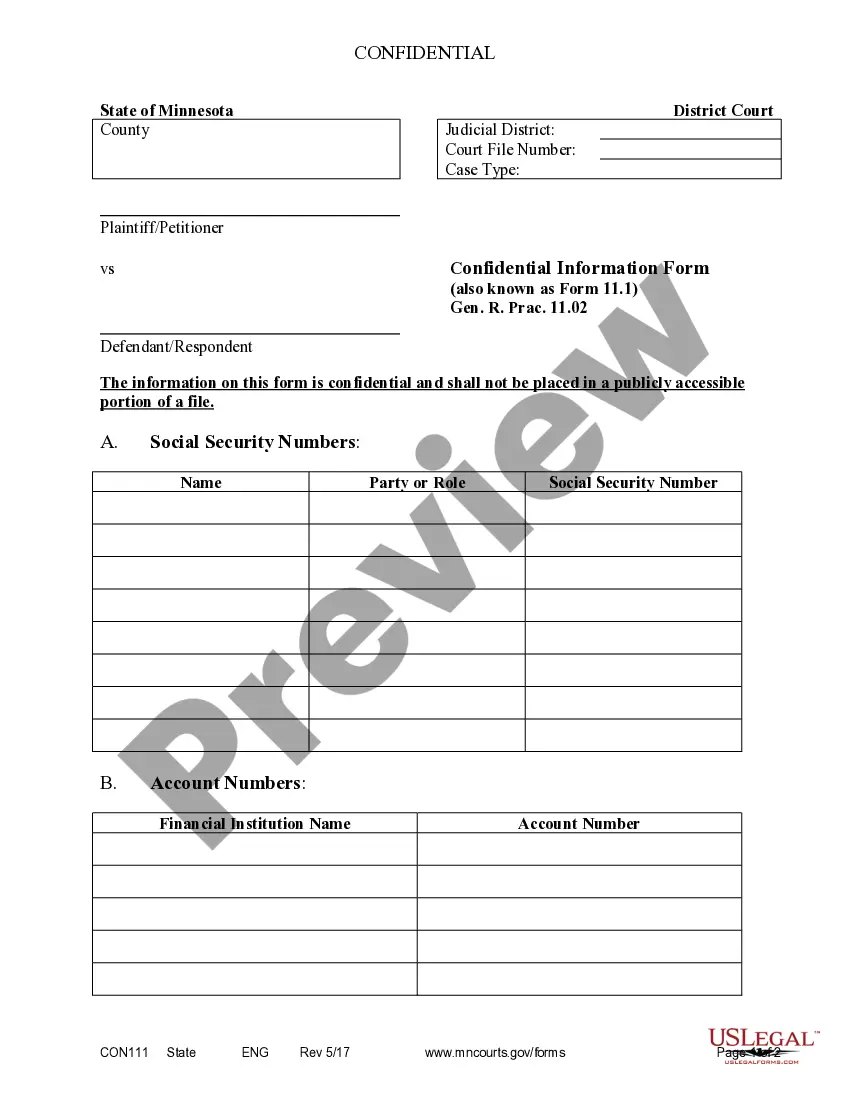
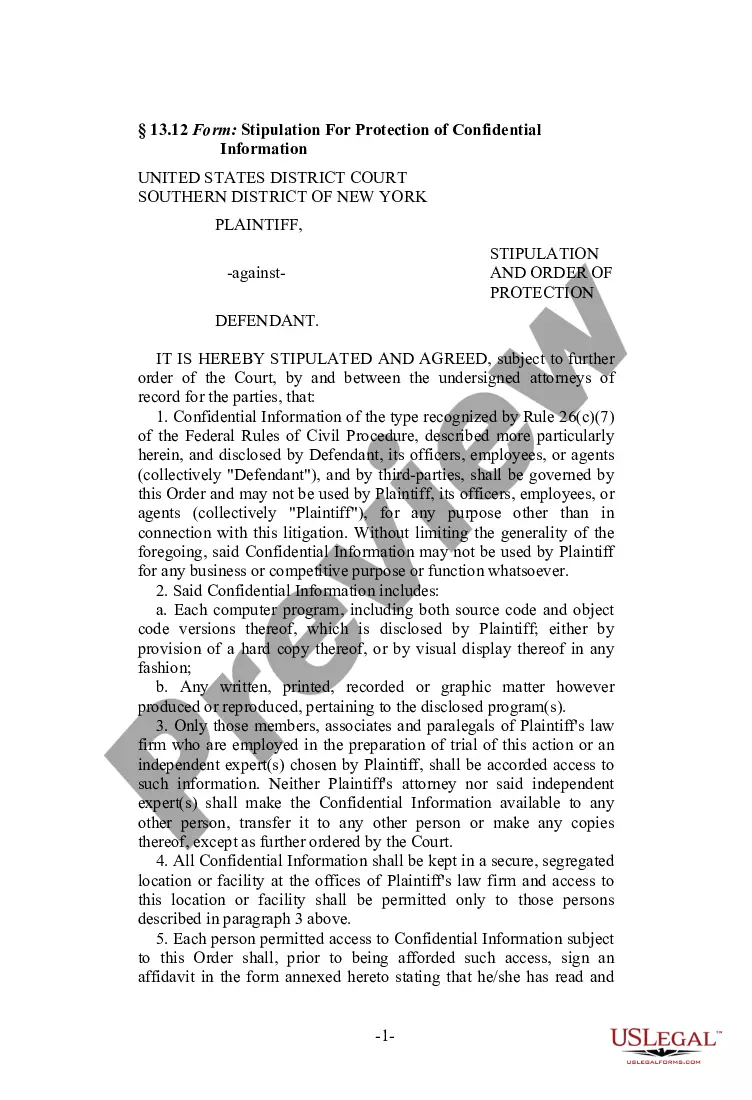
The Stipulated Confidentiality Order is a legal document used in marriage dissolution proceedings to safeguard sensitive information disclosed during the case. This form establishes a confidentiality agreement between the parties involved, ensuring that all information and documents produced remain private and are only accessed by authorized individuals. It differs from other forms as it specifically addresses the treatment of sensitive information shared during the divorce process.
Form components explained
- Control of information related to the marriage dissolution proceeding.
- Confidentiality obligations for all parties receiving sensitive information.
- Return of all documents to the producing attorney after the Judgment and Decree.
- Conditions under which documents can be disclosed, including to court and expert witnesses.
- Protection measures if confidential information is introduced in testimony or trial documents.
Common use cases
This form should be used when the parties involved in a divorce require a formal agreement to keep certain information confidential. It is particularly useful during pretrial discovery when sensitive documents, such as financial records or personal information, may be exchanged. By signing this order, parties can ensure that their private matters are protected while allowing the necessary proceedings to move forward.
Who should use this form
- Individuals involved in a marriage dissolution proceeding.
- Attorneys representing clients in divorce cases.
- Any party who will be sharing or accessing confidential information during the case.
How to complete this form
- Identify the parties involved in the dissolution proceeding.
- Specify the sensitive information or documents that will be protected under the confidentiality order.
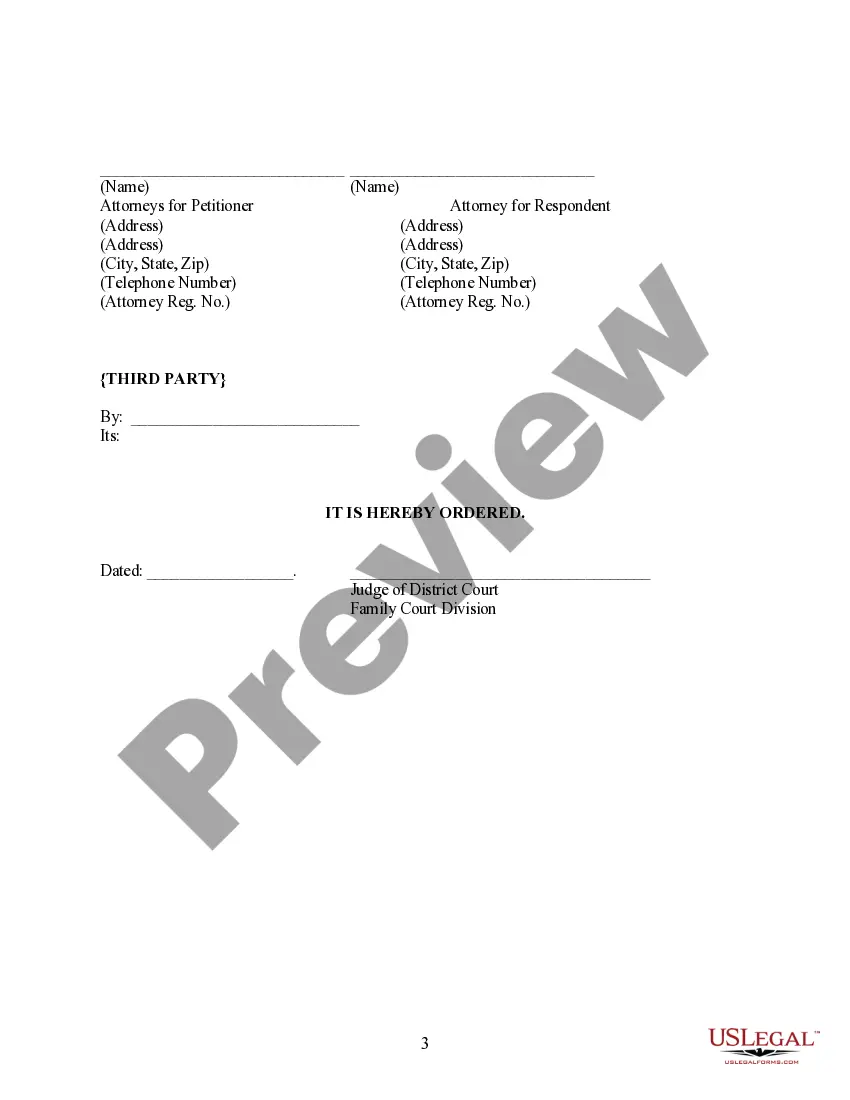
- Include names and contact information for each party's attorney.
- Date the document and obtain signatures from both parties or their attorneys.
- File the completed order with the appropriate court and ensure the judge signs it to make it enforceable.
Notarization requirements for this form
This form usually doesn’t need to be notarized. However, local laws or specific transactions may require it. Our online notarization service, powered by Notarize, lets you complete it remotely through a secure video session, available 24/7.
Get your form ready online
Our built-in tools help you complete, sign, share, and store your documents in one place.
Make edits, fill in missing information, and update formatting in US Legal Forms—just like you would in MS Word.
Download a copy, print it, send it by email, or mail it via USPS—whatever works best for your next step.
Sign and collect signatures with our SignNow integration. Send to multiple recipients, set reminders, and more. Go Premium to unlock E-Sign.
If this form requires notarization, complete it online through a secure video call—no need to meet a notary in person or wait for an appointment.
We protect your documents and personal data by following strict security and privacy standards.

Make edits, fill in missing information, and update formatting in US Legal Forms—just like you would in MS Word.

Download a copy, print it, send it by email, or mail it via USPS—whatever works best for your next step.

Sign and collect signatures with our SignNow integration. Send to multiple recipients, set reminders, and more. Go Premium to unlock E-Sign.

If this form requires notarization, complete it online through a secure video call—no need to meet a notary in person or wait for an appointment.

We protect your documents and personal data by following strict security and privacy standards.
Common mistakes to avoid
- Failing to specify all sensitive documents to be covered under the confidentiality order.
- Not obtaining signatures from all required parties or their attorneys.
- Omitting important party information, such as names and contact details.
- Neglecting to file the signed order with the court.
Why use this form online
- Convenience of accessing and filling out the form from home.
- Immediate download available, allowing for quick completion and filing.
- Templates drafted by licensed attorneys, ensuring legal compliance.
- Editability allows users to customize the form to meet their specific needs.
Looking for another form?

Form popularity
FAQ
The order for disclosure in Minnesota refers to the legal requirement for parties to exchange information relevant to their case. This process is critical for ensuring transparency and fairness in litigation. By implementing a Minnesota Stipulated Confidentiality Order, you can safeguard sensitive information while still complying with disclosure requirements, allowing you to navigate legal proceedings with confidence.
Rule 33 of the Minnesota Rules of Civil Procedure pertains to interrogatories, which are written questions one party submits to another in a lawsuit. This rule allows parties to gather necessary information to support their case effectively. When drafting a Minnesota Stipulated Confidentiality Order, it's important to understand how Rule 33 interacts with confidentiality issues, ensuring that sensitive information is adequately protected during the discovery process.
A stipulation of confidentiality and protective order is a specific type of agreement that governs the handling of confidential information in legal proceedings. This order protects sensitive data by restricting access and outlining the circumstances under which information can be shared. By utilizing a Minnesota Stipulated Confidentiality Order, parties can confidently engage in discovery, knowing their sensitive information remains secure.
A stipulation and protective order is a legal agreement between parties involved in a case, designed to protect certain information from being disclosed to the public. This order outlines the terms under which sensitive information can be shared and establishes guidelines for its confidentiality. In Minnesota, a Stipulated Confidentiality Order helps ensure that all parties respect the confidentiality of sensitive materials during litigation.
Rule 33 means that parties in a civil case can formally ask written questions to each other, enhancing the discovery process. This rule aims to clarify issues and gather evidence that may be crucial to a case. When sensitive information is involved, a Minnesota Stipulated Confidentiality Order helps ensure that confidentiality is maintained, allowing parties to share necessary details without fear of public disclosure.
Rule 33 in the Minnesota Rules of Civil Procedure specifically addresses the use of interrogatories in civil cases. It outlines the procedures for submitting questions and the requirements for responses. Utilizing a Minnesota Stipulated Confidentiality Order can be crucial when interrogatories involve confidential or sensitive details that need protection during litigation.
In court, Rule 33 is a procedural mechanism that facilitates the exchange of information between parties through written questions. This rule enhances the discovery phase, allowing for a more structured approach to gathering evidence. When sensitive information arises, implementing a Minnesota Stipulated Confidentiality Order can provide the necessary safeguards to protect confidentiality while still allowing for legal transparency.
Common examples of Rule 33 include inquiries about a party’s financial records, employment history, or any relevant communications. These interrogatories can help clarify facts and gather necessary evidence. When dealing with sensitive topics, a Minnesota Stipulated Confidentiality Order can help ensure that the information remains protected during the litigation process.
Rule of Practice 521 in Minnesota governs the use of protective orders in legal proceedings. It is designed to safeguard sensitive or confidential information from being disclosed publicly. By utilizing a Minnesota Stipulated Confidentiality Order, parties can effectively protect their proprietary information while still complying with the discovery process.
Rule 33 in Minnesota pertains to the discovery process in civil litigation. It allows parties to request written interrogatories, which are questions that the opposing party must answer under oath. This rule ensures that both sides have access to relevant information, promoting transparency and fairness in legal proceedings. A Minnesota Stipulated Confidentiality Order can be essential when handling sensitive information revealed through these interrogatories.