Sample Letter for Field Trip
Overview of this form
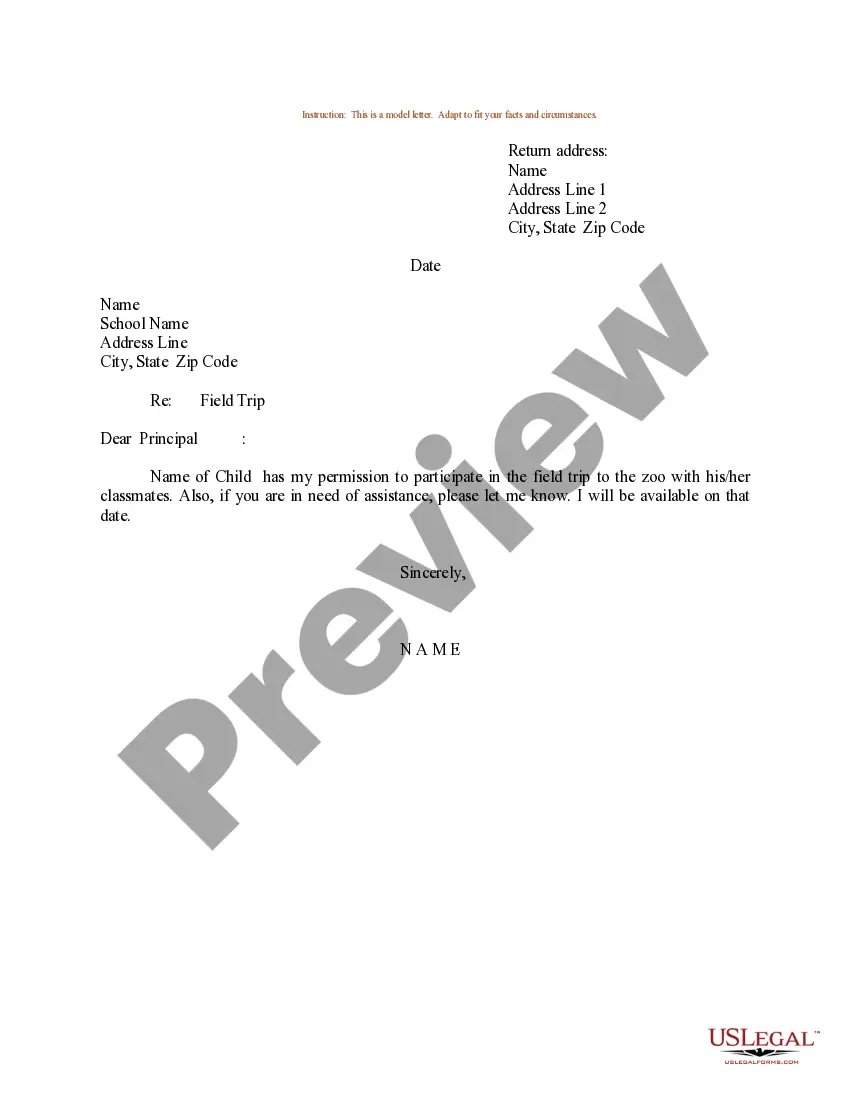
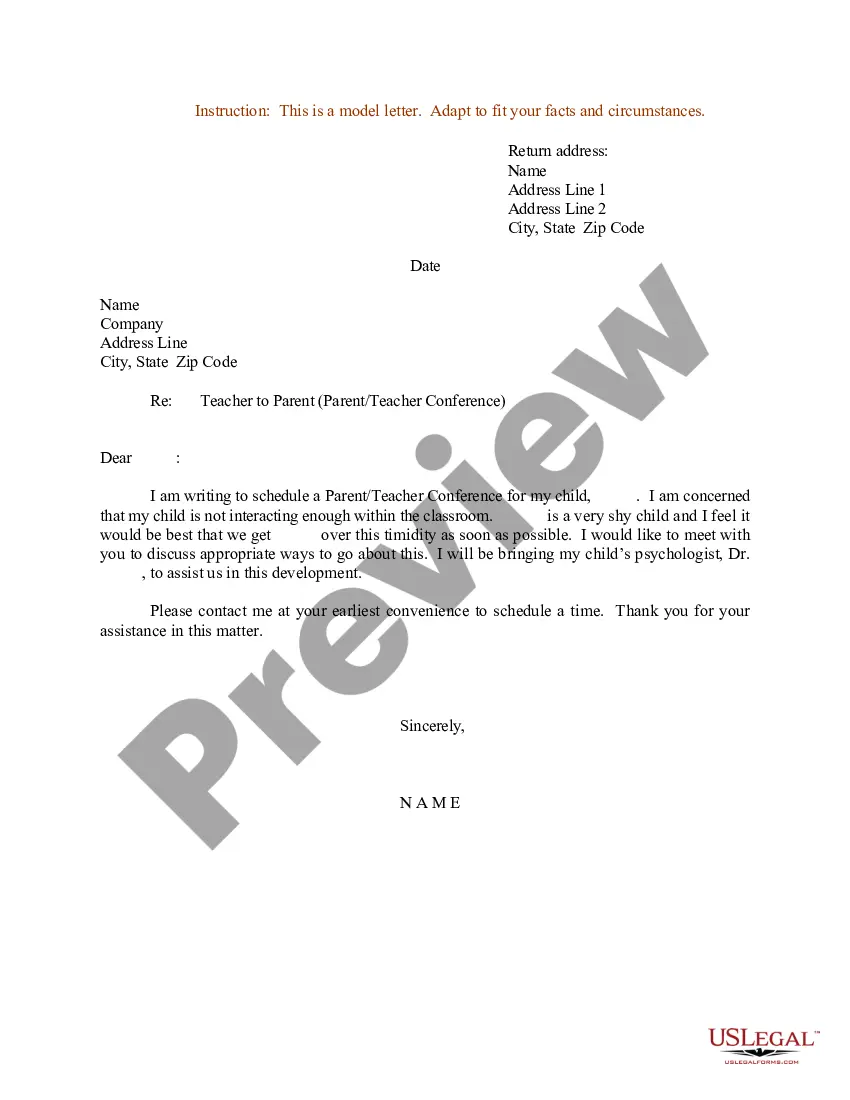
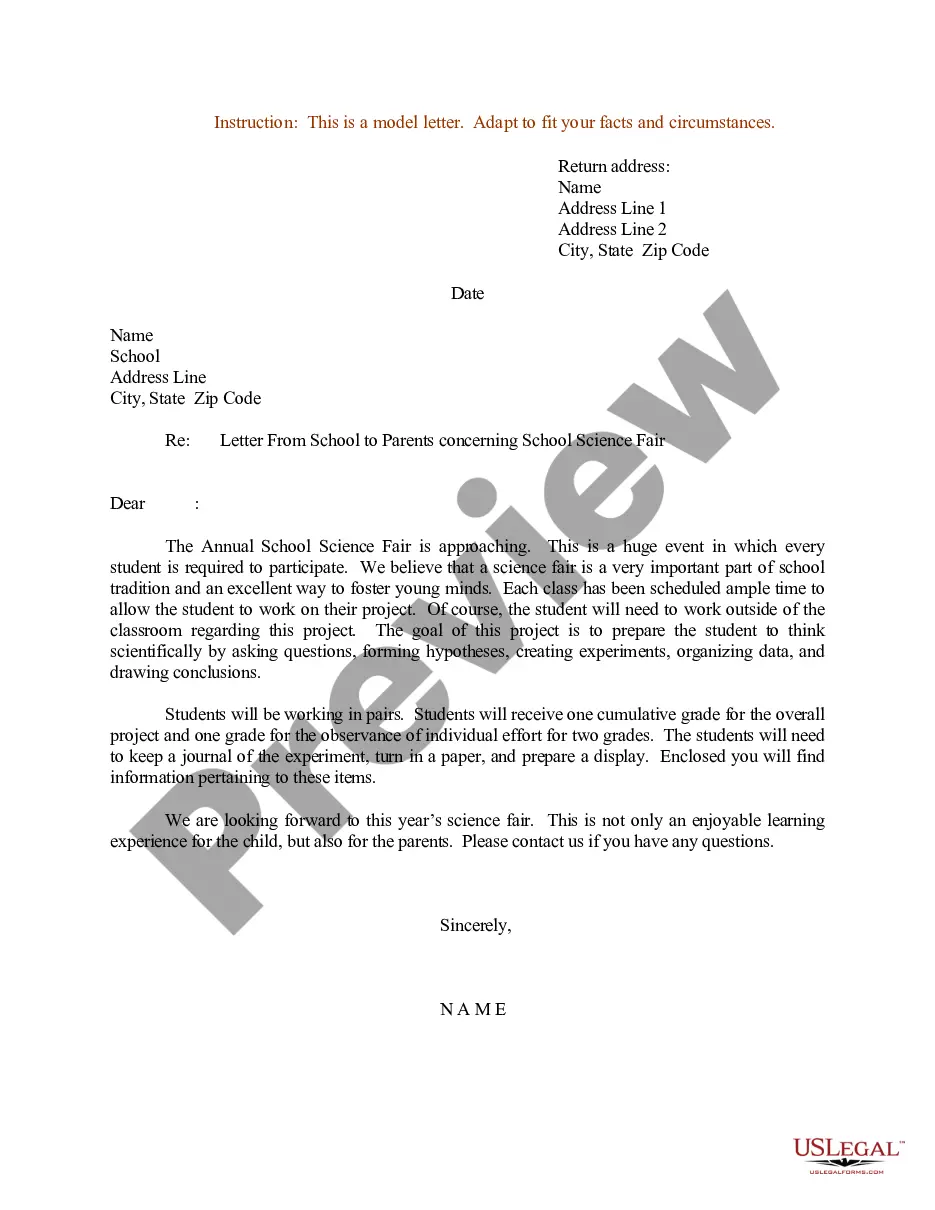
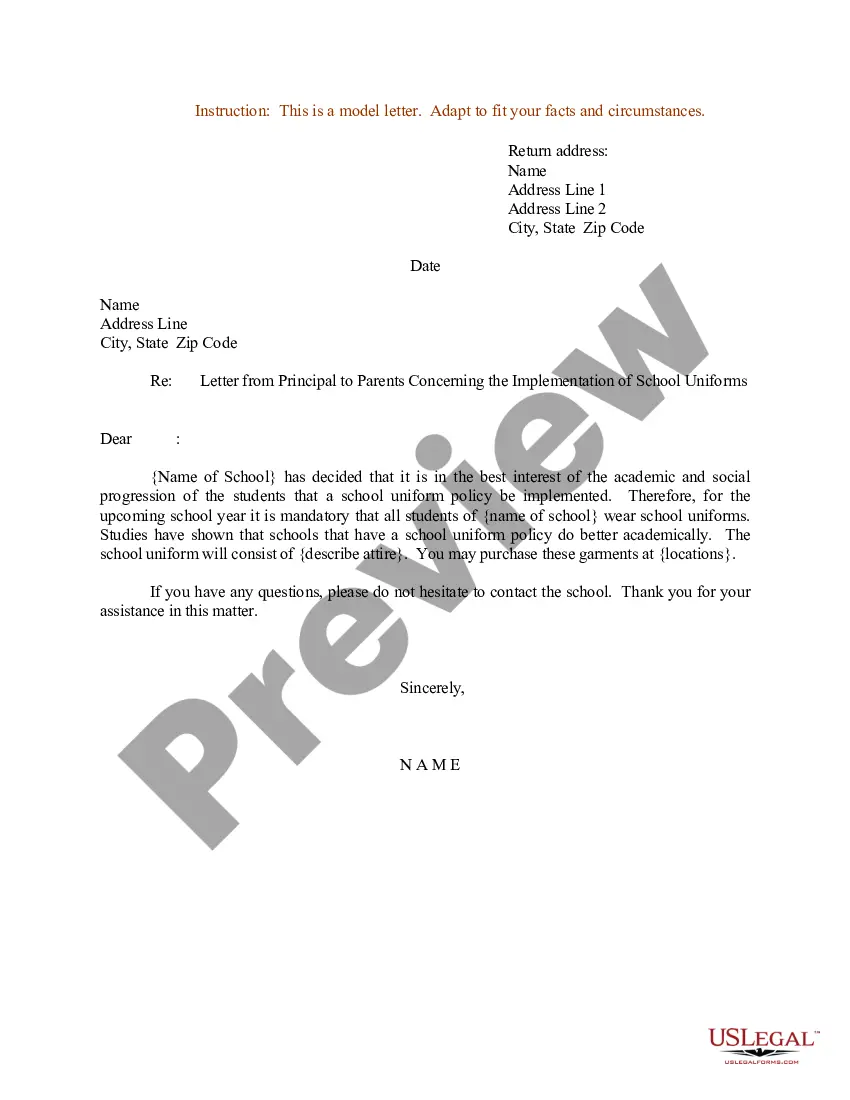
The Sample Letter for Field Trip is a template designed to inform parents or guardians about an upcoming school field trip. This letter serves as a formal notification and provides essential details, distinguishing it from other general communication formats by specifically addressing educational outings. It ensures clarity for parents on important logistics and expectations surrounding the trip.
Key parts of this document
- Return address of the sender
- Date of the letter
- Recipient details, including name and school address
- Subject line indicating the purpose: Field Trip
Situations where this form applies
This form should be used when a school organizes a field trip and needs to notify parents or guardians. It is best suited for instances when detailed information about the trip needs to be communicated, including dates, locations, and any required preparations or permissions needed from parents.
Who needs this form
- Teachers planning a field trip
- School administrators responsible for student outings
- Organizations collaborating with schools on educational programs
How to prepare this document
- Identify the sender's return address at the top of the letter.
- Enter the current date below the return address.
- Fill in the recipient's name and school address accurately.
- Clearly state the purpose of the letter, indicating it is regarding a field trip.
Is notarization required?
This form usually doesn’t need to be notarized. However, local laws or specific transactions may require it. Our online notarization service, powered by Notarize, lets you complete it remotely through a secure video session, available 24/7.
Get your form ready online
Our built-in tools help you complete, sign, share, and store your documents in one place.
Make edits, fill in missing information, and update formatting in US Legal Forms—just like you would in MS Word.
Download a copy, print it, send it by email, or mail it via USPS—whatever works best for your next step.
Sign and collect signatures with our SignNow integration. Send to multiple recipients, set reminders, and more. Go Premium to unlock E-Sign.
If this form requires notarization, complete it online through a secure video call—no need to meet a notary in person or wait for an appointment.
We protect your documents and personal data by following strict security and privacy standards.

Make edits, fill in missing information, and update formatting in US Legal Forms—just like you would in MS Word.

Download a copy, print it, send it by email, or mail it via USPS—whatever works best for your next step.

Sign and collect signatures with our SignNow integration. Send to multiple recipients, set reminders, and more. Go Premium to unlock E-Sign.

If this form requires notarization, complete it online through a secure video call—no need to meet a notary in person or wait for an appointment.

We protect your documents and personal data by following strict security and privacy standards.
Avoid these common issues
- Neglecting to include all necessary details about the trip.
- Failing to proofread for spelling and grammatical errors.
- Not providing clear instructions or deadlines for parent responses.
Why use this form online
- Easy access to a professionally drafted template.
- Editability allows customization for specific trips and details.
- Reduces printing and administrative overhead by enabling electronic distribution.
Summary of main points
- This form is a specialized letter for notifying parents about field trips.
- Completing the letter correctly helps ensure clear communication between the school and families.
- Using a template streamlines the process and reduces potential errors.
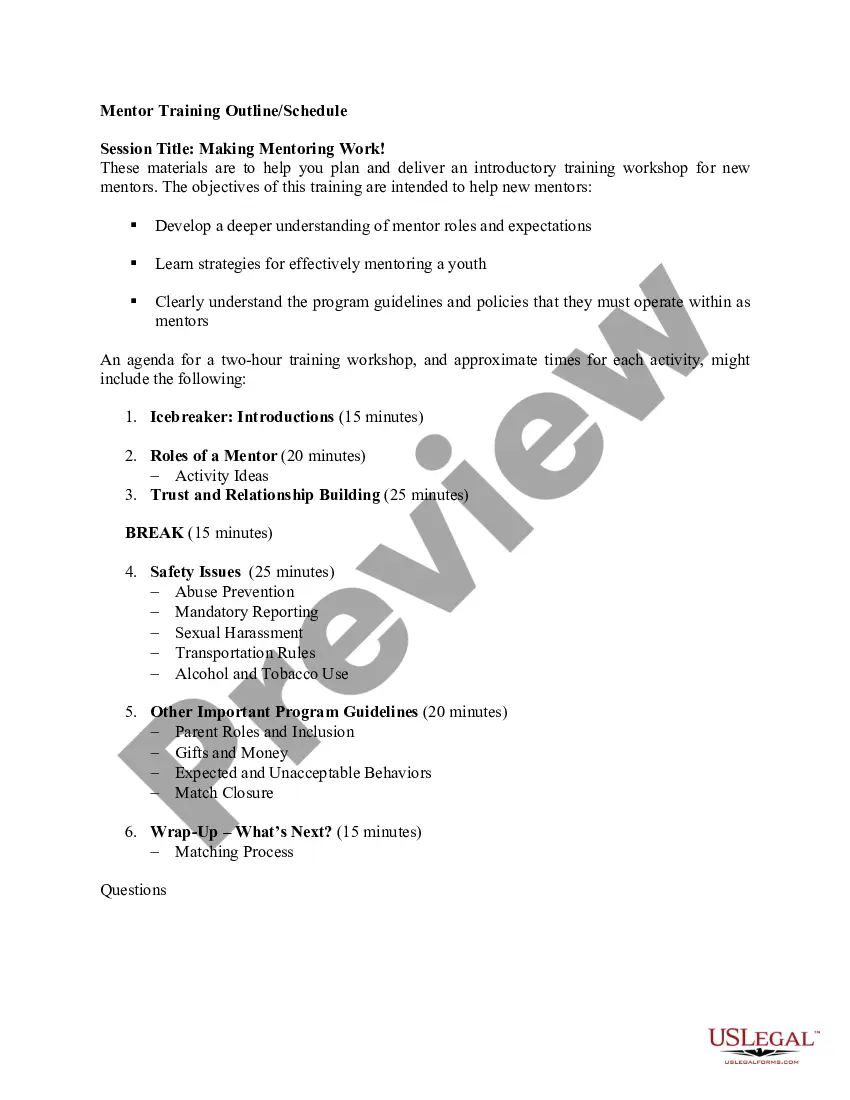
Looking for another form?

Form popularity
FAQ
Study the history of the place you are going to. Use the site's educational materials. Look at key personalities. Do a Quiz on the material. Explain the purpose of your trip. Prepare Them For What They Will Be Doing. Watch a short movie. Show the students the site's web page.
Sir/Madam, We, the students of your school, want to have a picnic at (place name2026.) It is really a nice picnic spot. We think that this picnic will broaden our knowledge and load our hearts with pleasure.
Be polite and try not to force decisions on them. Try to convince as much as you can. Give the necessary details of the field trip. Make sure you come out as trustworthy in the letter.
1) Art Museum. Art Museums are a great way to connect art and history- a subject that young students struggle to identify with. 2) Aquarium. 3) TV Station. 4) Botanical Gardens. 5) Theatre. 6) Movies. 7) Zoo. 8) Farm.
Start Planning Early. Contact An Educational Tour Operator. Prepare Students & Parents For The Trip. Tie The Trip Into Your Curriculum. Make Sure Students (and Parents) Know The Rules. Assign Volunteers and Chaperones. Be Prepared.
Decide on a Destination. Ask Your Administrator. Arrange Transportation. Decide on a Food Plan. Plan Your Schedule for the Day. Arrange Supervision and Volunteers. Create a Permission Slip. Decide Who's Allowed to Go.
First Aid Kit. Having a basic first aid kit on a field trip is super important. Clipboards or Notebooks. Something to write with is another staple in my bag. Tools for Investigations. Camera. Walking Rope. Name Tags and/or Bright T-Shirts. List of Questions. Bags for Collections.
1) Be Prepared The Night Before. 2) Choose The Right Clothes. 3) Talk To Your Child. 4) Ensure Your Child Is Ready. 5) Encourage Your Child To Take Notes. 6) Take Precautions. 7) Know How Much Cash Is Right. 8) Give Your Contact Information.
Decide on a Destination. Ask Your Administrator. Arrange Transportation. Decide on a Food Plan. Plan Your Schedule for the Day. Arrange Supervision and Volunteers. Create a Permission Slip. Decide Who's Allowed to Go.