Michigan Last Will and Testament for a Widow or Widower with Adult Children
What is this form?
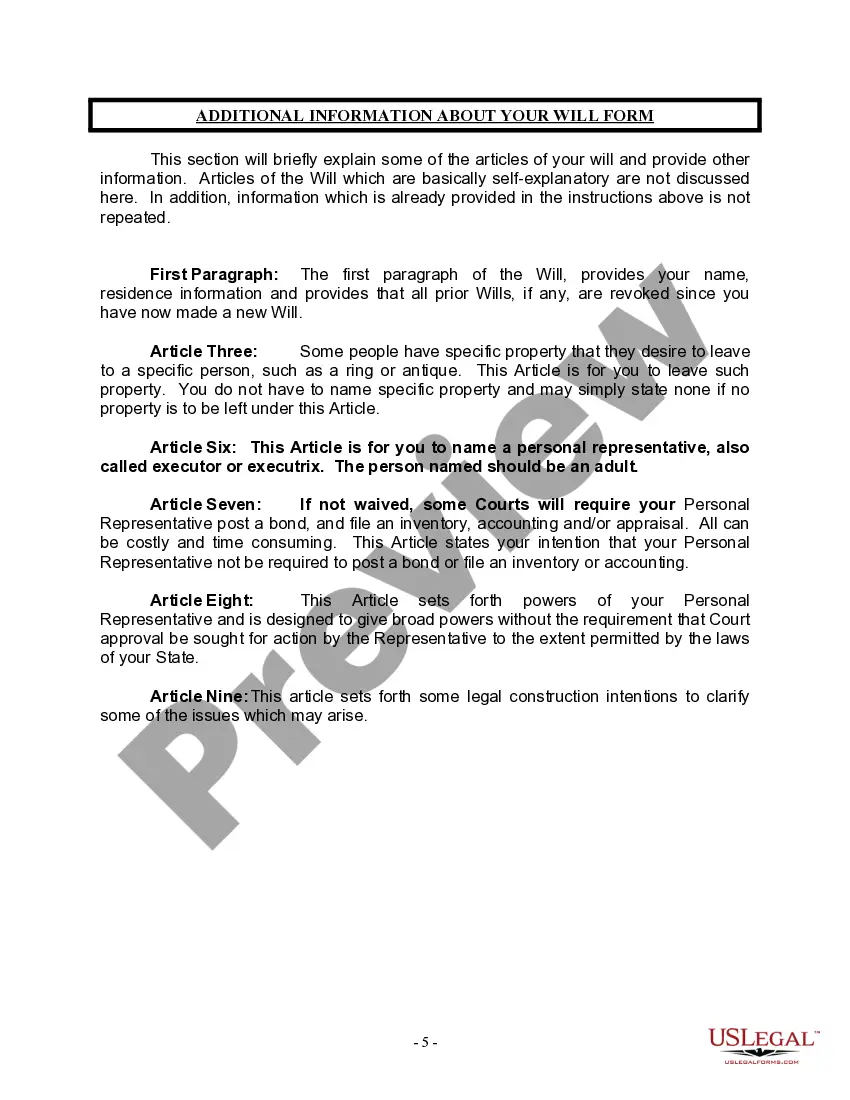
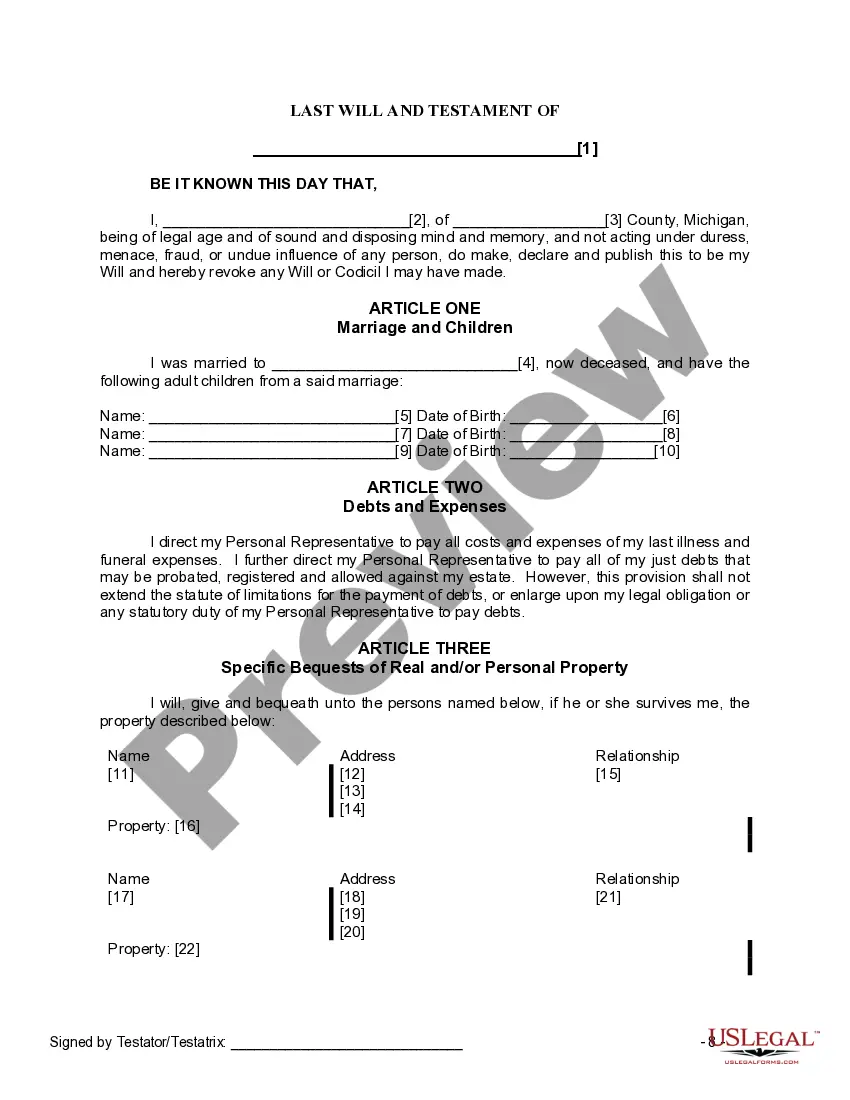
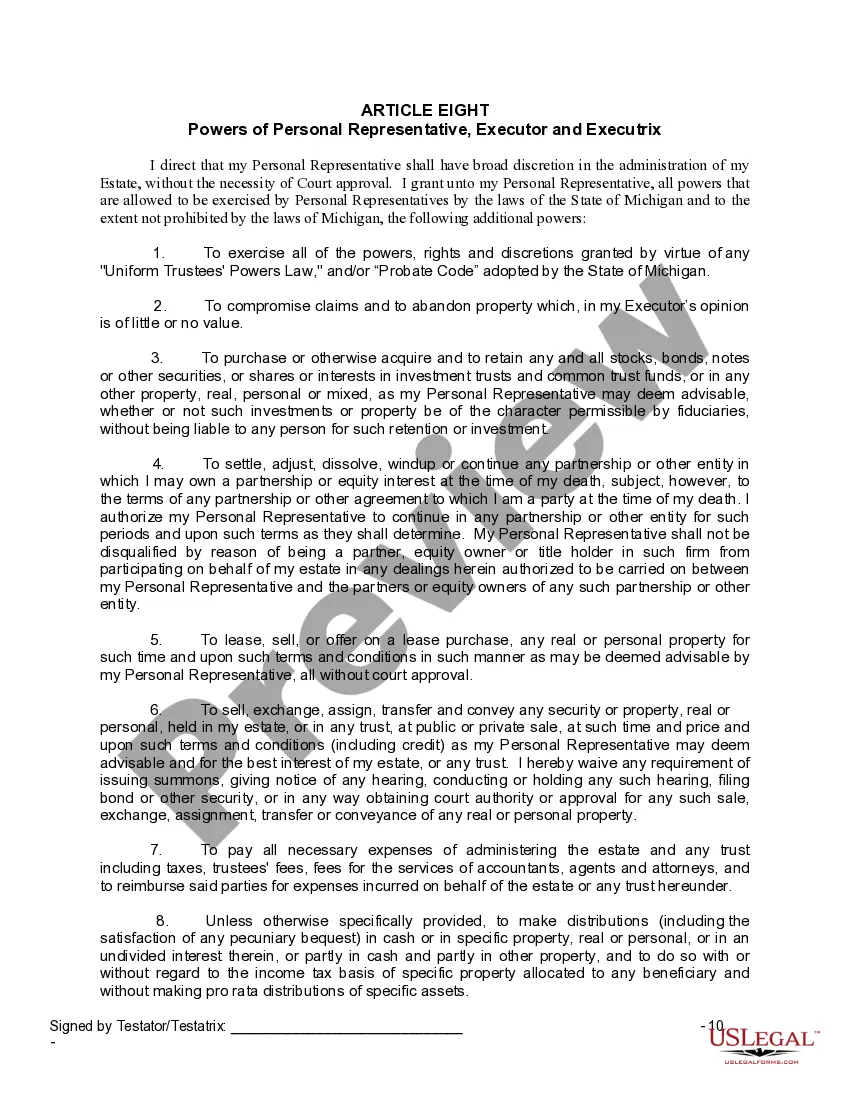
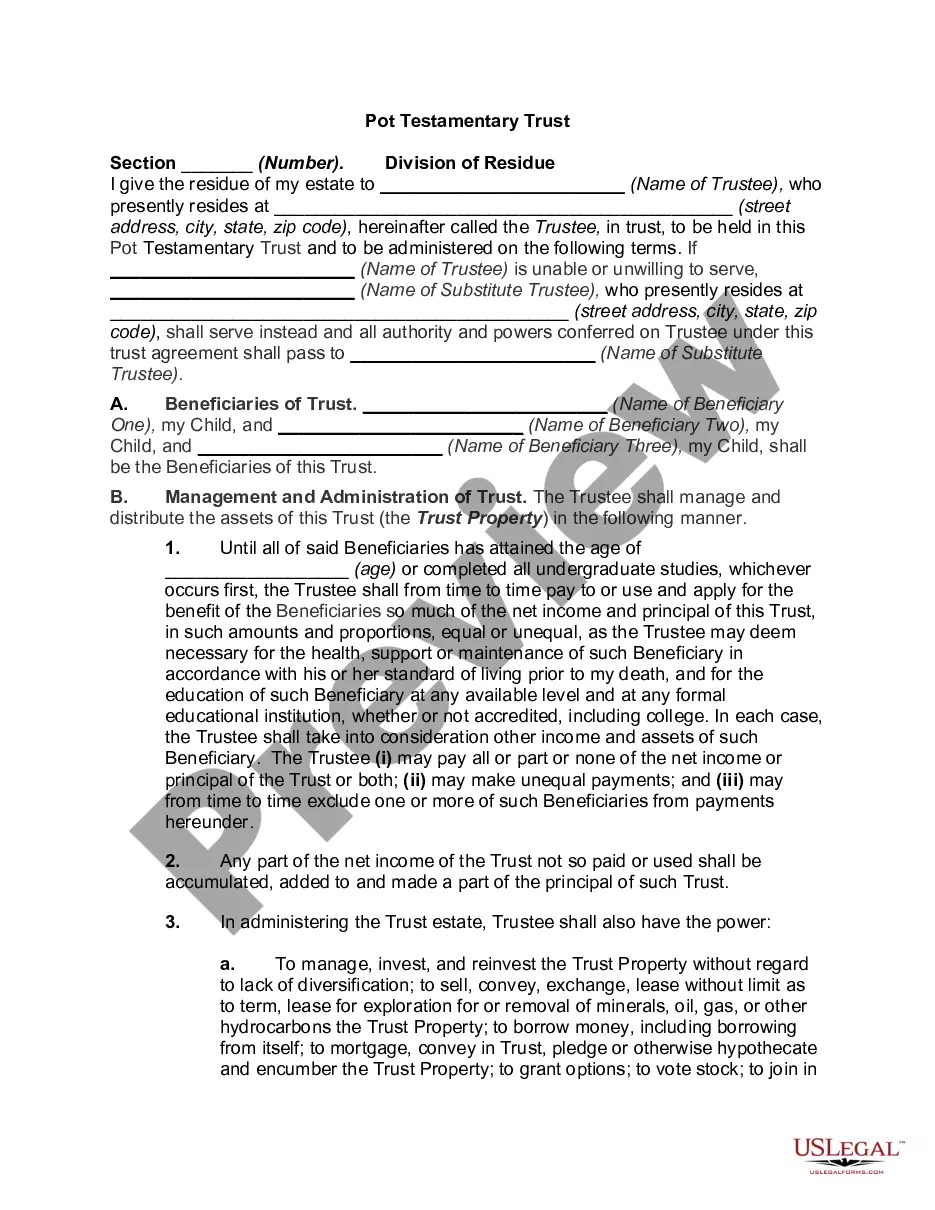
This form is a Last Will and Testament specifically designed for widows and widowers with adult children. It allows you to specify how your estate will be distributed after your death, appoint a personal representative, and include special provisions for your adult children. This will ensures that your wishes are clearly outlined and legally recognized, differentiating it from other generic will forms by addressing the unique circumstances of a widow or widower.
Key parts of this document
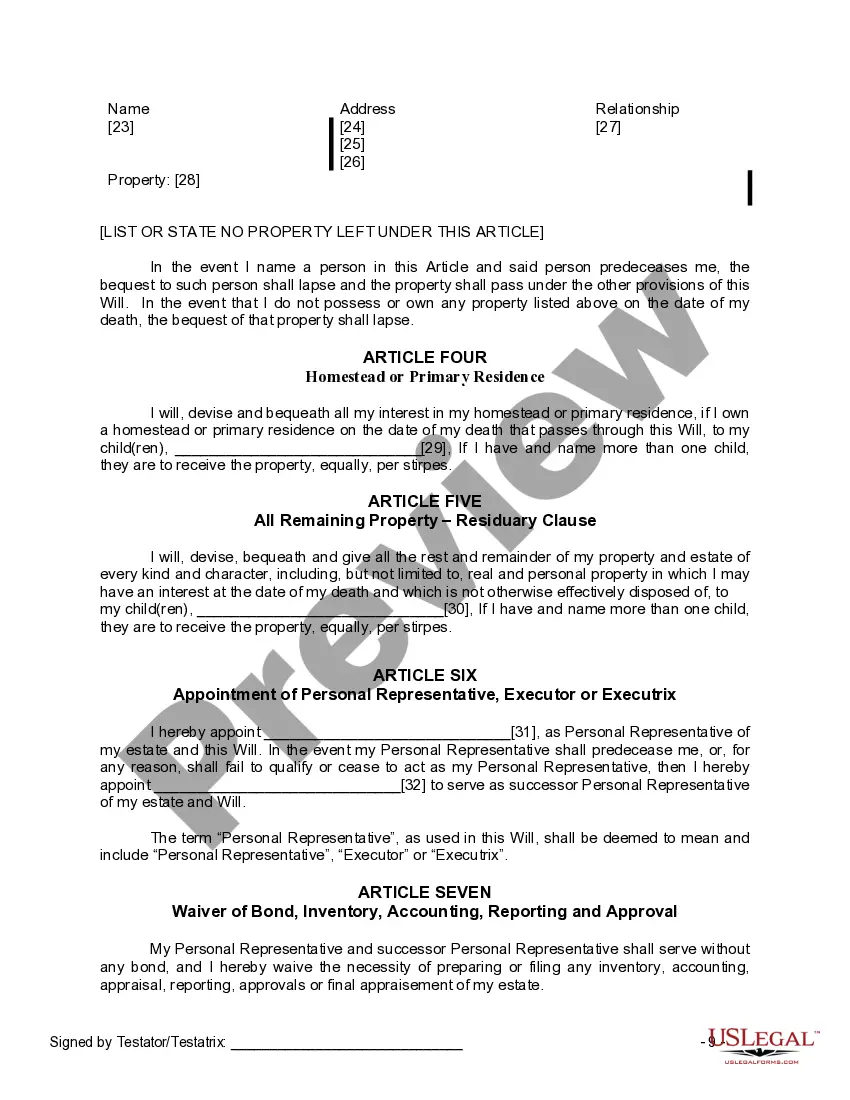
- Appointment of a personal representative or executor to administer your estate.
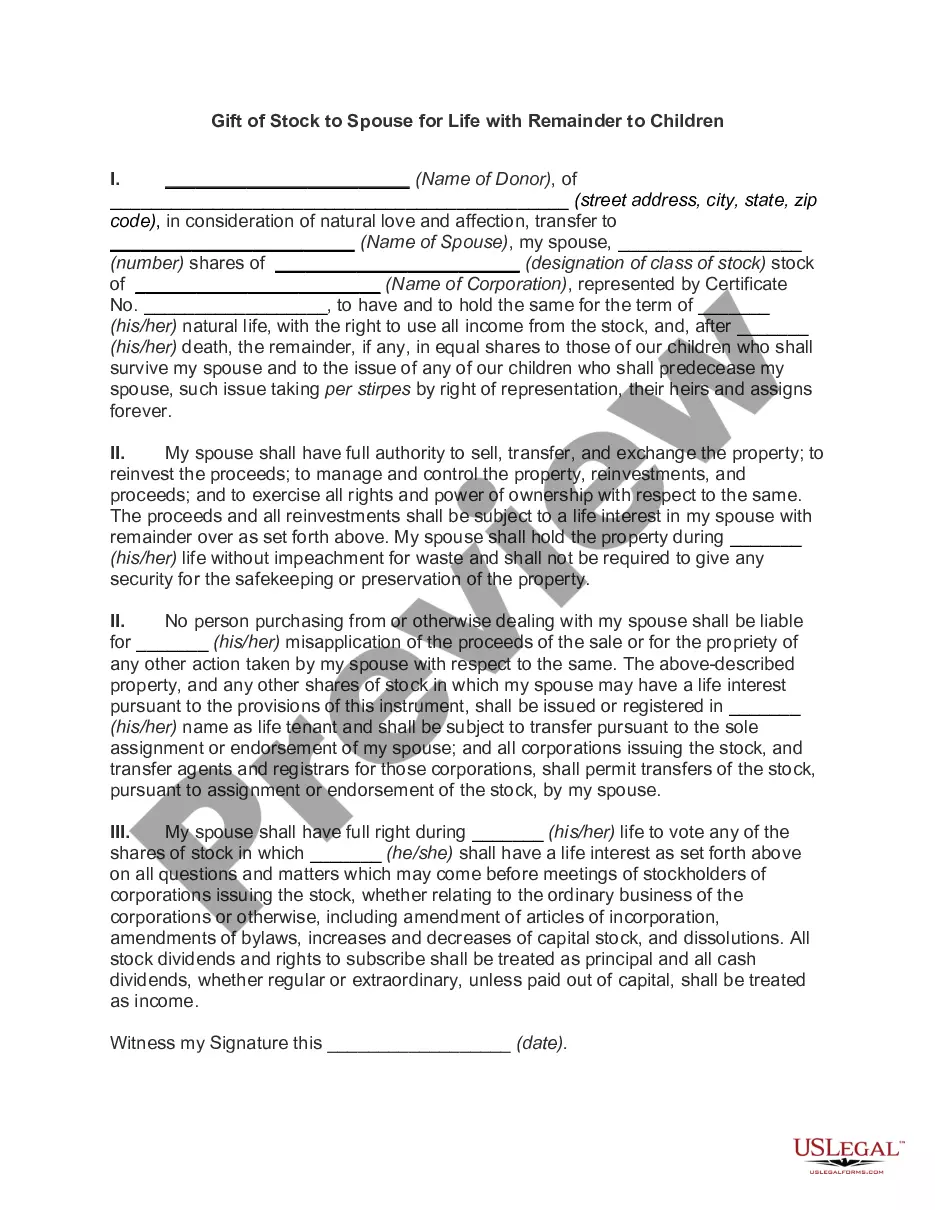
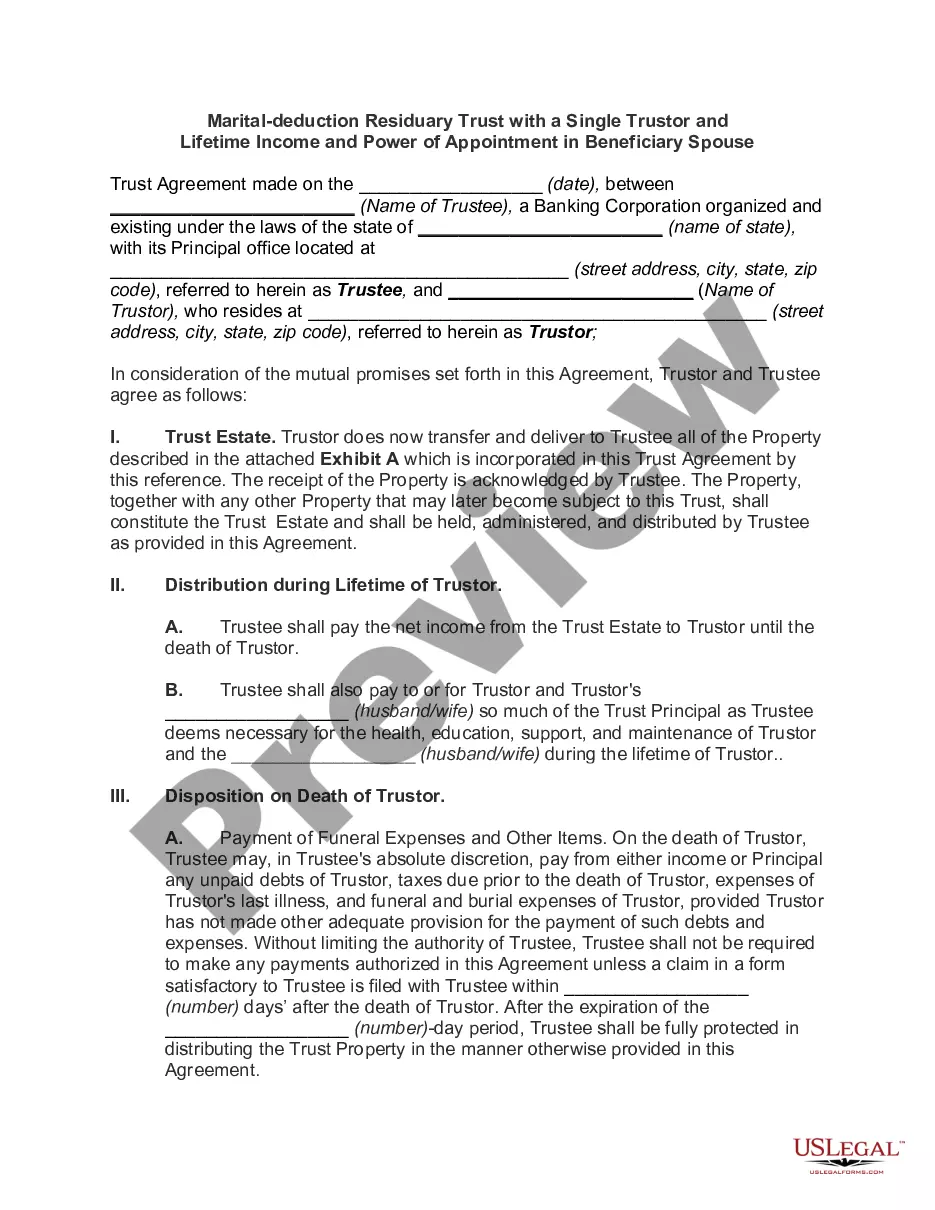
- Designations for property distribution, including specific bequests and residuary clauses.
- Provisions for your adult children, specifying how and what they will receive.
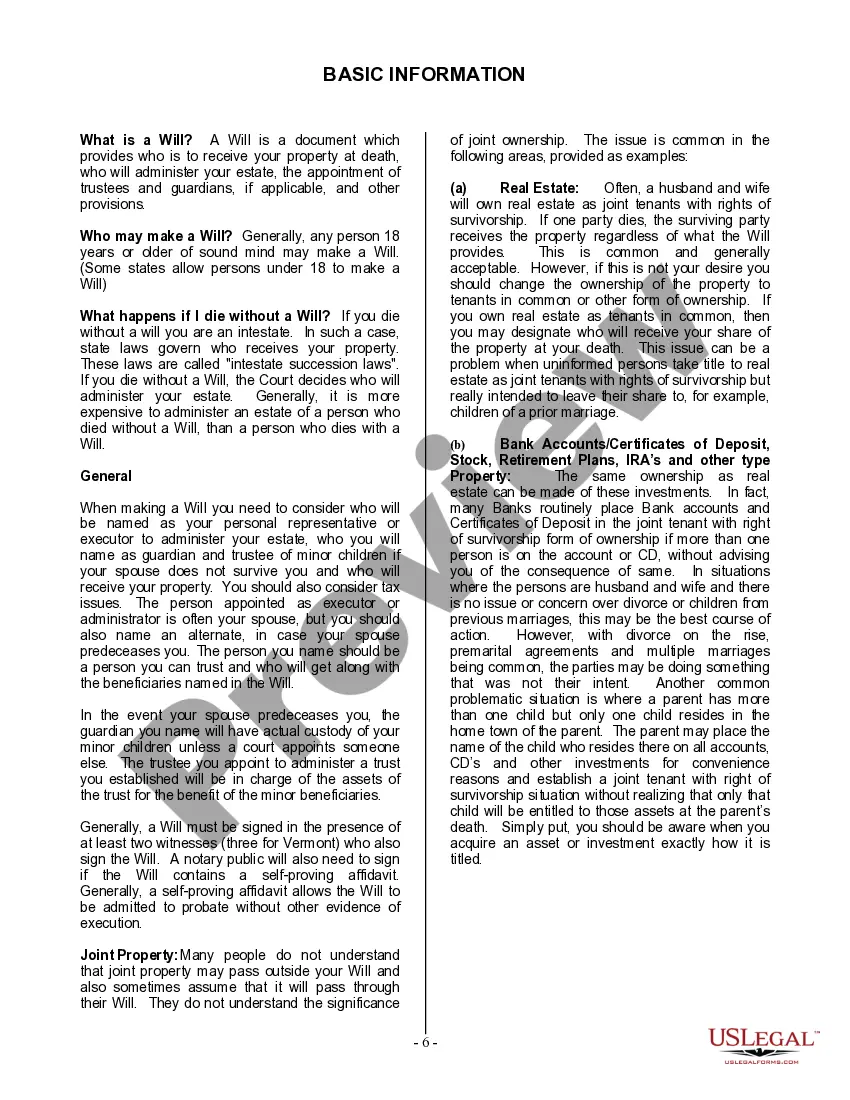
- Requirement of signatures from two witnesses who are not beneficiaries in the will.
- Inclusion of a self-proving affidavit for easier probate process if applicable.





Situations where this form applies
This form is needed when a widow or widower wishes to dictate the distribution of their estate after passing away. It is particularly useful in situations where the individual has adult children and needs to make specific bequests or designate how assets will be handled after their death. This form helps avoid potential disputes among beneficiaries and ensures that your wishes are honored.
Who needs this form
This form is intended for:
- Widows and widowers with adult children who wish to establish a clear last will.
- Individuals wanting to ensure their property is distributed according to their preferences after death.
- Those who have previously created a will but wish to make changes due to personal circumstances.
How to prepare this document
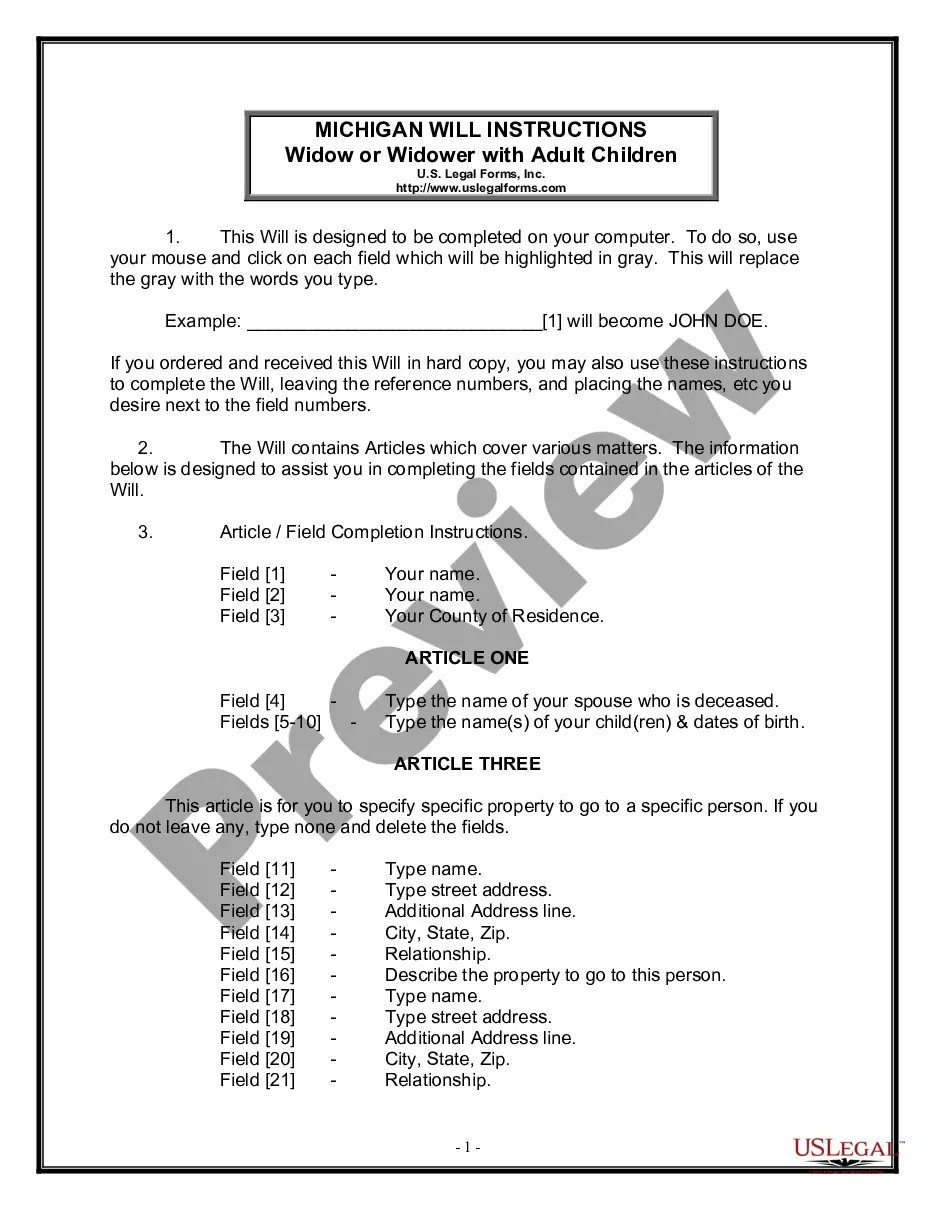
- Begin by entering your full name and county of residence at the beginning of the form.
- Specify the name of your deceased spouse and list your adult children along with their dates of birth.
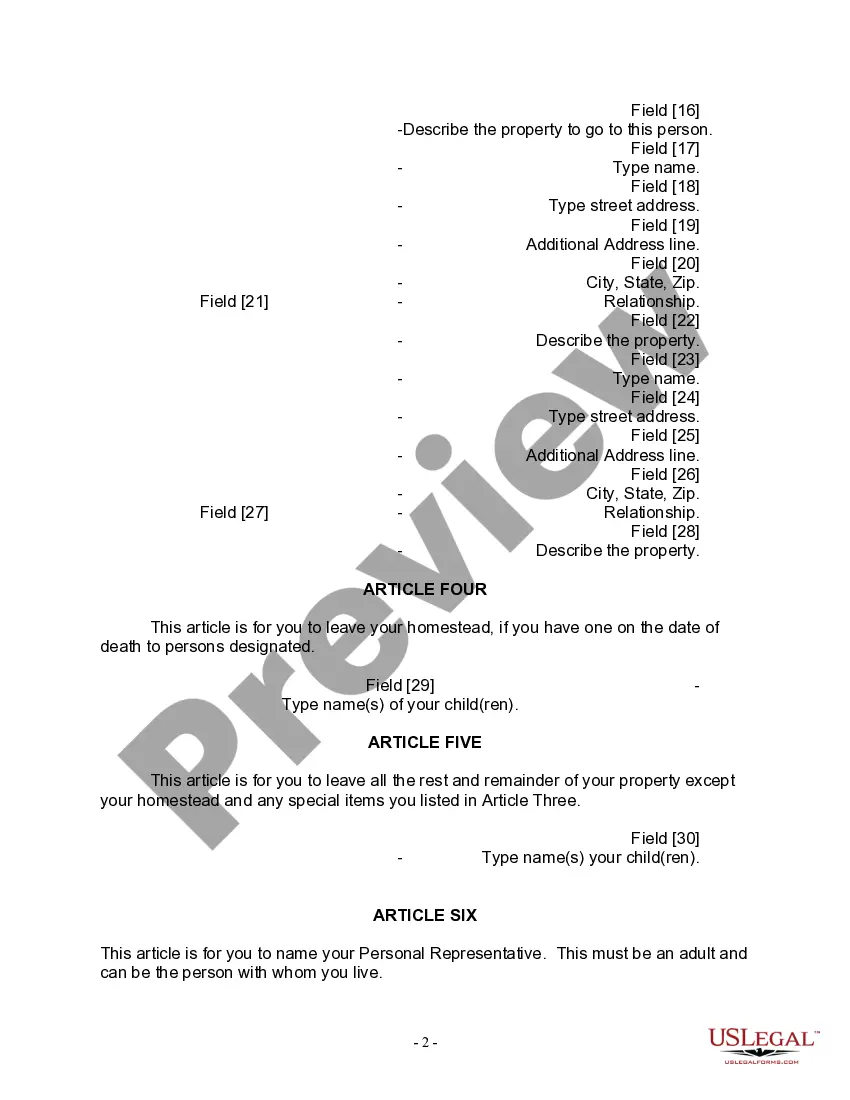
- Detail any specific property bequests you wish to make, including the recipient's name, address, and relationship to you.
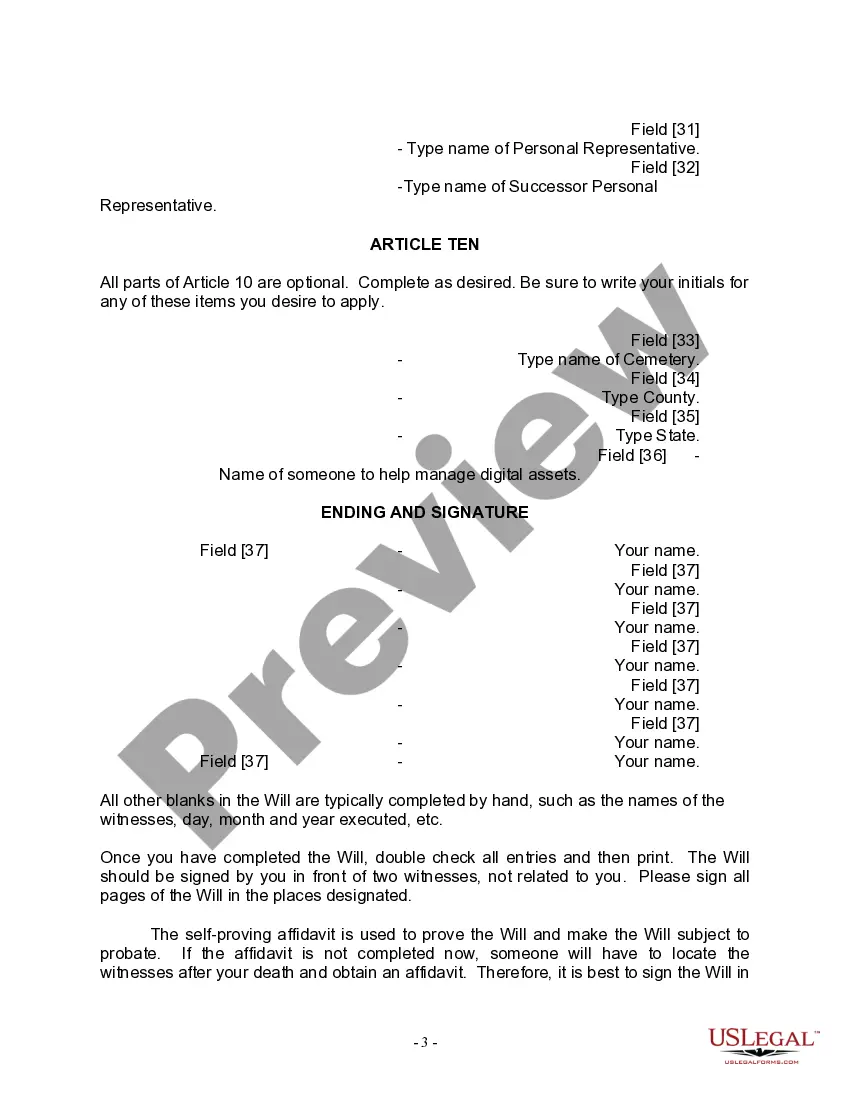
- Designate a personal representative who will oversee your estate and list an alternate if necessary.
- Sign the will in front of two witnesses, ensuring they also sign and provide their addresses.
Does this document require notarization?
To make this form legally binding, it must be notarized. Our online notarization service, powered by Notarize, lets you verify and sign documents remotely through an encrypted video session.
Get your form ready online
Our built-in tools help you complete, sign, share, and store your documents in one place.
Make edits, fill in missing information, and update formatting in US Legal Forms—just like you would in MS Word.
Download a copy, print it, send it by email, or mail it via USPS—whatever works best for your next step.
Sign and collect signatures with our SignNow integration. Send to multiple recipients, set reminders, and more. Go Premium to unlock E-Sign.
If this form requires notarization, complete it online through a secure video call—no need to meet a notary in person or wait for an appointment.
We protect your documents and personal data by following strict security and privacy standards.

Make edits, fill in missing information, and update formatting in US Legal Forms—just like you would in MS Word.

Download a copy, print it, send it by email, or mail it via USPS—whatever works best for your next step.

Sign and collect signatures with our SignNow integration. Send to multiple recipients, set reminders, and more. Go Premium to unlock E-Sign.

If this form requires notarization, complete it online through a secure video call—no need to meet a notary in person or wait for an appointment.

We protect your documents and personal data by following strict security and privacy standards.
Common mistakes to avoid
- Failing to have the will signed by two disinterested witnesses.
- Not updating the will after significant life changes, such as remarriage or the birth of additional children.
- Overlooking the requirement for notarization if applicable, especially with the self-proving affidavit.
- Neglecting to keep the executed will in a safe and accessible location.
Why complete this form online
- Convenient completion from home, allowing you to fill in the form at your own pace.
- Editability ensures you can make changes easily as your situation evolves.
- A reliable template created by licensed attorneys, providing peace of mind regarding legal compliance.
Legal use & context
- This Last Will and Testament is a legally binding document once duly executed, adhering to the laws of Michigan.
- It provides clear instructions for asset distribution, helping prevent legal disputes among heirs.
- Using this form may ease the probate process when properly executed with required signatures and notarization.
What to keep in mind
- The Last Will and Testament for a widow or widower is essential for clearly expressing your wishes regarding asset distribution.
- Ensure all signatures and notarization requirements are met to validate your will.
- Regularly review and update your will to reflect any changes in your personal circumstances.
Looking for another form?

Form popularity
FAQ
In Michigan, the first in line for inheritance is typically the surviving spouse. If the deceased has adult children, the spouse receives a set share, while the adult children inherit the rest equally. This order emphasizes the importance of having a well-structured Michigan Last Will and Testament for a Widow or Widower with Adult Children, ensuring that your wishes are clearly articulated and legally upheld. You can utilize platforms like USLegalForms to create a comprehensive will that reflects your desires.
In Michigan, the order of heirs follows a specific hierarchy when distributing an estate. First, the surviving spouse inherits the entire estate if there are no children. If there are adult children, the spouse receives a portion, and the remaining assets are divided equally among the children. Understanding this process is crucial for creating a Michigan Last Will and Testament for a Widow or Widower with Adult Children.
In Michigan, the order of inheritance is crucial when creating a Michigan Last Will and Testament for a Widow or Widower with Adult Children. If there is no will, the state laws dictate that the spouse inherits the first portion of the estate, followed by the children. If the spouse has passed away, the adult children typically inherit the estate equally. Understanding this order can help you make informed decisions when drafting your will.
Creating a Michigan Last Will and Testament for a Widow or Widower with Adult Children can be done without a lawyer by following a few simple steps. First, gather all necessary information, including details about your assets and beneficiaries. Next, use a reliable online platform such as US Legal Forms to access templates that comply with Michigan laws. Finally, ensure that you sign your will in the presence of two witnesses to make it legally binding.
You can absolutely write your own Michigan Last Will and Testament for a Widow or Widower with Adult Children and have it notarized. Just ensure that your will meets all the legal requirements, including proper signatures and witness validation. Once you complete your will, having it notarized adds an extra layer of authenticity. Utilizing tools from uslegalforms can simplify this process and help you create a legally sound document.
Yes, you can create a Michigan Last Will and Testament for a Widow or Widower with Adult Children without hiring a lawyer. Many resources, including online platforms like uslegalforms, provide templates and guidance to help you draft your will. However, while it is possible, consider consulting with a lawyer if you have complex circumstances or unique wishes. This can ensure that your will meets all legal standards.
To create a valid Michigan Last Will and Testament for a Widow or Widower with Adult Children, your will must be in writing and signed by you. Additionally, it should be witnessed by at least two individuals who are not beneficiaries of the will. These requirements ensure that your wishes are respected and enforceable. Following these guidelines can help prevent disputes among your heirs.
You can have your Michigan Last Will and Testament for a Widow or Widower with Adult Children notarized at a bank, law office, or notary public's office. Many local libraries and community centers also offer notary services. It's important to ensure that the notary is licensed and qualified to avoid any issues with validation later. After notarization, you can confidently store your will in a safe place.
In Michigan, the inheritance rights of a surviving spouse are significant but not absolute. Under the law, the spouse is entitled to a portion of the estate, especially if there are children involved. A Michigan Last Will and Testament for a Widow or Widower with Adult Children can provide clarity on these rights and ensure that the surviving spouse's needs are met. Engaging with platforms like uslegalforms can streamline the process of creating a comprehensive will that protects your family.
In Michigan, a wife may not inherit everything unless her husband has created a Michigan Last Will and Testament for a Widow or Widower with Adult Children that specifies such intentions. If there is no will, Michigan law governs the distribution of assets, which may divide the estate among children and other relatives. It's crucial for spouses to discuss their wishes and formalize them through proper estate planning. Understanding these elements can help avoid potential conflicts.