Michigan Codicil to Will Form for Amending Your Will - Will Changes or Amendments
What is this form?
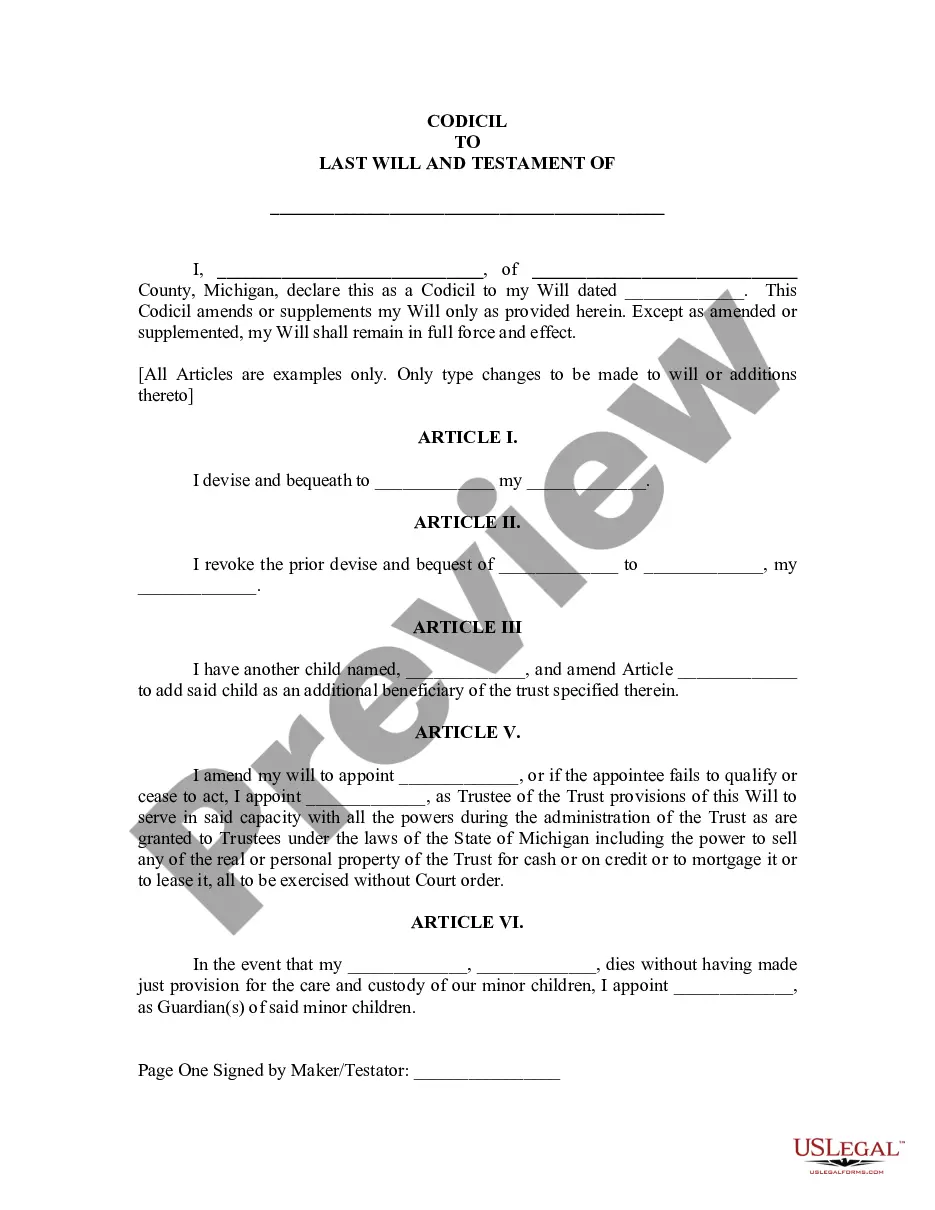
The Codicil to Will Form allows individuals to make specific changes to their existing will without having to create an entirely new document. A codicil is an amendment that clarifies or alters certain provisions of the original will, while stating that all other aspects remain valid. This form provides a straightforward way to adjust beneficiary designations, appoint fiduciaries, or make other essential modifications, ensuring the intentions of the testator are accurately reflected.
What’s included in this form
- Identification of the testator and the original will's date.
- Articles to amend or add beneficiaries and other provisions.
- Revocation of previous bequests.
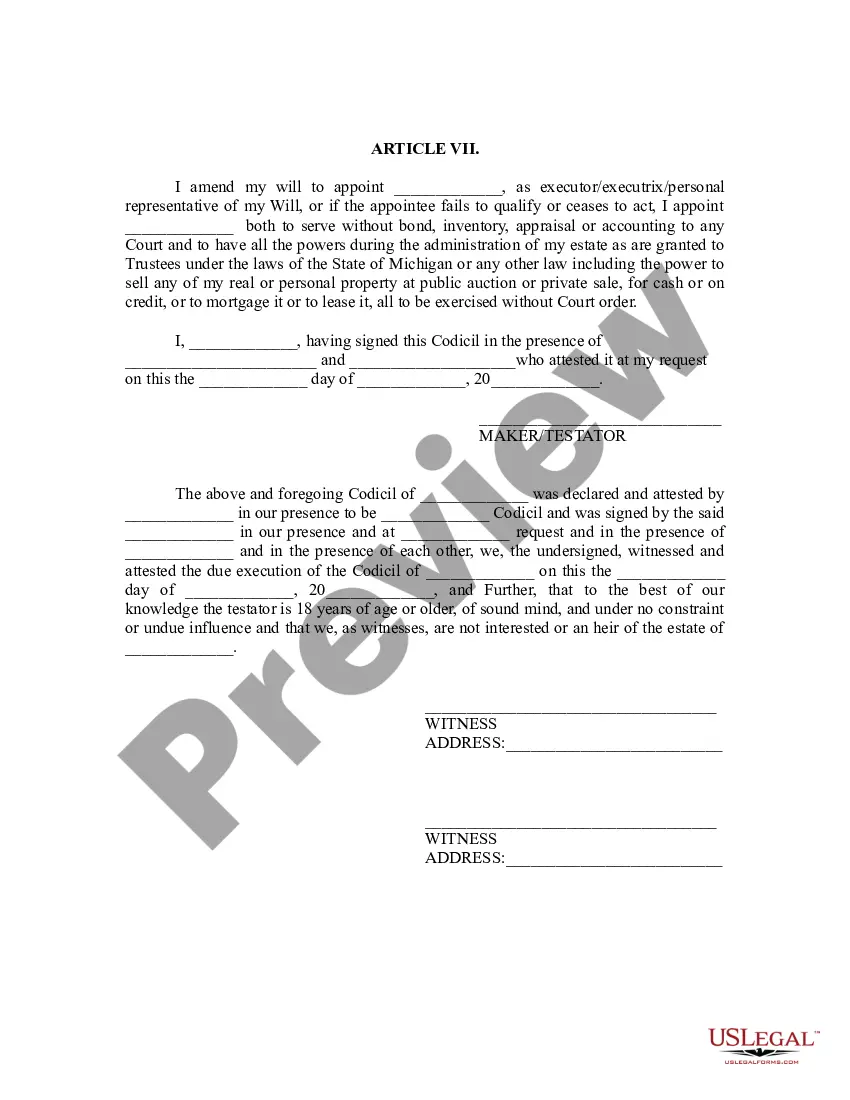
- Appointment of trustees and guardians, if applicable.
- Witness signatures and attestation clauses to ensure validity.
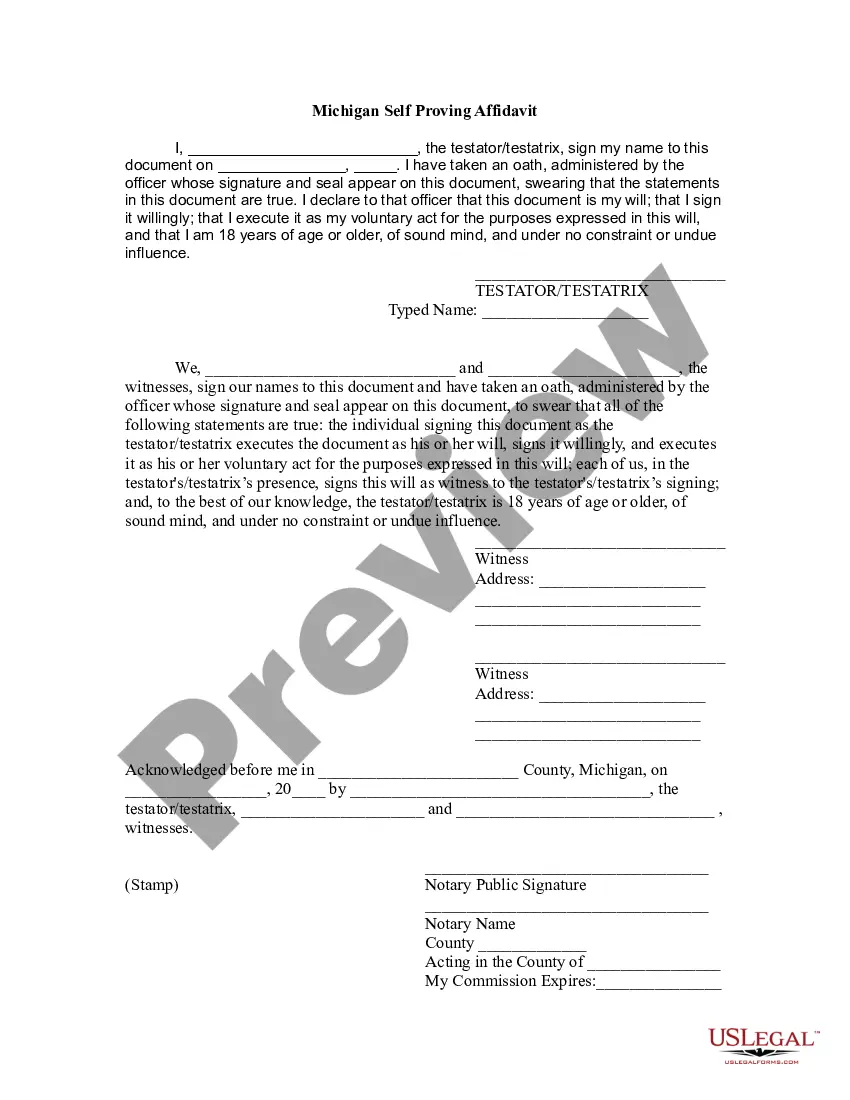
- Self-proving affidavit requirements, if applicable.

When to use this form
This form should be used when an individual wishes to make changes to their will without drafting a new one. Common situations include adding or removing beneficiaries, adjusting the division of assets, or appointing a new executor. It is especially useful when minor updates are needed, ensuring the original will remains effective with the specified amendments in place.
Who needs this form
- Individuals who have an existing will and wish to make amendments.
- Testators looking to simplify the process of updating their estate plan.
- Anyone in need of adding new beneficiaries, removing individuals, or making other modifications to their will.
How to prepare this document
- Begin by filling in your full name, county, and the date of your original will.
- Specify the articles you wish to amend, adding or deleting beneficiaries as needed.
- Clearly indicate any new appointments for trustees or guardians.
- Sign the document in the presence of at least two witnesses who will also sign the form.
- If applicable, complete the self-proving affidavit section as required.
Is notarization required?
This form must be notarized to be legally valid. US Legal Forms provides secure online notarization powered by Notarize, allowing you to complete the process through a verified video call.
Get your form ready online
Our built-in tools help you complete, sign, share, and store your documents in one place.
Make edits, fill in missing information, and update formatting in US Legal Forms—just like you would in MS Word.
Download a copy, print it, send it by email, or mail it via USPS—whatever works best for your next step.
Sign and collect signatures with our SignNow integration. Send to multiple recipients, set reminders, and more. Go Premium to unlock E-Sign.
If this form requires notarization, complete it online through a secure video call—no need to meet a notary in person or wait for an appointment.
We protect your documents and personal data by following strict security and privacy standards.

Make edits, fill in missing information, and update formatting in US Legal Forms—just like you would in MS Word.

Download a copy, print it, send it by email, or mail it via USPS—whatever works best for your next step.

Sign and collect signatures with our SignNow integration. Send to multiple recipients, set reminders, and more. Go Premium to unlock E-Sign.

If this form requires notarization, complete it online through a secure video call—no need to meet a notary in person or wait for an appointment.

We protect your documents and personal data by following strict security and privacy standards.
Common mistakes to avoid
- Failing to sign in front of witnesses, which may invalidate the codicil.
- Not clearly specifying all changes, which could lead to ambiguity.
- Using outdated forms that do not comply with current state laws.
Benefits of using this form online
- Convenient access to legal documents from anywhere at any time.
- Ability to customize the form quickly to meet individual needs.
- Reliability of professionally drafted legal templates that can be easily downloaded.
Key takeaways
- A codicil allows you to amend your will without creating a new document.
- This form is essential for ensuring that your changes are legally recognized.
- Always follow your state's guidelines when completing this form for validity.
Looking for another form?


Form popularity
FAQ
It’s a form that lets you amend an existing will without drafting a new document, clarifying or altering specific provisions while keeping the rest of the will valid. Use it to update beneficiaries, appoint fiduciaries, or make other changes in Michigan. It includes identifying the testator and original will date, the changes, revocation of previous bequests, and witness signatures with attestation clauses (self-proving affidavit if applicable).
Yes. A codicil amends a will by adding or changing specific provisions while the rest of the will remains in force. The Michigan Codicil to Will Form guides this by detailing the amendments, revoking previous bequests as needed, and providing space to update appointments (trustees or guardians). It requires witnesses, an attestation clause, and, if applicable, a self-proving affidavit.
Start by identifying the testator and the original will’s date. List each amendment or addition in later articles, noting revocations of any previous bequests. If applicable, update the appointment of trustees or guardians. Sign the document with witnesses, include an attestation clause, and attach a self-proving affidavit if required.
A lawyer is not required, but it’s often wise if the changes are complex or involve multiple beneficiaries. The form provides the essential elements—testator identification, original will date, specific amendments, and execution with witnesses and an attestation clause—so ensure your intent is clear or consult a licensed attorney if unsure.
Yes. You can download a codicil form online, including this Michigan-focused form, designed to amend an existing will rather than rewrite it. After downloading, complete the amendments, then sign in the presence of witnesses and, if applicable, attach a self-proving affidavit.
This form amends an existing will rather than creating a new document. It specifies changes to beneficiaries or fiduciaries, revokes only the relevant bequests, and keeps the rest of the will intact. It also includes sections for identifying the testator, original will date, and requires witnesses and an attestation clause (self-proving affidavit if applicable).