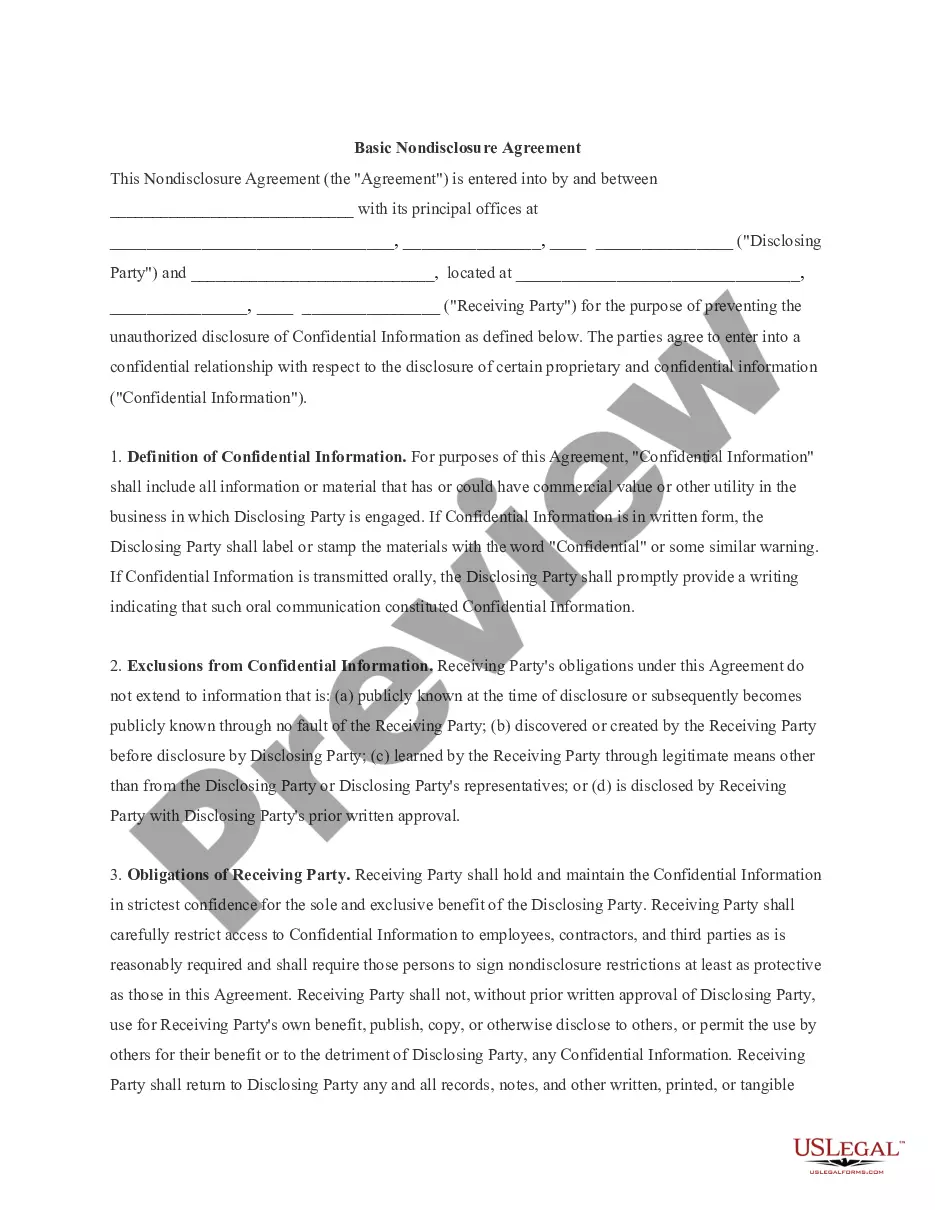
Basic Nondisclosure Agreement
Understanding this form
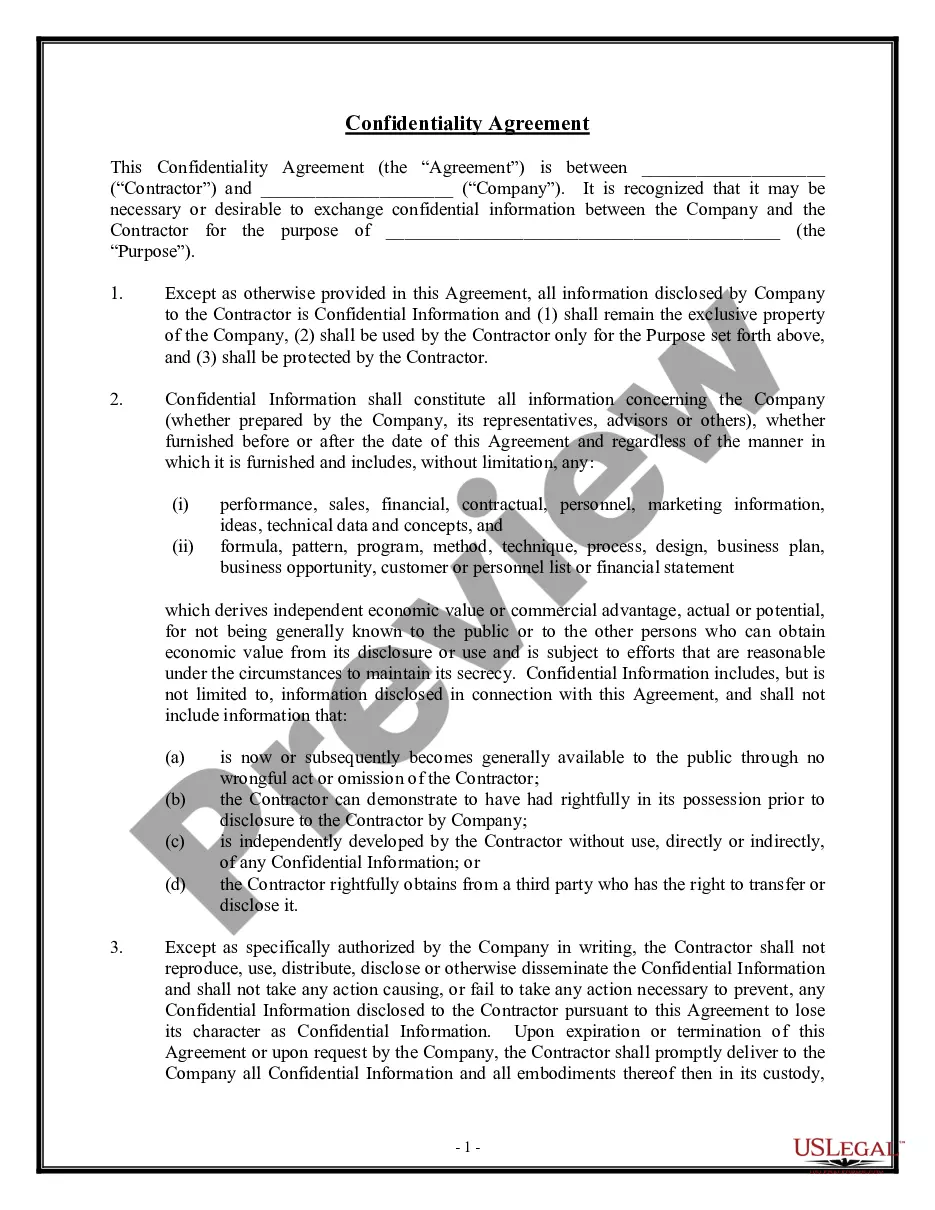
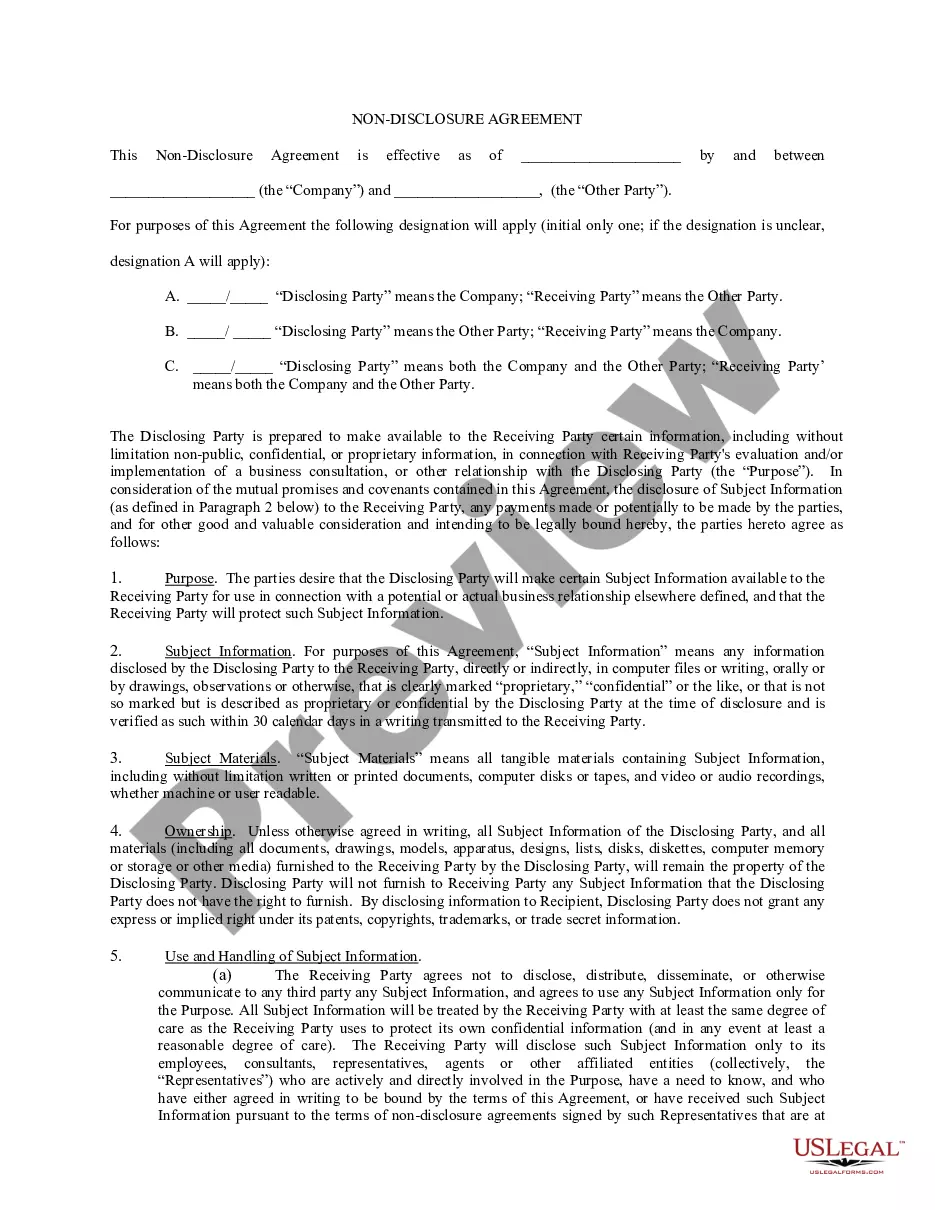
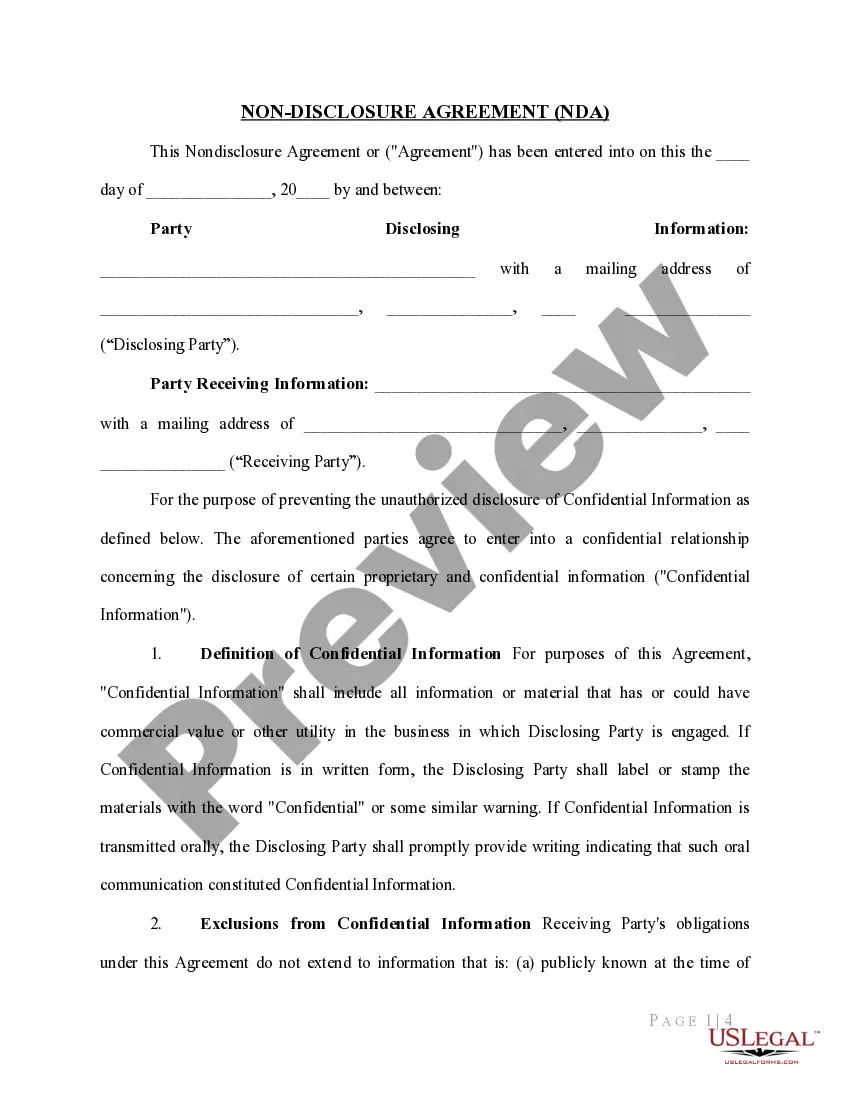
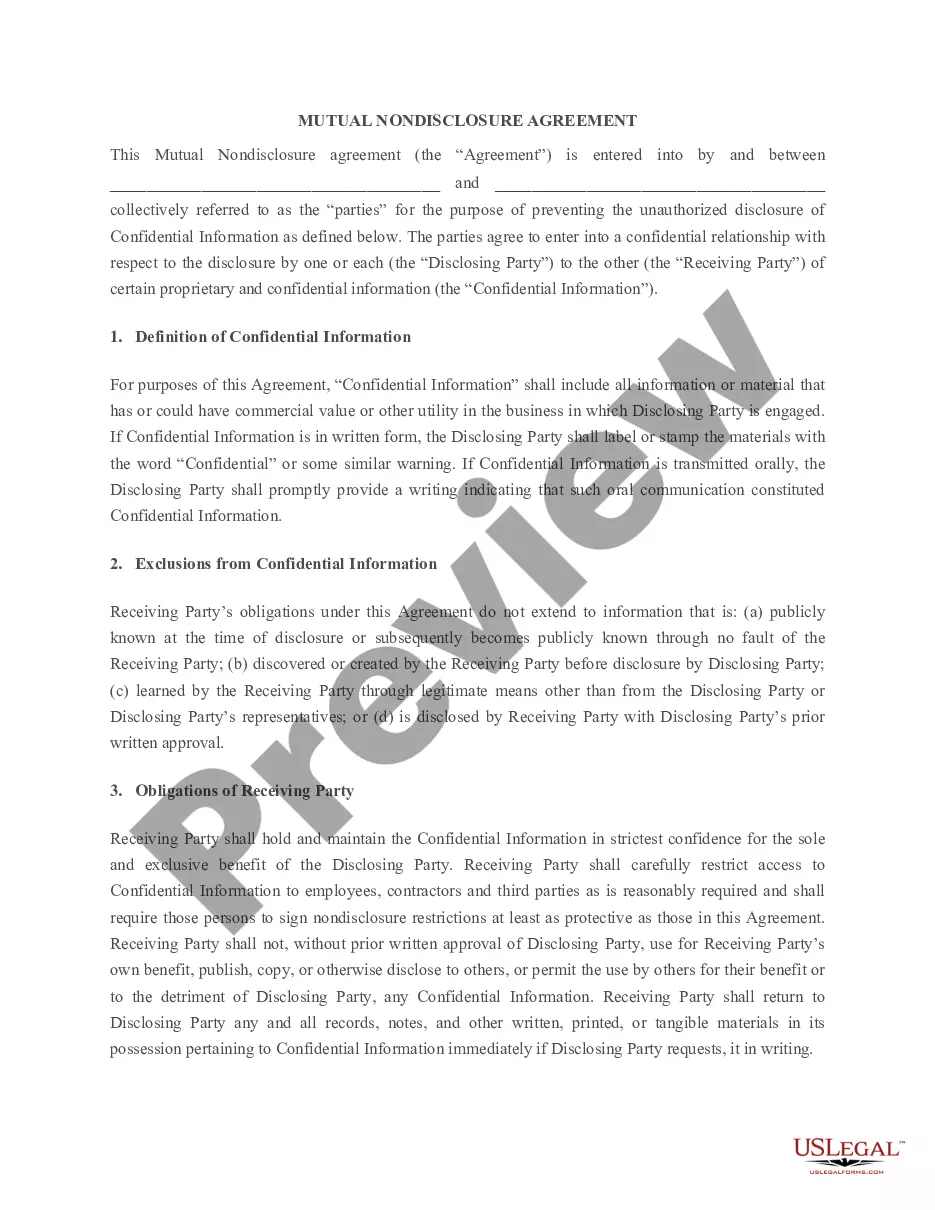
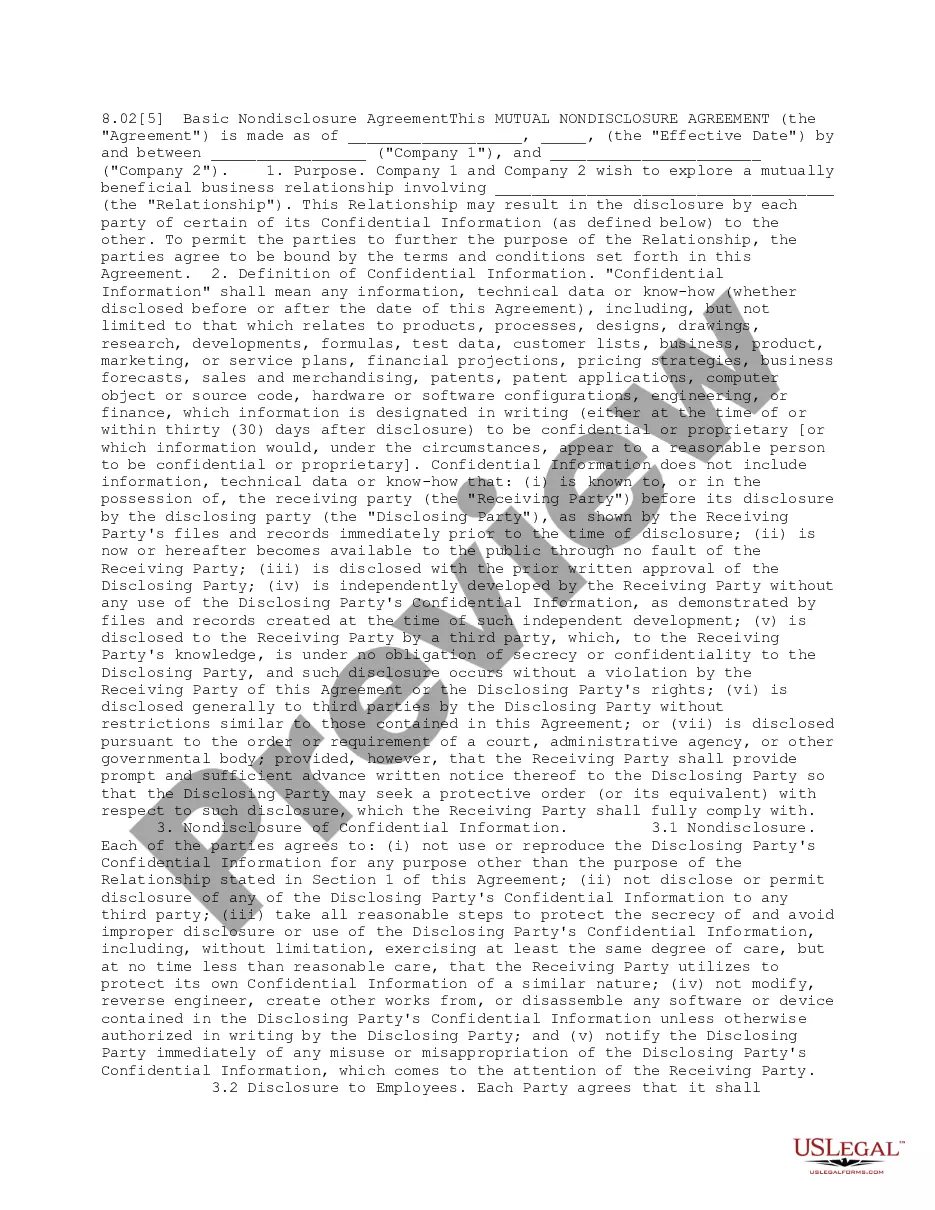
The Basic Nondisclosure Agreement is a legal document designed to protect confidential information shared between two parties. This agreement ensures that the Receiving Party does not disclose any proprietary information they receive from the Disclosing Party. Unlike other agreements that might include more complex terms or obligations, this basic version simplifies the process of confidentiality, making it accessible for a wide range of users and scenarios.
What’s included in this form
- Definition of Confidential Information: Details what constitutes confidential information and how it should be marked.
- Exclusions from Confidential Information: Lists specific circumstances where the Receiving Party is not obligated to maintain confidentiality.
- Obligations of the Receiving Party: Outlines the duty of the Receiving Party to protect the Disclosing Party's confidential information.
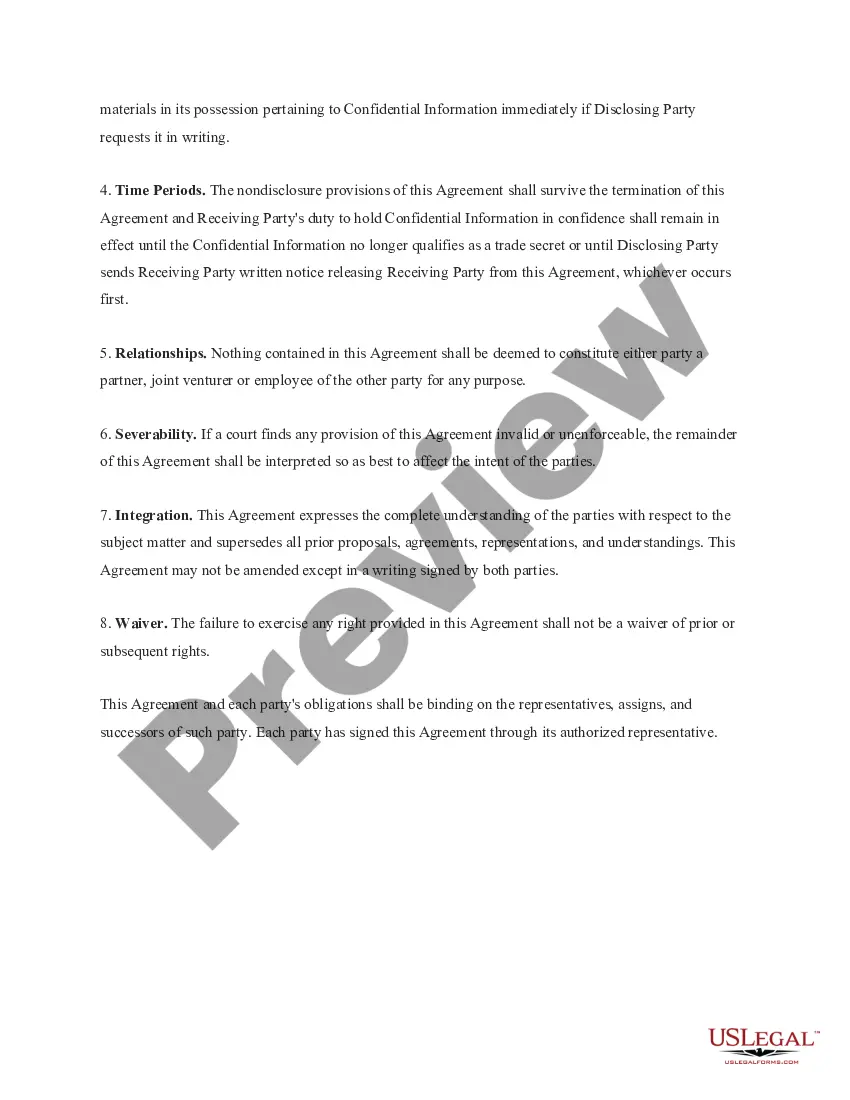
- Time Periods: Specifies how long the confidentiality obligations remain in effect.
- Legal Relationships: Clarifies that the agreement does not create any partnership or employment relationship between parties.
When to use this form
This form is useful in various situations, including when businesses share proprietary information for potential partnerships, when startups discuss their ideas with potential investors, or when employees receive sensitive information as part of their job responsibilities. It serves as a foundation for fostering trust and ensuring that confidential information remains secure.
Who needs this form
- Businesses or entrepreneurs sharing sensitive trade secrets or proprietary information.
- Employers or organizations needing to protect confidential information disclosed to employees or contractors.
- Individuals entering discussions for potential joint ventures or collaborations that involve sensitive data.
Completing this form step by step
- Identify the parties: Fill in the names and addresses of the Disclosing Party and the Receiving Party.
- Define Confidential Information: Specify what information will be considered confidential and how it will be marked.
- Outline obligations: Indicate the responsibilities of the Receiving Party regarding the handling of confidential information.
- Enter dates: Provide the date when the agreement is being signed.
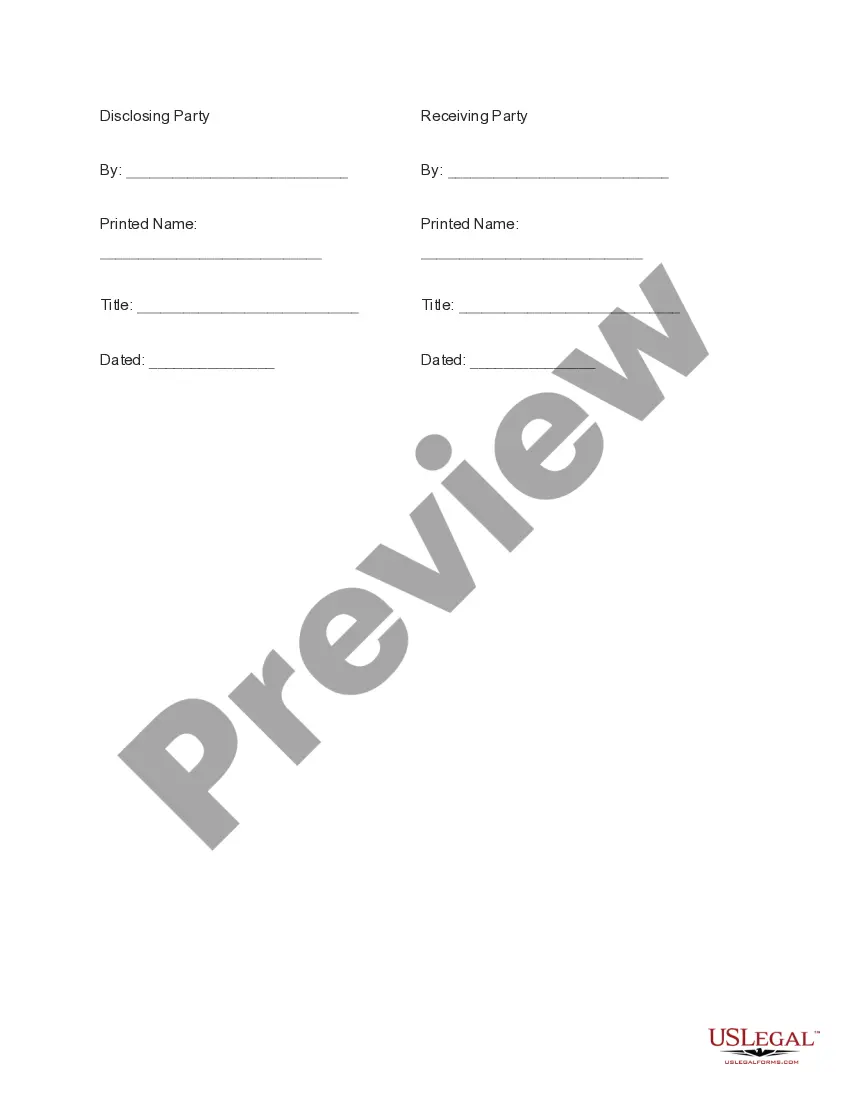
- Sign the agreement: Ensure both parties sign and date the document to make it legally binding.
Does this document require notarization?
This form does not typically require notarization unless specified by local law. However, having the agreement notarized can add an additional layer of verification and can be beneficial if disputes arise.
Get your form ready online
Our built-in tools help you complete, sign, share, and store your documents in one place.
Make edits, fill in missing information, and update formatting in US Legal Forms—just like you would in MS Word.
Download a copy, print it, send it by email, or mail it via USPS—whatever works best for your next step.
Sign and collect signatures with our SignNow integration. Send to multiple recipients, set reminders, and more. Go Premium to unlock E-Sign.
If this form requires notarization, complete it online through a secure video call—no need to meet a notary in person or wait for an appointment.
We protect your documents and personal data by following strict security and privacy standards.

Make edits, fill in missing information, and update formatting in US Legal Forms—just like you would in MS Word.

Download a copy, print it, send it by email, or mail it via USPS—whatever works best for your next step.

Sign and collect signatures with our SignNow integration. Send to multiple recipients, set reminders, and more. Go Premium to unlock E-Sign.

If this form requires notarization, complete it online through a secure video call—no need to meet a notary in person or wait for an appointment.

We protect your documents and personal data by following strict security and privacy standards.
Common mistakes to avoid
- Not specifying what constitutes confidential information, leaving it open to interpretation.
- Failing to outline the exclusions from confidential information properly.
- Not ensuring both parties sign the agreement, which can lead to enforceability issues.
Advantages of online completion
- Convenience: Download and complete the form at your own pace, without the need for in-person meetings.
- Editability: Easily modify the template to suit specific situations and requirements.
- Reliability: Ensure that the agreement is drafted by licensed attorneys, providing peace of mind regarding legal compliance.
Looking for another form?
Form popularity
FAQ
disclosure agreement (NDA) is a legally binding contract that establishes a confidential relationship. The party or parties signing the agreement agree that sensitive information they may obtain will not be made available to any others. An NDA may also be referred to as a confidentiality agreement.
The key elements of Non-Disclosure Agreements: Identification of the parties. Definition of what is deemed to be confidential. The scope of the confidentiality obligation by the receiving party.
When drafting an NDA, it is critical to be as specific as possible. A contract can be declared null and void if the language is unduly broad, irrational, or onerous. Agreements that are overly broad, oppressive, or attempt to contain non-confidential information will also be challenged or invalidated by the courts.
Data in electronic form (how most personal information is stored) is poorly protected by an NDA because it usually contains large information. A data security clause must be included in the NDA as it is difficult to identify some of the data as ?confidential? in this case.
You do not need a lawyer to create and sign a non-disclosure agreement. However, if the information you are trying to protect is important enough to warrant an NDA, you may want to have the document reviewed by someone with legal expertise.
Besides naming all parties to the NDA, five essential elements every NDA should include are: Description Of The Confidential Information.Requirements And Obligations Of The Parties.Exclusions To The Confidentiality Agreement.Term Of The Non-Disclosure Agreement.Consequences Of Breach Of The NDA.
To create a Non-Disclosure Agreement, include the following information: The parties' names and contact information. The length of the non-disclosure period. The scope and definition of the confidential information. The obligations of the Non-Disclosure Agreement. The ownership and return information.
Key elements of Non-disclosure Agreement Identification of the parties that are signing the agreement. A precise definition of what is considered confidential under the agreement. The clear reason as to why the information is shared and for what purpose.