Basic NonDisclosure Agreement
What this document covers
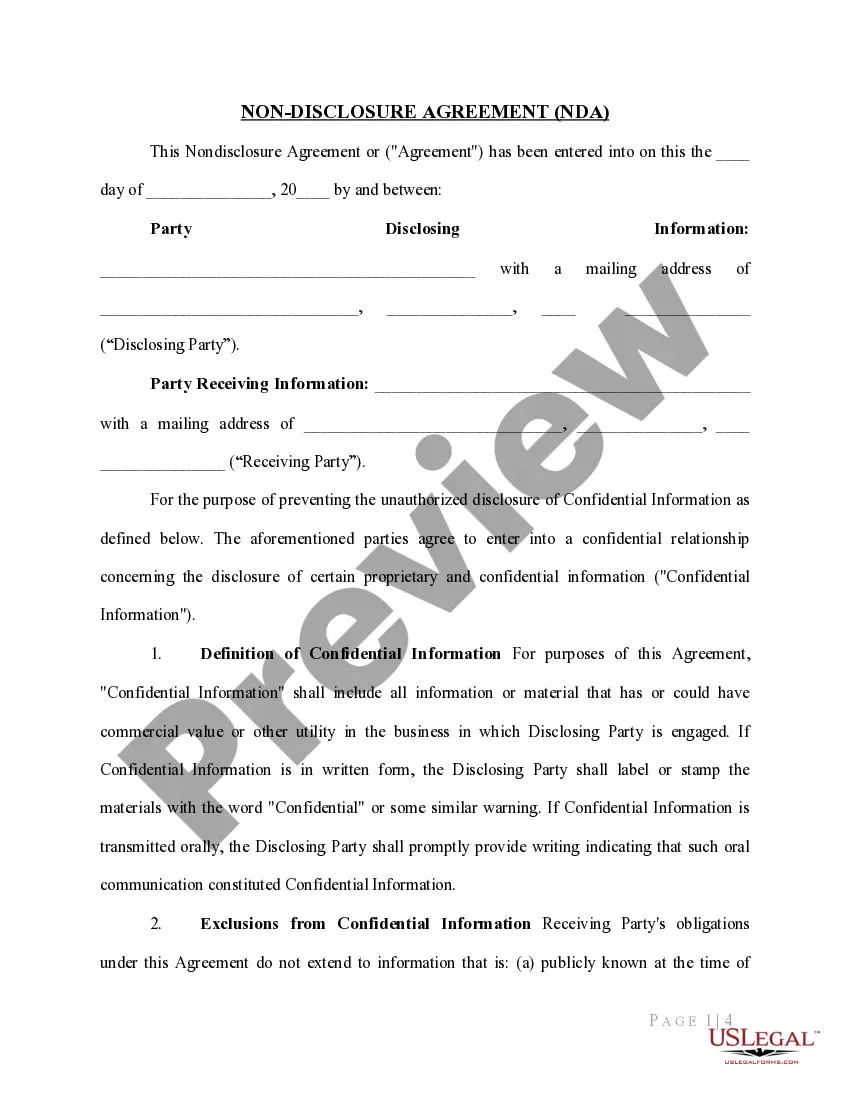
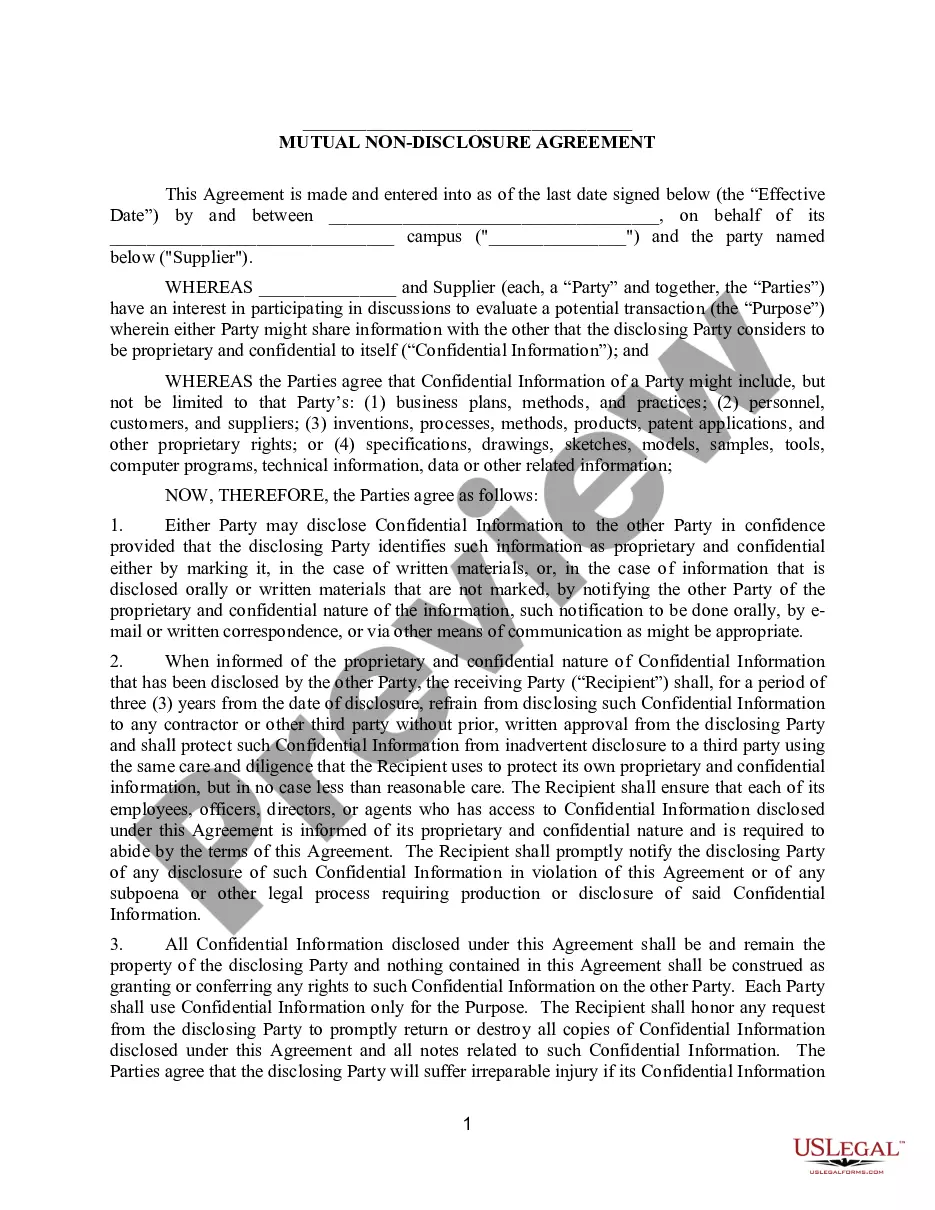
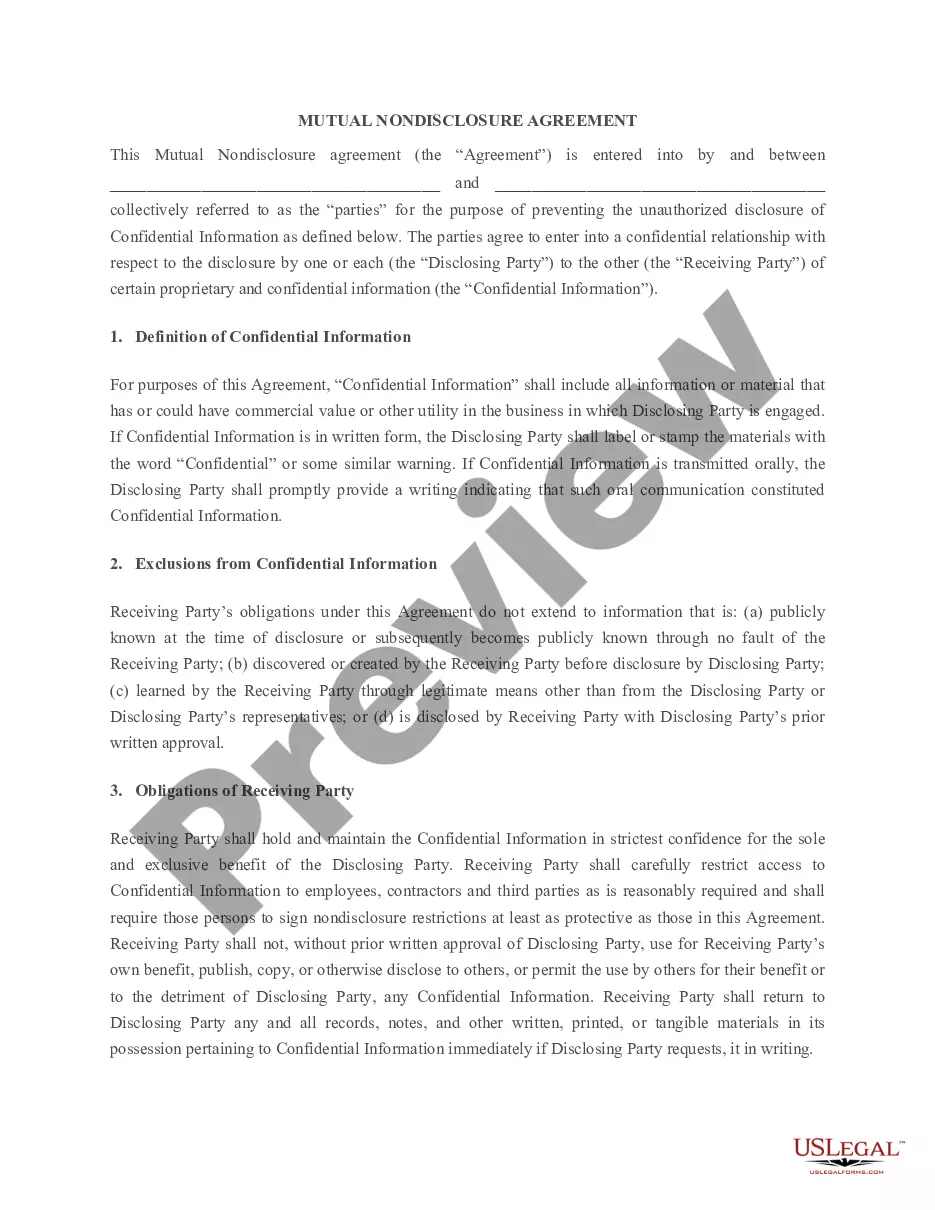
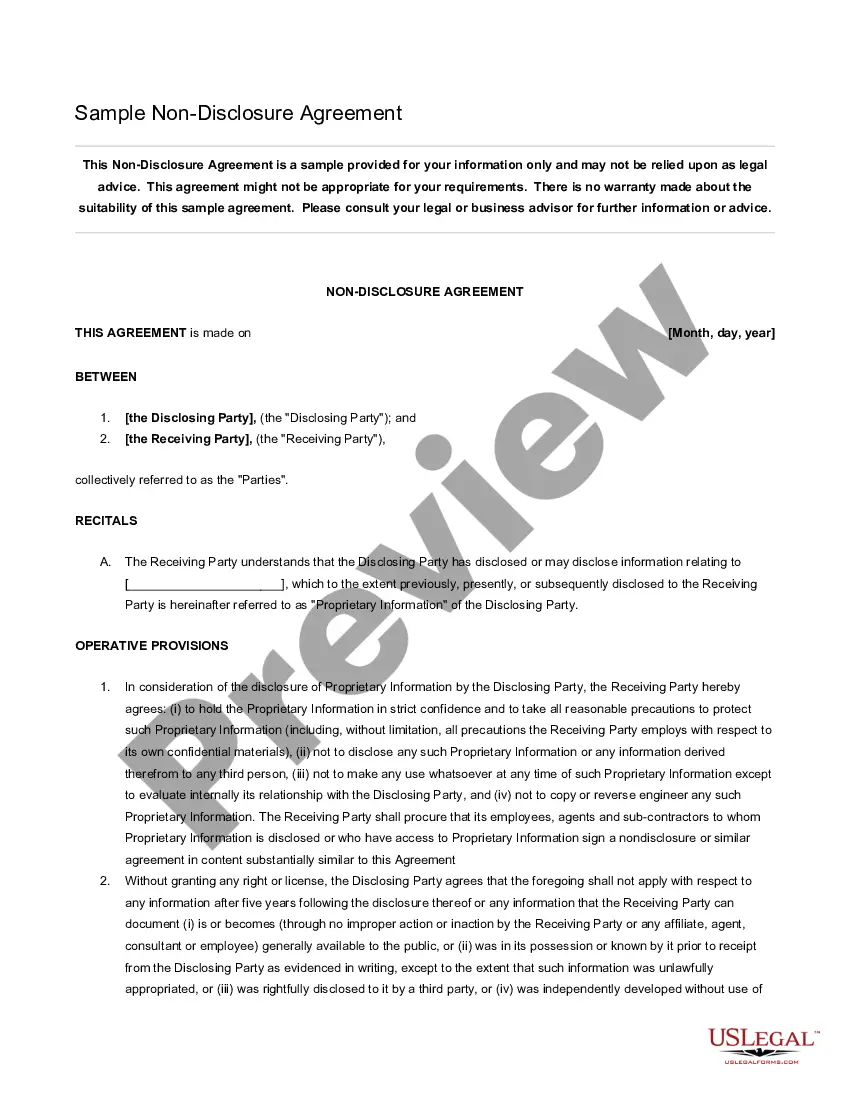
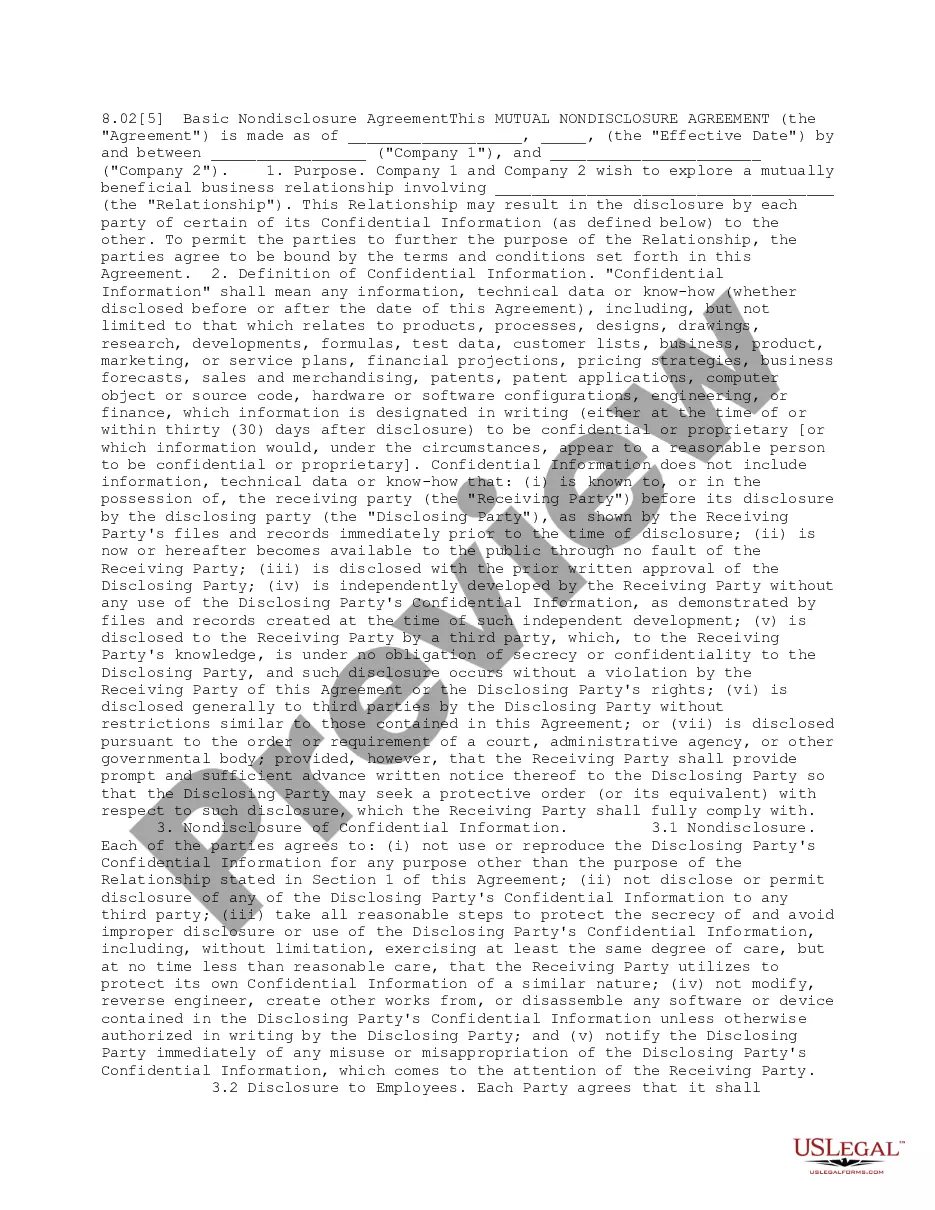
The Basic NonDisclosure Agreement (NDA) is a legal document used to establish a confidential relationship between parties. It ensures that any proprietary or sensitive information shared during their collaboration remains protected from unauthorized disclosure. This simple agreement is easy to complete and is ideal for everyday use when confidentiality is necessary, differentiating it from more complex agreements that may include specific legal jargon or additional clauses.
Main sections of this form
- Definitions: Clearly outlines what constitutes 'Confidential Information.'
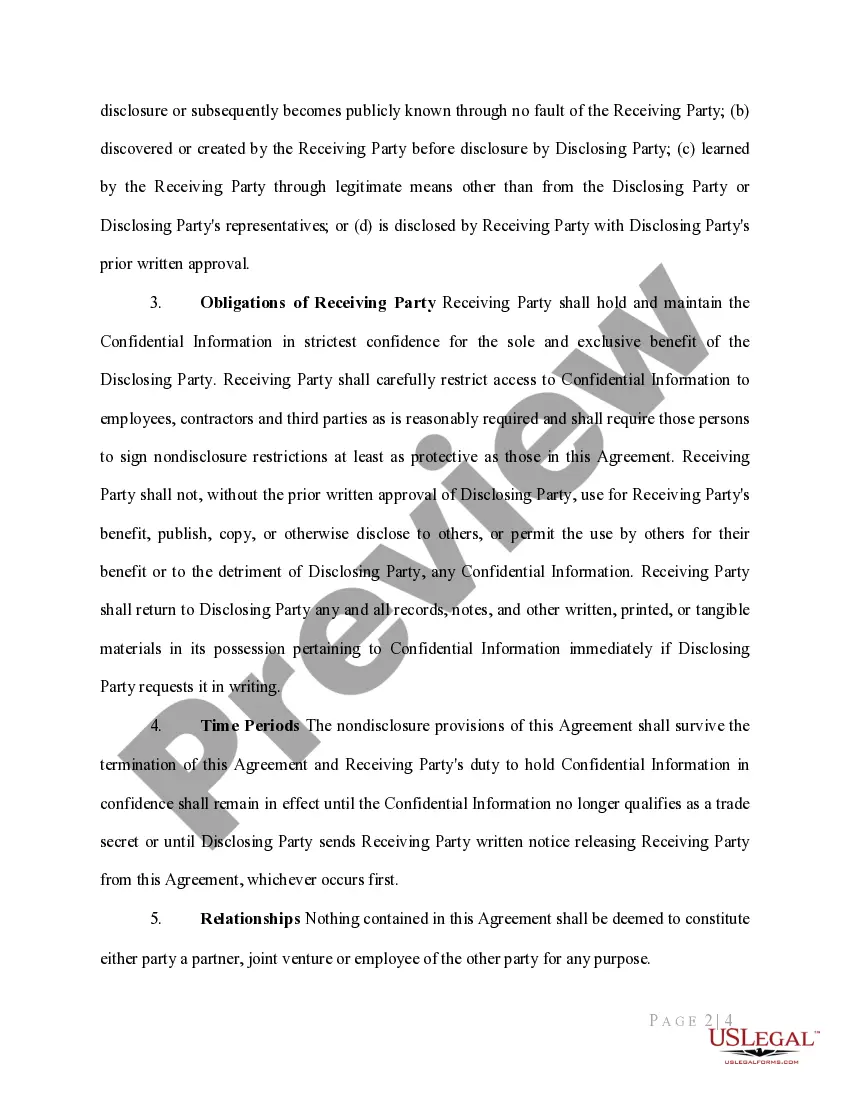
- Exclusions: Lists information that is not regarded as confidential.
- Obligations: Details the responsibilities of the Receiving Party in maintaining confidentiality.
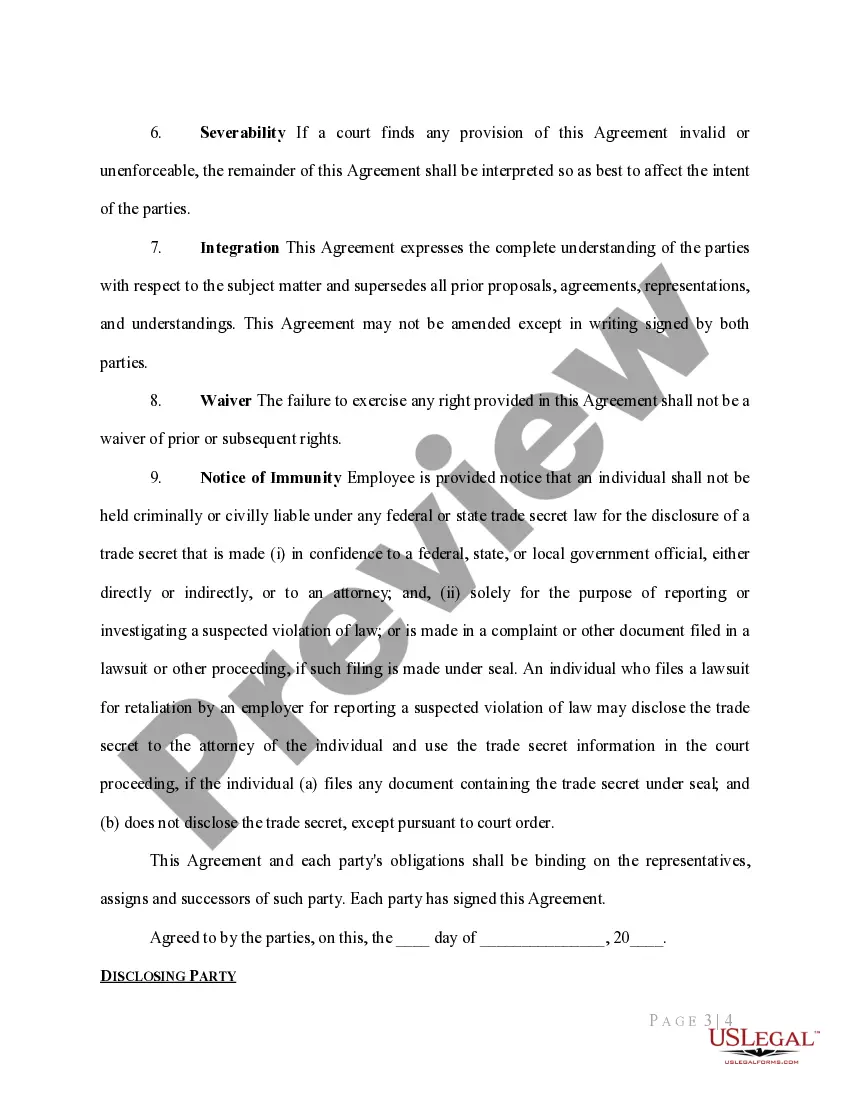
- Time Periods: Specifies how long the confidentiality obligations last.
- Severability: Provides guidance on what happens if a part of the agreement is deemed invalid.
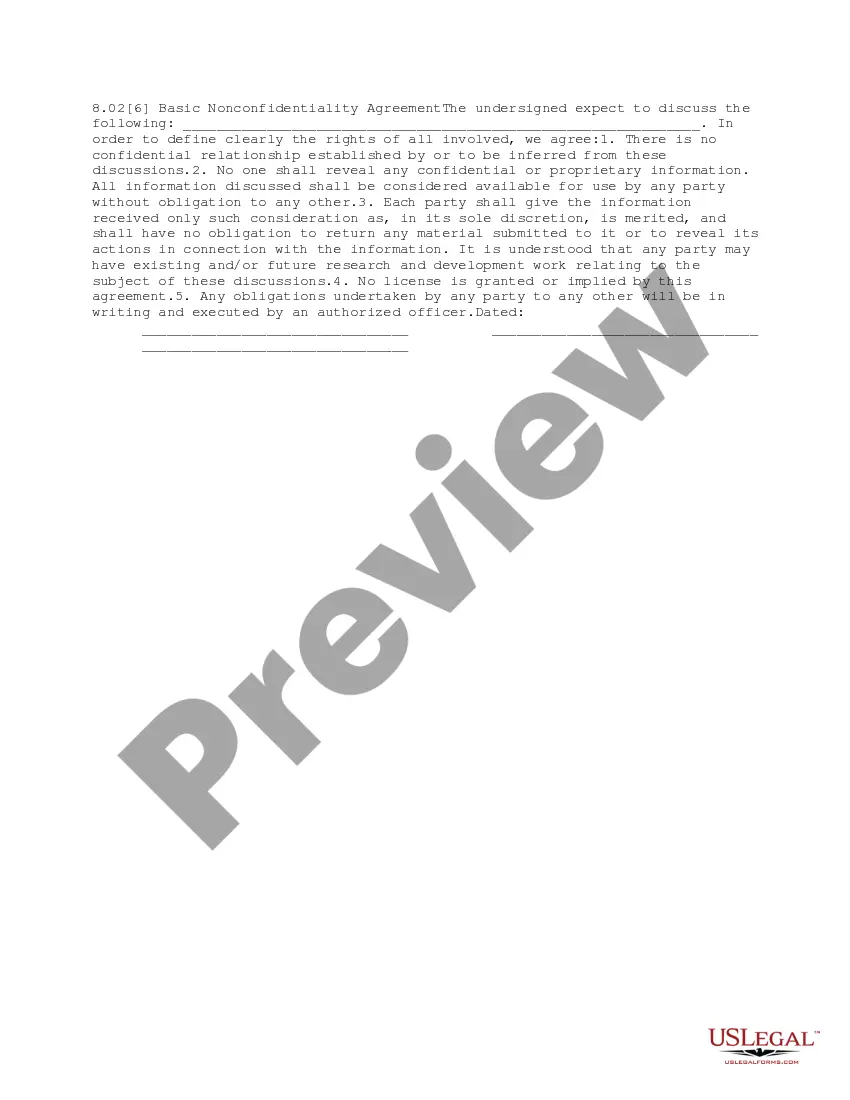
When this form is needed
This Basic NonDisclosure Agreement should be used whenever two parties are discussing business-related information that they wish to keep confidential. Common situations include sharing business plans, product designs, financial information, or any proprietary content. It's essential to use this form when you want to protect your sensitive information before engaging in negotiations or collaborations.
Who this form is for
This NDA is suitable for:
- Individuals or entrepreneurs seeking to protect their business ideas.
- Businesses collaborating on projects that involve the exchange of confidential information.
- Consultants or freelancers who require assurance that sensitive data provided by clients will be kept confidential.
- Parties entering negotiations or discussions that could result in the sharing of proprietary information.
How to complete this form
- Identify the parties involved by entering the names and addresses of both the Disclosing Party and the Receiving Party.
- Specify the date of the agreement.
- Clearly define what constitutes 'Confidential Information' being shared.
- Review and check that all parties understand their obligations regarding confidentiality.
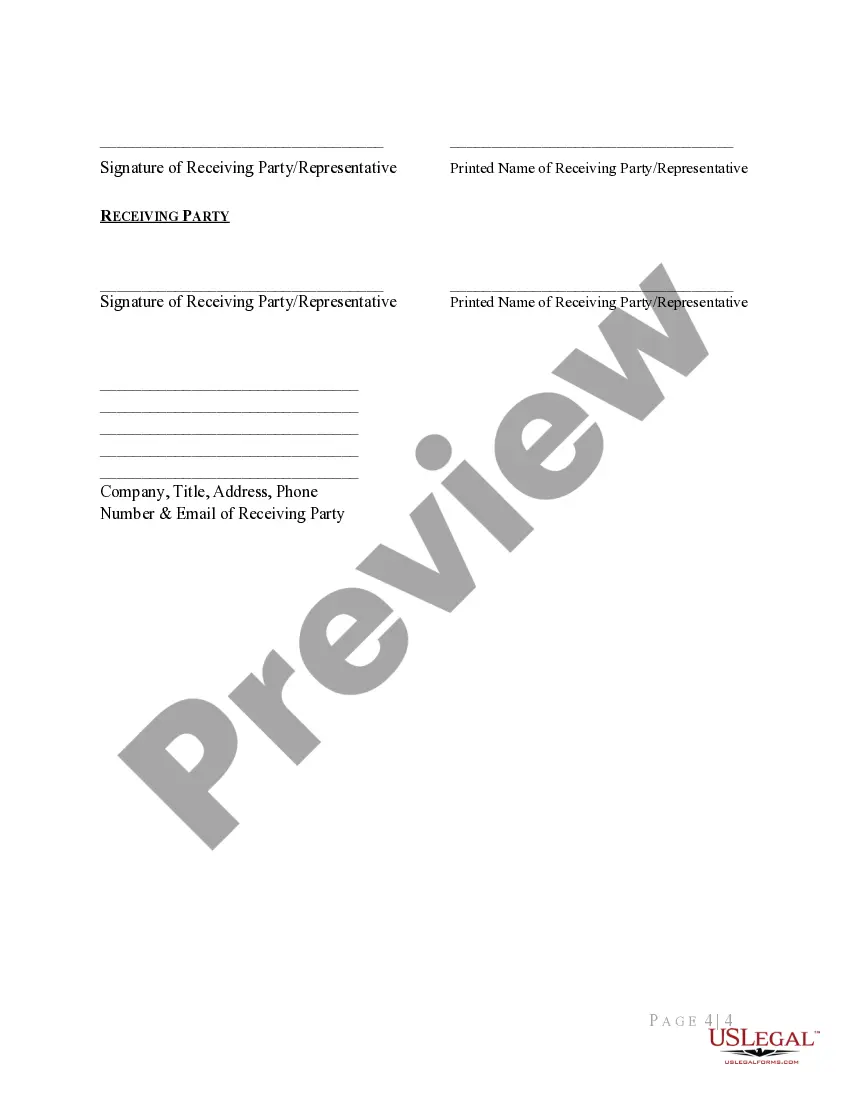
- Ensure that all parties sign the agreement to indicate their acceptance.
Does this form need to be notarized?
This form does not typically require notarization unless specified by local law. It is important to review your specific legal context to ensure compliance.
Get your form ready online
Our built-in tools help you complete, sign, share, and store your documents in one place.
Make edits, fill in missing information, and update formatting in US Legal Forms—just like you would in MS Word.
Download a copy, print it, send it by email, or mail it via USPS—whatever works best for your next step.
Sign and collect signatures with our SignNow integration. Send to multiple recipients, set reminders, and more. Go Premium to unlock E-Sign.
If this form requires notarization, complete it online through a secure video call—no need to meet a notary in person or wait for an appointment.
We protect your documents and personal data by following strict security and privacy standards.

Make edits, fill in missing information, and update formatting in US Legal Forms—just like you would in MS Word.

Download a copy, print it, send it by email, or mail it via USPS—whatever works best for your next step.

Sign and collect signatures with our SignNow integration. Send to multiple recipients, set reminders, and more. Go Premium to unlock E-Sign.

If this form requires notarization, complete it online through a secure video call—no need to meet a notary in person or wait for an appointment.

We protect your documents and personal data by following strict security and privacy standards.
Common mistakes
- Failing to clearly define what information is considered confidential.
- Not including a time frame for confidentiality obligations.
- Forgetting to obtain signatures from all parties involved.
- Not discussing the NDA terms thoroughly before signing.
Benefits of using this form online
- Convenient and quick access to legal documents, eliminating the need for in-person appointments.
- Easy customization to fit specific needs without legal jargon.
- Affordable option for individuals and businesses looking to protect sensitive information.
- Secure downloads ensure that your information remains confidential until shared appropriately.
Looking for another form?
Form popularity
FAQ
Besides naming all parties to the NDA, five essential elements every NDA should include are: Description Of The Confidential Information.Requirements And Obligations Of The Parties.Exclusions To The Confidentiality Agreement.Term Of The Non-Disclosure Agreement.Consequences Of Breach Of The NDA.
In order to minimize the risk of information falling into the wrong hands, make sure to avoid the four common NDA traps below. Typos and Clerical Errors.Poorly Defining "Confidentiality"Not Defining Enforcement and Penalties.Having the Wrong Person Sign.
In order for the NDA to be legally binding, all parties involved will need to sign and date the agreement. The representatives that sign are usually people that may share, obtain or keep information for the specific transactions and are often officers of the company.
To create a Non-Disclosure Agreement, include the following information: The parties' names and contact information. The length of the non-disclosure period. The scope and definition of the confidential information. The obligations of the Non-Disclosure Agreement. The ownership and return information.
You do not need a lawyer to create and sign a non-disclosure agreement. However, if the information you are trying to protect is important enough to warrant an NDA, you may want to have the document reviewed by someone with legal expertise.
To create a Non-Disclosure Agreement, include the following information: The parties' names and contact information. The length of the non-disclosure period. The scope and definition of the confidential information. The obligations of the Non-Disclosure Agreement. The ownership and return information.
disclosure agreement (NDA) is a legally binding contract that establishes a confidential relationship. The party or parties signing the agreement agree that sensitive information they may obtain will not be made available to any others. An NDA may also be referred to as a confidentiality agreement.
To be valid, a Non-Disclosure Agreement only needs two signatures ? the disclosing party and the receiving party. It doesn't need to be notarized or filed with any state or local administrative office.