Michigan Easement for Gas Pipeline
About this form
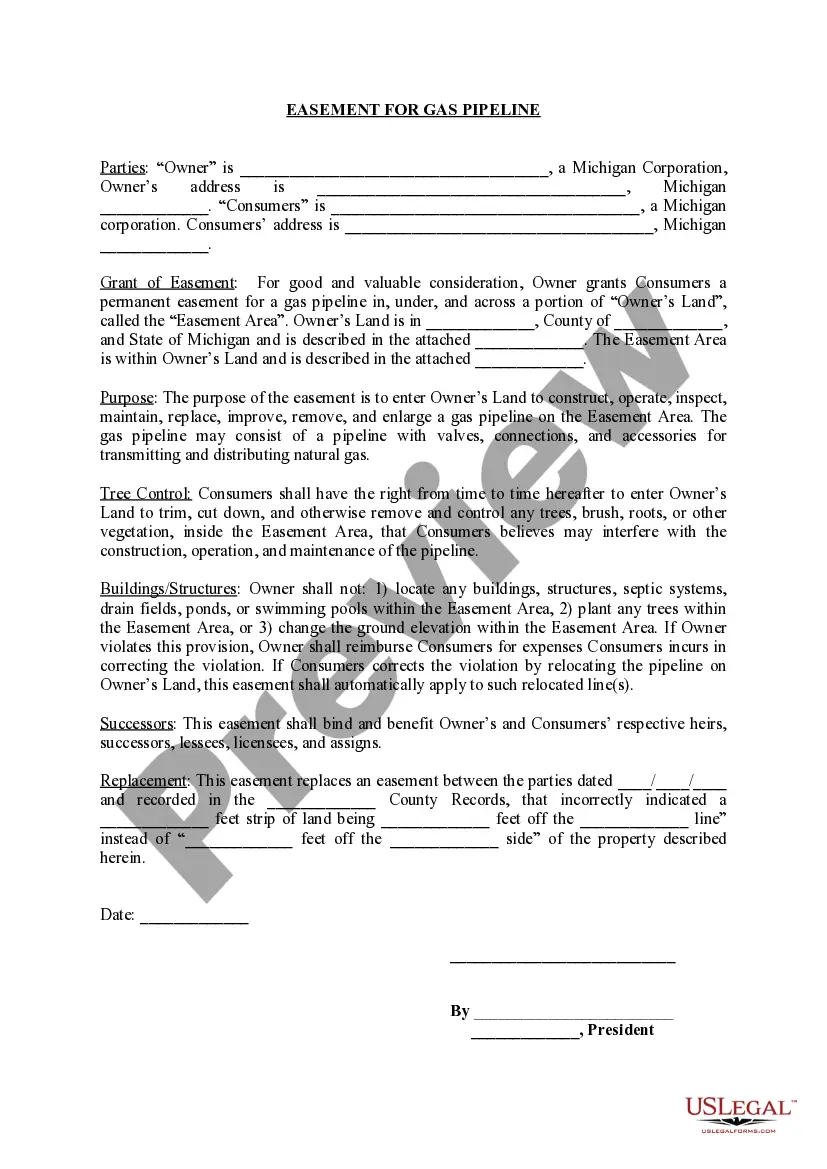
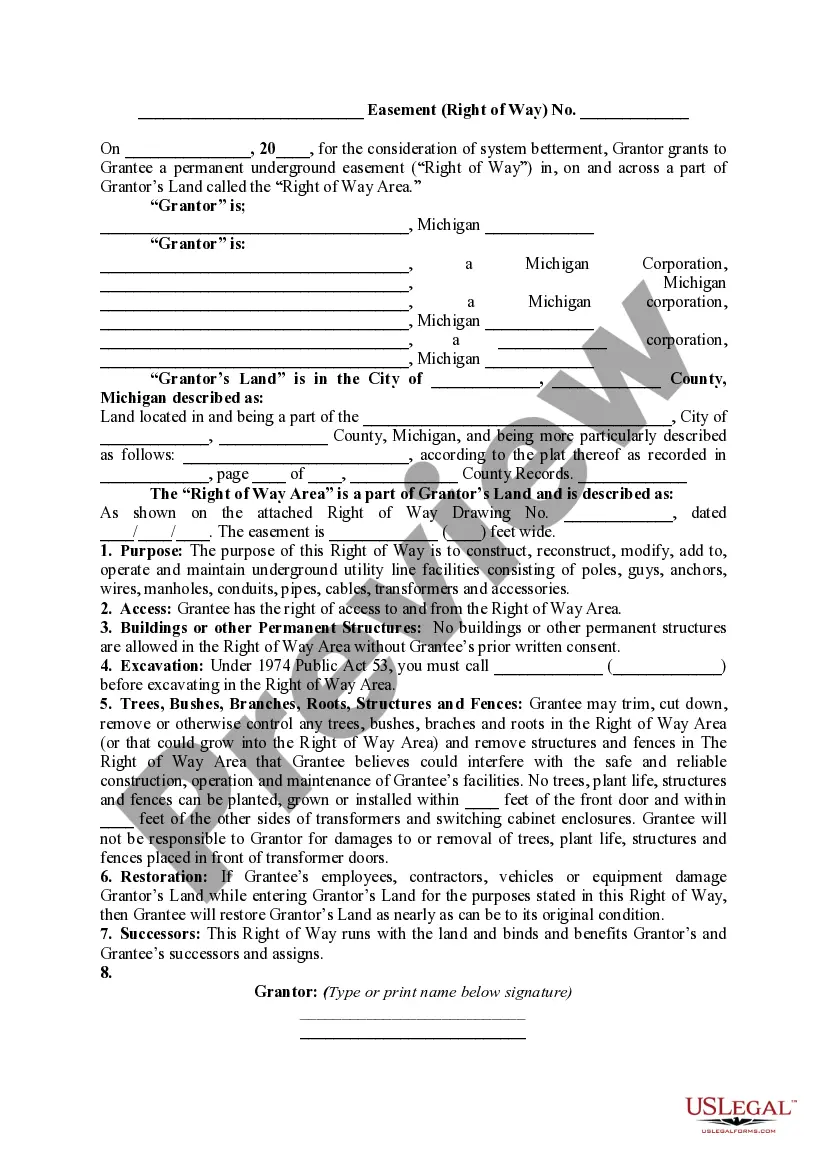
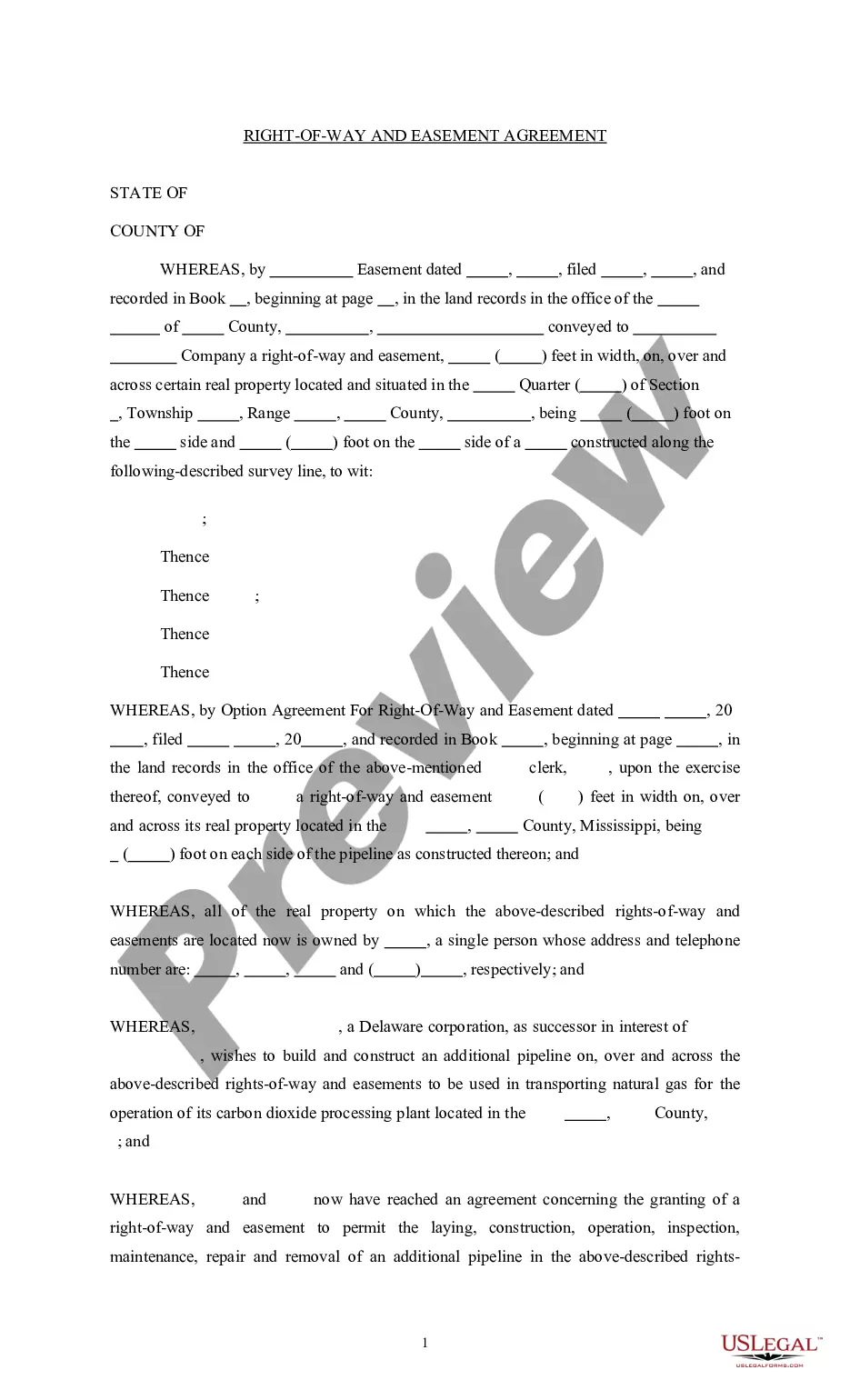
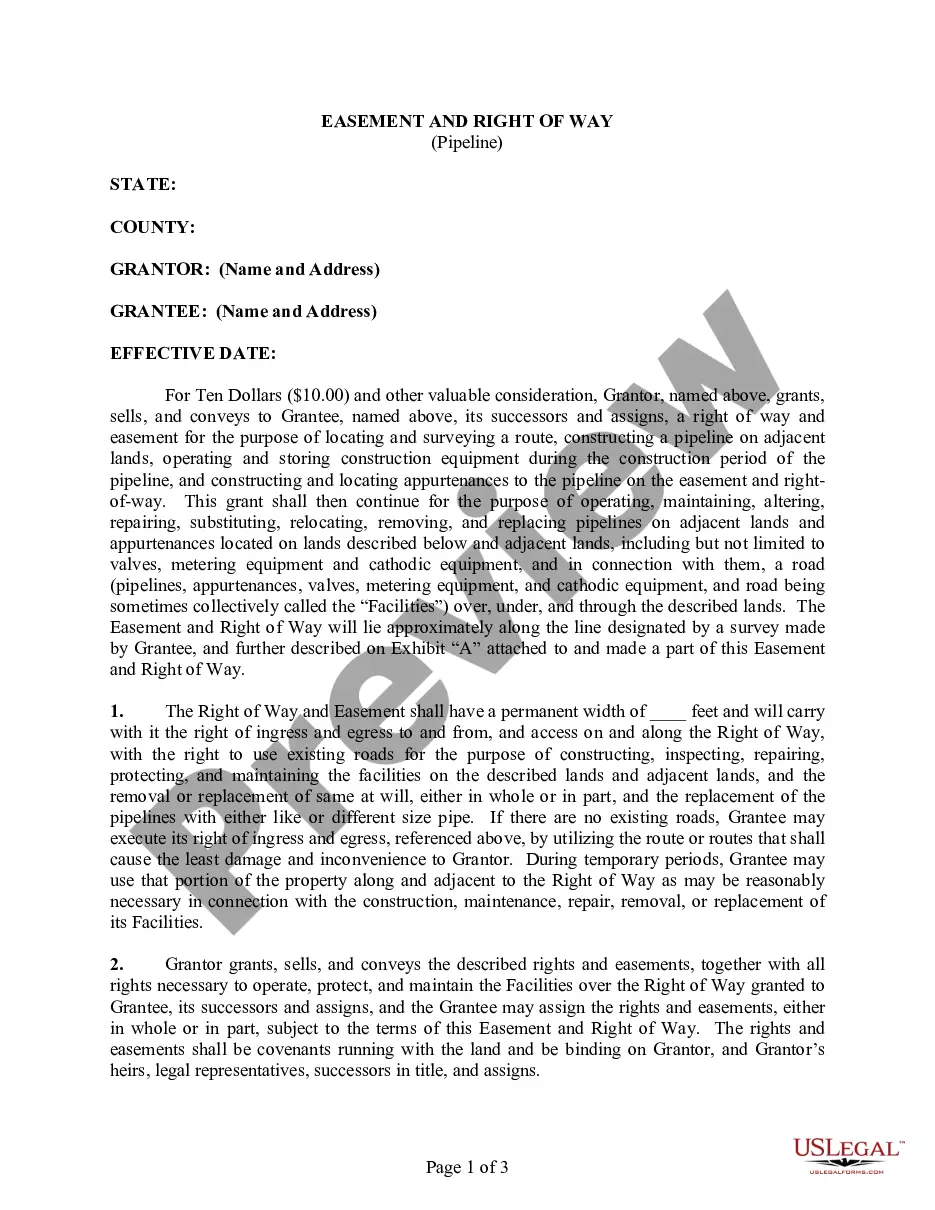
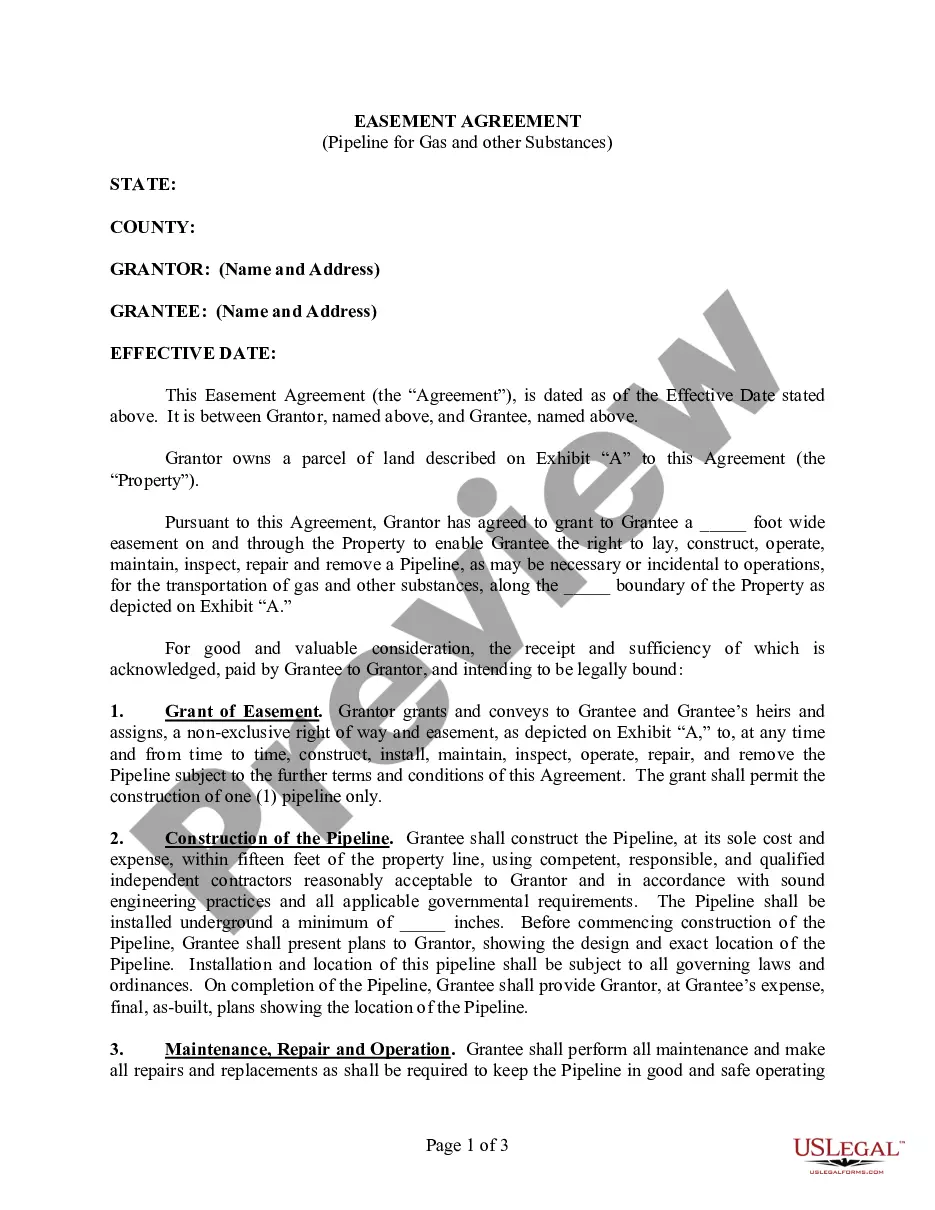
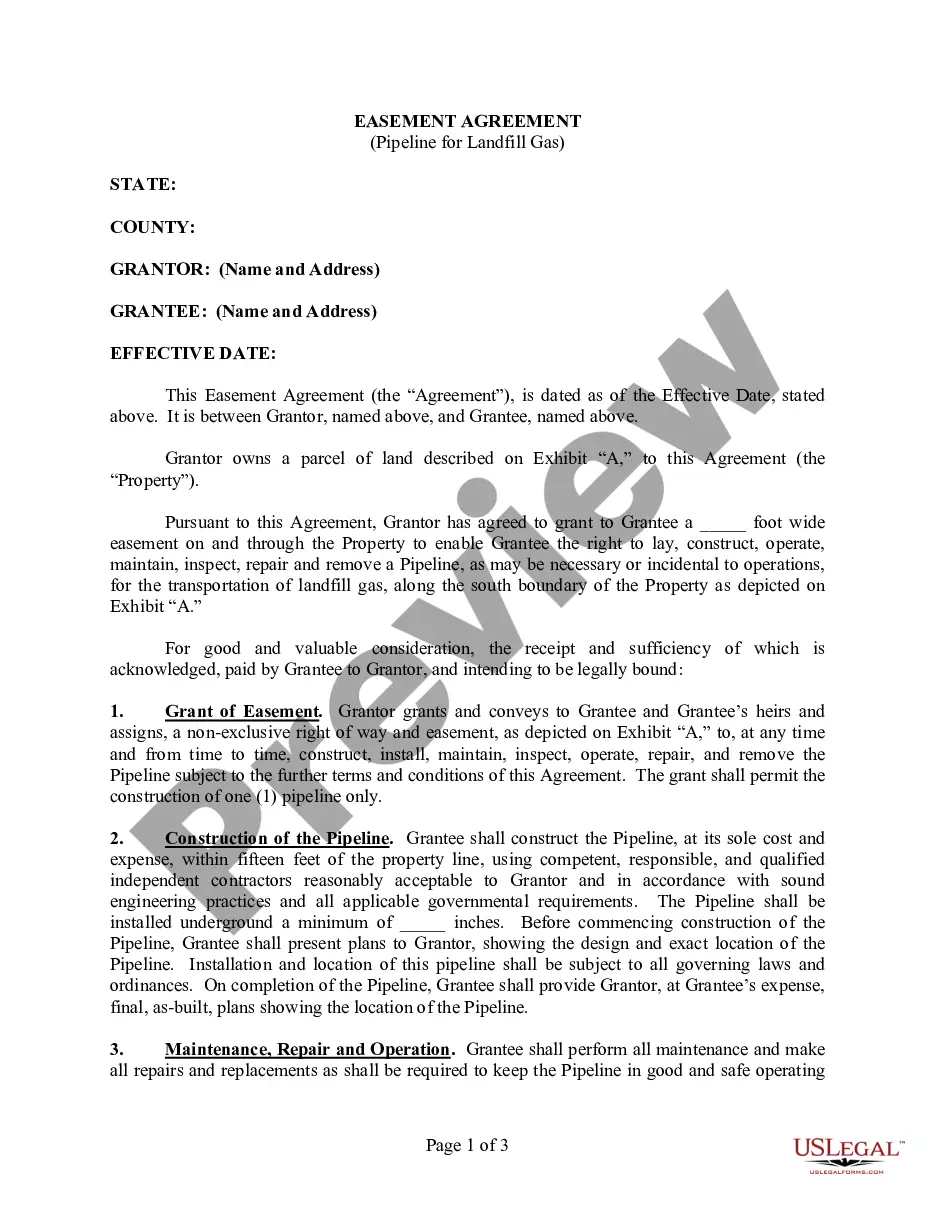
The Easement for Gas Pipeline is a legal document that grants a permanent right of way to a gas company, allowing it to construct, operate, maintain, and remove a gas pipeline on a designated piece of property. This form differs from other easements as it specifically pertains to gas pipelines, detailing the rights and responsibilities of both the property owner and the gas company regarding access and maintenance of the pipeline.
Key parts of this document
- Identification of the property owner and gas company involved.
- Description of the easement area being granted.
- The purpose of the easement, including pipeline maintenance and tree control.
- Restrictions on land use within the easement area, such as prohibiting buildings and vegetation.
- Clauses regarding successors and replacement of existing easements.
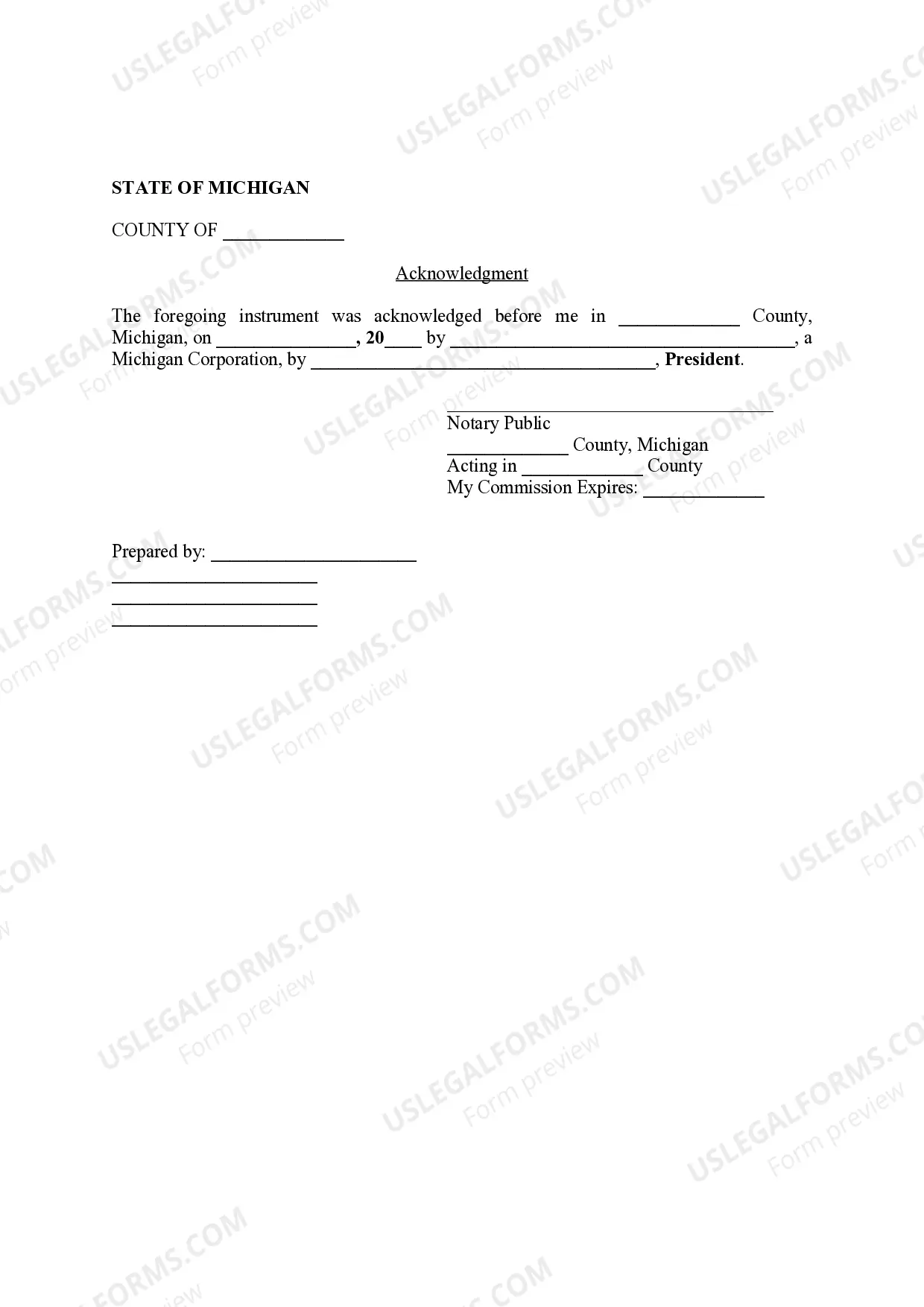
- Notarization requirements for the document to be legally binding.
Common use cases
This form is necessary when a property owner is allowing a gas company access to their land for the installation and maintenance of a gas pipeline. It is typically used in situations where the pipeline company requires a legally binding agreement to construct and operate its infrastructure without interference from future land developments by the property owner.
Who this form is for
- Property owners who wish to grant an easement for a gas pipeline on their land.
- Gas companies needing legal access to perform work related to gas pipelines.
- Real estate professionals assisting clients in negotiating easement agreements.
- Legal professionals drafting or reviewing easement agreements in relation to gas pipelines.
How to prepare this document
- Identify and provide the names and addresses of the property owner and the gas company.
- Describe the easement area clearly, including the county and specific details of the property.
- State the purpose of the easement, detailing the rights granted to the gas company.
- Include any restrictions or obligations the property owner must adhere to in the easement area.
- Sign and date the document in the presence of a notary public, if required.
Notarization requirements for this form
Yes, this form must be notarized to be legally valid. US Legal Forms offers integrated online notarization services that provide secure video calls, ensuring your document's legal equivalence without the need for in-person visits.
Get your form ready online
Our built-in tools help you complete, sign, share, and store your documents in one place.
Make edits, fill in missing information, and update formatting in US Legal Forms—just like you would in MS Word.
Download a copy, print it, send it by email, or mail it via USPS—whatever works best for your next step.
Sign and collect signatures with our SignNow integration. Send to multiple recipients, set reminders, and more. Go Premium to unlock E-Sign.
If this form requires notarization, complete it online through a secure video call—no need to meet a notary in person or wait for an appointment.
We protect your documents and personal data by following strict security and privacy standards.

Make edits, fill in missing information, and update formatting in US Legal Forms—just like you would in MS Word.

Download a copy, print it, send it by email, or mail it via USPS—whatever works best for your next step.

Sign and collect signatures with our SignNow integration. Send to multiple recipients, set reminders, and more. Go Premium to unlock E-Sign.

If this form requires notarization, complete it online through a secure video call—no need to meet a notary in person or wait for an appointment.

We protect your documents and personal data by following strict security and privacy standards.
Typical mistakes to avoid
- Failing to accurately describe the easement area may lead to disputes.
- Not specifying the responsibilities regarding tree and vegetation control can result in misunderstandings.
- Neglecting to include a clear purpose for the easement could limit the gas company's operational rights.
- Forgetting to have the document notarized, which may affect its validity.
Benefits of completing this form online
- Convenience of downloading and filling out the form at your own pace.
- Easily editable to accommodate specific details of the property and parties involved.
- Access to professionally drafted templates ensures legal compliance and accuracy.
- 24/7 access to resources for completing and understanding your legal documents.
Looking for another form?


Form popularity
FAQ
Filling out an easement form, particularly for a Michigan Easement for Gas Pipeline, involves several steps. First, gather all necessary information regarding the property and the intended use of the easement. Then, accurately complete each section of the form, ensuring all details are clear and thorough. For assistance and a seamless process, consider using USLegalForms platform, where you can find templates and guidance tailored to your needs.
In Michigan, the code governing underground gas lines is essential for ensuring safety and compliance. The Michigan Easement for Gas Pipeline must adhere to local regulations to prevent hazards. It is advisable to consult the Michigan Public Service Commission for precise guidelines. By understanding these codes, you can ensure that your easement is compliant and effective.
Georgia law on easements outlines the rules and regulations governing easements, including those for gas pipelines. While this law may differ from a Michigan Easement for Gas Pipeline, understanding the general principles can provide insights into your rights and responsibilities. If you're navigating easement questions in any state, it might be beneficial to consult legal resources or services that offer information specific to your needs, such as UsLegalForms.
Negotiating an easement with a utility company involves a few key steps. First, gather all relevant property documents and understand your rights under a Michigan Easement for Gas Pipeline. Next, communicate your concerns clearly and seek to negotiate terms that protect your property interests. Utilizing templates and legal guidance from platforms like UsLegalForms can help you develop a negotiation strategy and understand the implications of the easement.
A gas line easement is a legal agreement that allows a utility company to use a portion of your property for gas pipeline installation and maintenance. This agreement ensures that the company can access and maintain the gas lines while you retain ownership of the property. Understanding the terms of a Michigan Easement for Gas Pipeline is crucial for protecting your rights and property. If you have questions about crafting or understanding an easement, consider exploring resources on the UsLegalForms platform.
Easement rules in Michigan cover various aspects related to the use, maintenance, and enforcement of easements. These rules require the easement holder to maintain the area and respect any limitations set in the agreement. Property owners should be informed of their rights and responsibilities, ensuring a clear understanding of the Michigan easement for gas pipeline.
Pipeline easements in Michigan can vary in width, but typically range from 25 to 50 feet. The required width often depends on the specific gas pipeline and local regulations. It is essential to establish the easement's dimensions in the agreement to prevent future issues and ensure compliance with safety standards.
The three main types of easements are appurtenant, gross, and prescriptive easements. Appurtenant easements benefit a specific parcel of land and transfer with ownership. Gross easements do not depend on property ownership and can be granted for specific uses, such as a gas pipeline, while prescriptive easements arise from continuous use without permission.
Yes, property owners in Michigan can challenge or block an easement under certain circumstances. If the easement is not legally established or if it violates specific regulations, you may have grounds for objection. Consulting with a legal expert can help clarify your rights regarding the Michigan easement for gas pipeline.
An easement agreement for a gas line outlines the terms under which the pipeline can be installed and maintained on a property. This agreement specifies rights and obligations of both the gas company and the property owner. Clarity in this agreement helps avoid disputes and ensures compliance with Michigan law.