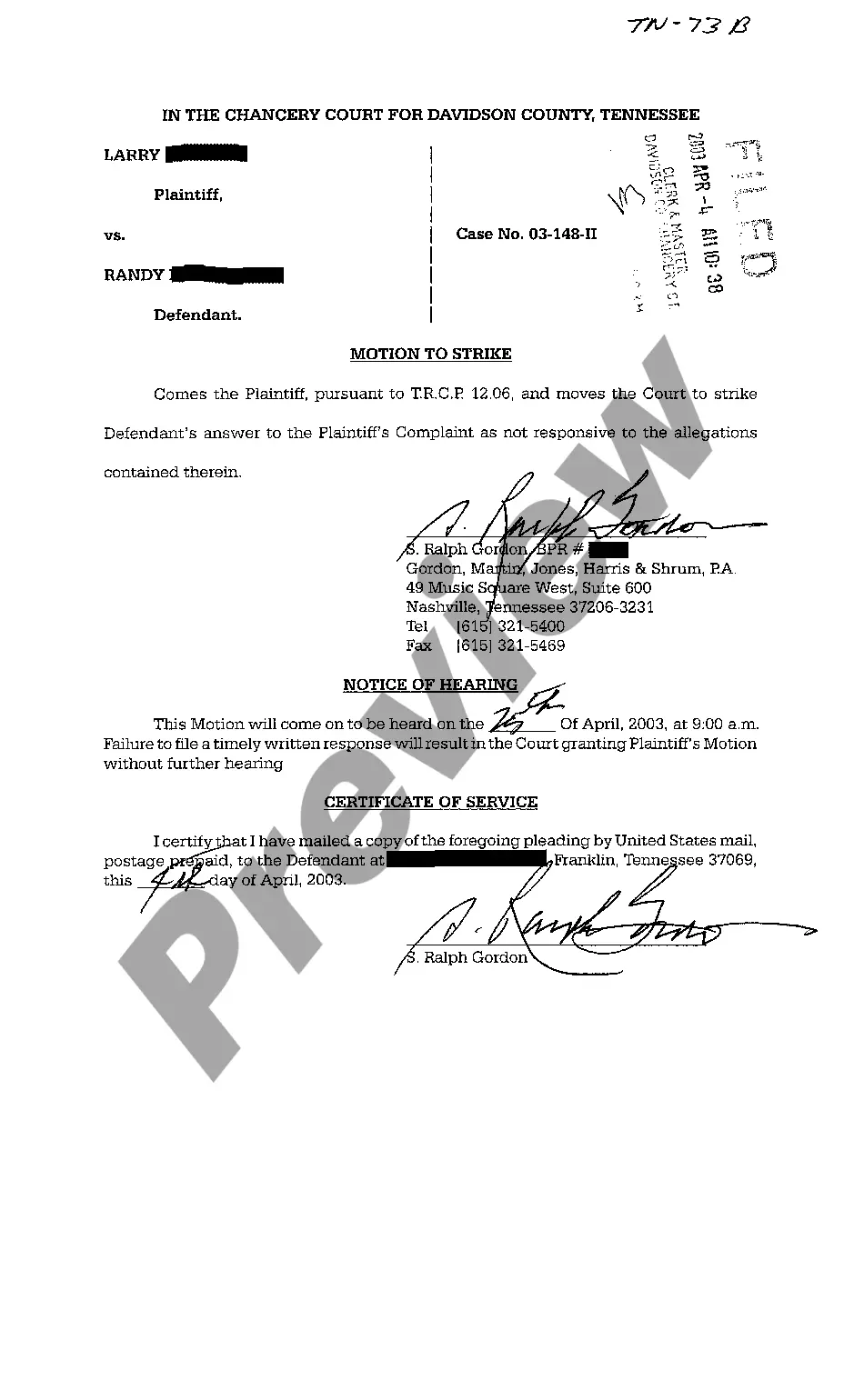
Michigan Oil and Gas Lease
About this form
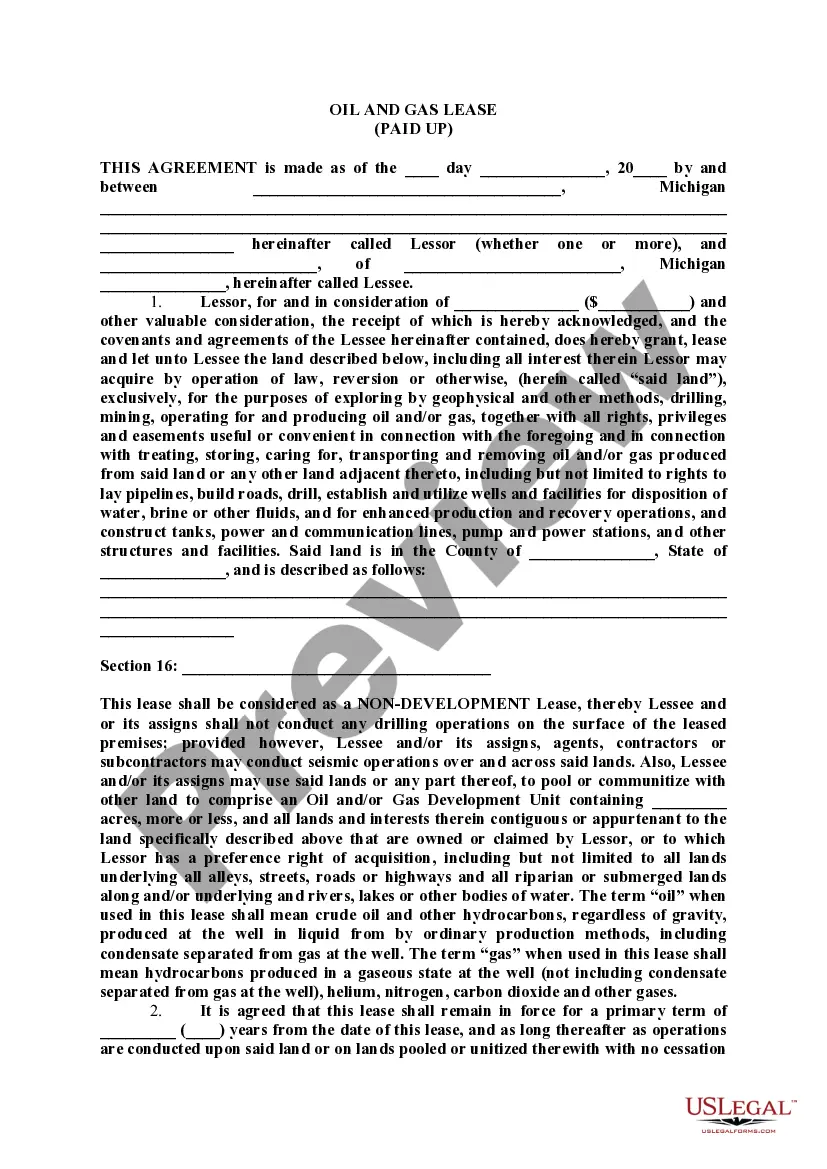
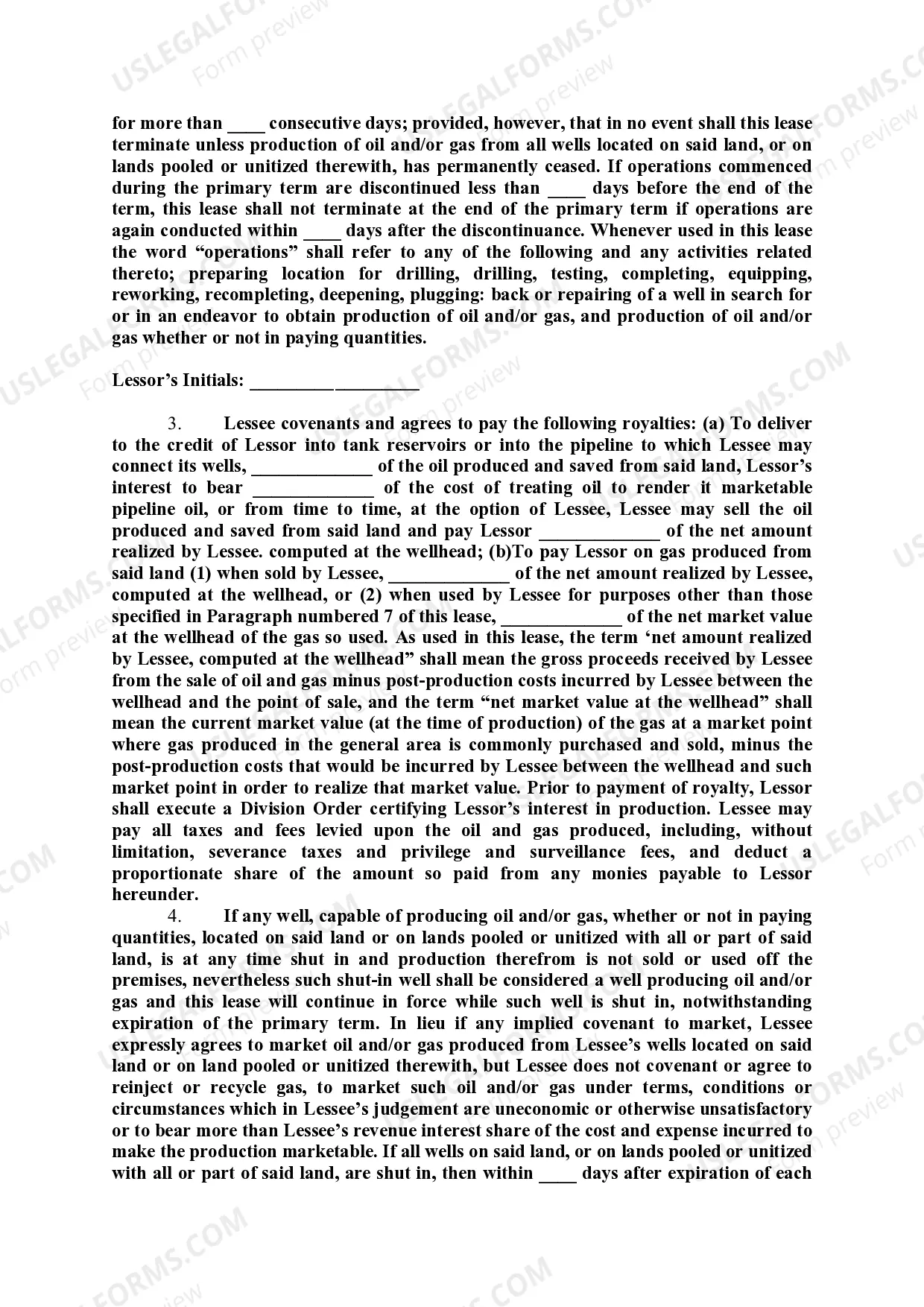
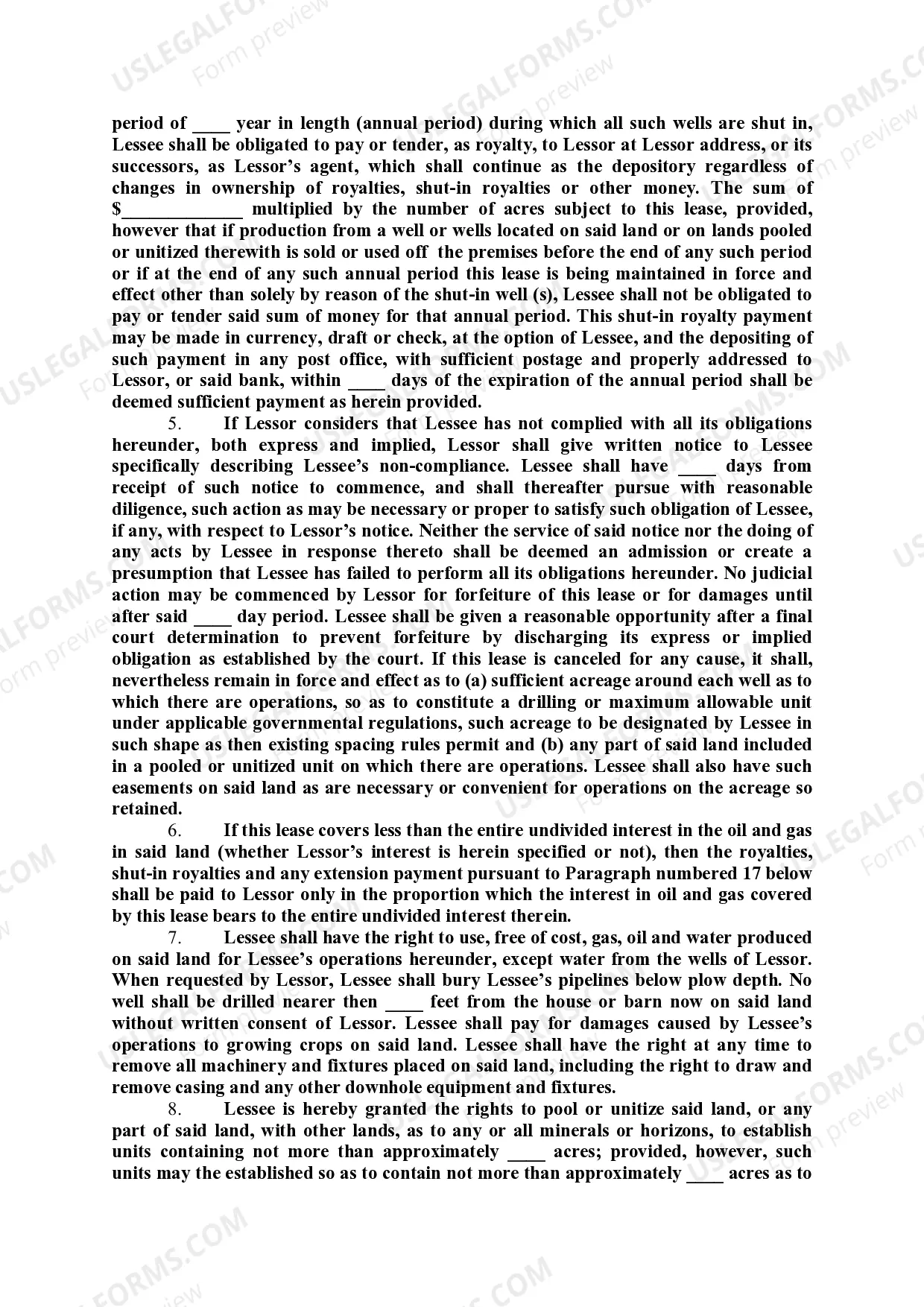
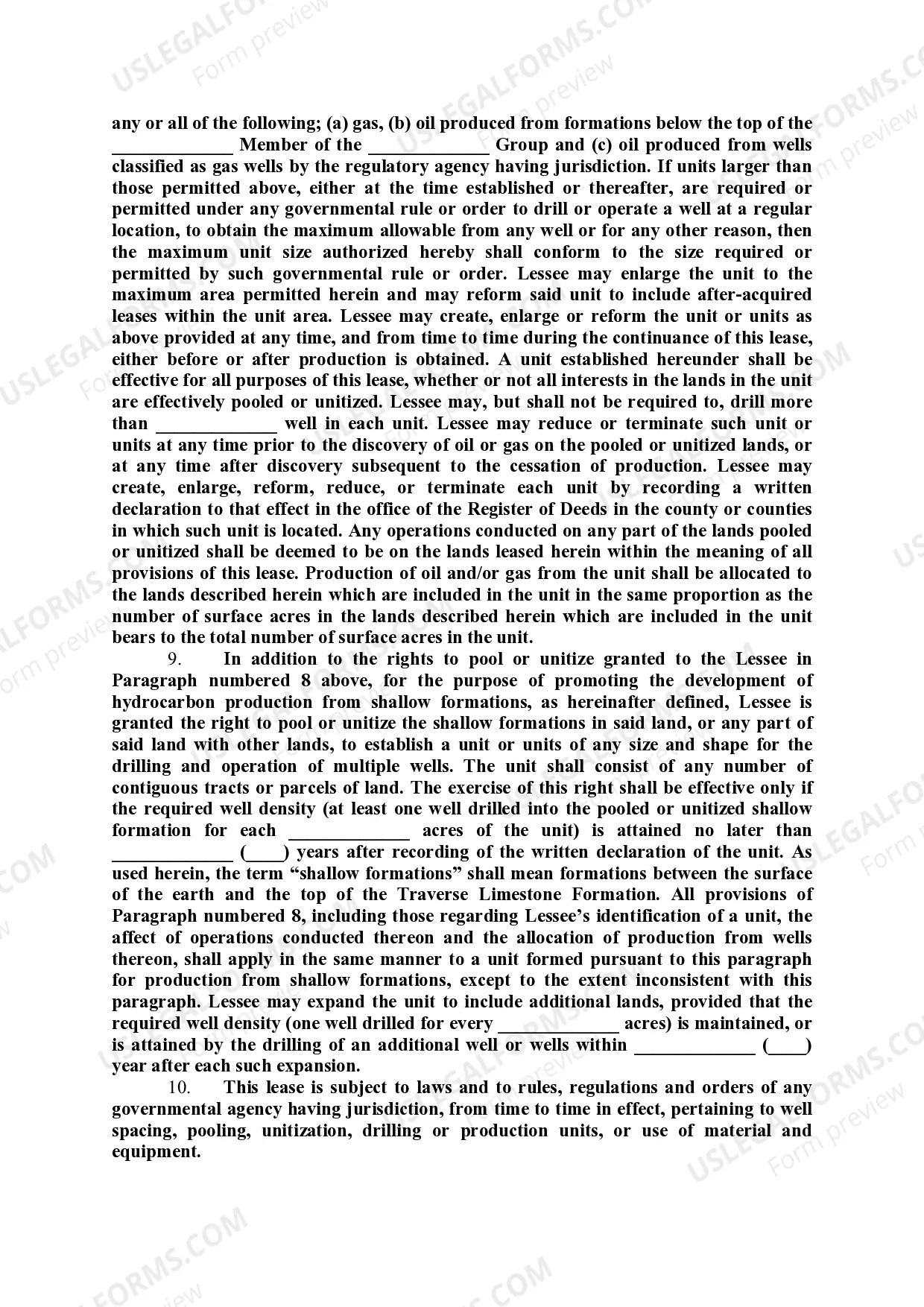
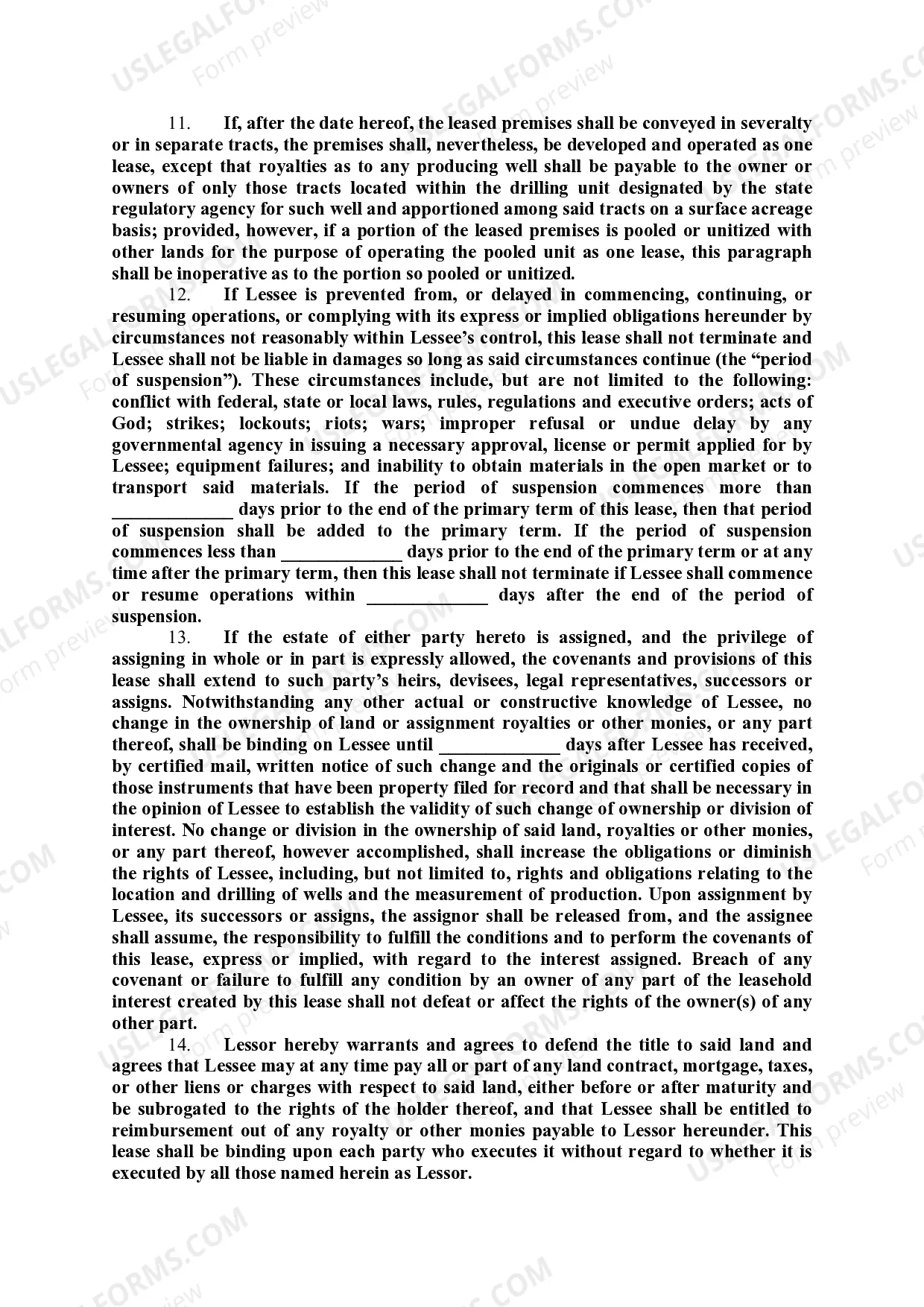
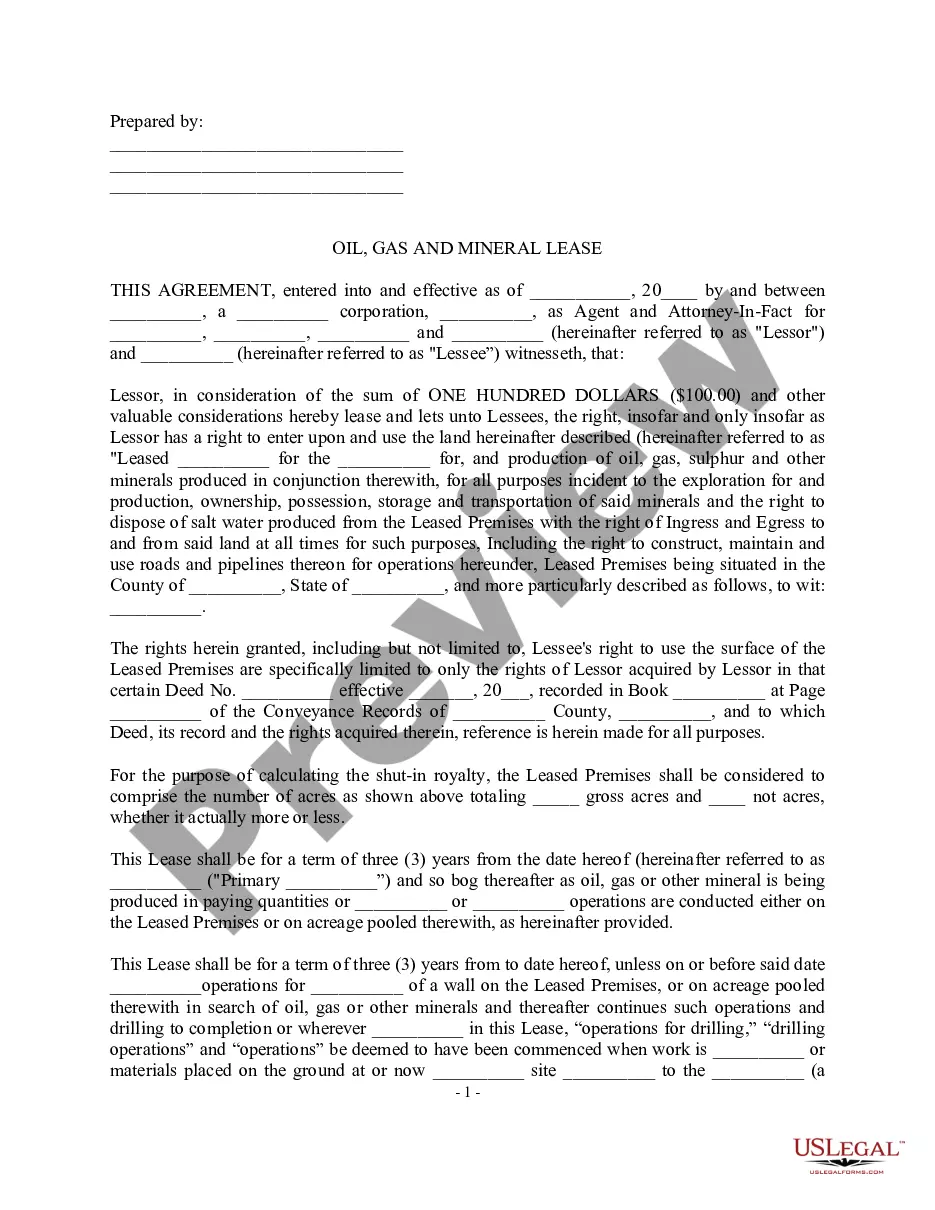
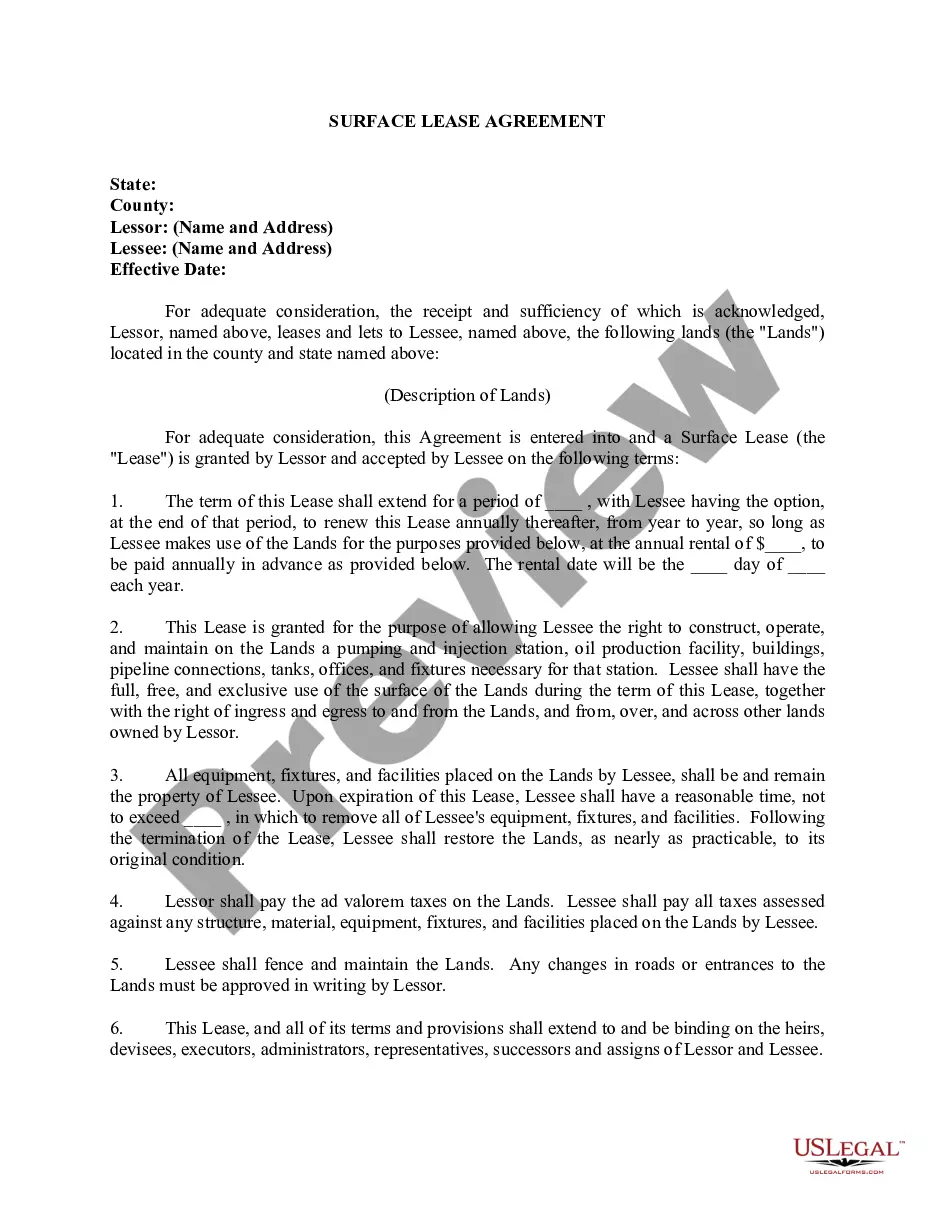
The Oil and Gas Lease is a legal document that outlines the terms under which a lessor grants a lessee the rights to explore for and extract oil and gas from a specified piece of land. This form differs from similar agreements as it provides specific provisions for exploration, rights of access, royalty payments, and lease duration, ensuring both partiesâ interests are protected in the oil and gas industry.
What’s included in this form
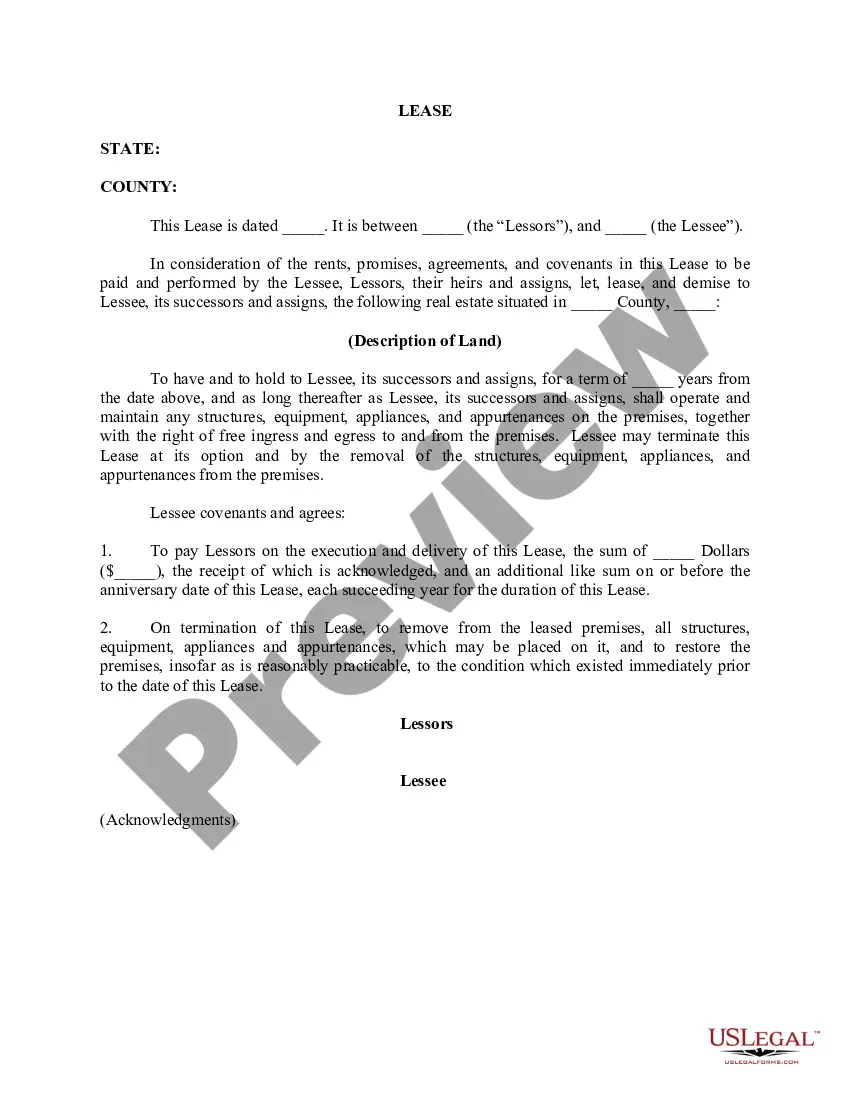
- Identification of the lessor and lessee, including their addresses.
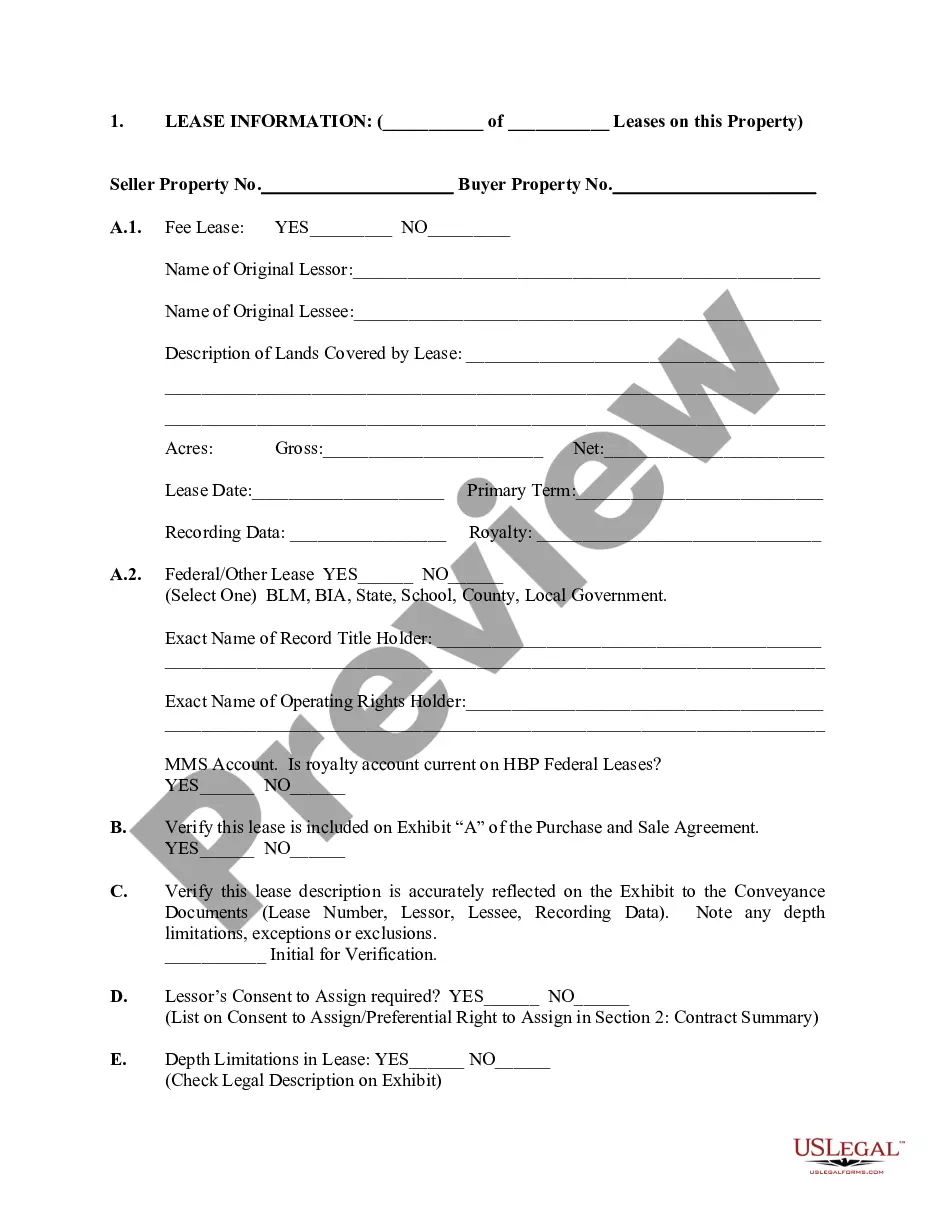
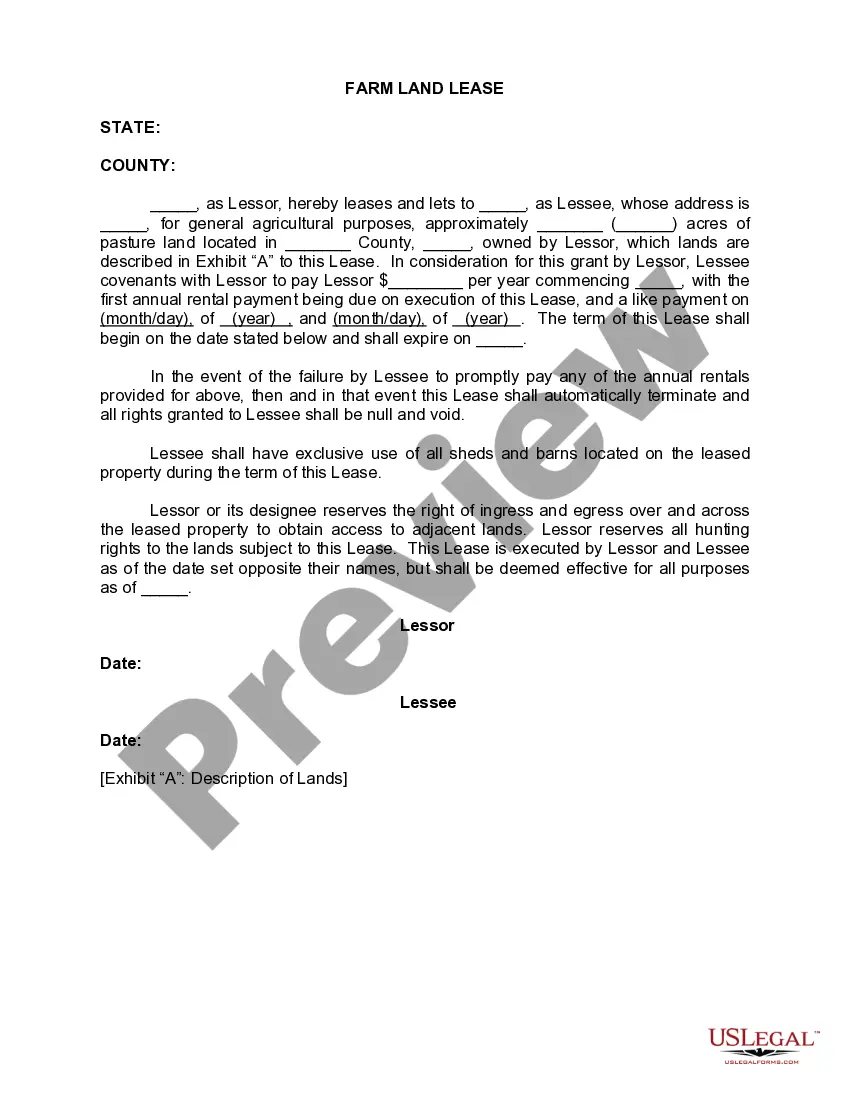
- Description of the land covered by the lease.
- Details on the rights granted to the lessee, including drilling and operation permissions.
- Royalty payment clauses for oil and gas extraction.
- Terms regarding the lease duration and conditions for renewal or termination.
- Provisions regarding the pooling of land with adjacent properties for development.
Common use cases
This form should be used when a landowner (lessor) wishes to lease their land for oil and gas exploration and production. It is applicable in situations where a company or individual (lessee) wants to secure the rights to extract these minerals from the property. Typical scenarios include the development of oil fields where drilling operations are planned, or when negotiating agreements for exploring gas reserves on the land.
Who this form is for
- Landowners or lessors seeking to lease their property for oil and gas extraction.
- Companies or individuals looking to operate in the oil and gas sector.
- Legal representatives involved in drafting or reviewing oil and gas lease agreements.
- Investment firms or stakeholders interested in oil and gas development.
Completing this form step by step
- Identify the parties involved by entering the names and addresses of the lessor and lessee.
- Provide a clear description of the land being leased, including legal descriptions or parcel numbers.
- Specify the terms of the lease, including duration, royalty rates, and operational rights.
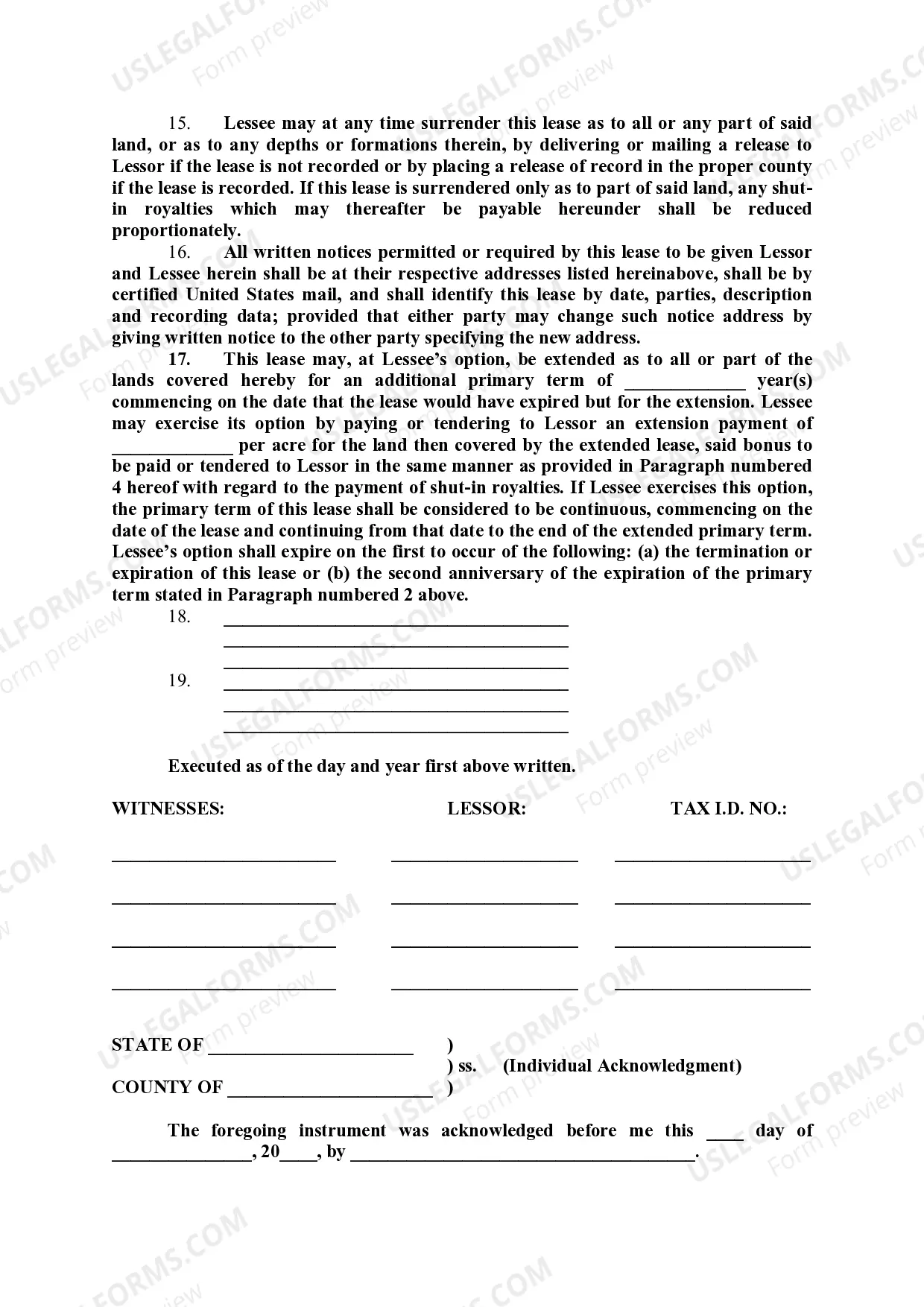
- Ensure all parties sign the document and have it notarized if required.
- Submit the completed form as needed to the appropriate local authorities or keep it for personal records.
Notarization requirements for this form
Yes, this form must be notarized to be legally valid. US Legal Forms offers integrated online notarization, allowing you to complete this step securely through a video call, providing legal equivalence without the need to travel for an appointment.
Get your form ready online
Our built-in tools help you complete, sign, share, and store your documents in one place.
Make edits, fill in missing information, and update formatting in US Legal Forms—just like you would in MS Word.
Download a copy, print it, send it by email, or mail it via USPS—whatever works best for your next step.
Sign and collect signatures with our SignNow integration. Send to multiple recipients, set reminders, and more. Go Premium to unlock E-Sign.
If this form requires notarization, complete it online through a secure video call—no need to meet a notary in person or wait for an appointment.
We protect your documents and personal data by following strict security and privacy standards.

Make edits, fill in missing information, and update formatting in US Legal Forms—just like you would in MS Word.

Download a copy, print it, send it by email, or mail it via USPS—whatever works best for your next step.

Sign and collect signatures with our SignNow integration. Send to multiple recipients, set reminders, and more. Go Premium to unlock E-Sign.

If this form requires notarization, complete it online through a secure video call—no need to meet a notary in person or wait for an appointment.

We protect your documents and personal data by following strict security and privacy standards.
Common mistakes to avoid
- Failing to provide complete and accurate descriptions of the leased land.
- Omitting essential terms such as royalty percentages or lease duration.
- Not having the lease properly notarized when required.
- Neglecting to specify rights related to drilling and operational access.
- Assuming all parties understand their obligations without clear definitions in the lease.
Why complete this form online
- Convenience of instantly downloading a legally vetted form.
- Editability of the template allows customization to specific needs.
- Access to reliable legal language that adheres to state laws.
- Time-saving process compared to drafting a lease from scratch.
Looking for another form?
Form popularity
FAQ
To break a Michigan Oil and Gas Lease without incurring penalties, you must carefully review the lease for any clauses allowing early termination. Many leases include specific conditions or notice periods that must be followed. Consulting with experts or using platforms like US Legal Forms can help you navigate the process effectively.
An oil and gas lease operates by granting the lessee permission to drill and extract resources from the land for a specified time. During this term, the lessee must comply with environmental regulations and other conditions outlined in the lease. Understanding these terms is vital, as they dictate how resources are harvested and profits are shared.
Oil and gas leases function as legal agreements between landowners and lessees. The lessee pays the landowner a bonus and a percentage of profits, known as royalties, from the extraction process. This arrangement allows for resource development while ensuring landowners receive compensation for their land use.
A leasehold in the context of a Michigan Oil and Gas Lease refers to the rights the lessee obtains to explore and extract minerals from the property. Essentially, it means the lessee holds temporary rights to use the land for oil and gas development. It's critical to understand this concept, as the leasehold carries specific obligations for all parties involved.
In Michigan, oil and gas leases are predominantly controlled by the landowner, who grants rights to explore and extract resources. Once the lease is signed, operators manage the land and operations, following the agreed terms. Remember, you can consult with legal professionals or resources like US Legal Forms to ensure your interests are protected.
A Michigan Oil and Gas Lease typically lasts for a primary term of 3 to 5 years, but it can vary based on the specific agreement. If production begins during this term, the lease may continue indefinitely as long as the property remains productive. Landowners should always review the lease terms closely to understand the duration and renewal conditions.
The value of Michigan oil and gas leases can fluctuate widely based on multiple factors, including the lease's size, location, and the potential for resource extraction. Some leases can be worth thousands, while others may be significantly less. To ascertain a more accurate worth, consider consulting industry professionals who can evaluate your specific situation.
Average royalty payments for Michigan oil and gas leases generally fall between 12.5% and 18.75% of the revenue generated from production. These percentages can differ depending on the negotiation between the landowner and the oil company. Understanding this range can empower you to negotiate better terms for your lease.
Valuing Michigan oil and gas leases requires careful consideration of various factors, including location, production potential, and market conditions. Engaging a qualified appraiser can provide a well-informed estimate of value. Additionally, analyzing recent lease transactions in your area can offer insights into fair market value.