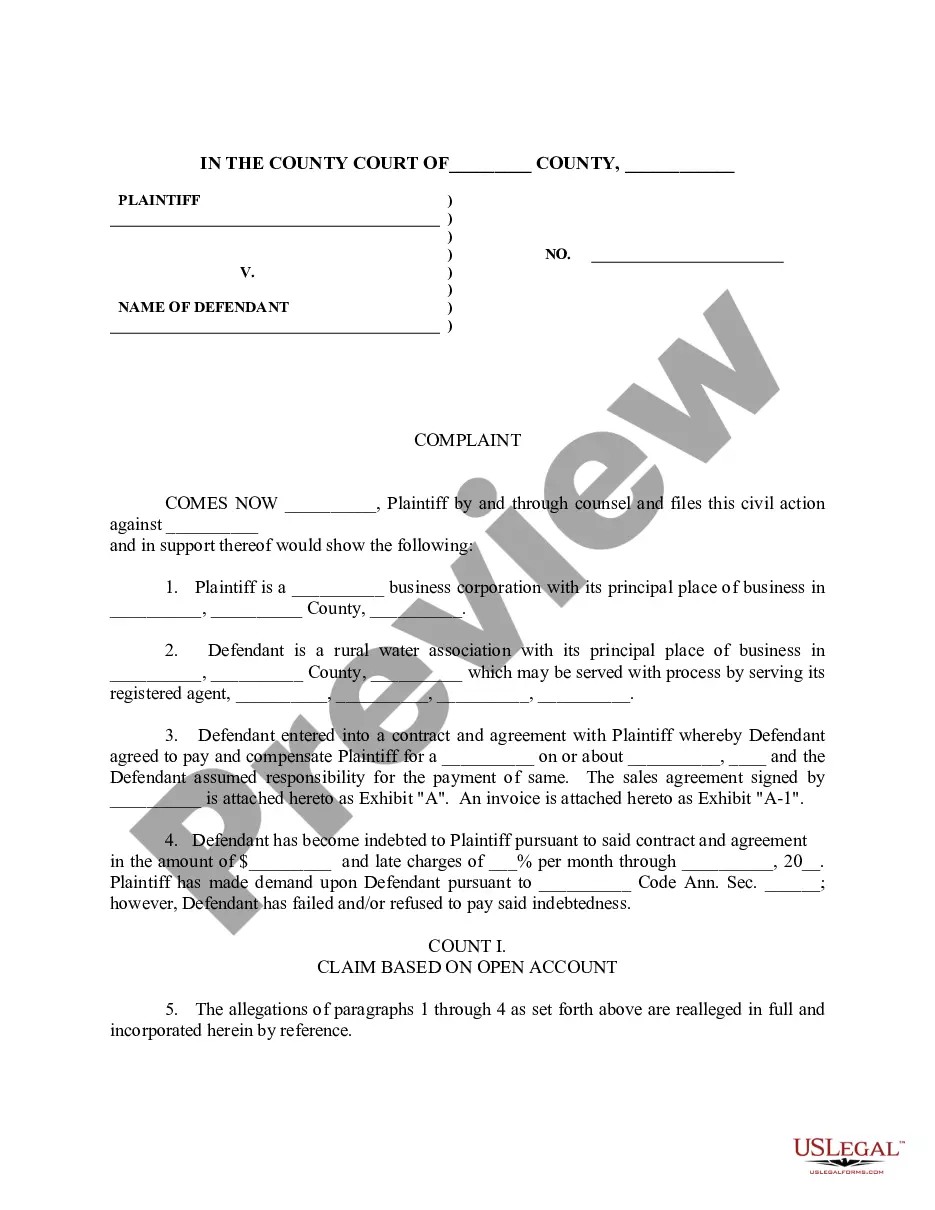
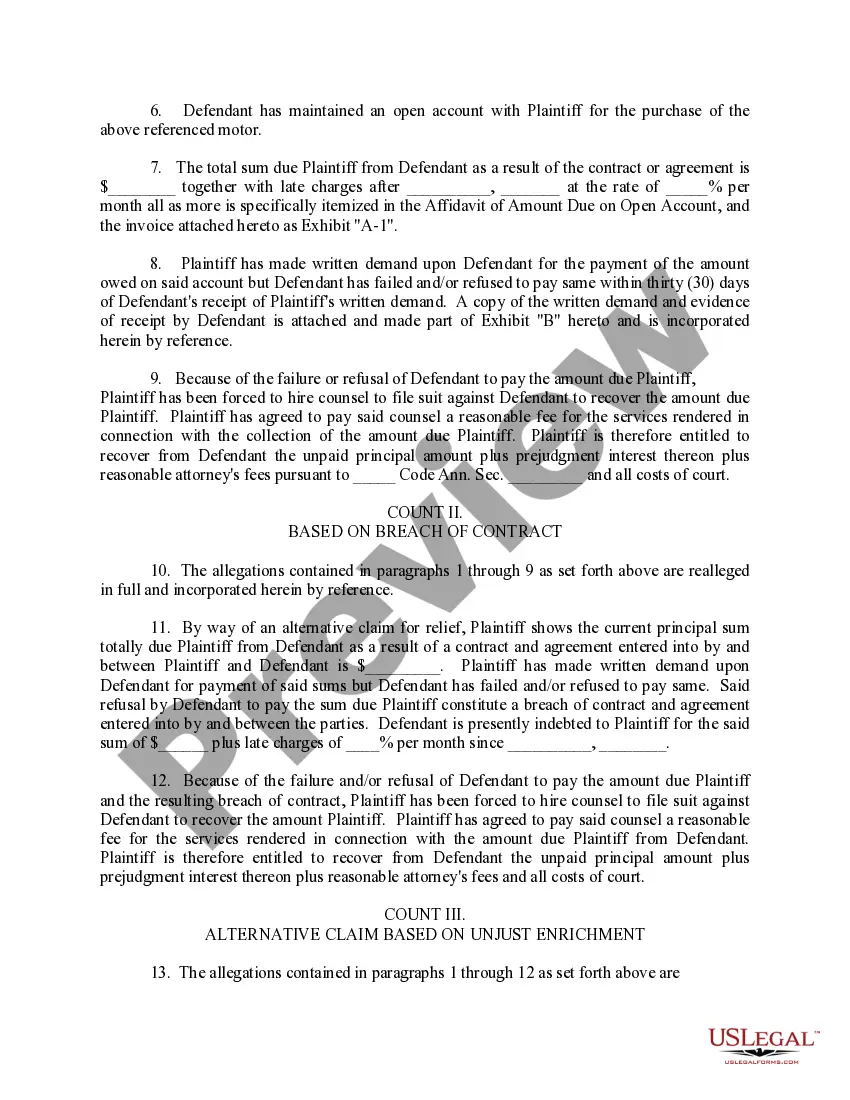
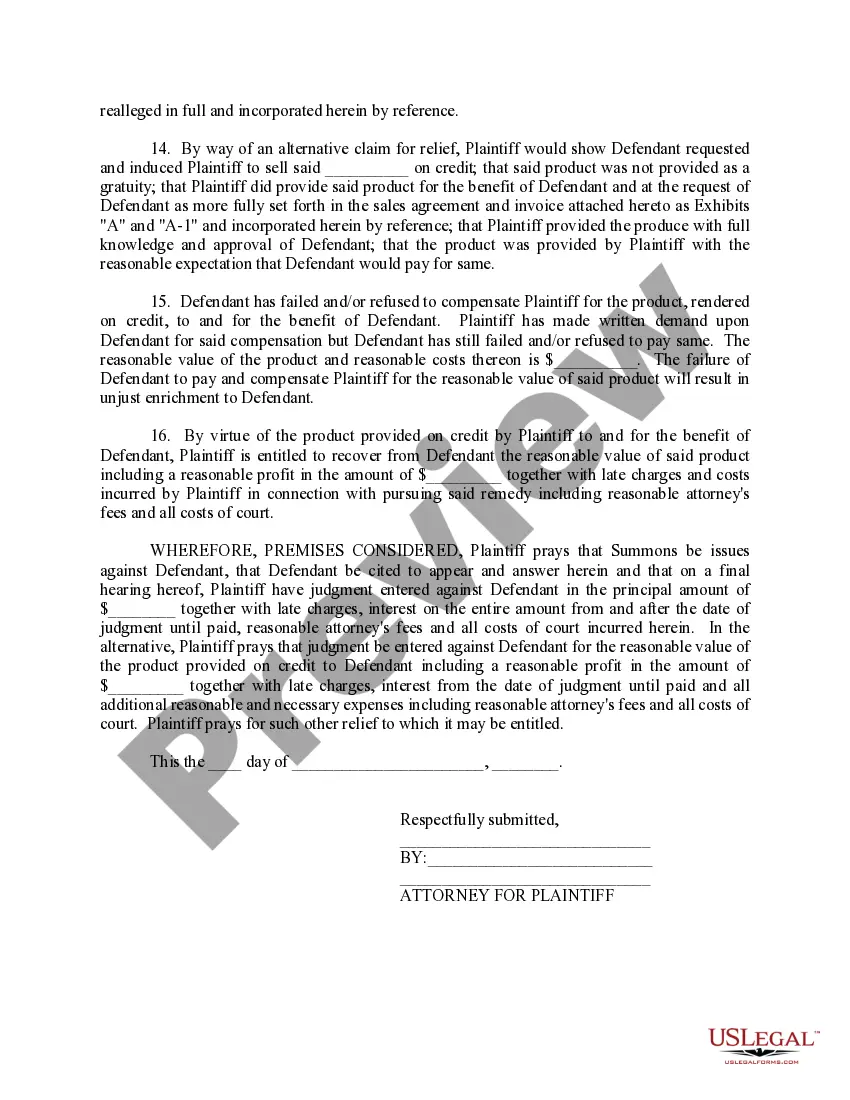
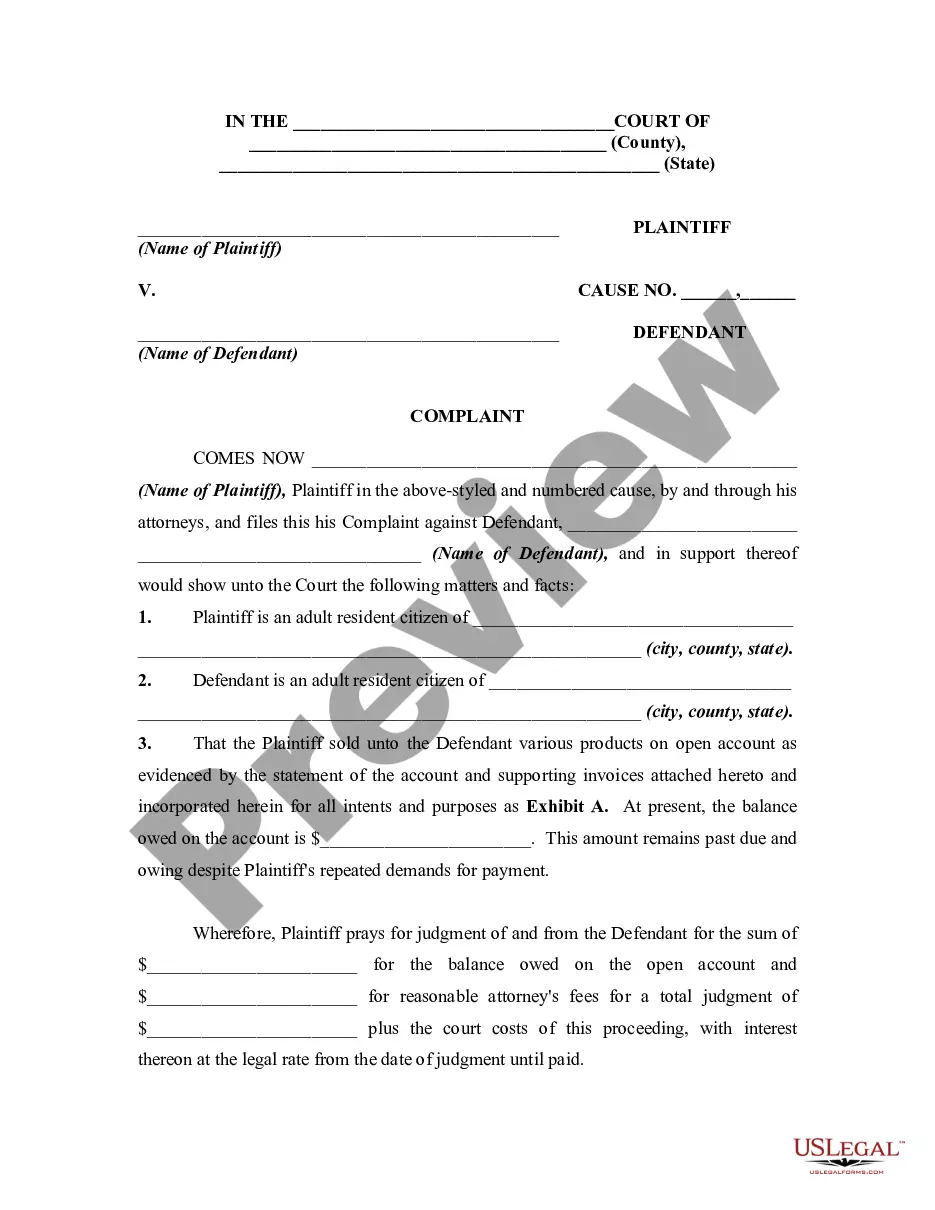
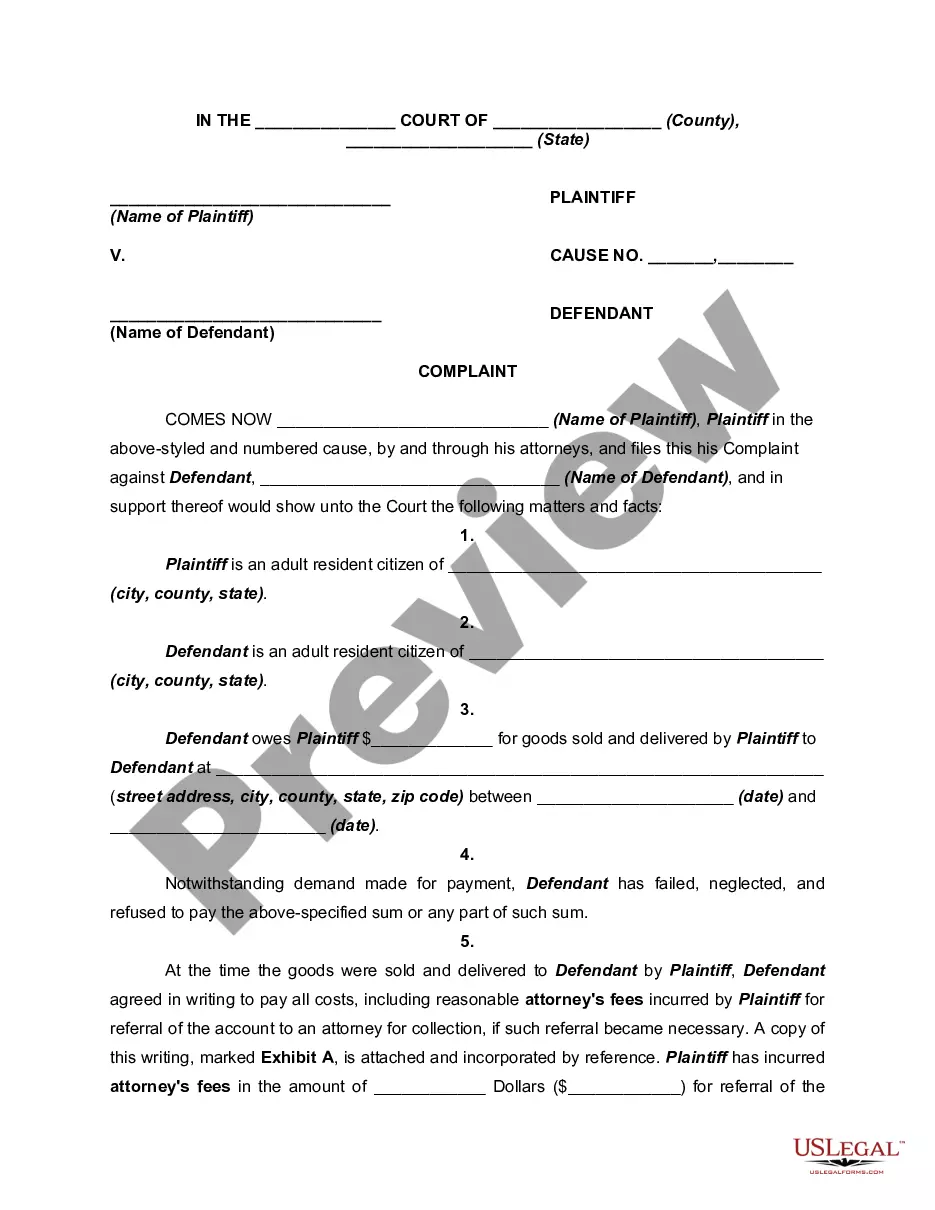
Michigan Complaint based on Open Account, Breach of Contract, Unjust Enrichment
Description
Get your form ready online
Our built-in tools help you complete, sign, share, and store your documents in one place.
Make edits, fill in missing information, and update formatting in US Legal Forms—just like you would in MS Word.
Download a copy, print it, send it by email, or mail it via USPS—whatever works best for your next step.
Sign and collect signatures with our SignNow integration. Send to multiple recipients, set reminders, and more. Go Premium to unlock E-Sign.
If this form requires notarization, complete it online through a secure video call—no need to meet a notary in person or wait for an appointment.
We protect your documents and personal data by following strict security and privacy standards.

Make edits, fill in missing information, and update formatting in US Legal Forms—just like you would in MS Word.

Download a copy, print it, send it by email, or mail it via USPS—whatever works best for your next step.

Sign and collect signatures with our SignNow integration. Send to multiple recipients, set reminders, and more. Go Premium to unlock E-Sign.

If this form requires notarization, complete it online through a secure video call—no need to meet a notary in person or wait for an appointment.

We protect your documents and personal data by following strict security and privacy standards.
Looking for another form?

How to fill out Complaint Based On Open Account, Breach Of Contract, Unjust Enrichment?
You can spend hours online searching for the legal document template that meets the federal and state requirements you need. US Legal Forms offers a vast collection of legal forms reviewed by professionals.
It's easy to obtain or print the Michigan Complaint regarding Open Account, Breach of Contract, Unjust Enrichment from our service. If you already have a US Legal Forms account, you can Log In and click the Obtain button. After that, you can complete, modify, print, or sign the Michigan Complaint regarding Open Account, Breach of Contract, Unjust Enrichment. Every legal document template you acquire is yours forever.
To get another copy of a purchased form, go to the My documents tab and click the corresponding button. If this is your first time using the US Legal Forms website, follow the simple instructions below: First, make sure you have selected the correct document template for your region. Check the form description to ensure you have chosen the right one. If available, use the Review button to examine the document template as well.
Avoid altering or deleting any HTML tags. Only synonymize plain text outside of the HTML tags.
- If you want to find another version of your form, use the Look for section to locate the template that matches your needs and requirements.
- Once you have found the template you need, click Acquire now to continue.
- Select the pricing plan you want, enter your details, and register for an account on US Legal Forms.
- Complete the payment. You can use your credit card or PayPal account to pay for the legal form.
- Choose the format of your document and download it to your device.
- Make adjustments to your document if possible. You can complete, edit, sign, and print the Michigan Complaint regarding Open Account, Breach of Contract, Unjust Enrichment.
- Obtain and print a vast array of document templates using the US Legal Forms website, which provides the largest selection of legal forms. Utilize professional and state-specific templates to address your business or personal needs.
Form popularity
FAQ
An example is instances where one person transfers electronic funds into the incorrect bank account and the enriched person then receives and uses the money. This commonly occurs in situations involving a breach of contract where one party begins providing goods or services with the expectation of being paid.
Unjust enrichment is a source of civil liability parallel to tort and contract. That is, you can be civilly liable without having done anything wrong, simply because you have received a thing of value that rightly belongs to someone else.
How Can I Prove That Someone Breached a Contract? A Valid Contract Must Exist. ... The Plaintiff Fulfilled Their Legal Obligation. ... The Defendant Didn't Fulfill Their Legal Obligation. ... The Plaintiff Incurred Damages Due to the Breach.
In most cases they will simply have to show that the other party was aware of the existence of the standard terms and conditions. Such evidence typically consists of correspondence referring to the standard terms and conditions or reference to them on order forms.
These elements include: All parties considered competent enough to enter into a contract. Appropriate subject matter. Consideration ? whether the contract is mutually beneficial. Mutuality of agreement between parties. Mutuality of obligation between parties.
To show that a benefit would unjustly enrich the defendant, the plaintiff must establish that the defendant received a benefit from the plaintiff, and that it would be inequitable for the defendant to keep the benefit.
The elements of unjust enrichment exist if: 1) you provided something of value to the defendant; 2) the defendant acknowledged, accepted and benefitted from what you provided; and 3) it would be inequitable for the defendant to enjoy the benefit you provided without compensating you.
Unjust enrichment occurs when Party A confers a benefit upon Party B without Party A receiving the proper restitution required by law. This typically occurs in a contractual agreement when Party A fulfills his/her part of the agreement and Party B does not fulfill his/her part of the agreement.
You Either Have Breach of Contract, or Unjust Enrichment. You Can't Have Both. Simply put, as a claimant you must decide from the get-go whether your claim is based upon the breach of a valid written contract, or whether your claim is grounded in quasi-contract, i.e., to seek recovery on an strictly equitable basis.
If one party fails to perform their obligations under an agreement without a reasonable excuse, the other party may be able to sue them for breach of contract. To do this, the contract must be valid?it must be legal and both parties must have the capacity to enter into it.