Michigan Discharge of Option to Lease
What this document covers
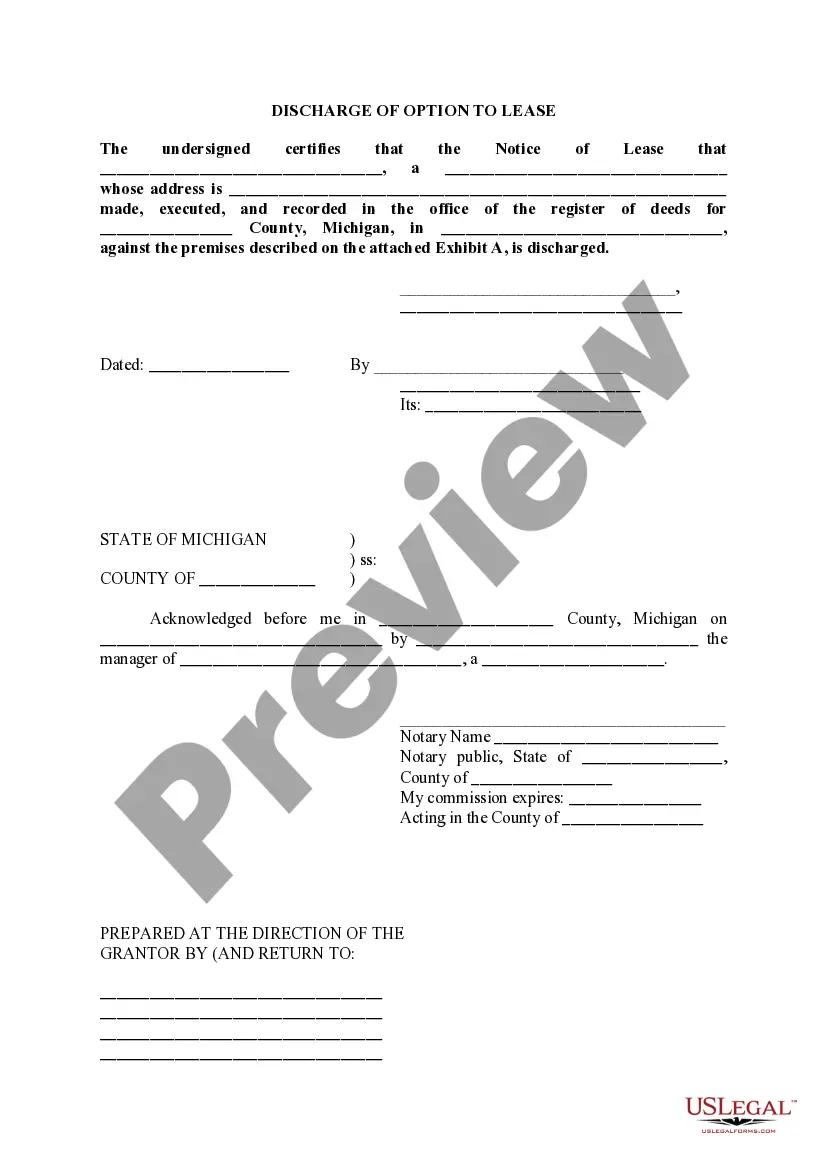
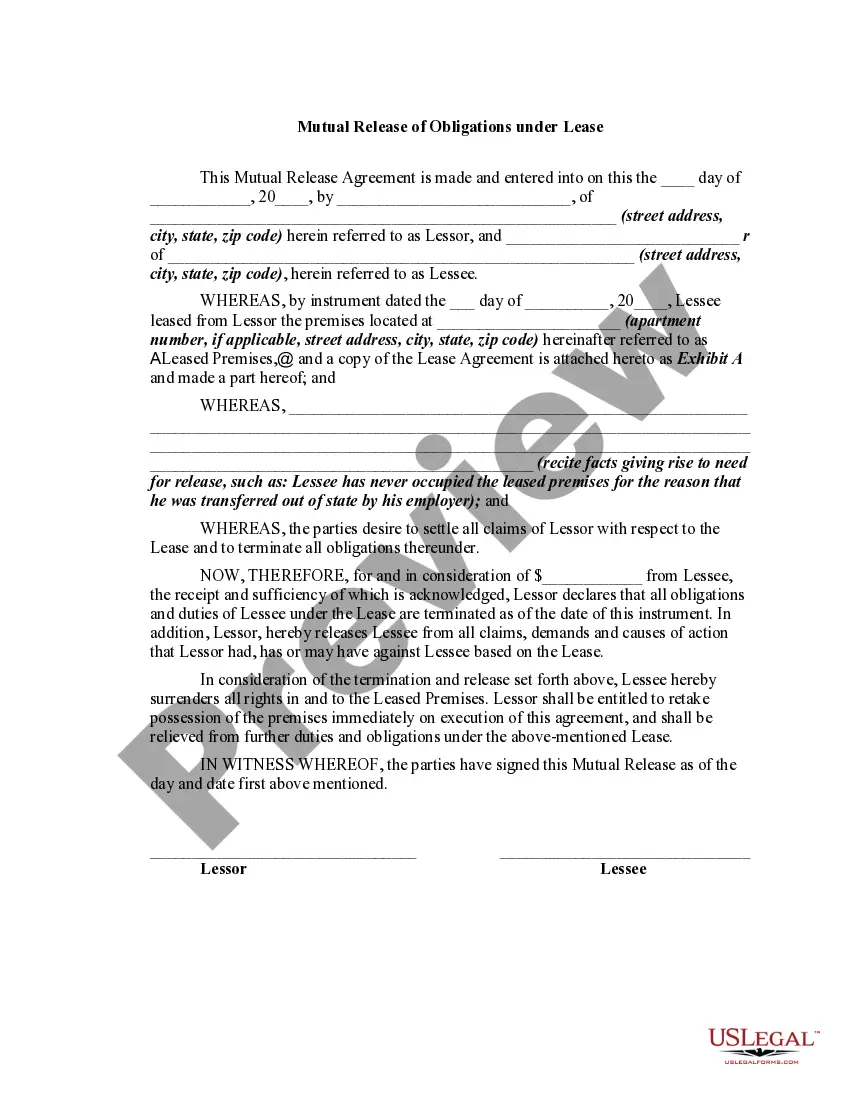
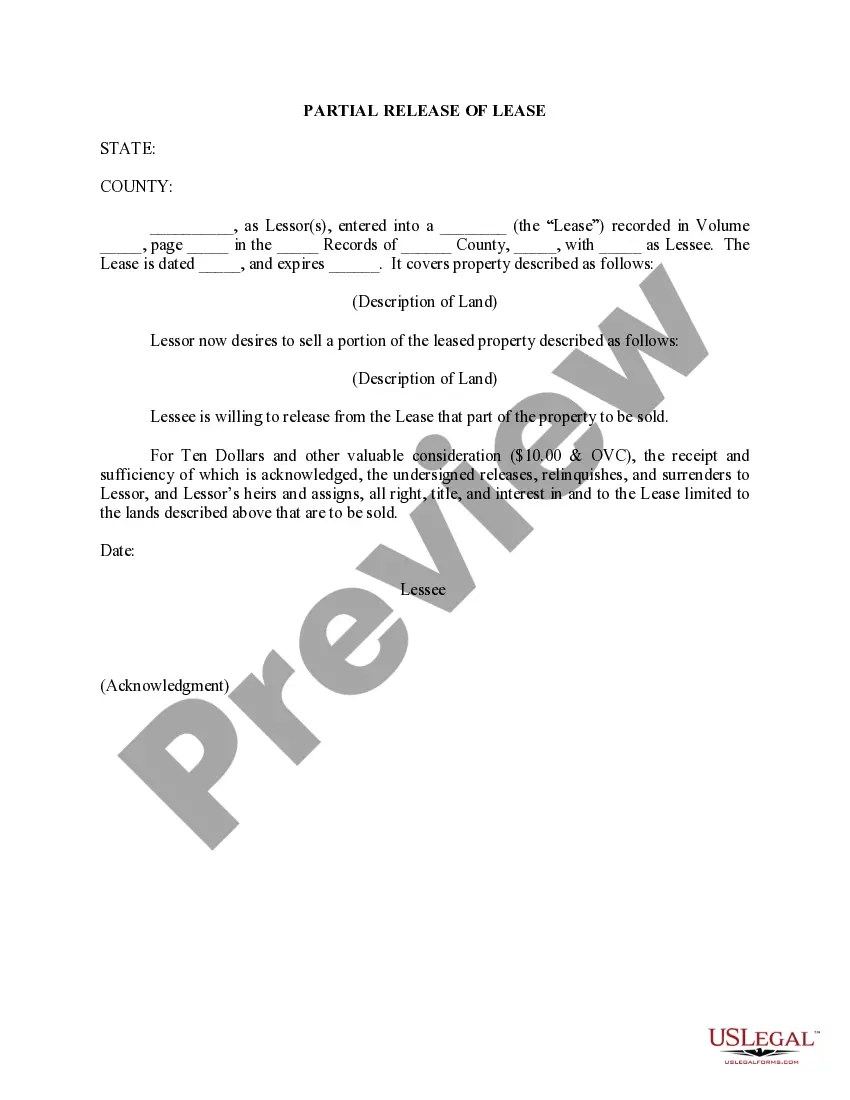
The Discharge of Option to Lease is a legal document that formally releases the lessee from their option to lease specific premises. Unlike lease agreements that establish terms for renting property, this form signifies that a previously recorded lease option is no longer in effect, providing clarity and reassurance for both parties involved.
Key components of this form
- Identification of the lessee and the lessor involved in the lease.
- The details of the Notice of Lease, including recording information.
- A statement affirming the discharge of the option to lease.
- Signature lines for parties involved, including date and capacity.
- Notary acknowledgment section, confirming the authenticity of signatures.
When to use this form
This form is typically used when a lessee no longer wishes to pursue their option to lease the property after it has been made available. It may be necessary in situations where terms of the lease are not favorable, changes in business direction occur, or simply when the lessee opts out of the agreement for personal reasons.
Intended users of this form
This form is suitable for:
- Lessee individuals or businesses who have previously expressed interest in leasing the property.
- Lessor property owners seeking to clarify the status of the lease option.
- Real estate professionals handling lease agreements and modifications.
How to prepare this document
- Identify the parties involved by entering the names of the lessee and lessor.
- Specify the location and details of the property by referencing the attached Exhibit A.
- Fill in the date and signature of the parties to validate the discharge.
- Complete the notary acknowledgment section, ensuring it is signed and dated by a notary public.
- Ensure the document is recorded with the appropriate county office to provide public notice of the discharge.
Notarization guidance
Yes, this form must be notarized to be legally valid. US Legal Forms offers an integrated online notarization service that is available 24/7. This service allows you to complete notarization securely via video call, ensuring you donât have to travel for notarization while still meeting legal requirements.
Get your form ready online
Our built-in tools help you complete, sign, share, and store your documents in one place.
Make edits, fill in missing information, and update formatting in US Legal Forms—just like you would in MS Word.
Download a copy, print it, send it by email, or mail it via USPS—whatever works best for your next step.
Sign and collect signatures with our SignNow integration. Send to multiple recipients, set reminders, and more. Go Premium to unlock E-Sign.
If this form requires notarization, complete it online through a secure video call—no need to meet a notary in person or wait for an appointment.
We protect your documents and personal data by following strict security and privacy standards.

Make edits, fill in missing information, and update formatting in US Legal Forms—just like you would in MS Word.

Download a copy, print it, send it by email, or mail it via USPS—whatever works best for your next step.

Sign and collect signatures with our SignNow integration. Send to multiple recipients, set reminders, and more. Go Premium to unlock E-Sign.

If this form requires notarization, complete it online through a secure video call—no need to meet a notary in person or wait for an appointment.

We protect your documents and personal data by following strict security and privacy standards.
Typical mistakes to avoid
- Failing to include all required signatures, which can invalidate the form.
- Not properly completing the notary section, risking the legal effectiveness of the document.
- Not recording the Discharge of Option to Lease as required by local laws.
- Leaving out specific property details, which can lead to confusion or disputes.
Benefits of using this form online
- Convenience of immediate download and completion from anywhere.
- Editability allows users to customize the form easily to fit their needs.
- Access to legally sound templates drafted by licensed attorneys, providing peace of mind.
Looking for another form?
Form popularity
FAQ
Exiting a rental lease in Michigan can be straightforward, but it requires understanding the lease agreement and state laws. You may need to communicate with your landlord about your intention to terminate the lease, as well as familiarize yourself with the Michigan Discharge of Option to Lease provisions. If complications arise, consider utilizing platforms like US Legal Forms to access necessary documents that facilitate a smooth lease termination process.
Once you sign a tenancy agreement in Michigan, you generally cannot change your mind without potential consequences. However, if specific circumstances apply, the Michigan Discharge of Option to Lease might provide a way out. It’s crucial to understand the terms of your agreement, as some may offer grace periods or conditions for withdrawal. For assistance, US Legal Forms can help clarify your options and ensure that you make informed decisions.
To terminate a lease in Michigan, you must follow specific legal procedures that depend on the lease agreement type. If you have a lease with a set term, you usually need to provide written notice before the lease ends. Additionally, the Michigan Discharge of Option to Lease allows tenants to explore options for early termination under certain conditions. For detailed guidance, consider using US Legal Forms to ensure you complete the process correctly.
The 554.134 law in Michigan involves the stipulations surrounding lease agreements and tenant rights. This law ensures that renters receive proper notifications regarding lease terms and any potential changes. It aims to maintain transparency between landlords and tenants. Understanding this law can empower you, especially when dealing with the Michigan Discharge of Option to Lease.
To get out of a lease in Michigan, tenants should first review their lease agreement for any exit clauses. If no such clause exists, you might need to negotiate with your landlord for an early termination. Providing a valid reason for your request, such as financial hardship or unexpected relocation, can help in this discussion. If you're unsure about your rights, exploring resources like US Legal Forms can assist you through the Michigan Discharge of Option to Lease process.
The 554.613 law in Michigan pertains to the rights of tenants concerning the discharge of lease options. This law protects tenants from unjust termination of their lease agreements. It ensures that any lease agreement modifications must be in writing and agreed upon by both parties. Familiarizing yourself with this law is important, particularly when navigating the Michigan Discharge of Option to Lease.
In Michigan, landlords can request up to three times the rent in income verification. This is a common practice to ensure tenants can afford their rental payments. However, the requested income must be reasonable and reflect current housing market conditions. Understanding your rights in situations like these is crucial, especially when considering the Michigan Discharge of Option to Lease.