Michigan Complex Will with Credit Shelter Marital Trust for Large Estates
What this document covers
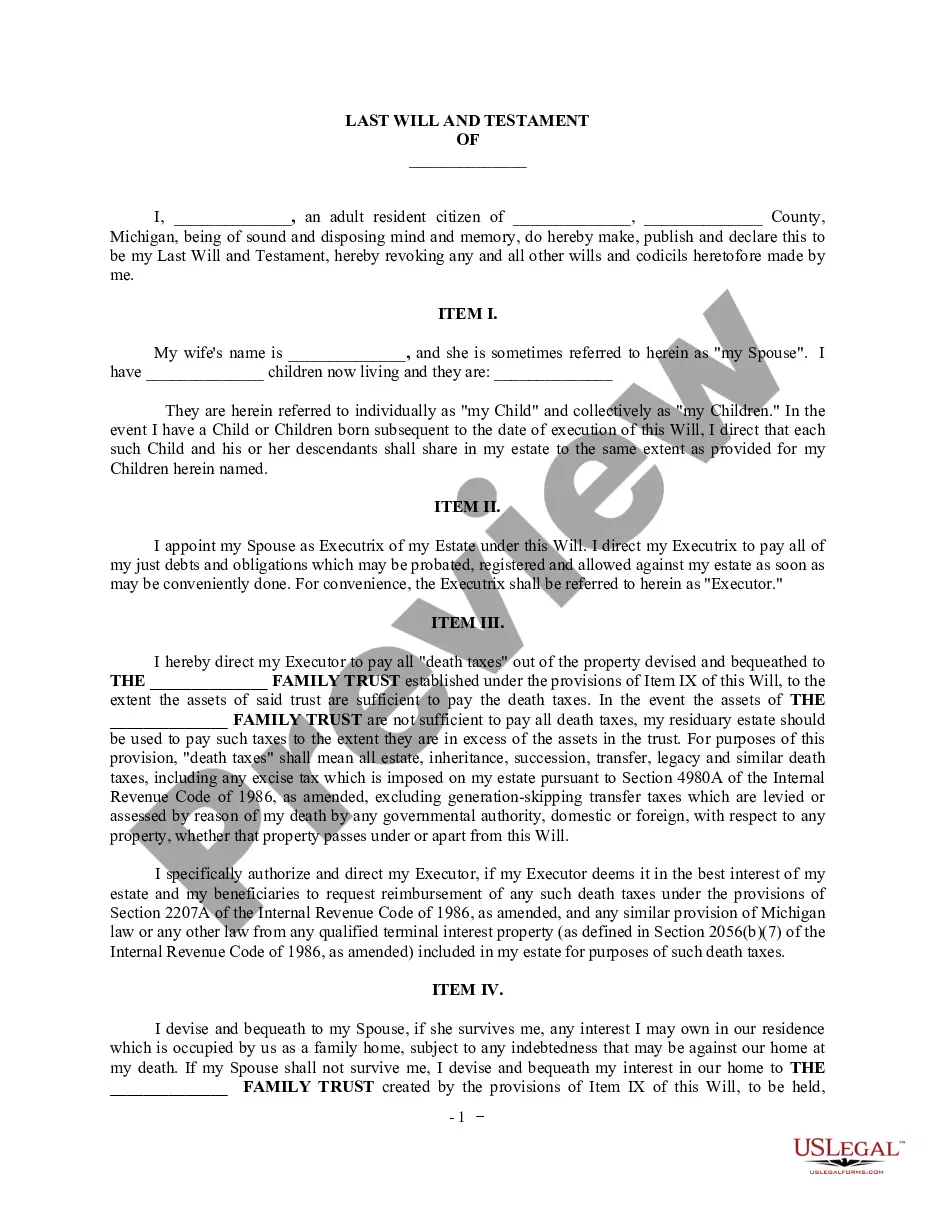
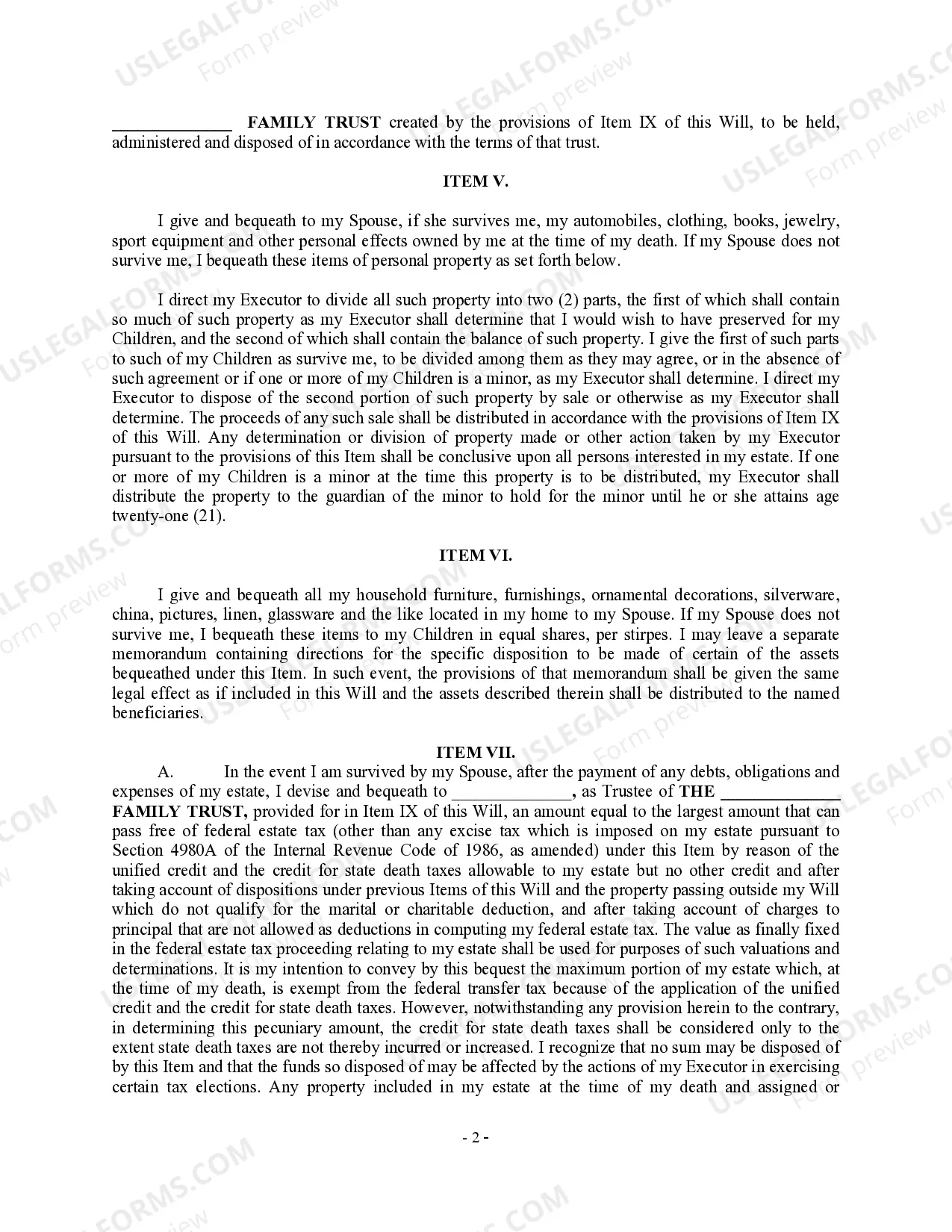
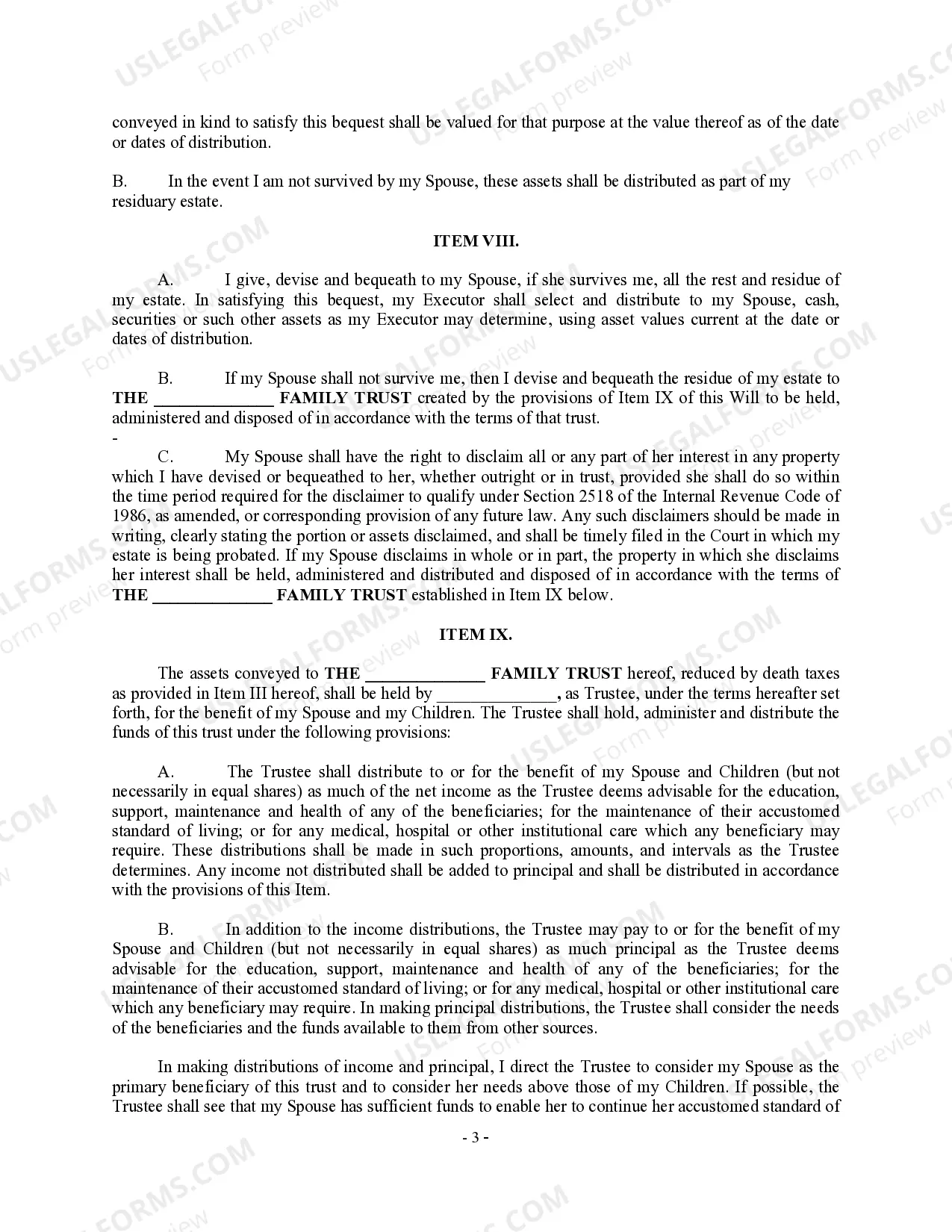
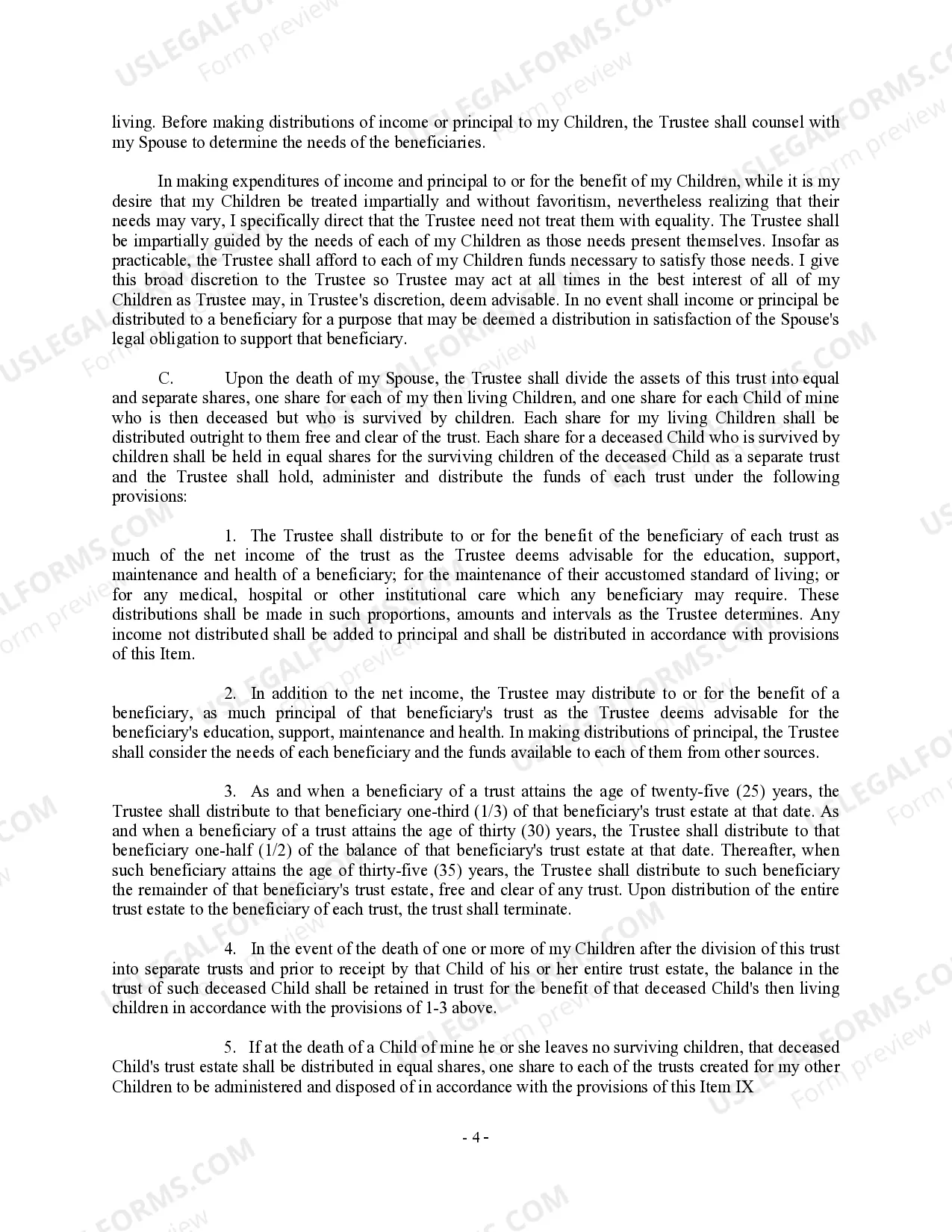
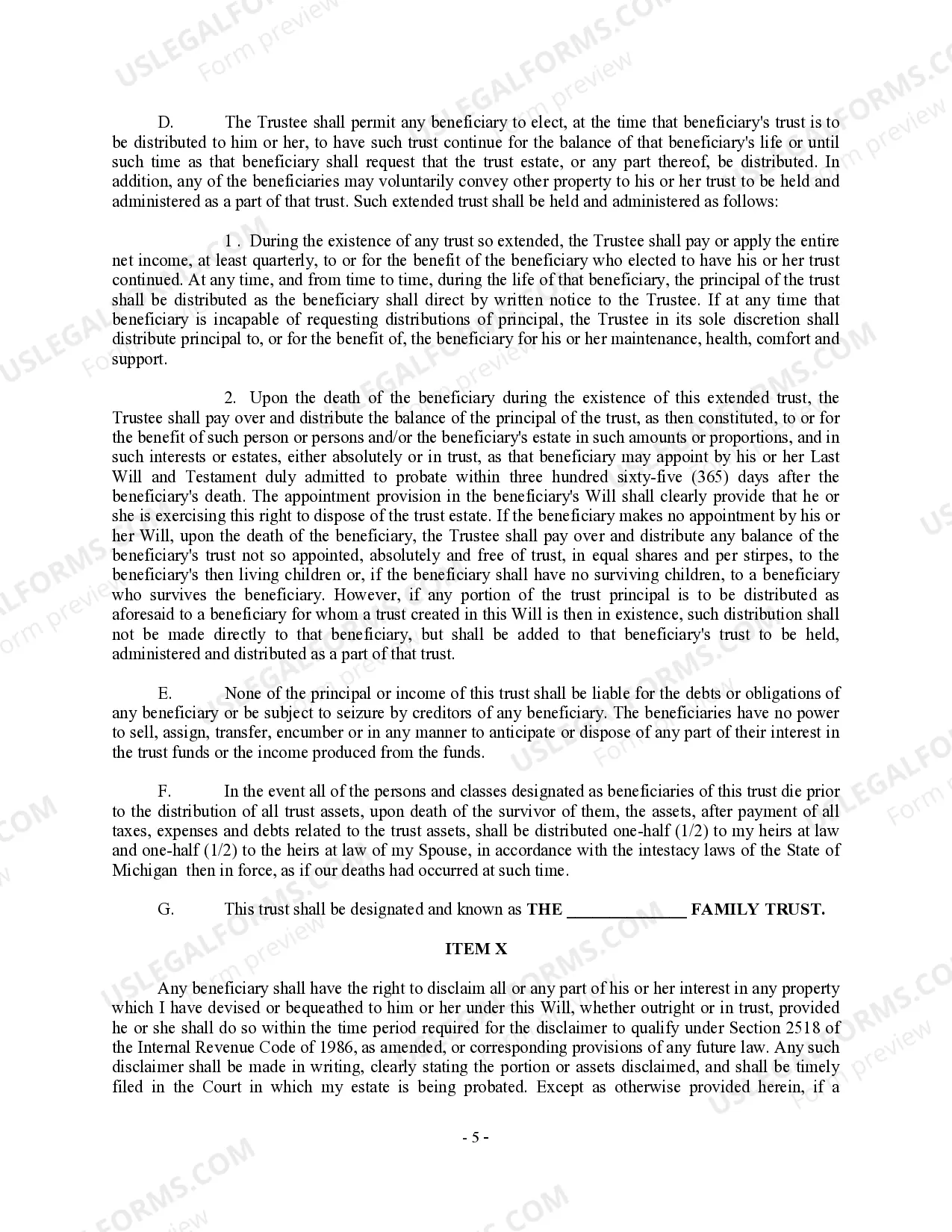
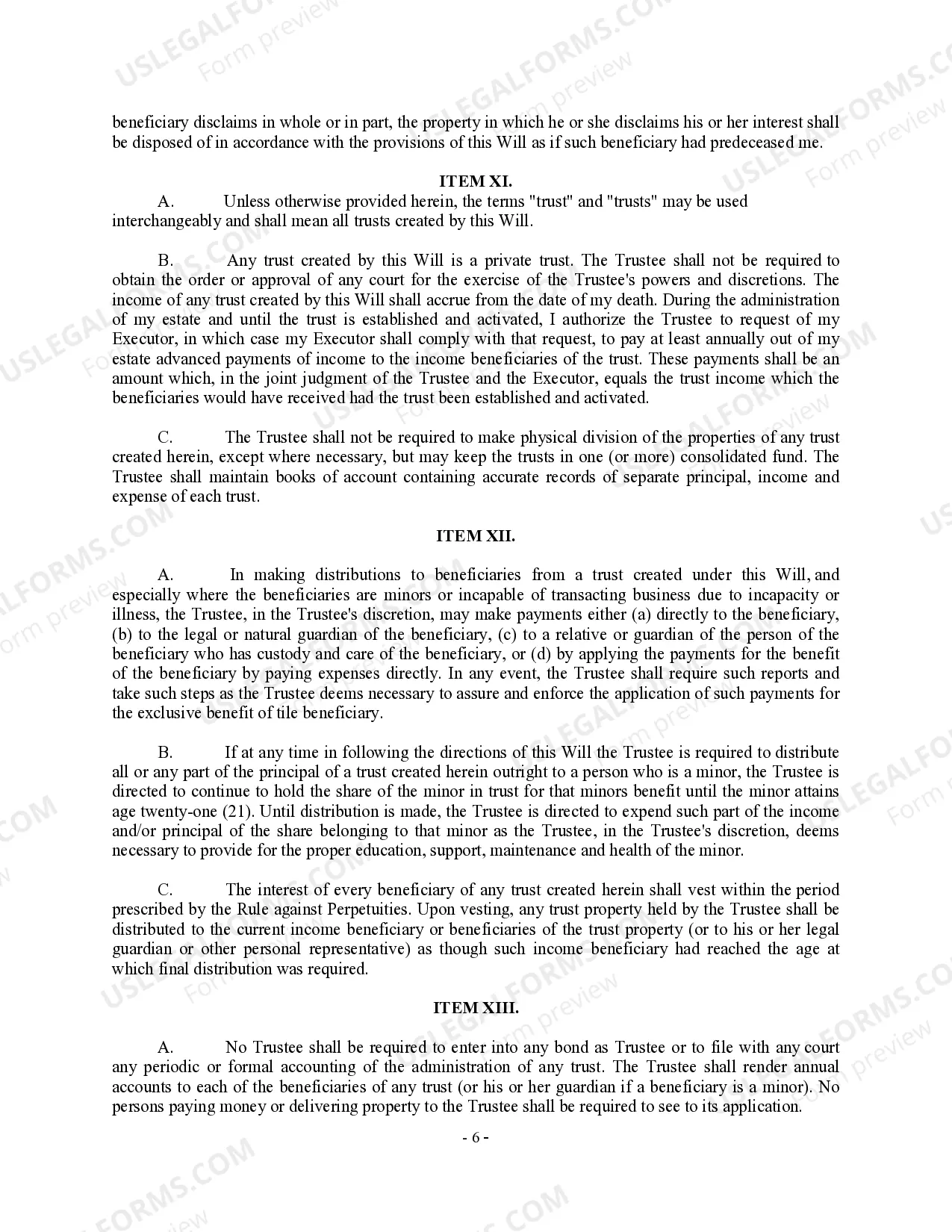
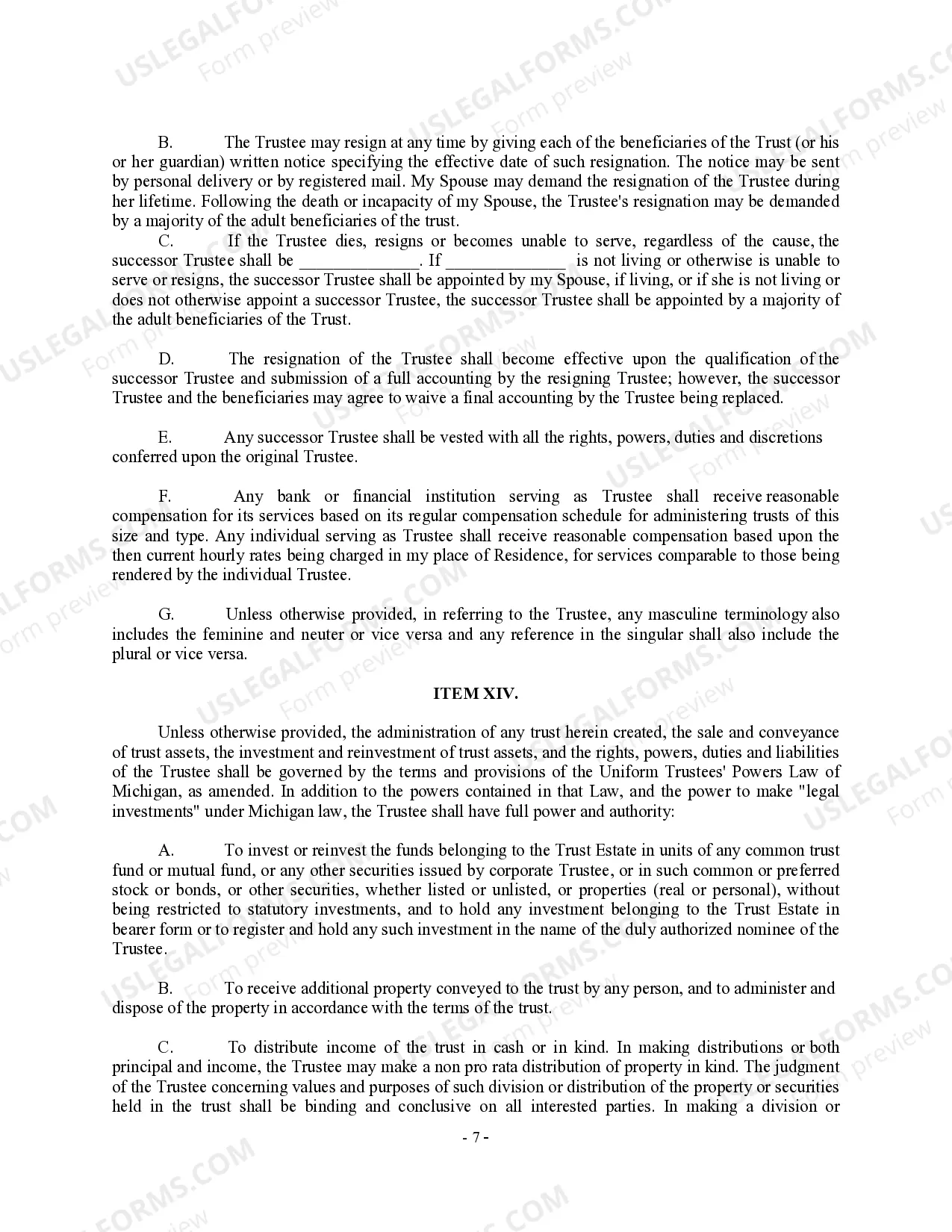
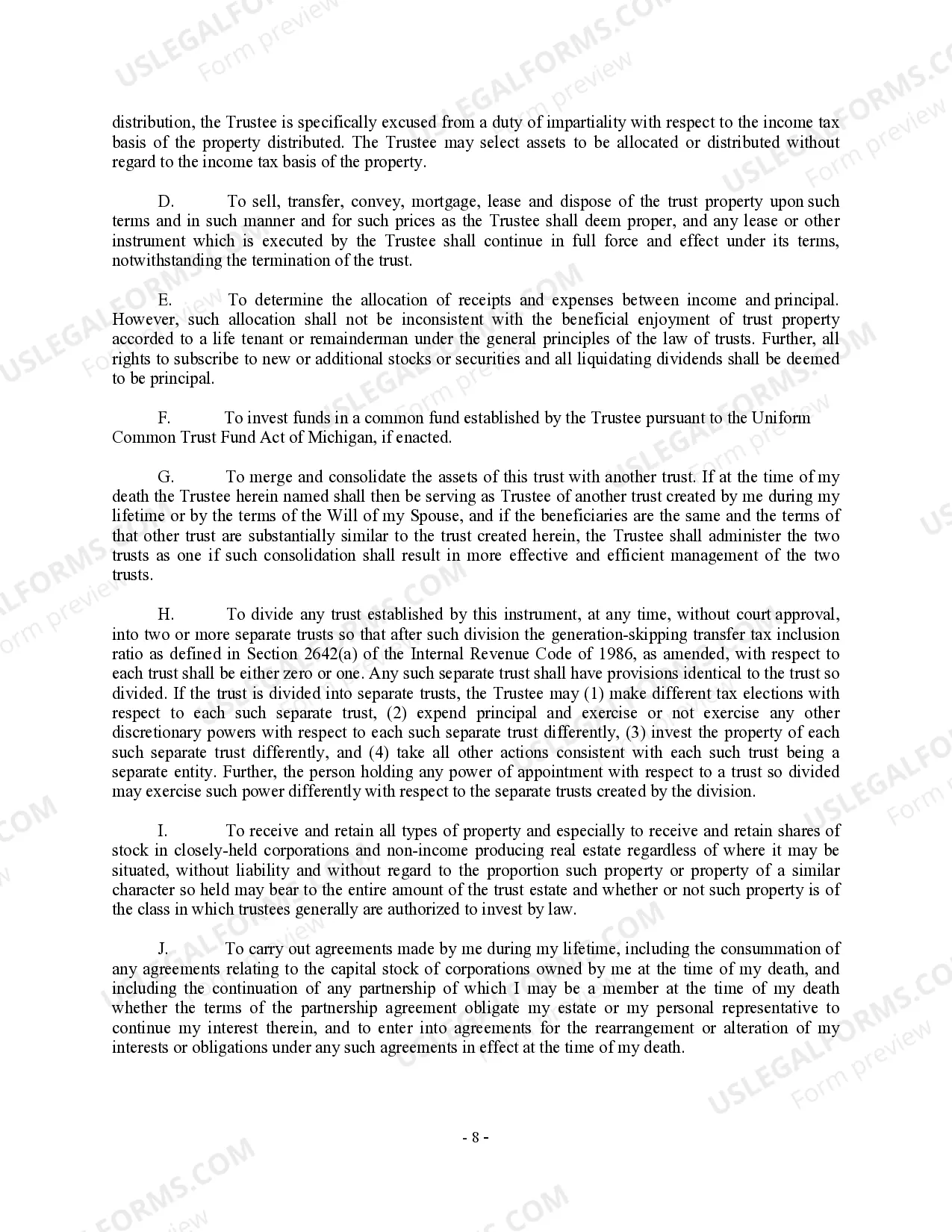
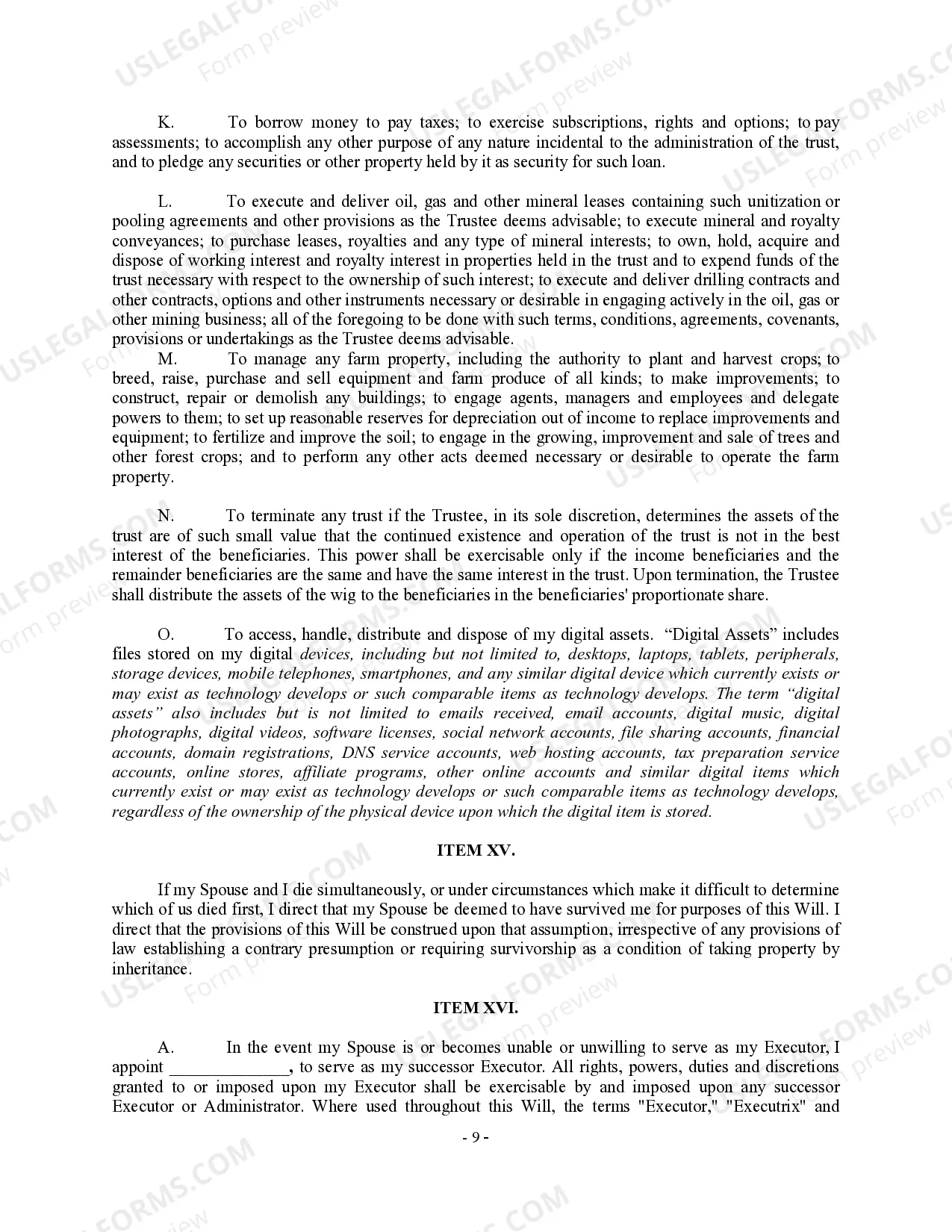
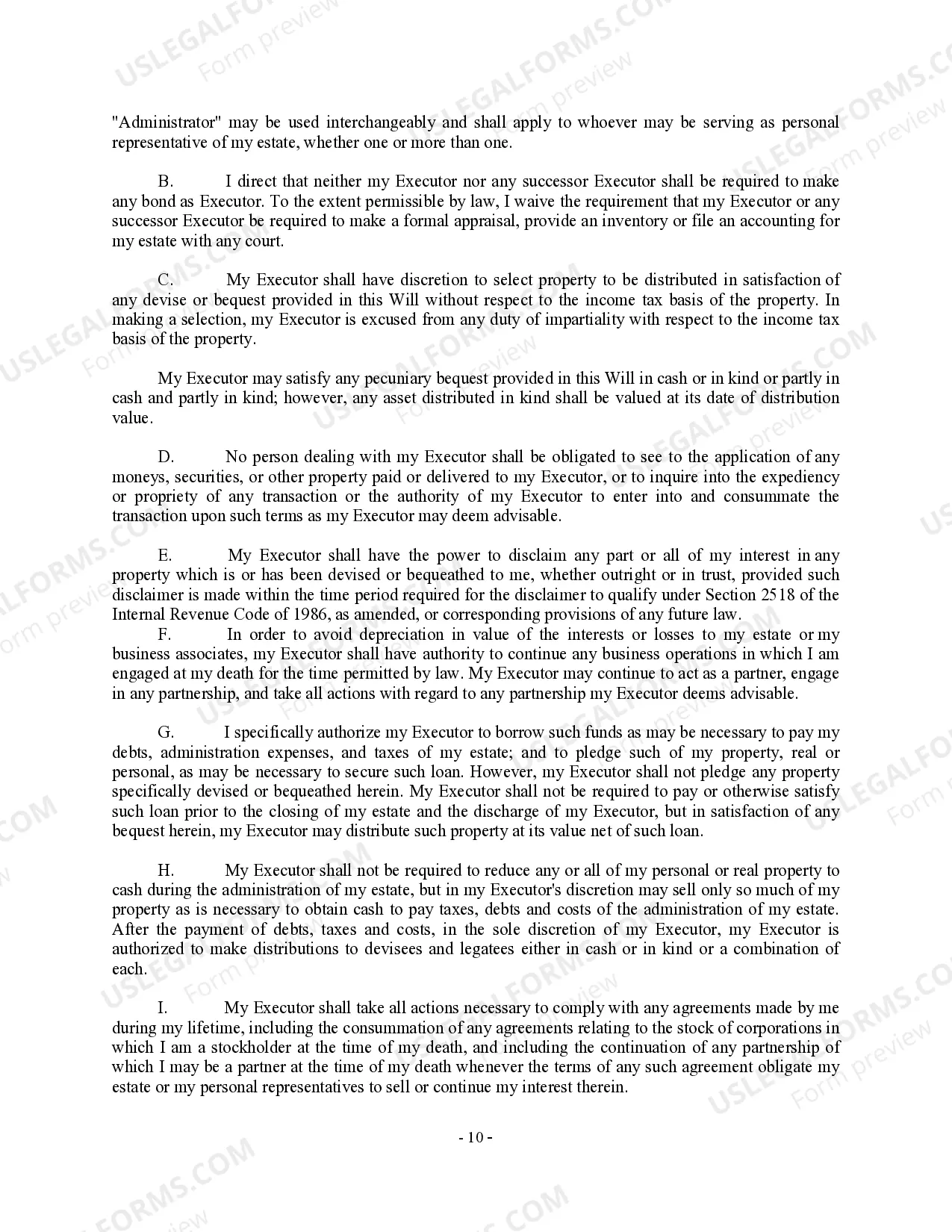
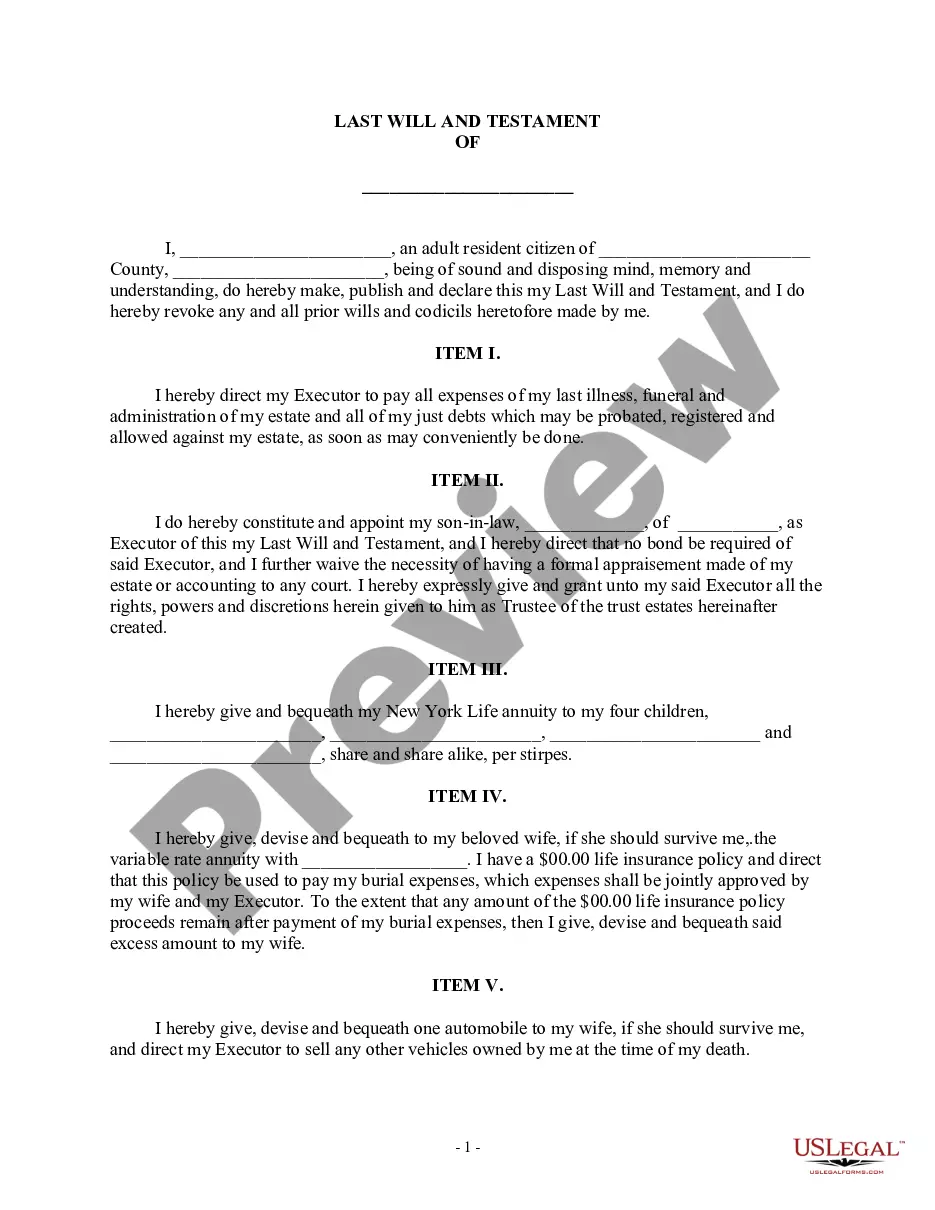
The Complex Will with Credit Shelter Marital Trust for Large Estates is a legal document designed to protect the assets of a couple while minimizing estate taxes. This form allows one spouse to leave a specified amount of their estate into a trust, preserving the tax exemption at the time of death, while the remainder is bequeathed to the surviving spouse. Unlike simpler wills, this form includes specific provisions for trusts and tax strategies, making it suitable for individuals with substantial estates looking to maximize their tax benefits.
Main sections of this form
- Identification of the Testator and their spouse.
- Appointment of an executor or executrix to manage the estate.
- Establishment of a family trust for asset management and tax benefits.
- Directions for distribution of personal property and real estate.
- Provisions for handling debts and taxes from the estate.
- Instructions on distributions to children and other beneficiaries.





When to use this document
This form is particularly useful when one or both spouses have large estates. It should be used to ensure that estate taxes are minimized and that assets are passed down efficiently to beneficiaries. Consider using this complex will when you wish to provide for both a surviving spouse and children, while taking advantage of tax benefits through trusts.
Who can use this document
- Couples with a combined estate exceeding the exempt threshold set by federal and state law.
- Individuals who want to ensure a significant portion of their assets can be passed down to heirs without incurring estate taxes.
- Parents wishing to establish trusts for their children to secure their financial future.
- Anyone looking to structure their estate planning strategy in a detailed manner.
How to complete this form
- Enter your name, address, and county in Michigan at the beginning of the form.
- Provide details about your spouse and children, including their names and any relevant birthdates.
- Designate an executor for your estate and ensure they are willing to take on this responsibility.
- Clearly outline the assets you wish to allocate into the trust and those that will go to your spouse.
- Sign the document in the presence of witnesses to ensure its legality, and consider notarization if required.
Does this document require notarization?
Yes, this form must be notarized to be legally valid. Utilizing US Legal Forms' integrated online notarization service provides a secure and convenient way to complete this step, allowing legal execution without the need to travel.
Get your form ready online
Our built-in tools help you complete, sign, share, and store your documents in one place.
Make edits, fill in missing information, and update formatting in US Legal Forms—just like you would in MS Word.
Download a copy, print it, send it by email, or mail it via USPS—whatever works best for your next step.
Sign and collect signatures with our SignNow integration. Send to multiple recipients, set reminders, and more. Go Premium to unlock E-Sign.
If this form requires notarization, complete it online through a secure video call—no need to meet a notary in person or wait for an appointment.
We protect your documents and personal data by following strict security and privacy standards.

Make edits, fill in missing information, and update formatting in US Legal Forms—just like you would in MS Word.

Download a copy, print it, send it by email, or mail it via USPS—whatever works best for your next step.

Sign and collect signatures with our SignNow integration. Send to multiple recipients, set reminders, and more. Go Premium to unlock E-Sign.

If this form requires notarization, complete it online through a secure video call—no need to meet a notary in person or wait for an appointment.

We protect your documents and personal data by following strict security and privacy standards.
Typical mistakes to avoid
- Failing to update the will after major life changes, such as the birth of a child or changes in financial status.
- Not clearly specifying how debts and expenses will be handled, which can lead to disputes among beneficiaries.
- Neglecting to properly witness or notarize the document as required by law.
- Overlooking tax implications and failing to consult with a tax advisor regarding estate planning.
Benefits of using this form online
- Easy access and immediate downloads eliminate the need for in-person visits to legal offices.
- Editability allows for customization to suit individual circumstances.
- Guidance from templates drafted by licensed attorneys helps ensure compliance with legal requirements.
- Review and storage of documents are convenient, enhancing record-keeping efficiency.
Looking for another form?

Form popularity
FAQ
Deciding between a will and a trust in Michigan often depends on your individual circumstances and goals. A Michigan Complex Will with Credit Shelter Marital Trust for Large Estates offers both flexibility and tax benefits, especially for larger estates. Trusts can provide more privacy and control over how assets are distributed, while wills are generally simpler and less expensive to create. Ultimately, consulting with a legal expert can help you choose the option that best meets your needs.
When the surviving spouse dies, the assets in the credit shelter trust typically pass to the beneficiaries named in the trust. These assets do not become part of the surviving spouse's estate, which helps to minimize estate taxes. This process is crucial in the context of a Michigan Complex Will with Credit Shelter Marital Trust for Large Estates, as it ensures that wealth is preserved for future generations. Therefore, understanding this mechanism is vital for effective estate planning.
Yes, assets held within a marital trust may be included in the overall estate. However, specific rules apply depending on the type of Michigan Complex Will with Credit Shelter Marital Trust for Large Estates you have in place. It is wise to consult with an experienced estate planner to understand how these assets will affect estate taxes and distribution. Utilizing platforms like USLegalForms can help you navigate these complexities and efficiently manage your estate.
A credit shelter trust, as part of a Michigan Complex Will with Credit Shelter Marital Trust for Large Estates, can have some drawbacks. First, it may complicate the overall estate plan, requiring additional management and oversight. Secondly, funding the trust can limit the surviving spouse's access to assets, which may not be ideal for every family situation. Before implementing this strategy, discussions with an estate planning professional are essential to ensure it aligns with your goals.
A marital trust, often established through a Michigan Complex Will with Credit Shelter Marital Trust for Large Estates, is typically included in the estate of the deceased. This trust aims to provide financial benefits to the surviving spouse while effectively reducing estate taxes. By utilizing this strategy, individuals can protect their wealth and ensure a smooth transition of assets. Understanding the integration of a marital trust within your estate plan can lead to better financial outcomes for your loved ones.
Unlike with a QTIP trust, the surviving spouse typically has complete control over a marital trust, including use of the trust assets and final say on designating who the final beneficiaries are. A QTIP trust offers more control to the grantor but less control to the surviving spouse compared to marital trust.
Many people find that they can successfully set up their own living trust without the help of a lawyer. Making a living trust takes a more work than writing a will because a living trust requires that you take the additional step of transferring property into the trust.
The effect of the marital deduction trust is that it shields both spouse's assets and estates from federal estate taxes because when the first spouse dies, the assets indicated by the settlor (the spouse who created the trust) pass to the marital trust free and clear of any and all federal estate taxes.
QTIP trusts are put to use in estate planning and are especially useful when beneficiaries exist from a previous marriage but the grantor dies before a subsequent spouse does. With a QTIP, estate tax is not assessed at the point of the first spouse's death, but is instead determined after the second spouse has passed.
Wills and Trusts FAQs Deciding between a will or a trust is a personal choice, and some experts recommend having both. A will is typically less expensive and easier to set up than a trust, an expensive and often complex legal document.