Sample Letter for Tax Receipt for Fundraiser Dinner - Request by Attendee
Overview of this form
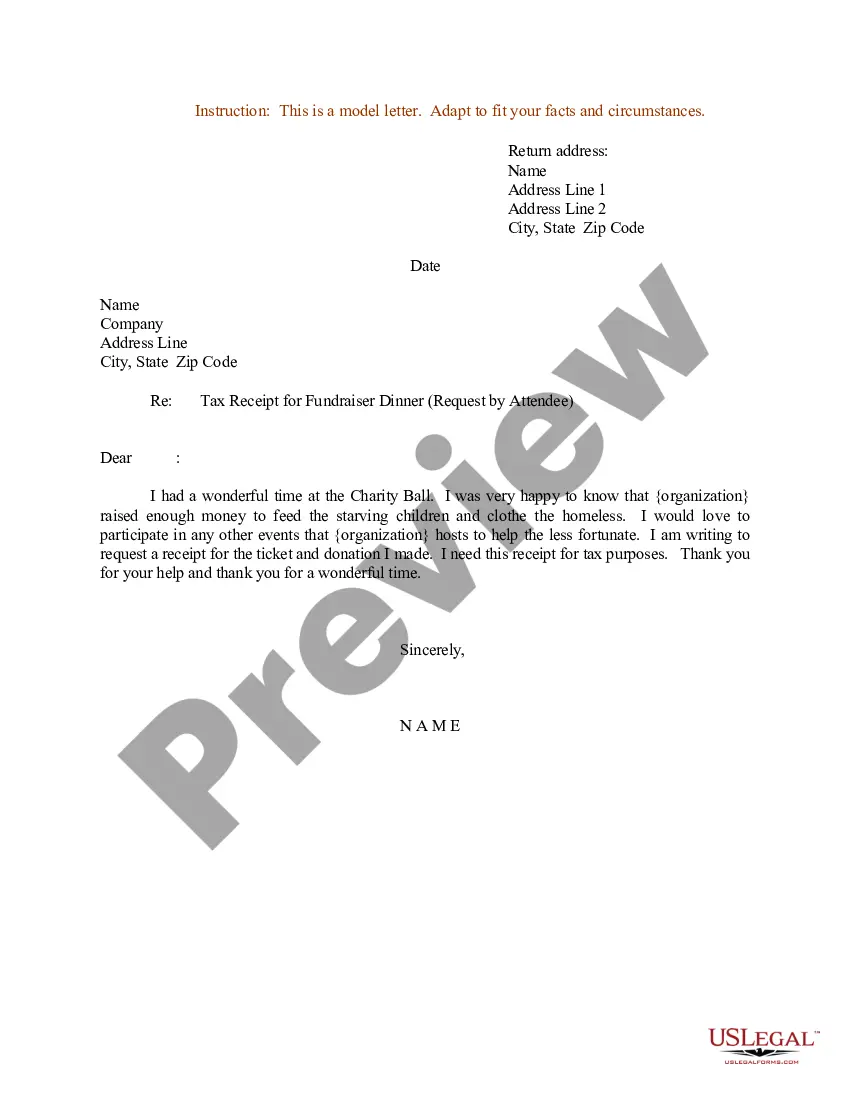
This Sample Letter for Tax Receipt for Fundraiser Dinner is a template designed for attendees to request a receipt for their contributions. The form helps ensure that attendees can document their donations for tax purposes. Unlike other general donation letters, this specific template is catered to fundraising dinners, providing a clear structure for the needed information.
Form components explained
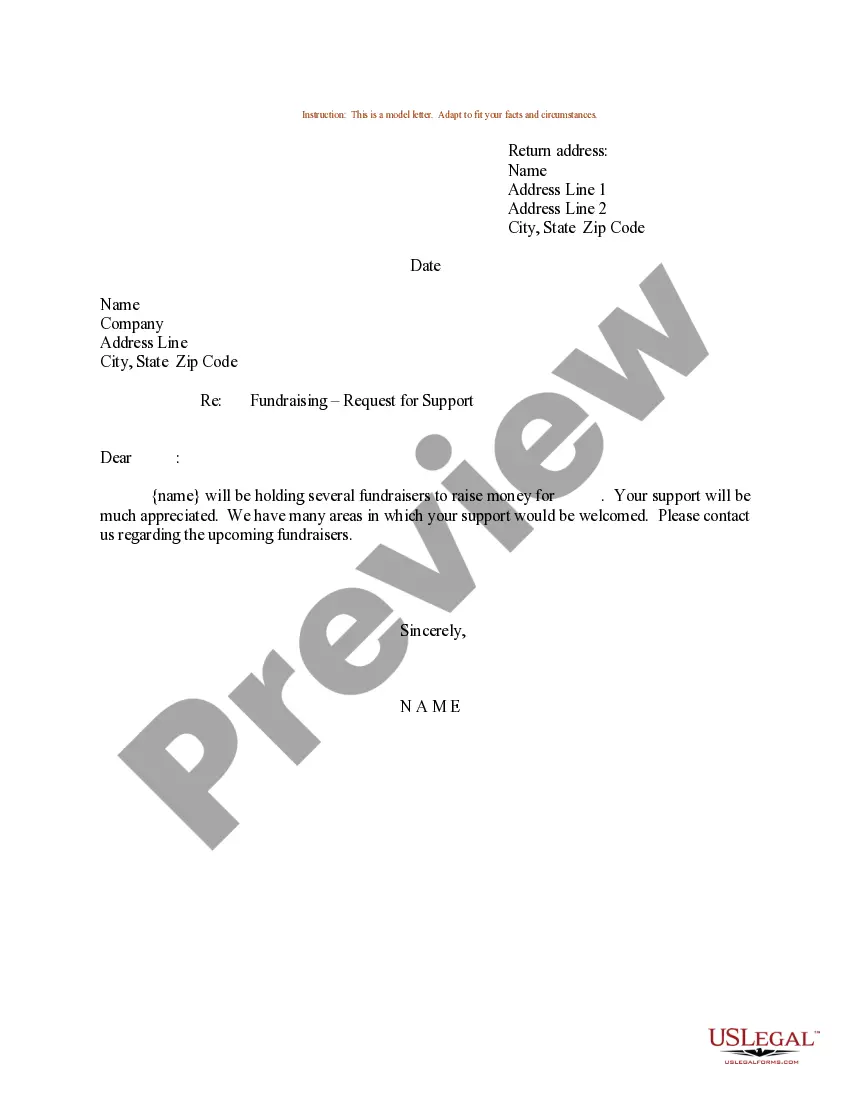
- Return address: Includes the name and contact details of the attendee.
- Date: The date on which the letter is written.
- Recipient's address: Contact information of the organization hosting the fundraiser.
- Subject line: Clearly states the purpose as a request for a tax receipt.
- Closure: Includes a signature line for the requester.
Common use cases
This form should be used when an individual has attended a fundraising dinner and wishes to secure a tax receipt for their donation. It is appropriate in instances where the donation amount is significant enough to require documentation for tax deduction purposes, ensuring compliance with IRS requirements.
Who this form is for
This form is suitable for:
- Individuals who have contributed financially to a fundraiser dinner
- Non-profit organizations requesting documentation from their attendees
- Accountants or tax preparers assisting clients with donation records
How to complete this form
- Identify the return address: Fill in your name and address details at the top of the letter.
- Enter the date: Write the date when the letter is being sent.
- Provide the recipient's address: Fill in the name and address of the organization hosting the fundraiser.
- Specify the subject: Write "Tax Receipt for Fundraiser Dinner (Request by Attendee)" to clarify the purpose of your letter.
- Sign the letter: Conclude with your name to formally submit the request.
Notarization guidance
This form does not typically require notarization unless specified by local law.
Get your form ready online
Our built-in tools help you complete, sign, share, and store your documents in one place.
Make edits, fill in missing information, and update formatting in US Legal Forms—just like you would in MS Word.
Download a copy, print it, send it by email, or mail it via USPS—whatever works best for your next step.
Sign and collect signatures with our SignNow integration. Send to multiple recipients, set reminders, and more. Go Premium to unlock E-Sign.
If this form requires notarization, complete it online through a secure video call—no need to meet a notary in person or wait for an appointment.
We protect your documents and personal data by following strict security and privacy standards.

Make edits, fill in missing information, and update formatting in US Legal Forms—just like you would in MS Word.

Download a copy, print it, send it by email, or mail it via USPS—whatever works best for your next step.

Sign and collect signatures with our SignNow integration. Send to multiple recipients, set reminders, and more. Go Premium to unlock E-Sign.

If this form requires notarization, complete it online through a secure video call—no need to meet a notary in person or wait for an appointment.

We protect your documents and personal data by following strict security and privacy standards.
Avoid these common issues
- Failing to include the correct return address.
- Not specifying the donation amount in the letter.
- Omitting the date, which could delay processing.
Benefits of using this form online
- Editable format: Customize the template to fit your specific details easily.
- Accessible: Download and use the form at any time, from anywhere.
- Professional layout: Provides a legally compliant format for documentation purposes.
What to keep in mind
- The form is essential for requesting tax receipts from fundraiser dinners.
- Involves key components like a clear return address and recipient details.
- Used primarily by donors for tax documentation purposes.
Looking for another form?

Form popularity
FAQ
Necessary Information Acceptable receipts should clearly indicate the name of the facility, the date, what item or service is being provided, and all applicable costs for the item and subsequent taxes. They should also indicate how you have paid for the item -- check, money order, debit or credit card, or cash.
The name of the organization; The amount of cash contribution; A description (but not the value) of non-cash contribution; A statement that no goods or services were provided by the organization in return for the contribution, if that was the case;
The name of the organization; The amount of cash contribution; A description (but not the value) of non-cash contribution; A statement that no goods or services were provided by the organization in return for the contribution, if that was the case;
A receipt provided by a charity or an organization accepting cash donations should include the name of the charity/organization, amount of the contribution as well as the date the contribution was made, and a statement advising that the organization did not provide any services or goods in exchange for the donation.
Official donation receipts must include the name and website address of the Canada Revenue Agency. The website address has changed to canada.ca/charities-giving. Charities and qualified donees have until March 31, 2019 to update their receipts.
Names: The name of the donor and the full, legal name of your organization. Tax-Exempt Status and EIN: A statement declaring your organization's 501(c)(3) tax-exempt status, including your EIN (Employer Identification Number). Date: The date that the gift was received by your nonprofit.
To reduce the amount of taxes one would pay for the year, one can employ two methods. One method is to reduce taxes paid dollar for dollar with a tax credit. The second is to take your entire income and reduce it in the hopes of moving into a lower tax bracket and lowering the amount you need to pay.
Tell a story. Your fundraising letter should start with a story one that fully engages your current and potential supporters in your issue or the problem your organization is working to address. Define the problem. Present your goal. Ask for help. Be humble.
Most receipts include at least the amount, vendor name, and date, but not all receipts clearly show the nature of the expense. A handwritten note on the receipt is an acceptable method of documenting the purpose of the expense (see example below).