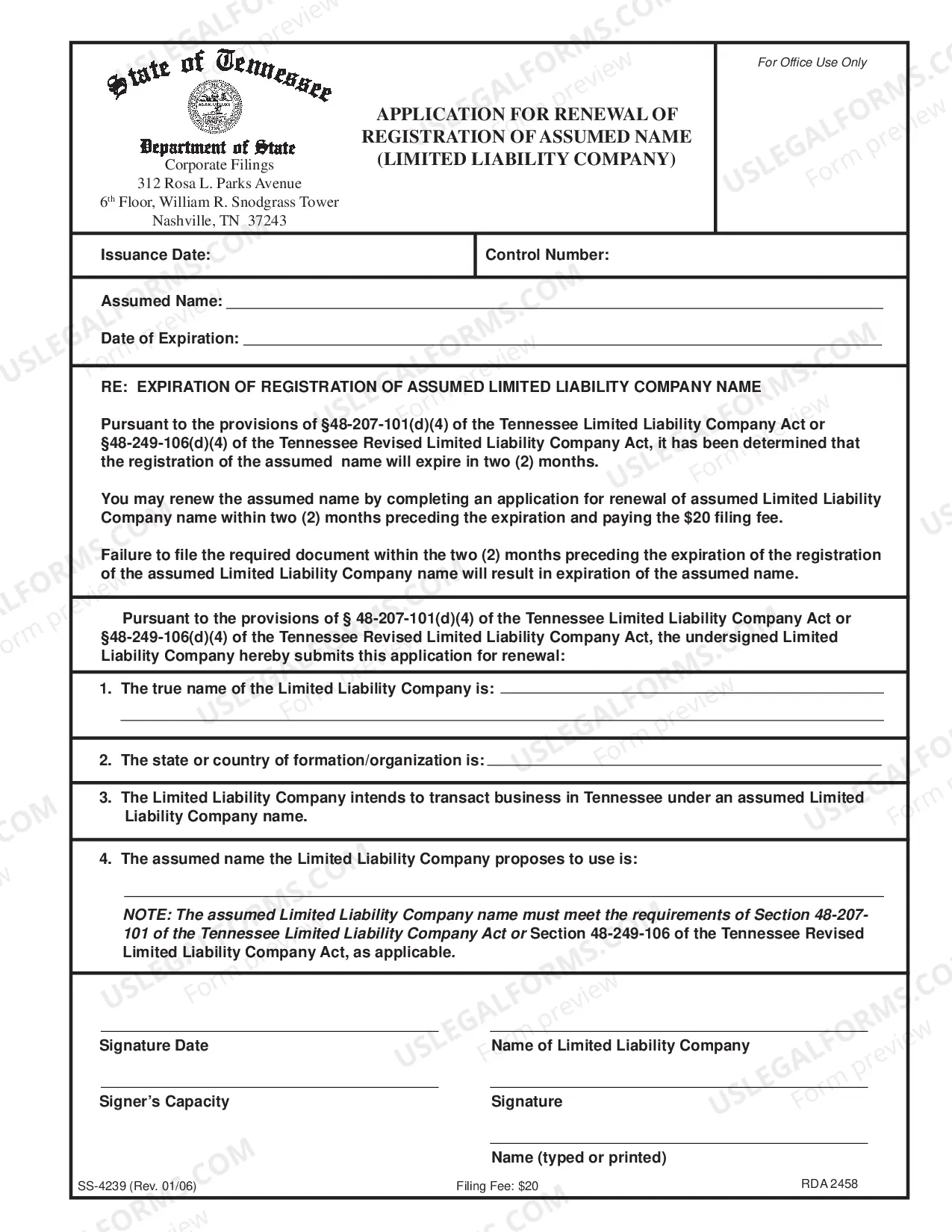
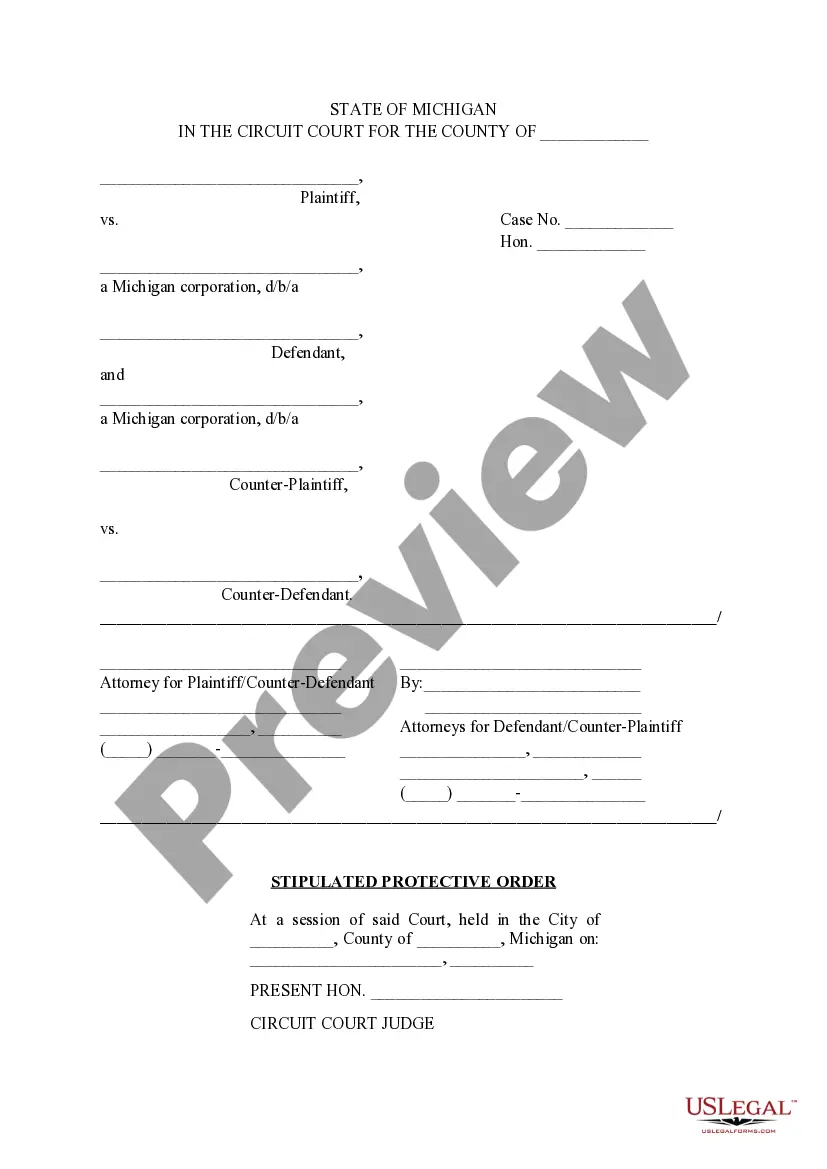
Michigan Stipulated Protective Order
What this document covers
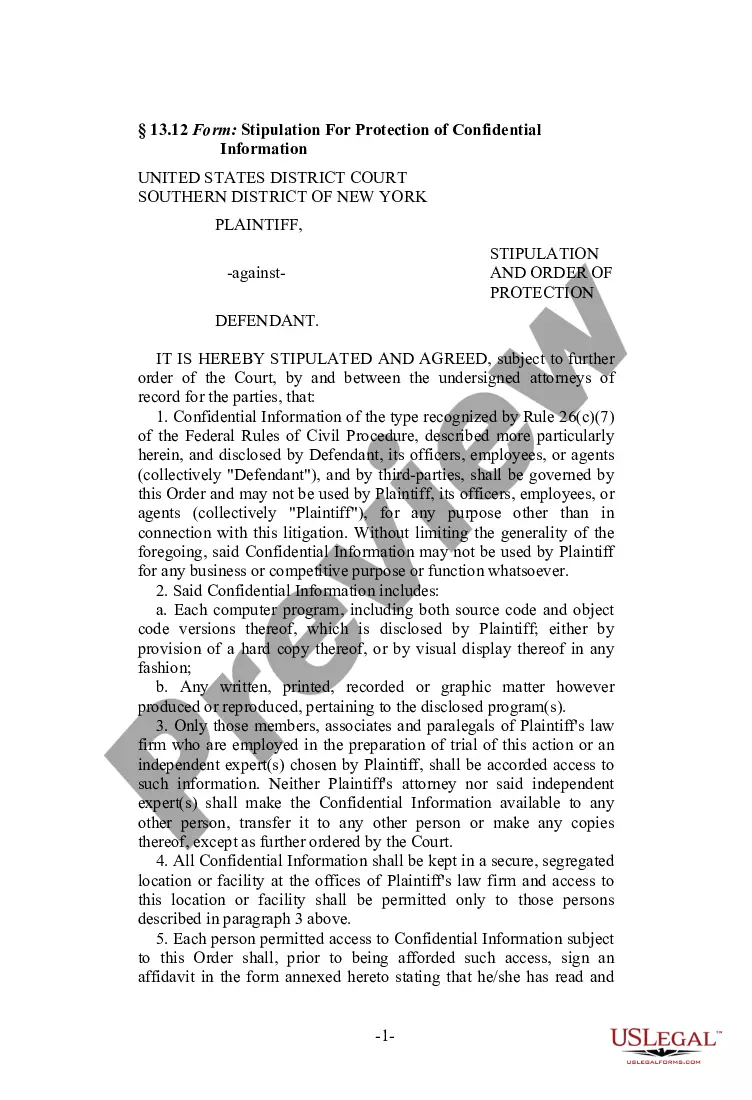
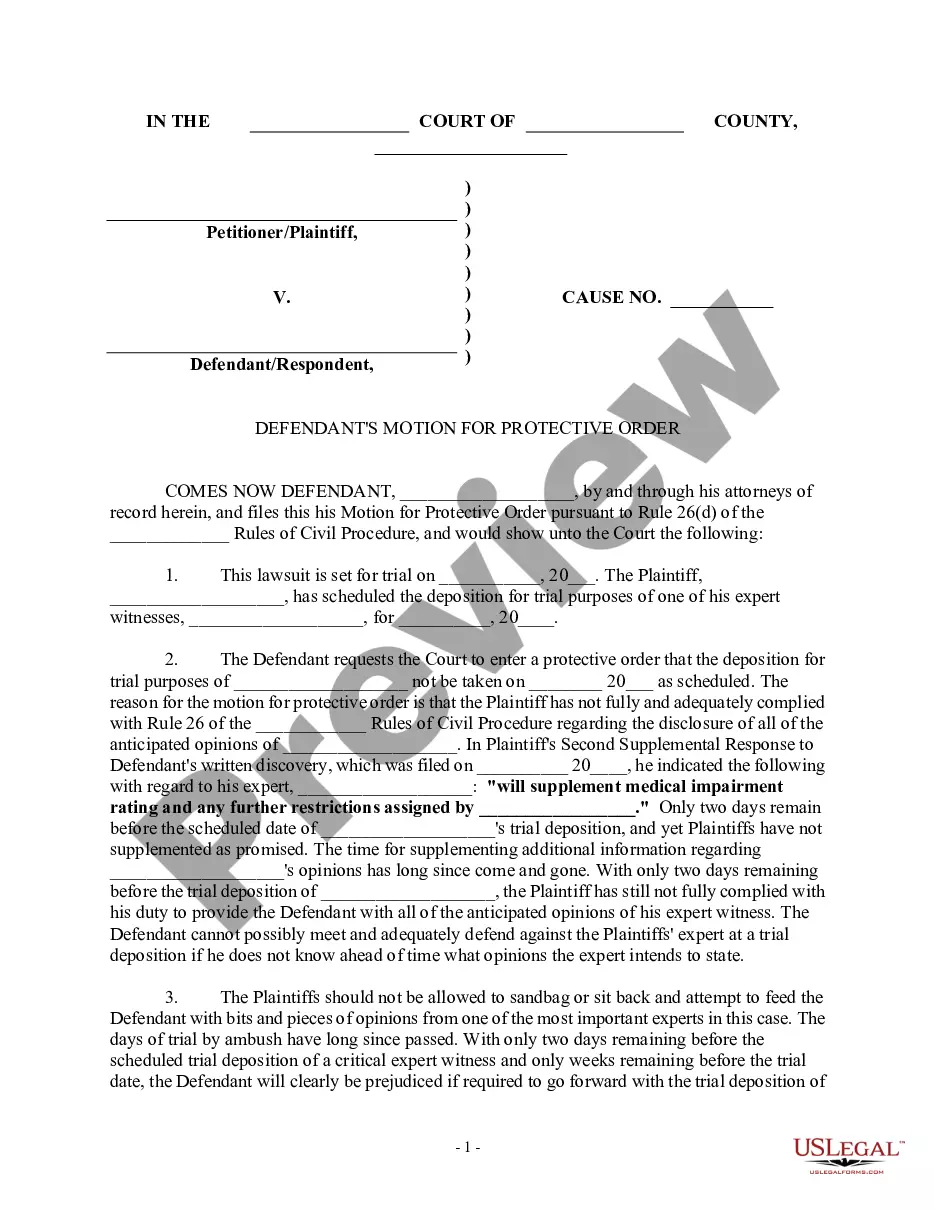
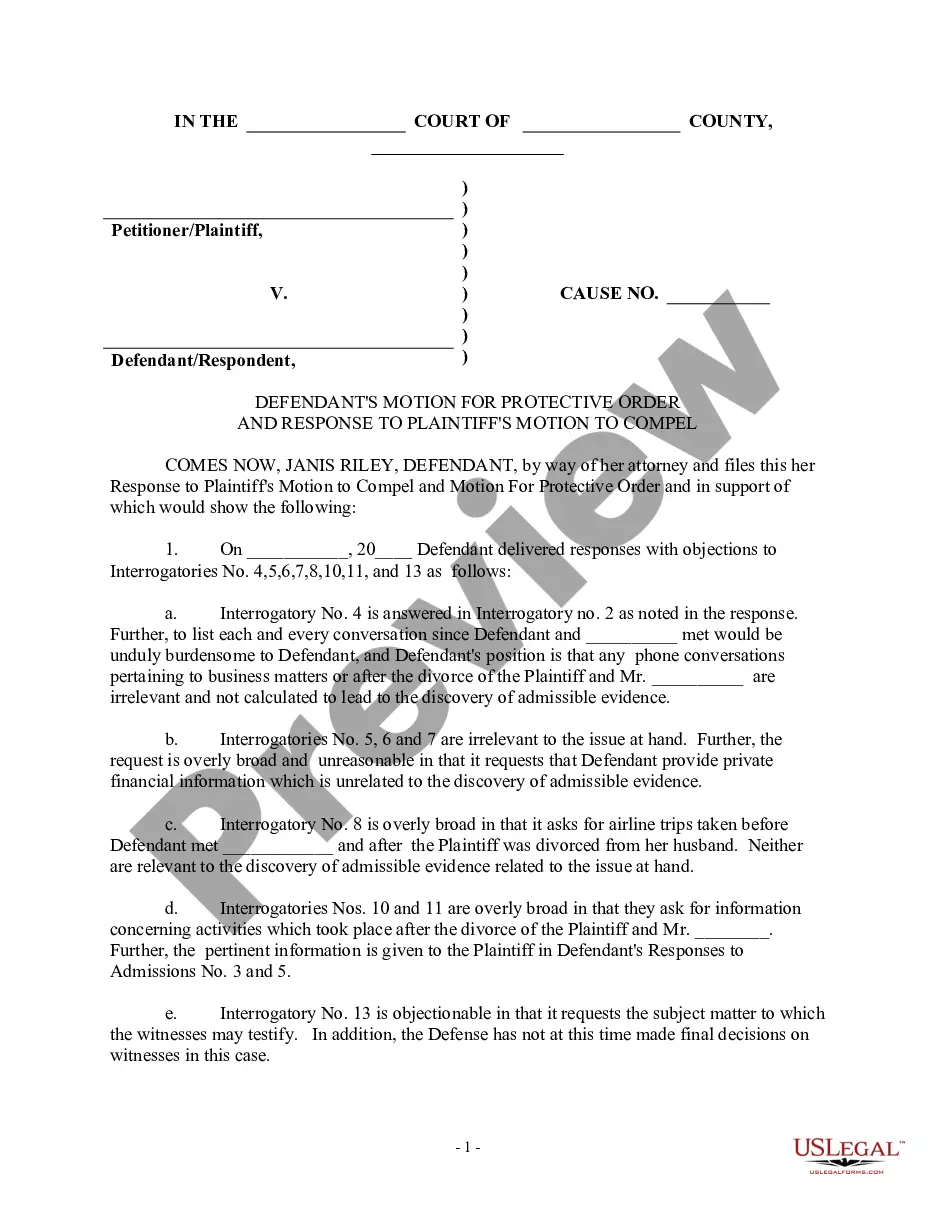
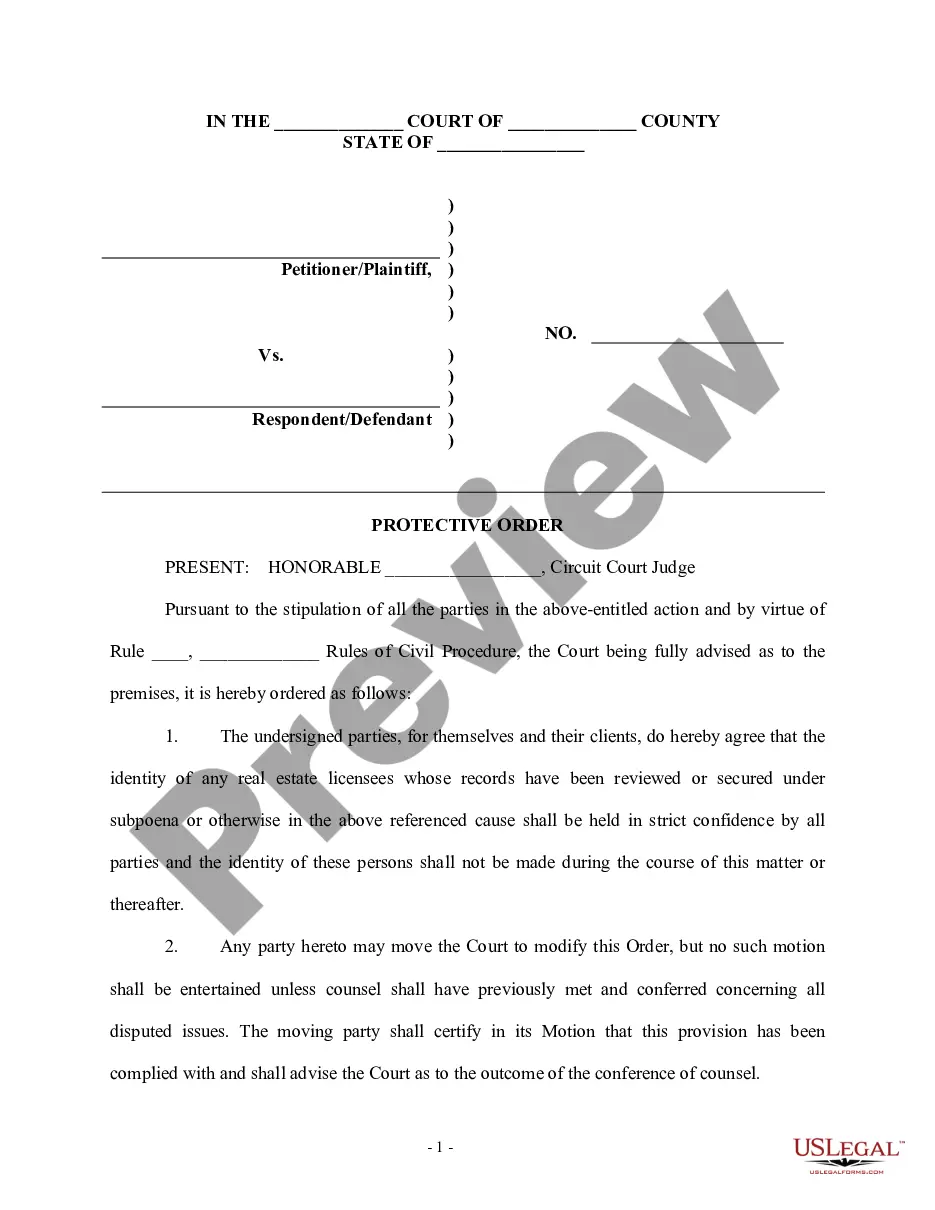
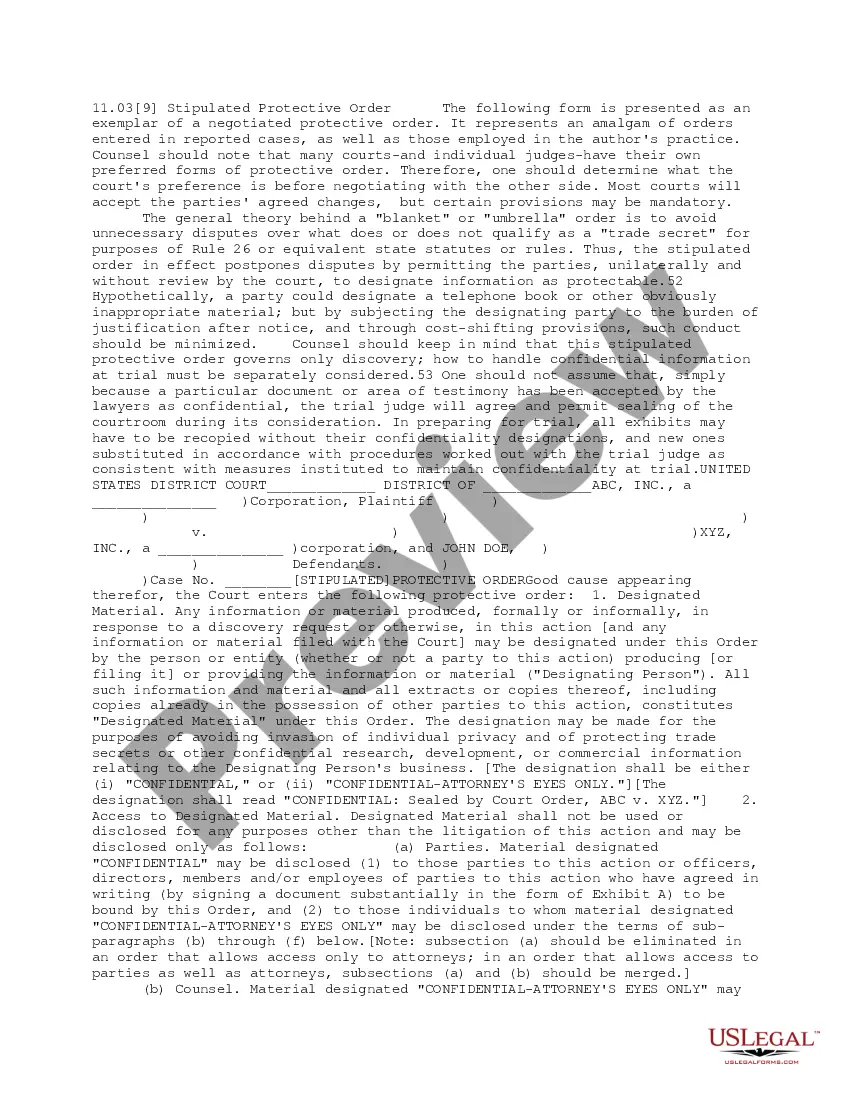
A stipulated protective order is a legal document used during the discovery phase of litigation to protect proprietary and confidential information. It allows parties to designate certain materials as confidential, ensuring that sensitive information is not disclosed to the public during legal proceedings. This form differs from other legal documents by specifically focusing on establishing confidentiality agreements between parties involved in a lawsuit, thus preventing unauthorized access to critical data.
Key parts of this document
- Identification of the parties involved in the lawsuit.
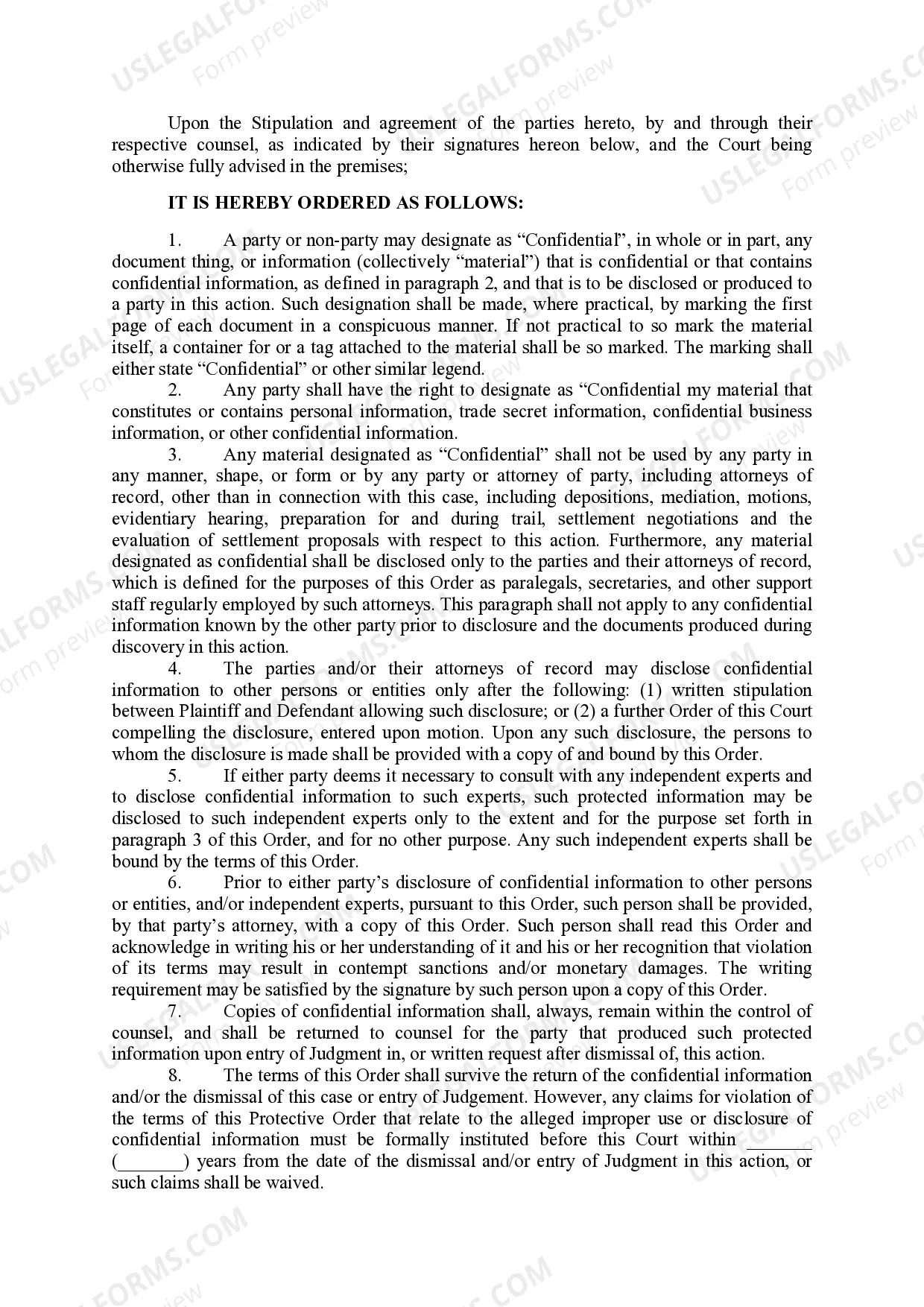
- Designation of materials as confidential, including documents and information.
- Rules regarding the handling and dissemination of confidential information.
- Procedures for disclosing confidential materials to independent experts.
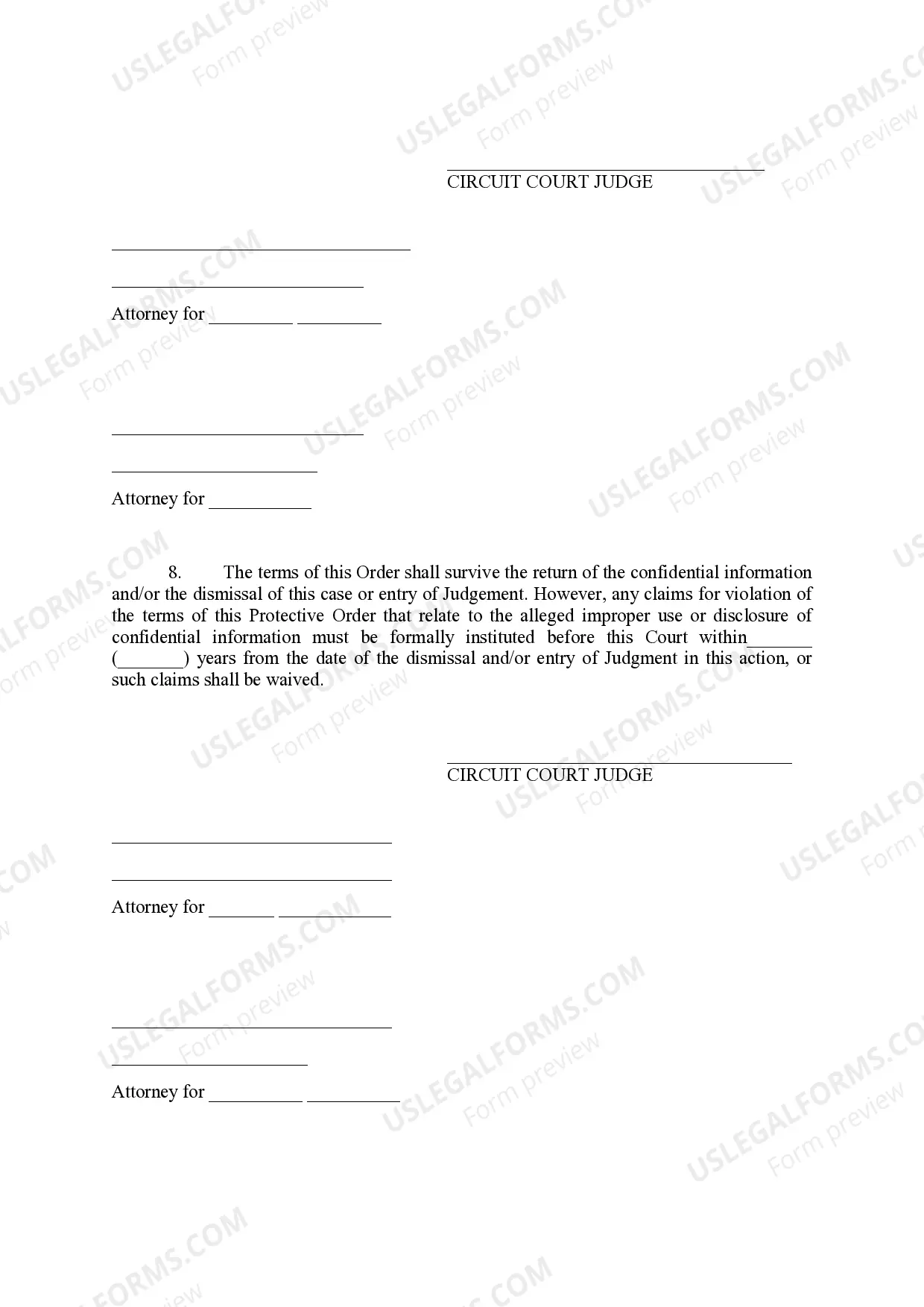
- Survival clause indicating confidentiality obligations post-dismissal or judgment.
Situations where this form applies
This form should be used at the beginning of a lawsuit, specifically during the discovery phase, when parties anticipate sharing proprietary or sensitive information that needs protection. It is necessary in scenarios where confidential business information, trade secrets, or personal data will be exchanged between parties throughout the legal process.
Intended users of this form
- Litigants involved in a lawsuit where sensitive information will be disclosed.
- Attorneys representing clients in civil litigation cases.
- Parties requiring safeguards for proprietary information against unauthorized disclosure.
Steps to complete this form
- Identify the parties and their respective roles in the lawsuit at the top of the form.
- Fill in the case number and presiding judge's information.
- Clearly define what materials will be considered confidential.
- Specify any additional terms relating to the handling and sharing of confidential information.
- Ensure all parties' attorneys sign the document to formalize the agreement.
Does this document require notarization?
This form does not typically require notarization unless specified by local law. However, it's crucial to check with local court rules or consult with an attorney to confirm requirements.
Get your form ready online
Our built-in tools help you complete, sign, share, and store your documents in one place.
Make edits, fill in missing information, and update formatting in US Legal Forms—just like you would in MS Word.
Download a copy, print it, send it by email, or mail it via USPS—whatever works best for your next step.
Sign and collect signatures with our SignNow integration. Send to multiple recipients, set reminders, and more. Go Premium to unlock E-Sign.
If this form requires notarization, complete it online through a secure video call—no need to meet a notary in person or wait for an appointment.
We protect your documents and personal data by following strict security and privacy standards.

Make edits, fill in missing information, and update formatting in US Legal Forms—just like you would in MS Word.

Download a copy, print it, send it by email, or mail it via USPS—whatever works best for your next step.

Sign and collect signatures with our SignNow integration. Send to multiple recipients, set reminders, and more. Go Premium to unlock E-Sign.

If this form requires notarization, complete it online through a secure video call—no need to meet a notary in person or wait for an appointment.

We protect your documents and personal data by following strict security and privacy standards.
Mistakes to watch out for
- Failing to clearly define what is considered confidential.
- Not obtaining the necessary signatures from all parties involved.
- Ignoring state-specific requirements during completion.
Advantages of online completion
- Convenient access to legally vetted templates for quick use.
- Editability allows for customization to fit specific case details.
- Reliable protection for sensitive information in legal settings.
Looking for another form?

Form popularity
FAQ
To keep someone away from you in Michigan, you can seek a personal protection order (PPO) or a Michigan Stipulated Protective Order. These legal tools allow you to request specific terms like no contact or staying a certain distance away. For effective results, it is essential to provide adequate evidence to support your request. Utilizing platforms like US Legal Forms can simplify the documentation process and guide you through the necessary steps.
In Michigan, the burden of proof for issuing a PPO rests with the person seeking the order. You must demonstrate through clear and convincing evidence that you have experienced harassment or a credible threat. This proof can include witness statements, text messages, or other documentation. Understanding the requirements of a Michigan Stipulated Protective Order can streamline the process and ensure your rights are protected.
To obtain a personal protection order (PPO) in Michigan, you must file a petition with the court and provide specific information about the situation. You will need to show evidence of harassment, threats, or domestic violence. Additionally, you should include details about the relationship with the individual you want the order against. A Michigan Stipulated Protective Order can help clarify expectations and enhance safety for everyone involved.