Michigan Section 8 Lease Agreement
About this form
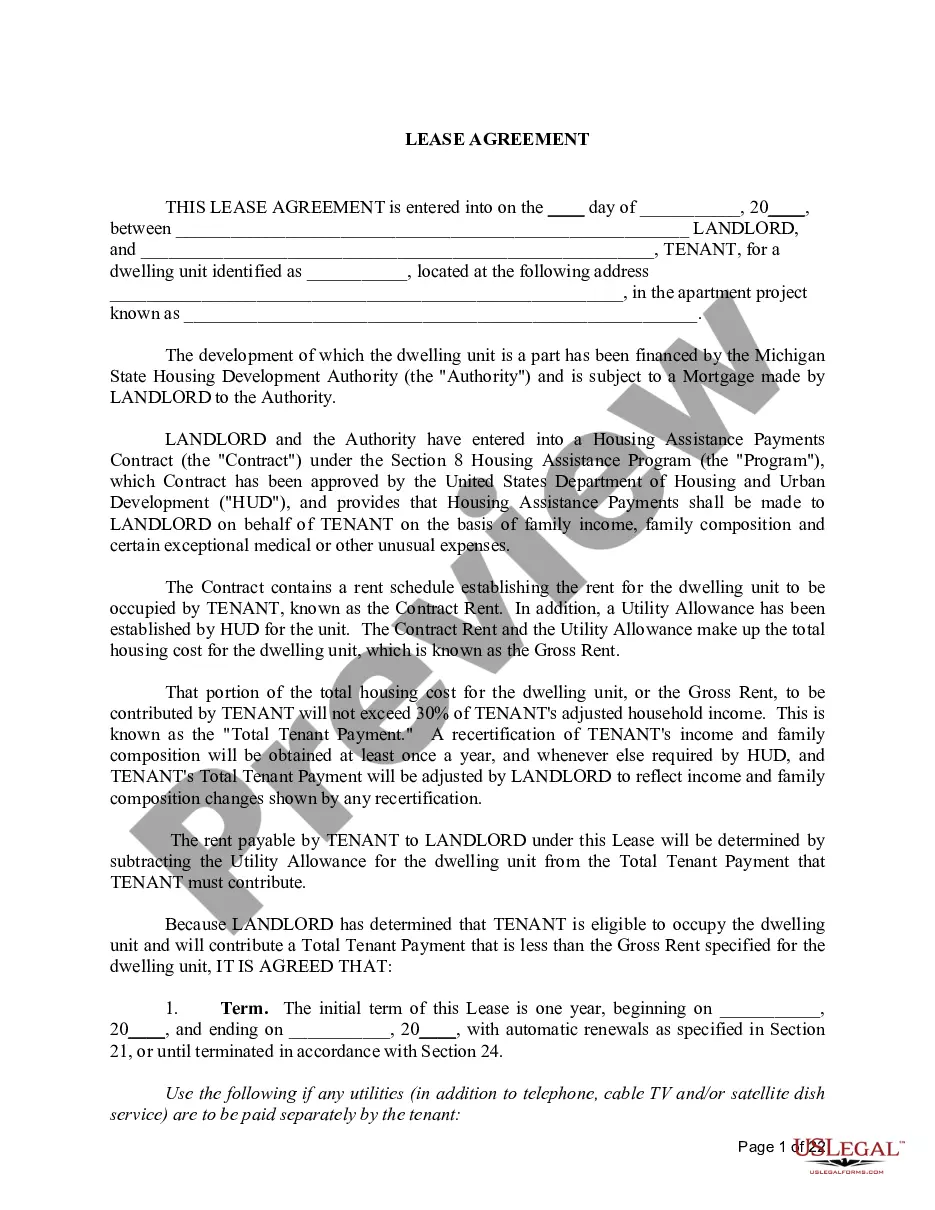
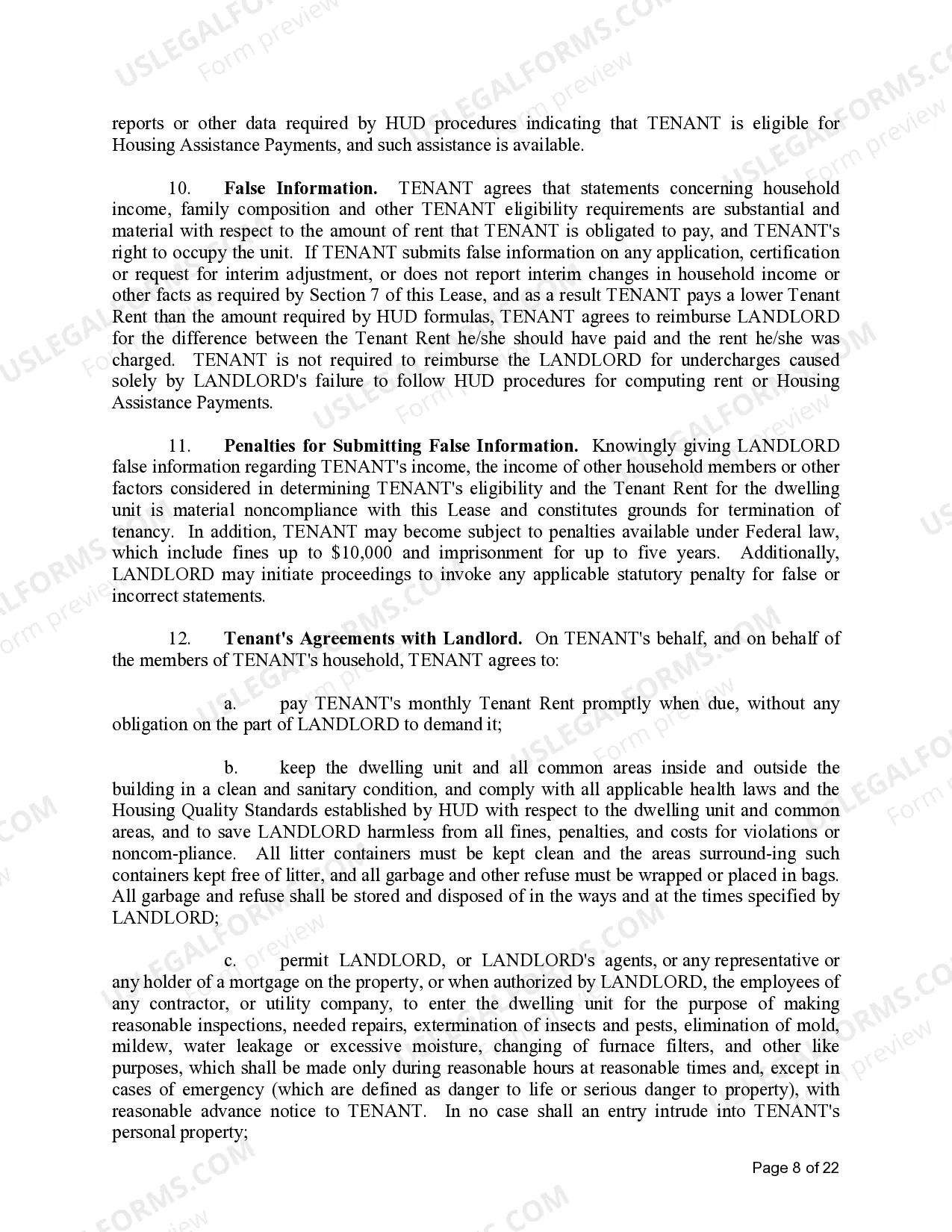
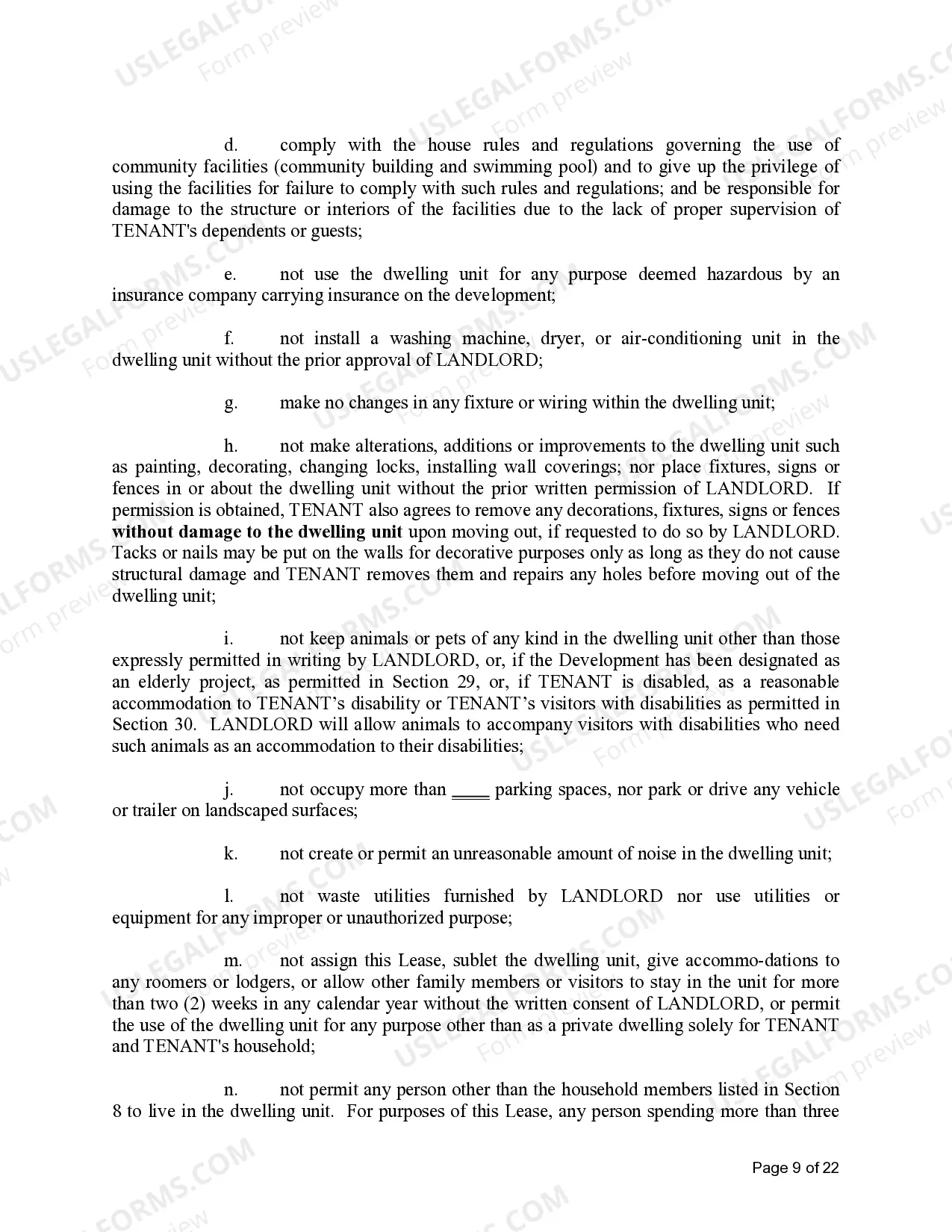
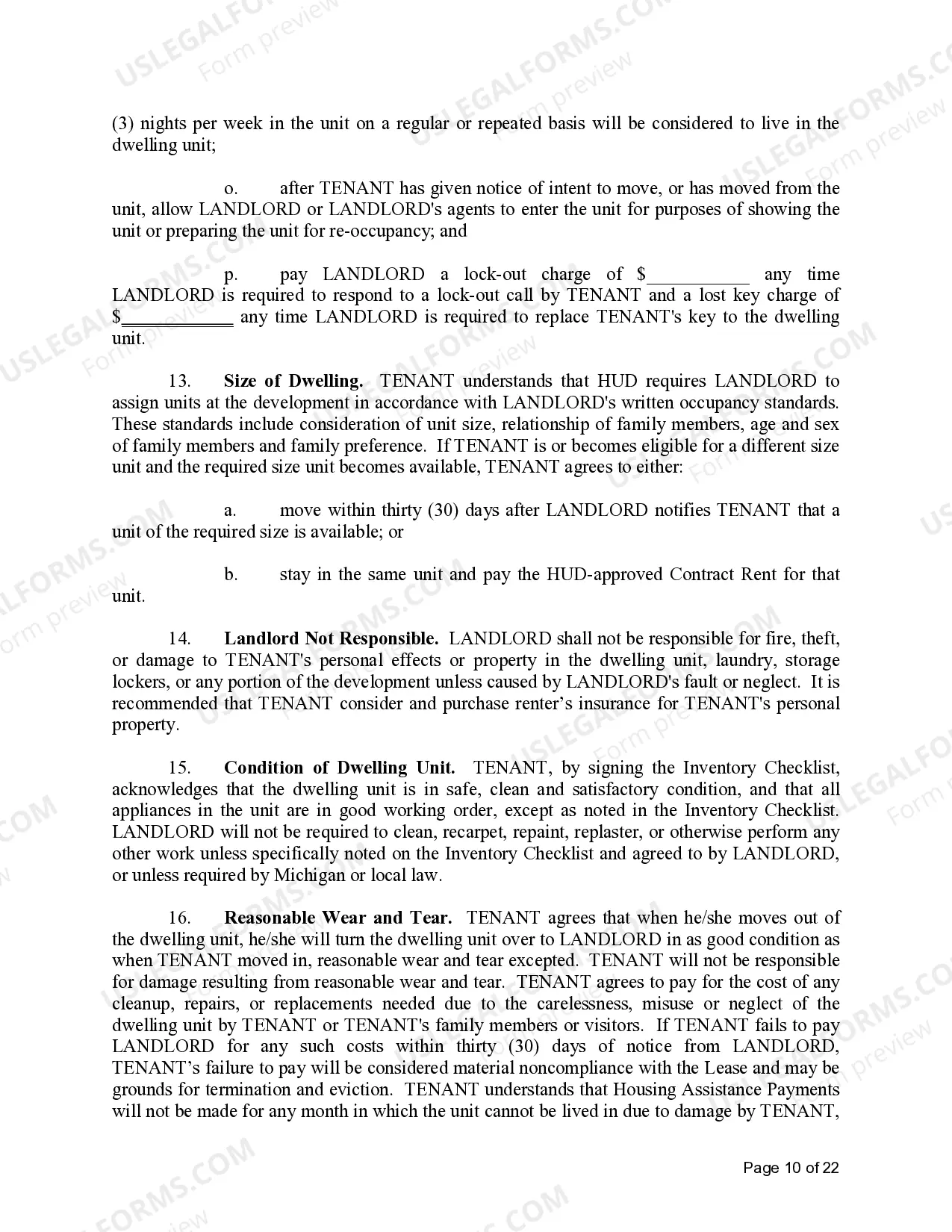
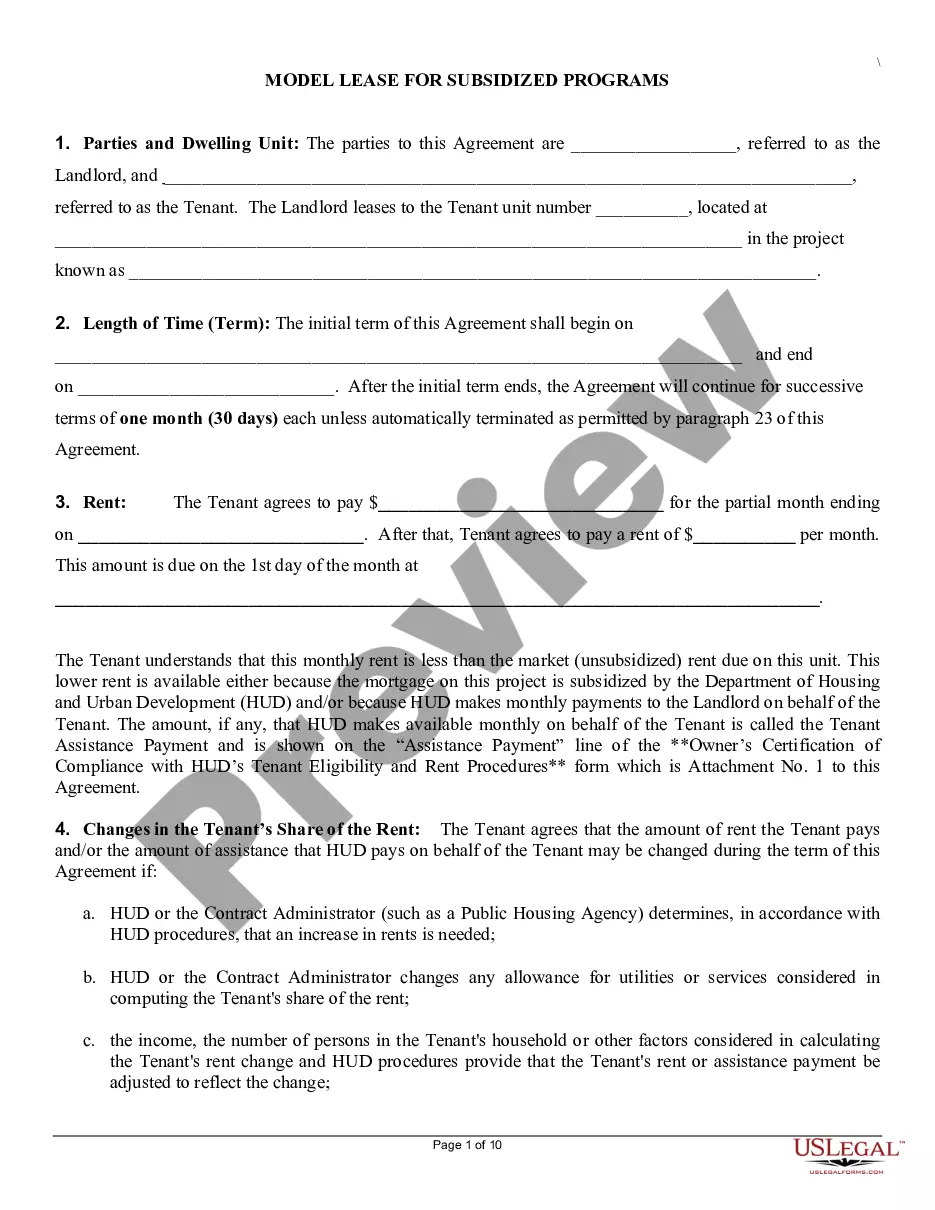
The Michigan Section 8 Lease Agreement is a formal contract between a landlord and a tenant participating in the Section 8 Housing Assistance Program. This lease outlines the terms of occupancy, including rent payments that are informed by the tenant's income and the utilities provided. It ensures compliance with both state and local housing laws while detailing the obligations and rights of both parties. This lease is specifically designed for properties supported by federal housing assistance, making it essential for both landlords and tenants involved in the program.
Key parts of this document
- Details of the landlord and tenant including names and addresses.
- Terms defining the length of the lease and automatic renewal clauses.
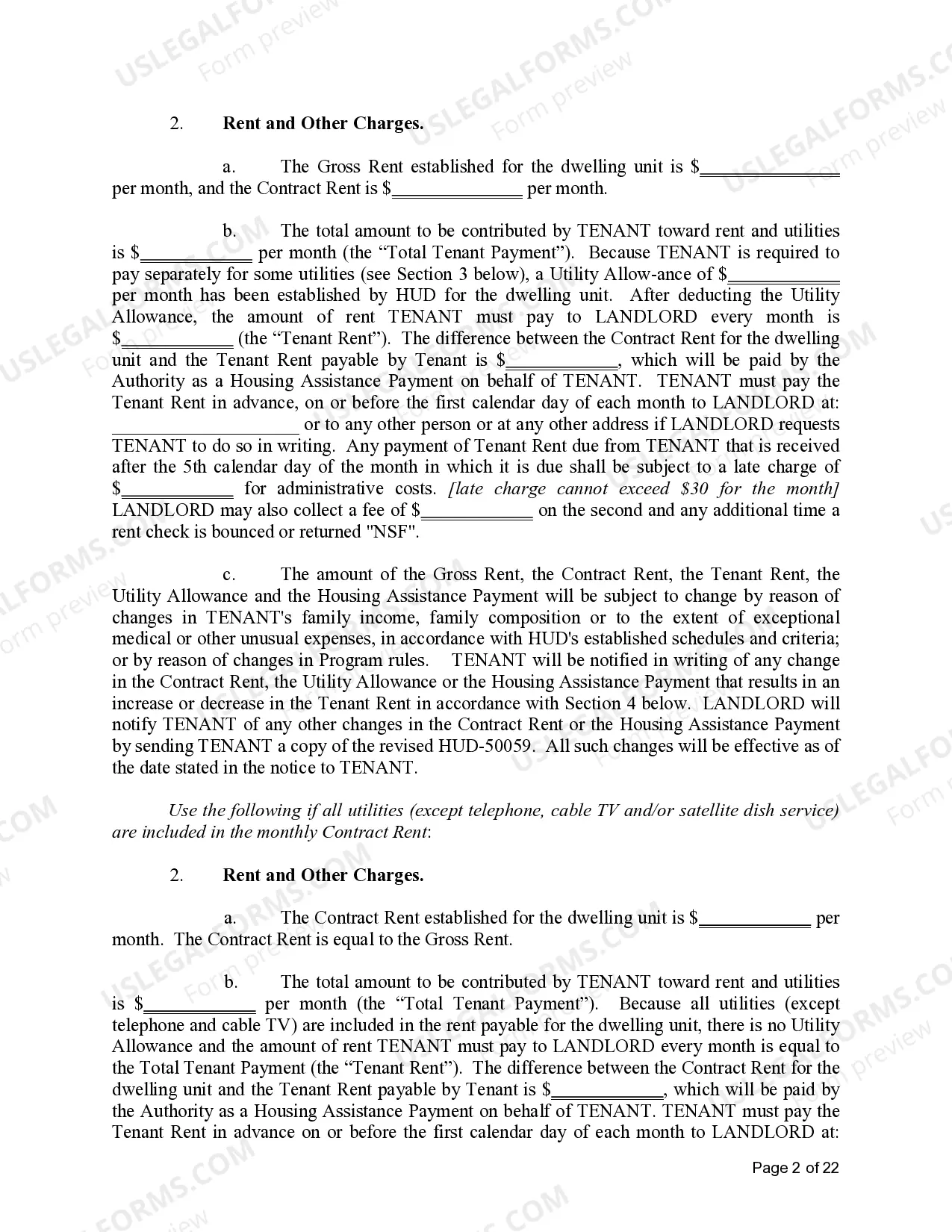
- Rent details including Gross Rent, Contract Rent, Tenant Rent, and Utility Allowance.
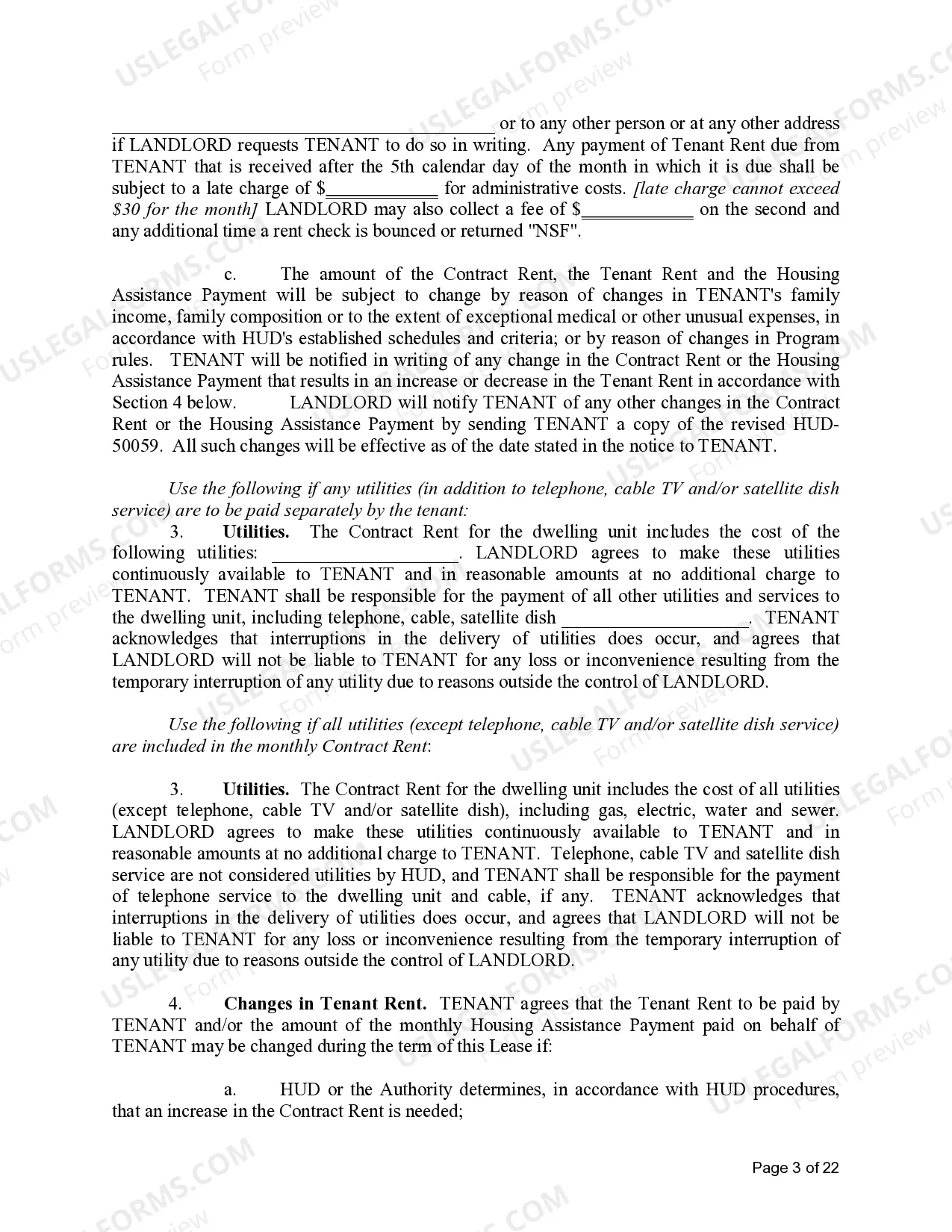
- Provisions about utilities, specifying which are covered and the tenant's responsibilities.
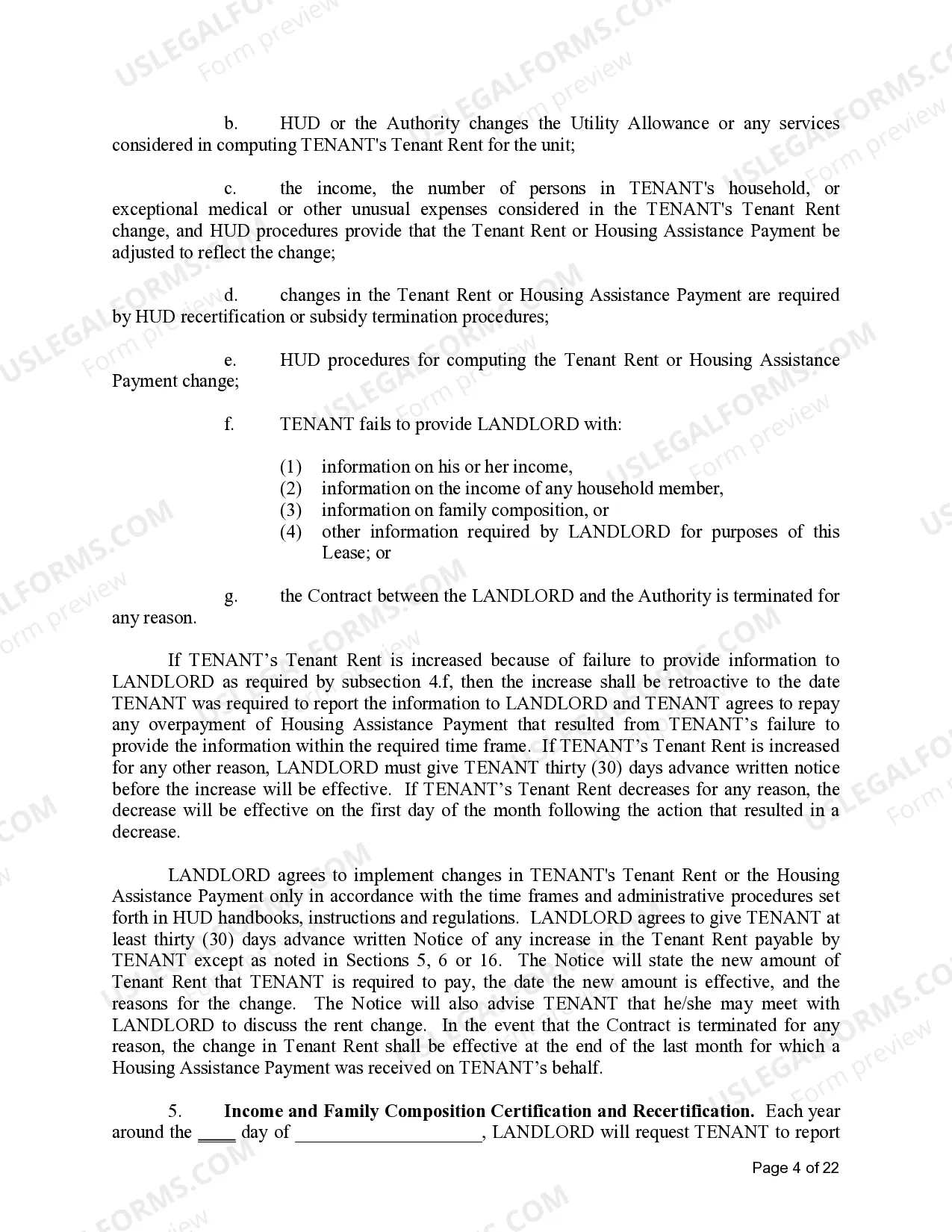
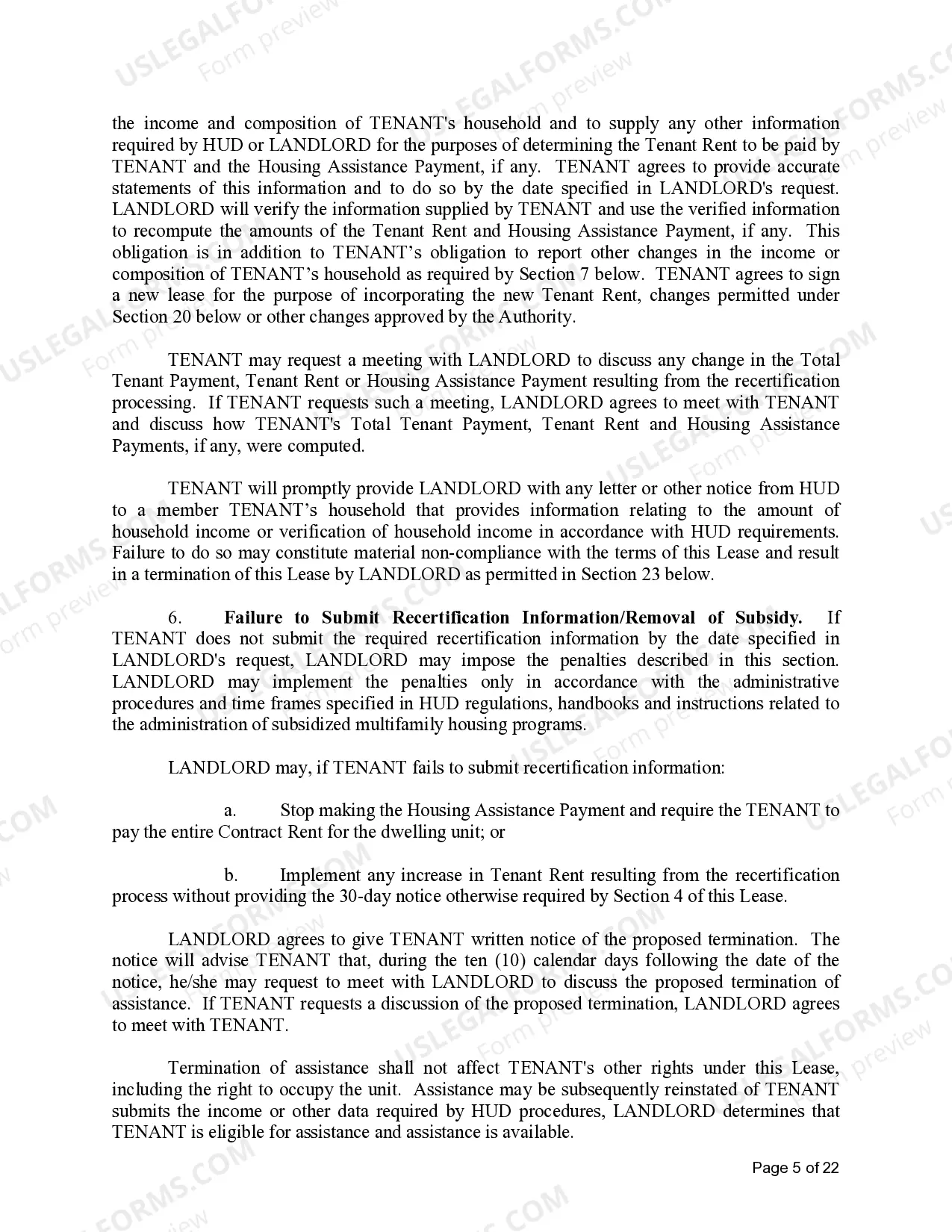
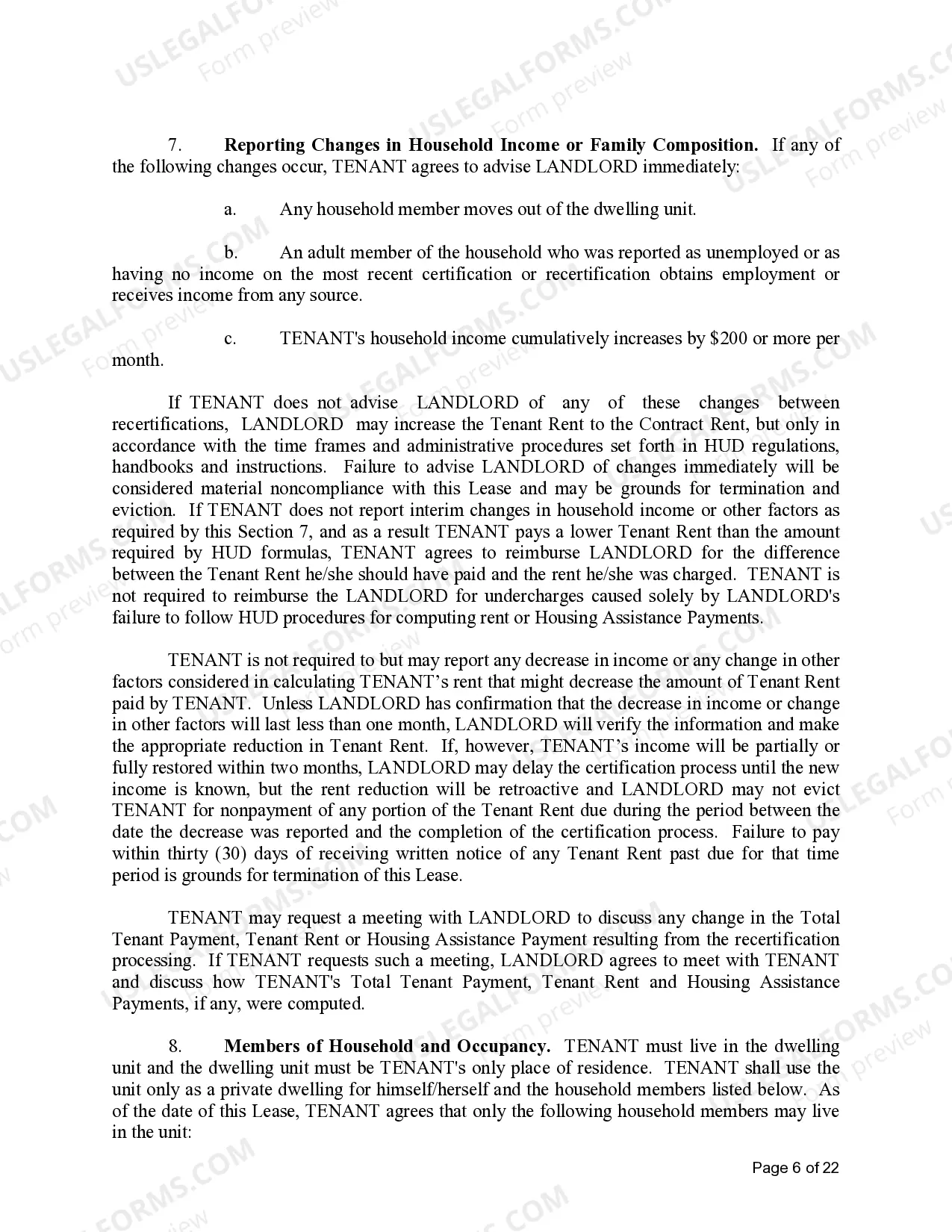
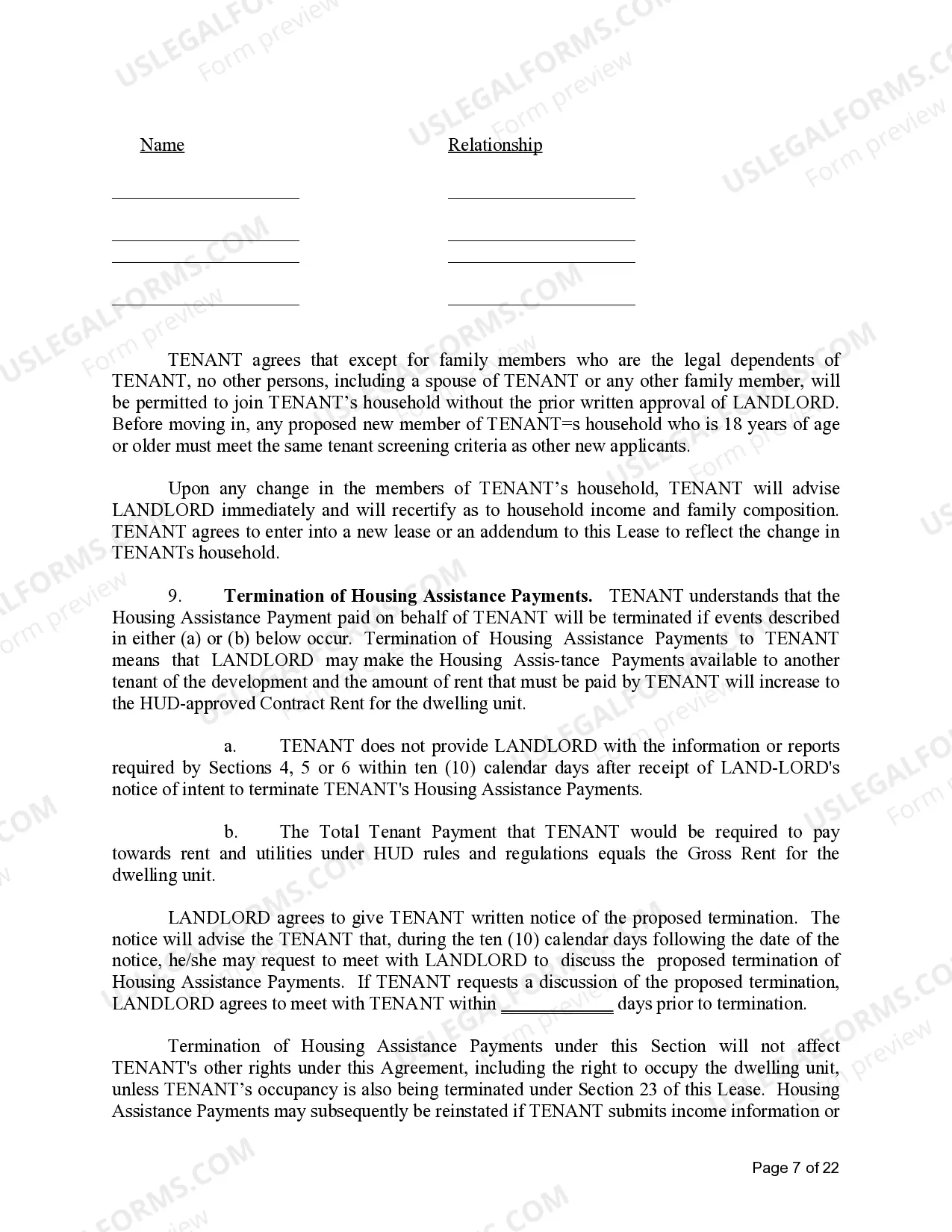
- Conditions for recertification of income and changes in household composition.
- Termination clauses detailing reasons for eviction or lease termination.

When this form is needed
This form should be used when entering into a rental agreement for a property participating in the Section 8 program in Michigan. It is necessary for landlords who accept housing assistance payments and for tenants who qualify for the program. You would typically use this form at the start of a tenancy or when renewing an existing lease under Section 8 guidelines.
Who needs this form
- Landlords renting properties under the Section 8 Housing Assistance Program in Michigan.
- Tenants who are approved for housing assistance and wish to lease an eligible dwelling.
- Property managers overseeing Section 8 rental agreements.
Completing this form step by step
- Identify the parties involved by entering the full names and addresses of the landlord and tenant.
- Specify the property details, including the address and any specific apartment project names.
- Enter the lease term dates, starting and ending, along with any renewal provisions.
- Detail the financial aspects, including Gross Rent, Contract Rent, the amount to be contributed by the tenant, and any applicable Utility Allowance.
- Ensure both parties sign and date the lease agreement to formalize the contract.
Does this form need to be notarized?
This form does not typically require notarization unless specified by local law. However, it is recommended to review any additional state or local requirements that may apply at the time of signing.
Get your form ready online
Our built-in tools help you complete, sign, share, and store your documents in one place.
Make edits, fill in missing information, and update formatting in US Legal Forms—just like you would in MS Word.
Download a copy, print it, send it by email, or mail it via USPS—whatever works best for your next step.
Sign and collect signatures with our SignNow integration. Send to multiple recipients, set reminders, and more. Go Premium to unlock E-Sign.
If this form requires notarization, complete it online through a secure video call—no need to meet a notary in person or wait for an appointment.
We protect your documents and personal data by following strict security and privacy standards.

Make edits, fill in missing information, and update formatting in US Legal Forms—just like you would in MS Word.

Download a copy, print it, send it by email, or mail it via USPS—whatever works best for your next step.

Sign and collect signatures with our SignNow integration. Send to multiple recipients, set reminders, and more. Go Premium to unlock E-Sign.

If this form requires notarization, complete it online through a secure video call—no need to meet a notary in person or wait for an appointment.

We protect your documents and personal data by following strict security and privacy standards.
Avoid these common issues
- Failing to specify the correct rental amount or Utility Allowance.
- Not renewing the lease before its expiration leads to confusion about tenancy terms.
- Omitting necessary signatures, which may invalidate the lease.
- Neglecting to provide a forward address for future communications.
- Not updating the lease to reflect changes in the tenantâs income or household composition.
Why complete this form online
- Convenience of filling out and downloading the lease from anywhere, saving time.
- Editability allows for customization based on specific rental situations.
- Access to reliable, attorney-drafted documents ensures compliance with legal standards.
- Easy storage and retrieval of your lease agreements in a digital format.
Legal use & context
- This lease is legally binding and must comply with Michigan landlord-tenant laws.
- It protects the rights of both tenants and landlords concerning occupancy and rental terms.
- It is enforceable in court if either party fails to comply with the terms outlined in the lease.
Main things to remember
- The Michigan Section 8 Lease Agreement is essential for compliance with housing assistance requirements.
- It clarifies the responsibilities of both landlords and tenants under a federally supported rental framework.
- Proper completion and adherence to this lease can prevent lawful disputes between parties.
Glossary of terms used in this form
- Gross Rent: The total housing cost, including utilities, that the landlord charges.
- Contract Rent: The amount agreed upon for rent that will be subsidized by the housing authority.
- Tenant Rent: The portion of the total rent the tenant is responsible for paying after assistance.
- Utility Allowance: A reduction in rent calculated based on expected utility costs.
Looking for another form?



Form popularity
FAQ
Roommates cannot evict one another. The eviction process is only available in landlord-tenant relationships. This means you cannot force your roommate to leave the home, and your roommate cannot force you to leave the home. This is true even if your roommate stopped paying for their portion of rent and utilities.
Usually a month-to-month tenancy, the lease is considered renewed at the end of each rental period (month-to-month or week-to-week, depending on how often rent must be paid). Termination procedure is governed by statute and requires notice. tenancy. This type of tenancy is created by operation of law only.
The lease agreement is between the landlord and tenant only. Occupants are not tenants; they are not named on the lease, but you can authorize them to stay on the property as a landlord. Occupants do not have financial responsibility for the lease and have no specific rights under landlord/tenant law.
term lease ends on its own without further action. However, many leases include the provision that the lease converts to a monthtomonth tenancy at the end of the fixed term.
Yes, someone can live with the tenant without being on the lease. However, it is important to distinguish the difference between a guest and a long-term guest.
Landlords are not legally required to accept Section 8 vouchers and may turn you down if you want to use vouchers. However, it is illegal for them to refuse to rent to you because you have a disability.
You have the right to live in a home that is in good, habitable condition. This means both your home and the premises, such as a yard, should be safe and in good repair. Your landlord must also keep any common areas in good enough shape for their normal use.
Can someone live with you without being on the lease? Yes, someone can live with the tenant without being on the lease. However, it is important to distinguish the difference between a guest and a long-term guest.