Maine Transfer on Death Deed or TOD - Beneficiary Deed for Two Individuals to Two Individuals
About this form
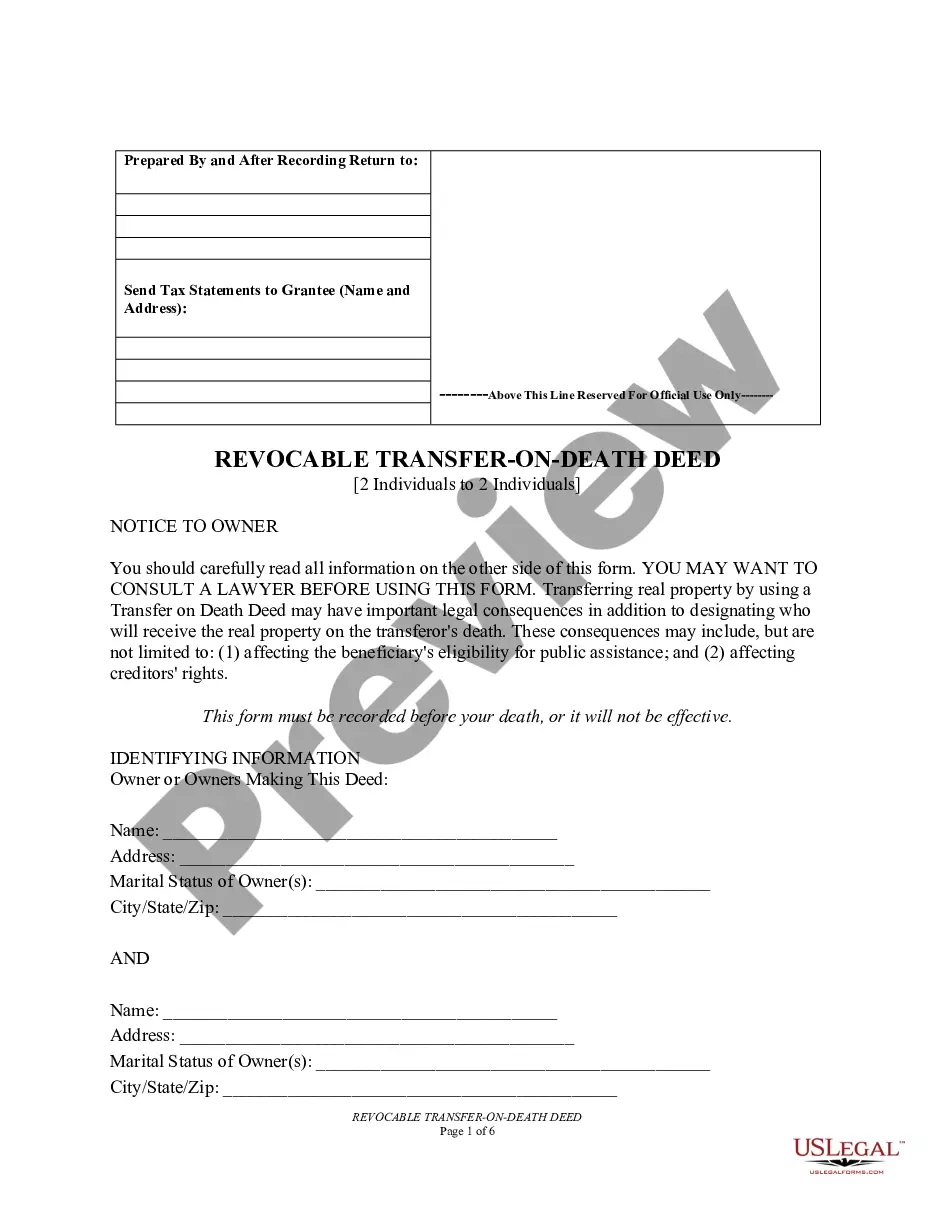
The Transfer on Death Deed (TOD) is a legal document used to transfer ownership of real property upon the death of the owner, known as the Grantor. This deed allows two individuals to designate two beneficiaries to inherit the property without the need for probate. Unlike other methods of transfer, a Transfer on Death Deed ensures that the owner retains control of the property during their lifetime, as it does not take effect until after their death.
Main sections of this form
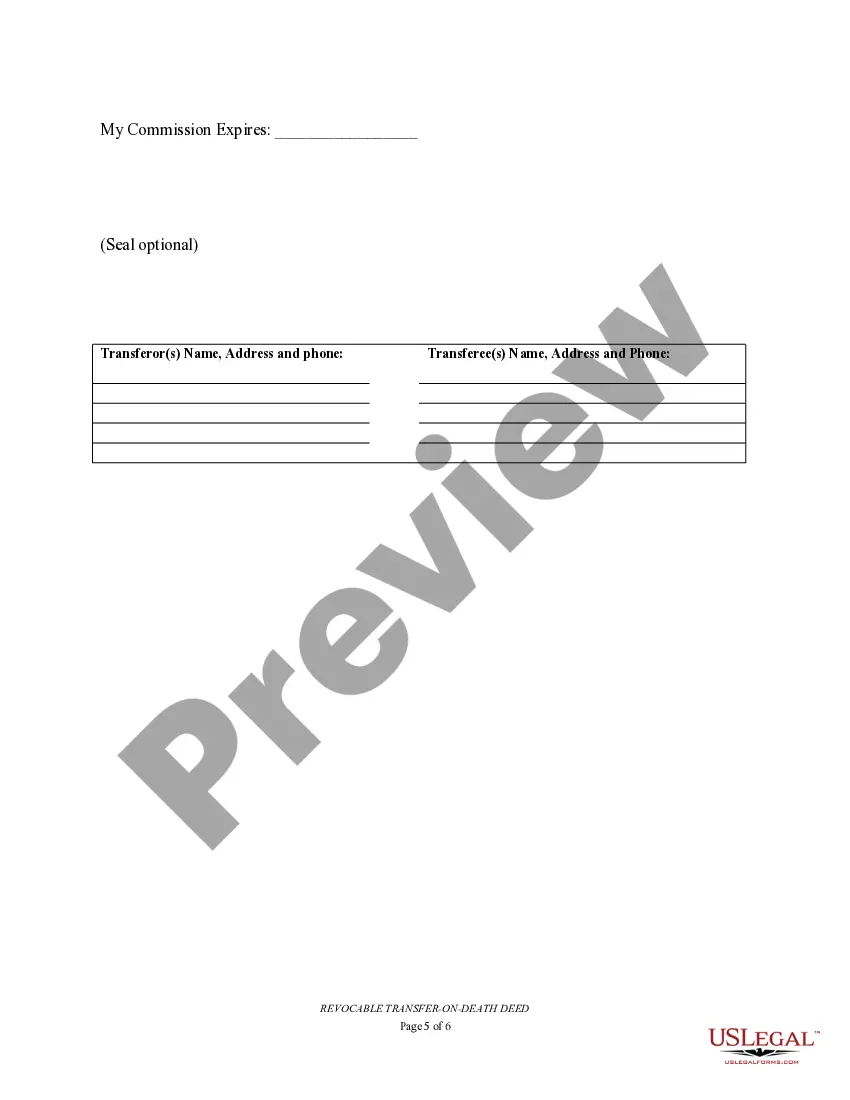
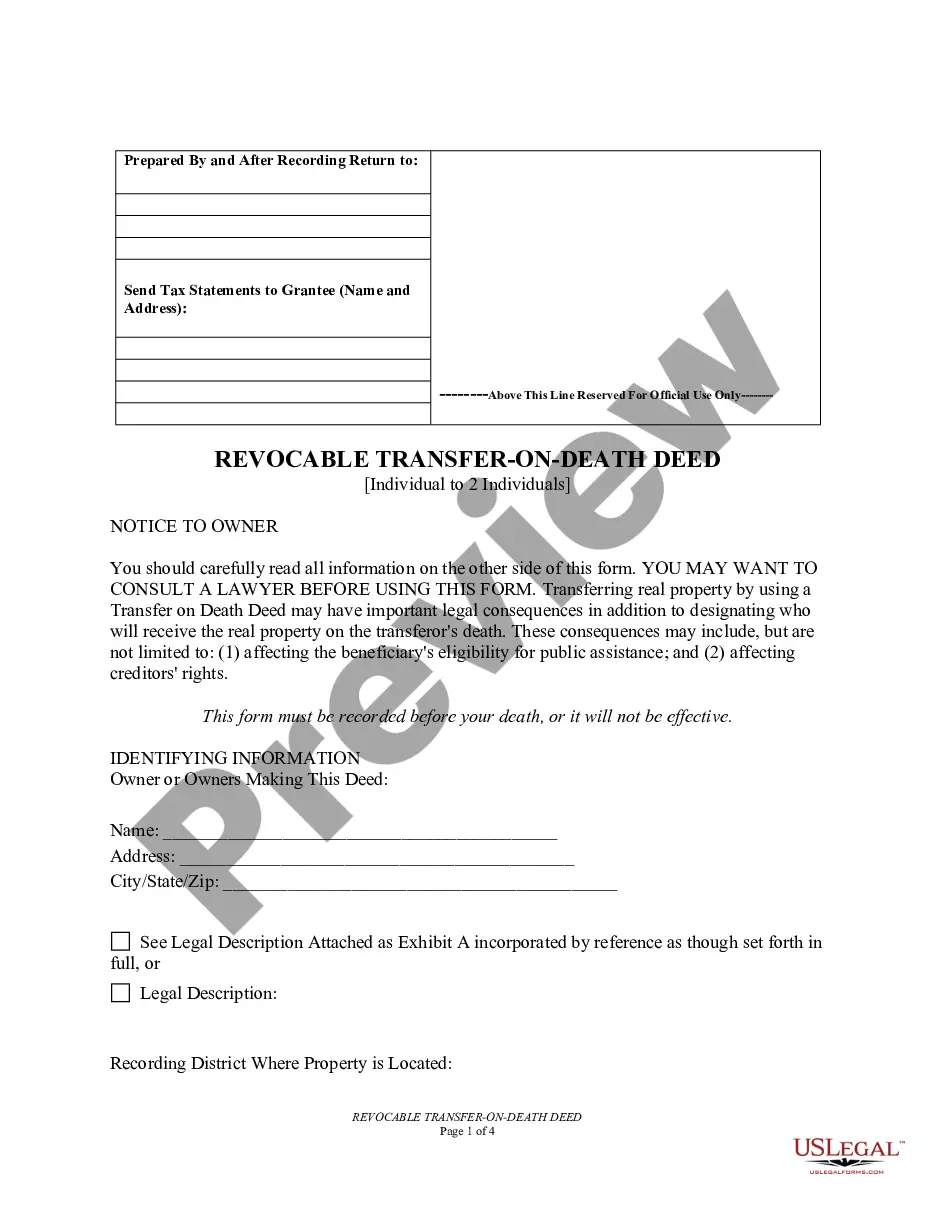
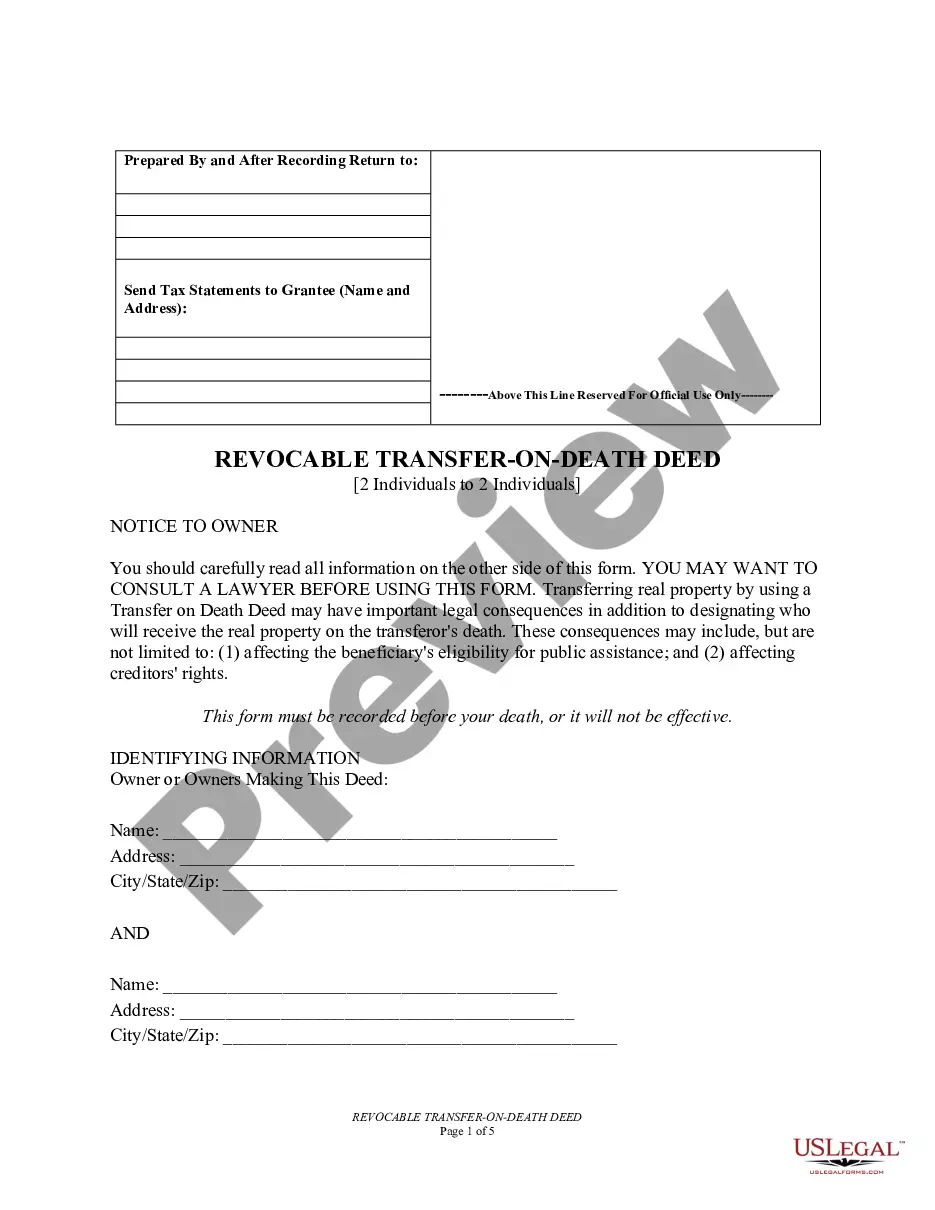
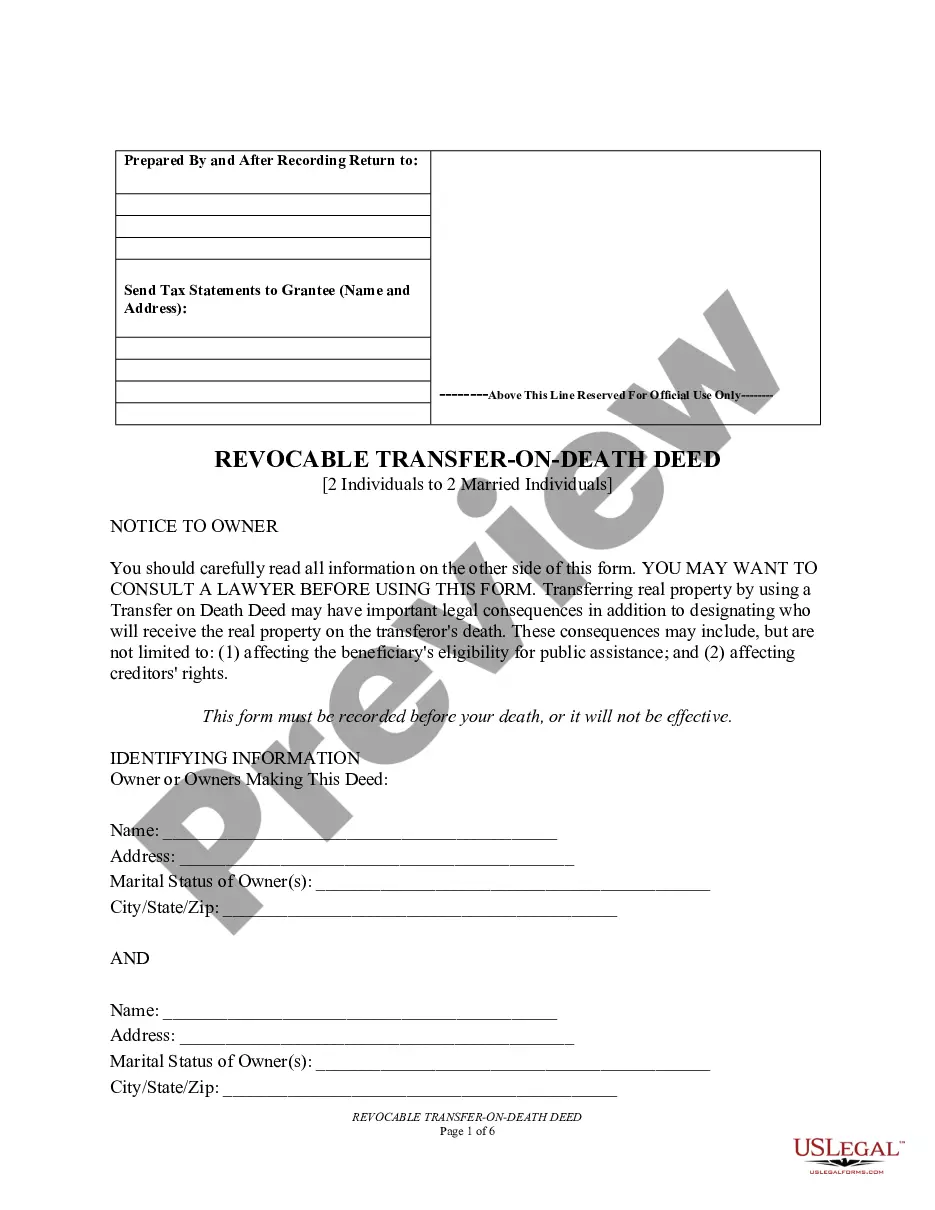
- Identifying information for the Grantors, including names, addresses, and marital status.
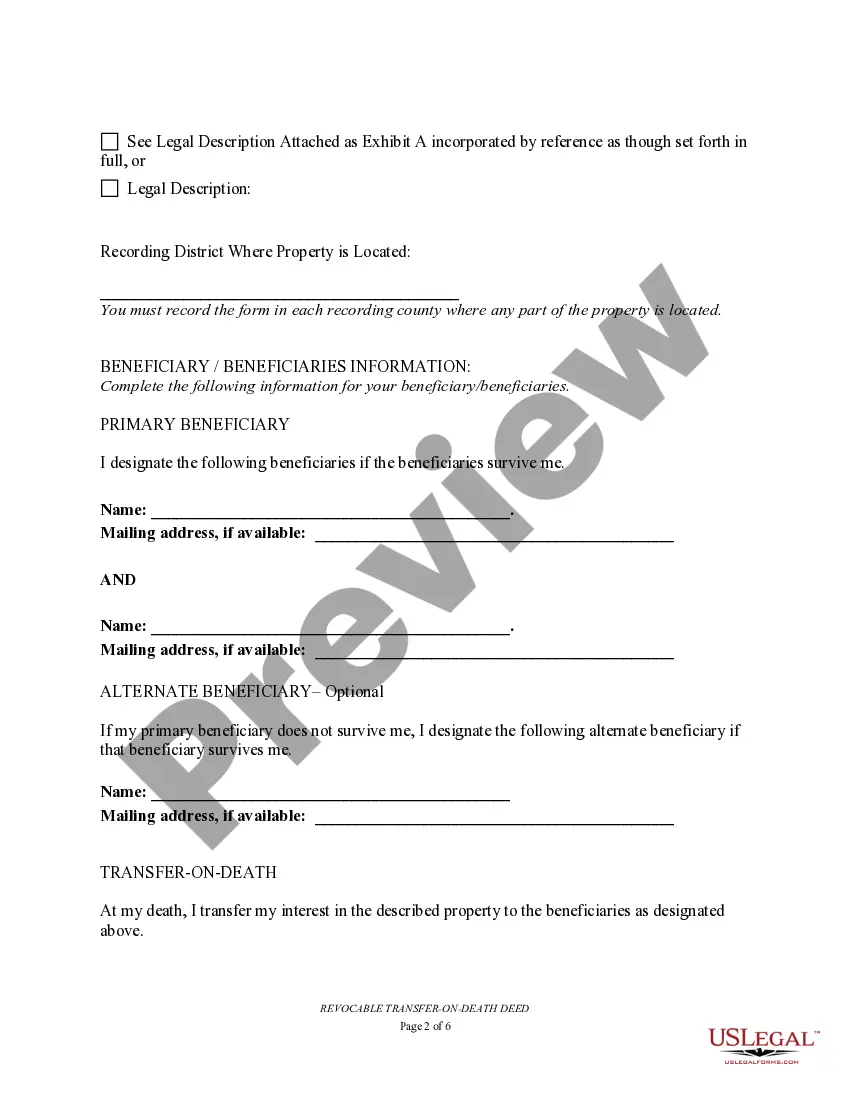
- Details of the property being transferred, with an option to include a legal description as an attachment.
- Designated primary beneficiaries who will receive the property after the Grantor's death.
- An optional section for naming alternate beneficiaries if the primary beneficiaries do not survive the Grantor.
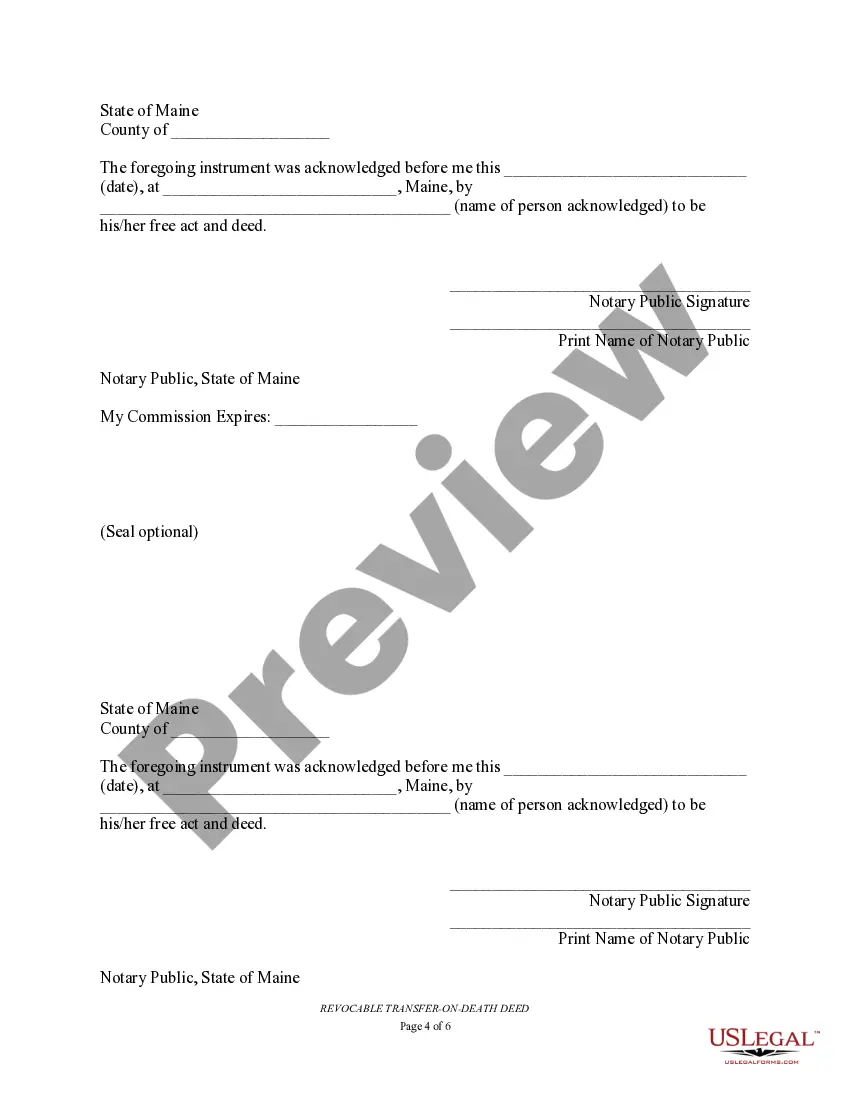
- Space for notarization to validate the deed.




When to use this form
This form is typically used when the property owner wants to ensure that their property automatically transfers to designated beneficiaries upon their death, bypassing the lengthy probate process. It is particularly useful for individuals who wish to retain full control of their real estate assets during their lifetime while clearly designating who will inherit the property later.
Intended users of this form
- Individuals looking to transfer real property to two beneficiaries upon death.
- Property owners who wish to avoid probate for the designated property.
- Couples who want to jointly name beneficiaries for a property they own together.
How to complete this form
- Identify the Grantors by providing their names, addresses, and marital status in the designated fields.
- Enter the legal description of the property being transferred or attach it as Exhibit A.
- Fill out the details for the primary beneficiaries, ensuring to include names and mailing addresses if available.
- Optionally, designate alternate beneficiaries who will inherit if the primary beneficiaries do not survive the Grantor.
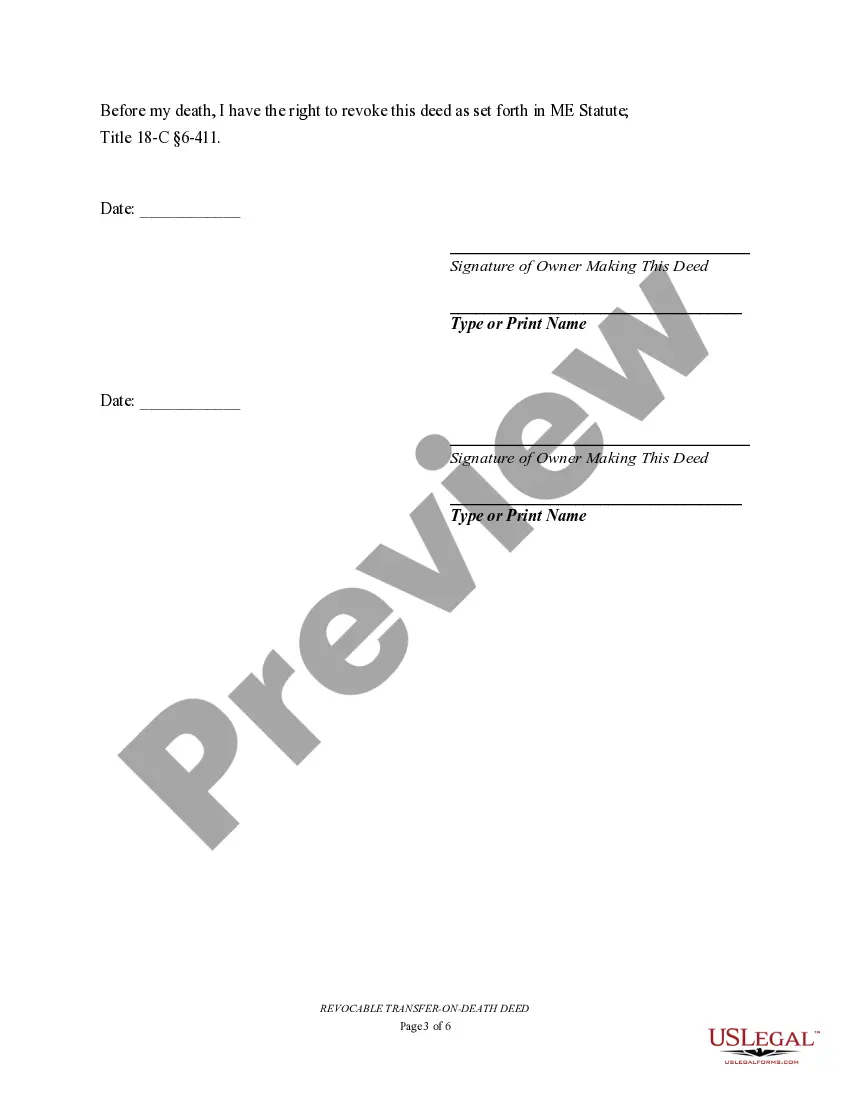
- Sign and date the deed in the presence of a notary public to validate the document.
Does this document require notarization?
Yes, this form must be notarized to be legally valid. Notarization ensures that the signatures of the Grantors are verified, adding a layer of protection against fraud. US Legal Forms offers integrated online notarization services, making it easy for users to complete this process securely and conveniently.
Get your form ready online
Our built-in tools help you complete, sign, share, and store your documents in one place.
Make edits, fill in missing information, and update formatting in US Legal Forms—just like you would in MS Word.
Download a copy, print it, send it by email, or mail it via USPS—whatever works best for your next step.
Sign and collect signatures with our SignNow integration. Send to multiple recipients, set reminders, and more. Go Premium to unlock E-Sign.
If this form requires notarization, complete it online through a secure video call—no need to meet a notary in person or wait for an appointment.
We protect your documents and personal data by following strict security and privacy standards.

Make edits, fill in missing information, and update formatting in US Legal Forms—just like you would in MS Word.

Download a copy, print it, send it by email, or mail it via USPS—whatever works best for your next step.

Sign and collect signatures with our SignNow integration. Send to multiple recipients, set reminders, and more. Go Premium to unlock E-Sign.

If this form requires notarization, complete it online through a secure video call—no need to meet a notary in person or wait for an appointment.

We protect your documents and personal data by following strict security and privacy standards.
Mistakes to watch out for
- Failing to record the deed before the Grantor's death, rendering it ineffective.
- Not providing complete information for beneficiaries, which may lead to disputes.
- Using incorrect property descriptions that could cause confusion or legal challenges.
Key takeaways
- The Transfer on Death Deed enables property transfer without probate.
- It must be properly recorded to take effect after the Grantor's death.
- Notarization is required for the deed to be valid.
Looking for another form?
Form popularity
FAQ
While a Transfer on Death Deed in Maine has many benefits, there are some potential disadvantages to consider. For instance, it may not provide the same level of control as a will, and once established, you cannot change the deed's beneficiaries without formally revoking it. Additionally, if a beneficiary predeceases you, the property might not transfer as intended. It’s wise to consult with a legal professional for guidance on your specific situation.