Maine Transfer on Death Deed or TOD - Beneficiary Deed for Two Married Individuals to Two Individuals
About this form
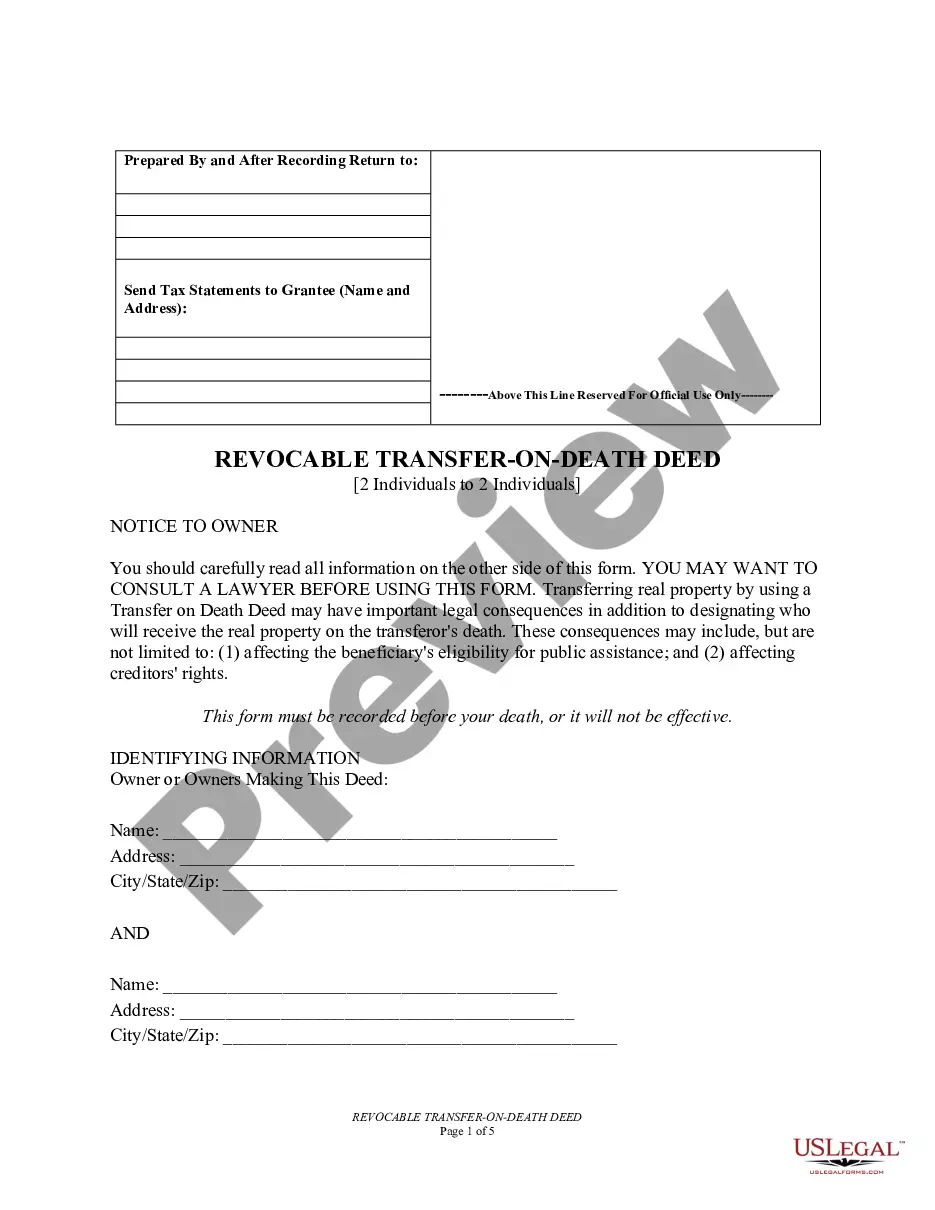
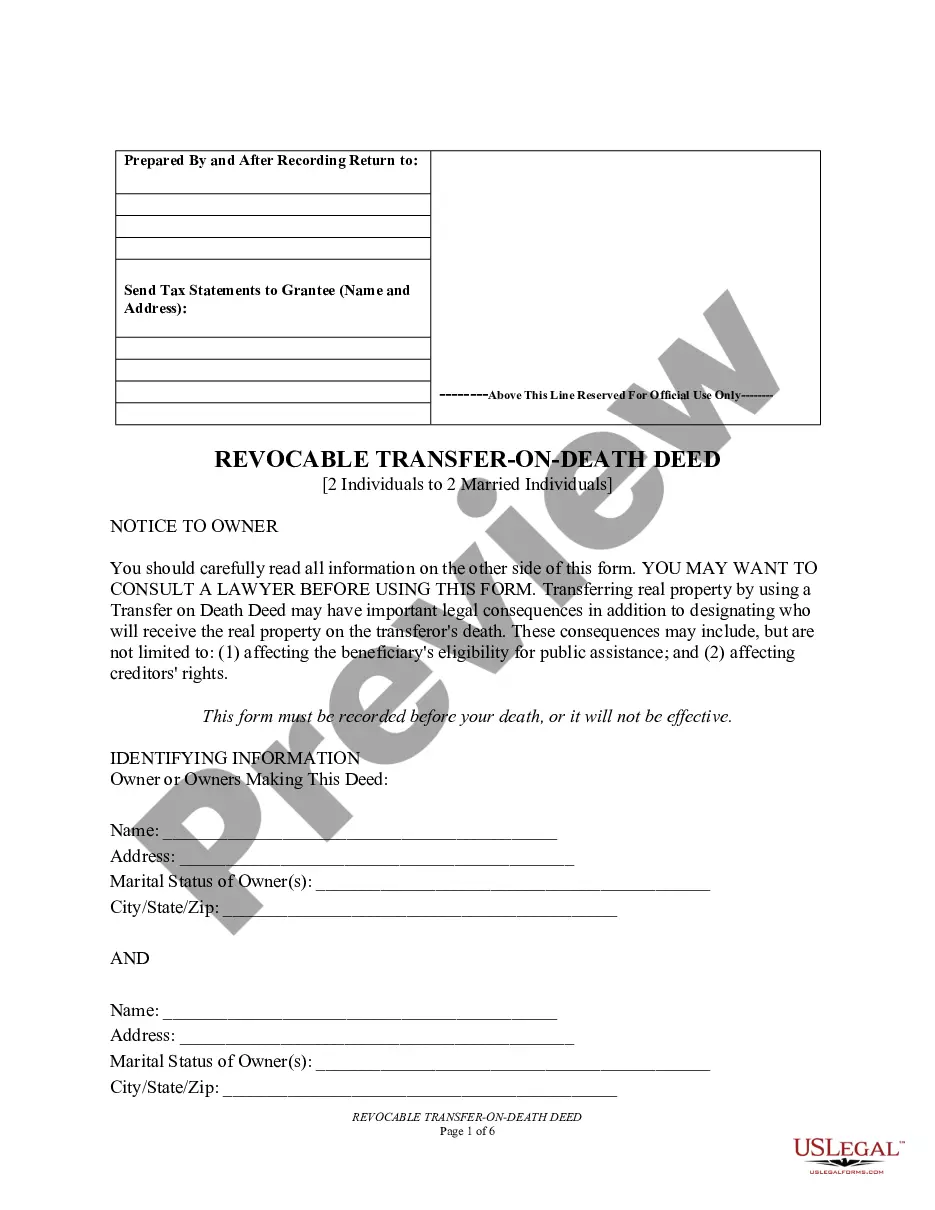
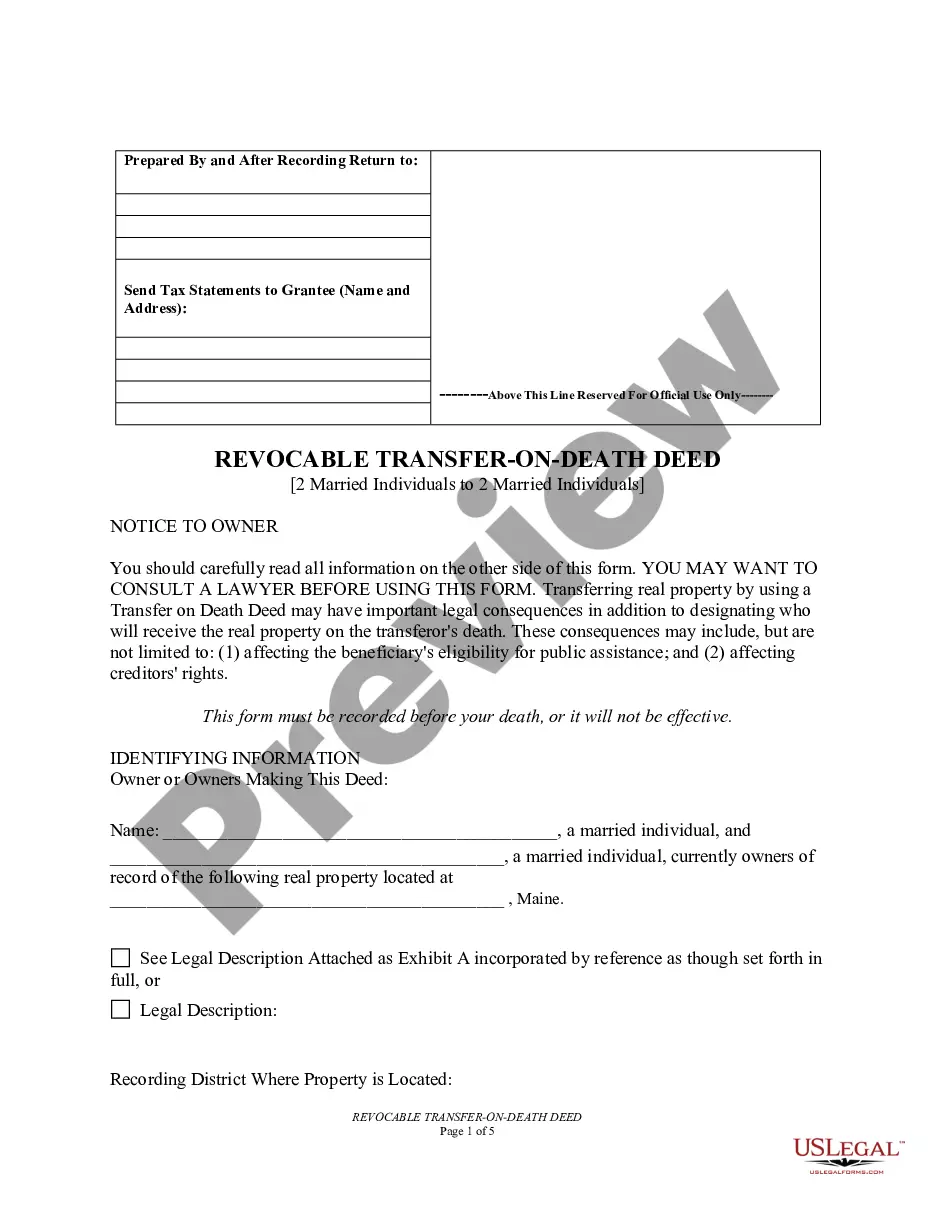
The Transfer on Death Deed or TOD - Beneficiary Deed for Two Married Individuals to Two Individuals is a legal document that enables property owners to transfer their real estate title to designated beneficiaries upon their death. This deed allows the owners to maintain control over the property while they're alive, as it does not transfer any present ownership interest, and it can be revoked at any time. Unlike traditional wills, this form avoids probate, making the transfer of property more straightforward for the beneficiaries.
Main sections of this form
- Identifying information for owners and beneficiaries.
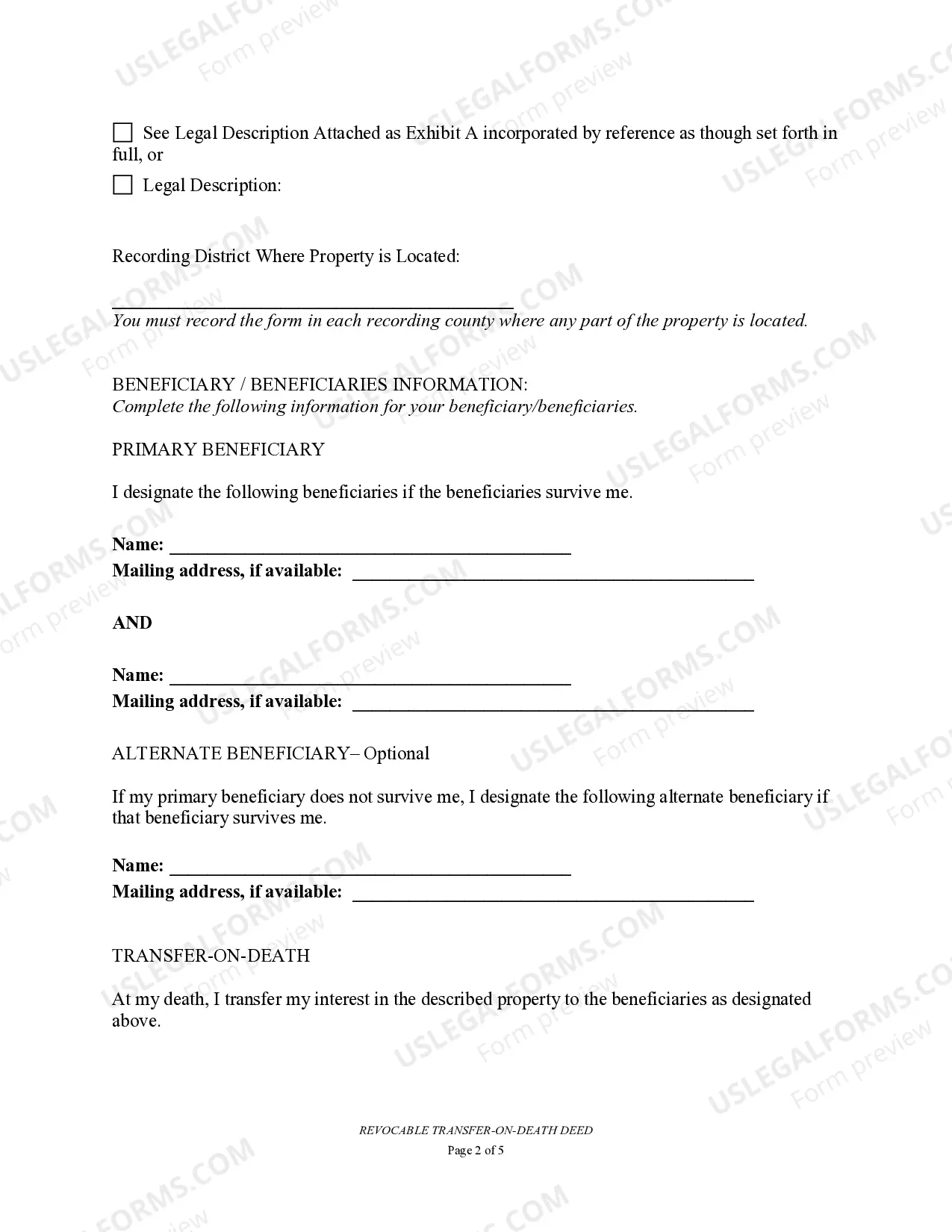
- Legal description of the property being transferred.
- Primary and alternate beneficiary designations.
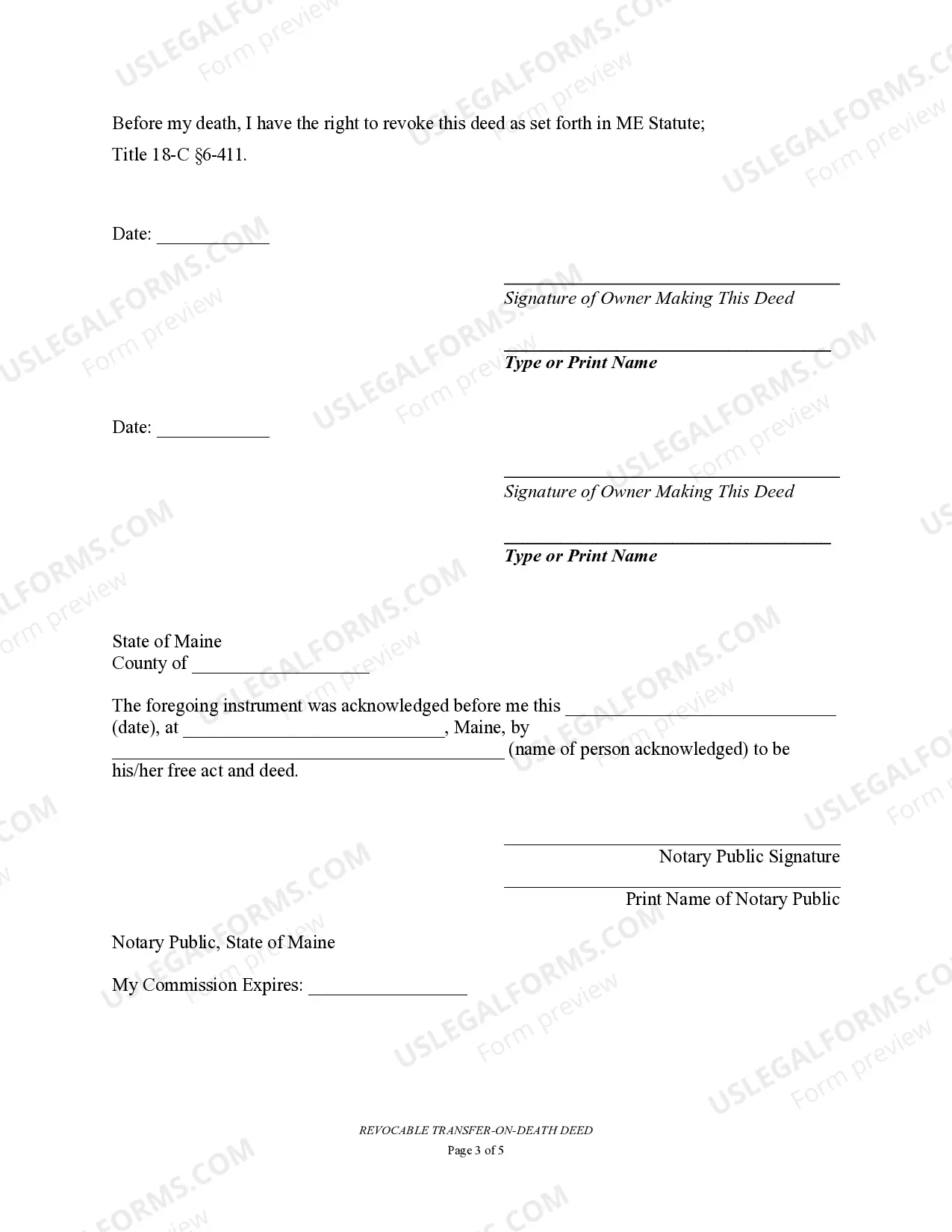
- Consent section for the owners with space for signatures and dates.
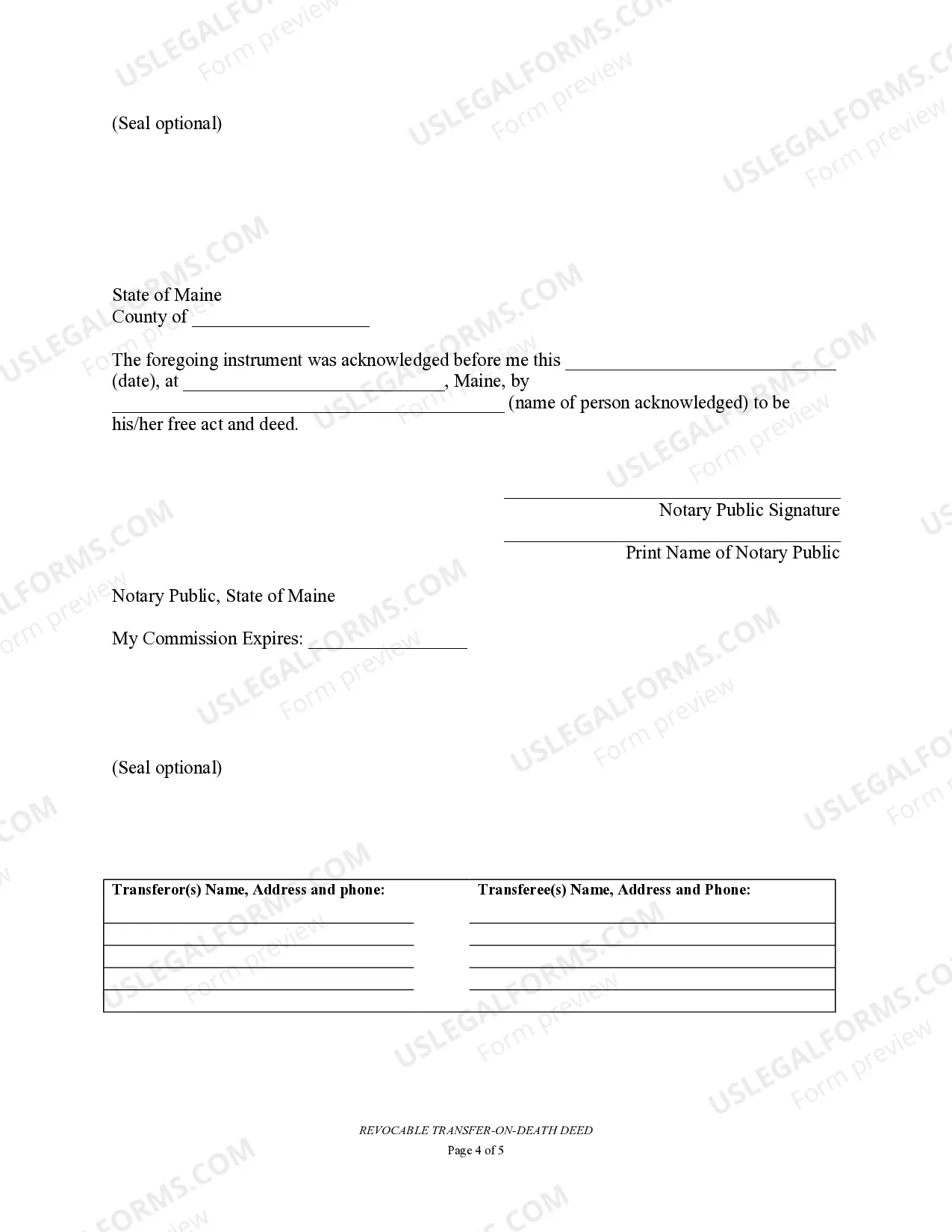
- Notary acknowledgment for legal validation.




When this form is needed
This form is used when two married individuals want to ensure that their property is transferred directly to specific individuals upon their death. It is particularly useful for couples who wish to avoid probate and streamline the inheritance process for their beneficiaries. Situations may include transferring a family home to children or any trusted friends or relatives without complications after the owners pass away.
Who should use this form
This form is intended for:
- Married couples who own real property together.
- Individuals who want to designate beneficiaries for their real estate assets.
- Those seeking to avoid probate for their property upon death.
Instructions for completing this form
- Identify the current owners by filling in their names and addresses.
- Specify the legal description of the property or attach an exhibit if necessary.
- List the primary beneficiaries who will receive the property upon your death.
- Optionally, identify alternate beneficiaries in case the primary beneficiaries do not survive you.
- Sign and date the form in the presence of a notary public.
- Record the completed form in the appropriate recording office.
Notarization guidance
Yes, this form must be notarized to be legally valid. This ensures that the signatures are confirmed and provides a legal safeguard for the document's integrity. US Legal Forms offers integrated online notarization, allowing you to complete the process securely via video call at any time.
Get your form ready online
Our built-in tools help you complete, sign, share, and store your documents in one place.
Make edits, fill in missing information, and update formatting in US Legal Forms—just like you would in MS Word.
Download a copy, print it, send it by email, or mail it via USPS—whatever works best for your next step.
Sign and collect signatures with our SignNow integration. Send to multiple recipients, set reminders, and more. Go Premium to unlock E-Sign.
If this form requires notarization, complete it online through a secure video call—no need to meet a notary in person or wait for an appointment.
We protect your documents and personal data by following strict security and privacy standards.

Make edits, fill in missing information, and update formatting in US Legal Forms—just like you would in MS Word.

Download a copy, print it, send it by email, or mail it via USPS—whatever works best for your next step.

Sign and collect signatures with our SignNow integration. Send to multiple recipients, set reminders, and more. Go Premium to unlock E-Sign.

If this form requires notarization, complete it online through a secure video call—no need to meet a notary in person or wait for an appointment.

We protect your documents and personal data by following strict security and privacy standards.
Mistakes to watch out for
- Failing to sign the form or have it notarized appropriately.
- Not recording the deed before the owner's death.
- Improperly describing the property in the legal description section.
- Omitting the alternate beneficiary information if desired.
Why use this form online
- Convenient and easy to download directly from your home.
- Editable templates allow for customization to fit your specific needs.
- Access to legal templates prepared by licensed attorneys ensures accuracy.
Legal use & context
- This deed allows property owners to ensure a smooth transition of their property after death without going through probate.
- It is essential to consult with a lawyer to understand potential impacts on taxes and eligibility for public assistance for beneficiaries.
Quick recap
- The Transfer on Death Deed is a useful tool for married couples to control property inheritance.
- Proper completion and recording of the form is crucial for its effectiveness.
- Consulting with a legal professional is advisable to navigate potential implications that come with property transfer.
Looking for another form?
Form popularity
FAQ
Yes, a transfer on death deed can be structured as a joint deed. This arrangement allows two married individuals to share property ownership and provide for a smooth transfer upon death. However, it's vital to follow the legal requirements in Maine to ensure that the deed is valid and enforceable.
Choosing between a transfer on death deed and a beneficiary deed depends largely on your specific needs and circumstances. A Maine Transfer on Death Deed or TOD - Beneficiary Deed for Two Married Individuals to Two Individuals can simplify the transfer process, while a beneficiary deed may offer broader options for asset distribution. Carefully evaluate the benefits and consult with professionals to make the best choice.
Absolutely, you can designate two beneficiaries on a Maine Transfer on Death Deed or TOD - Beneficiary Deed for Two Married Individuals to Two Individuals. This option allows you to share property equally or assign different percentages to each beneficiary. Ensure that this is clearly specified in the deed to avoid any future complications.
Yes, you can have more than one person listed on a Maine Transfer on Death Deed or TOD - Beneficiary Deed for Two Married Individuals to Two Individuals. This allows you to designate multiple beneficiaries, enhancing the flexibility of your estate plan. However, it's important to consult with a legal professional to ensure proper designation and understand the implications of sharing ownership.