Maine Warranty Deed from Parent to Six Children with Reserved Life Estate
Overview of this form
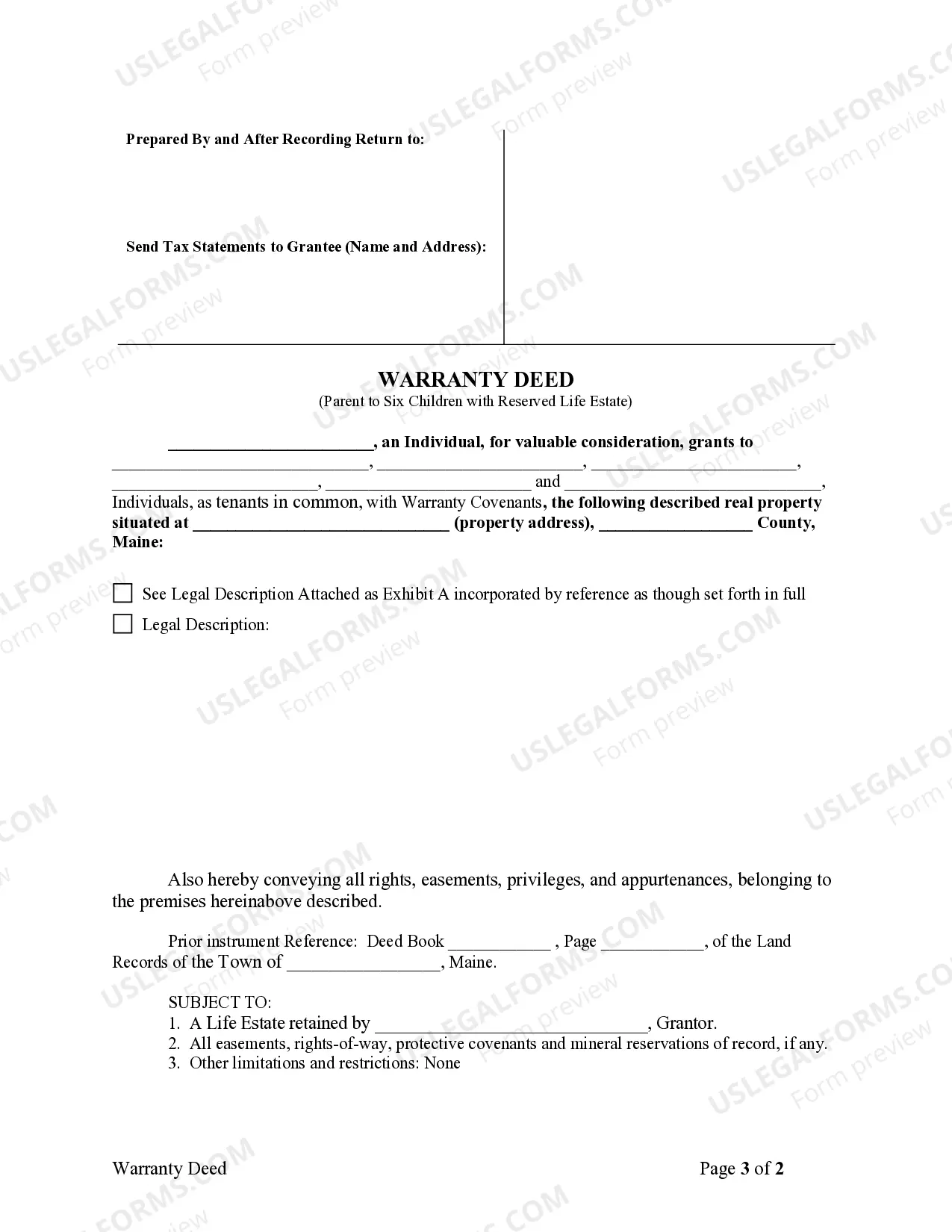
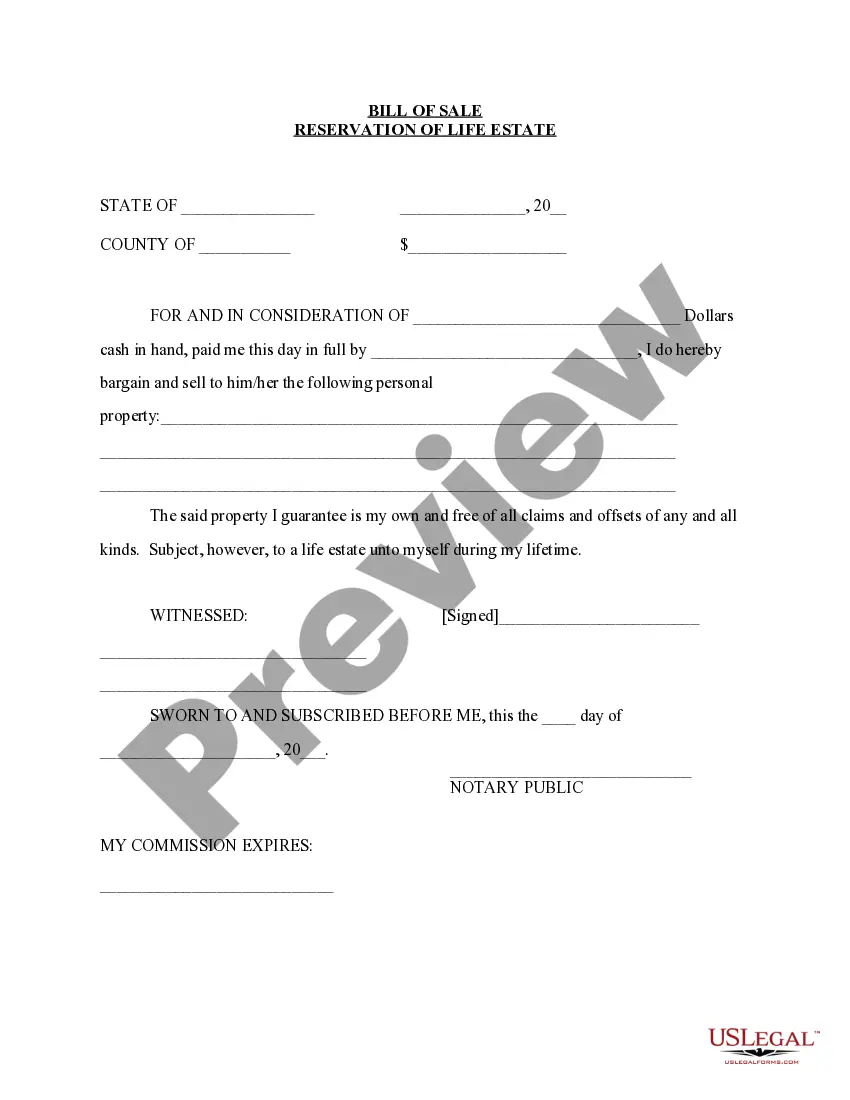
The Warranty Deed from Parent to Six Children with Reserved Life Estate is a legal document used to transfer property ownership from a parent (the grantor) to their six children (the grantees), while reserving a life estate for the grantor. This means that the parent can retain the right to use and benefit from the property during their lifetime, even after the transfer of ownership. Unlike a simple gift deed, a warranty deed offers stronger protections by ensuring that the grantor guarantees clear title to the property.
Form components explained
- Identification of the grantor and grantees.
- Description of the property being transferred, including its address.
- Statement of the reserved life estate for the grantor.
- Provisions addressing easements, rights-of-way, and other encumbrances.
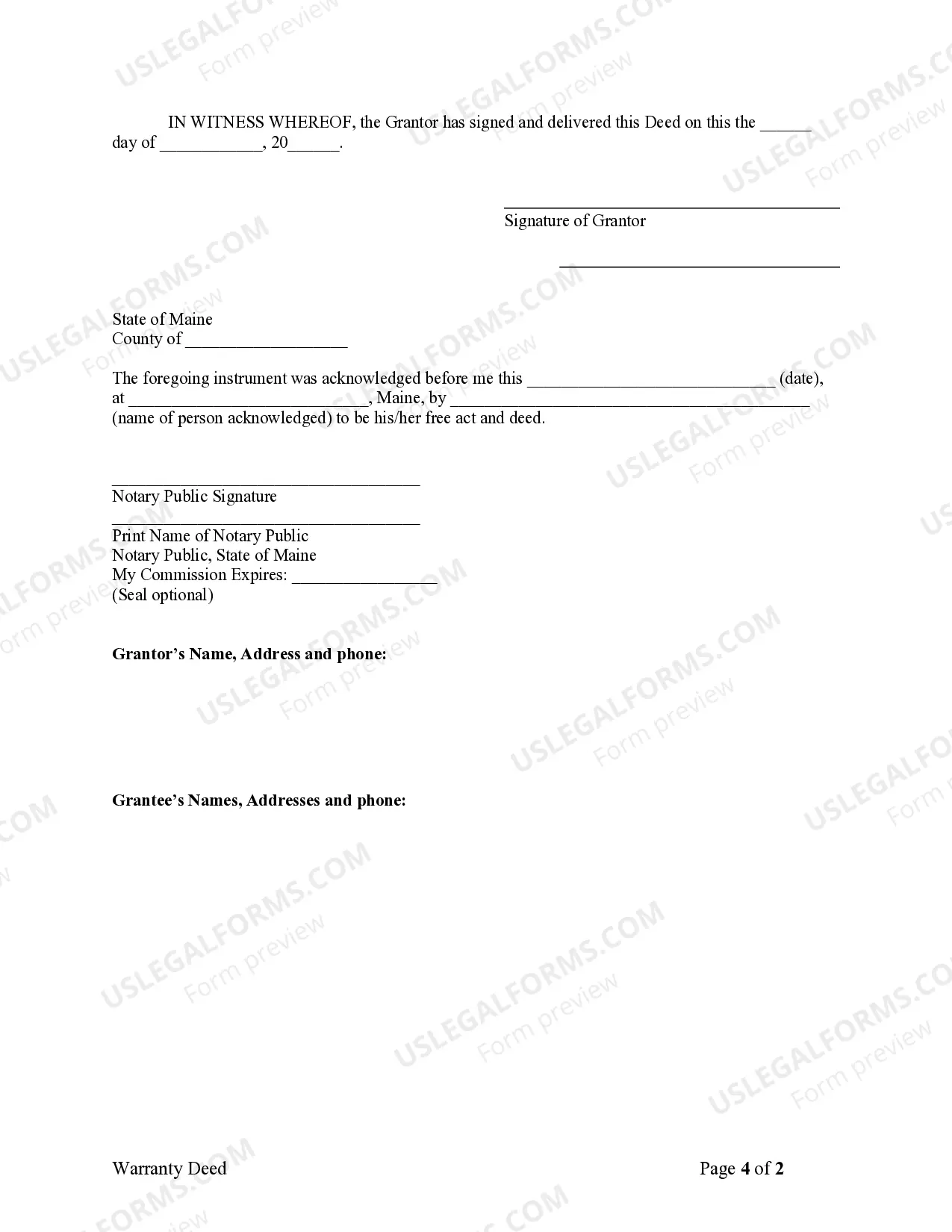
- Signature line for the grantor to validate the deed.



Common use cases
This form should be used when a parent wishes to transfer property to multiple children while maintaining the right to live on or use the property during their lifetime. It is especially useful for estate planning, allowing the parent to minimize estate tax implications and ensuring a smooth transition of ownership to the next generation without the need for probate.
Who can use this document
- Parents looking to transfer real estate to their children.
- Individuals wanting to establish clear ownership and property rights among siblings.
- People planning their estate to avoid future disputes among heirs.
Instructions for completing this form
- Identify and enter the names and addresses of the grantor and all grantees.
- Provide a full legal description of the property being transferred.
- Specify the reserved life estate, including the grantor's name.
- Indicate any easements or restrictions that apply to the property.
- Have the grantor sign and date the deed in the designated section.
Does this form need to be notarized?
This form must be notarized to be legally valid. US Legal Forms provides secure online notarization powered by Notarize, allowing you to complete the process through a verified video call.
Get your form ready online
Our built-in tools help you complete, sign, share, and store your documents in one place.
Make edits, fill in missing information, and update formatting in US Legal Forms—just like you would in MS Word.
Download a copy, print it, send it by email, or mail it via USPS—whatever works best for your next step.
Sign and collect signatures with our SignNow integration. Send to multiple recipients, set reminders, and more. Go Premium to unlock E-Sign.
If this form requires notarization, complete it online through a secure video call—no need to meet a notary in person or wait for an appointment.
We protect your documents and personal data by following strict security and privacy standards.

Make edits, fill in missing information, and update formatting in US Legal Forms—just like you would in MS Word.

Download a copy, print it, send it by email, or mail it via USPS—whatever works best for your next step.

Sign and collect signatures with our SignNow integration. Send to multiple recipients, set reminders, and more. Go Premium to unlock E-Sign.

If this form requires notarization, complete it online through a secure video call—no need to meet a notary in person or wait for an appointment.

We protect your documents and personal data by following strict security and privacy standards.
Typical mistakes to avoid
- Failing to include all grantee names or correct property descriptions.
- Not specifying the reserved life estate adequately.
- Forgetting to sign and date the document, making it invalid.
Benefits of using this form online
- Convenient downloadable format that saves time.
- Editability allows you to fill in the form accurately on your computer.
- Reliable templates created by licensed attorneys ensure compliance with state laws.
Looking for another form?
Form popularity
FAQ
Can a life estate deed be changed? It is challenging to modify or change a life estate deed. The grantor cannot change the life estate as he or she has no power to do so after creating the life estate deed unless all of the future tenants agree. It requires the permission or consent of every one of the beneficiaries.
Let's start with the definition of a deed: DEED: A written instrument by which one party, the Grantor, conveys the title of ownership in property to another party, the Grantee. A Warranty Deed contains promises, called covenants, that the Grantor makes to the Grantee.
A warranty deed guarantees that: The grantor is the rightful owner of the property and has the legal right to transfer the title.The title would withstand third-party claims to ownership of the property. The grantor will do anything to ensure the grantee's title to the property.
Typically, the lender will provide you with a copy of the deed of trust after the closing. The original warranty deeds are often mailed to the grantee after they are recorded. These are your original copies and should be kept in a safe place, such as a fireproof lockbox or a safe deposit box at a financial institution.
This life estate deed is a document that transfers ownership of real property, while reserving access and use of the property for the duration of the grantor's life. It allows the original owner (grantor) to remain on the premises with full access to and benefits from the property.
It's important to note that a warranty deed does not actually prove the grantor has ownership (a title search is the best way to prove that), but it is a promise by the grantor that they are transferring ownership and if it turns out they don't actually own the property, the grantor will be responsible for compensating
The date the deed was made; The name of the party granting the life estate and their address; The name of the grantee and their address; The address and a legal description of the property that is subject to the life estate;
A person owns property in a life estate only throughout their lifetime. Beneficiaries cannot sell property in a life estate before the beneficiary's death. One benefit of a life estate is that property can pass when the life tenant dies without being part of the tenant's estate.
Fill out the "grantor" section of the warranty deed. The grantors are the givers, or current owners, of the property. Use the legal name of each grantor and insert current addresses after each grantor's name.