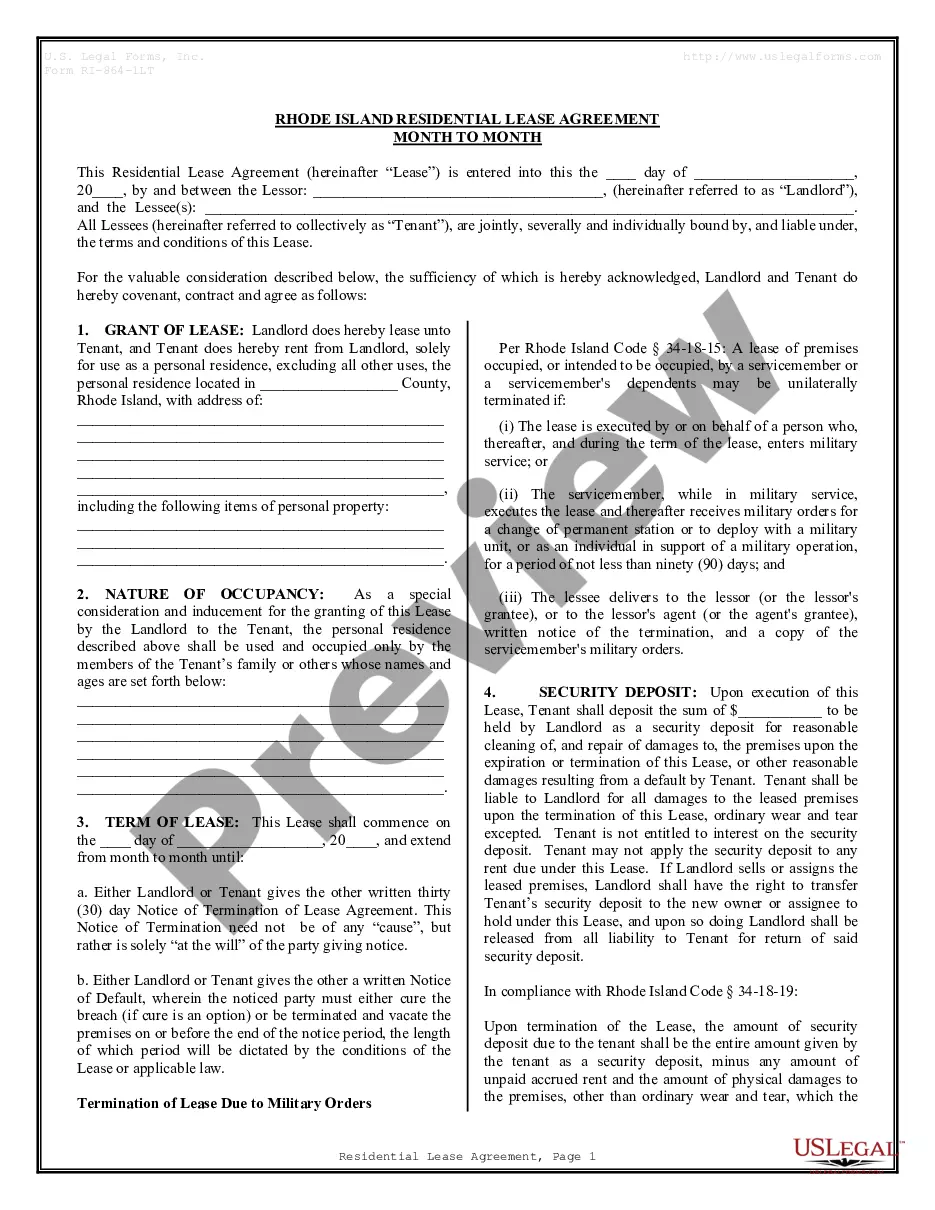
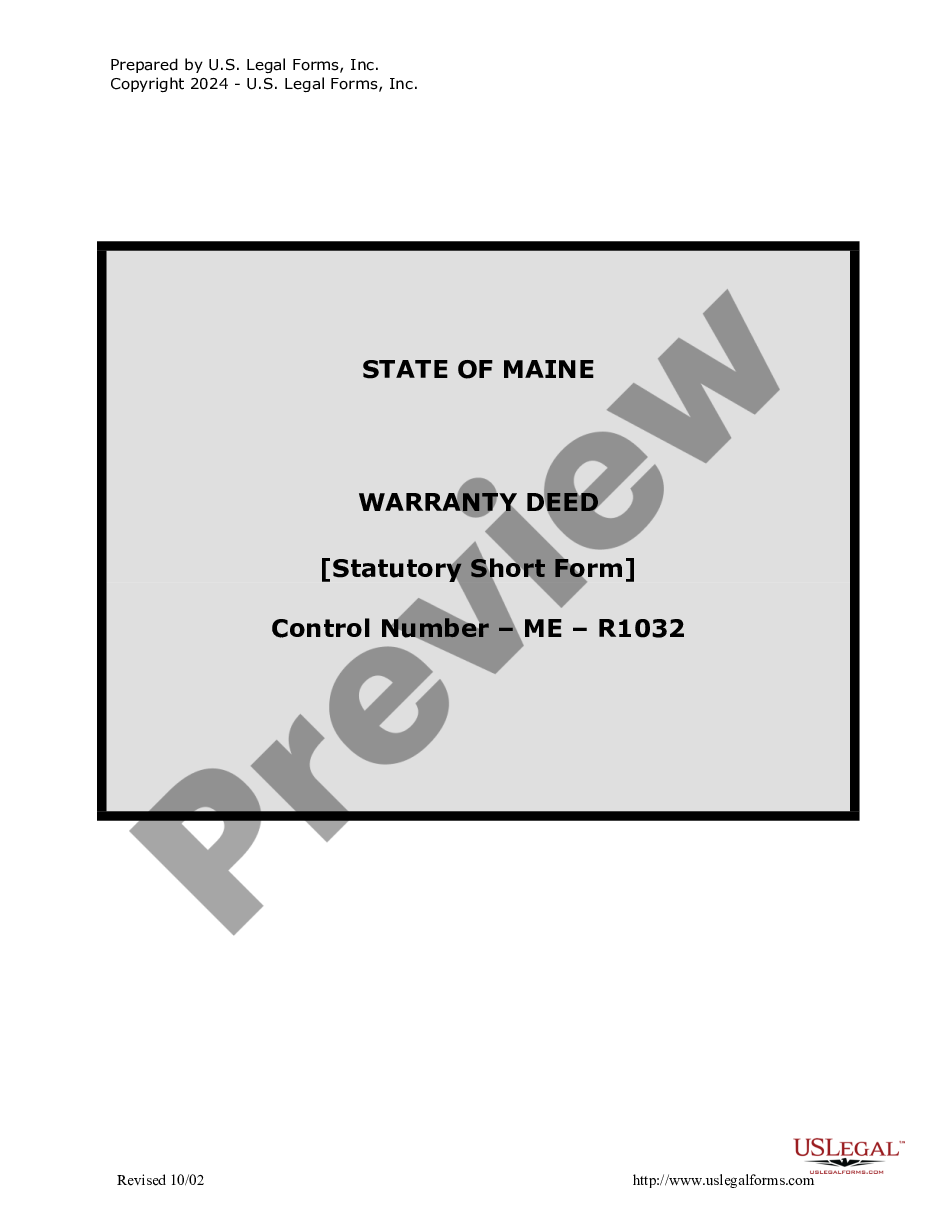
Maine Statutory Warranty Deed
Understanding this form
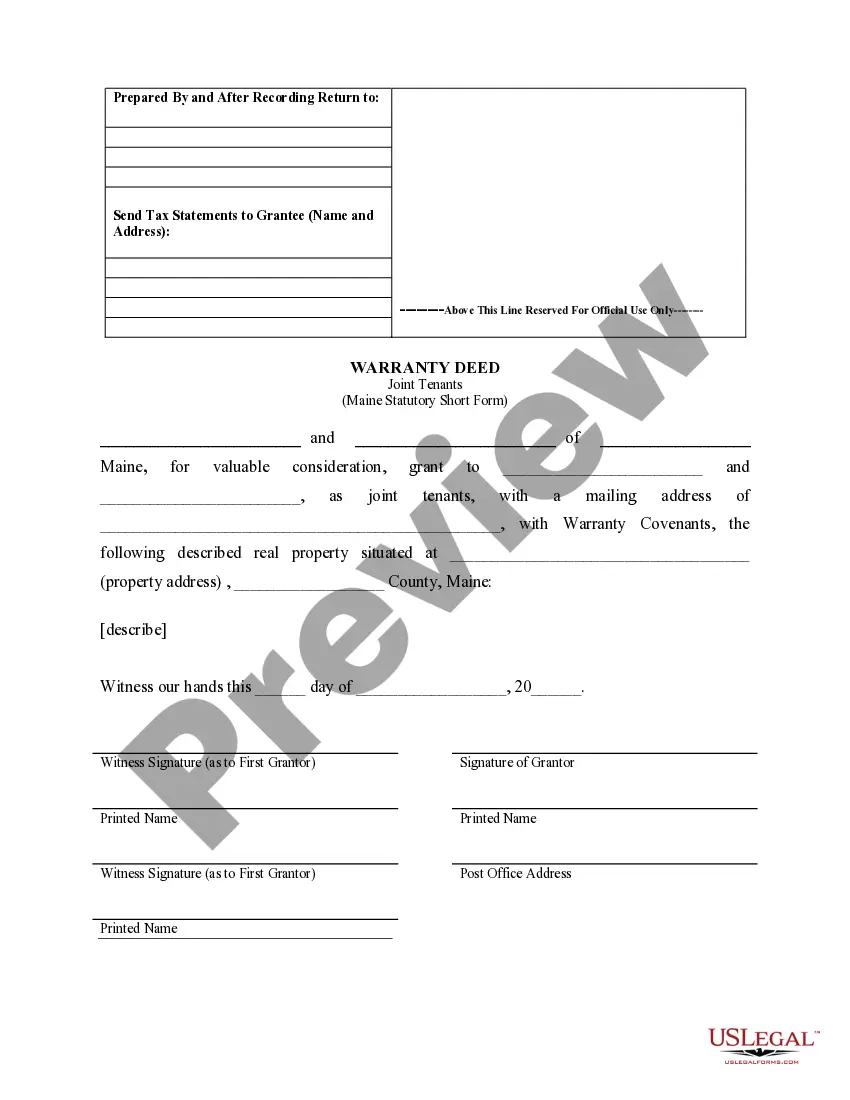
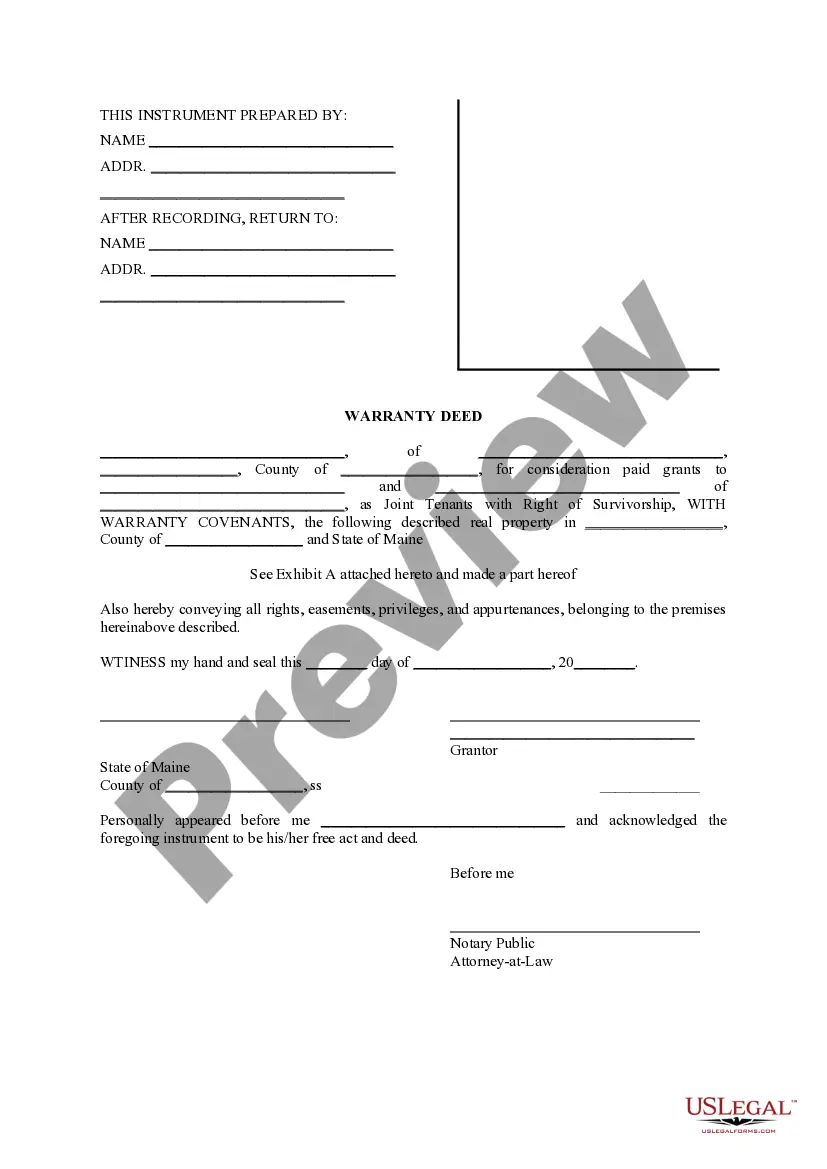
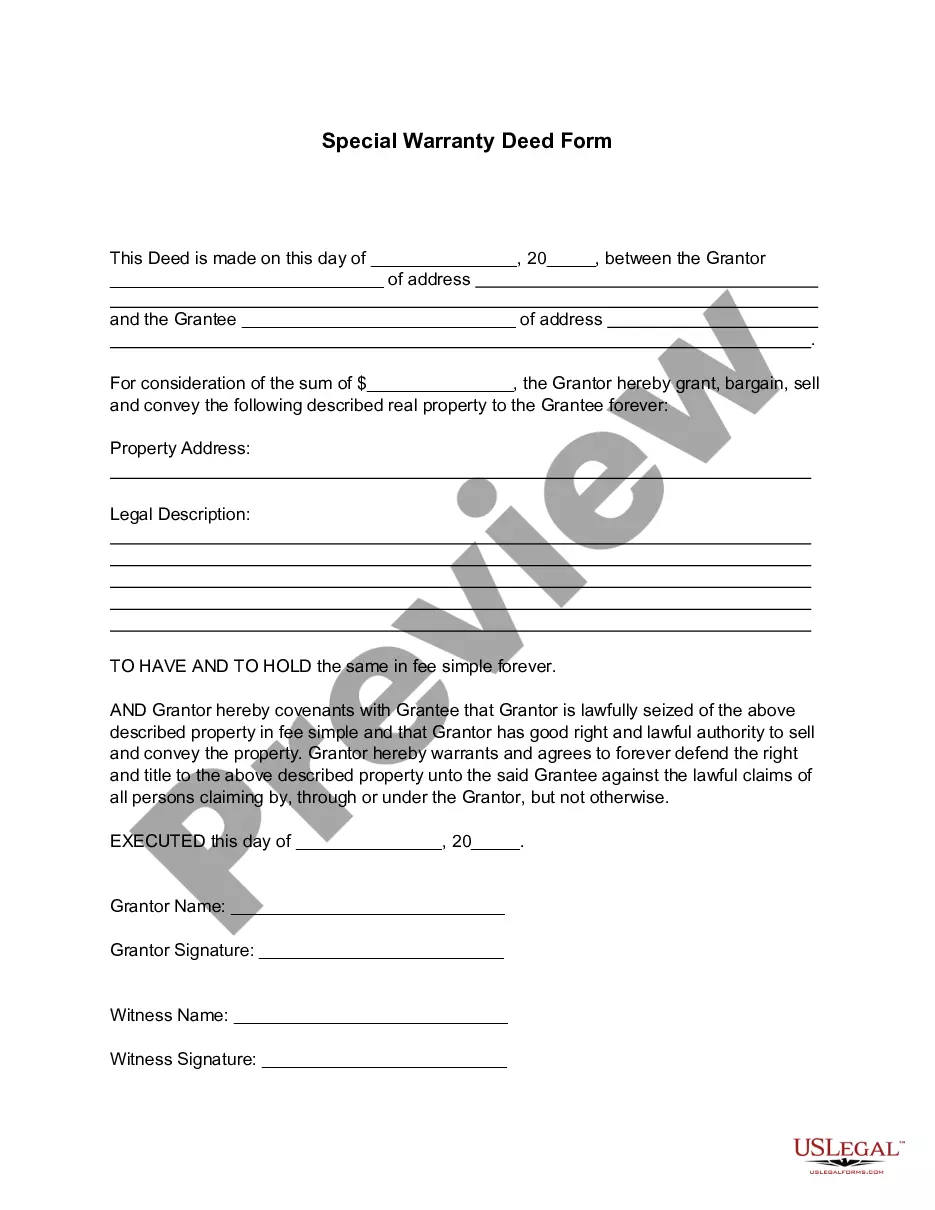
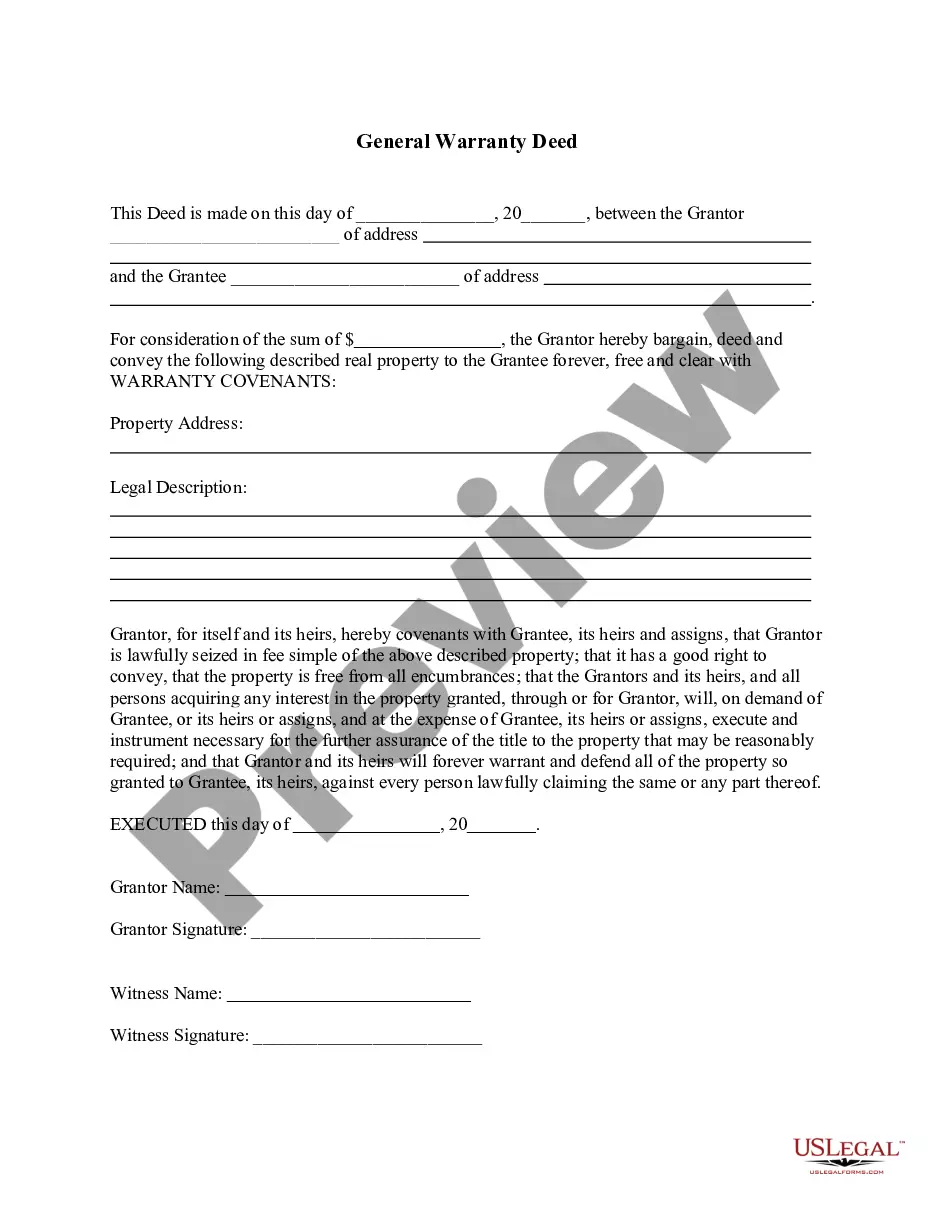
The Statutory Warranty Deed is a legal document used in real estate transactions to transfer property ownership between parties. Unlike other deed types, this specific warranty deed provides guarantees that the grantor holds clear title to the property and has the authority to convey it. This deed also protects the grantee against any future claims to the property from third parties. Overall, it is a crucial tool in ensuring the integrity of property transfers.
Key components of this form
- Parties involved: Identifies the granter and grantee.
- Property description: Details about the property being transferred.
- Consideration: Specifies the payment or value exchanged for the property.
- Warranty covenants: Assurances provided by the grantor regarding the property title.
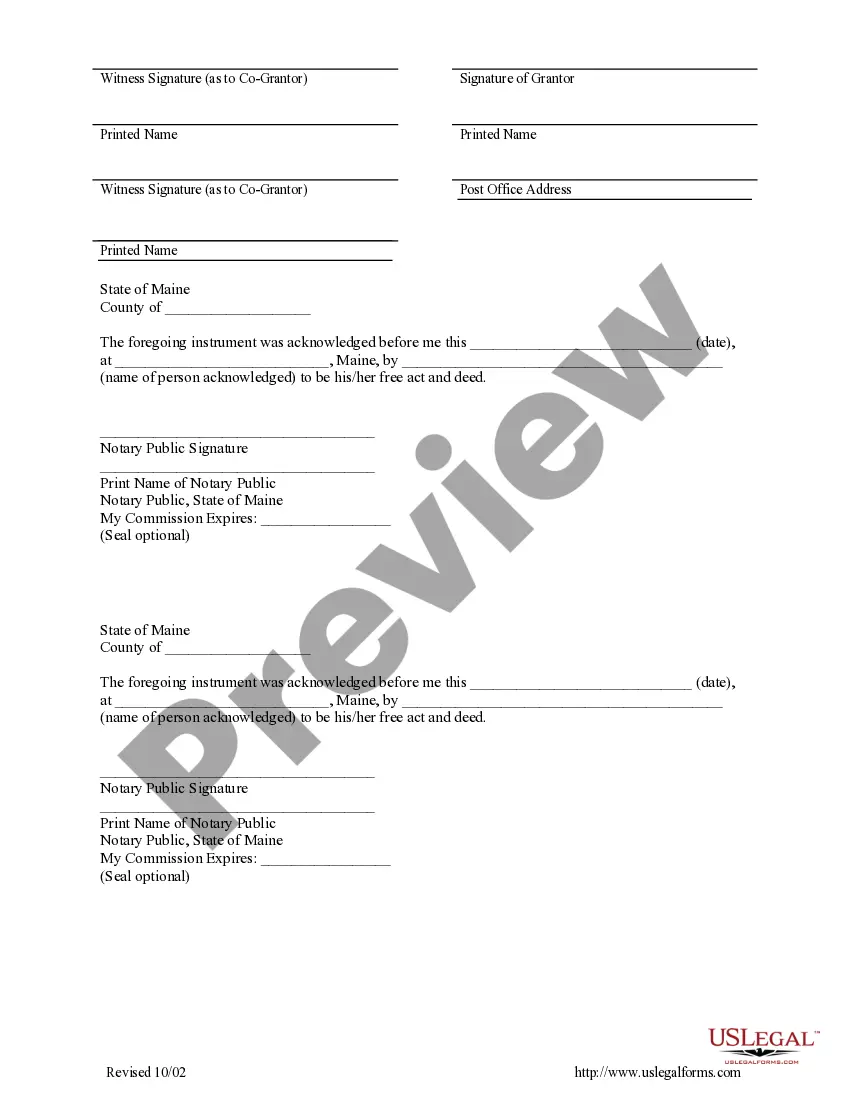
- Signatures: Required signatures from the grantor and witnesses to validate the deed.
- Notarization: Information on whether the deed needs to be notarized.

When this form is needed
You should use the Statutory Warranty Deed when buying or selling real estate in Maine. This form is particularly important when you want to ensure that the title is clear and the property is free from any liens or encumbrances that could affect ownership. It is commonly used in residential property transactions, ensuring that both parties are protected during the transfer process.
Who needs this form
Eligible Users:
- Property owners looking to sell their property.
- Buyers acquiring real estate in Maine.
- Real estate agents facilitating property transactions.
- Attorneys assisting clients with real estate matters.
How to complete this form
Steps to Complete this Form:
- Identify the parties: Enter the names of the granter and grantee.
- Specify the property: Provide a detailed description of the property including address and county.
- Enter consideration: Fill in the amount or value exchanged for the property.
- Include signature lines: Ensure all required parties sign and date the document.
- Finalize notarization if applicable: Confirm if legal notarization is needed as per local law.
Does this document require notarization?
This form does not typically require notarization unless specified by local law. However, notarization can add an extra layer of verification to your property transaction.
Get your form ready online
Our built-in tools help you complete, sign, share, and store your documents in one place.
Make edits, fill in missing information, and update formatting in US Legal Forms—just like you would in MS Word.
Download a copy, print it, send it by email, or mail it via USPS—whatever works best for your next step.
Sign and collect signatures with our SignNow integration. Send to multiple recipients, set reminders, and more. Go Premium to unlock E-Sign.
If this form requires notarization, complete it online through a secure video call—no need to meet a notary in person or wait for an appointment.
We protect your documents and personal data by following strict security and privacy standards.

Make edits, fill in missing information, and update formatting in US Legal Forms—just like you would in MS Word.

Download a copy, print it, send it by email, or mail it via USPS—whatever works best for your next step.

Sign and collect signatures with our SignNow integration. Send to multiple recipients, set reminders, and more. Go Premium to unlock E-Sign.

If this form requires notarization, complete it online through a secure video call—no need to meet a notary in person or wait for an appointment.

We protect your documents and personal data by following strict security and privacy standards.
Avoid these common issues
- Failing to include accurate property descriptions, which could lead to disputes.
- Not having all required signatures, potentially invalidating the deed.
- Omitting the consideration amount, which may cause legal issues later.
Advantages of online completion
- Convenient online access to downloadable forms.
- Edit and complete the form easily using a computer.
- Avoid delays by preparing documents at your own pace.
Quick recap
- The Statutory Warranty Deed is essential for transferring property in Maine.
- It provides important warranties regarding property title and ownership.
- Accurate completion of the deed ensures legal validity and protects your interests.
Looking for another form?

Form popularity
FAQ
A general warranty deed covers the property's entire history.With a special warranty deed, the guarantee covers only the period when the seller held title to the property. Special warranty deeds do not protect against any mistakes in a free-and-clear title that may exist before the seller's ownership.
A special warranty deed to real estate offers protection to the buyer through the seller's guarantee that the title has been free and clear of encumbrances during their ownership of the property. It does not guarantee clear title beyond their ownership.
Let's start with the definition of a deed: DEED: A written instrument by which one party, the Grantor, conveys the title of ownership in property to another party, the Grantee. A Warranty Deed contains promises, called covenants, that the Grantor makes to the Grantee.
It's important to note that a warranty deed does not actually prove the grantor has ownership (a title search is the best way to prove that), but it is a promise by the grantor that they are transferring ownership and if it turns out they don't actually own the property, the grantor will be responsible for compensating
A warranty deed guarantees that: The grantor is the rightful owner of the property and has the legal right to transfer the title.The title would withstand third-party claims to ownership of the property. The grantor will do anything to ensure the grantee's title to the property.
Typically, the lender will provide you with a copy of the deed of trust after the closing. The original warranty deeds are often mailed to the grantee after they are recorded. These are your original copies and should be kept in a safe place, such as a fireproof lockbox or a safe deposit box at a financial institution.
A statutory warranty deed is different from a warranty deed because it is a shorter form made available through your state's statutes and it may not outright list the promise that the title is guaranteed to be clear. Instead, because it is a statutory form, this guarantee is implied and is still legally enforceable.
A warranty deed guarantees that: The grantor is the rightful owner of the property and has the legal right to transfer the title. The property is free and clear of all liens and outstanding claims. The title would withstand third-party claims to ownership of the property.
They are (1) covenant for seisin; (2) covenant of the right to convey; (3) covenant against encumbrances; (4) covenant for QUIET ENJOYMENT; (5) covenant of general WARRANTY; and (6) covenant for further assurances.