Maine Discovery Interrogatories for Divorce Proceeding for either Plaintiff or Defendant - Another Form
Overview of this form
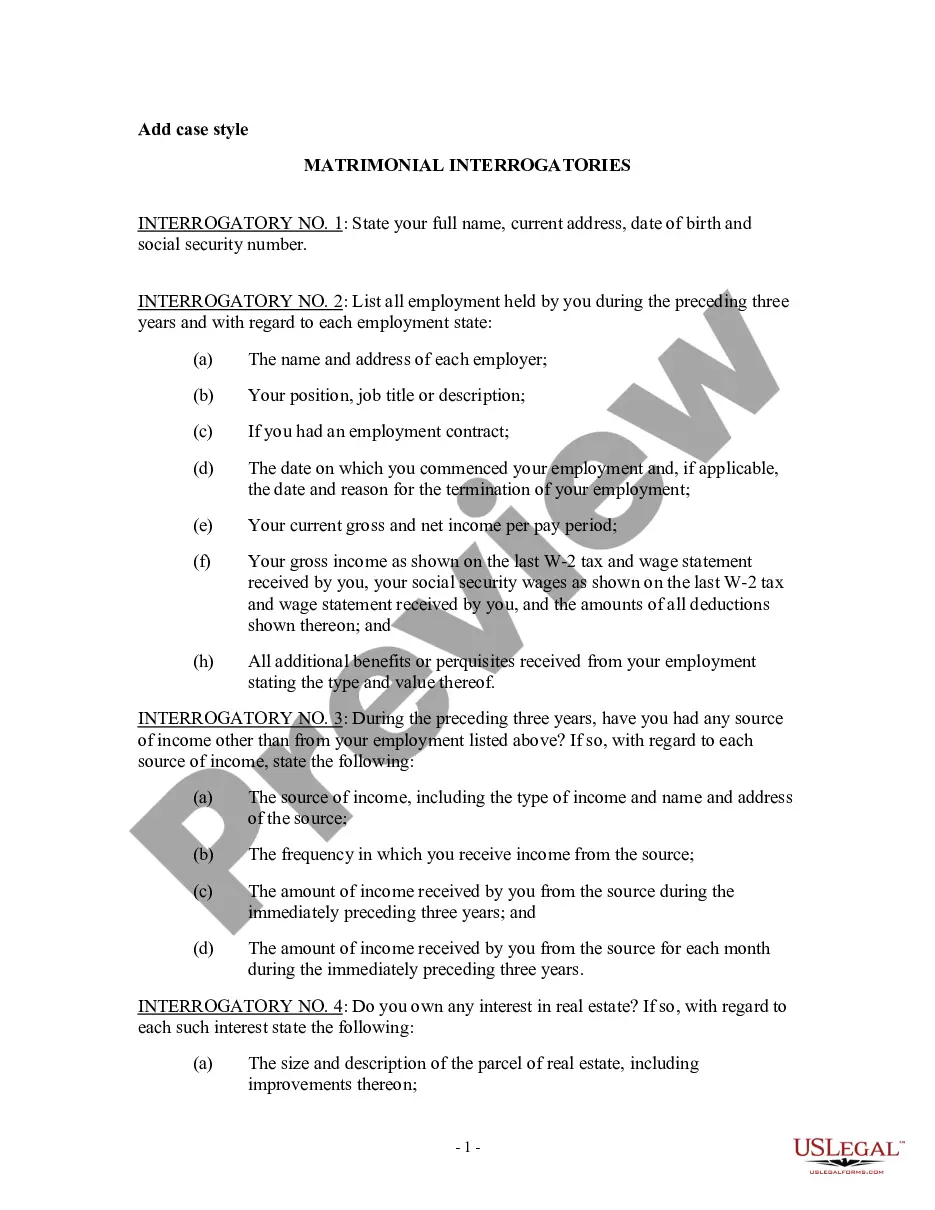
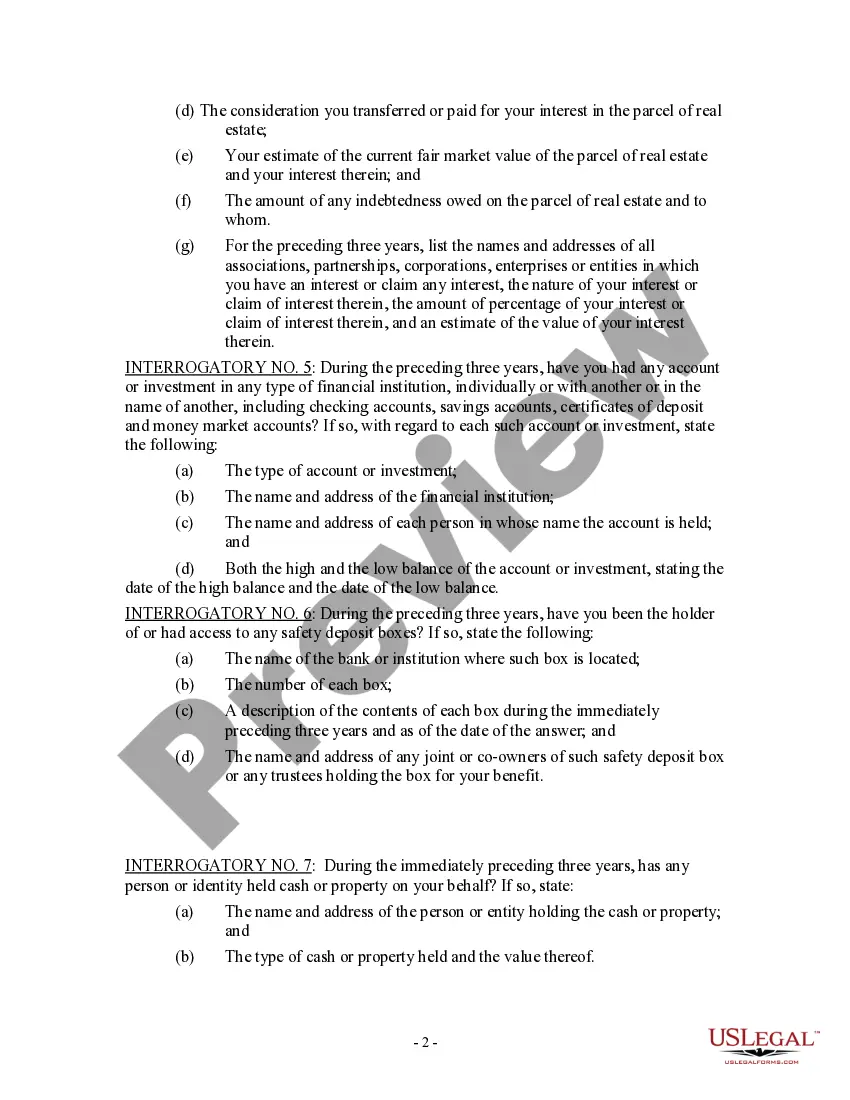
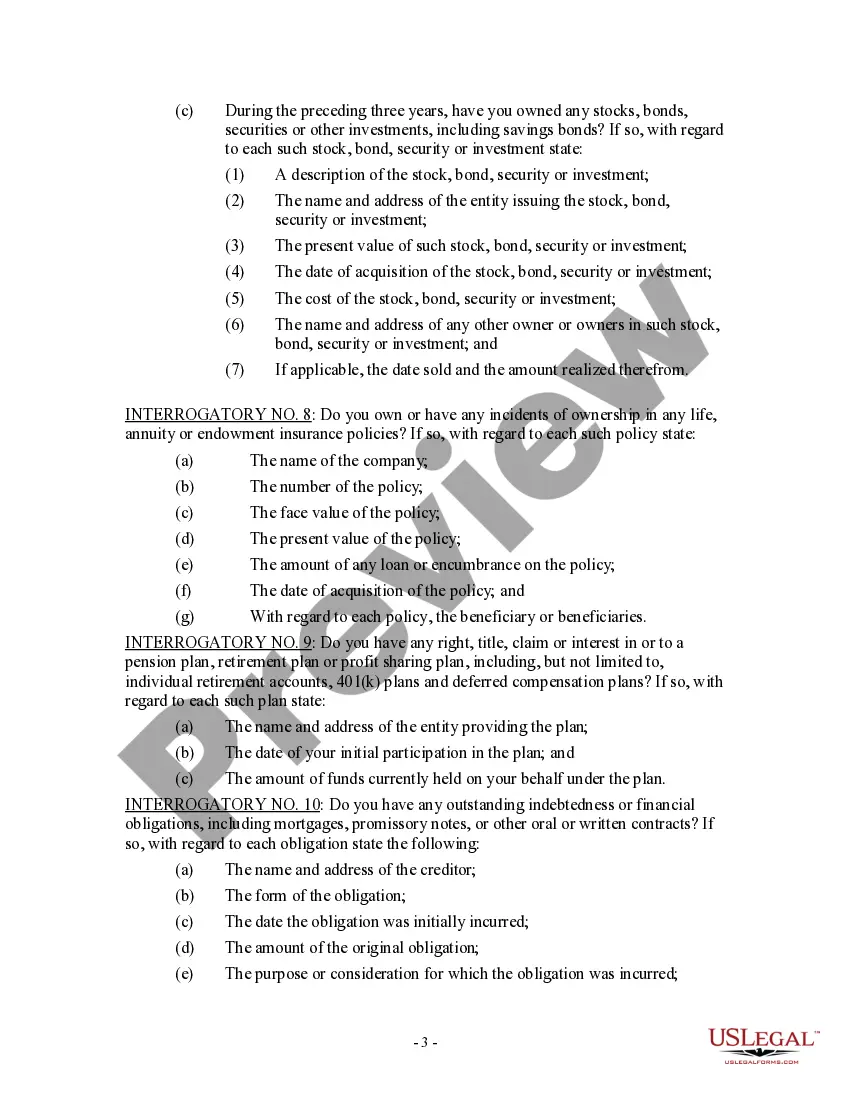
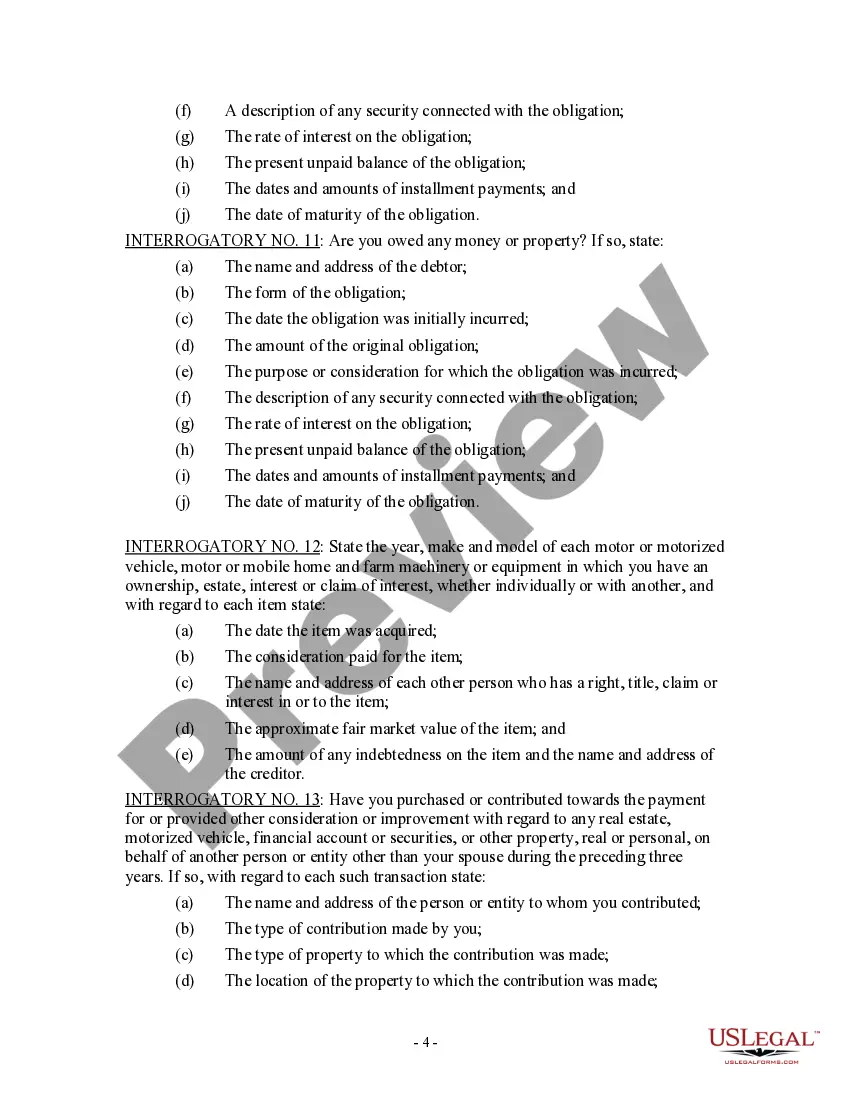
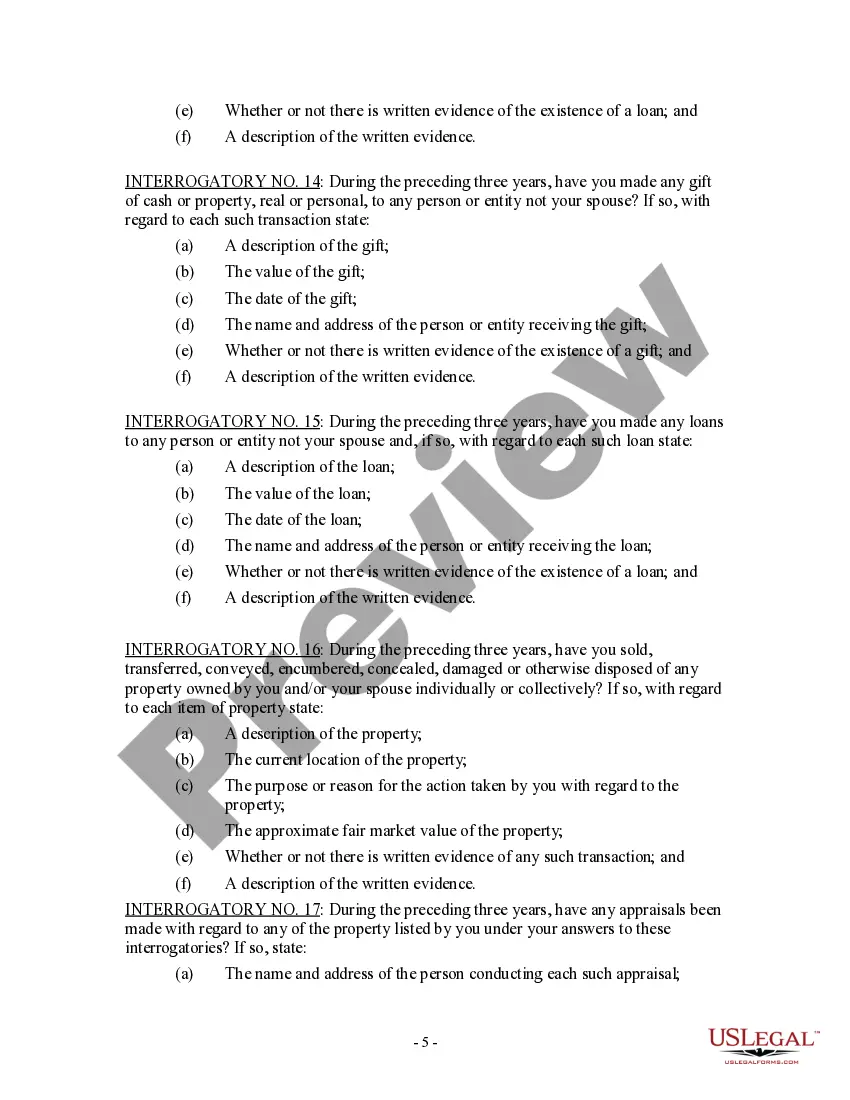
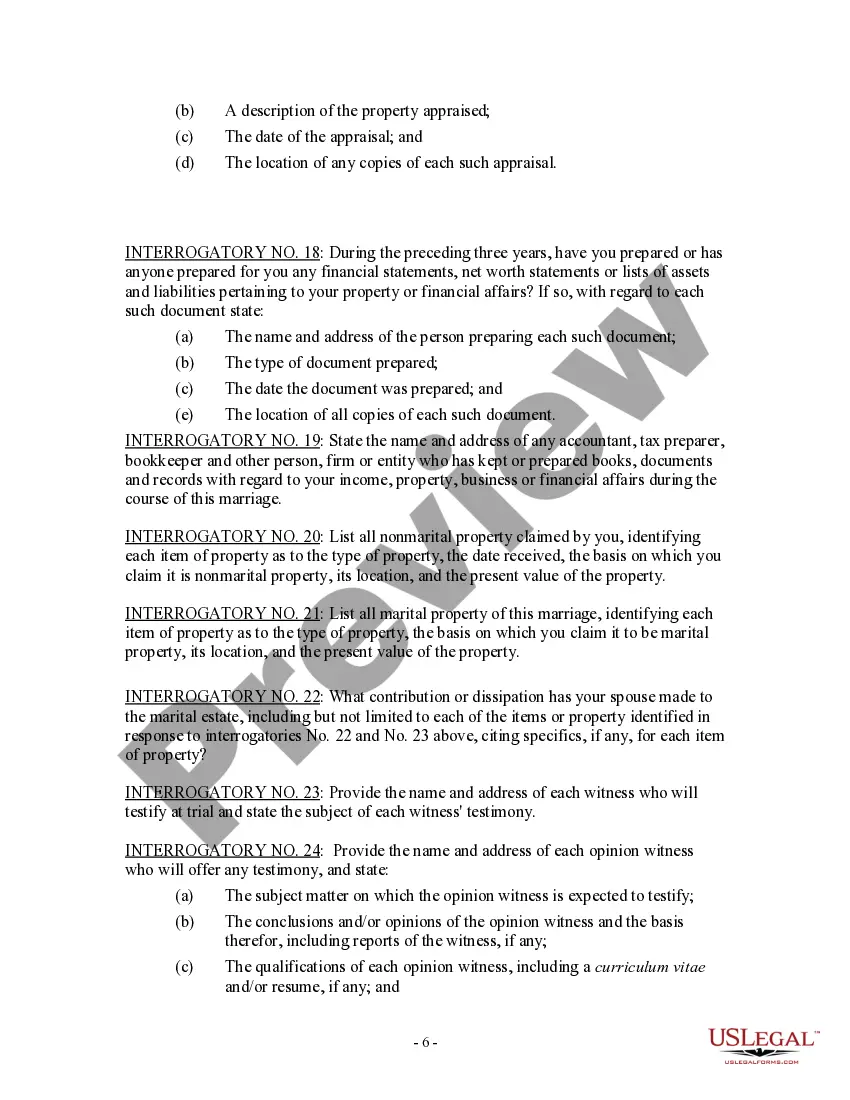
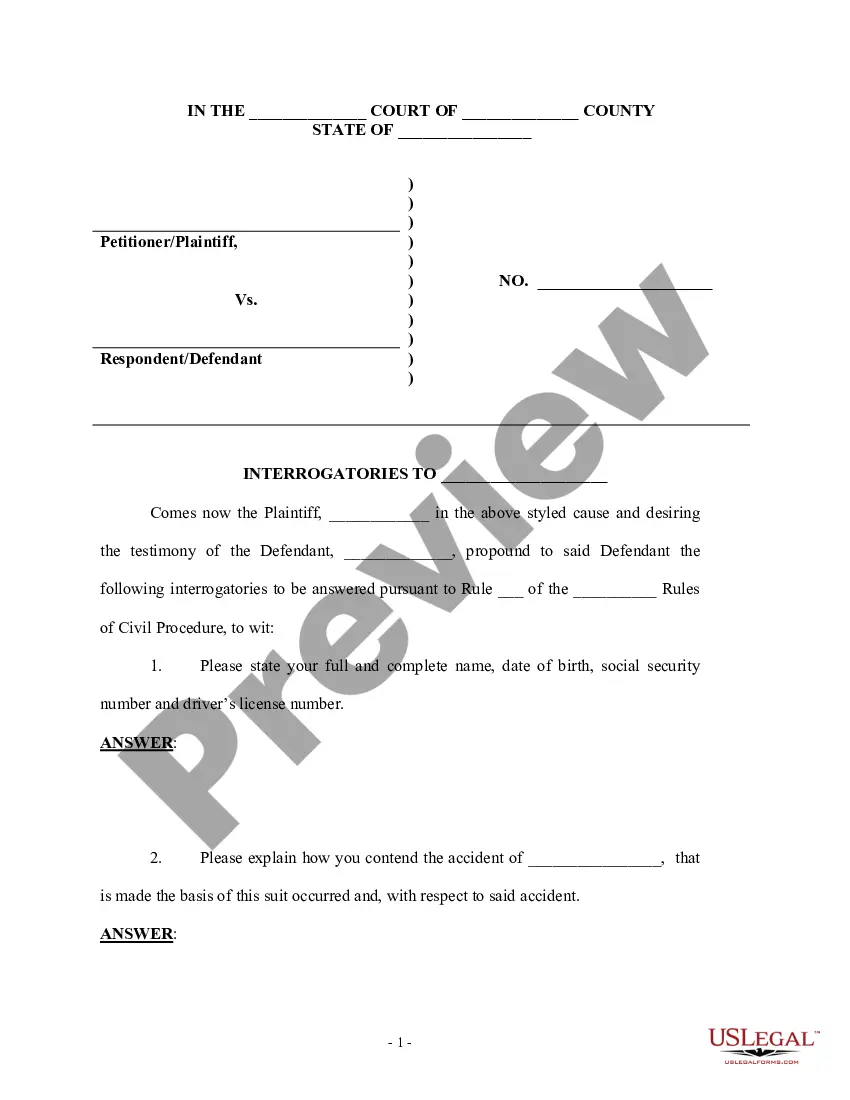
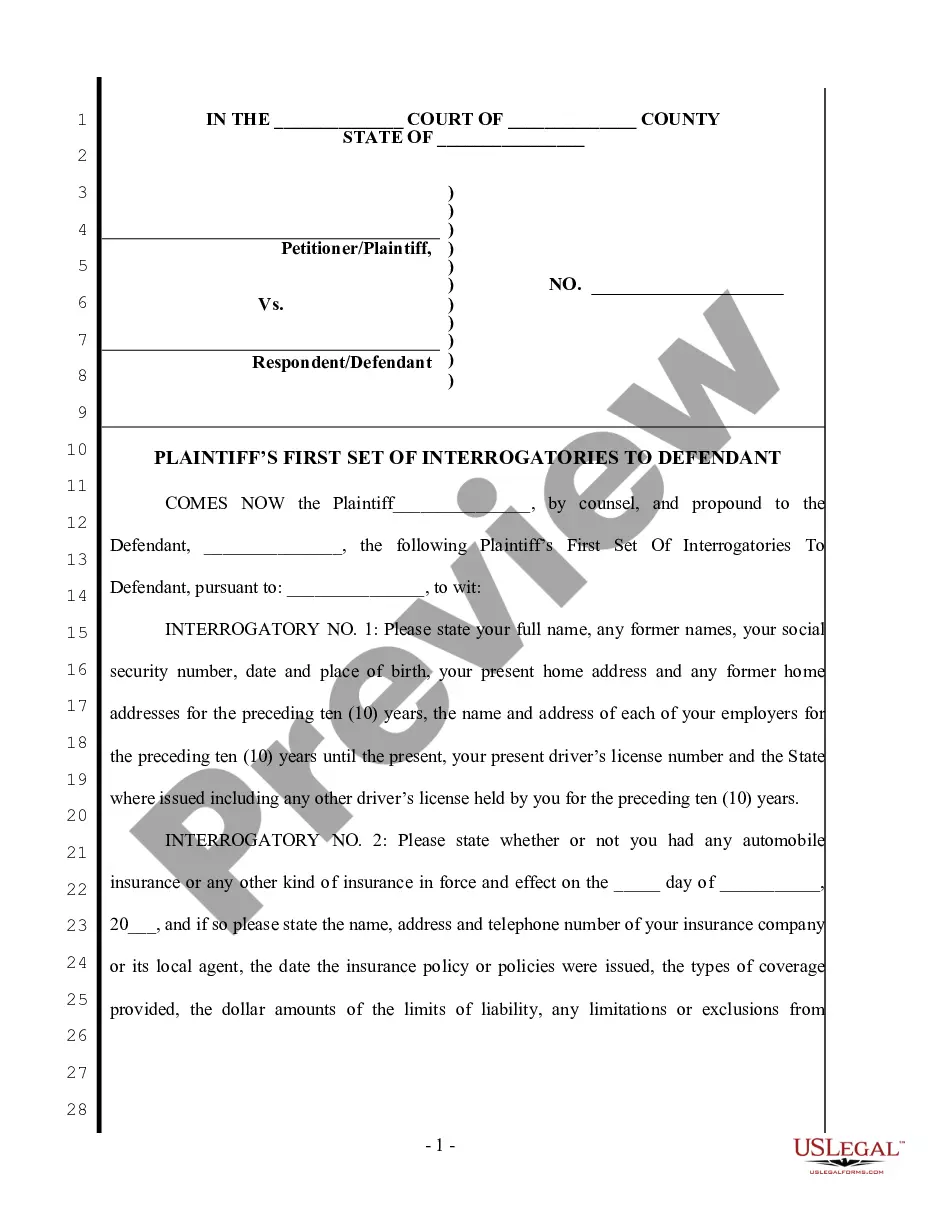
The Discovery Interrogatories for Divorce Proceeding is a legal document that allows either the Plaintiff or Defendant in a divorce case to formally request detailed information from the other party. This form includes a variety of questions pertinent to financial matters, property ownership, and other relevant personal information that may affect the divorce proceedings. Unlike other forms, this document includes a comprehensive set of interrogatories designed to uncover necessary facts for a thorough divorce evaluation.
Form components explained
- Identification of parties involved in the divorce.
- Detailed inquiries about employment history and income sources.
- Questions regarding real estate ownership and interests.
- Information about bank accounts and financial institutions.
- Disclosure of debt obligations and outstanding financial matters.
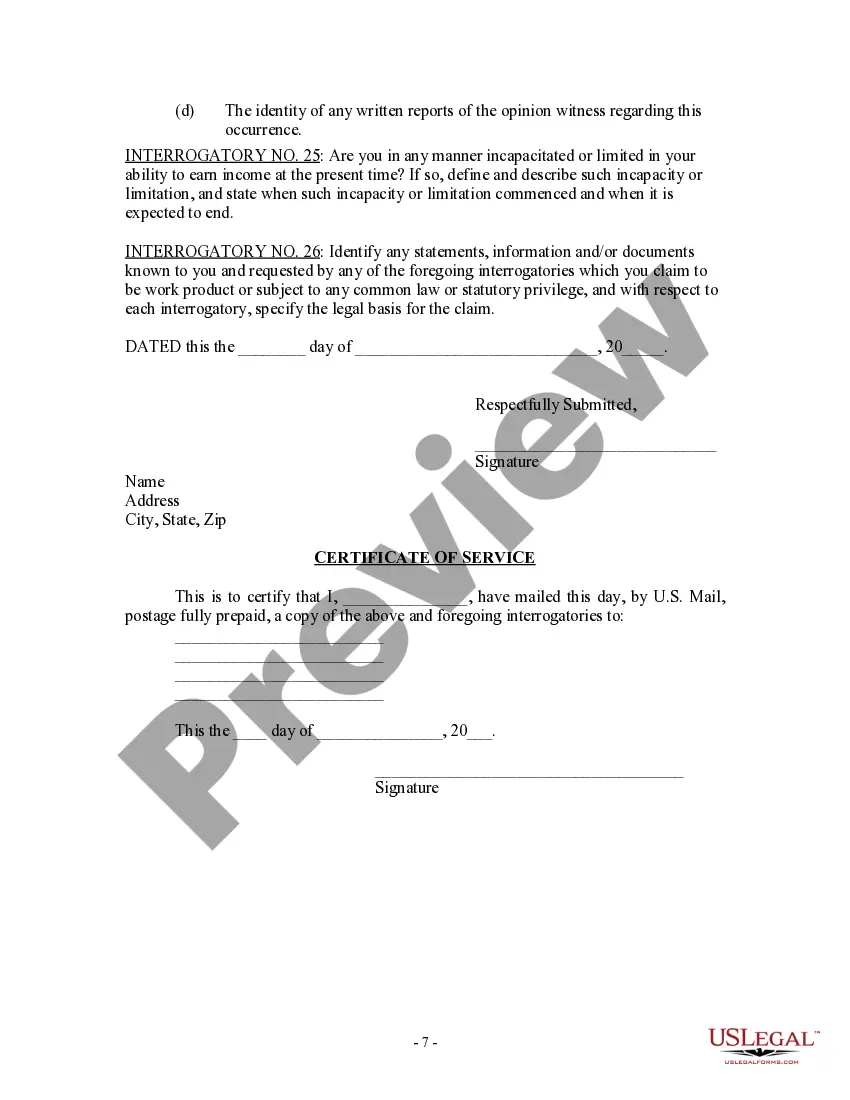
- Identification of witnesses and expert witnesses for the case.
When this form is needed
This form should be used during divorce proceedings when either party needs to gather crucial information from the other party. It is particularly useful for uncovering financial details and obligations that may affect alimony, asset division, and child support arrangements. Use this form to ensure that you have all necessary information to proceed effectively through the legal process of divorce.
Who can use this document
This form is suitable for:
- Individuals initiating a divorce as the Plaintiff.
- Individuals responding to a divorce as the Defendant.
- Attorneys representing clients in family law cases.
Instructions for completing this form
- Identify the parties by entering their full names and contact information.
- Answer each interrogatory carefully and truthfully, providing all requested information.
- Attach any relevant documents as required by the interrogatories.
- Review your responses for accuracy and completeness before submission.
- Sign and date the form to certify the information provided.
- File the form with the court and serve a copy to the other party.
Does this document require notarization?
This form usually doesn’t need to be notarized. However, local laws or specific transactions may require it. Our online notarization service, powered by Notarize, lets you complete it remotely through a secure video session, available 24/7.
Get your form ready online
Our built-in tools help you complete, sign, share, and store your documents in one place.
Make edits, fill in missing information, and update formatting in US Legal Forms—just like you would in MS Word.
Download a copy, print it, send it by email, or mail it via USPS—whatever works best for your next step.
Sign and collect signatures with our SignNow integration. Send to multiple recipients, set reminders, and more. Go Premium to unlock E-Sign.
If this form requires notarization, complete it online through a secure video call—no need to meet a notary in person or wait for an appointment.
We protect your documents and personal data by following strict security and privacy standards.

Make edits, fill in missing information, and update formatting in US Legal Forms—just like you would in MS Word.

Download a copy, print it, send it by email, or mail it via USPS—whatever works best for your next step.

Sign and collect signatures with our SignNow integration. Send to multiple recipients, set reminders, and more. Go Premium to unlock E-Sign.

If this form requires notarization, complete it online through a secure video call—no need to meet a notary in person or wait for an appointment.

We protect your documents and personal data by following strict security and privacy standards.
Mistakes to watch out for
- Failing to answer all interrogatories thoroughly.
- Not providing documentation when requested.
- Missing deadlines for submitting the completed form.
- Not signing or dating the form.
Why use this form online
- Quick access to necessary legal documents.
- Editable format to tailor the interrogatories to your specific case.
- Convenient and secure download options.
- Access to attorney-drafted forms ensuring legal compliance.
Legal use & context
- The interrogatories must be relevant to the issues at hand in the divorce case.
- Responses are legally binding and can be used in court proceedings.
- Failure to respond to interrogatories can result in legal penalties or assumptions made against the non-responder.
Key takeaways
- The Discovery Interrogatories for Divorce Proceeding is vital for obtaining necessary financial and personal information.
- Utilizing this form can lead to a more informed negotiation process during a divorce.
- Ensure that all responses are complete and accurate to avoid complications.
Looking for another form?
Form popularity
FAQ
The purpose of interrogatories is to learn a great deal of general information about a party in a lawsuit. For example, the defendant in a personal injury lawsuit about a car accident might send you interrogatories asking you to disclose things like: Where you live.
Interrogatories are part of the discovery process of divorce. They allow you and your soon-to-be/already ex spouse to ask questions that must be responded to in writing under oath. These answer are then used to determine facts in the case, as well as to question each side if/when the case goes to trial.
You can certainly make discovery requests that go further back than three years, especially if you have good cause to make such requests. There is nothing that prohibits you from making the request.
Written questions called interrogatories or requests for admission. Using these discovery tools, your spouse must answer questions in writing, or admit specific statements that you believe are true. Inspection demands. You can ask to inspect property like a safe deposit box or wine collection.
Your answers to the interrogatories should usually be short, clear, and direct and should answer only the question that is being asked. This is not the time to set out your entire case or defense to the other side. Take the time to make sure your answers are correct and truthful.
So, can you refuse to answer interrogatories? The answer is, no, you may not.That answer must either permit inspection of the requested information or object to the production of the information for a specific reason.
Written questions submitted to a party from his or her adversary to ascertain answers that are prepared in writing and signed under oath and that have relevance to the issues in a lawsuit.No party can be compelled to answer interrogatories that involve matters beyond the party's control.
You can object to an interrogatory if the information sought is known by the requesting party or available to both parties equally. For example, you should raise this objection if the answers are publicly available or in a third-party's custody or control.
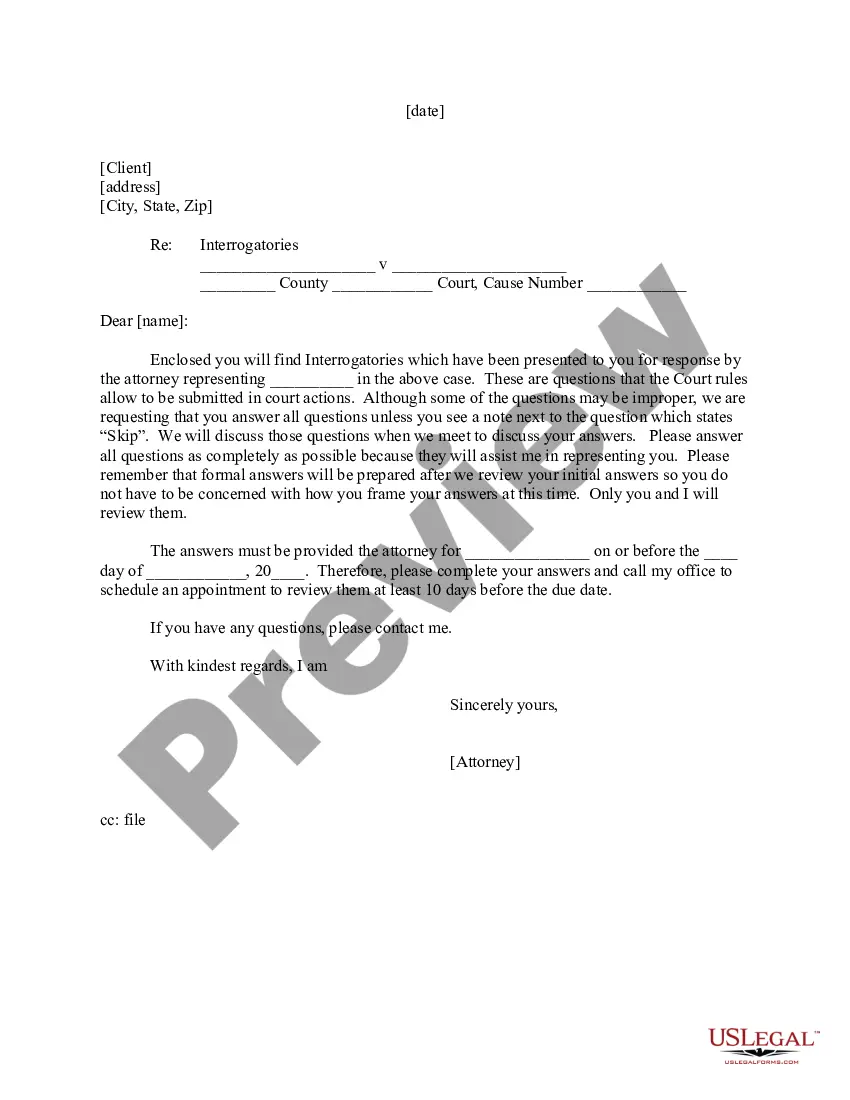
Interrogatories are a discovery tool that the parties can use to have specific questions about a case answered before trial. Interrogatories are lists of questions sent to the other party that s/he must respond to in writing.