Maryland Landlord Agreement to allow Tenant Alterations to Premises
What this document covers
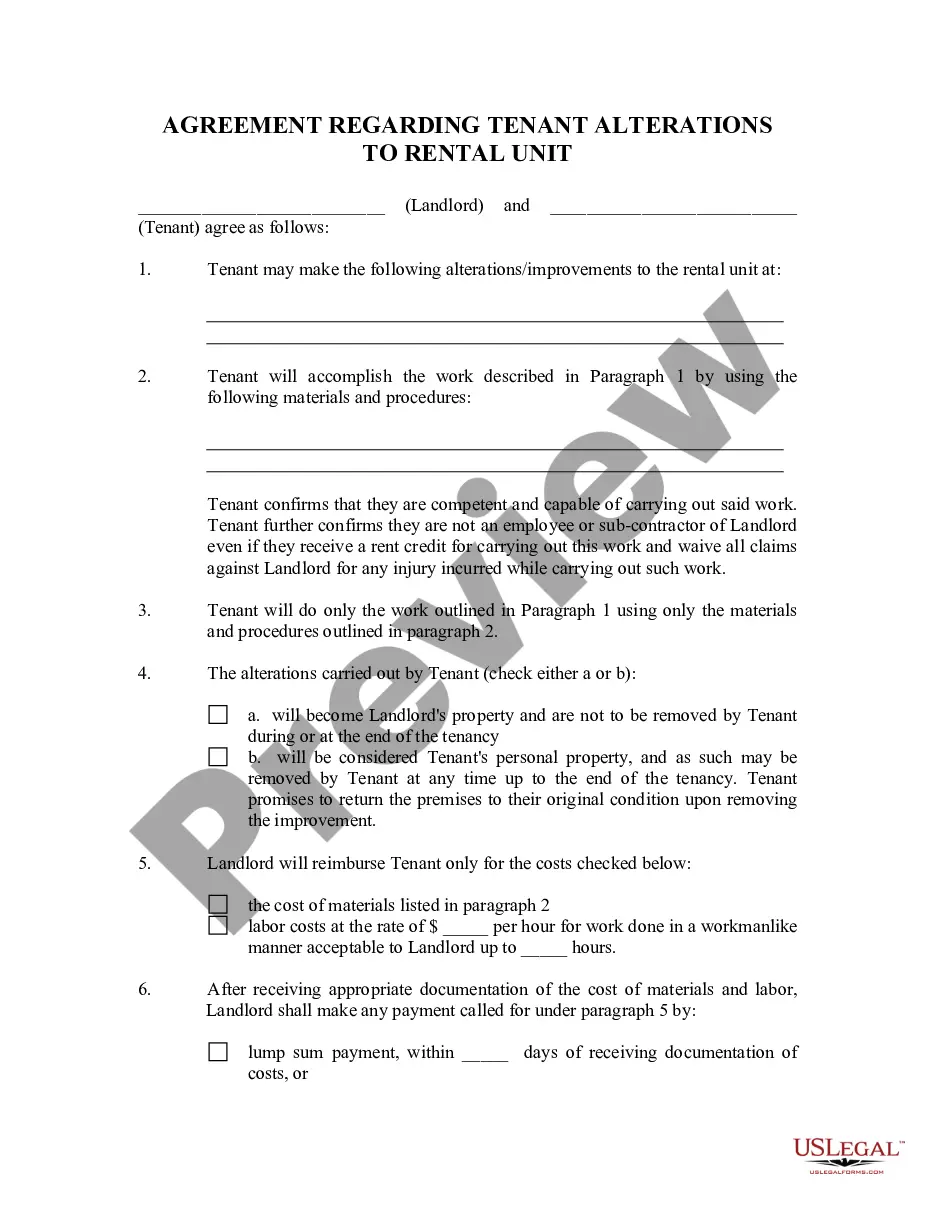
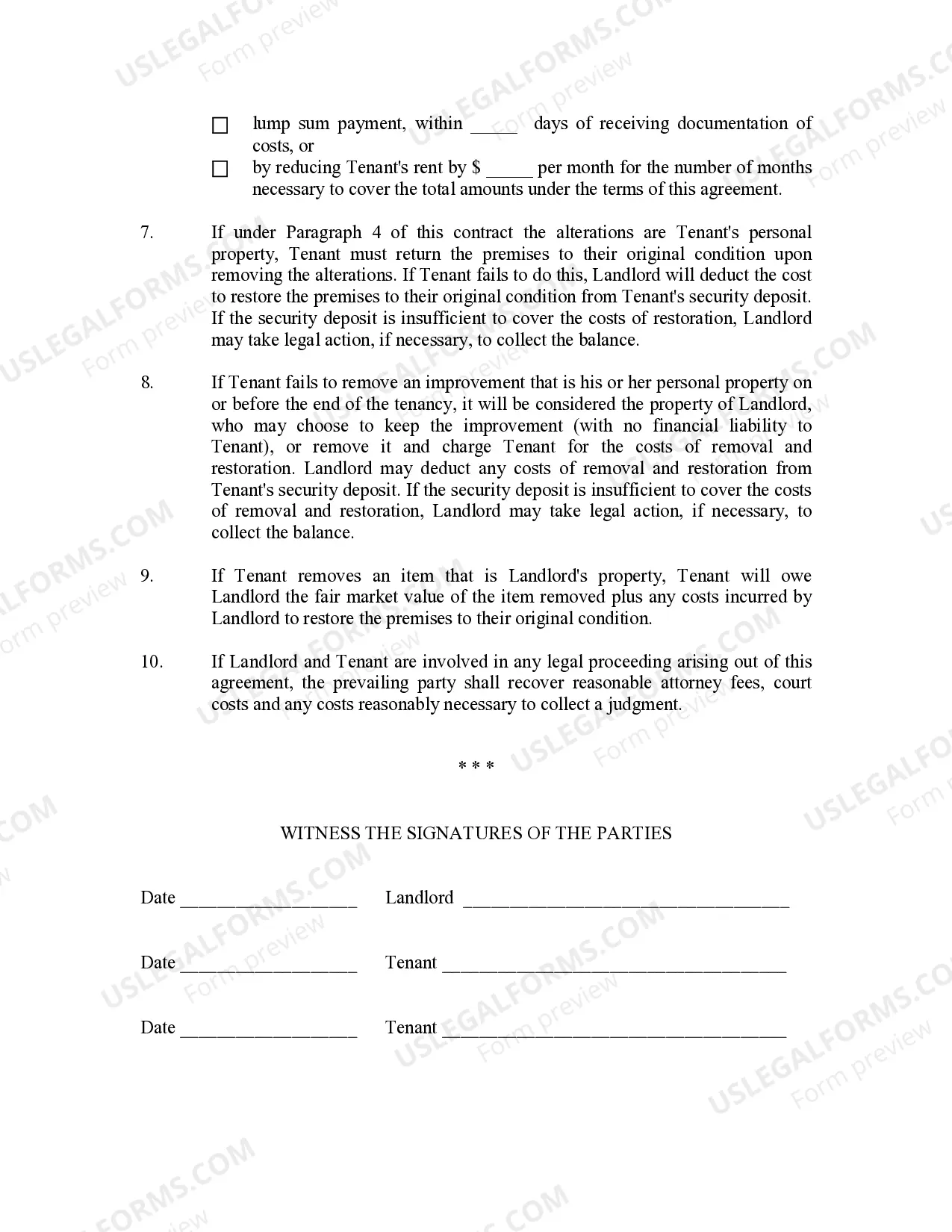
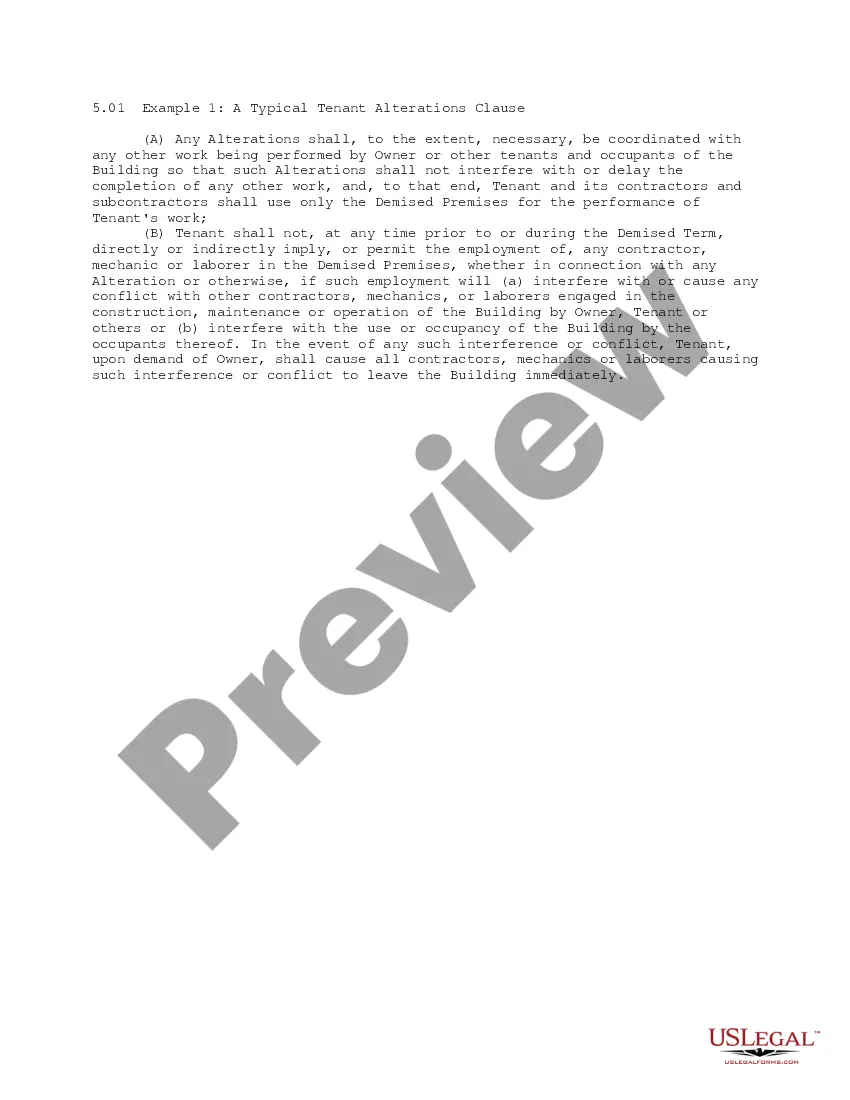
The Landlord Agreement to Allow Tenant Alterations to Premises is a legal contract between a landlord and a tenant that outlines the terms under which a tenant may make modifications to a rental unit. This form helps prevent misunderstandings by clarifying responsibilities regarding the costs of improvements, ownership of the alterations, and the conditions under which alterations can be removed. It is essential for establishing clear expectations between both parties.
Form components explained
- Identification of the tenant and landlord.
- Description of the specific alterations or improvements allowed.
- Details on whether improvements become the landlord's property or remain the tenant's personal property.
- Financial arrangements regarding reimbursement for materials and labor.
- Conditions for restoring the premises to their original condition upon removal of alterations.
- Provisions for handling disputes and legal costs in case of disagreements.
Situations where this form applies
This agreement should be used when a tenant wants to make changes to a rental unit, such as renovations or improvements, that require the landlord's approval. Situations may include adding shelves, painting walls, or renovating kitchens and bathrooms. It ensures that both parties agree on the changes to be made, the financial responsibilities involved, and the treatment of these alterations after the tenant vacates the property.
Who this form is for
This form is intended for:
- Landlords who wish to establish clear guidelines for tenant alterations.
- Tenants seeking permission to improve or modify their rented space.
- Property managers who handle agreements between landlords and tenants.
Instructions for completing this form
- Identify and enter the names of the landlord and tenant at the top of the form.
- Specify the alterations or improvements that the tenant is allowed to make.
- State whether the alterations will be considered the landlord's property or the tenant's property.
- Outline the reimbursement details for the materials and labor involved.
- Include dates and signatures from both the landlord and tenant to finalize the agreement.
Notarization requirements for this form
This form does not typically require notarization to be legally valid. However, some jurisdictions or document types may still require it. US Legal Forms provides secure online notarization powered by Notarize, available 24/7 for added convenience.
Get your form ready online
Our built-in tools help you complete, sign, share, and store your documents in one place.
Make edits, fill in missing information, and update formatting in US Legal Forms—just like you would in MS Word.
Download a copy, print it, send it by email, or mail it via USPS—whatever works best for your next step.
Sign and collect signatures with our SignNow integration. Send to multiple recipients, set reminders, and more. Go Premium to unlock E-Sign.
If this form requires notarization, complete it online through a secure video call—no need to meet a notary in person or wait for an appointment.
We protect your documents and personal data by following strict security and privacy standards.

Make edits, fill in missing information, and update formatting in US Legal Forms—just like you would in MS Word.

Download a copy, print it, send it by email, or mail it via USPS—whatever works best for your next step.

Sign and collect signatures with our SignNow integration. Send to multiple recipients, set reminders, and more. Go Premium to unlock E-Sign.

If this form requires notarization, complete it online through a secure video call—no need to meet a notary in person or wait for an appointment.

We protect your documents and personal data by following strict security and privacy standards.
Typical mistakes to avoid
- Failing to specify the alterations clearly, leading to misunderstandings.
- Not including reimbursement details, which can cause disputes over costs.
- Leaving out signatures or dates, making the agreement unenforceable.
Advantages of online completion
- Convenient downloadable format for easy access and completion.
- Editability allows for customization based on specific arrangements.
- Prepared by licensed attorneys to ensure reliability and compliance with legal standards.
Looking for another form?
Form popularity
FAQ
Tenant Rights to Withhold Rent in Maryland Tenants may withhold rent if a landlord fails to take care of important repairs, such as a broken heater.
Maryland is a relatively tenant-friendly state. From stern security deposit regulations to required lease disclosures to mandatory rental property registrations, every move you make as a landlord is regulated by the state and often the county as well.
The Tenant Doesn't Make Enough Income. The Tenant Smokes. The Tenant Has a Pet. The Tenant's Income Isn't Verified. The Tenant Has Been Convicted of a Crime. The Tenant Does Not Have Rental History. The Tenant Has a History of Damaging Property and Not Paying Rent. The Tenant Provides False Information.
Evicting a tenant in Maryland can take around 3 weeks to 5 months, depending on the reason for the eviction. If tenants request a continuance or file an appeal, the process can take longer (read more).
A landlord cannot legally evict you without a court order, whether or not you have a lease.) How long does it take for a landlord to evict a tenant? A landlord can evict a tenant only by going through a formal eviction proceeding, which can take a few weeks from start to finish.
Evicting a tenant in Maryland can take around 3 weeks to 5 months, depending on the reason for the eviction. If tenants request a continuance or file an appeal, the process can take longer (read more).
Gives the landlord 30 days' written notice either hand-delivered or by first-class mail prior to ending the lease, along with a copy of the court order.
Under Maryland law, tenants have a right to freedom from housing discrimination, a right to certain security deposit protections, the right to freedom from landlord retaliation, and the right to be protected after domestic violence.
To evict you, a landlord must go to District Court to get a judgment against you.A notice to vacate from your landlord is not a court order. This is the written notice that a landlord must give you at least one month before your lease ends, if they want you to move out at the end of the lease.