Massachusetts New State Resident Package
Overview of this form package
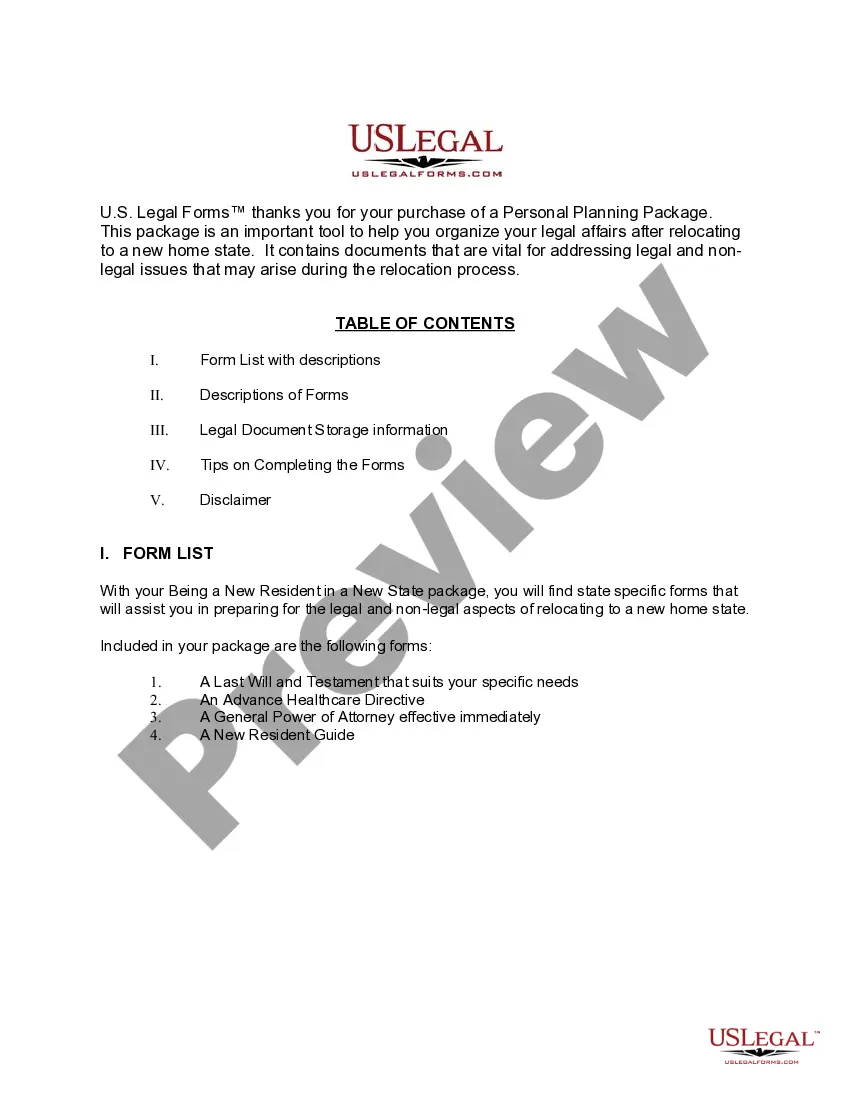
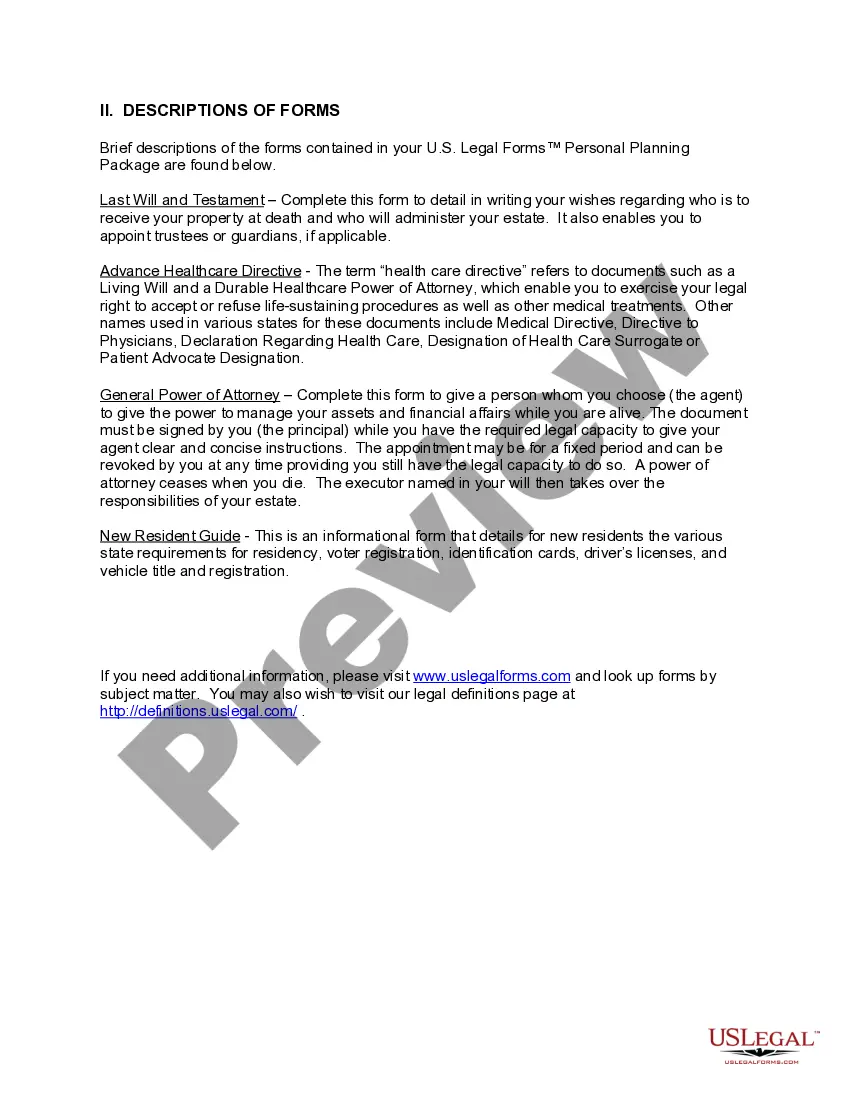
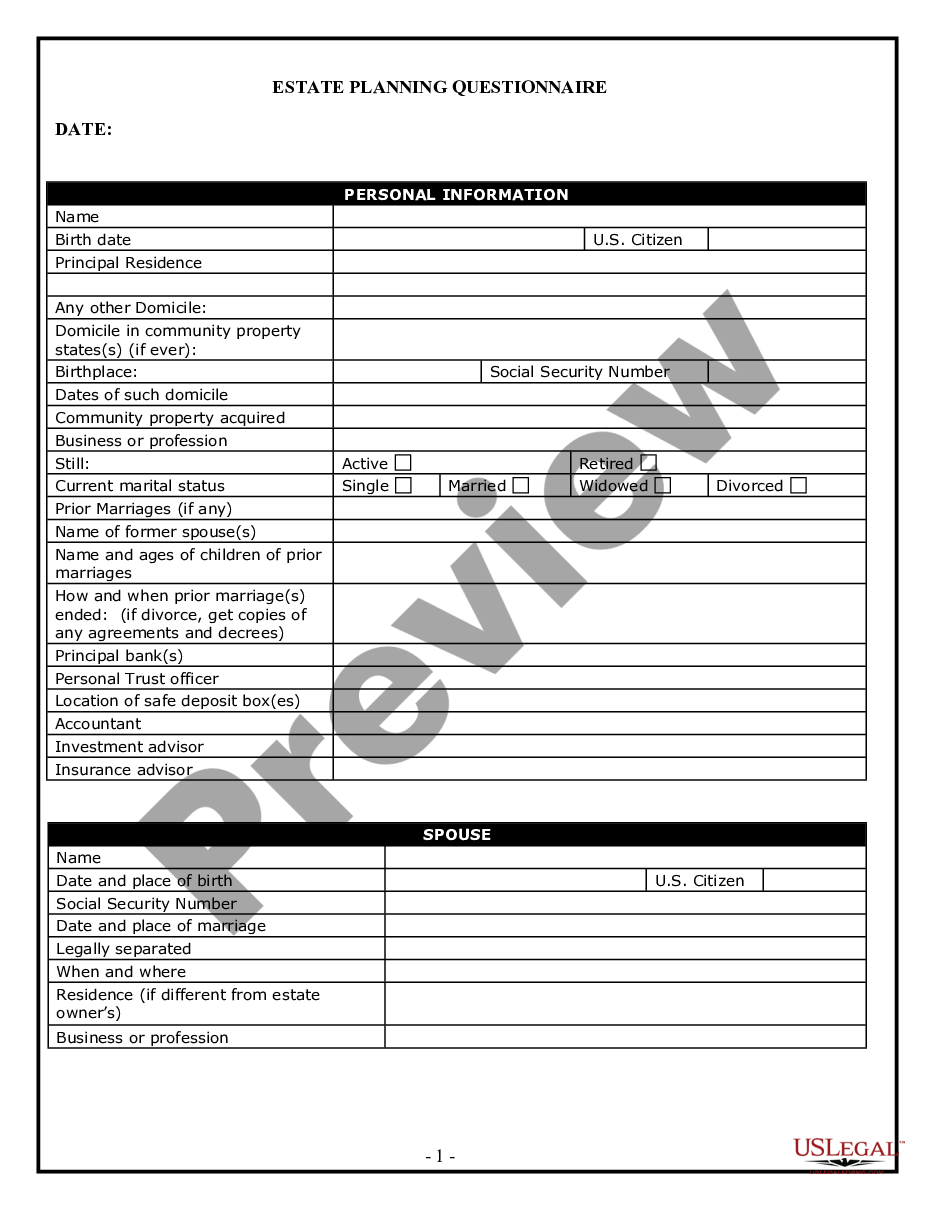
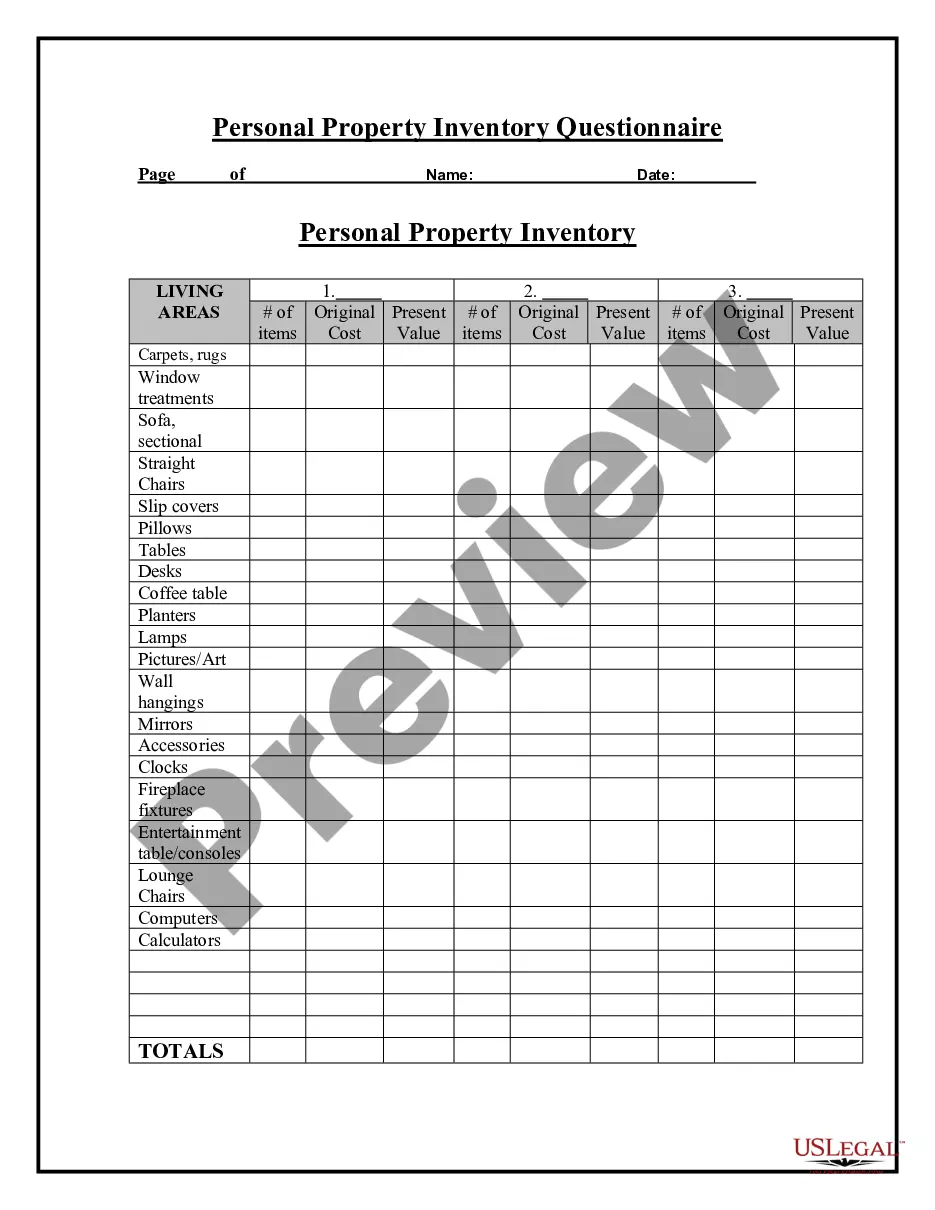
The Massachusetts New State Resident Package contains essential legal documents designed to assist individuals in managing their legal affairs after moving to Massachusetts. This package differs from others by focusing specifically on crucial legal and non-legal documents needed for new residents in this state. It ensures that you are well-prepared for the challenges that may arise during your relocation process.
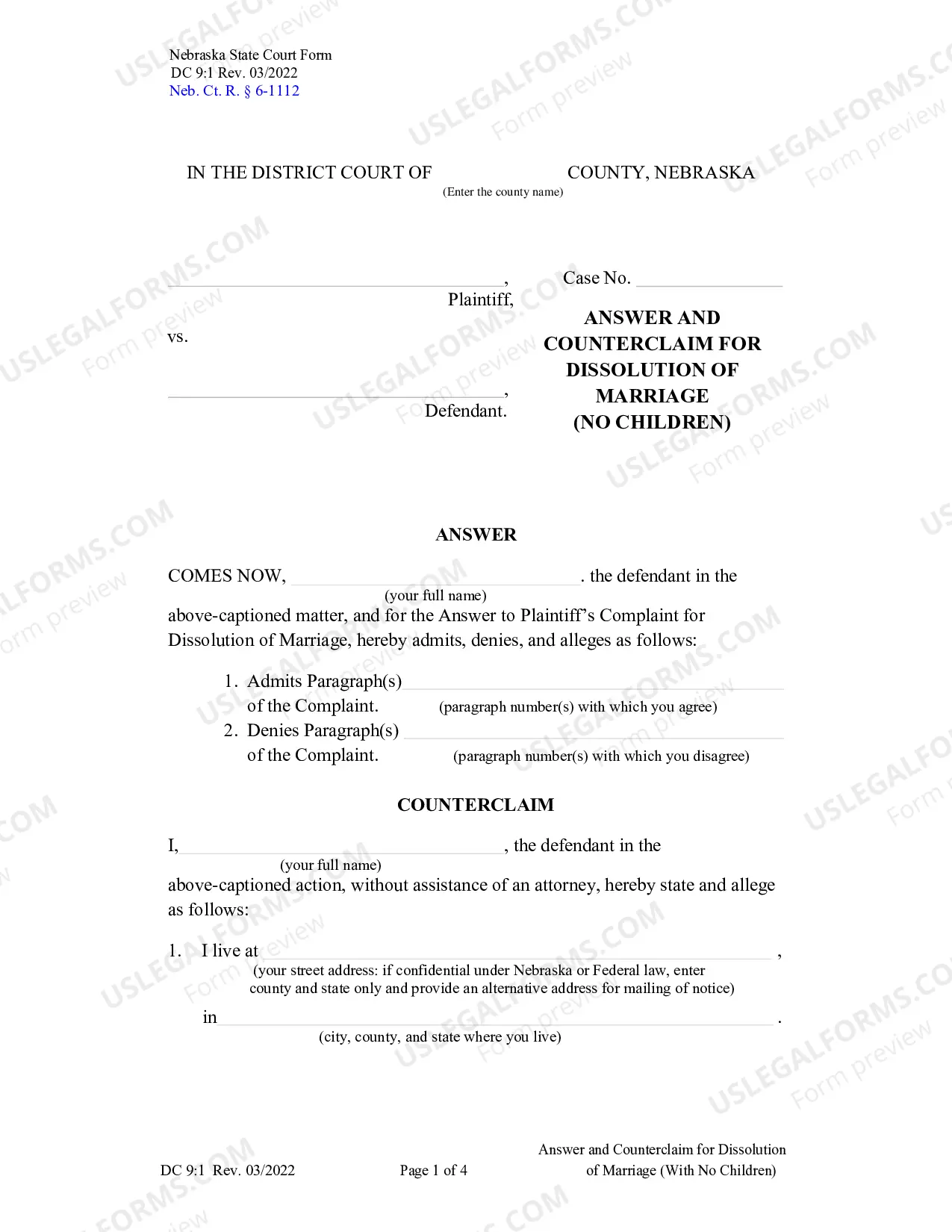
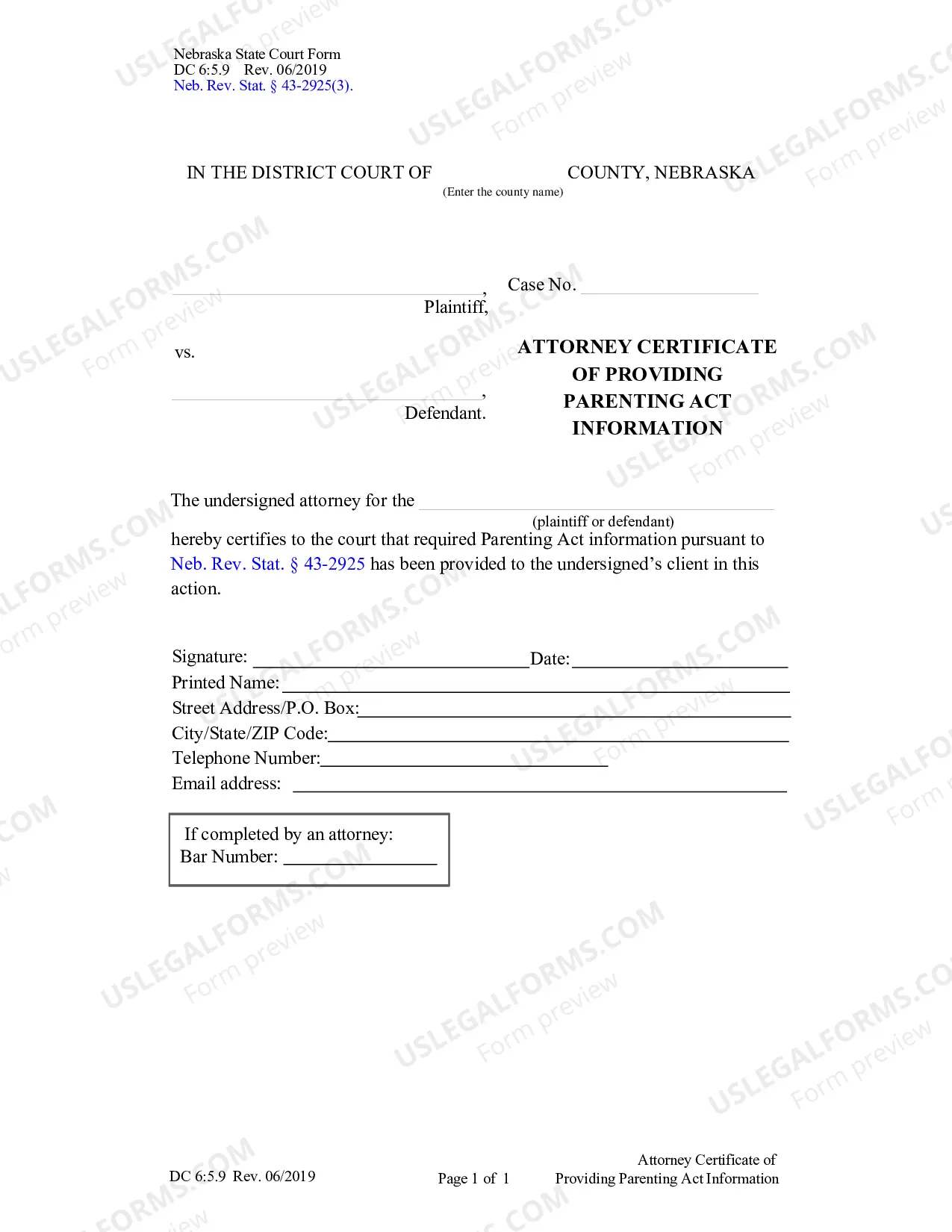
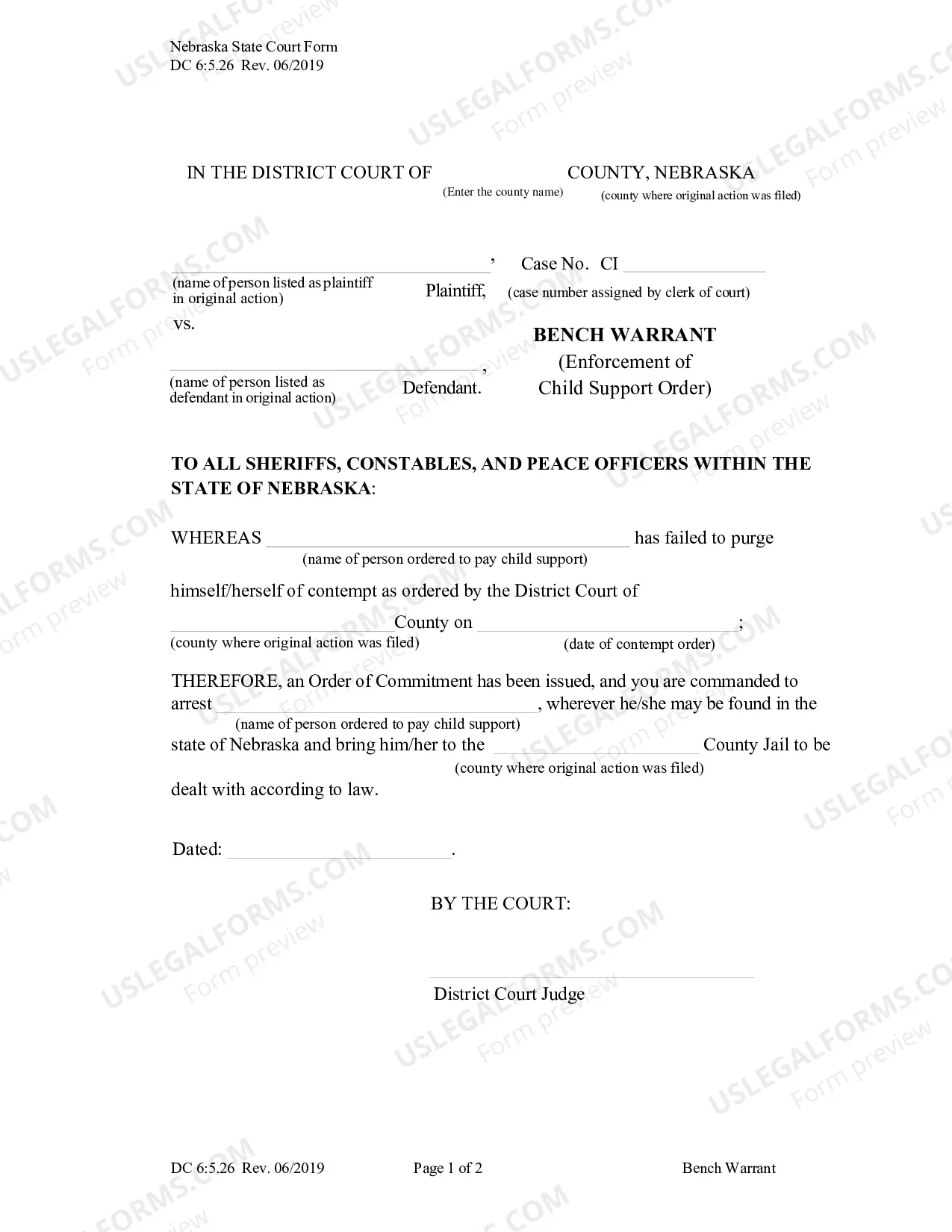
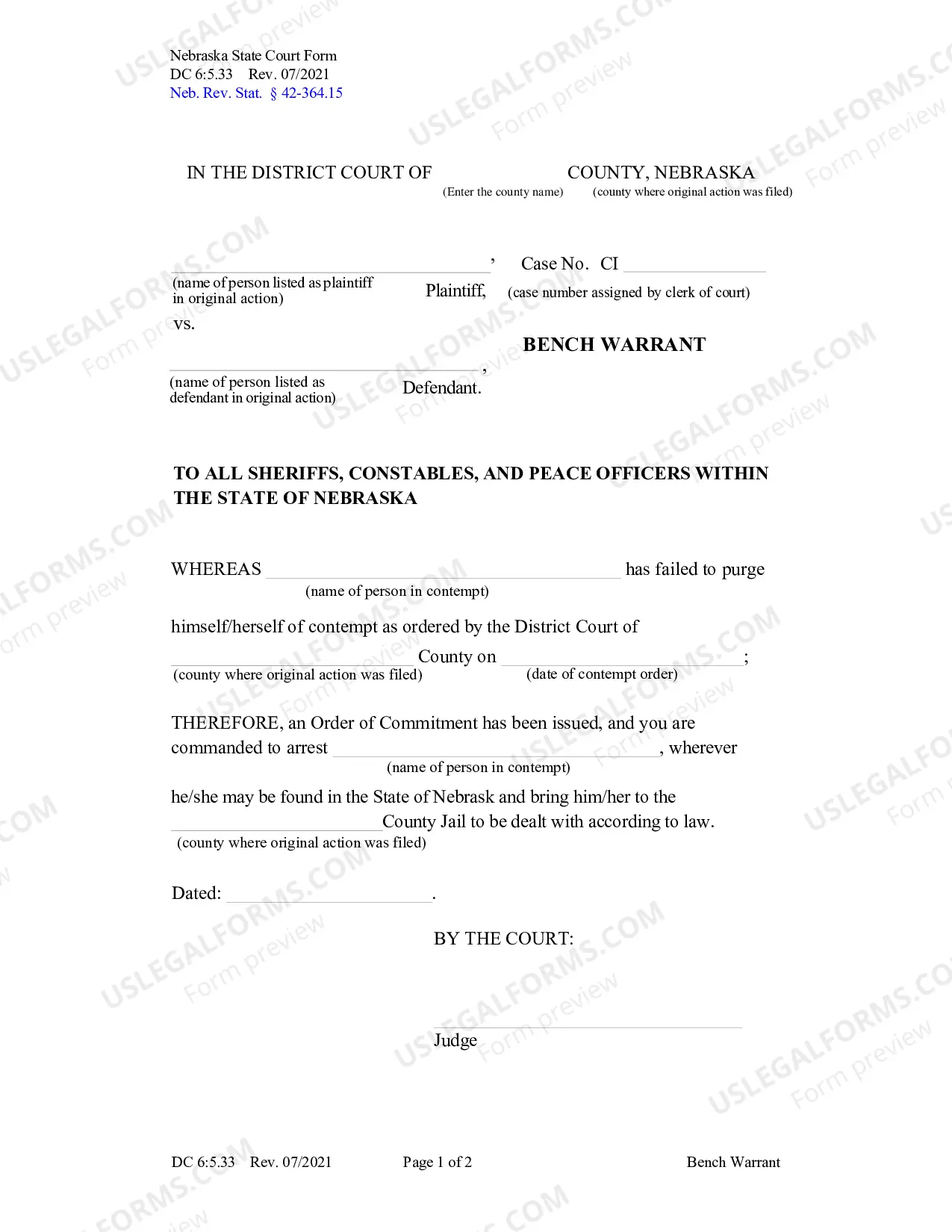
Forms you’ll find in this package
When to use this document
This package is useful when you have recently moved to Massachusetts and need to organize your legal affairs. You may find it beneficial to use this package when you want to establish a last will and testament, set up healthcare directives, designate a power of attorney, or familiarize yourself with the requirements and processes for new residents in the state.
Who needs this form package
- New residents of Massachusetts seeking to establish their legal documents.
- Individuals who wish to create or update their last will and testament.
- People looking to set up healthcare directives to ensure their medical preferences are honored.
- Anyone needing to assign a power of attorney to manage their financial affairs.
- Residents looking for guidance on state-specific requirements for living in Massachusetts.
Steps to complete these forms
- Review the included forms thoroughly to understand their purpose.
- Gather any necessary personal information required for each document.
- Follow the instructions for filling out each form, ensuring that all required fields are completed.
- Sign and date the necessary forms as specified in the package.
- Securely store completed documents in a safe location and inform trusted individuals of their whereabouts.
Do documents in this package require notarization?
Notarization is not commonly needed for forms in this package. However, if your state’s laws require it, our notarization service, powered by Notarize, allows you to finalize documents online 24/7 without in-person visits.
Get your form ready online
Our built-in tools help you complete, sign, share, and store your documents in one place.
Make edits, fill in missing information, and update formatting in US Legal Forms—just like you would in MS Word.
Download a copy, print it, send it by email, or mail it via USPS—whatever works best for your next step.
Sign and collect signatures with our SignNow integration. Send to multiple recipients, set reminders, and more. Go Premium to unlock E-Sign.
If this form requires notarization, complete it online through a secure video call—no need to meet a notary in person or wait for an appointment.
We protect your documents and personal data by following strict security and privacy standards.

Make edits, fill in missing information, and update formatting in US Legal Forms—just like you would in MS Word.

Download a copy, print it, send it by email, or mail it via USPS—whatever works best for your next step.

Sign and collect signatures with our SignNow integration. Send to multiple recipients, set reminders, and more. Go Premium to unlock E-Sign.

If this form requires notarization, complete it online through a secure video call—no need to meet a notary in person or wait for an appointment.

We protect your documents and personal data by following strict security and privacy standards.
Common mistakes to avoid
- Failing to sign the forms where required.
- Not providing complete or accurate information in the forms.
- Overlooking the need for witnesses or notarization for certain documents.
- Not storing the documents in a secure place after completion.
Advantages of online completion
- Convenience of accessing forms from anywhere at any time.
- Editability allows for easy adjustments before printing.
- Reliability of documents drafted by licensed attorneys, ensuring compliance with state laws.
Looking for another form?
Form popularity
FAQ
Find a new place to live in the new state. Establish domicile. Change your mailing address and forward your mail. Change your address with utility providers. Change IRS address. Register to vote. Get a new driver's license. File taxes in your new state.
Lawful presence (1 document) If your name differs on the lawful presence document, you must also provide proof of the legal name change. Social Security number (1 document) Massachusetts residency (2 documents)
Generally, you need to establish a physical presence in the state, an intent to stay there and financial independence. Then you need to prove those things to your college or university. Physical presence: Most states require you to live in the state for at least a full year before establishing residency.
To be eligible for the resident tuition rate, the applicant must be able to indicate residency (physical presence) and twelve months domicile in Massachusetts with intent to stay prior to the date of entry into the state college or university (six months for community colleges).
A Resident of Massachusetts is an individual who is domiciled in Massachusetts or maintains a permanent place of abode in MA and spends more than 183 days in the state. A Nonresident of Massachusetts is an individual who was not domiciled in Massachusetts but earned MA income.
Residency. There is no formal procedure for establishing a legal residence in Massachusetts. Voter registration, automobile registration, a driver's license, the appearance of a person's name on a city or town street list, and rent, utility, mortgage or telephone bills normally provide tangible proof of residence.
A resident is a person who maintains a permanent place of abode in Massachusetts and spends more than 183 days of the taxable year in Massachusetts. Whether a person maintains a permanent place of abode in Massachusetts is a factual determination.
Not only must a person maintain a permanent place of abode in Massachusetts, but a person must also spend more than 183 days in Massachusetts to meet the definition of a resident. For purposes of determining presence in Massachusetts, a day is defined as any part of a day spent in Massachusetts for whatever reason.