Louisiana Mortgage to Secure Future Advances
Understanding this form
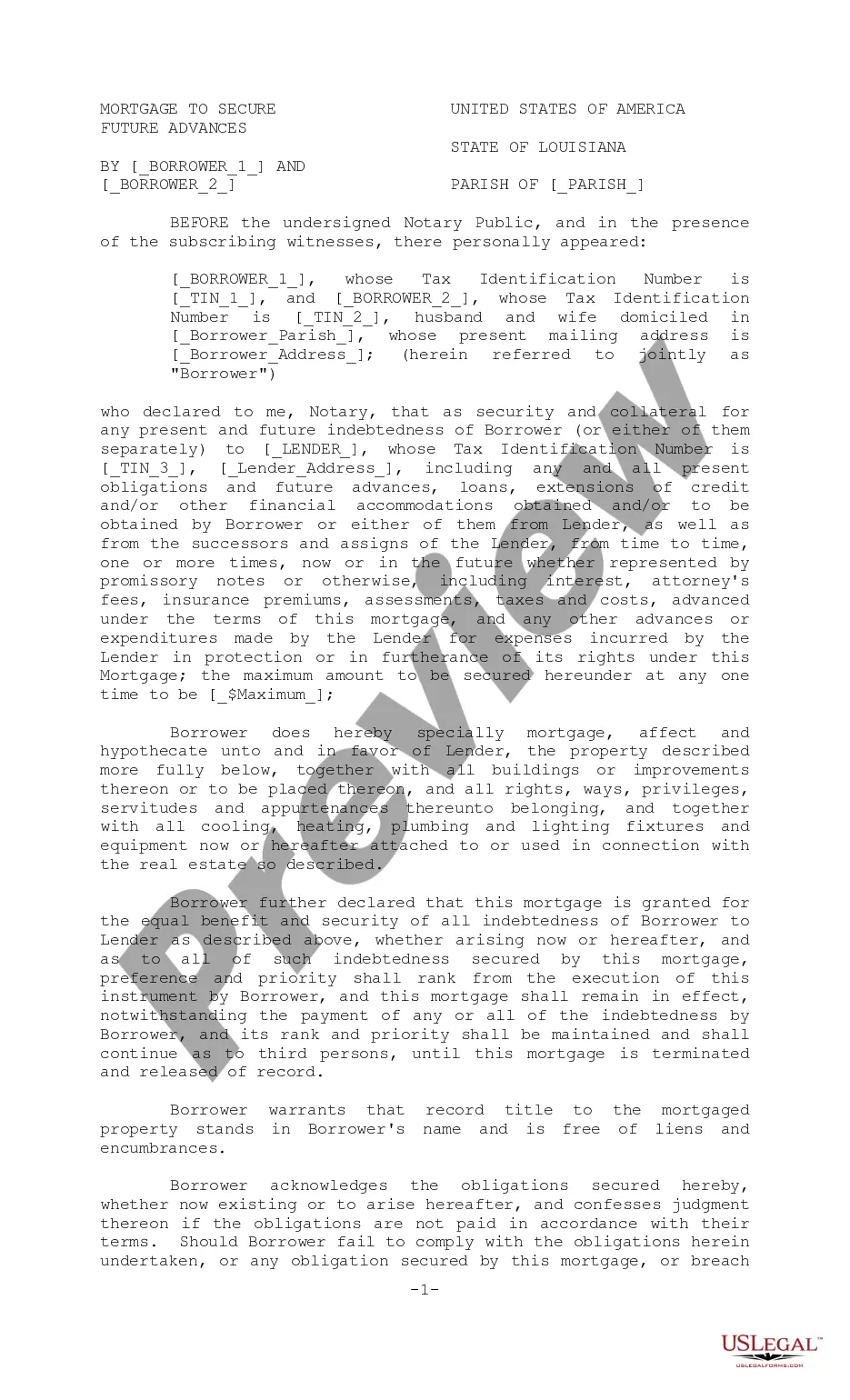
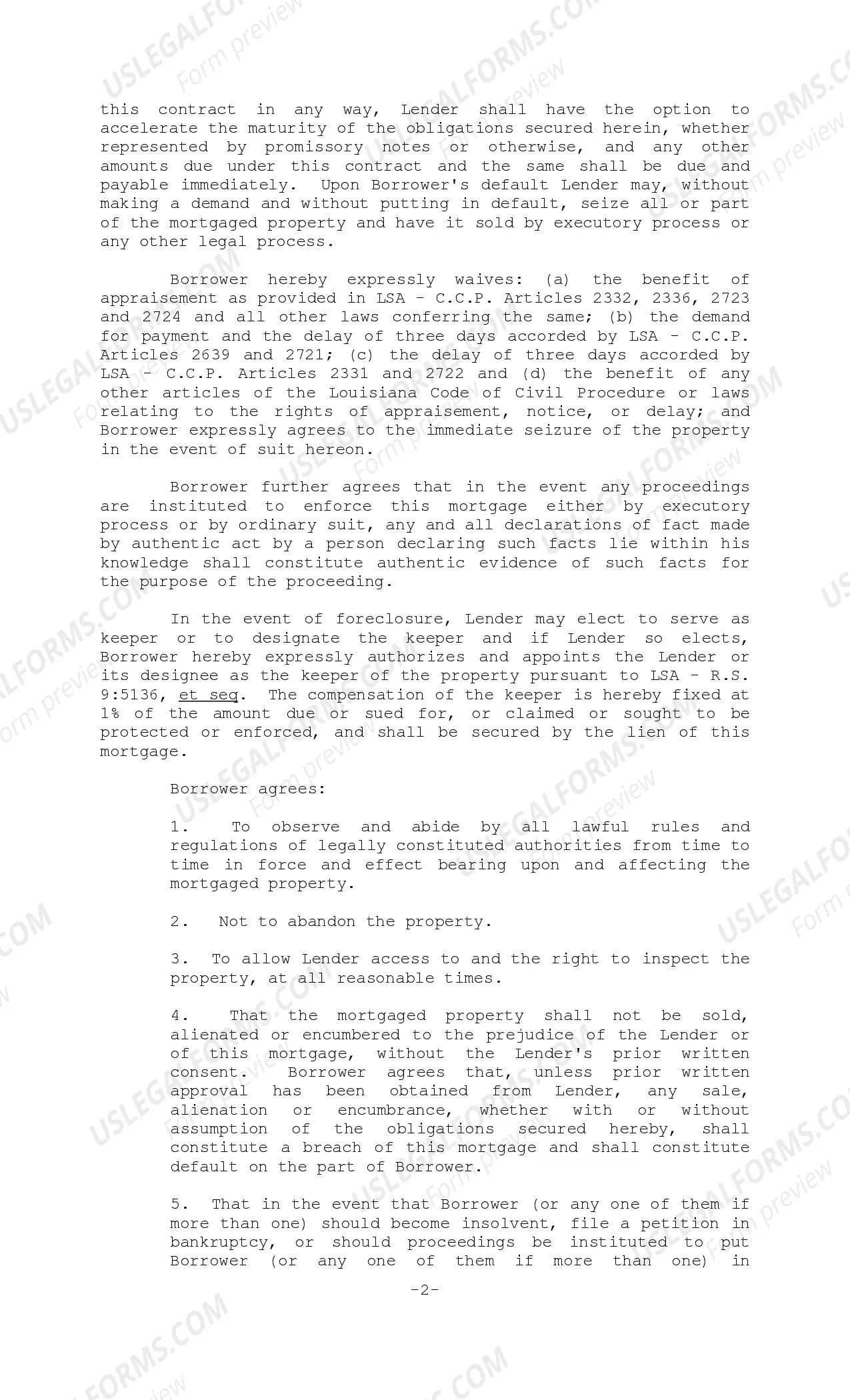
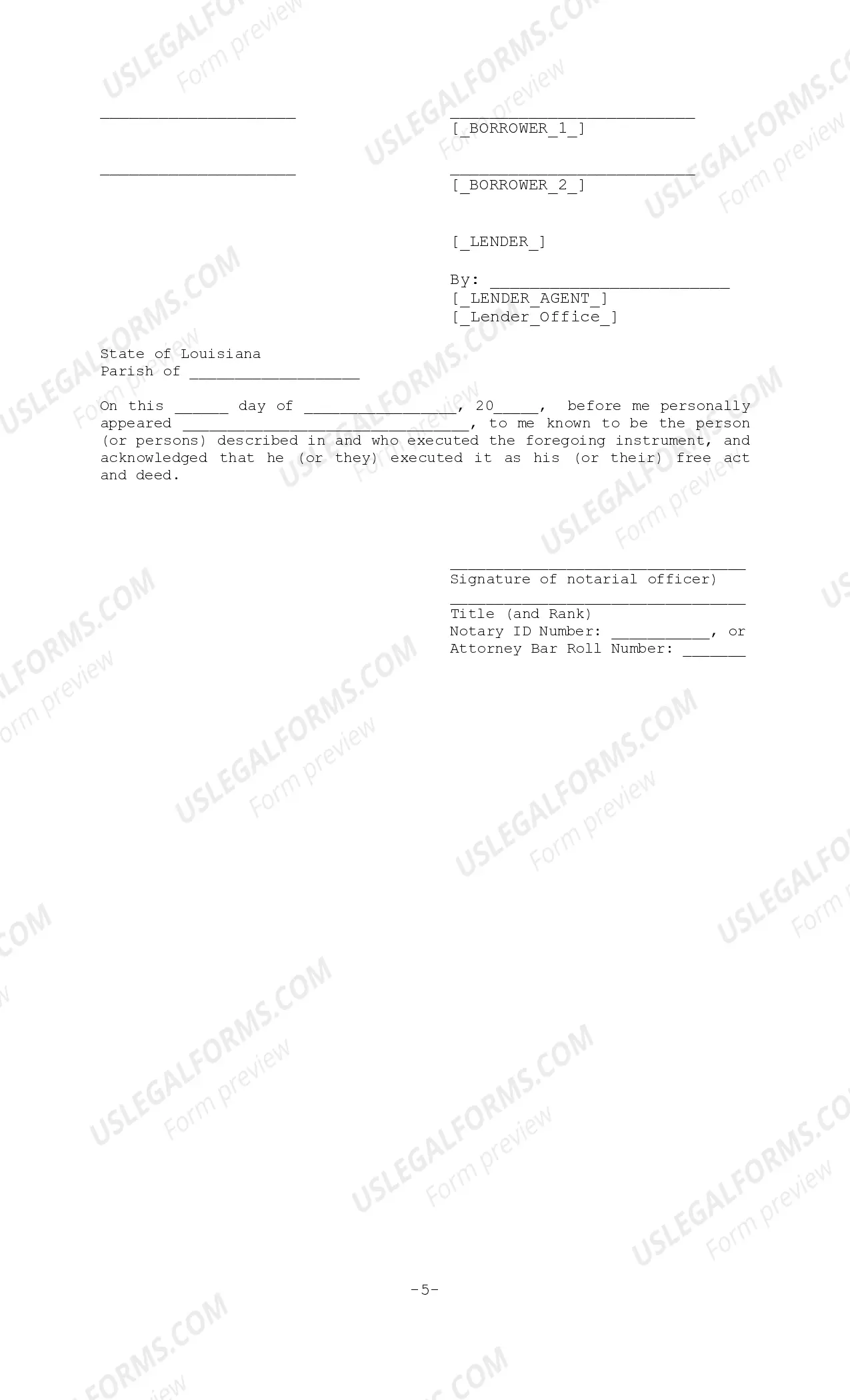
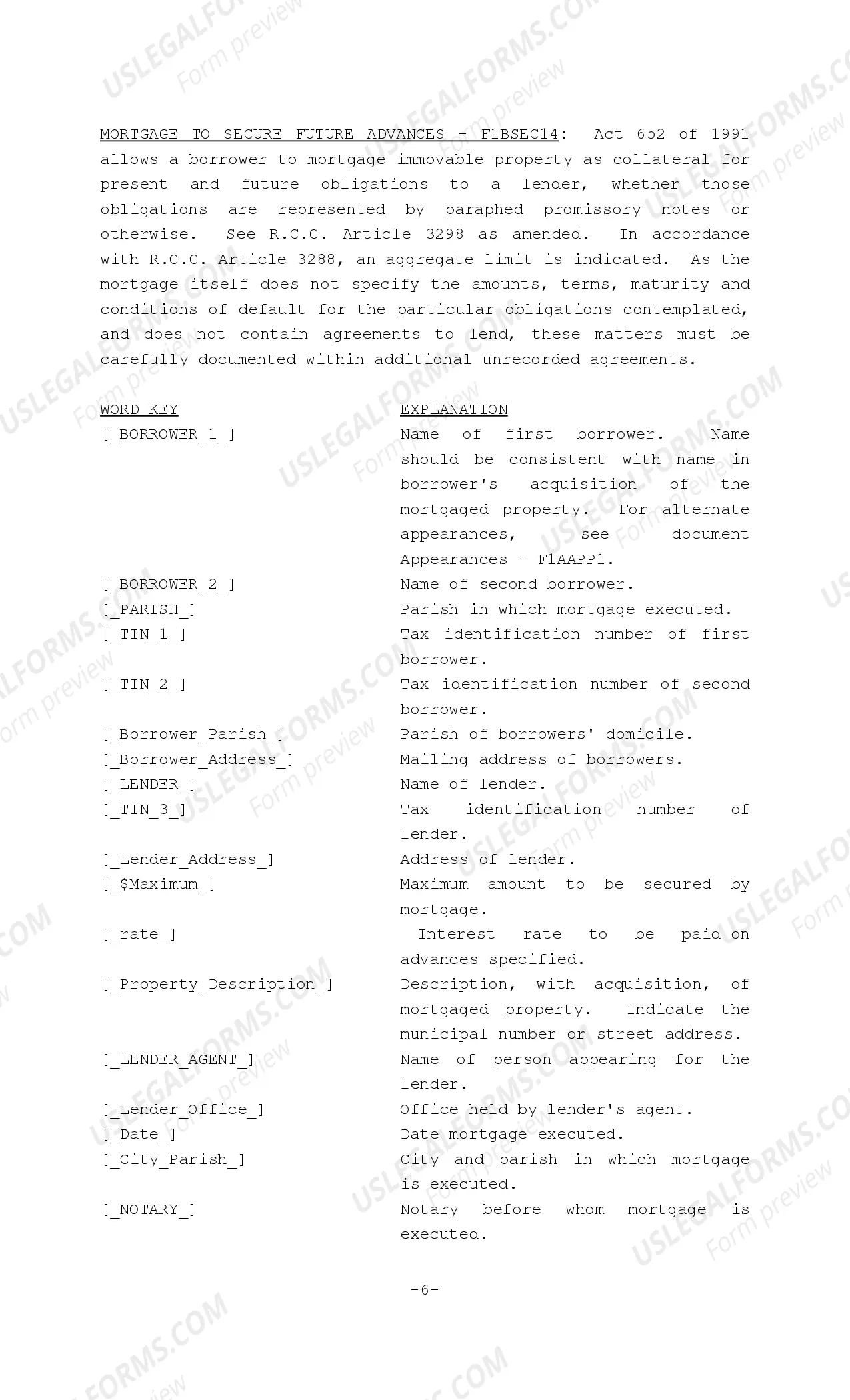
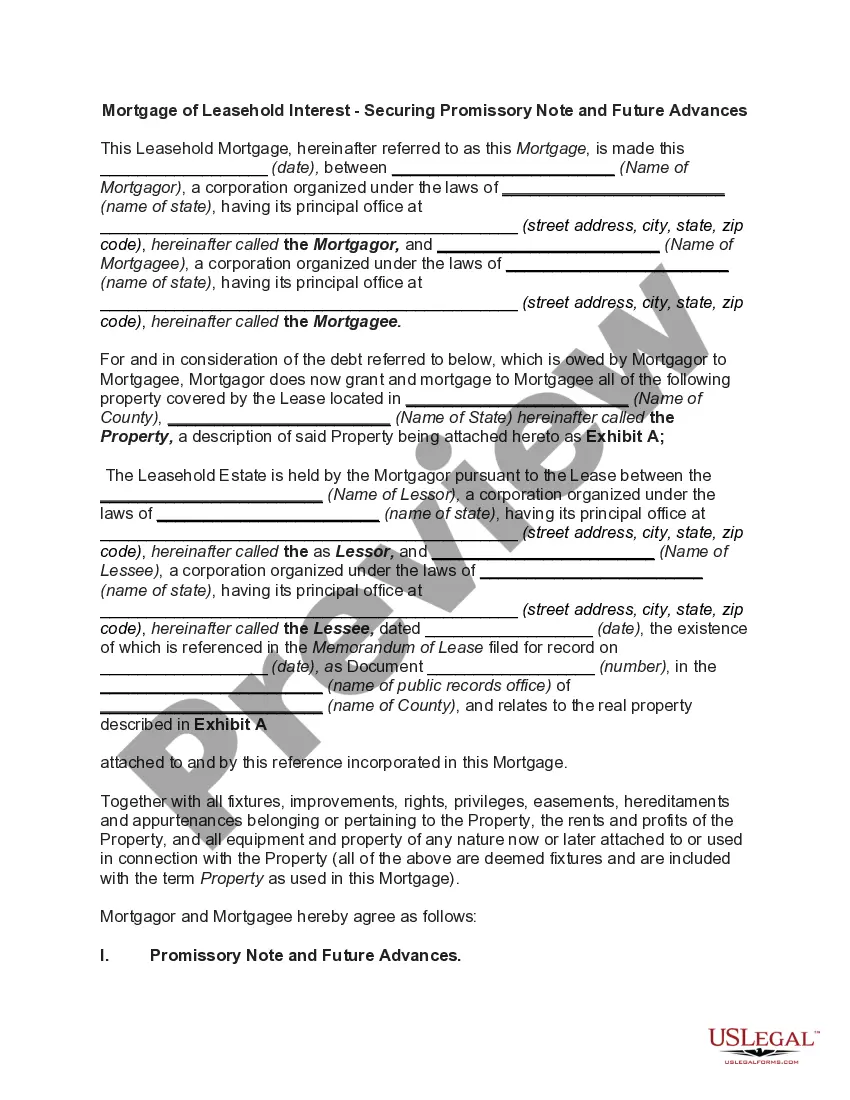
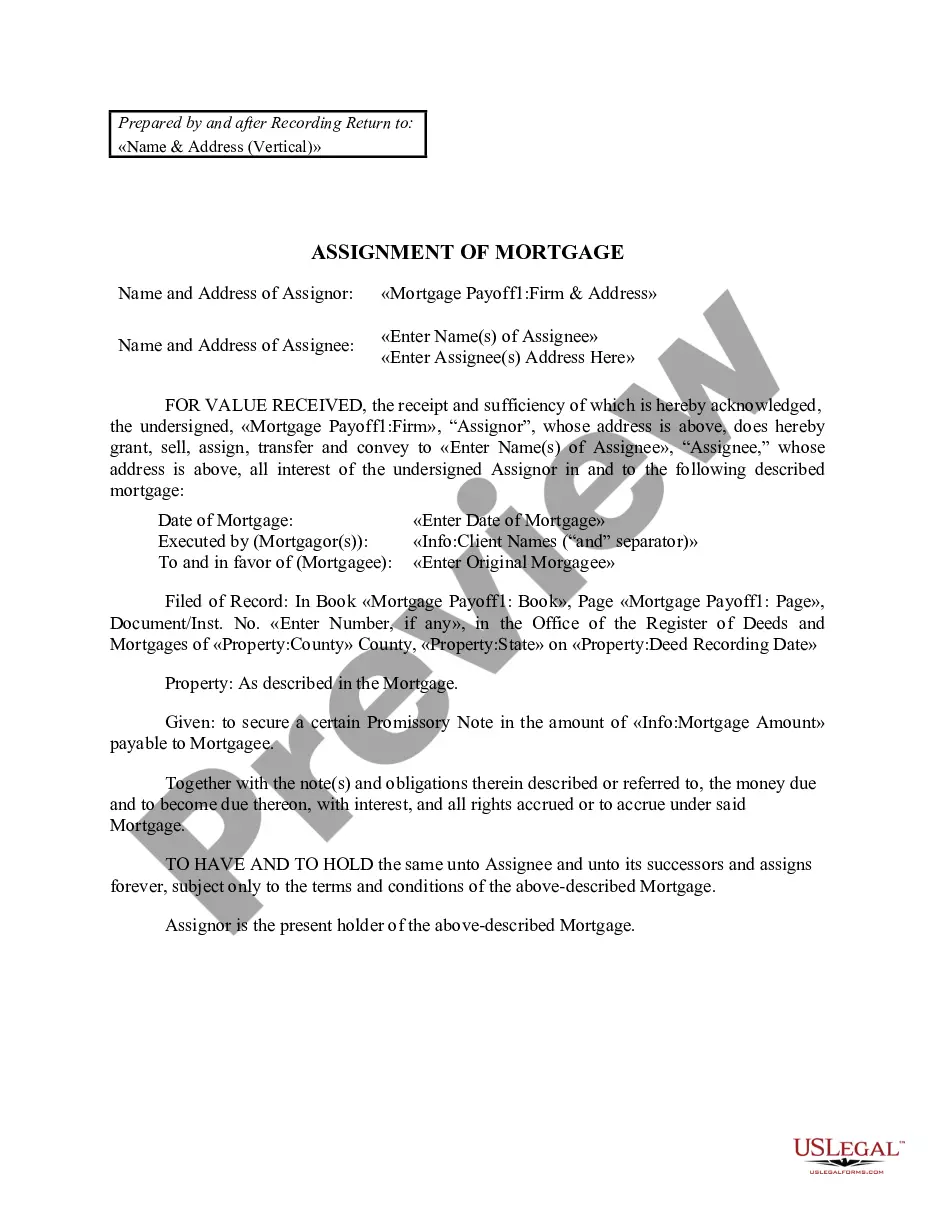
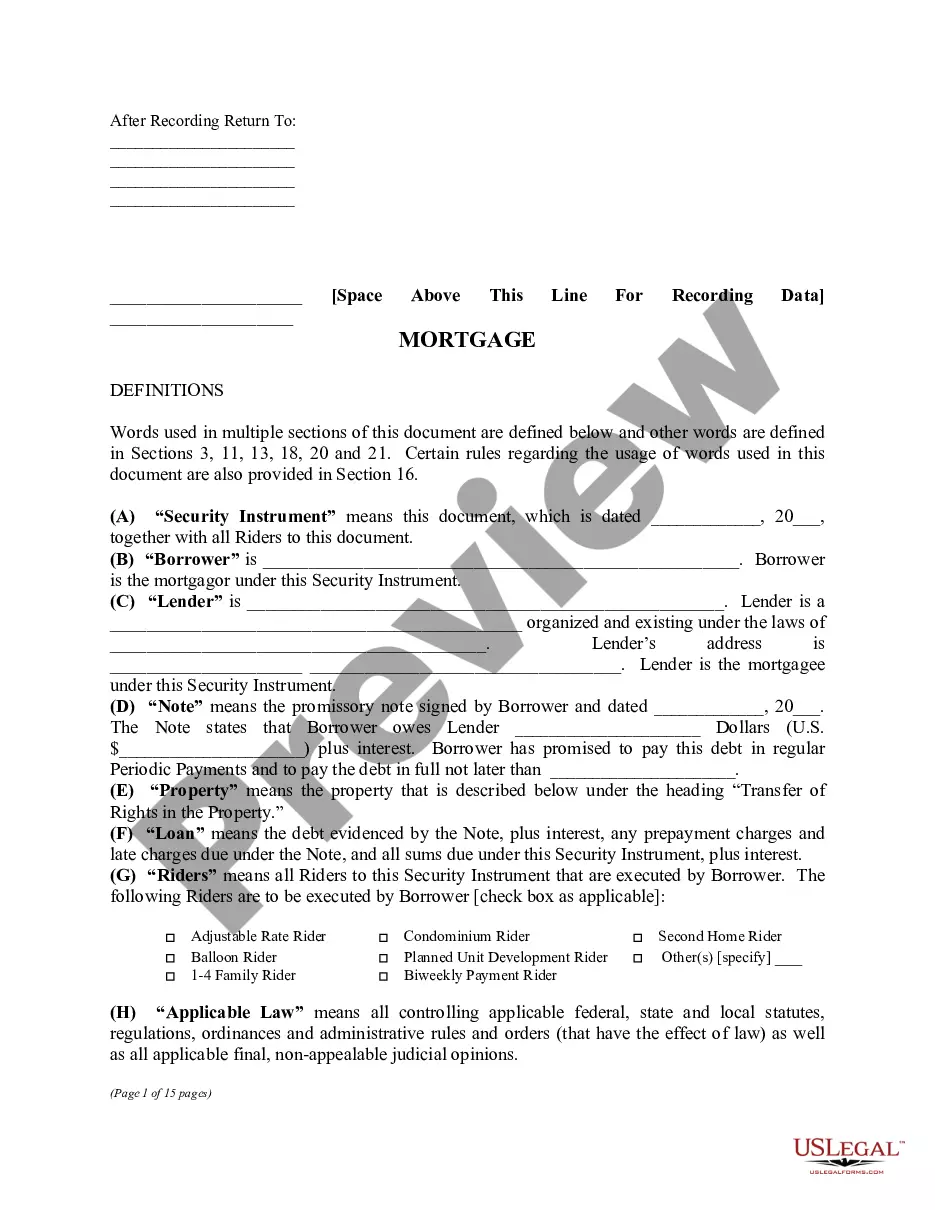
The Mortgage to Secure Future Advances is a legal document that allows a borrower to use immovable property as collateral for current and future loans from a lender. This form differs from standard mortgage agreements as it specifically secures not just present debt but also future advances. Designed to ensure that the lender has rights to the property should the borrower default, this document includes terms and obligations related to the use and maintenance of the property as security.
Key components of this form
- Identification of the borrower(s) and lender.
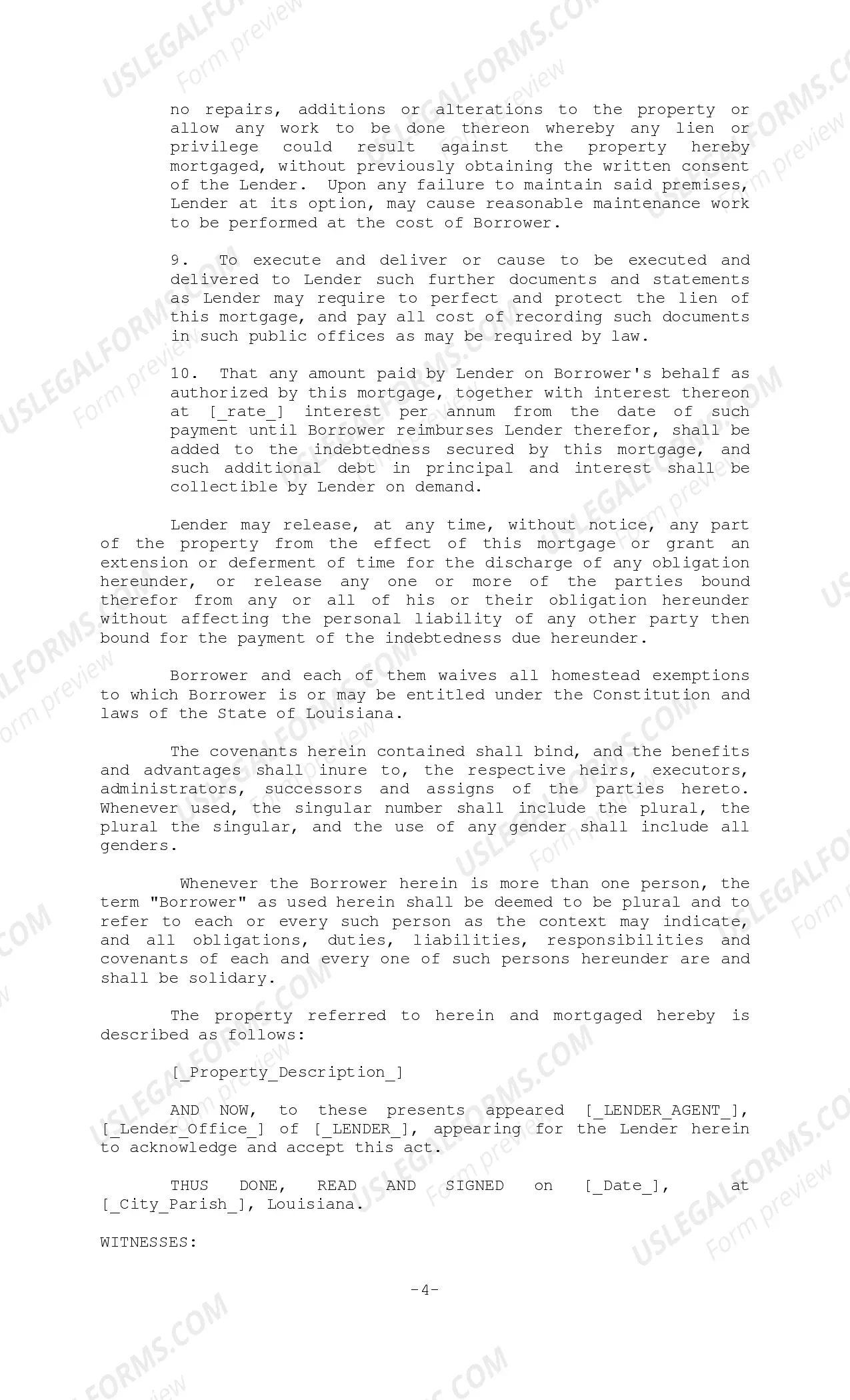
- Description of the property being mortgaged.
- Maximum amount secured under the mortgage.
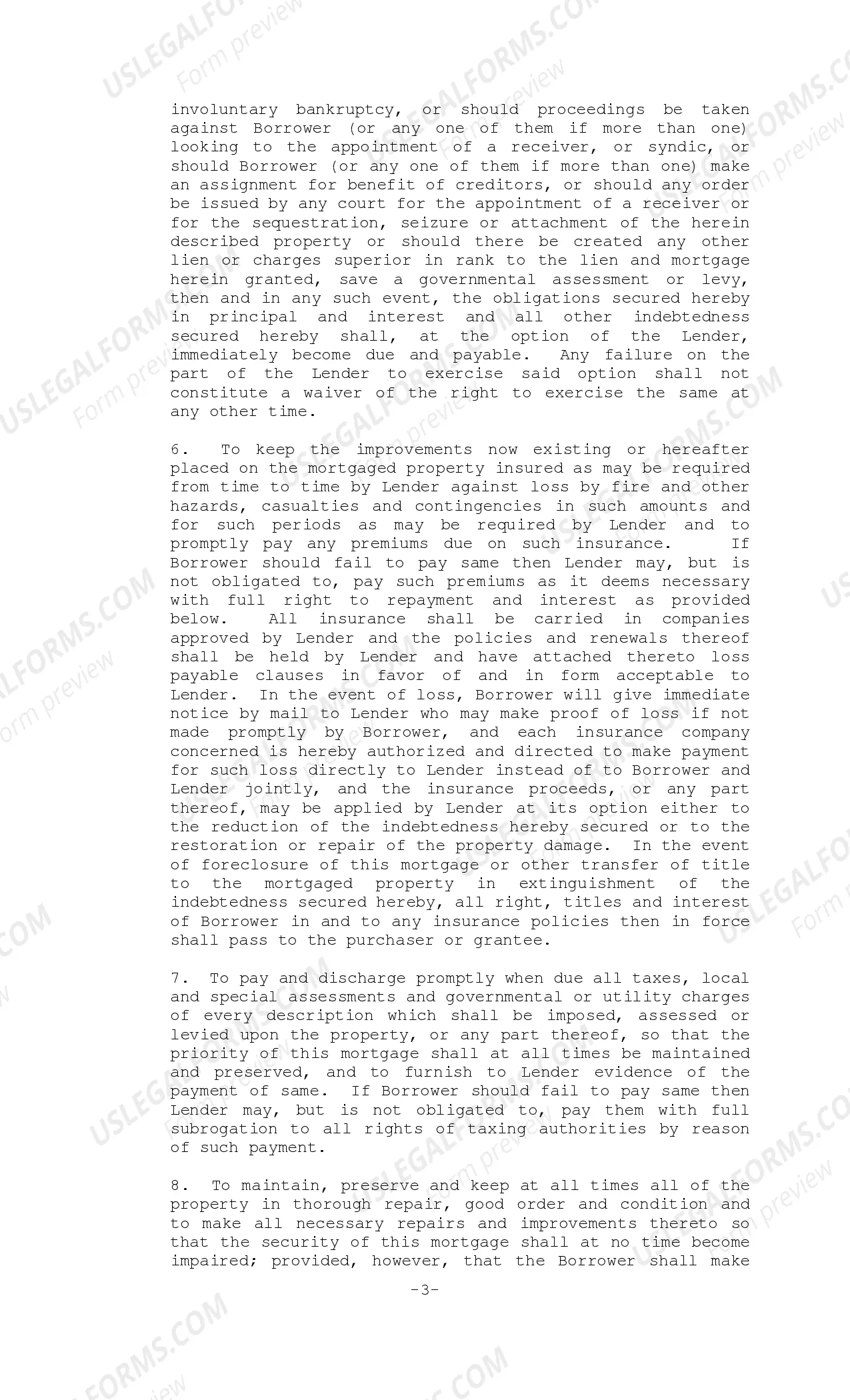
- Provisions for the obligations and terms of repayment.
- Conditions for inspection and maintenance of the property.
- Rights of the lender in case of borrower default.
Common use cases
This form is useful when a borrower needs to secure a loan with real estate, particularly when they anticipate needing additional advances from the lender in the future. It is commonly used in scenarios such as refinancing existing debt, acquiring new loans for property development, or obtaining lines of credit where property serves as collateral.
Who should use this form
- Homeowners seeking a loan secured by their property.
- Borrowers expecting future financial needs requiring additional funds.
- Lenders who want to ensure their rights over the mortgaged property.
- Property owners looking to leverage their equity for financial benefits.
How to prepare this document
- Identify the parties involved, including the borrowers and lender, and provide relevant identification details.
- Describe the property being mortgaged, including its legal address and any pertinent details.
- Specify the maximum amount of future advances that can be secured by the mortgage.
- Include the date of execution and the relevant saints involved in the notarization process.
- Ensure all parties sign the document in the presence of a notary public for legal validity.
Does this document require notarization?
To make this form legally binding, it must be notarized. Our online notarization service, powered by Notarize, lets you verify and sign documents remotely through an encrypted video session.
Get your form ready online
Our built-in tools help you complete, sign, share, and store your documents in one place.
Make edits, fill in missing information, and update formatting in US Legal Forms—just like you would in MS Word.
Download a copy, print it, send it by email, or mail it via USPS—whatever works best for your next step.
Sign and collect signatures with our SignNow integration. Send to multiple recipients, set reminders, and more. Go Premium to unlock E-Sign.
If this form requires notarization, complete it online through a secure video call—no need to meet a notary in person or wait for an appointment.
We protect your documents and personal data by following strict security and privacy standards.

Make edits, fill in missing information, and update formatting in US Legal Forms—just like you would in MS Word.

Download a copy, print it, send it by email, or mail it via USPS—whatever works best for your next step.

Sign and collect signatures with our SignNow integration. Send to multiple recipients, set reminders, and more. Go Premium to unlock E-Sign.

If this form requires notarization, complete it online through a secure video call—no need to meet a notary in person or wait for an appointment.

We protect your documents and personal data by following strict security and privacy standards.
Common mistakes to avoid
- Failing to specify the maximum amount secured, leading to potential disputes about borrower limits.
- Not providing complete and accurate property descriptions, which can complicate enforcement.
- Omitting signatures or not including a notary, rendering the document invalid.
- Neglecting to maintain the property as required by the mortgage terms, risking default consequences.
Benefits of using this form online
- Convenient download and access to ready-made legal document templates.
- Editability allows customization to specific borrower and lender needs.
- Reliability ensured by forms drafted by licensed attorneys with jurisdictional compliance.
- Guidance provided throughout the process, minimizing legal complexities.
Key takeaways
- This form serves to secure both present and future indebtedness through a mortgage on real property.
- It is imperative for borrowers to clearly outline obligations and maximum amounts supported under the mortgage.
- Legal compliance with Louisiana statutes is essential for validity and enforcement.
- Notarization is required to ensure the document holds legal weight.
Looking for another form?

Form popularity
FAQ
This is the sum your Lender has agreed you can borrow for your remortgage/purchase.
A future advance is a clause in a mortgage that provides for additional availability of funds under the loan contract.
What is a collateral loan? When you take out a collateral loan, you agree to give a lender the right to take the property that's securing the loan like a car, home or savings account if you fail to repay it as agreed.
Obvious forms of collateral include houses, cars, stocks, bonds and cash -- all things that are readily convertible into cash to repay the loan. Some of those assets are "hard," such as houses and automobiles; others are "paper," such as stocks and bonds.
The term collateral refers to an asset that a lender accepts as security for a loan. Collateral may take the form of real estate or other kinds of assets, depending on the purpose of the loan. The collateral acts as a form of protection for the lender.
Lenders use open-end mortgages to advance loan funds to borrowers while maintaining a first priority lien and without having to issue a new mortgage after each advance.
A further advance is taking on more borrowing from your current mortgage lender. This is typically at a different rate to your main mortgage.Your lender's further advance is competitive. You don't want to remortgage or switch lenders.
Multiple indebtedness mortgages (a MIM) serve the same purpose as collateral real estate mortgages. However, unlike a collateral mortgage, a MIM may secure multiple extensions of credit on a cross-collateralization basis. A MIM may also secure multiple loan advances under a secured revolving line of credit (La. Civ.
Once documents such as deeds, mortgage notes, or satisfaction of mortgage or judgment are recorded they become an official public record. Countrywide Process has the capability of completing document recordings quickly and efficiently throughout California.