Mississippi Oil, Gas and Mineral Lease
What is this form?
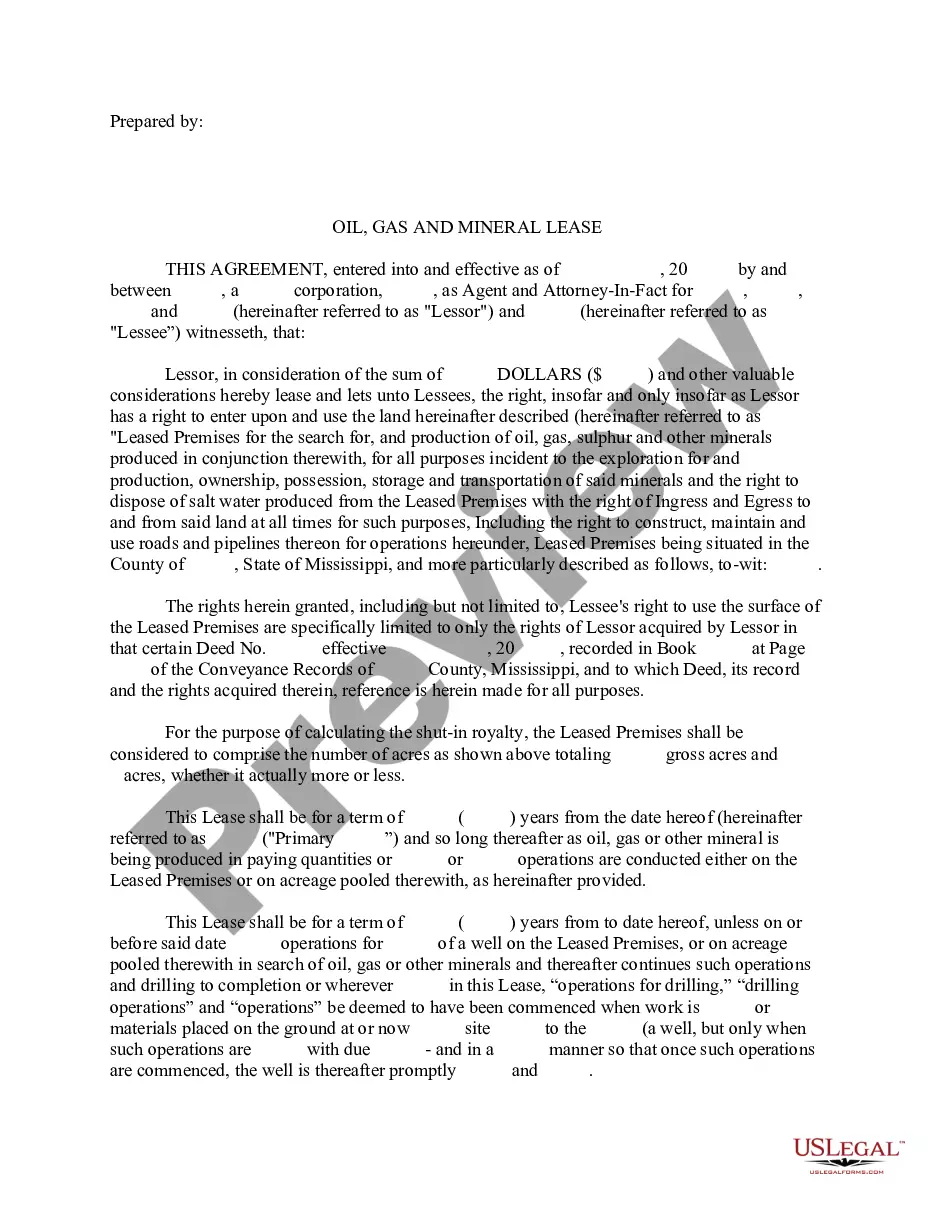
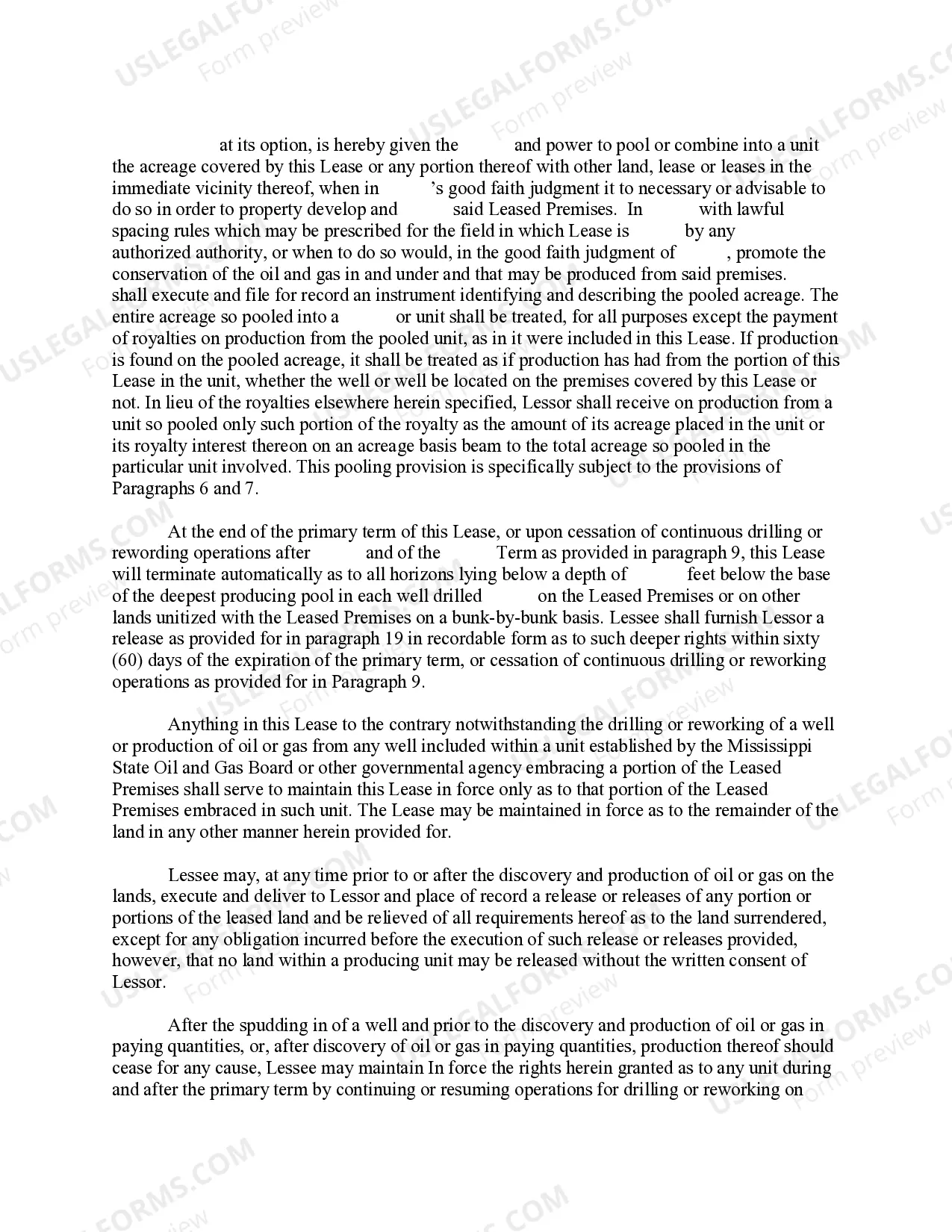
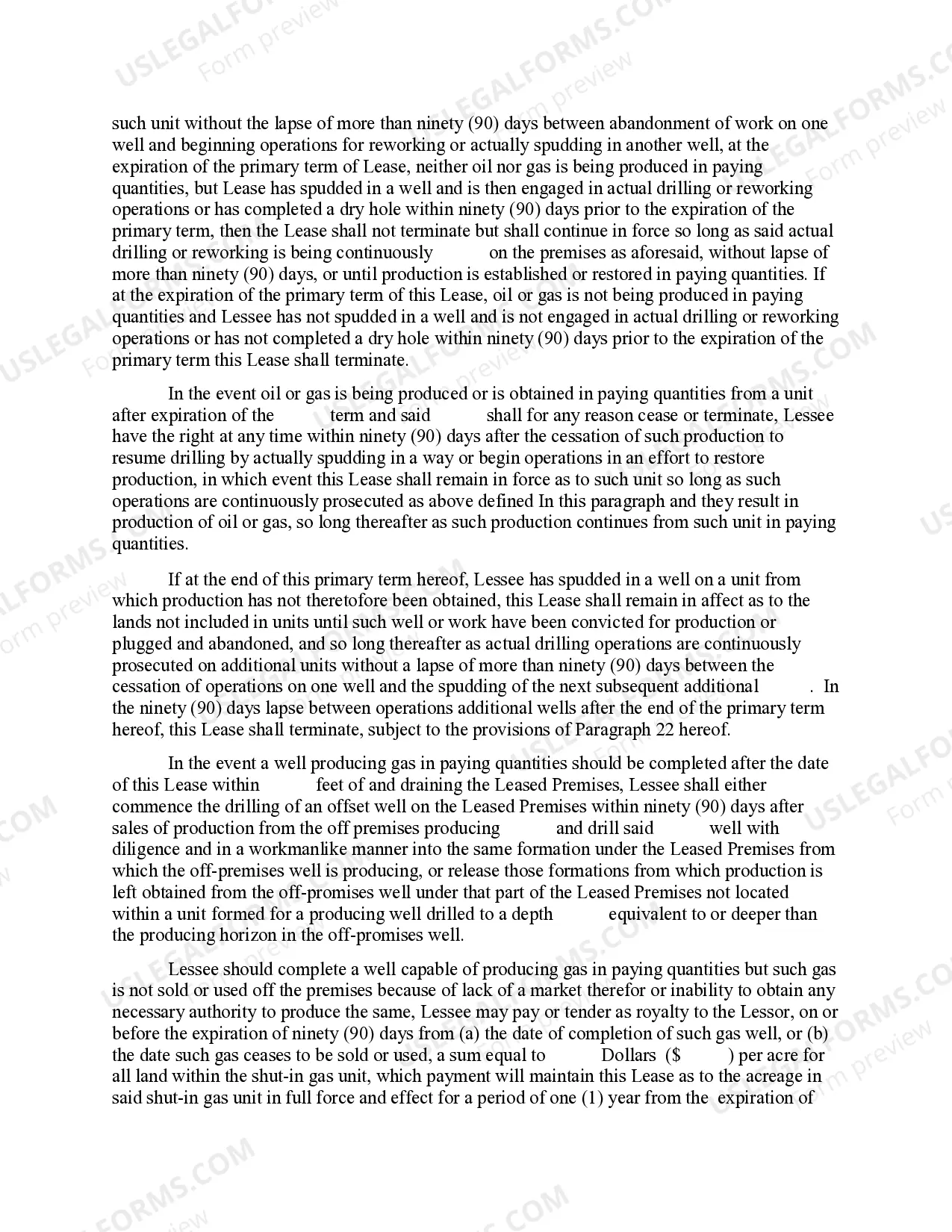
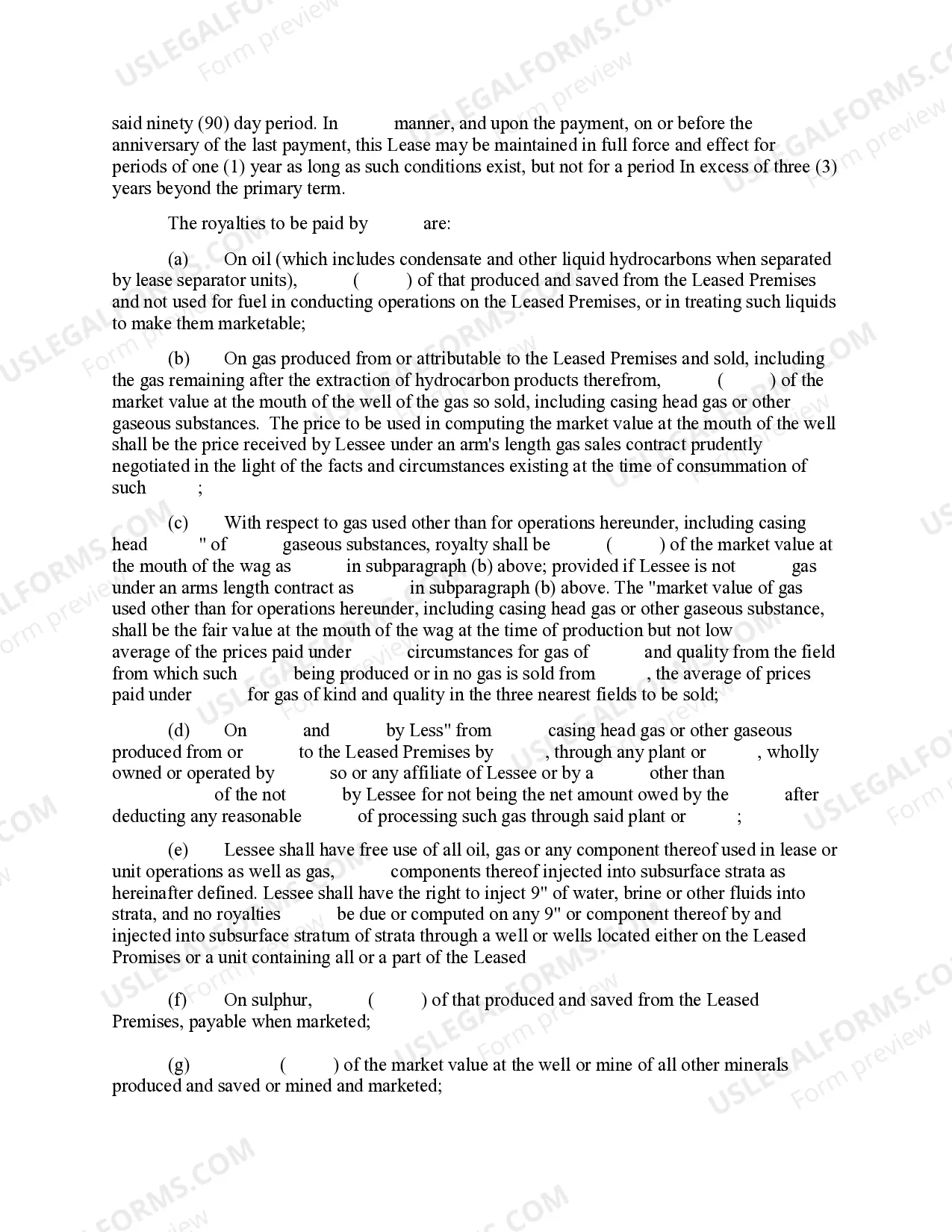
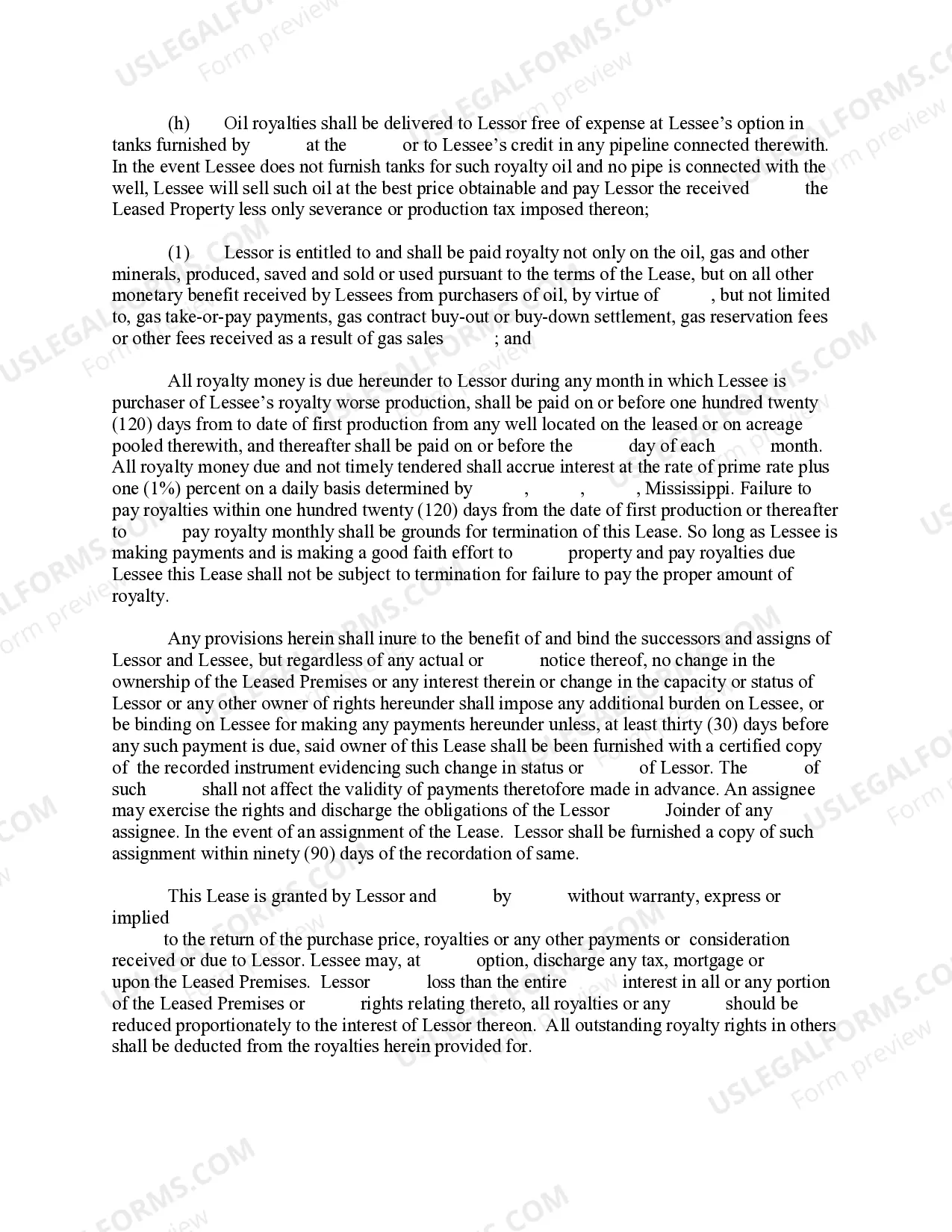
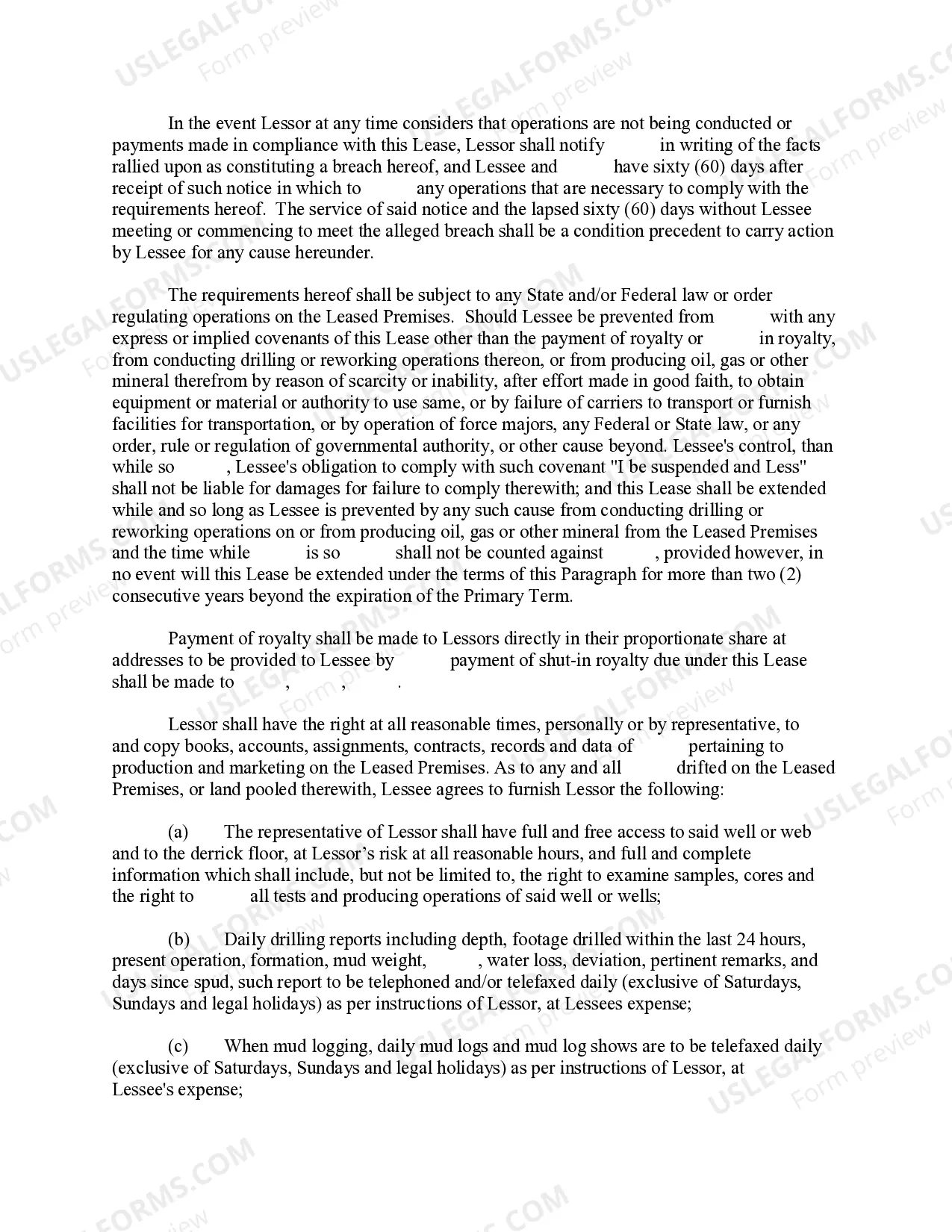
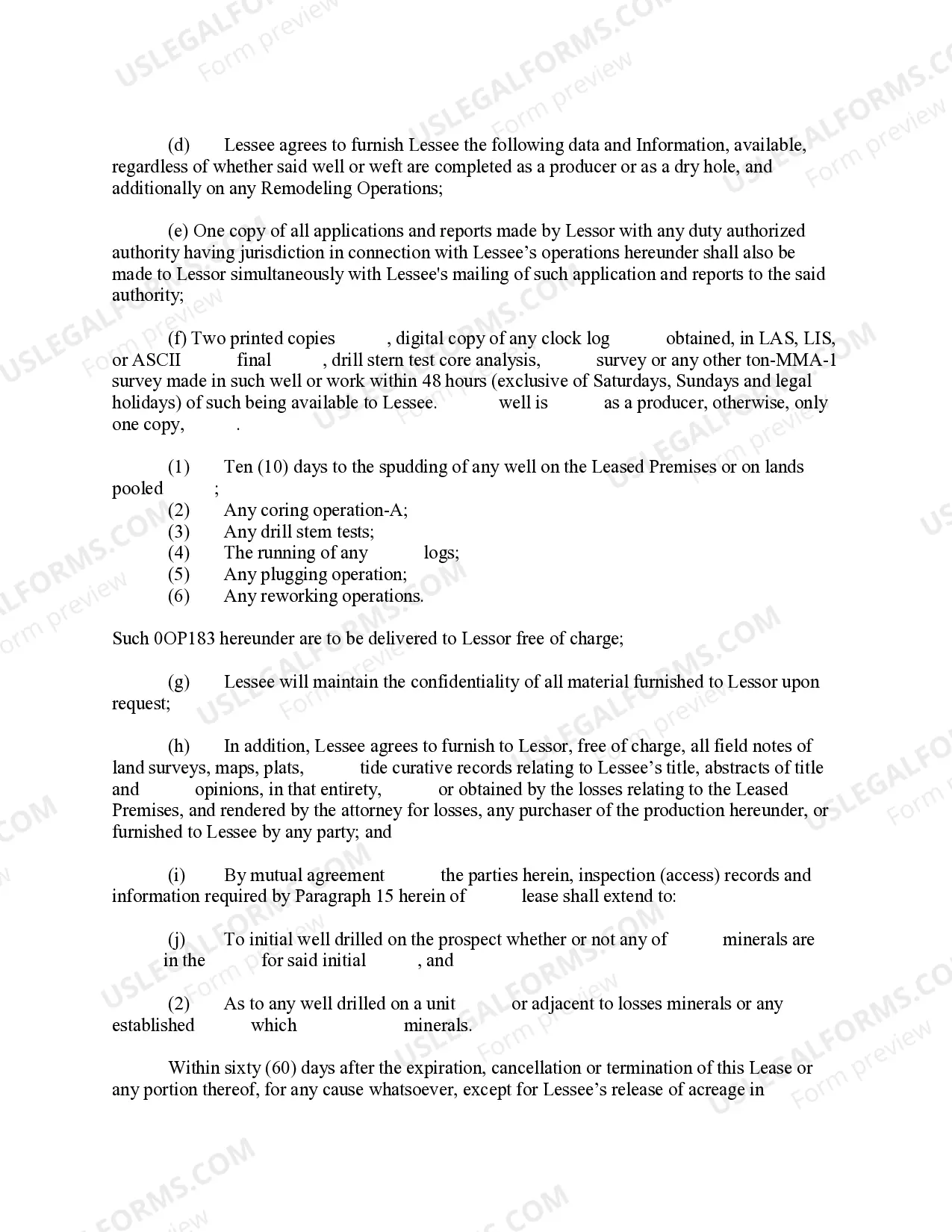
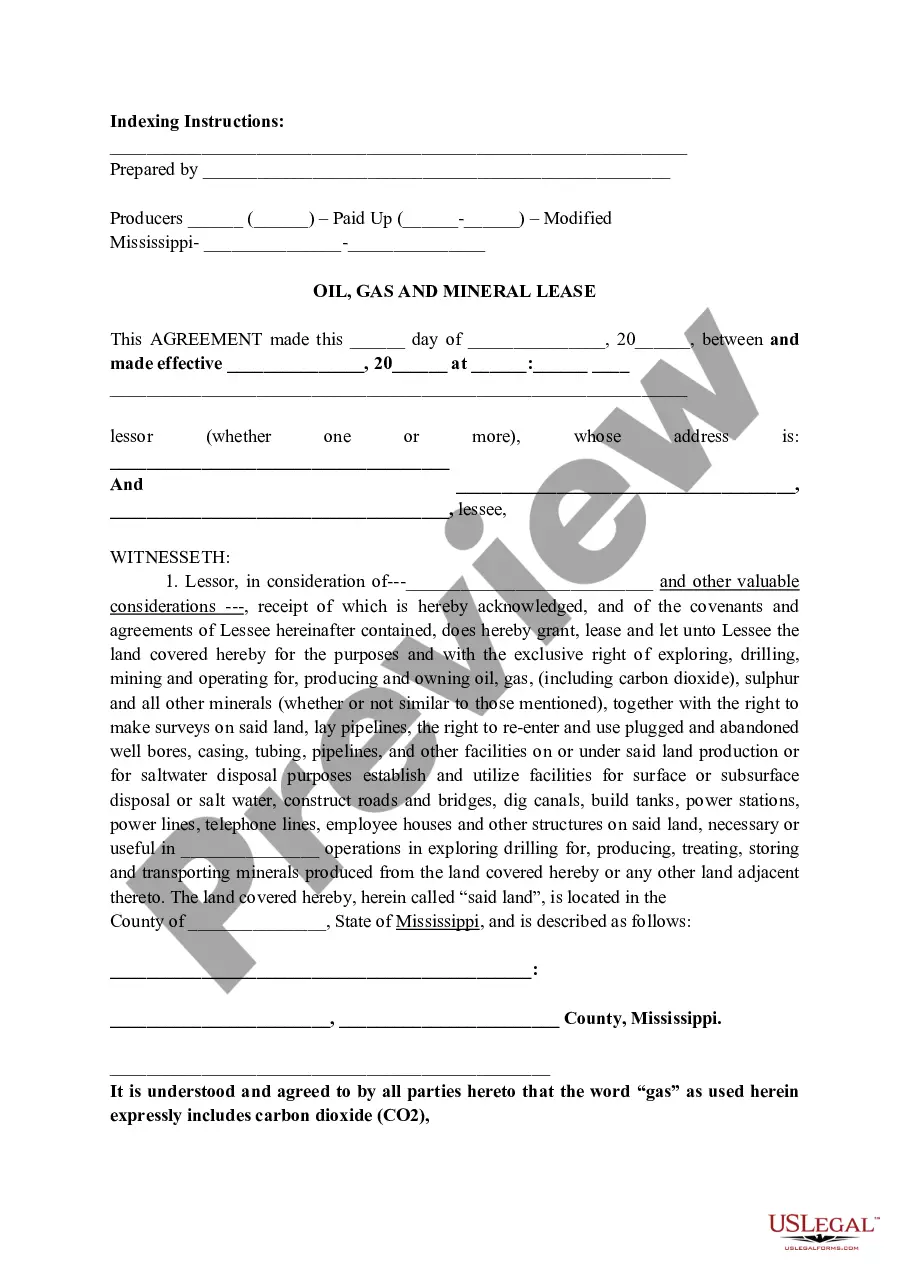
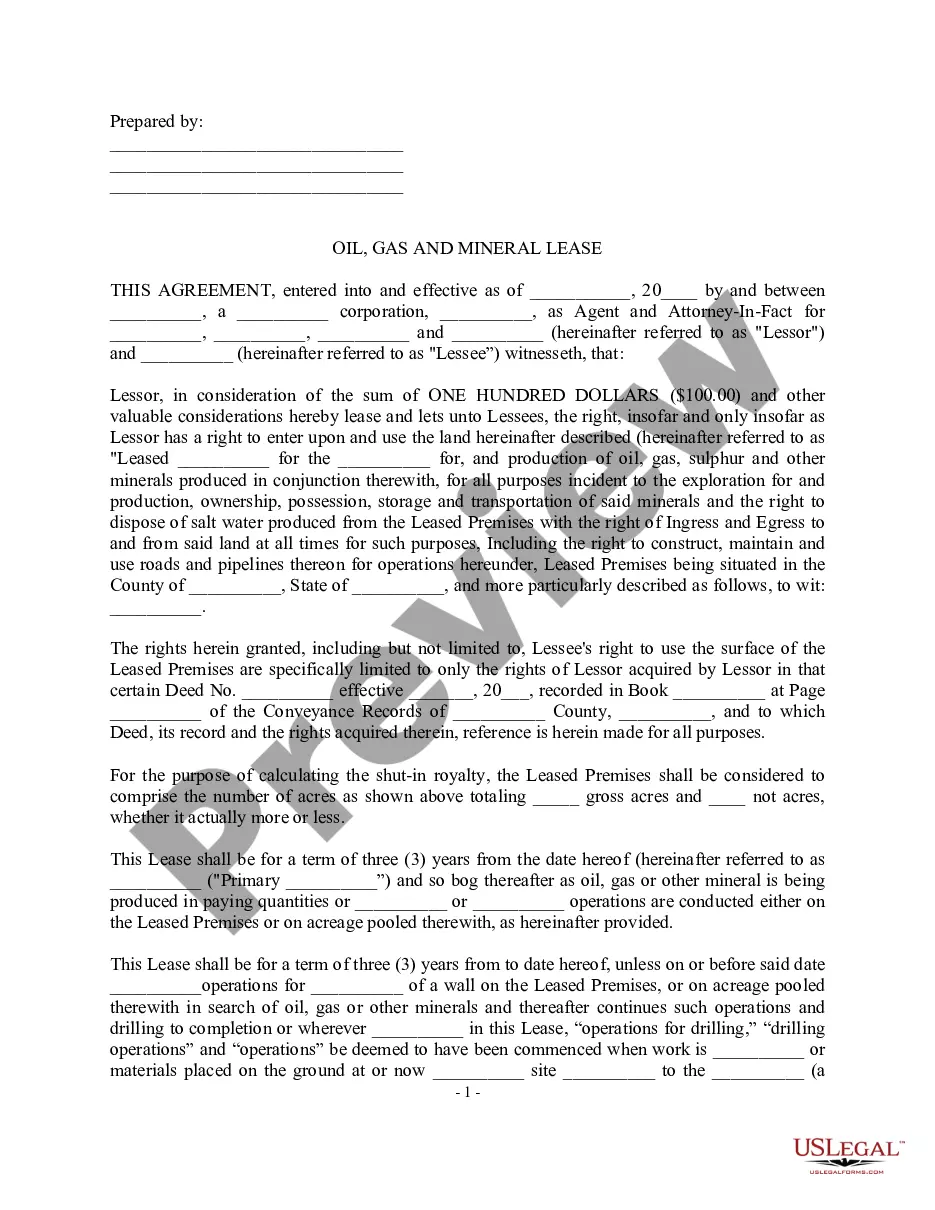
The Oil, Gas, and Mineral Lease is a legal agreement permitting one party, the Lessee, to explore for and extract oil, gas, and minerals from another party's land, known as the Lessor. This Mississippi-specific lease complies with state statutes, making it distinct from similar forms. It's essential for both parties to understand their rights and responsibilities under this contract, as it governs access to land and the management of natural resources.
Key components of this form
- Definition of the Lessor and Lessee roles.
- Detailed rights granted to the Lessee regarding exploration and extraction.
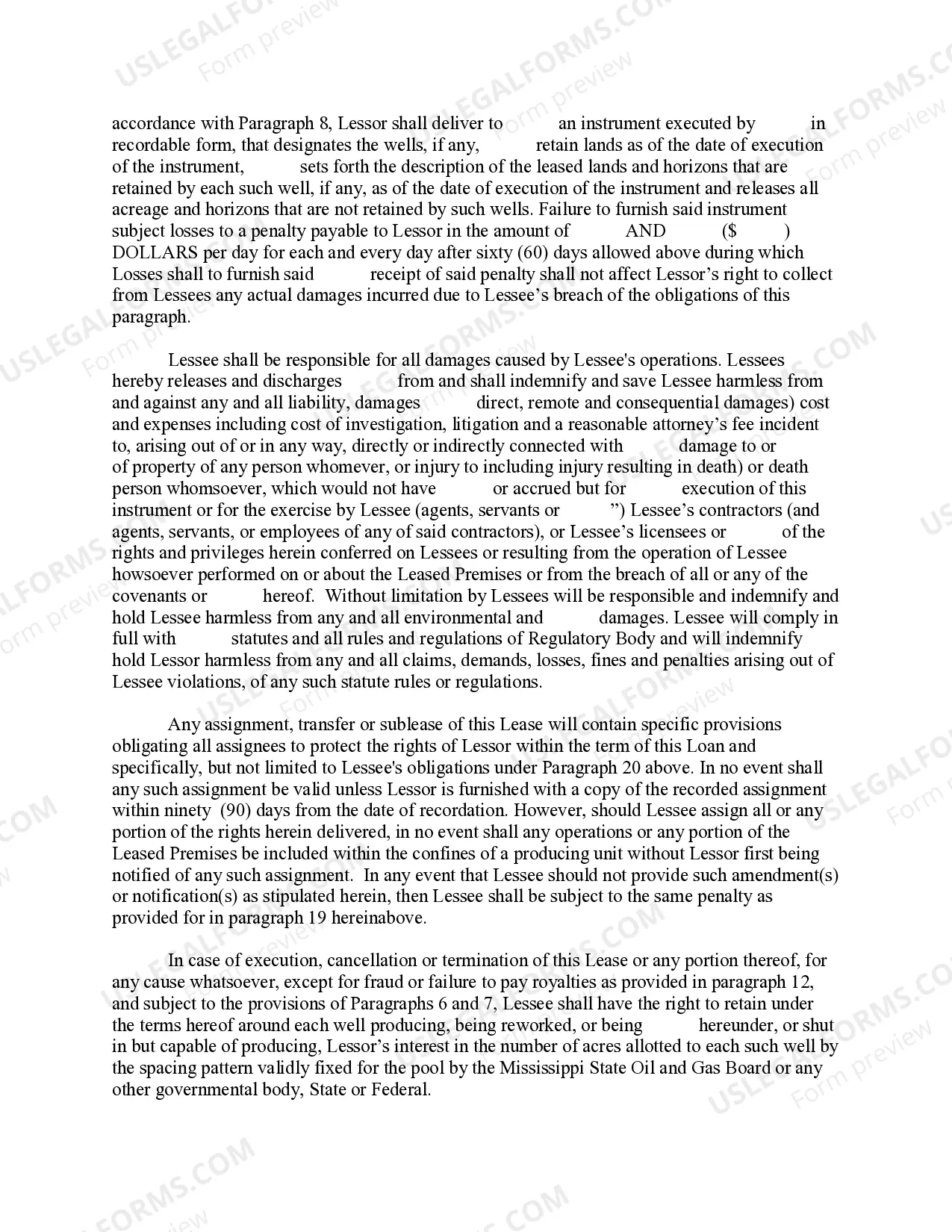
- Conditions related to production units established by state authorities.
- Provisions for confidentiality and data sharing between parties.
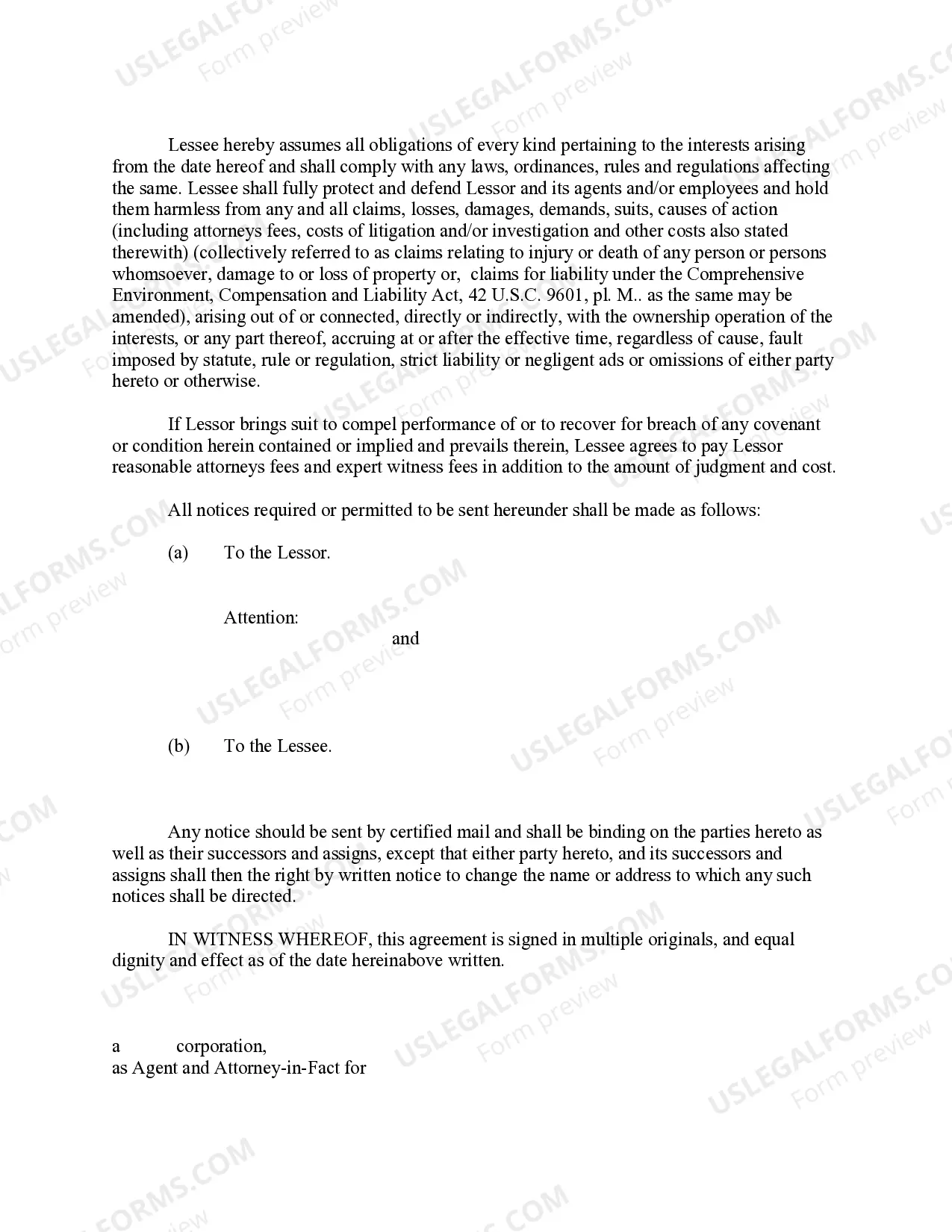
- Requirements regarding the assignment of lease rights.

When to use this form
This form should be used when a landowner (Lessor) agrees to allow an oil and gas company (Lessee) to access their property for the purpose of exploring and extracting oil, gas, or minerals. It is commonly necessary in areas where extraction activities are planned, and it is crucial for formalizing the terms of engagement between the two parties involved.
Who this form is for
- Landowners seeking to lease their property for oil, gas, or mineral extraction.
- Oil and gas companies looking to secure the rights to explore on private lands.
- Legal professionals assisting clients with property and resource agreements.
- Individuals or entities involved in real estate or mineral rights transactions.
How to complete this form
- Identify the parties involved: the Lessor and the Lessee.
- Specify the property being leased, including a detailed description of the land.
- Outline the terms of the lease, including duration and any specifics regarding access and operations.
- Include any mutual agreements related to data sharing and confidentiality.
- Ensure that all parties sign and date the document to make it legally binding.
Notarization guidance
This form usually doesn’t need to be notarized. However, local laws or specific transactions may require it. Our online notarization service, powered by Notarize, lets you complete it remotely through a secure video session, available 24/7.
Get your form ready online
Our built-in tools help you complete, sign, share, and store your documents in one place.
Make edits, fill in missing information, and update formatting in US Legal Forms—just like you would in MS Word.
Download a copy, print it, send it by email, or mail it via USPS—whatever works best for your next step.
Sign and collect signatures with our SignNow integration. Send to multiple recipients, set reminders, and more. Go Premium to unlock E-Sign.
If this form requires notarization, complete it online through a secure video call—no need to meet a notary in person or wait for an appointment.
We protect your documents and personal data by following strict security and privacy standards.

Make edits, fill in missing information, and update formatting in US Legal Forms—just like you would in MS Word.

Download a copy, print it, send it by email, or mail it via USPS—whatever works best for your next step.

Sign and collect signatures with our SignNow integration. Send to multiple recipients, set reminders, and more. Go Premium to unlock E-Sign.

If this form requires notarization, complete it online through a secure video call—no need to meet a notary in person or wait for an appointment.

We protect your documents and personal data by following strict security and privacy standards.
Mistakes to watch out for
- Failing to accurately describe the leased property.
- Not including clear terms regarding the rights and responsibilities of each party.
- Overlooking the need for consent when releasing portions of the leased land.
- Neglecting to sign and date the lease, which can invalidate the agreement.
Why complete this form online
- Immediate access to the latest version of the form, ensuring compliance with state laws.
- Convenient download and printing options that save time.
- Editable templates allow for customization to your specific needs.
- Secure storage options keep your legal documents safe and accessible.
Legal use & context
- This lease is legally binding once signed by both parties.
- It protects the rights of the Lessor while granting specific rights to the Lessee.
- Non-compliance with the lease terms can lead to legal disputes.
Summary of main points
- The Oil, Gas, and Mineral Lease is essential for formal agreements between landowners and extractors.
- Clearly outline rights and responsibilities to avoid potential disputes.
- Ensure compliance with Mississippi laws throughout the leasing process.
Looking for another form?

Form popularity
FAQ
Investing in mineral rights is a complex investment strategy but can be a profitable real estate venture.Then investing in mineral rights may be a great fit for your next real estate venture. Investing in mineral rights has the potential to provide big returns.
Nationally, mineral rights owners can expect anywhere from $100 to $5,000 per acre for their mineral rights lease. The most valuable mineral rights leases are on producing parcels of land that are still expected to hold many more precious minerals.
Landowners who are considering purchasing, or have already purchased a property can search their county Register of Deeds registry to determine if an oil and gas lease is recorded.A search of the public records at the county register of deeds office is necessary.
Not necessarily. Where your royalty is based on volume of production and your lease is for a period of years and as much longer as oil and gas is produced, or similar language is contained in your lease, your lease may not automatically expire at the end of its primary term.
What is a paid-up lease? At one time, the oil and gas company paid a delay rental payment to the landowner during the initial or primary term of the lease. The delay rental payment was usually paid on a yearly basis.
When it comes to mineral rights, the standard admonition has long been consistent and emphatic: Avoid selling them. After all, simply owning mineral rights costs you nothing. There are no liability risks, and in most cases, taxes are assessed only on properties that are actively producing oil or gas.
If you are ready to list or purchase mineral rights, the best mineral rights value rule of thumb to use is the current market price. Today, your mineral rights may sell for $2,000 an acre, but if the developers drill a few dry wells tomorrow, that value could plummet.
If you sell your mineral rights, you are gambling that the one-time payment you receive is worth more than the potential future value of the minerals. When you sell your rights, you lose all opportunity to benefit from the future exploration and excavation or extraction of those minerals.
Further, annual rental fees for onshore oil and gas leases $1.50 per acre during the first five years and $2 per acre each year thereafter allow drilling companies to hold and explore mineral leases for the price of a cup of coffee.