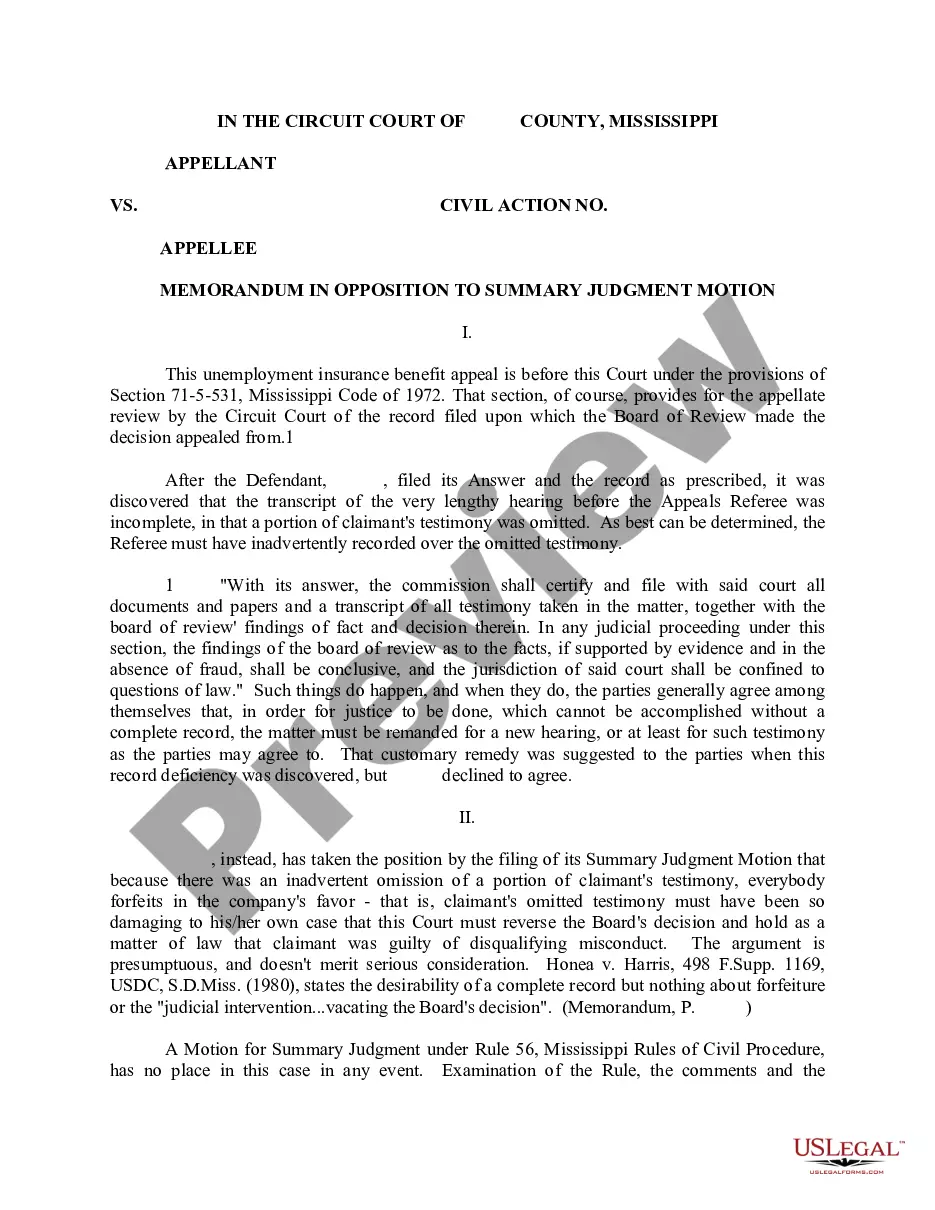
Louisiana Motion to Recuse
What is this form?
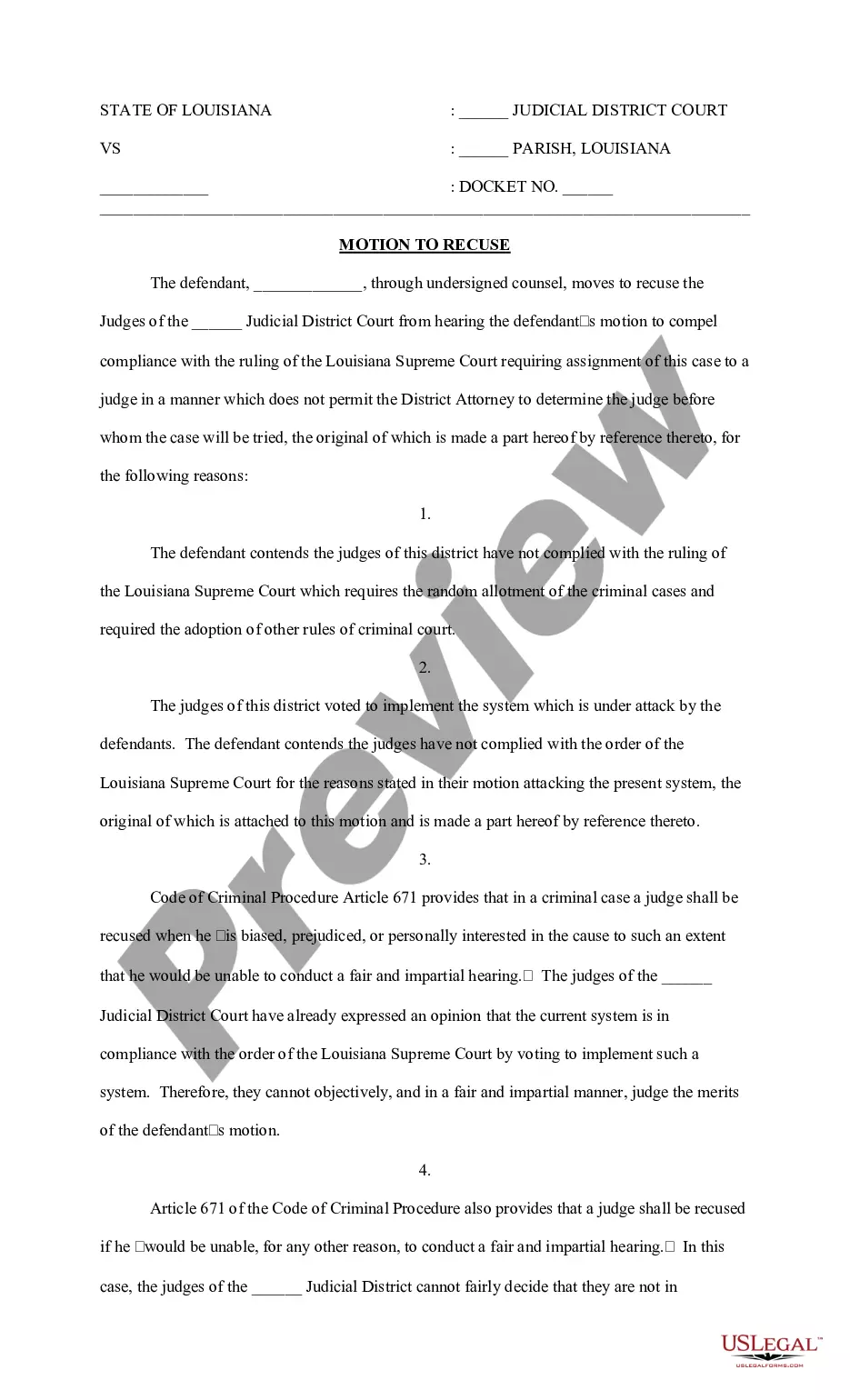
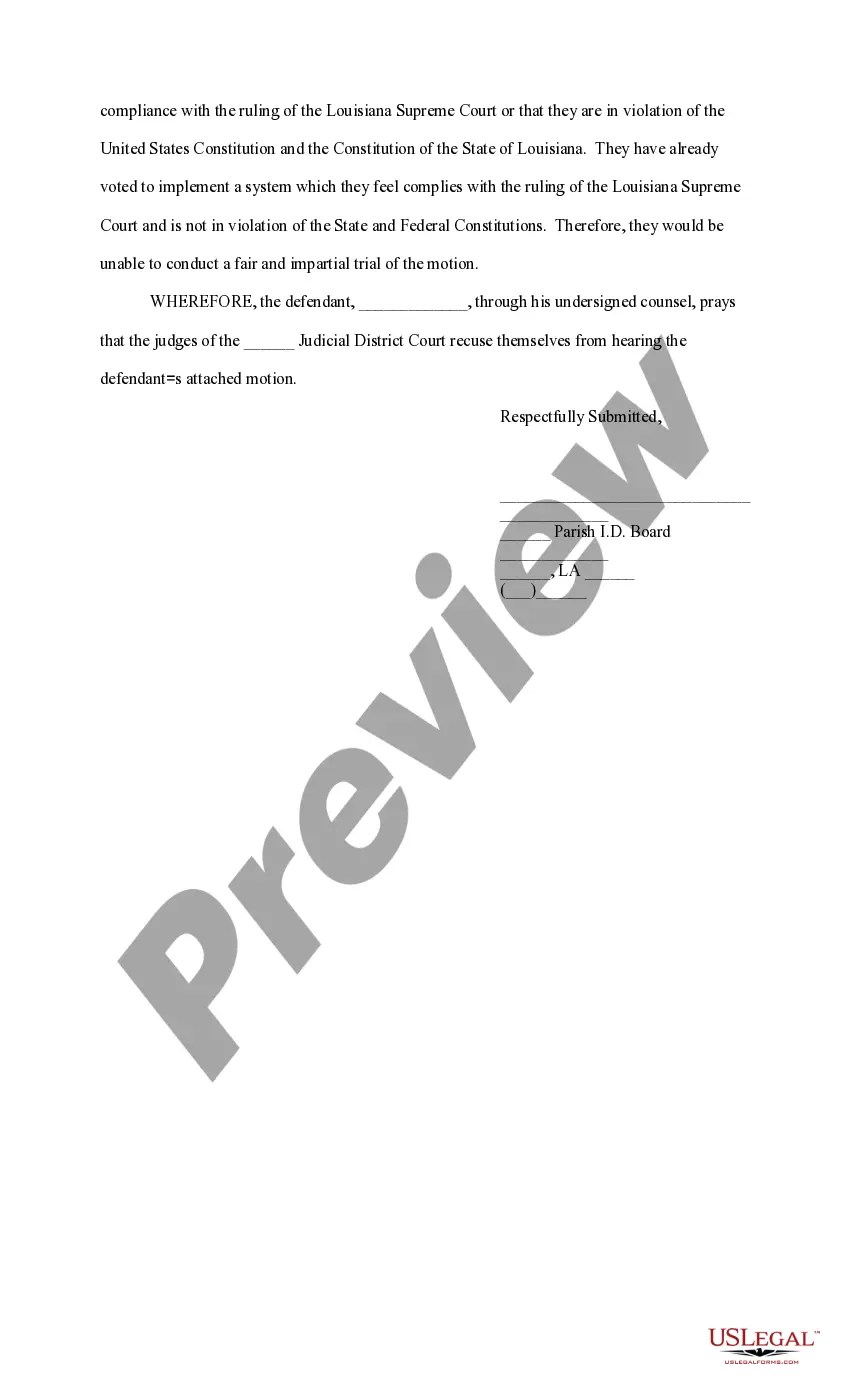
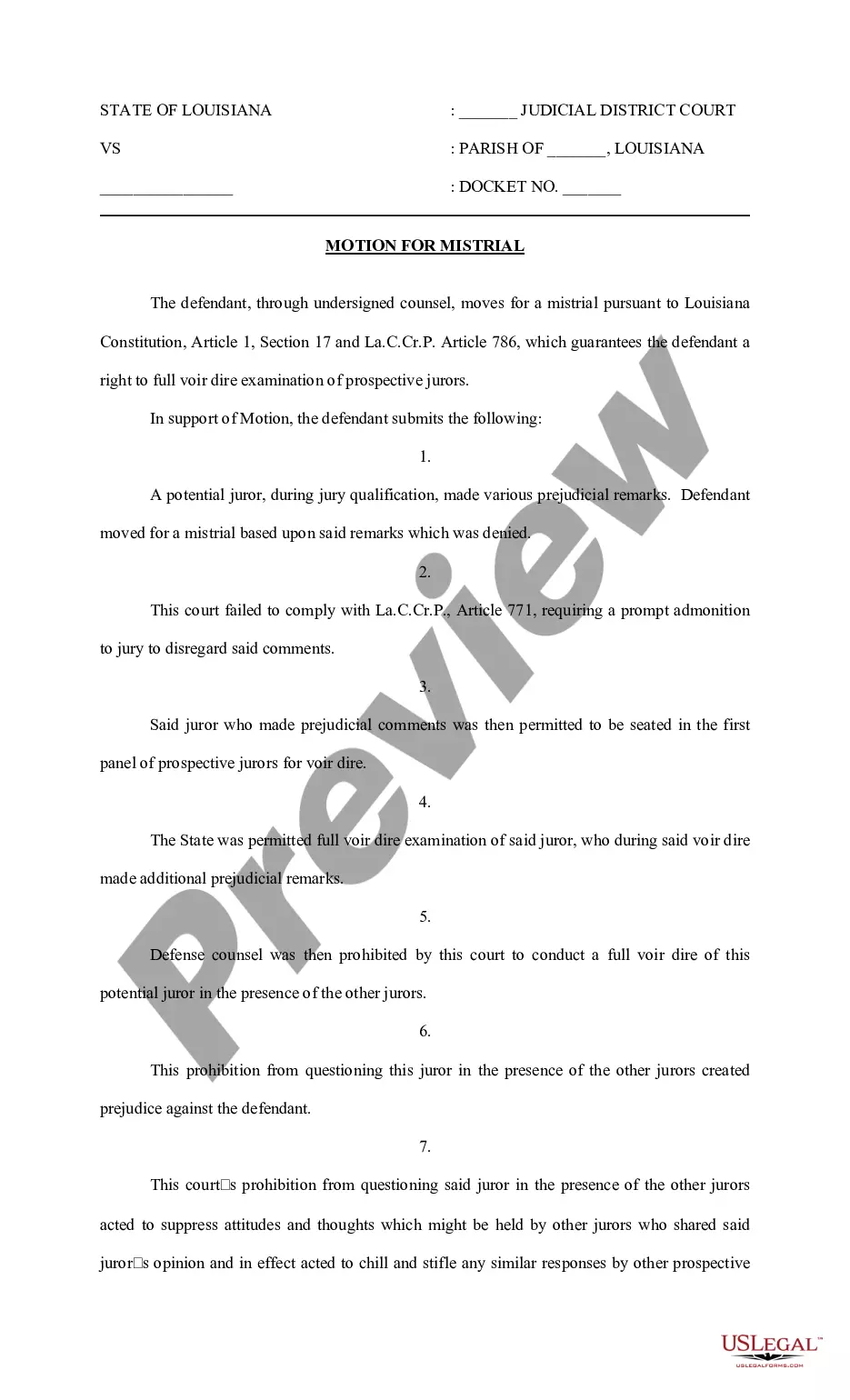
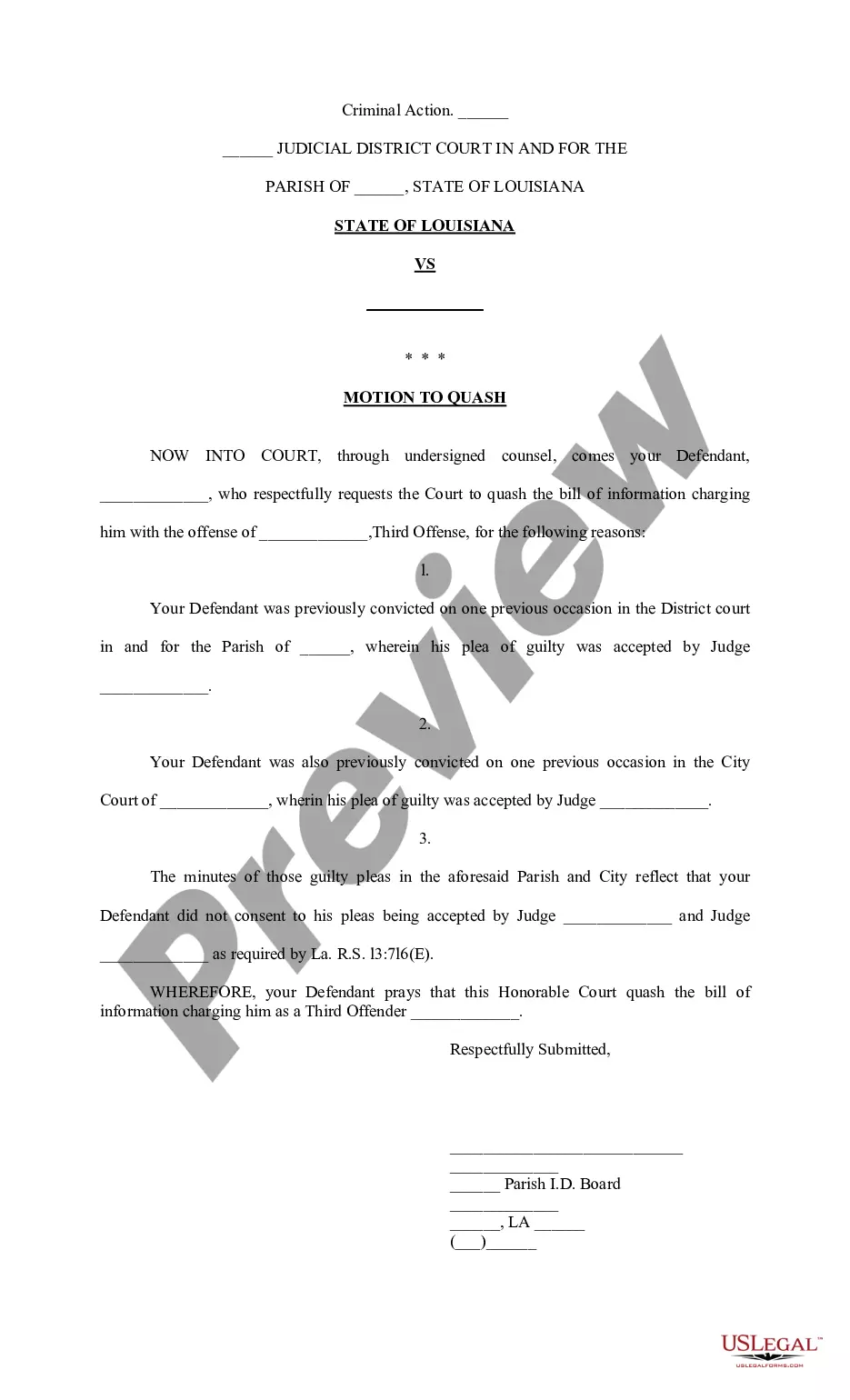
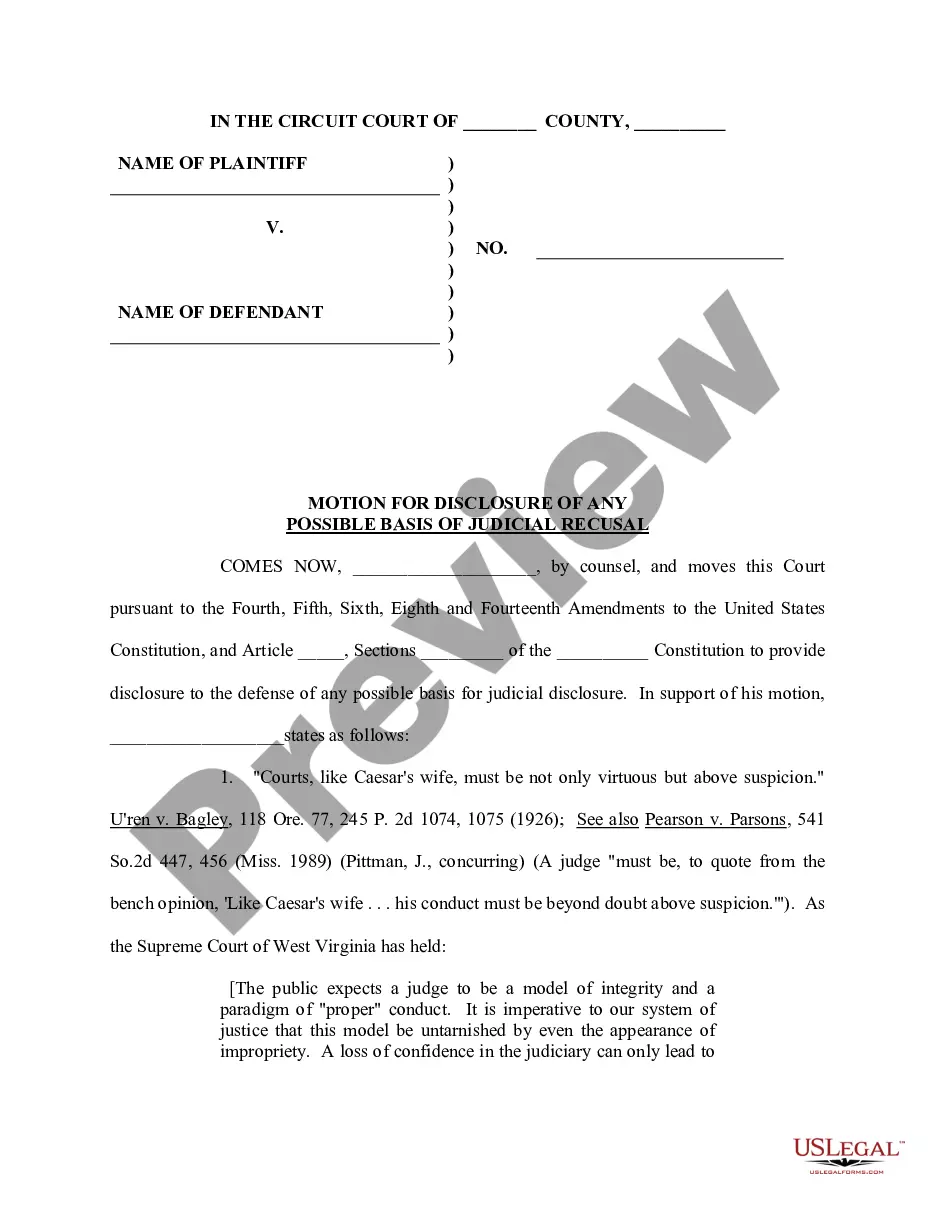
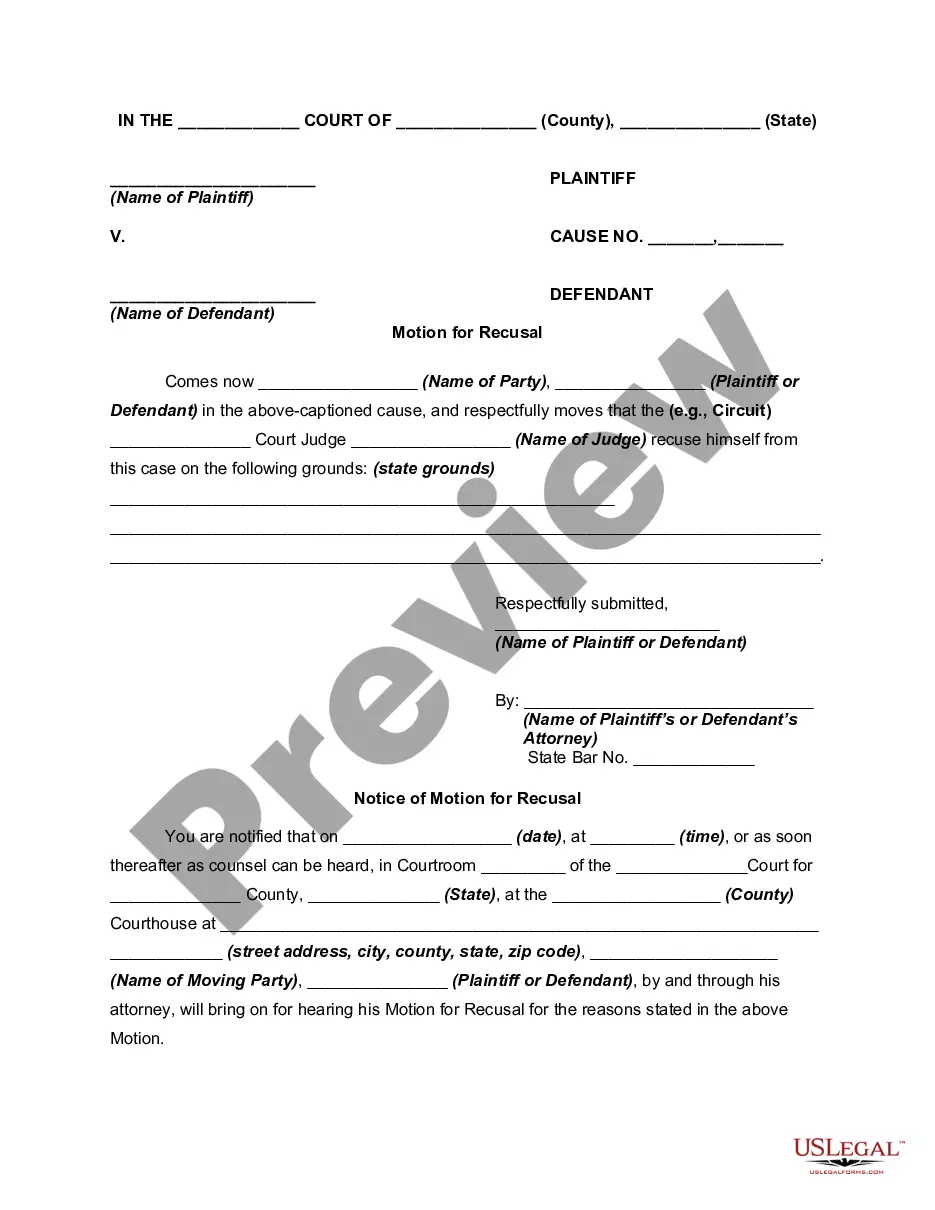
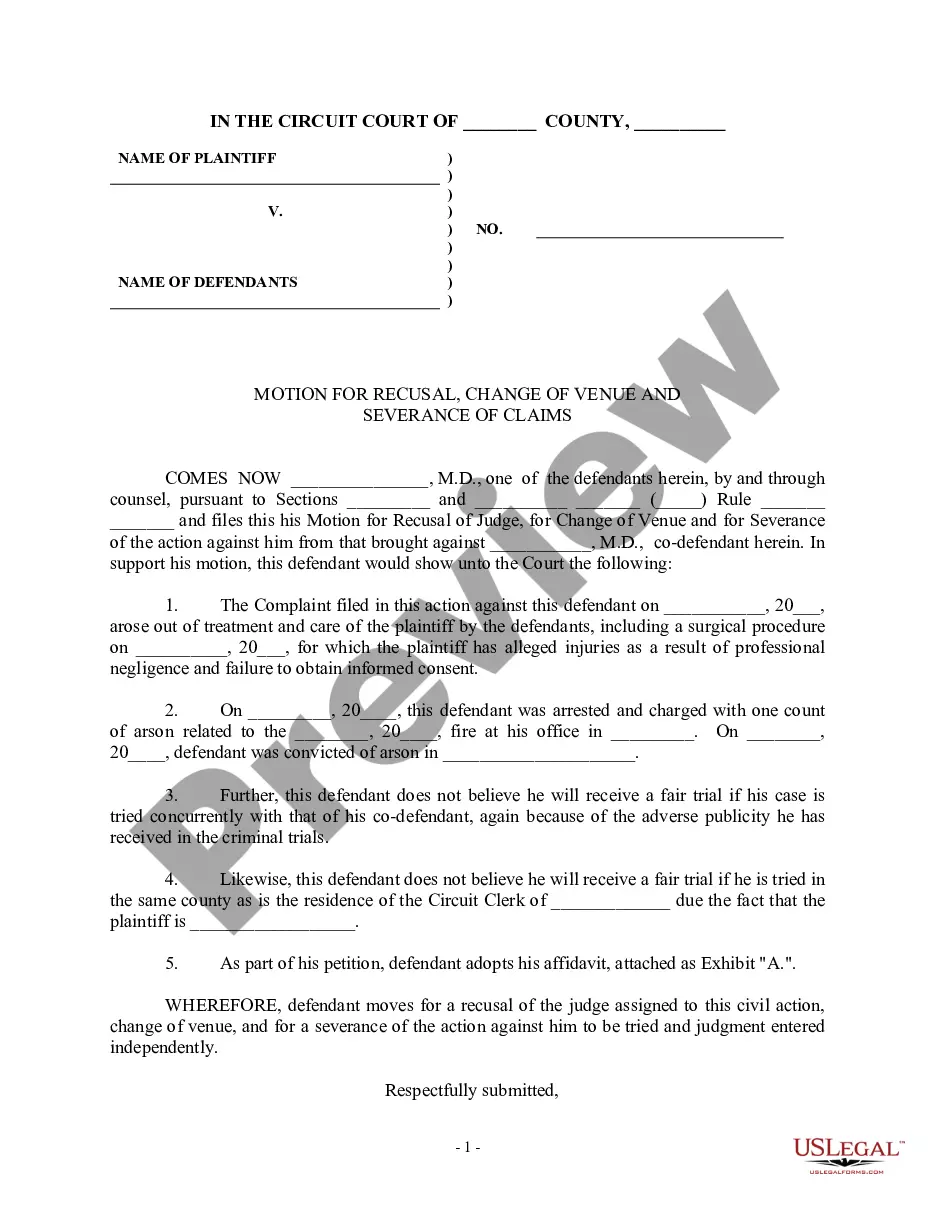
The Motion to Recuse is a legal document used in Louisiana to request the disqualification of judges from hearing a case. This request is based on concerns that the judges may not be able to conduct a fair and impartial hearing due to bias or conflict of interest. This form is specifically grounded in La. Code of Criminal Procedure Article 671 and is distinct from other legal motions because it specifically addresses the authority and compliance of judges in assigning cases.
Form components explained
- Identification of the parties involved in the case.
- Specific reasons for the motion to recuse based on judicial compliance and potential bias.
- Reference to the original motion challenging the judgesâ decisions.
- A request for the judges to recuse themselves from hearing the case.
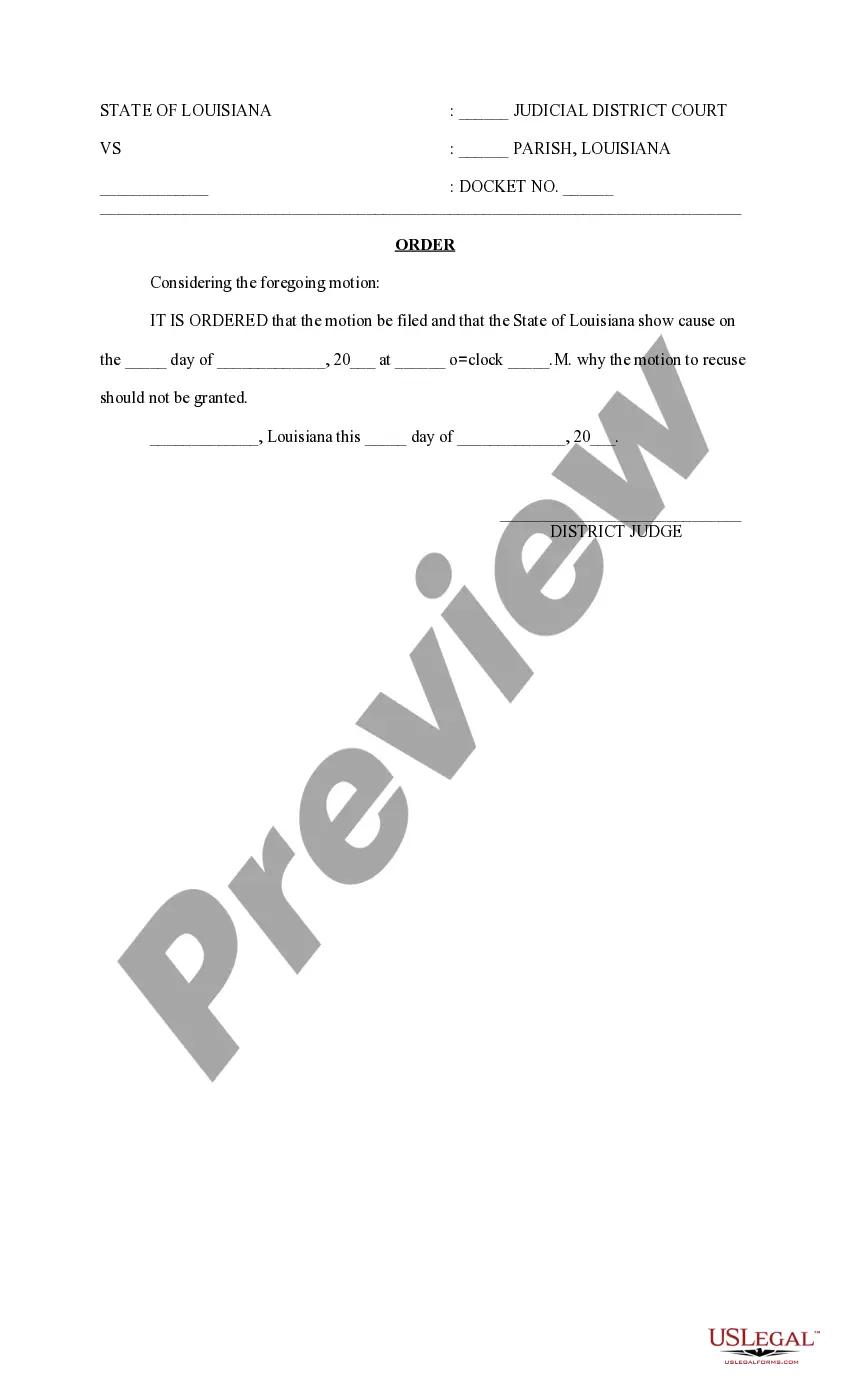
- Information on setting a hearing date for the motion.
When to use this form
This form should be used when a defendant believes that the judges assigned to their case cannot provide a fair trial, particularly when there are concerns about compliance with judicial guidelines established by the Louisiana Supreme Court. It is applicable in criminal cases where issues of bias or judicial misconduct are raised.
Who can use this document
- Defendants in criminal cases in Louisiana.
- Attorneys representing defendants who believe judges may exhibit bias.
- Individuals familiar with La. Code of Criminal Procedure Article 671.
Steps to complete this form
- Identify the parties involved in the case and fill in their names.
- Clearly articulate the reasons for the recusal request based on bias or procedural non-compliance.
- Attach the original motion challenging the current judicial system to the motion to recuse.
- Specify the Judicial District and provide the docket number.
- Sign and date the motion before submitting it to the court.
Notarization requirements for this form
This form does not typically require notarization unless specified by local law. However, it is advisable to check with your local jurisdiction for any additional requirements.
Get your form ready online
Our built-in tools help you complete, sign, share, and store your documents in one place.
Make edits, fill in missing information, and update formatting in US Legal Forms—just like you would in MS Word.
Download a copy, print it, send it by email, or mail it via USPS—whatever works best for your next step.
Sign and collect signatures with our SignNow integration. Send to multiple recipients, set reminders, and more. Go Premium to unlock E-Sign.
If this form requires notarization, complete it online through a secure video call—no need to meet a notary in person or wait for an appointment.
We protect your documents and personal data by following strict security and privacy standards.

Make edits, fill in missing information, and update formatting in US Legal Forms—just like you would in MS Word.

Download a copy, print it, send it by email, or mail it via USPS—whatever works best for your next step.

Sign and collect signatures with our SignNow integration. Send to multiple recipients, set reminders, and more. Go Premium to unlock E-Sign.

If this form requires notarization, complete it online through a secure video call—no need to meet a notary in person or wait for an appointment.

We protect your documents and personal data by following strict security and privacy standards.
Common mistakes to avoid
- Failing to attach supporting documents or the original motion.
- Not clearly stating the reasons for recusal, leading to insufficient justification.
- Incorrectly identifying the judicial district or docket number.
Why use this form online
- Convenient access to legal documents from anywhere.
- Ability to customize the form before downloading, ensuring all necessary information is included.
- Reliability, as the forms are drafted and reviewed by licensed attorneys to meet legal standards.
Legal use & context
- This motion is essential for ensuring a fair legal process when the impartiality of judges is questioned.
- The effectiveness of this motion in a court hearing depends on the factual basis and legality of the claims presented.
What to keep in mind
- A Motion to Recuse is essential for addressing concerns of judicial bias in Louisiana criminal cases.
- Clearly articulate reasons for recusal based on legal standards and prior judicial actions.
- Proper completion and filing of the motion are critical for it to be considered by the court.
Looking for another form?
Form popularity
FAQ
407.) Recusal normally occurs when a director has a conflict of interest or prejudice concerning a particular matter. A conflict of interest is any situation in which financial or other personal considerations may unduly influence the director's judgment.
Judicial disqualification, also referred to as recusal, is the act of abstaining from participation in an official action such as a legal proceeding due to a conflict of interest of the presiding court official or administrative officer.
If a judge declines recusal even though they were aware that proper grounds existed, then there may be significant repercussions. First, the result of the case can be reviewed by an appellate court, and an entirely new trial may be ordered.
The verb recuse is used in legal situations and means to remove someone from a position of judicial authority, either a judge or a member of a jury, who is deemed unacceptable to judge, usually because of some bias.You can recuse someone else, but also yourself.
Primary tabs. Judges recuse themselves when they take no part in deciding cases that they would otherwise help decide. The Due Process clauses of the United States Constitution requires judges to recuse themselves from cases in two situations: Where the judge has a financial interest in the case's outcome.
Judges recuse themselves when they take no part in deciding cases that they would otherwise help decide. The Due Process clauses of the United States Constitution requires judges to recuse themselves from cases in two situations: Where the judge has a financial interest in the case's outcome.
A judge asked to disqualify himself or herself may need to apply the fair-minded observer test in respect of the evidence, in other words, unless the hypothetical observer would reject the evidence as entirely implausible the judge should consider whether, if accepted, it had the relevant quality to raise a reasonable
The basis for a CCP §170.6 challenge affidavit to be filed with the Court is that the party or attorney believes that (1) the challenged judge is prejudiced against such party or attorney or his or her interest, and (2) that the party or attorney cannot have a fair and impartial trial before that judge.