Mississippi Agreed Order of Dismissal
What is this form?
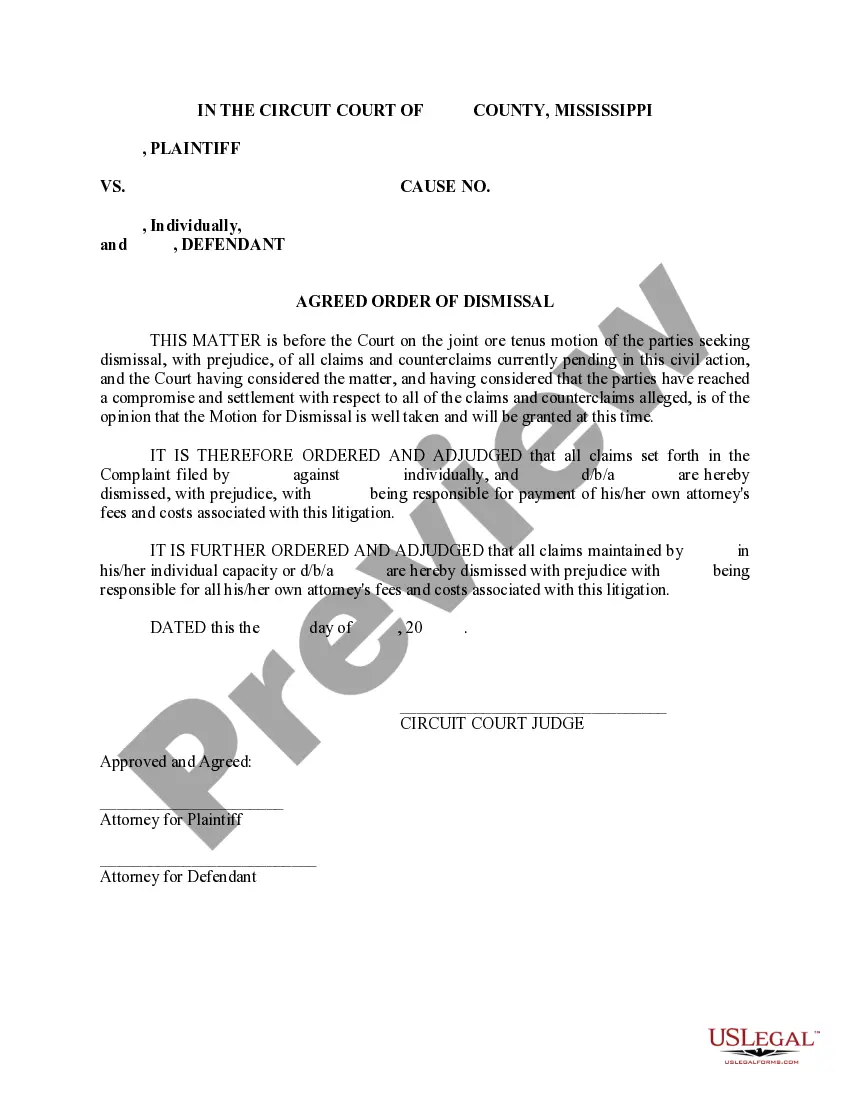
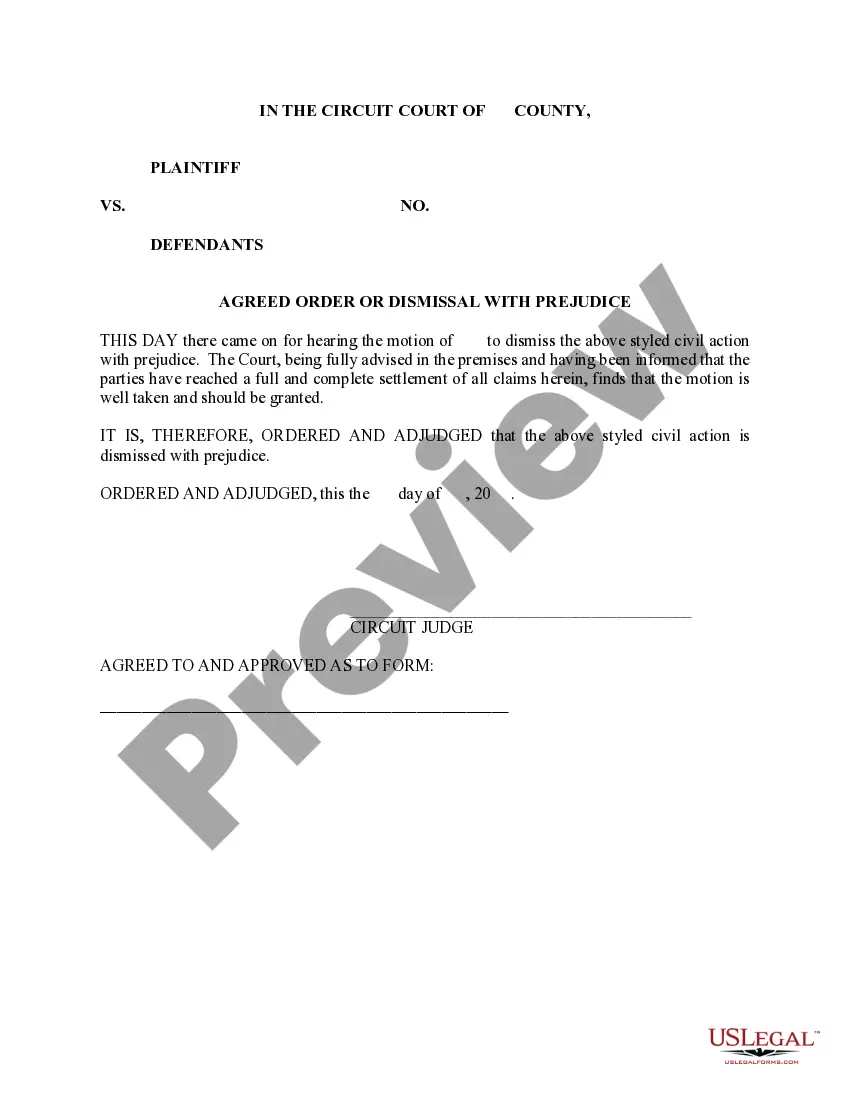
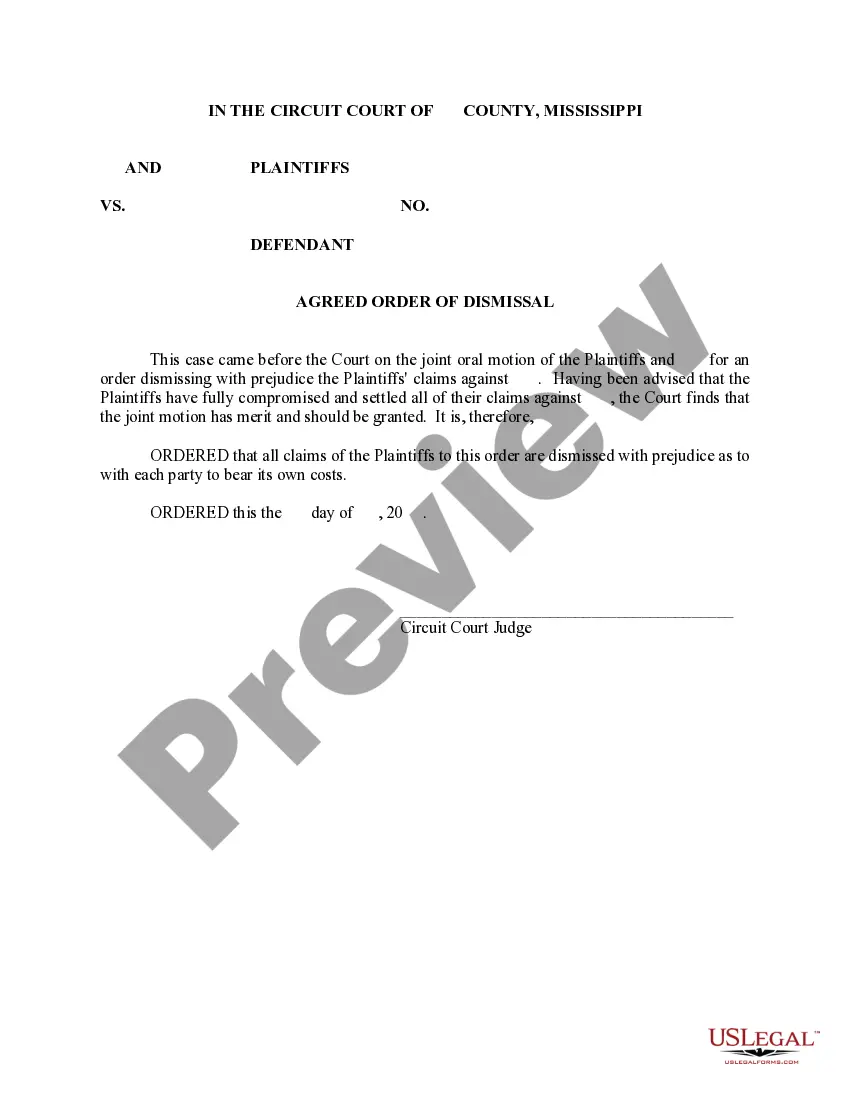
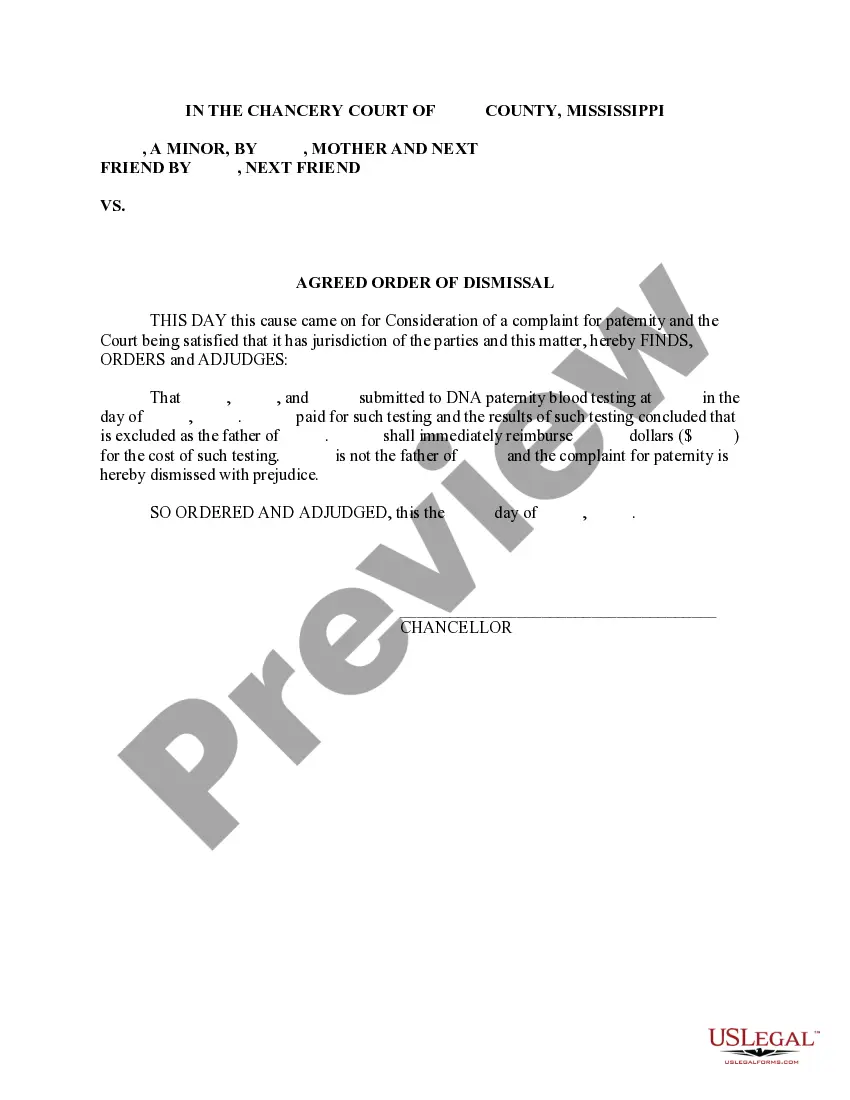
The Agreed Order of Dismissal is a legal document that confirms both parties in a dispute have reached an agreement to dismiss the case. This form is a key part of the legal process as it communicates the parties' intention to the court, effectively terminating the lawsuit initiated by the Plaintiff. Unlike similar forms, this order requires mutual consent from both parties, making it distinct in its application.
What’s included in this form
- Signature of the Circuit Court Judge
- Name and signature of the Attorney for the Plaintiff
- Name and signature of the Attorney for the Defendant
- Clear statement of mutual agreement between parties
Situations where this form applies
This form should be used when both parties to a legal dispute agree to terminate the case without proceeding to trial. It is relevant in situations where the Plaintiff believes that continuing with the lawsuit is no longer necessary, perhaps due to a settlement or resolution outside of court.
Who should use this form
- Both parties involved in a civil dispute
- Attorneys representing the Plaintiff and the Defendant
- Individuals seeking to formalize their agreement to dismiss a lawsuit
How to complete this form
- Identify the names and roles of the parties involved, including the attorneys.
- Ensure mutual agreement by having all parties sign the form.
- Submit the signed order to the Circuit Court for approval by the Judge.
Is notarization required?
This form does not typically require notarization unless specified by local law. Always check your jurisdiction's requirements for finalization of the dismissal order.
Get your form ready online
Our built-in tools help you complete, sign, share, and store your documents in one place.
Make edits, fill in missing information, and update formatting in US Legal Forms—just like you would in MS Word.
Download a copy, print it, send it by email, or mail it via USPS—whatever works best for your next step.
Sign and collect signatures with our SignNow integration. Send to multiple recipients, set reminders, and more. Go Premium to unlock E-Sign.
If this form requires notarization, complete it online through a secure video call—no need to meet a notary in person or wait for an appointment.
We protect your documents and personal data by following strict security and privacy standards.

Make edits, fill in missing information, and update formatting in US Legal Forms—just like you would in MS Word.

Download a copy, print it, send it by email, or mail it via USPS—whatever works best for your next step.

Sign and collect signatures with our SignNow integration. Send to multiple recipients, set reminders, and more. Go Premium to unlock E-Sign.

If this form requires notarization, complete it online through a secure video call—no need to meet a notary in person or wait for an appointment.

We protect your documents and personal data by following strict security and privacy standards.
Mistakes to watch out for
- Failure to have both parties sign the form.
- Inadequate detailing of the case specifics in the agreement.
- Not obtaining approval from the Circuit Court Judge before considering the case dismissed.
Benefits of using this form online
- Convenient access to legal templates at any time.
- Editable formats allow customization as needed.
- Reliable resources drafted by licensed attorneys.
Looking for another form?
Form popularity
FAQ
Thus, just as a summary judgment is not a dismissal meaning a summary judgment should not be sought through a motion to dismiss a dismissal is not a summary judgment, and should not be sought thereby.
A request for involuntary dismissal can be made by a defendant through a motion for dismissal, on grounds that the other party is not prosecuting the case, is not complying with a court order, or to comply with the Federal Rules of Civil Procedure.
When a lawsuit is dismissed with prejudice, the court is saying that it has made a final determination on the merits of the case, and that the plaintiff is therefore forbidden from filing another lawsuit based on the same grounds. See also: dismiss, dismissal without prejudice. courts.
In the formal legal world, a court case that is dismissed with prejudice means that it is dismissed permanently. A case dismissed with prejudice is over and done with, once and for all, and can't be brought back to court. A case dismissed without prejudice means the opposite. It's not dismissed forever.
It means the case was dismissed, either because plaintiff dismissed it or plaintiff didn't show up for the trial.