Louisiana Motion to Quash
About this form
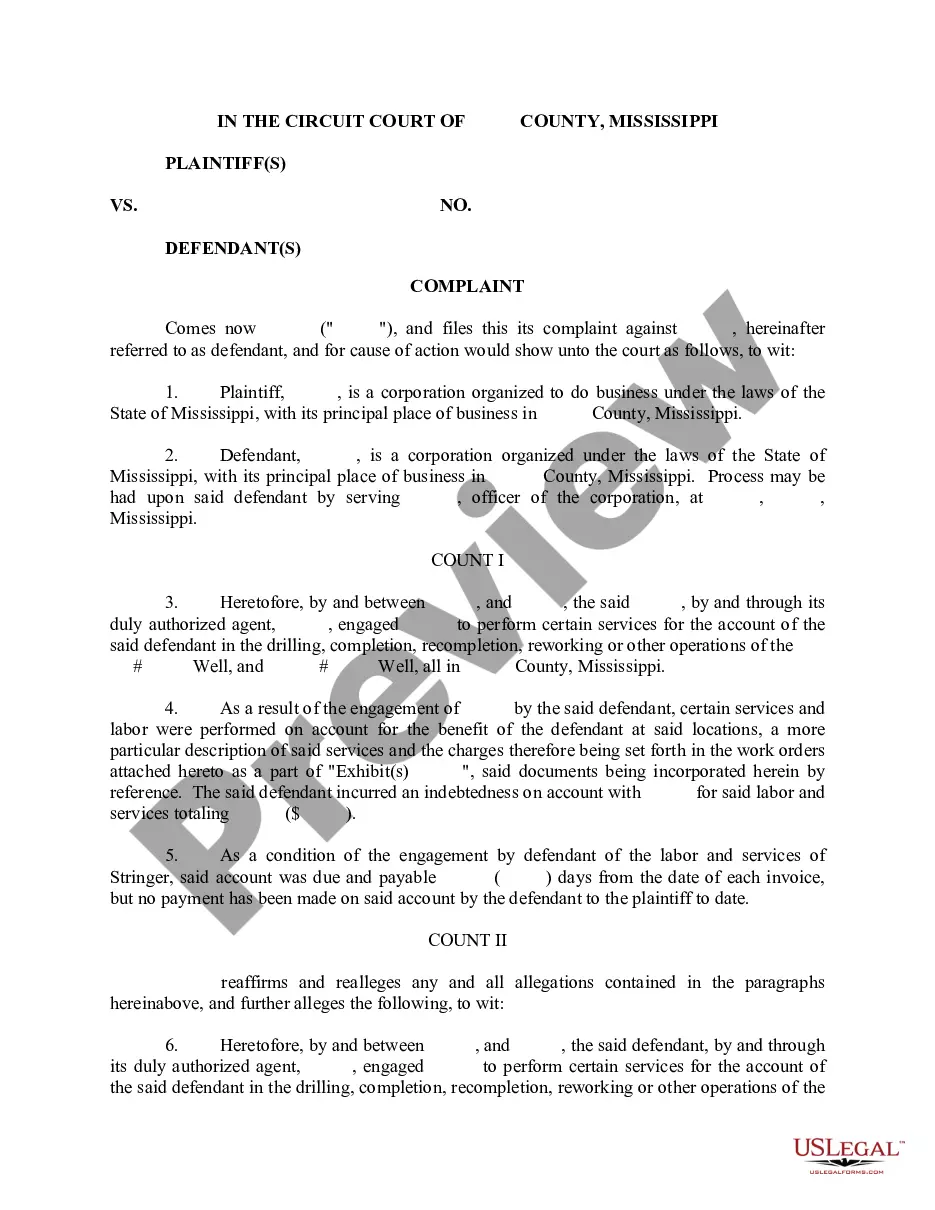
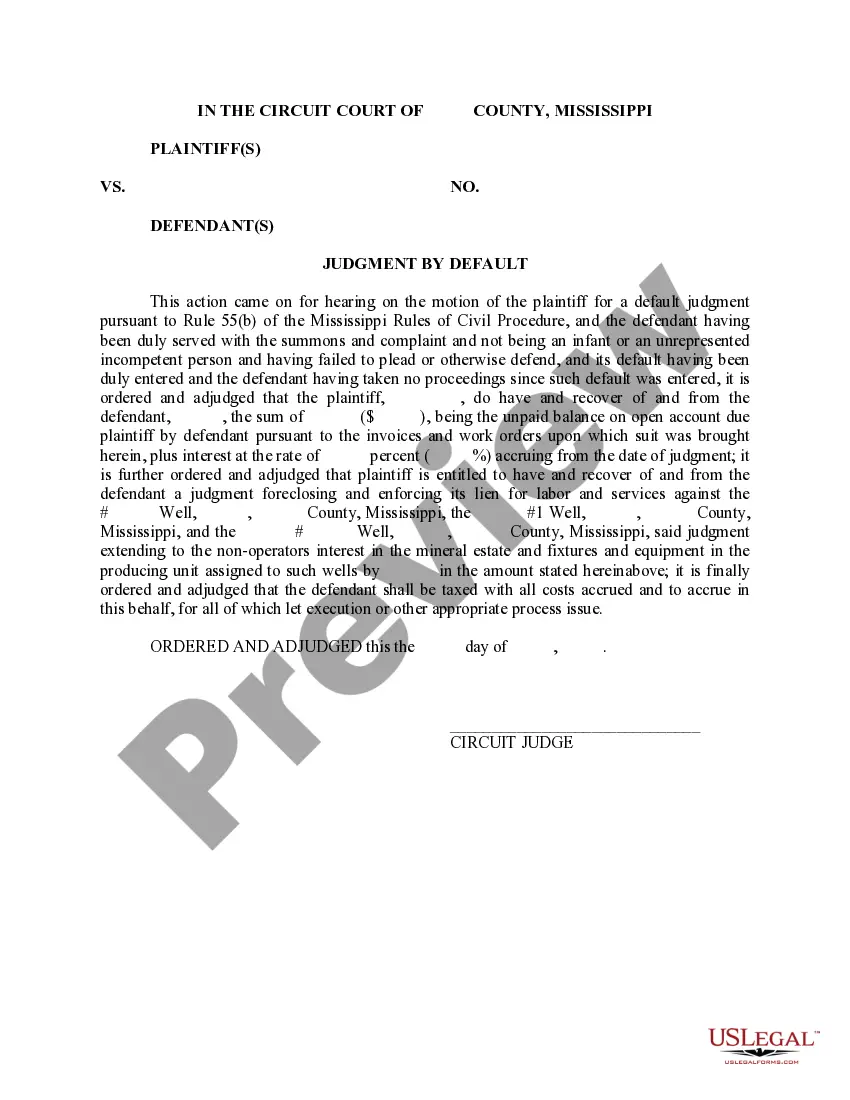
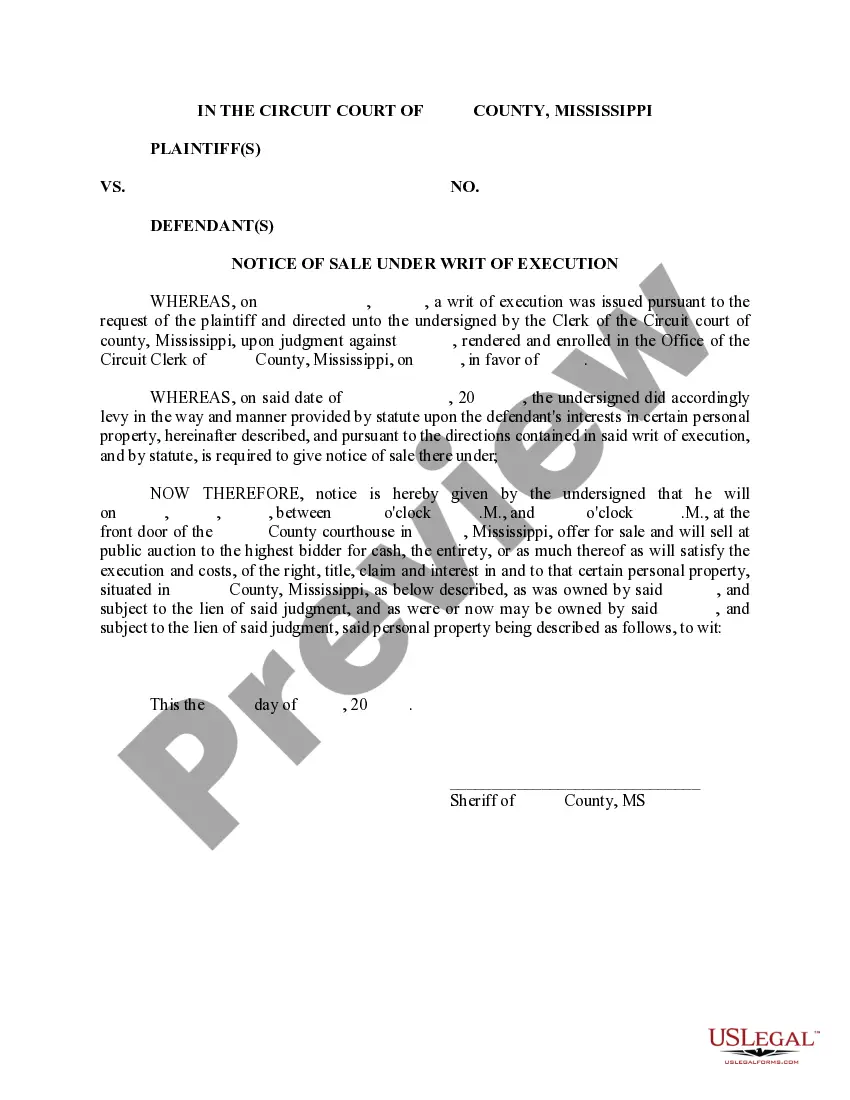
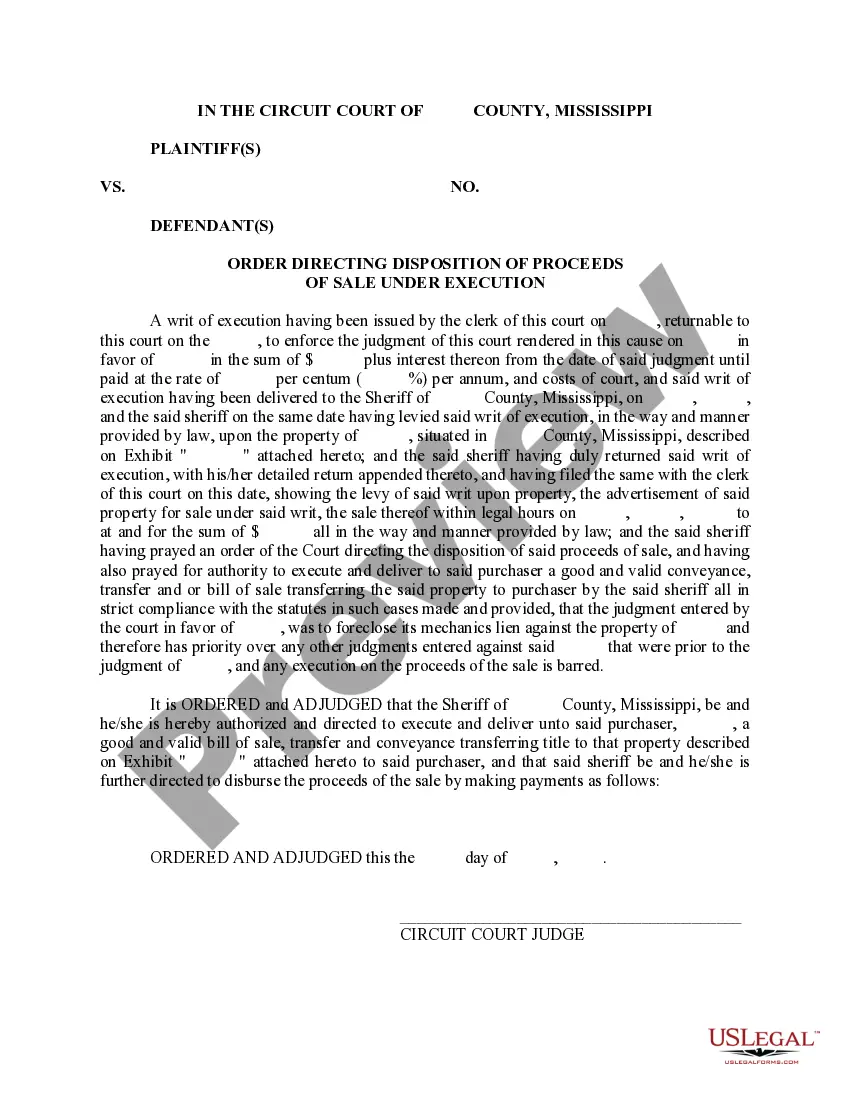
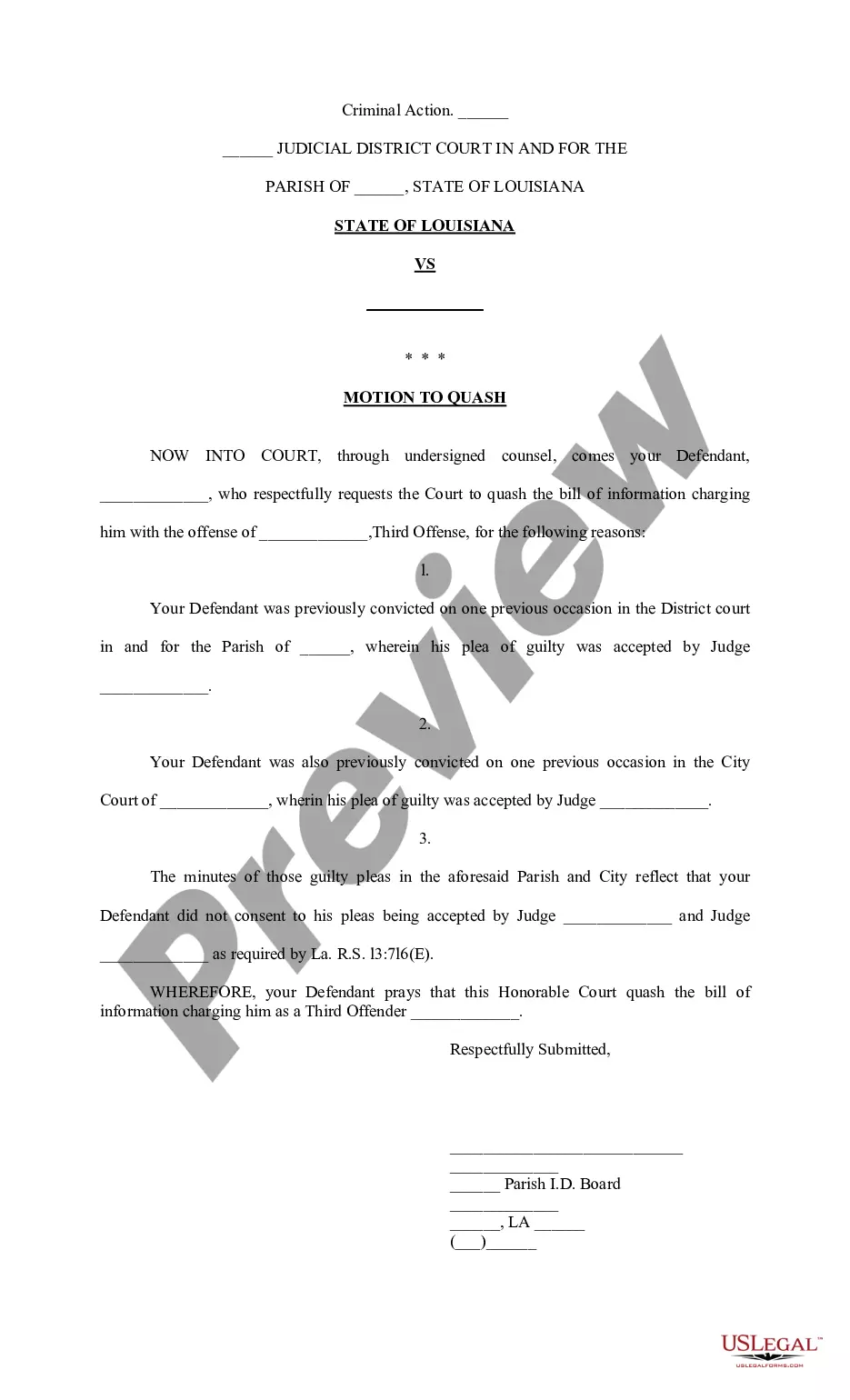
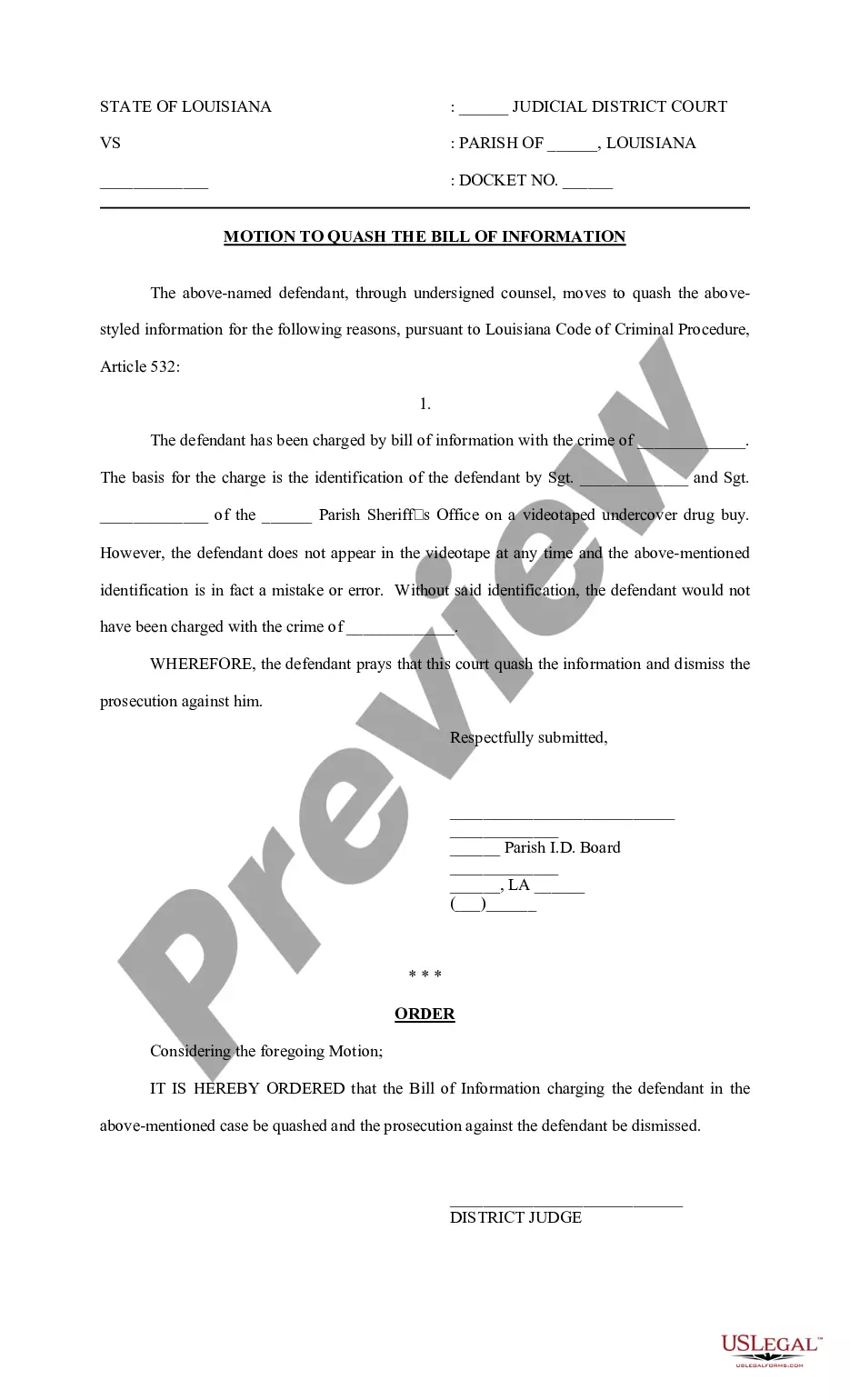
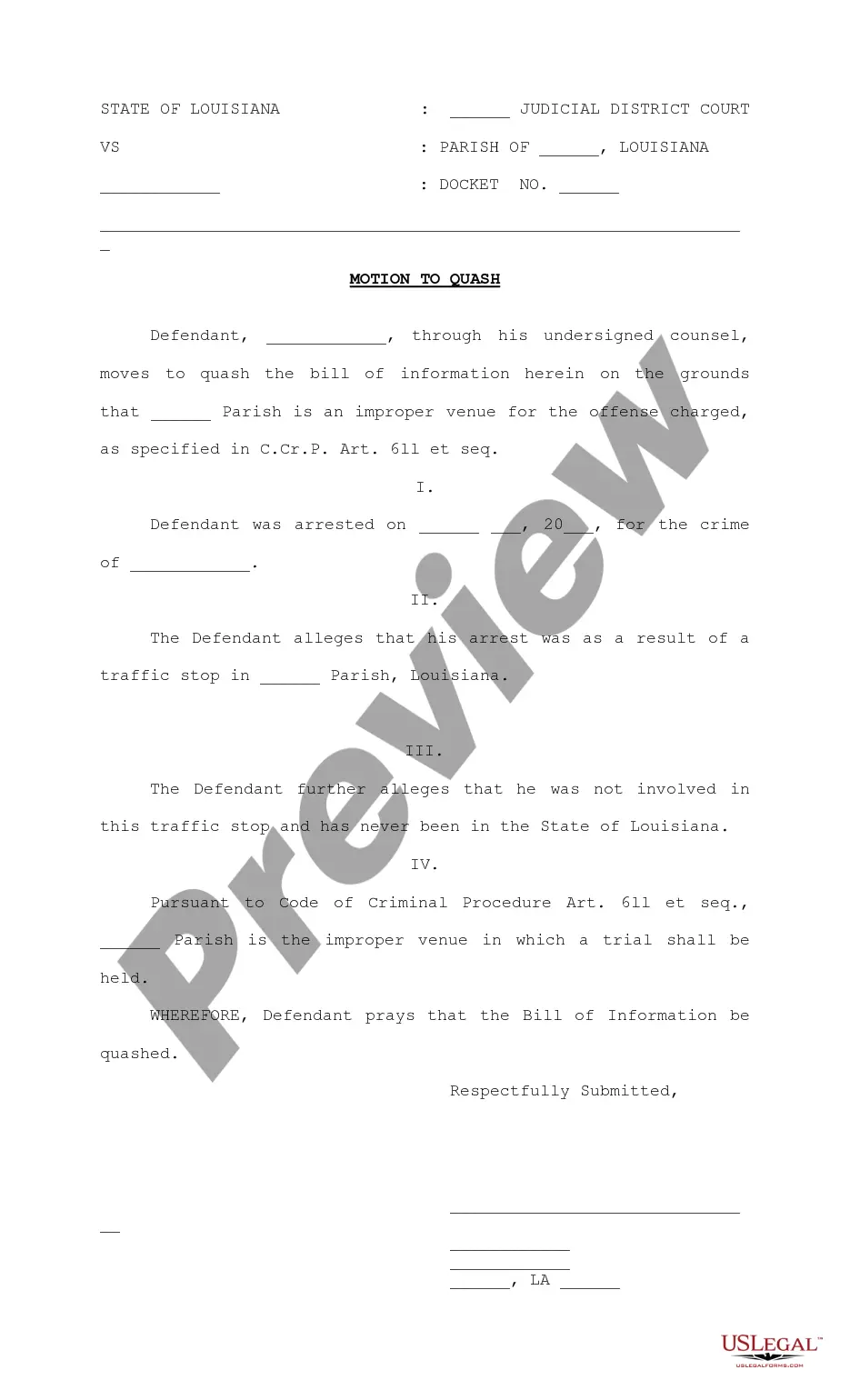
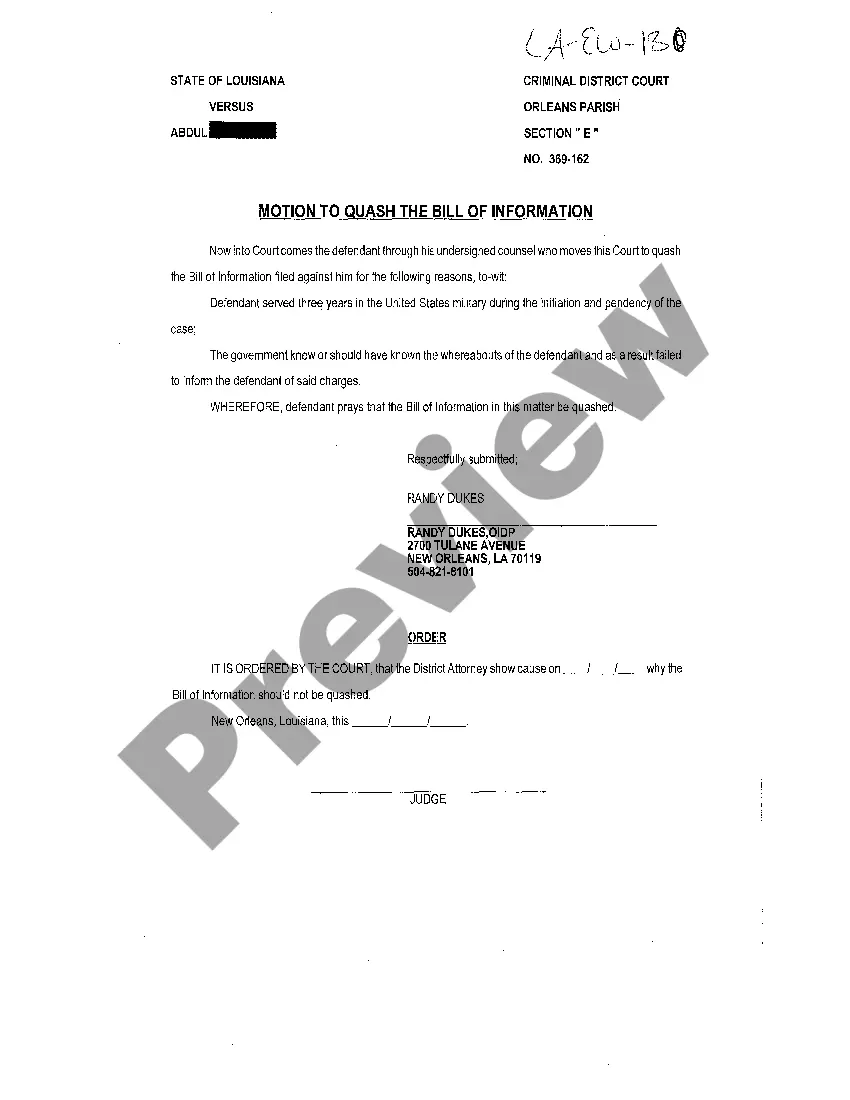
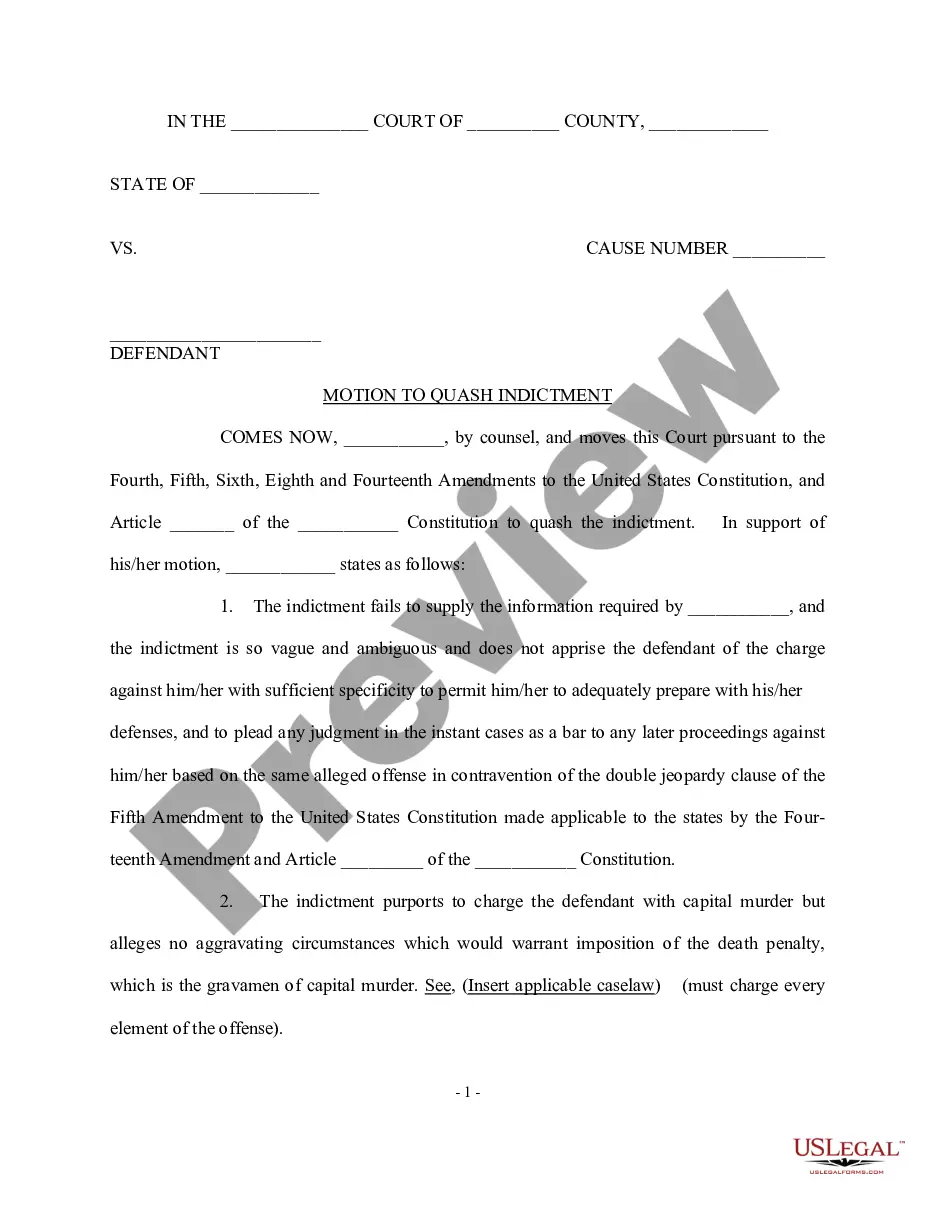
The Motion to Quash is a legal document used by a defendant to challenge the legitimacy of a bill of information charging them with an offense. This form is specifically utilized when a defendant did not consent to their guilty plea in a prior case, as required by Louisiana law (La. R.S. 13:716(E)). By filing this motion, the defendant seeks to quash the current charges based on procedural grounds, distinguishing it from other types of motions or legal forms that may address different aspects of criminal proceedings.
Key parts of this document
- Caption that identifies the judicial district court and the involved parties.
- Defendant's name and a request to quash the bill of information.
- Details of previous convictions and judges involved.
- Statement asserting lack of consent for guilty pleas.
- Prayer for relief specifying the request to quash charges.
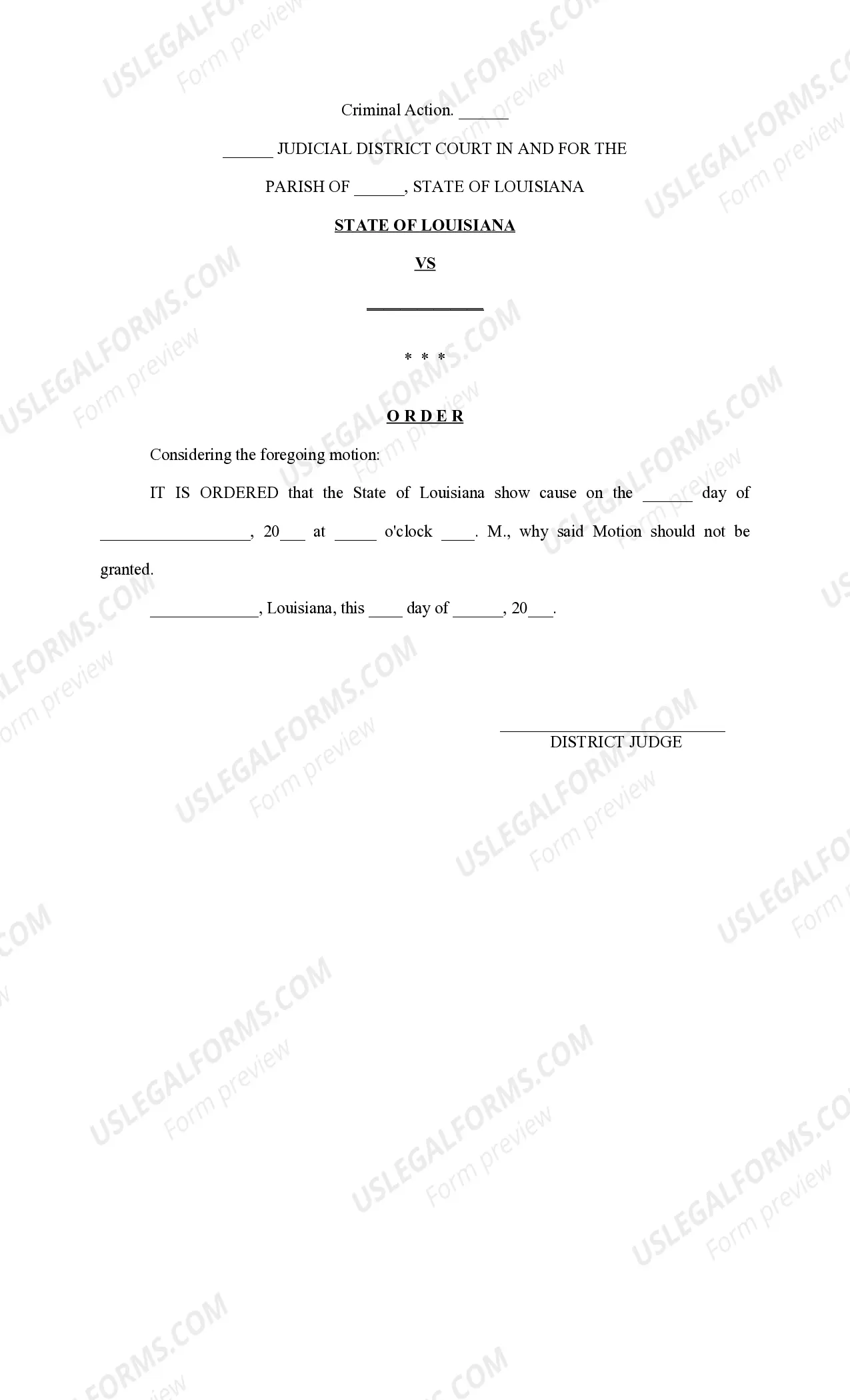
- Order for the state to show cause, including a date for the hearing.
Situations where this form applies
This form is necessary in situations where a defendant faces charges as a third offender but believes that previous guilty pleas were improperly accepted without their consent. It is essential when the defendant feels their legal rights were violated in earlier proceedings, and they wish to contest the current charges based on those grounds.
Who can use this document
- Defendants facing charges as a third offender in Louisiana.
- Individuals who have previously accepted guilty pleas that they did not consent to.
- People seeking to challenge the legal basis of their current charges in court.
How to prepare this document
- Identify the judicial district court and list the parish involved.
- Fill in the defendant's name and the specific offense charged.
- Detail previous convictions, including dates and names of judges.
- Include a statement asserting lack of consent to previous guilty pleas.
- State the legal request to the court, affirming the desire to quash the bill of information.
- Complete the order section with the date and time for the state to show cause.
Does this form need to be notarized?
This form does not typically require notarization unless specified by local law. Always verify any local regulations that may apply in your jurisdiction.
Get your form ready online
Our built-in tools help you complete, sign, share, and store your documents in one place.
Make edits, fill in missing information, and update formatting in US Legal Forms—just like you would in MS Word.
Download a copy, print it, send it by email, or mail it via USPS—whatever works best for your next step.
Sign and collect signatures with our SignNow integration. Send to multiple recipients, set reminders, and more. Go Premium to unlock E-Sign.
If this form requires notarization, complete it online through a secure video call—no need to meet a notary in person or wait for an appointment.
We protect your documents and personal data by following strict security and privacy standards.

Make edits, fill in missing information, and update formatting in US Legal Forms—just like you would in MS Word.

Download a copy, print it, send it by email, or mail it via USPS—whatever works best for your next step.

Sign and collect signatures with our SignNow integration. Send to multiple recipients, set reminders, and more. Go Premium to unlock E-Sign.

If this form requires notarization, complete it online through a secure video call—no need to meet a notary in person or wait for an appointment.

We protect your documents and personal data by following strict security and privacy standards.
Common mistakes to avoid
- Failing to accurately list previous convictions or judges.
- Not providing sufficient details to support the lack of consent argument.
- Missing the deadline for filing the motion.
- Inadequate signatures or incomplete identifying information.
Why complete this form online
- Convenience of filling out the form from any location and at any time.
- Editability allows for corrections before finalizing the document.
- Access to professionally drafted templates that ensure legal compliance.
Legal use & context
- The Motion to Quash serves as a formal request to dismiss charges based on procedural errors.
- It is important for upholding a defendant's rights and ensures proper legal procedures are followed.
- Failure to adequately demonstrate the lack of consent may result in court denial and continued charges.
Key takeaways
- The Motion to Quash is crucial for defendants contesting the legality of charges based on previous guilty pleas.
- Accurate completion and understanding of the form are essential for its success in court.
- Always consider state-specific requirements and potential notarization needs.
Looking for another form?


Form popularity
FAQ
The Louisiana Motion to Quash is a procedural tool defendants use to challenge the validity of a bill of information charging them with an offense. It is specifically used when the defendant did not consent to prior guilty pleas, as required by La. R.S. 13:716(E). The motion seeks to quash the current charges based on these grounds and follows the form’s required caption, prayer for relief, and hearing order.
It is a motion to quash the bill of information, a procedural challenge to the charging document. The form requires a caption identifying the district court, the defendant’s name and a request to quash, details of prior convictions and judges, a statement that there was no consent to prior pleas, a prayer for relief, and an order for the state to show cause with a hearing date.
If granted, the motion quashes the current charges and triggers an order for the state to show cause with a designated hearing date. The court will evaluate the state’s justification for maintaining the charges, and the charges may be dismissed or altered based on the ruling and subsequent proceedings.
Success depends on whether the procedural grounds—primarily lack of consent to prior guilty pleas—are clearly shown and supported by the record. The form is designed to present those grounds in a clear, organized way; outcomes vary with the facts and the judge’s interpretation, so consult a licensed attorney for guidance.
The caption must identify the judicial district court and the involved parties, including the defendant’s name and the state as appropriate. It should clearly reflect the request to quash the bill of information and set up the procedural context for the hearing and show-cause order.
This motion targets the legality of the charging document based on the defendant’s lack of consent to prior guilty pleas and third-offender status under La. R.S. 13:716(E). It is distinct from other motions (like dismissals or suppressions) that address different issues, focusing specifically on the procedural validity of the bill of information.