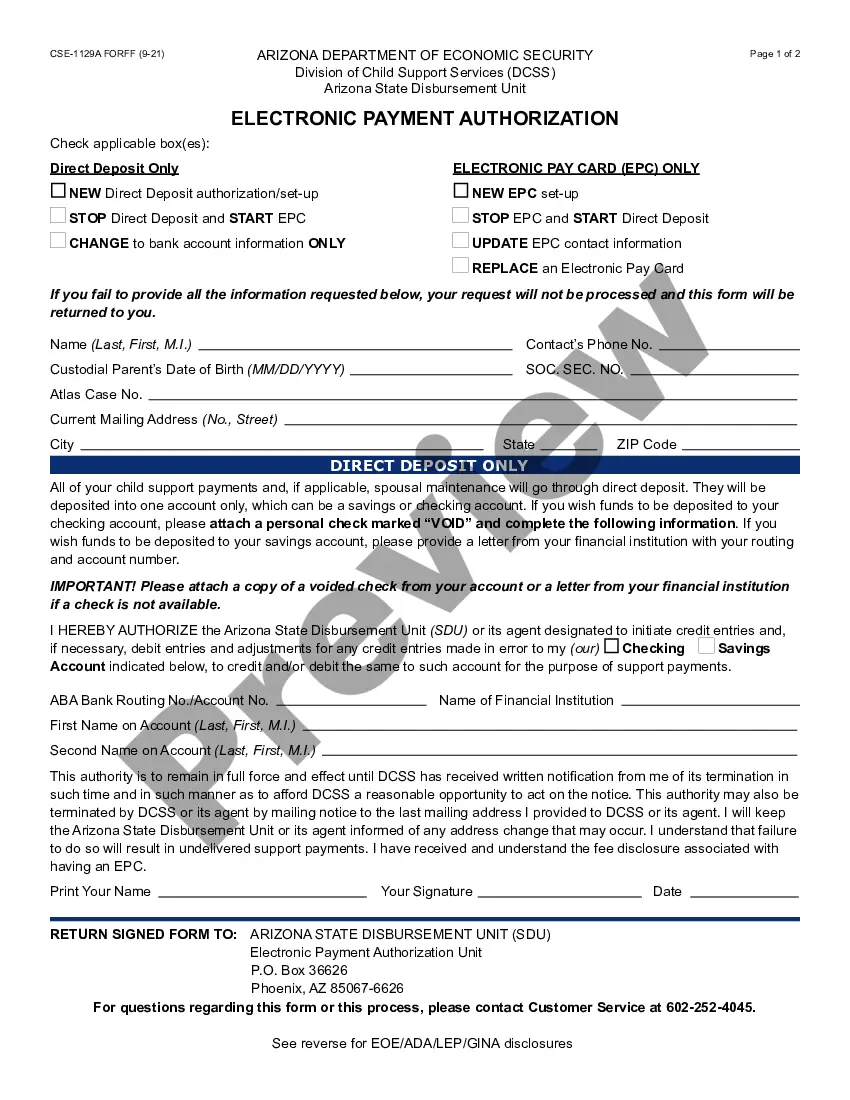
Mississippi First Amended Complaint
What this document covers
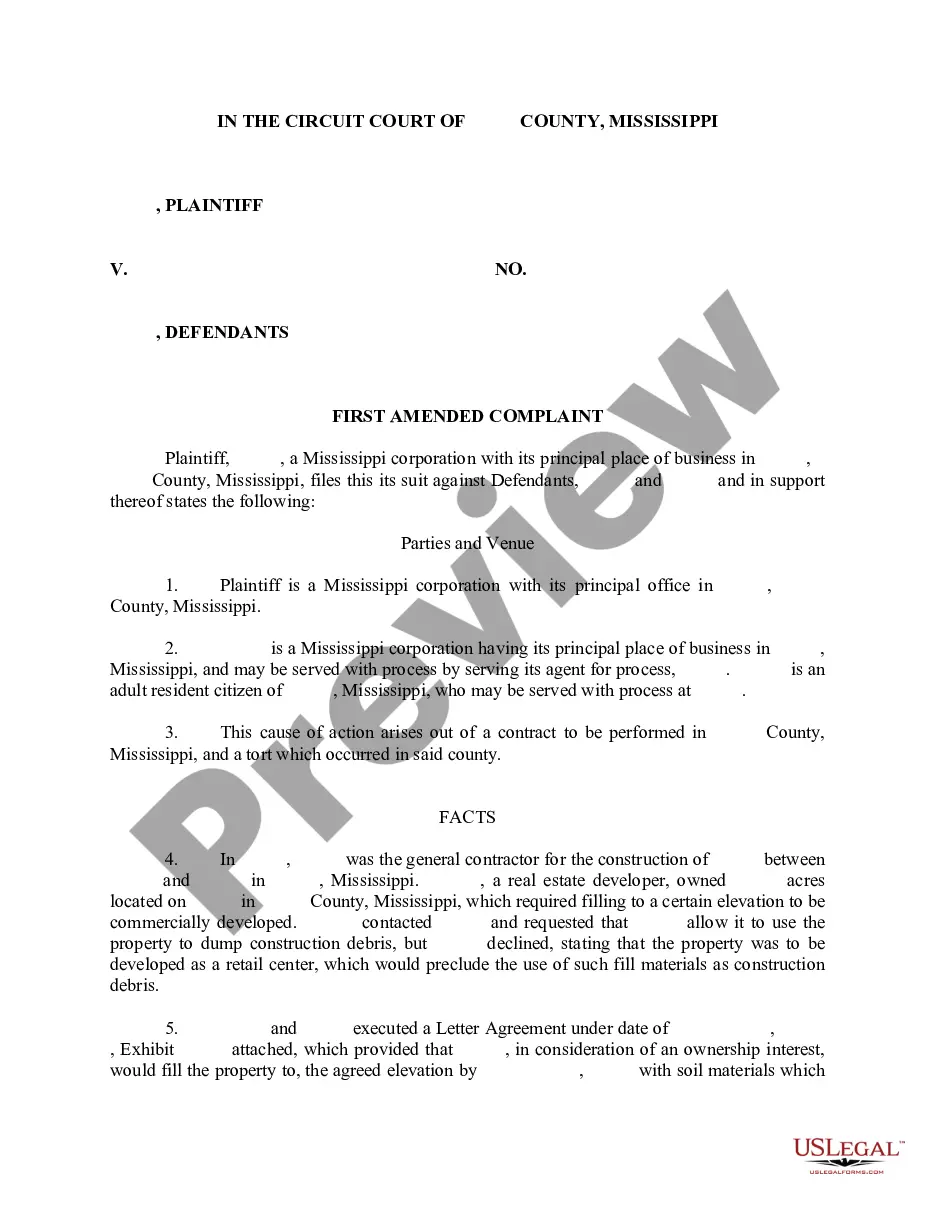
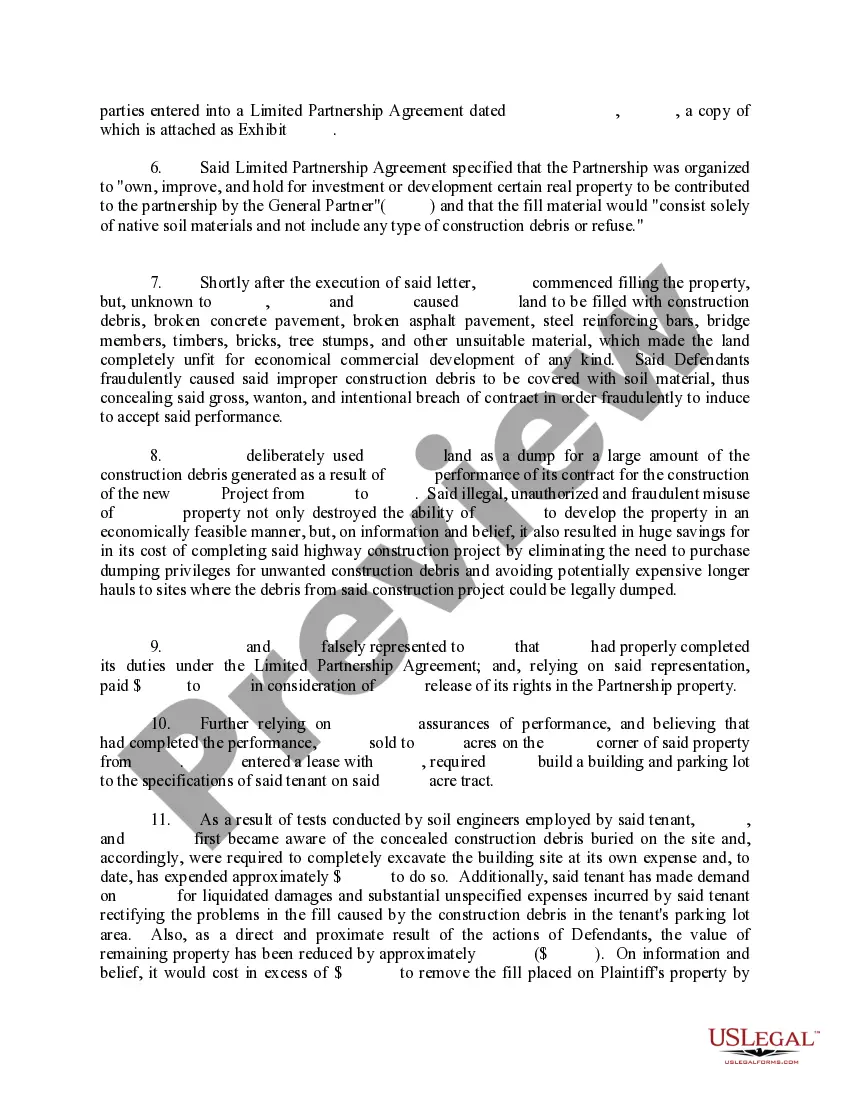
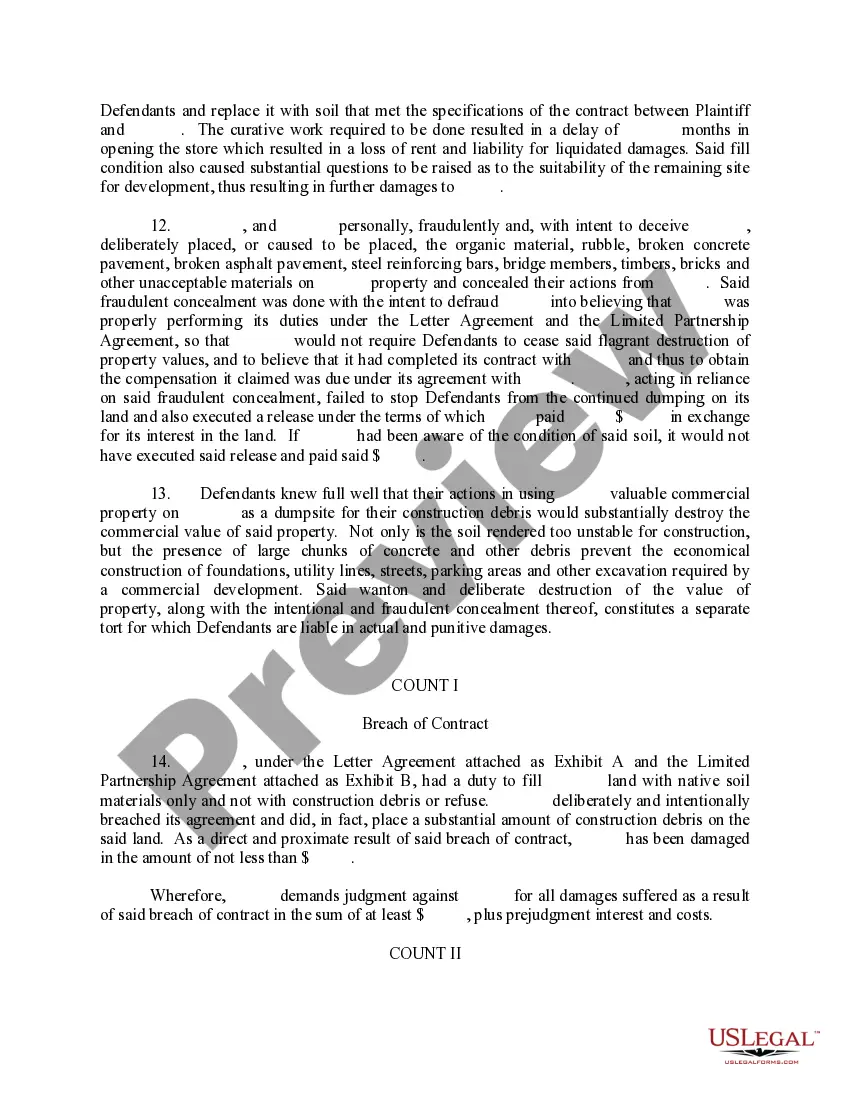
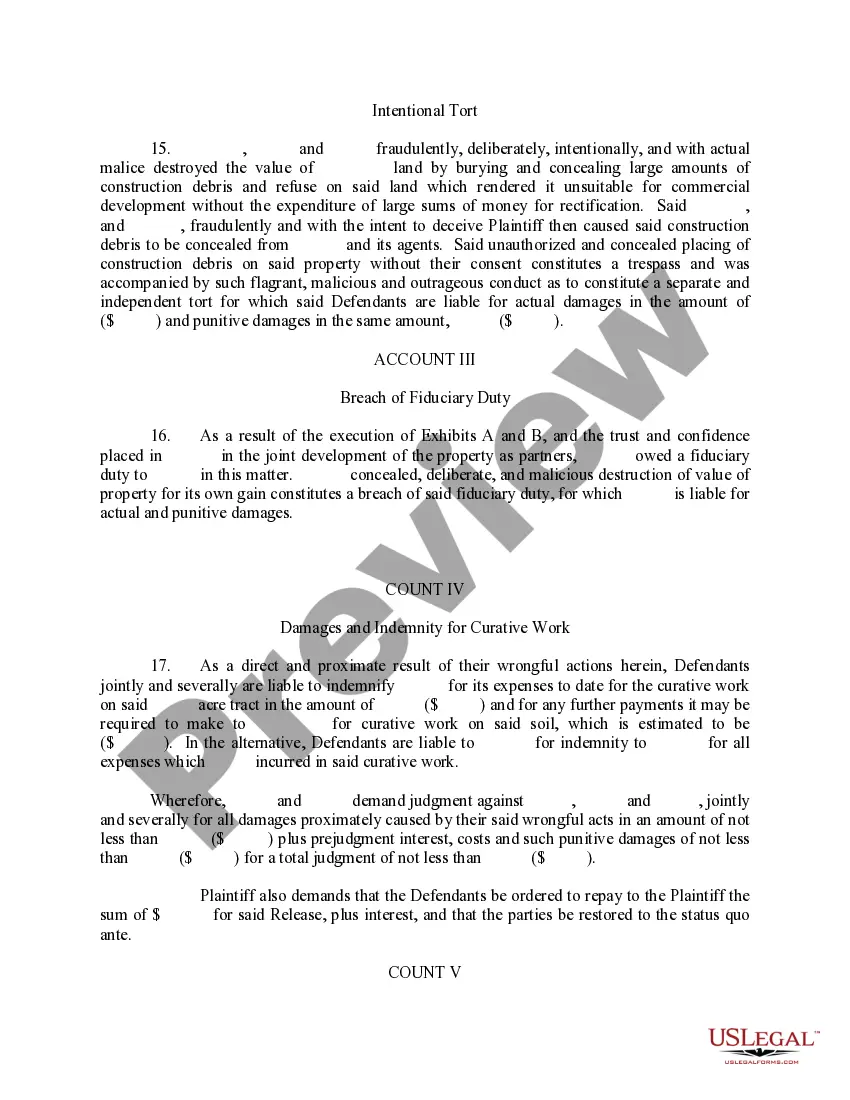
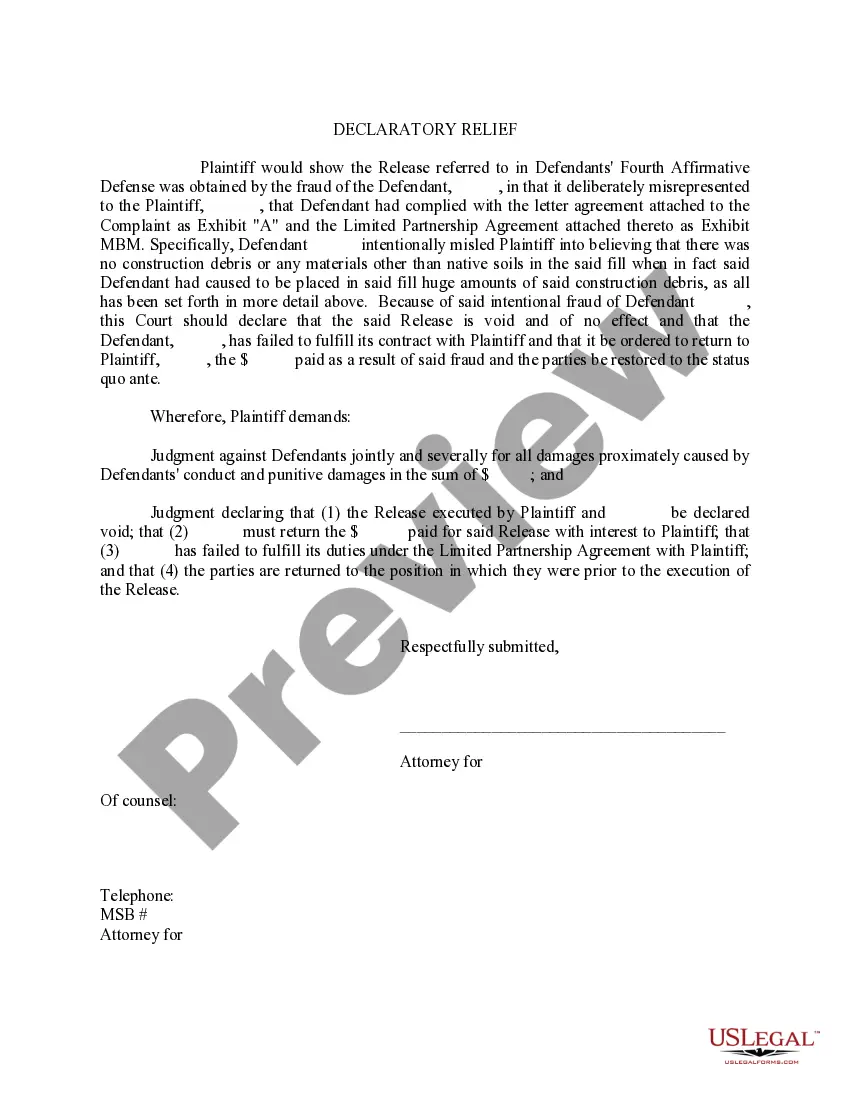
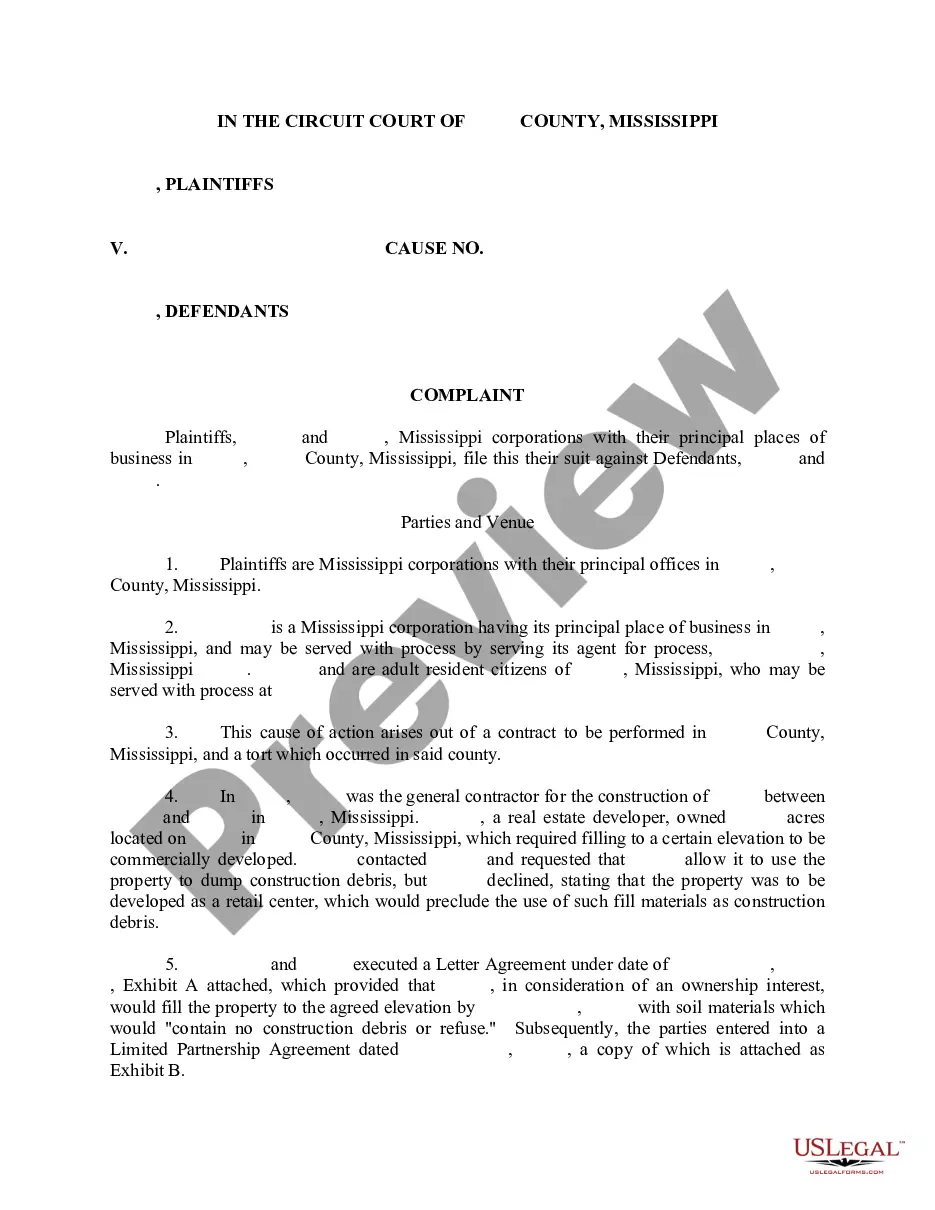
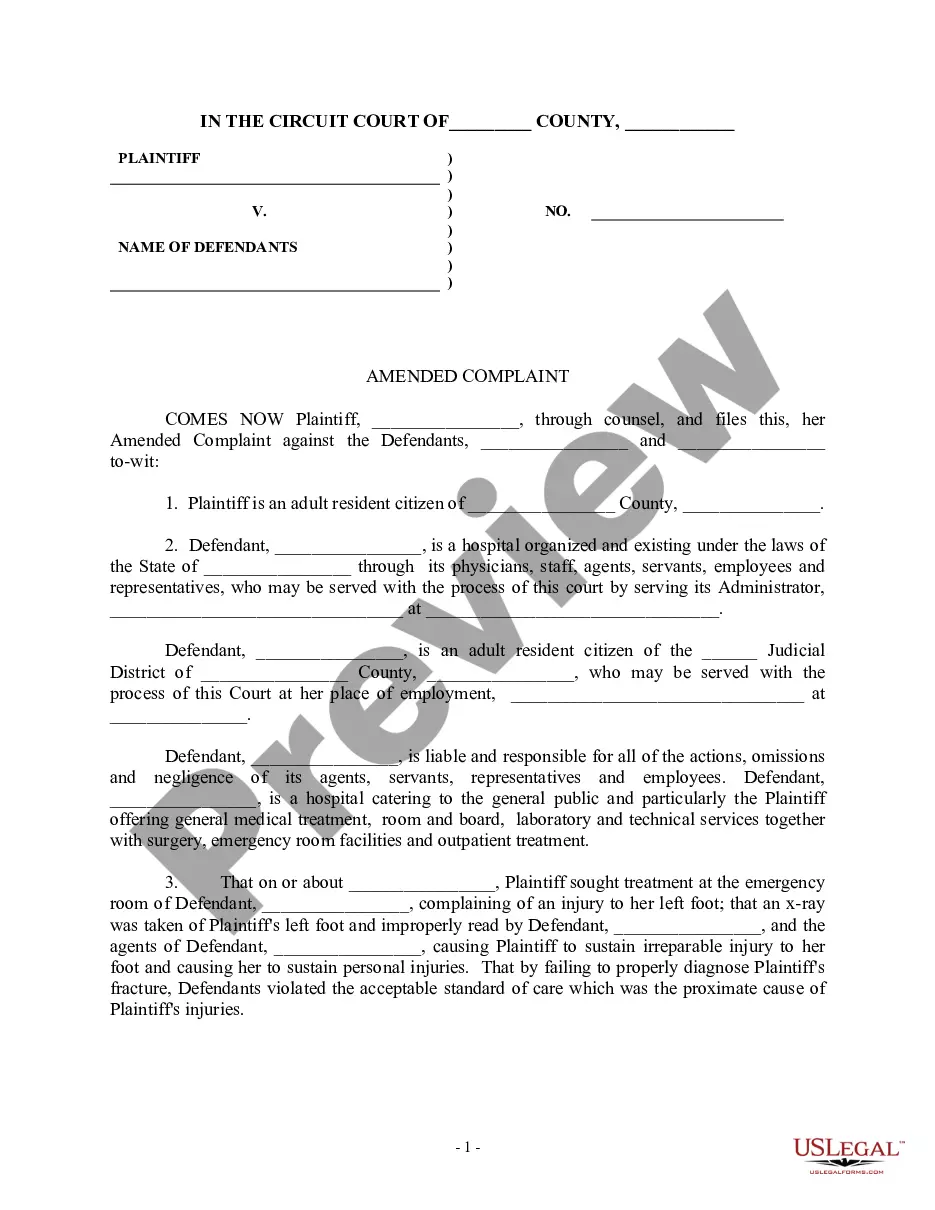
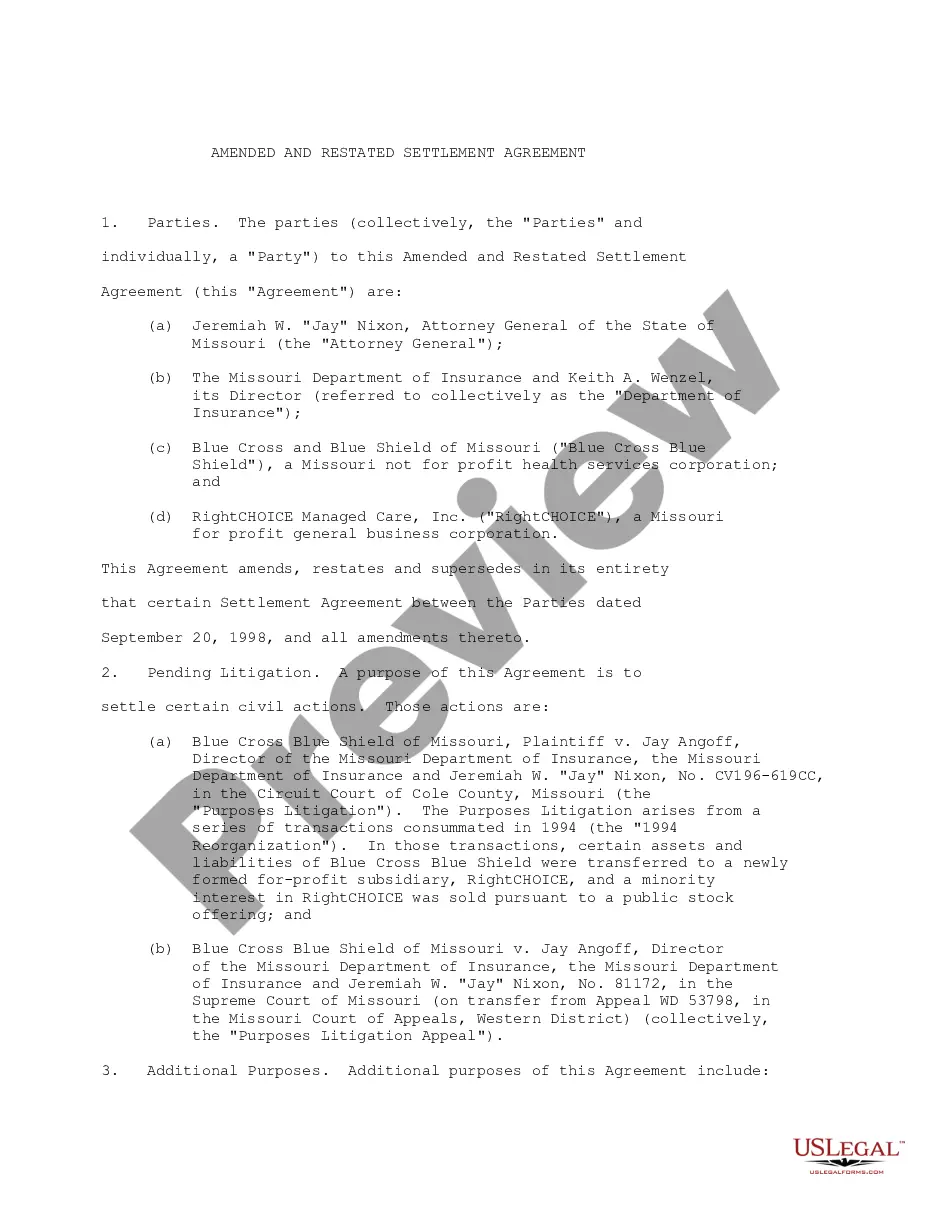
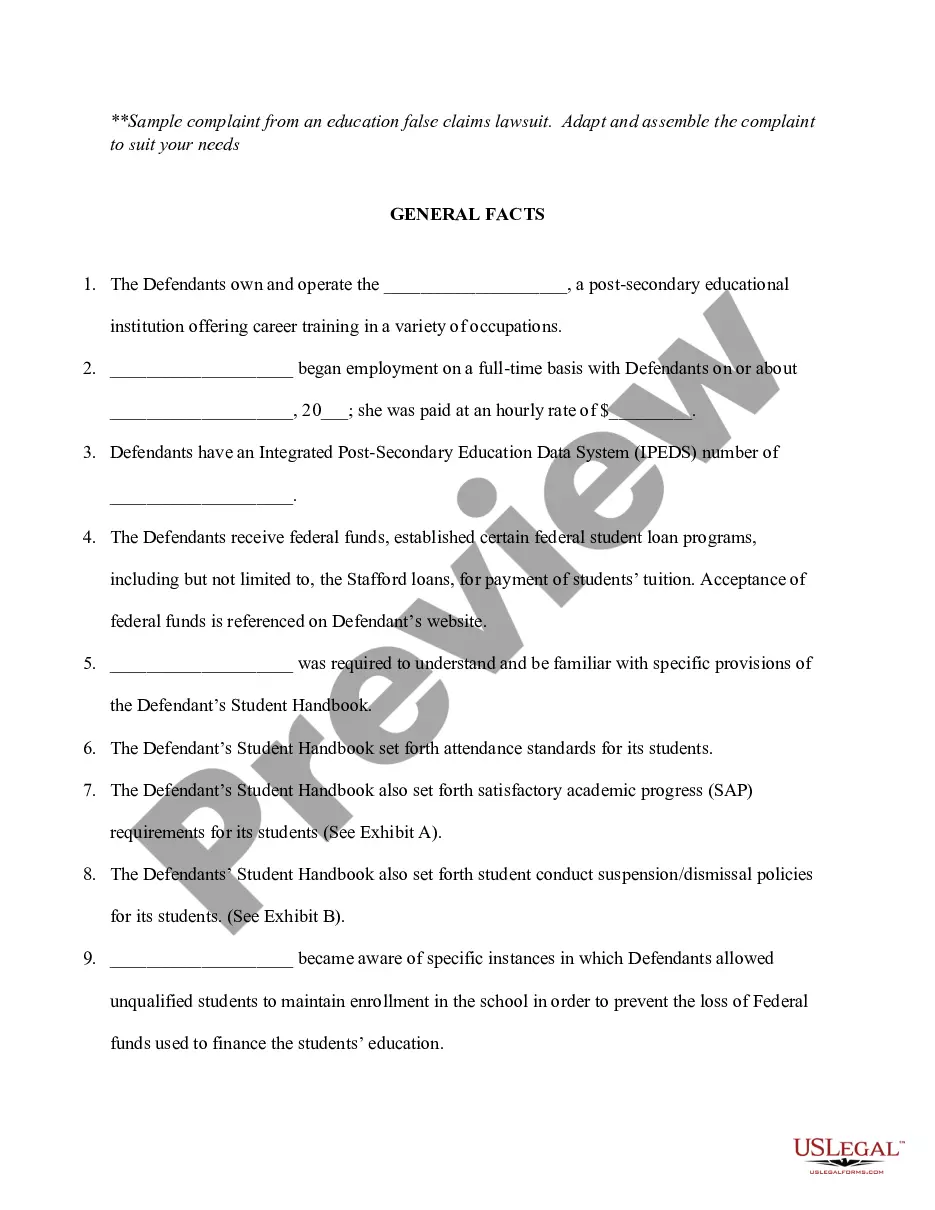
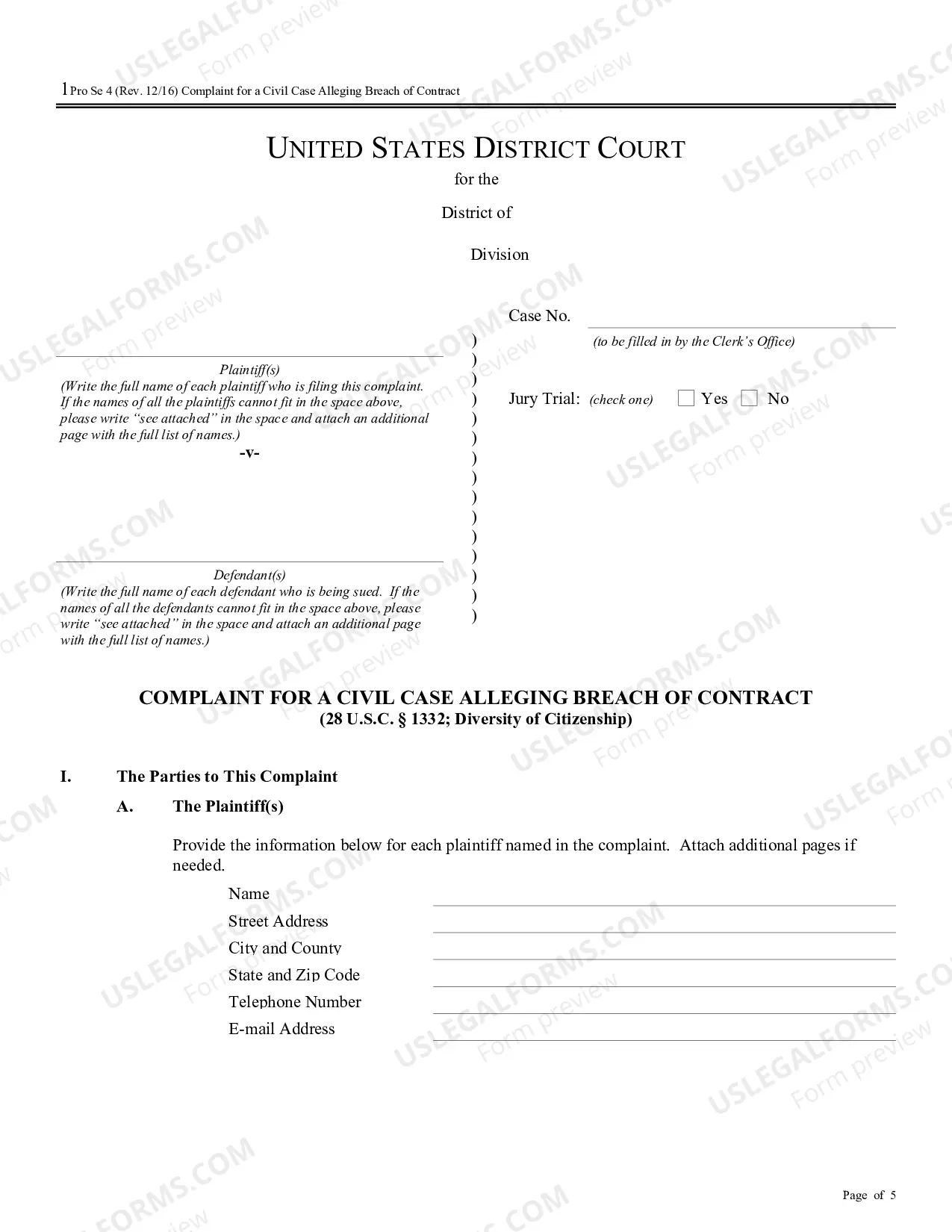
The First Amended Complaint is a legal document filed by a Plaintiff to make changes to the original Complaint for the first time. This form serves to clarify or modify claims and can include additional facts or corrections. Unlike the original Complaint, this document allows for updates that may arise after the initial filing, ensuring that all relevant issues are addressed in the case.
Main sections of this form
- Caption: Identifies the case title and the parties involved.
- Introduction: Sets forth the basis for the amendment and the reasons for the changes.
- Allegations: Details the specific claims being made, which may include new facts or assertions.
- Prayer for Relief: Indicates the specific relief or outcome sought by the Plaintiff.
- Signature Line: Provides space for the attorney or Plaintiff to sign and date the form.
Situations where this form applies
This form is used when a Plaintiff needs to amend the original Complaint due to newly discovered facts, changes in the legal arguments, or the addition of new parties. Situations may include errors in the original filing, new evidence that has come to light since the original Complaint, or when changes to legal claims are deemed necessary to better represent the case.
Who should use this form
- Individuals who have filed an original Complaint and require amendments.
- Attorneys representing clients in civil lawsuits who need to update their legal documents.
- Parties involved in litigation that requires clarification or modification of the initial allegations or claims.
Instructions for completing this form
- Identify the case caption, including the court and parties involved.
- State the reasons for amending the original Complaint in the introduction section.
- Detail any new allegations or changes you wish to include in the allegations section.
- Specify the relief you are requesting by completing the prayer for relief.
- Sign and date the form, ensuring all involved parties are appropriately acknowledged.
Is notarization required?
This form does not typically require notarization to be legally valid. However, some jurisdictions or document types may still require it. US Legal Forms provides secure online notarization powered by Notarize, available 24/7 for added convenience.
Get your form ready online
Our built-in tools help you complete, sign, share, and store your documents in one place.
Make edits, fill in missing information, and update formatting in US Legal Forms—just like you would in MS Word.
Download a copy, print it, send it by email, or mail it via USPS—whatever works best for your next step.
Sign and collect signatures with our SignNow integration. Send to multiple recipients, set reminders, and more. Go Premium to unlock E-Sign.
If this form requires notarization, complete it online through a secure video call—no need to meet a notary in person or wait for an appointment.
We protect your documents and personal data by following strict security and privacy standards.

Make edits, fill in missing information, and update formatting in US Legal Forms—just like you would in MS Word.

Download a copy, print it, send it by email, or mail it via USPS—whatever works best for your next step.

Sign and collect signatures with our SignNow integration. Send to multiple recipients, set reminders, and more. Go Premium to unlock E-Sign.

If this form requires notarization, complete it online through a secure video call—no need to meet a notary in person or wait for an appointment.

We protect your documents and personal data by following strict security and privacy standards.
Common mistakes
- Not including all necessary changes or new allegations in the amendment.
- Failing to sign and date the form before submission.
- Neglecting to notify the court and all parties of the amended Complaint.
Why complete this form online
- Convenience: Downloadable formats allow for easy access and editing.
- Time-saving: Quickly amend complaints without the need for drafting from scratch.
- Guidance: Forms are developed by licensed attorneys, ensuring legal compliance and accuracy.
Legal use & context
- This form is essential for maintaining the integrity of the legal process by allowing for amendments as cases evolve.
- Ensures that all parties are informed of any changes to the claims being made.
- Helps prevent cases from being dismissed for lack of clarity or incomplete information in the original Complaint.
Main things to remember
- The First Amended Complaint allows for necessary changes to the original legal claim.
- It is vital to provide complete and accurate updates to avoid potential legal issues.
- This form may be used by individuals and attorneys needing to ensure their legal documents are current and precise.
Looking for another form?


Form popularity
FAQ
Once a defendant has answered, a first amended complaint can only be filed and served with leave of court. If the plaintiff did not get the court's permission, it is not deemed a valid first amended complaint.
In the United States, a complaint is the first pleading filed by a plaintiff which initiates a lawsuit. A complaint sets forth the relevant allegations of fact that give rise to one or more legal causes of action along with a prayer for relief and sometimes a statement of damages claimed (an ad quod damnum clause).
Amend. v. to alter or change by adding, subtracting, or substituting. One can amend a statute, a contract or a written pleading filed in a law -suit. The change is usually called an amendment.
The court should freely give leave when justice so requires. (3) Time to Respond. Unless the court orders otherwise, any required response to an amended pleading must be made within the time remaining to respond to the original pleading or within 14 days after service of the amended pleading, whichever is later.
Amended complaint. n. what results when the party suing (plaintiff or petitioner) changes the complaint he/she has filed. It must be in writing, and can be done before the complaint is served on any defendant, by agreement between the parties (usually their lawyers), or upon order of the court.
An answer may be amended once without leave of court within ten (10) days after the answer was filed, or if there is a demurrer to the answer, amendment without leave of court may be made before the demurrer hearing. Amendment as a matter of right is made by filing and serving the amended pleading.
The defendant shall answer the amendments, or the complaint as amended, within 30 days after service thereof, or such other time as the court may direct, and judgment by default may be entered upon failure to answer, as in other cases.
It means to change the basis for the case in some way. A motion to amend a complaint is the formal way of asking the court for permission to change the original complaint.
At the very outset, it would be relevant to mention there is a limited scope of amendment in a criminal complaint as under the Indian Law there is no express provision for amending a criminal complaint. However, in a recent case of S.R. Sukumar v.Amendment does not change the original nature of complaint.
(e) (1) In response to a demurrer and prior to the case being at issue, a complaint or cross-complaint shall not be amended more than three times, absent an offer to the trial court as to such additional facts to be pleaded that there is a reasonable possibility the defect can be cured to state a cause of action.