Louisiana Letter to Opposing Counsel, Requesting Address for Service in Divorce Case
What this document covers
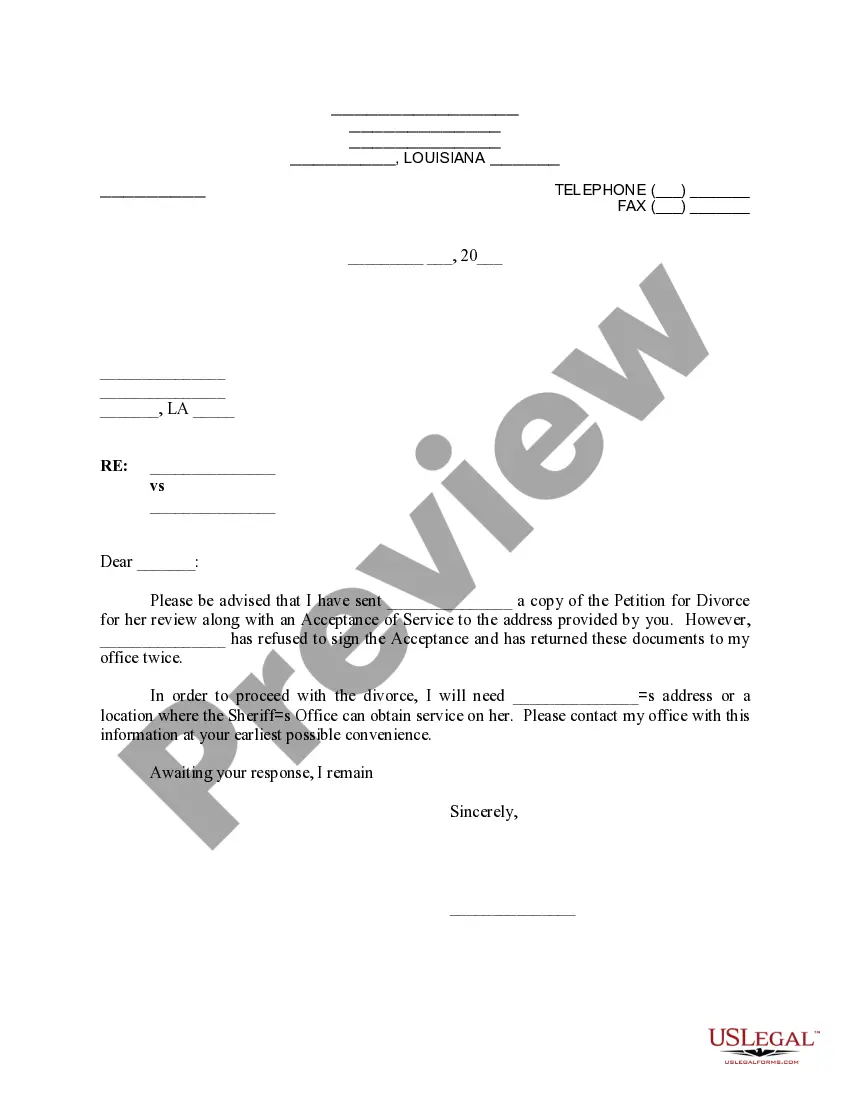
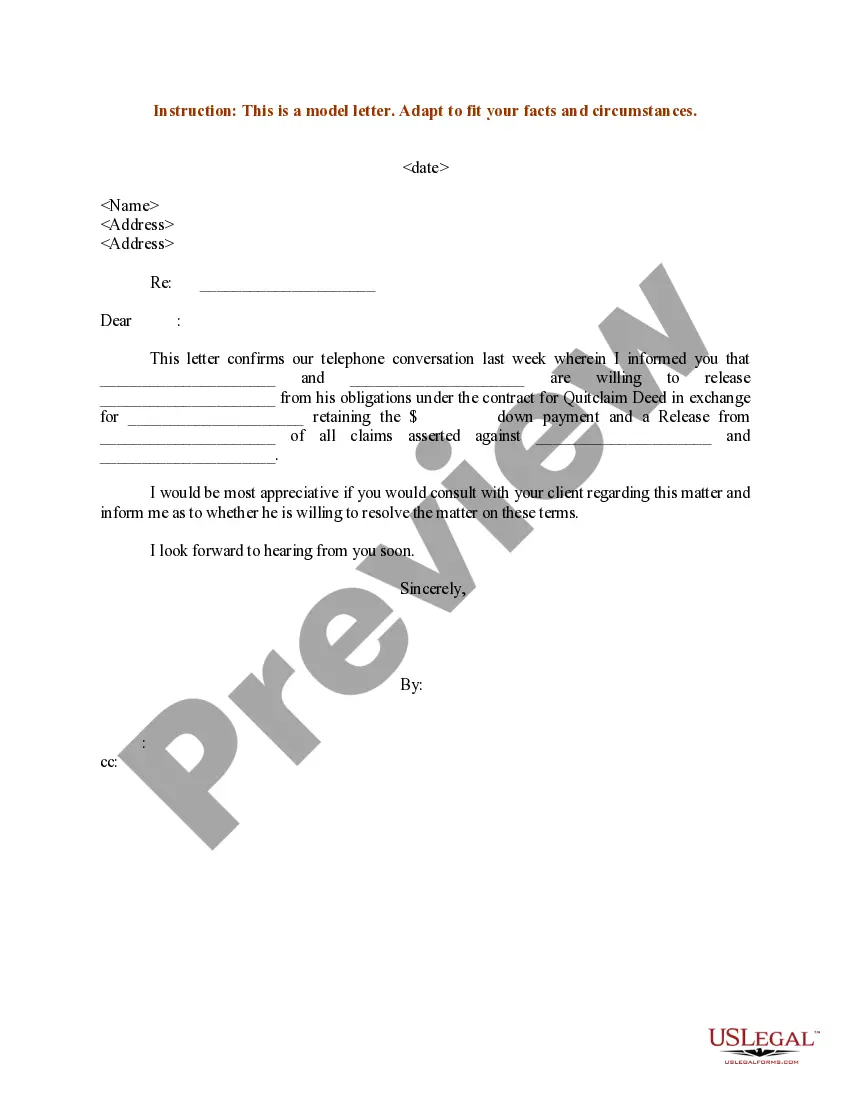
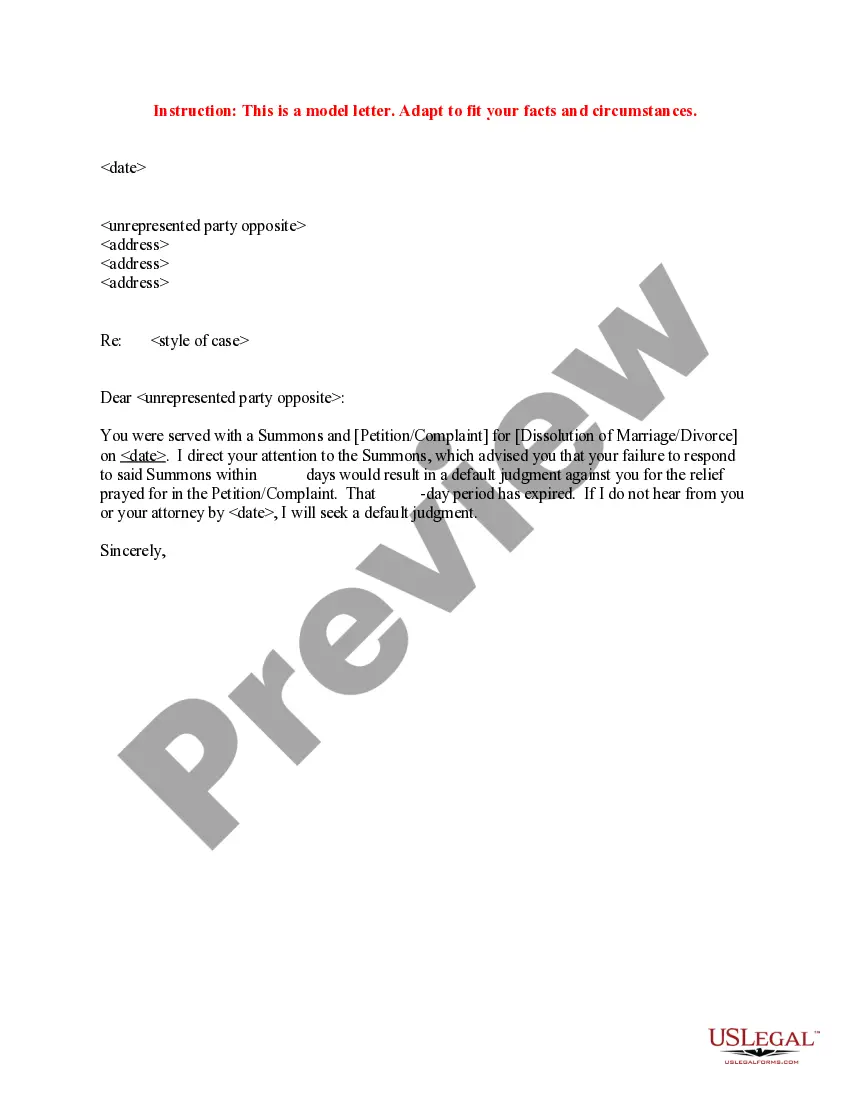
The Letter to Opposing Counsel, Requesting Address for Service in Divorce Case is a formal communication from an attorney to the opposing counsel in a divorce matter. Its primary purpose is to request the address of the opposing party to facilitate the serving of divorce papers, which is crucial when previous attempts to serve documents have failed. This form stands out as it specifically addresses the issue of personal service, differing from general correspondence forms used in legal contexts.
What’s included in this form
- Contact information for the attorney, including name, address, and phone numbers.
- Date of the letter.
- Name and address of the opposing counsel.
- Reference to the divorce petition filed.
- Details about previous attempts to serve divorce papers.
- A request for the correct address to serve the opposing party.
When to use this form
This form is necessary when you are representing a spouse in a divorce case and need to serve divorce papers to the opposing party, who has refused to accept them in previous mail attempts. Use this letter to formally request the required address for service from the opposing counsel to ensure the legal process can continue.
Who should use this form
- Attorneys representing clients in divorce cases.
- Legal professionals needing to serve documents and ensure compliance with service laws.
- Individuals looking to understand the legal communication processes involved in divorce proceedings.
Steps to complete this form
- Enter your contact information, including name, address, and phone number.
- Include the date of the letter.
- Fill in the opposing counsel's name and address.
- Reference the divorce petition and include any relevant details about previous service attempts.
- Clearly request the address for proper service of your client's divorce papers.
Does this document require notarization?
This form does not typically require notarization unless specified by local law. However, ensuring compliance with local jurisdictional rules is recommended.
Get your form ready online
Our built-in tools help you complete, sign, share, and store your documents in one place.
Make edits, fill in missing information, and update formatting in US Legal Forms—just like you would in MS Word.
Download a copy, print it, send it by email, or mail it via USPS—whatever works best for your next step.
Sign and collect signatures with our SignNow integration. Send to multiple recipients, set reminders, and more. Go Premium to unlock E-Sign.
If this form requires notarization, complete it online through a secure video call—no need to meet a notary in person or wait for an appointment.
We protect your documents and personal data by following strict security and privacy standards.

Make edits, fill in missing information, and update formatting in US Legal Forms—just like you would in MS Word.

Download a copy, print it, send it by email, or mail it via USPS—whatever works best for your next step.

Sign and collect signatures with our SignNow integration. Send to multiple recipients, set reminders, and more. Go Premium to unlock E-Sign.

If this form requires notarization, complete it online through a secure video call—no need to meet a notary in person or wait for an appointment.

We protect your documents and personal data by following strict security and privacy standards.
Typical mistakes to avoid
- Failing to include complete contact information for both parties.
- Not referencing prior service attempts or the divorce petition accurately.
- Leaving out a deadline for the opposing counsel to respond.
Advantages of online completion
- Convenient access to downloadable legal templates.
- Ability to edit and customize the letter to fit specific cases.
- Drafted by licensed attorneys to ensure legal compliance and reliability.
Key takeaways
- The form is essential for obtaining service addresses in divorce cases.
- Accurate completion of the form is crucial for legal compliance.
- Using this form online provides convenience and access to legal expertise.
Looking for another form?
Form popularity
FAQ
Rule 9.9 in Louisiana district court pertains to service of pleadings and other documents. It requires parties to ensure that all documentation is served to the opposing counsel in a timely manner. Understanding this rule is crucial when drafting a Louisiana Letter to Opposing Counsel, Requesting Address for Service in Divorce Case to meet all legal obligations.
Opposing counsel call each other 'friend' in increasingly popular SCOTUS lingo. The Supreme Court under the leadership of Chief Justice John G. Roberts Jr. is increasingly using the word friend to refer to opposing counsel in oral arguments, a term also picked up by the lawyers appearing before the court.
Definitions of opposing counsel lawyers representing the other side (the opponents) in a dispute.
Mirror the client's concerns. Focus on the client. Lay the groundwork for bad news and go slowly. Acknowledge the client's feelings. Let clients know that they're not alone. Work toward a resolution based on where you are now. Focus on the positive. Get help.
Never Refer To Counsel In Argument Resist the impulse in Court to address opposing counsel directly always address through the Court. It will keep you more civil and calmer (and it's what the Court wants anyway).
A party who is represented by counsel cannot be contacted directly by opposing counsel unless that party and opposing counsel expressly authorized direct contact.
A lawyer is not prohibited from calling another party's attorney or another member of the party's attorney's firm as a witness, either in discovery or at trial, where such attorney may have unprivileged knowledge relevant to the case or unprivileged knowledge reasonably calculated to lead to the discovery of admissible
No California legal ethics rule expressly prohibits a non-lawyer client from contacting another party directly, although clients cannot be used as conduits for indirect prohibited contact from lawyers.
There is no rule against your talking to the opposing party, or to the opposing party's attorney. There is a rule, however, that applies to attorneys only, that would prevent opposing counsel from responding to your communication, unless he had permission from your attorney.
Point out Common Ground. Don't be Afraid to Ask Why. Separate the Person from the Problem. Focus on your Interests. Don't Fall for your Assumptions. Take a Calculated Approach. Control the Conversation by Reframing. Pick up the Phone.