Mississippi Complaint to Enforce Mechanics and Materialmans Lien
Understanding this form
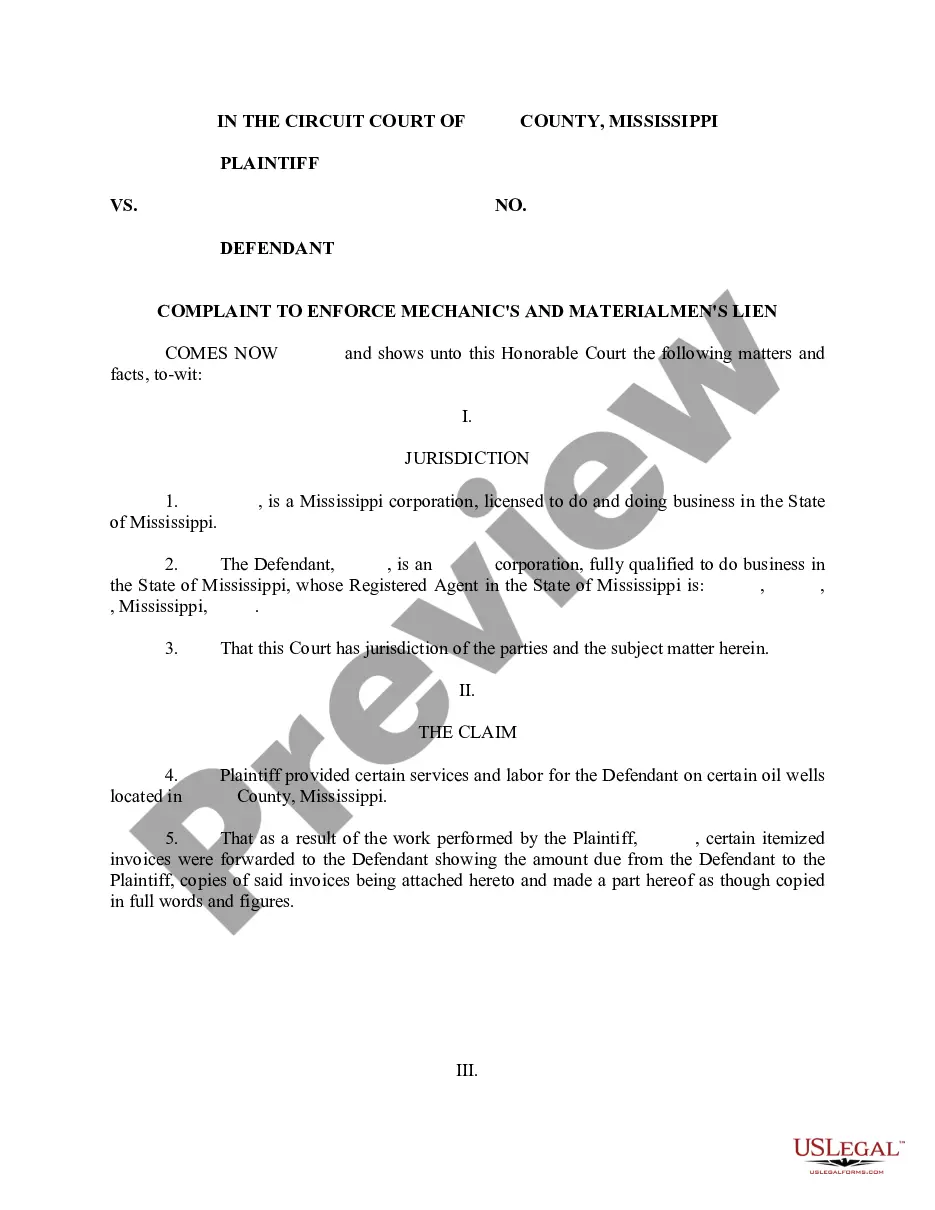
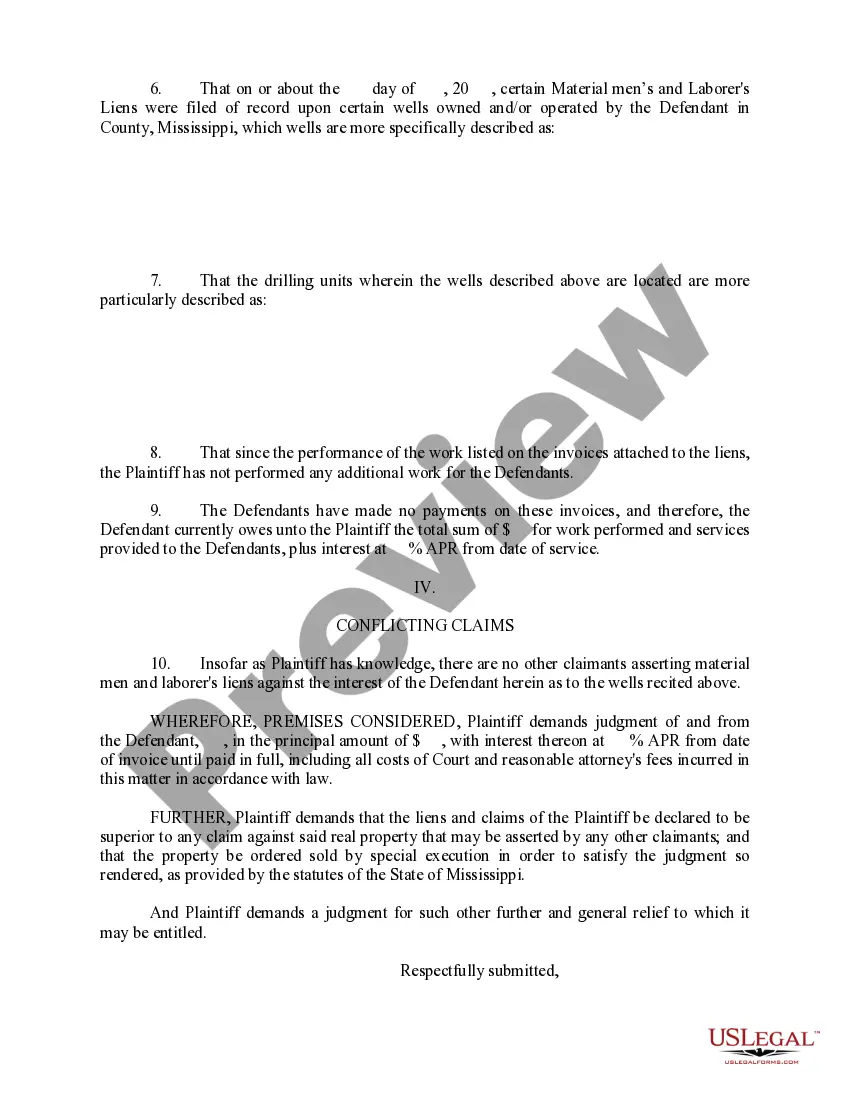
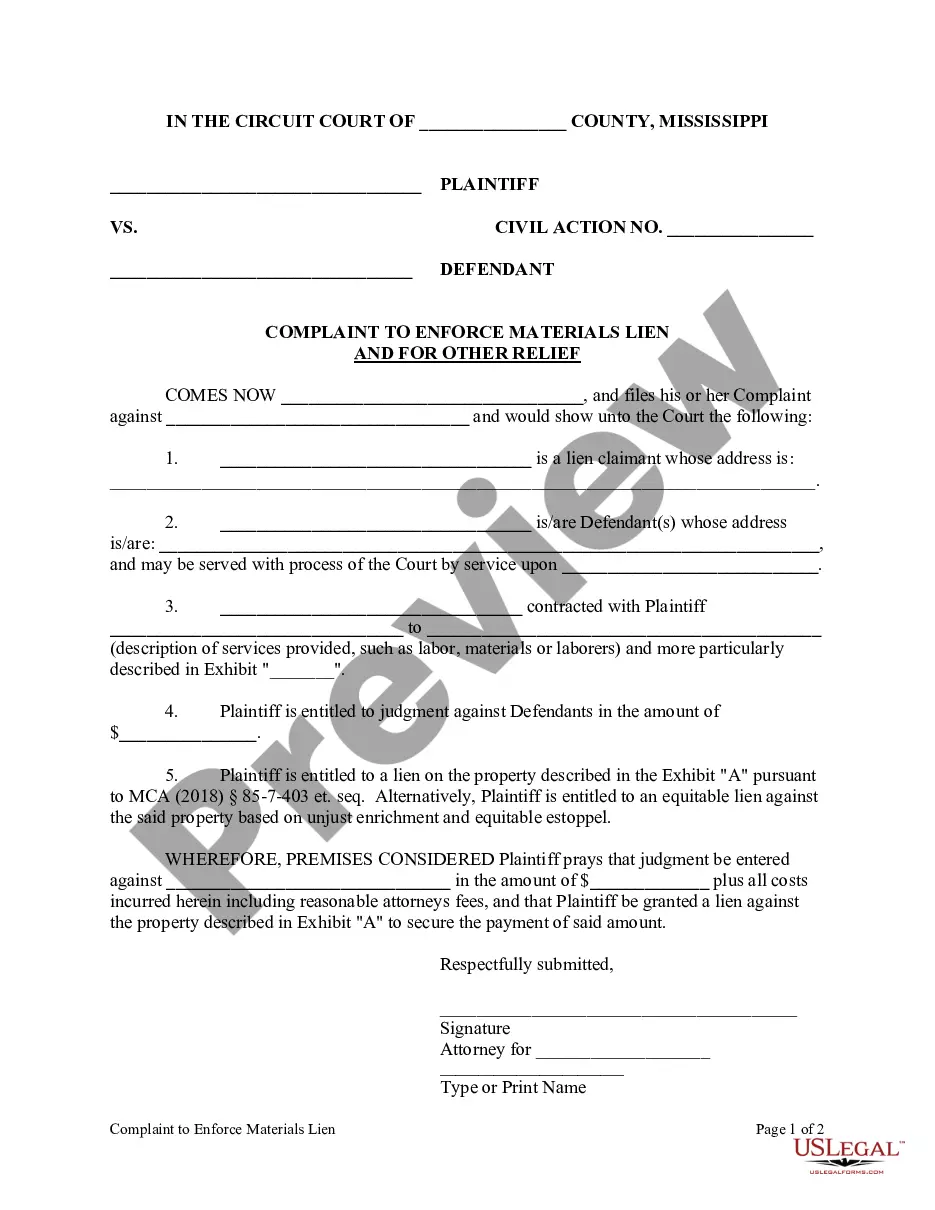
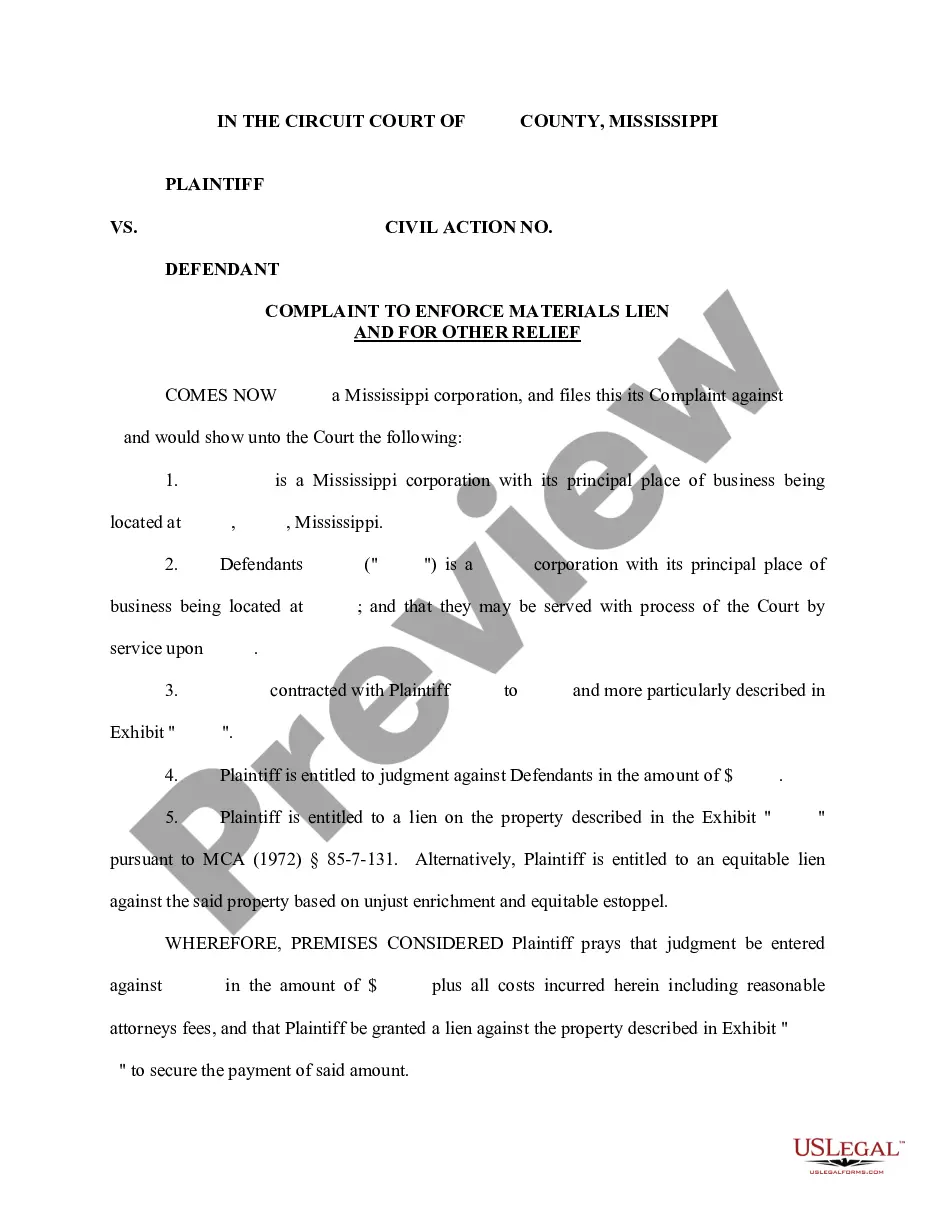
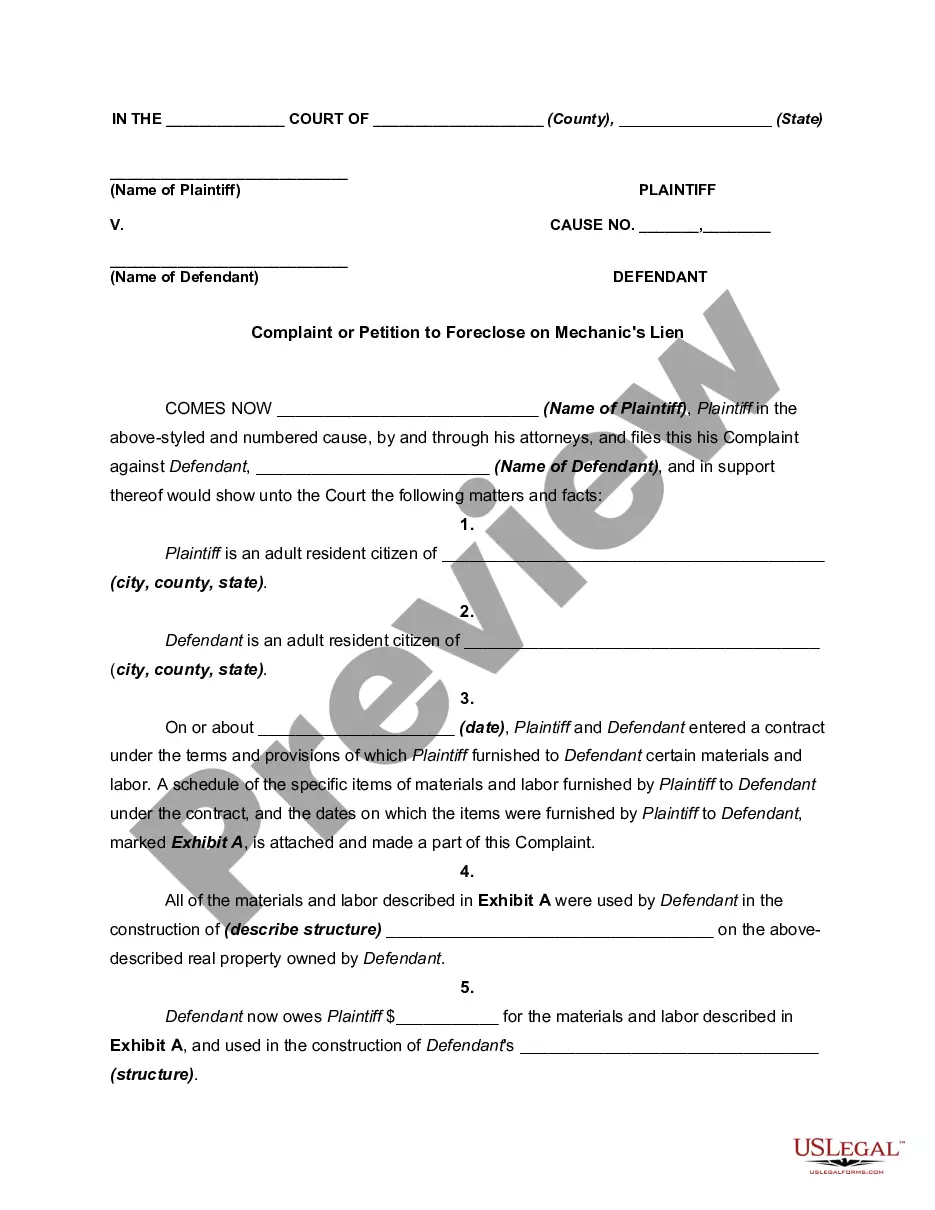
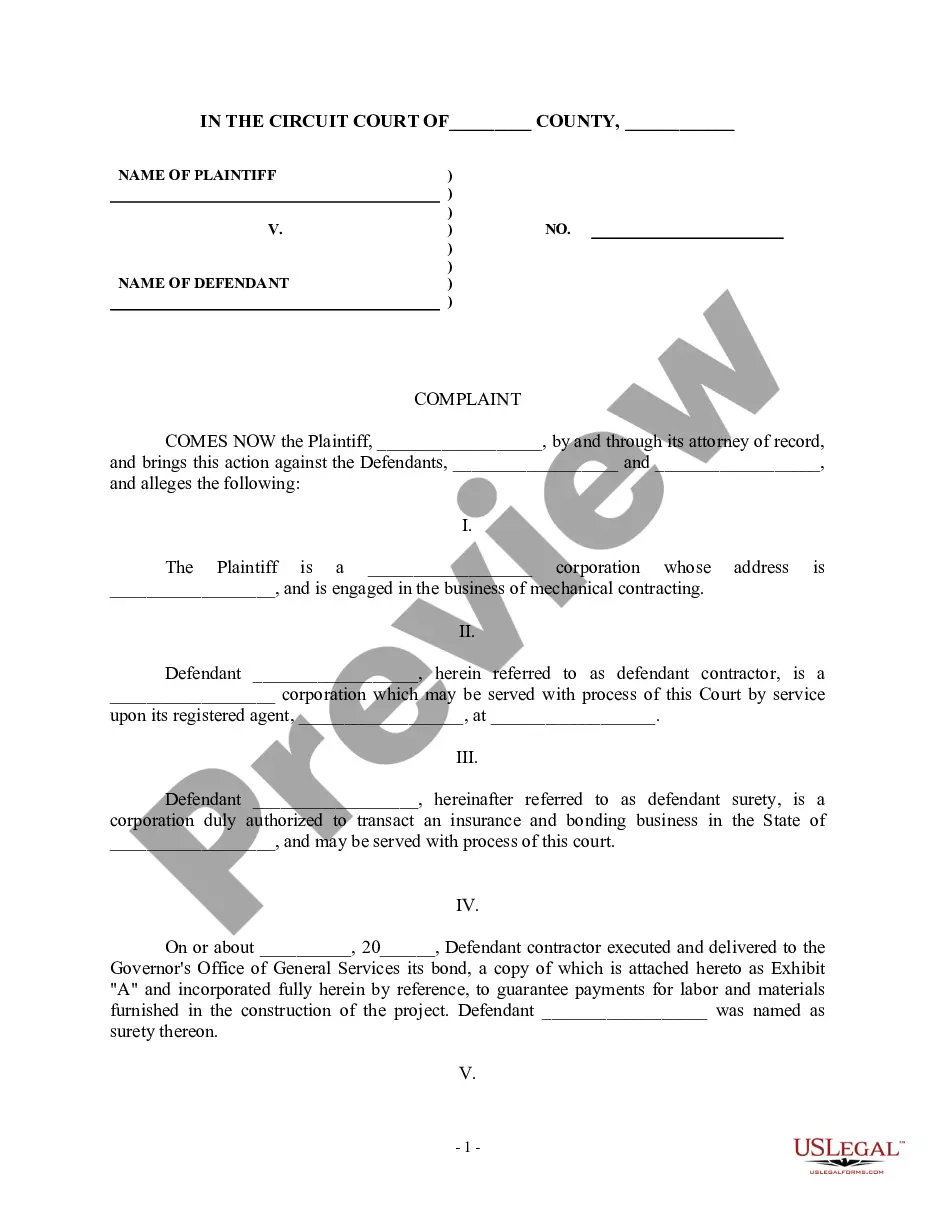
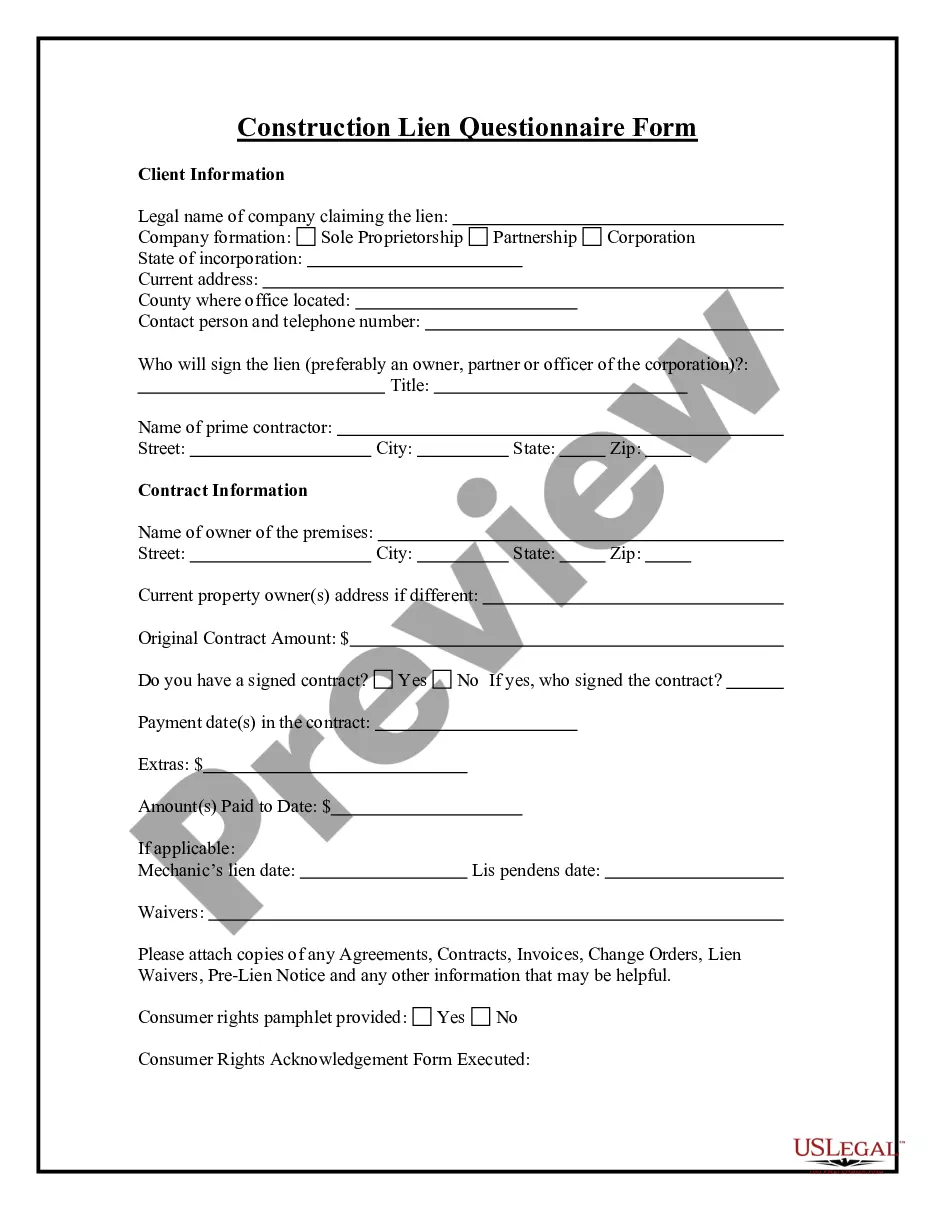
The Complaint to Enforce Mechanics and Materialmanâs Lien is a legal document used by contractors and suppliers in Mississippi. This form allows the party providing labor or materials to assert a claim against a property when they have not received payment. It outlines the details of the work performed and the amount due, establishing the right to seek a lien on the property for unpaid services. This form is essential for protecting the interests of those who contribute services or materials to construction projects within the state.
Key parts of this document
- Jurisdiction: Identifies the parties involved and establishes the court's jurisdiction.
- Claim Description: Details the services provided and the total amount owed.
- Liens Filed: Information on any liens filed against the property for unpaid services.
- Conflict Resolution: Asserts the priority of the Claimant's lien against any other claims on the property.
- Judgment Demand: Outlines the relief sought, including payment plus interest and attorney's fees.
When this form is needed
This form should be used when a contractor or supplier has completed work on a property but has not been compensated. It is particularly relevant for those involved in construction or material supply in Mississippi who need to secure their payment through a mechanic's lien. Situations may include contractors who have finished a project without receiving payment or suppliers who have delivered materials that remain unpaid.
Intended users of this form
- Contractors who have provided labor or services on a construction project.
- Suppliers of materials used in construction or improvement of properties.
- Property owners disputing payments for services rendered.
- Legal representatives of individuals or businesses involved in construction contracts.
Steps to complete this form
- Identify the parties involved, including the Plaintiff and Defendant.
- Clearly state the services provided and attach any invoices for reference.
- Detail the property and any liens already recorded related to the services provided.
- Specify the total amount owed, including any applicable interest.
- Sign and date the form, ensuring all necessary parties agree to the contents.
Is notarization required?
This form does not typically require notarization unless specified by local law. Always ensure compliance with Mississippi regulations regarding lien enforcement.
Get your form ready online
Our built-in tools help you complete, sign, share, and store your documents in one place.
Make edits, fill in missing information, and update formatting in US Legal Forms—just like you would in MS Word.
Download a copy, print it, send it by email, or mail it via USPS—whatever works best for your next step.
Sign and collect signatures with our SignNow integration. Send to multiple recipients, set reminders, and more. Go Premium to unlock E-Sign.
If this form requires notarization, complete it online through a secure video call—no need to meet a notary in person or wait for an appointment.
We protect your documents and personal data by following strict security and privacy standards.

Make edits, fill in missing information, and update formatting in US Legal Forms—just like you would in MS Word.

Download a copy, print it, send it by email, or mail it via USPS—whatever works best for your next step.

Sign and collect signatures with our SignNow integration. Send to multiple recipients, set reminders, and more. Go Premium to unlock E-Sign.

If this form requires notarization, complete it online through a secure video call—no need to meet a notary in person or wait for an appointment.

We protect your documents and personal data by following strict security and privacy standards.
Common mistakes
- Failing to include all relevant invoices or documents as attachments.
- Leaving out key details regarding the nature of the work performed.
- Not specifying the correct dates or property information.
- Incorrectly calculating the total owed or interest accruement.
- Neglecting to sign the form appropriately before submission.
Why use this form online
- Convenient access to a legally vetted document that adheres to Mississippi laws.
- Edit and customize the form easily to fit specific case details.
- Download and file the document promptly without the need for in-person visits.
- Ensures accuracy and reduces the risk of errors that could affect enforcement.
Legal use & context
- This form allows the plaintiff to enforce lien rights when there has been a failure to receive payment for services delivered.
- Filing this complaint is a critical step in asserting a claim against a property to secure payment.
- The legal framework for mechanics' liens varies by state, making it essential to adhere to Mississippi law.
Key takeaways
- The Complaint to Enforce Mechanics and Materialman's Lien is essential for securing payment in the construction industry.
- Proper completion and timely filing of the form are vital to assert your rights.
- Understanding state-specific requirements is crucial for successful enforcement of the lien.
Looking for another form?

Form popularity
FAQ
Posting a Bond Asselta says to expect to pay 110 percent of the lien amount. Submit the bond to the court. The lien will then transfer to the bond and clear the property's title. Wait for the contractor claimant to foreclose on the lien in the allotted period to dispute the lien in court.
In California, money judgments are enforceable by a writ of execution. In order to enforce the judgment lien, the judgment creditor must obtain a writ of execution, levy and then sell the real property at an execution sale.
California Mechanics' Lien law provides special protection to contractors, subcontractors, laborers and suppliers who furnish labor or materials to repair, remodel or build your home.The mechanics' lien is a right that California gives to workers and suppliers to record a lien to ensure payment.
A mechanics lien is a legal claim on the property for unpaid construction work or supplies. Once claimants file a mechanics lien in California, the owner's property turns into collateral, allowing claimants to secure the service they rendered or the supplies they provided.
The simplest way to prevent liens and ensure that subcontractors and suppliers are paid is to pay with joint checks. This is when both parties endorse the check. Compare the contractor's materials or labor bill to the schedule of payments in your contract and the Preliminary Notices.
When a contractor files a mechanics' (construction) lien on your home, the lien makes your home into what's called security for an outstanding debt, which the contractor claims is due and unpaid for services or materials.
To enforce the lien, the contractor must file a lawsuit within 90 days from the date of recording the lien. If this deadline is passed, the contractor may not be able to enforce the lien and may be required to remove the lien.