Mississippi Dismissal without Prejudice
Overview of this form
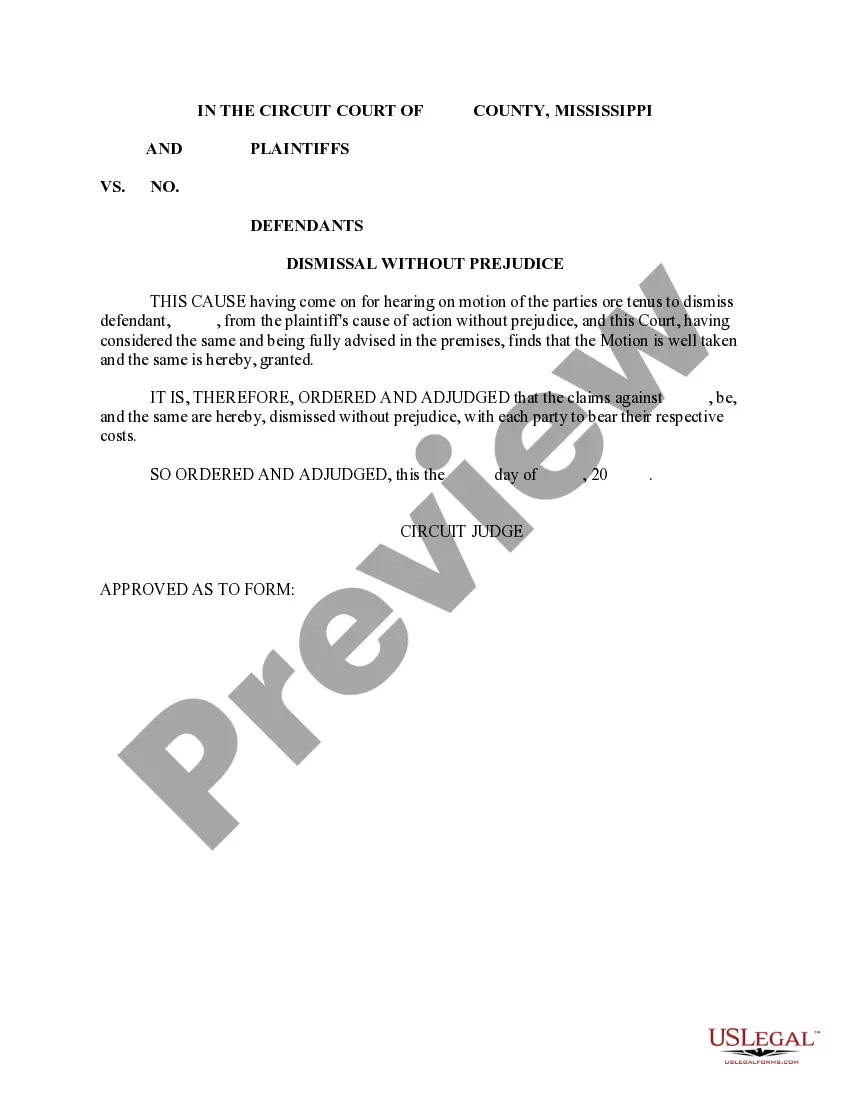
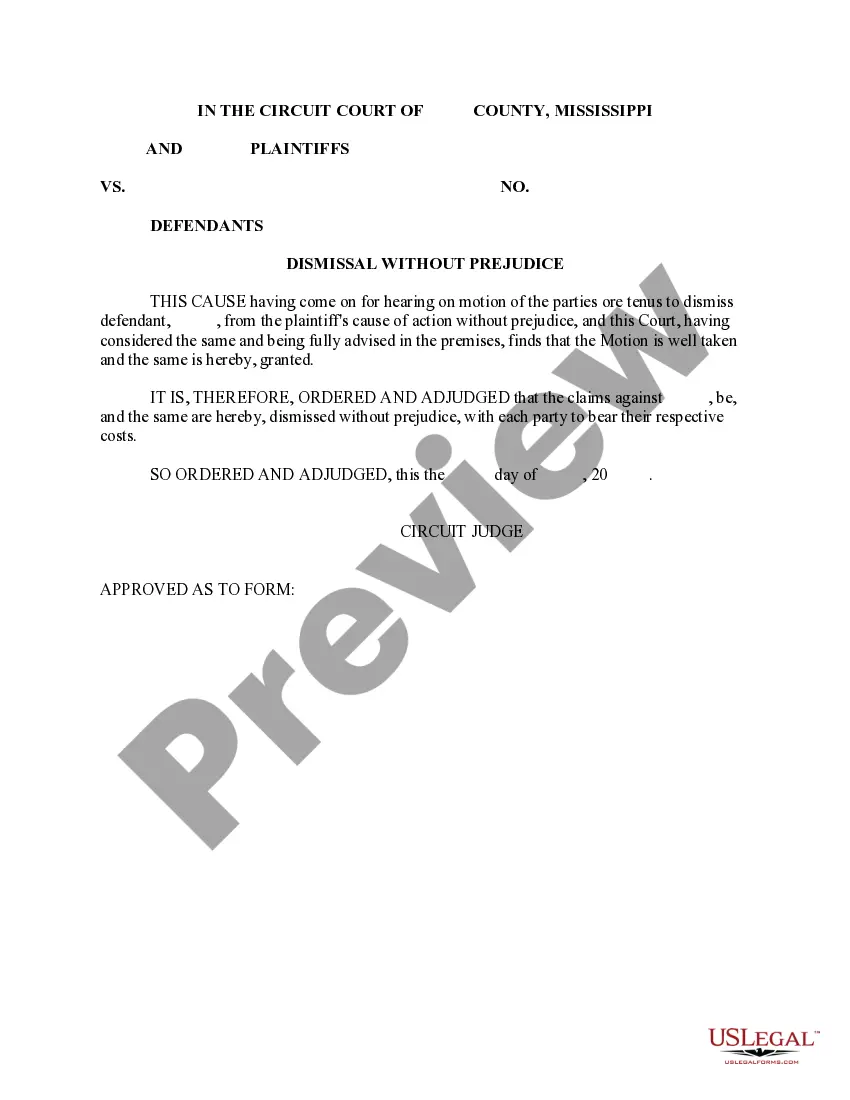
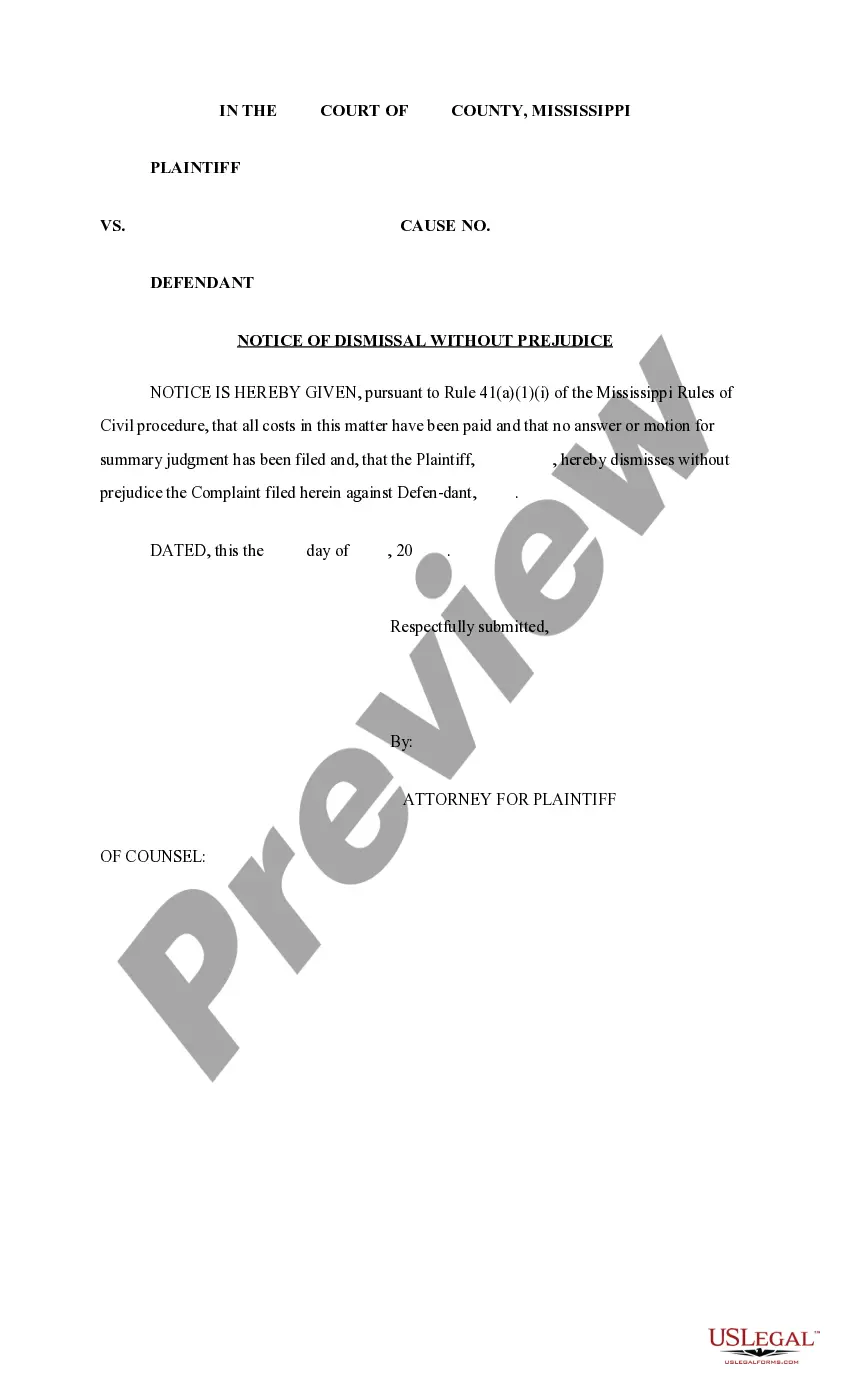
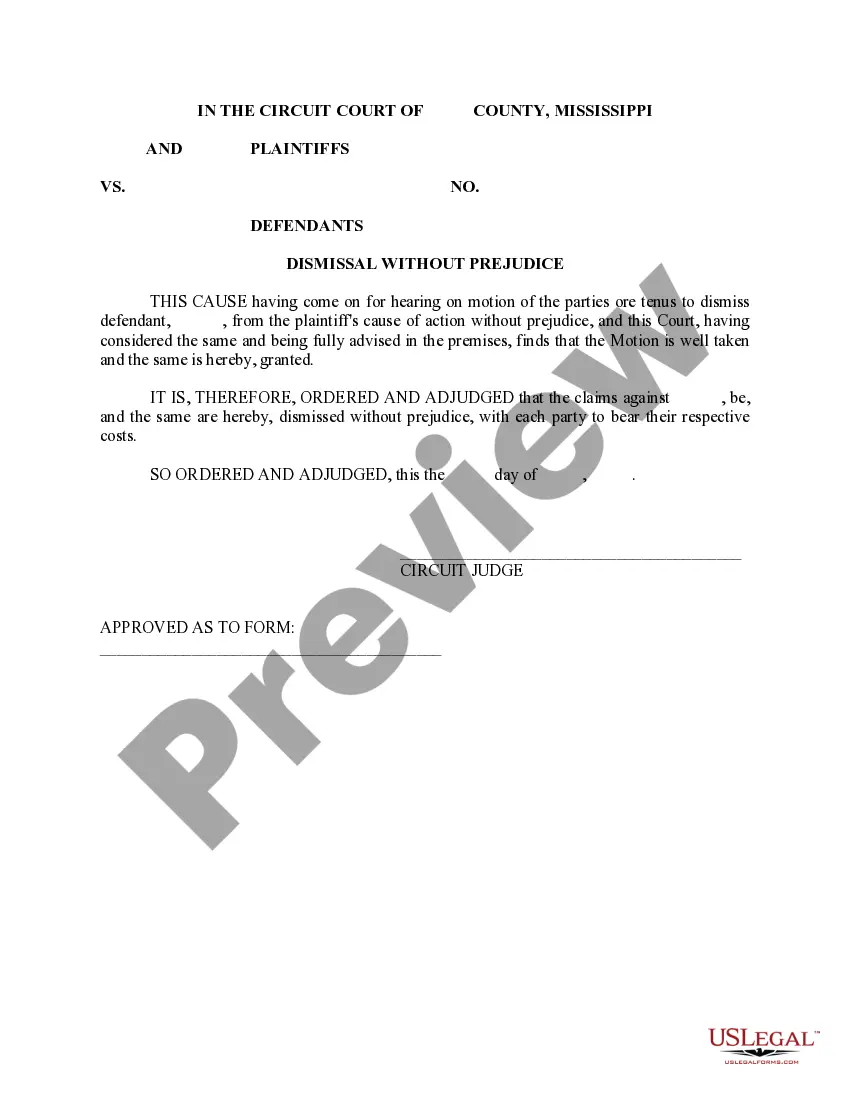
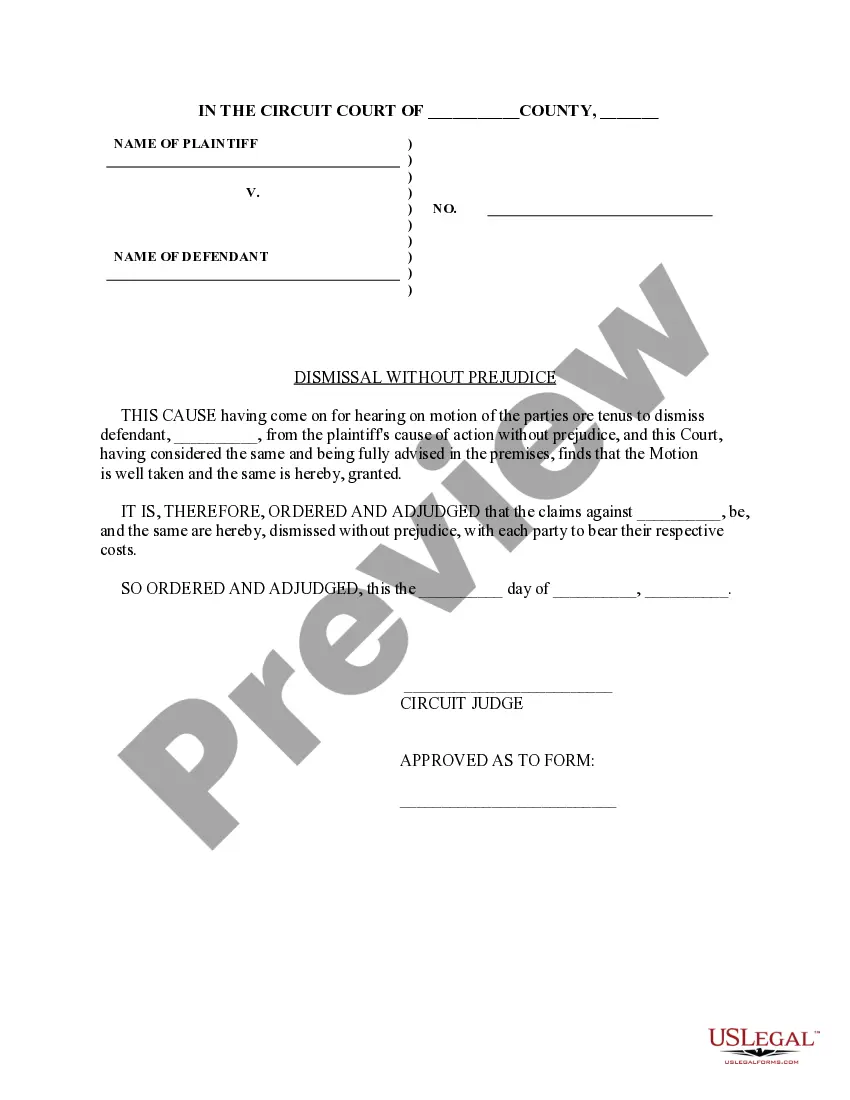
The Dismissal without Prejudice form is a legal document used to terminate a case without affecting the underlying claims. This form allows a party to dismiss a lawsuit while retaining the right to refile the same case in the future. Unlike a dismissal with prejudice, which permanently closes a case, a dismissal without prejudice ensures that the case can be pursued later, making it a crucial tool for parties who may want to reevaluate or gather more evidence before proceeding.
Main sections of this form
- Heading: Indicates the title of the document and its purpose.
- Case information: Includes the names of the parties involved and the case number.
- Statement of dismissal: A clear declaration intended to formally dismiss the case without prejudice.
- Signature section: Space for the party requesting the dismissal to sign and date the form.
- Judicial acknowledgement: Optional section if required by the court for validation purposes.
When to use this form
You would use the Dismissal without Prejudice form in scenarios such as when you wish to discontinue legal proceedings temporarily, avoid court costs while exploring settlement options, or address unresolved issues before moving forward with litigation. It is a useful form if you anticipate that you may need to bring the same claim again in the future.
Who can use this document
- Individuals who have initiated a lawsuit but wish to withdraw it for the time being.
- Attorneys representing clients who need to dismiss a case without permanently closing it.
- Bodies looking for more time to gather evidence or negotiate a settlement before re-filing.
Instructions for completing this form
- Identify the parties involved by including the names of the plaintiff and defendant.
- Enter the case number assigned by the court to your lawsuit.
- Clearly state your intention to dismiss the case without prejudice.
- Sign and date the form in the designated areas.
- File the completed form with the appropriate court clerk, following local submission protocols.
Is notarization required?
This form does not typically require notarization to be legally valid. However, some jurisdictions or document types may still require it. US Legal Forms provides secure online notarization powered by Notarize, available 24/7 for added convenience.
Get your form ready online
Our built-in tools help you complete, sign, share, and store your documents in one place.
Make edits, fill in missing information, and update formatting in US Legal Forms—just like you would in MS Word.
Download a copy, print it, send it by email, or mail it via USPS—whatever works best for your next step.
Sign and collect signatures with our SignNow integration. Send to multiple recipients, set reminders, and more. Go Premium to unlock E-Sign.
If this form requires notarization, complete it online through a secure video call—no need to meet a notary in person or wait for an appointment.
We protect your documents and personal data by following strict security and privacy standards.

Make edits, fill in missing information, and update formatting in US Legal Forms—just like you would in MS Word.

Download a copy, print it, send it by email, or mail it via USPS—whatever works best for your next step.

Sign and collect signatures with our SignNow integration. Send to multiple recipients, set reminders, and more. Go Premium to unlock E-Sign.

If this form requires notarization, complete it online through a secure video call—no need to meet a notary in person or wait for an appointment.

We protect your documents and personal data by following strict security and privacy standards.
Common mistakes to avoid
- Failing to include the case number or party names accurately.
- Not signing or dating the form, which can lead to rejection by the court.
- Assuming that additional notifications to other parties are unnecessary; they may be required by some jurisdictions.
Benefits of completing this form online
- Convenience: Access the form from anywhere at any time, allowing you to complete it at your pace.
- Editability: Easily modify the form to suit your specific legal situation before finalizing it.
- Reliability: The forms are prepared by licensed attorneys, ensuring they comply with current legal standards.
Summary of main points
- The Dismissal without Prejudice form allows for temporary withdrawal from a legal case without permanently affecting the right to refile.
- It is essential to provide complete and accurate information when completing this form.
- Review local jurisdiction rules to ensure compliance and understand filing procedures.
Looking for another form?

Form popularity
FAQ
When a lawsuit is dismissed with prejudice, the court is saying that it has made a final determination on the merits of the case, and that the plaintiff is therefore forbidden from filing another lawsuit based on the same grounds. See also: dismiss, dismissal without prejudice. courts.
The courts in California may dismiss a case either with or without prejudice. Cases dismissed with prejudice cannot be reopened.After a dismissal without prejudice, a case may be refiled in Los Angeles. This means that you can face the same charges again.
The courts in California may dismiss a case either with or without prejudice. Cases dismissed with prejudice cannot be reopened.After a dismissal without prejudice, a case may be refiled in Los Angeles. This means that you can face the same charges again.
A judge may dismiss a case without prejudice in order to allow for errors in the case presented to be addressed before it is brought back to court. A judge will dismiss a case with prejudice if he or she finds reason why the case should not move forward and should be permanently closed.
A non-suit is a dismissal without prejudice to re-filing the case. A dismissal with prejudice means that the case cannot be re-filed. Usually, a non-suit is taken when parties do not execute a release. Take care.
A case dismissed with prejudice is over and done with, once and for all, and can't be brought back to court. A case dismissed without prejudice means the opposite. It's not dismissed forever.When cases are dismissed involuntarily, it's by a judge, against the wishes of the person whose case is dismissed.
When a case is dismissed without prejudice, it leaves the plaintiff free to bring another suit based on the same grounds, for example if the defendant doesn't follow through on the terms of a settlement. See: dismiss, dismissal with prejudice.