Louisiana Letter to Opposing Counsel regarding Intent to File Motion to Dismiss
What is this form?
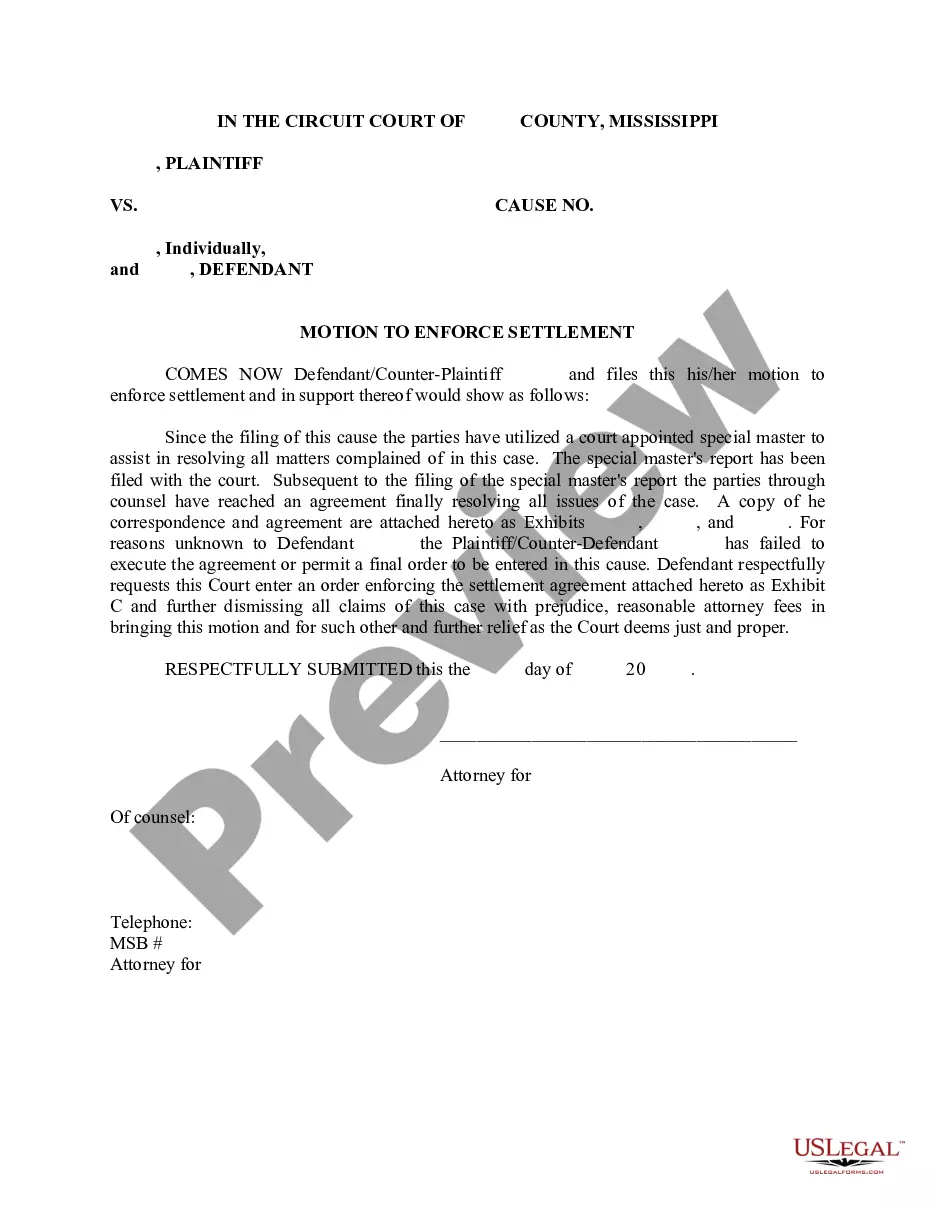
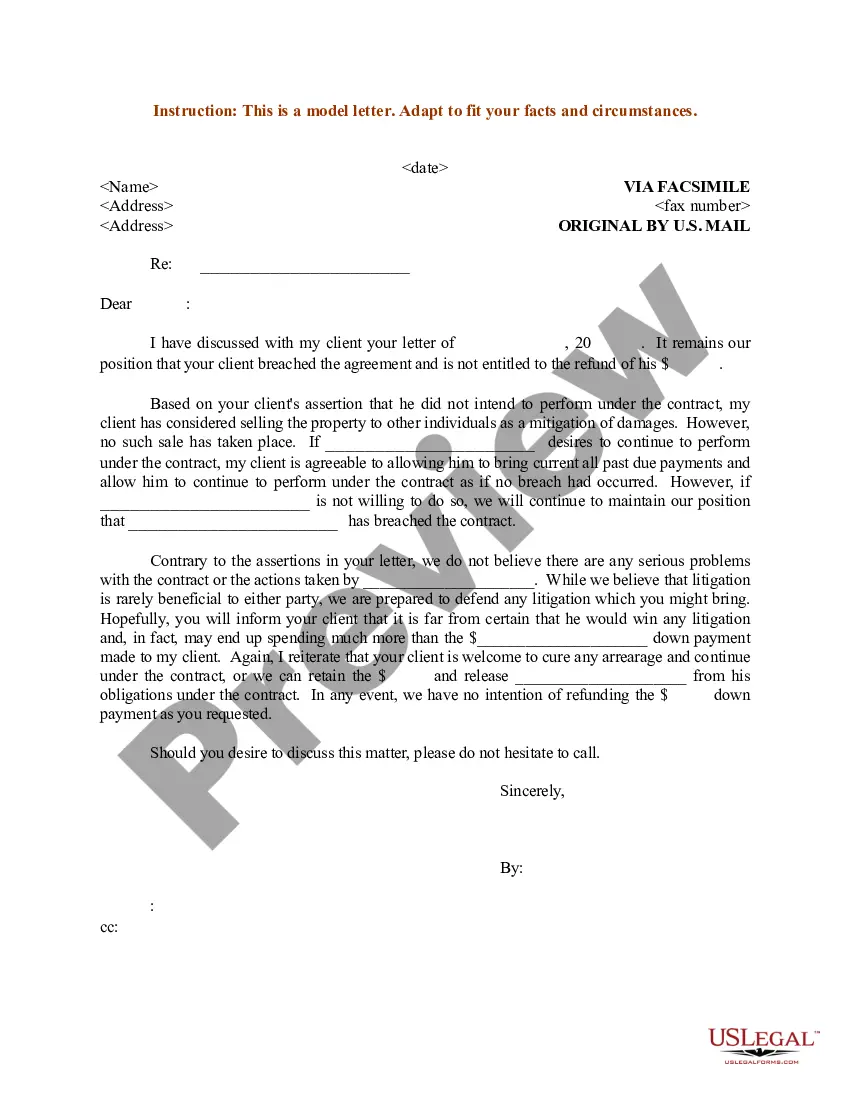
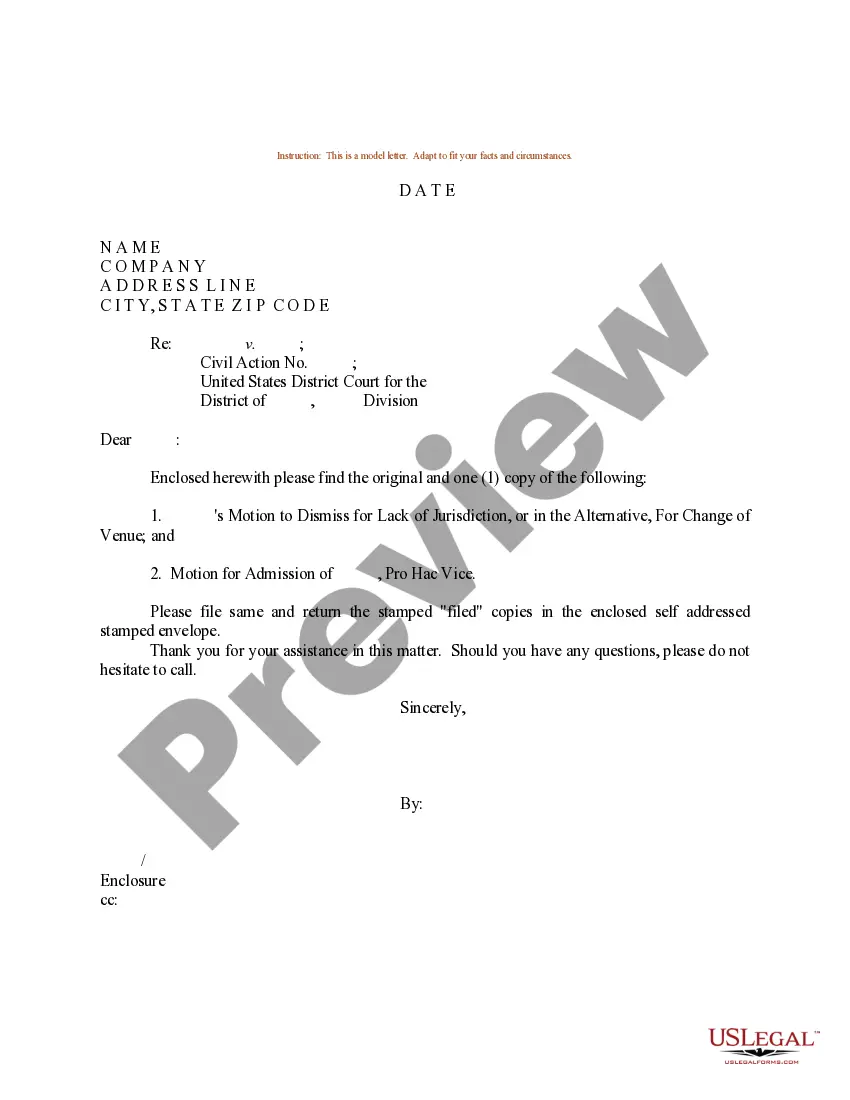
This Letter to Opposing Counsel regarding Intent to File Motion to Dismiss is a formal communication from an attorney to opposing counsel. It informs them of the intention to file a Motion to Dismiss on behalf of the client, highlighting that the client has sold their interest in the property in question and is no longer a party to the lawsuit. This letter serves as a notice and provides opposing counsel the opportunity to raise any objections before the motion is filed, thereby differing from standard pleadings or notices.
What’s included in this form
- Contact information of the attorney sending the letter.
- Reference to the case title and number.
- Statement of intent to file a Motion to Dismiss.
- Disclosure of the clientâs change in status regarding the property.
- Deadline for opposing counsel to object to the motion.
When to use this form
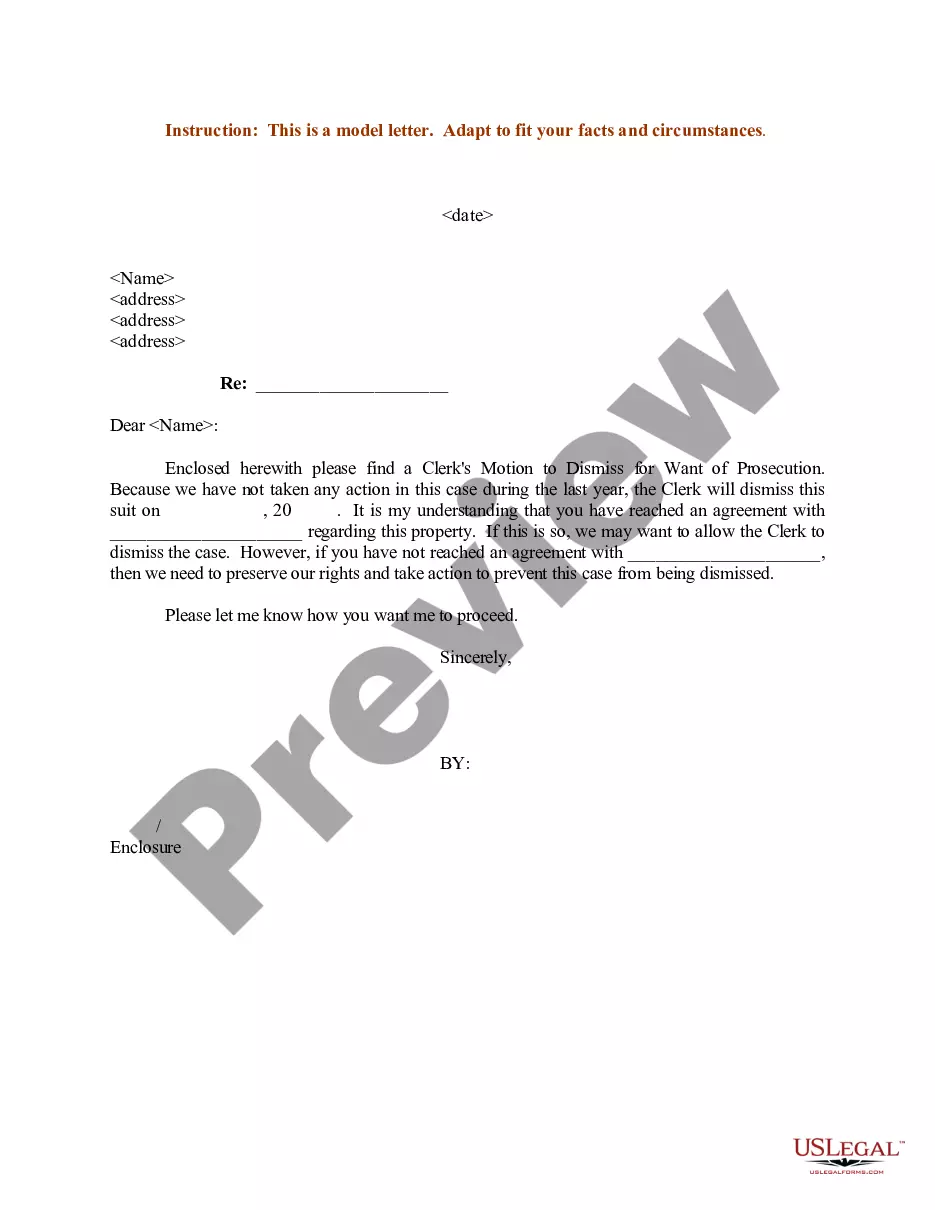
This form is utilized when an attorney wishes to notify opposing counsel of their intent to dismiss a case due to changes in the client's status, such as the sale of an interest in property involved in the lawsuit. It is particularly important in legal disputes where clarification of party status is necessary to avoid unnecessary litigation.
Who this form is for
This form is intended for:
- Attorneys representing clients in legal disputes involving property.
- Lawyers seeking to responsibly communicate changes in party status to opposing counsel.
- Legal professionals who need to provide notice of their intent to the other side before filing a motion.
How to prepare this document
- Enter the date and your contact information at the top of the letter.
- Fill in the case title and number appropriately.
- Draft the statement of intent to file the Motion to Dismiss.
- Clearly articulate the reasons for dismissing the case, such as the sale of the property.
- Set a deadline for opposing counsel to respond with any objections.
- Sign the letter and include any necessary enclosures.
Notarization requirements for this form
This form does not typically require notarization unless specified by local law. It is advisable to review local regulations to ensure compliance and confirm that the document is fully effective.
Get your form ready online
Our built-in tools help you complete, sign, share, and store your documents in one place.
Make edits, fill in missing information, and update formatting in US Legal Forms—just like you would in MS Word.
Download a copy, print it, send it by email, or mail it via USPS—whatever works best for your next step.
Sign and collect signatures with our SignNow integration. Send to multiple recipients, set reminders, and more. Go Premium to unlock E-Sign.
If this form requires notarization, complete it online through a secure video call—no need to meet a notary in person or wait for an appointment.
We protect your documents and personal data by following strict security and privacy standards.

Make edits, fill in missing information, and update formatting in US Legal Forms—just like you would in MS Word.

Download a copy, print it, send it by email, or mail it via USPS—whatever works best for your next step.

Sign and collect signatures with our SignNow integration. Send to multiple recipients, set reminders, and more. Go Premium to unlock E-Sign.

If this form requires notarization, complete it online through a secure video call—no need to meet a notary in person or wait for an appointment.

We protect your documents and personal data by following strict security and privacy standards.
Common mistakes
- Failing to provide complete contact information for all parties involved.
- Neglecting to specify the deadline for objections to the motion.
- Not clearly stating the change in party status or the rationale for the Motion to Dismiss.
- Omitting any necessary enclosures that may support the motion.
Benefits of using this form online
- Immediate access to a professionally drafted form tailored to your needs.
- Easy download and editing capabilities to customize the letter as required.
- Ensures compliance with legal standards, reducing the risk of errors.
- Convenient and time-saving, allowing you to focus on other legal tasks.
Summary of main points
- This letter formally notifies opposing counsel of the intent to file a Motion to Dismiss.
- It is crucial to state the reason for the motion and provide an appropriate response timeframe.
- This form is appropriate for attorneys and serves to ensure clear communication in legal disputes.
Looking for another form?

Form popularity
FAQ
Fill out your court forms. Fill out a Request for Dismissal (Form CIV-110 ). File your forms at the courthouse where you filed your case. Serve the other side with a copy of the dismissal papers. File the Notice of Entry of Dismissal and Proof of Service (Form CIV-120)
You simply need to request that the court deny the defendant's motion to dismiss. For example, you could write the following: For the foregoing reasons and all the others discussed in Plaintiff's Complaint, the present Motion to Dismiss should be denied.
You simply need to request that the court deny the defendant's motion to dismiss. For example, you could write the following: For the foregoing reasons and all the others discussed in Plaintiff's Complaint, the present Motion to Dismiss should be denied.
An order to dismiss a case can occur when the appellate court, having reversed the conviction on the grounds of a bad search or arrest, examines what's left of the case and determines that there is not enough evidence to warrant another trial.
Fill out the forms. You have to fill out at least 2 forms, maybe more, to file your opposition. File the forms. Turn in your completed forms by mail or efiling. Serve the other party. Get ready for the hearing. Prepare an order.
Overview. If one party to a case has filed a motion with the court, the other side can file an opposition. An opposition is a written statement explaining to the judge why the other side is not entitled to whatever he is asking for in his motion. It is your opportunity to oppose the other side's request.
The judge will either grant or deny the motion. If it is granted, the case is over and the defendant wins. If the motion is denied, as it usually is, the defense is given the opportunity to present its evidence.
You've written a motion and submitted it to the court. The court has set it for oral argument - now what? Read the rules. Know the judge. Review your written motion. Shepardize your cases again. Review opposing counsel's written motion. Note cases that are directly opposed to your argument. Prepare your argument.
Fill out your court forms. Fill out a Request for Dismissal (Form CIV-110 ). File your forms at the courthouse where you filed your case. Serve the other side with a copy of the dismissal papers. File the Notice of Entry of Dismissal and Proof of Service (Form CIV-120)