Palliative Care Services Agreement
What is this form?
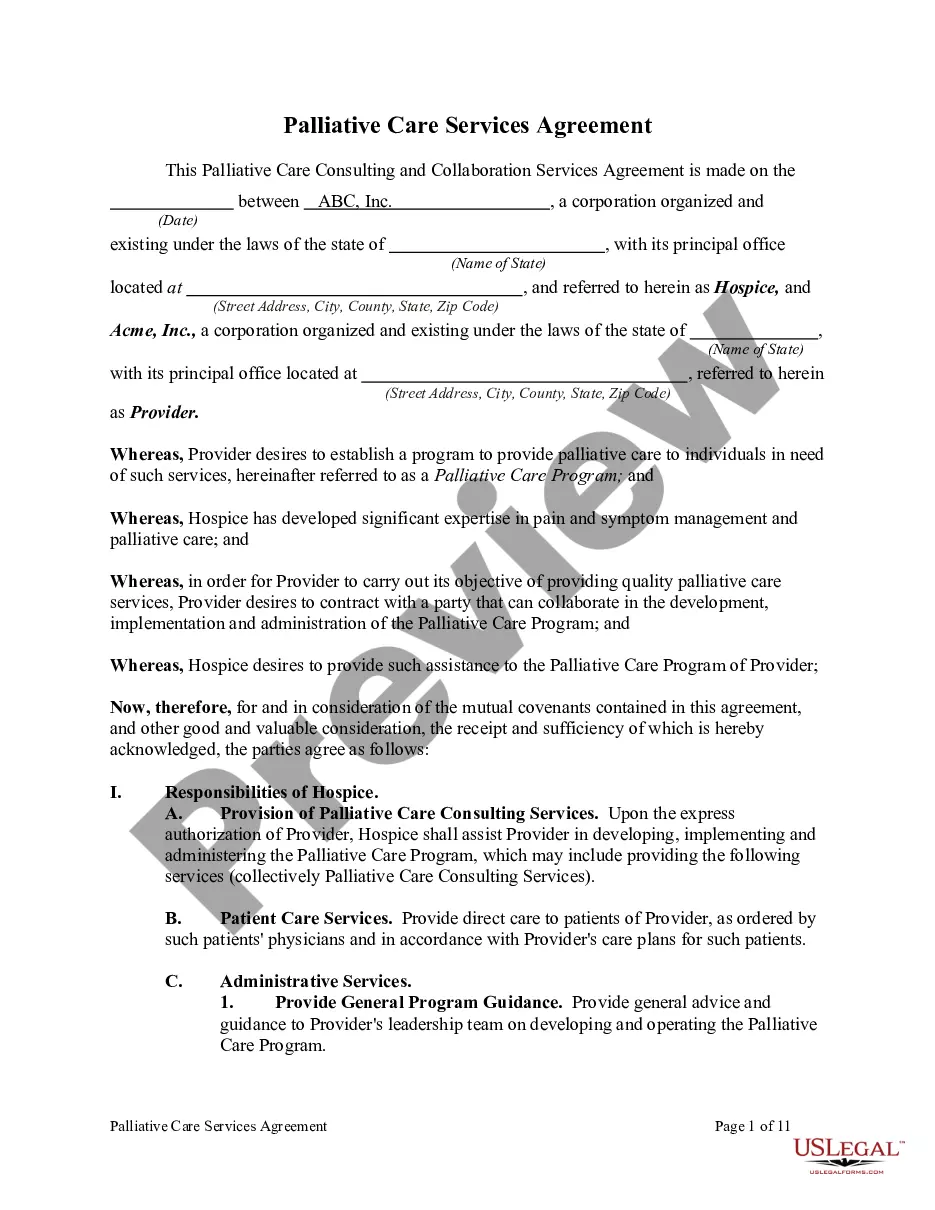
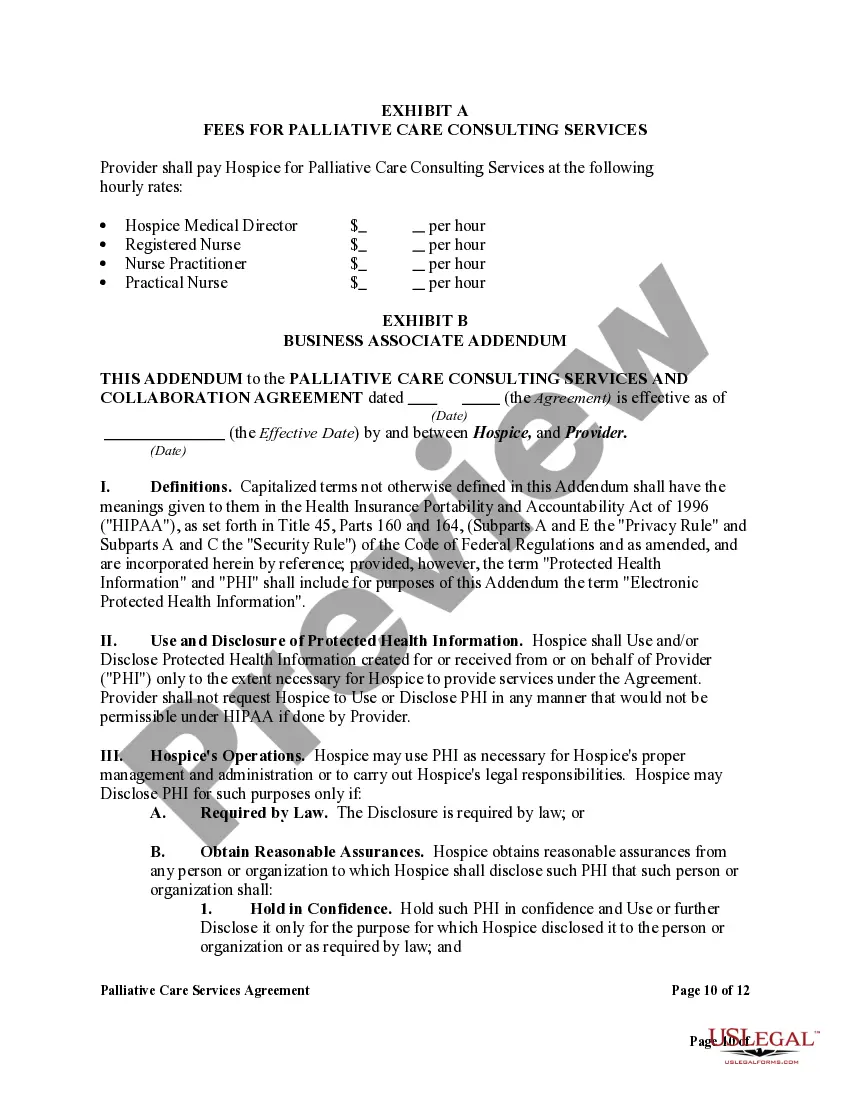
The Palliative Care Services Agreement is a legal document that outlines the responsibilities between a hospice and a service provider to deliver coordinated palliative care. Unlike hospice care, which is typically limited to those at the end of life, palliative care can also support patients with serious illnesses who may not be eligible for hospice services. This agreement ensures proper collaboration and delineates the roles in patient care management and administrative support, focusing on comfort and quality of life for patients suffering from progressive, incurable illnesses.
Key parts of this document
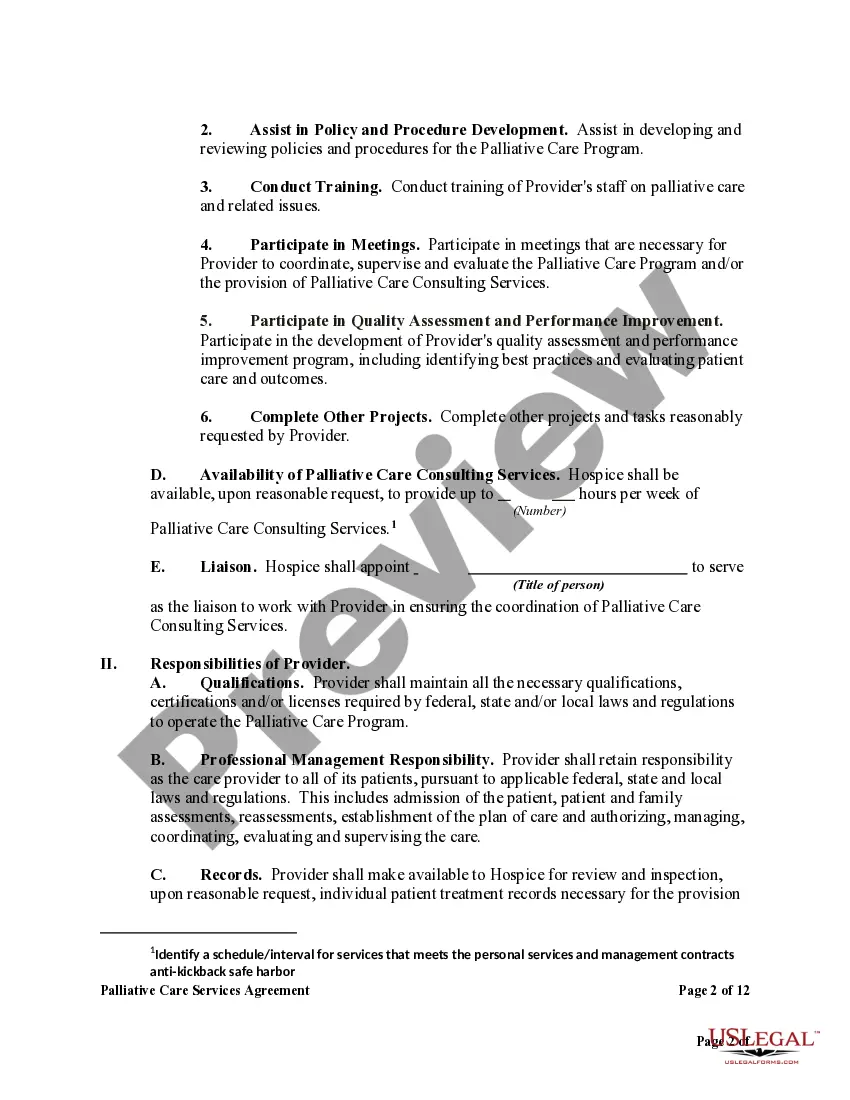
- Responsibilities of the hospice in providing consulting and patient care services.
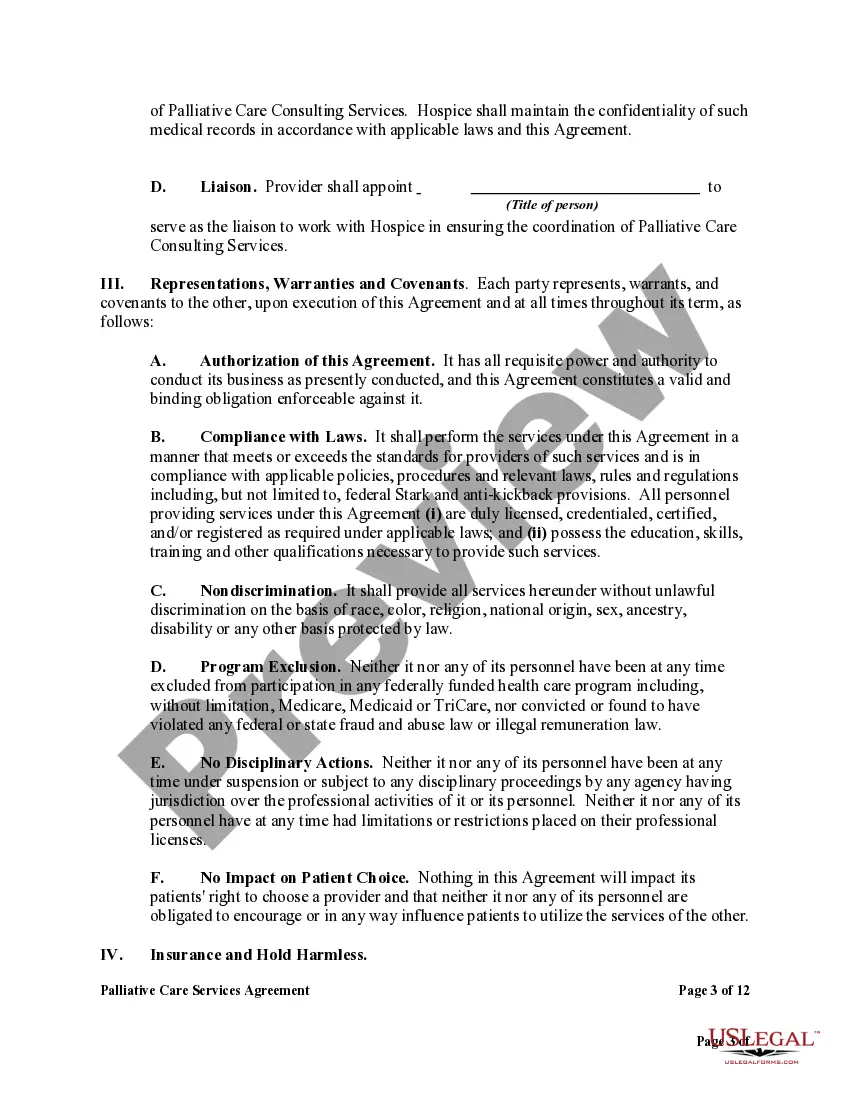
- Provider's obligations regarding patient care management and compliance with laws.
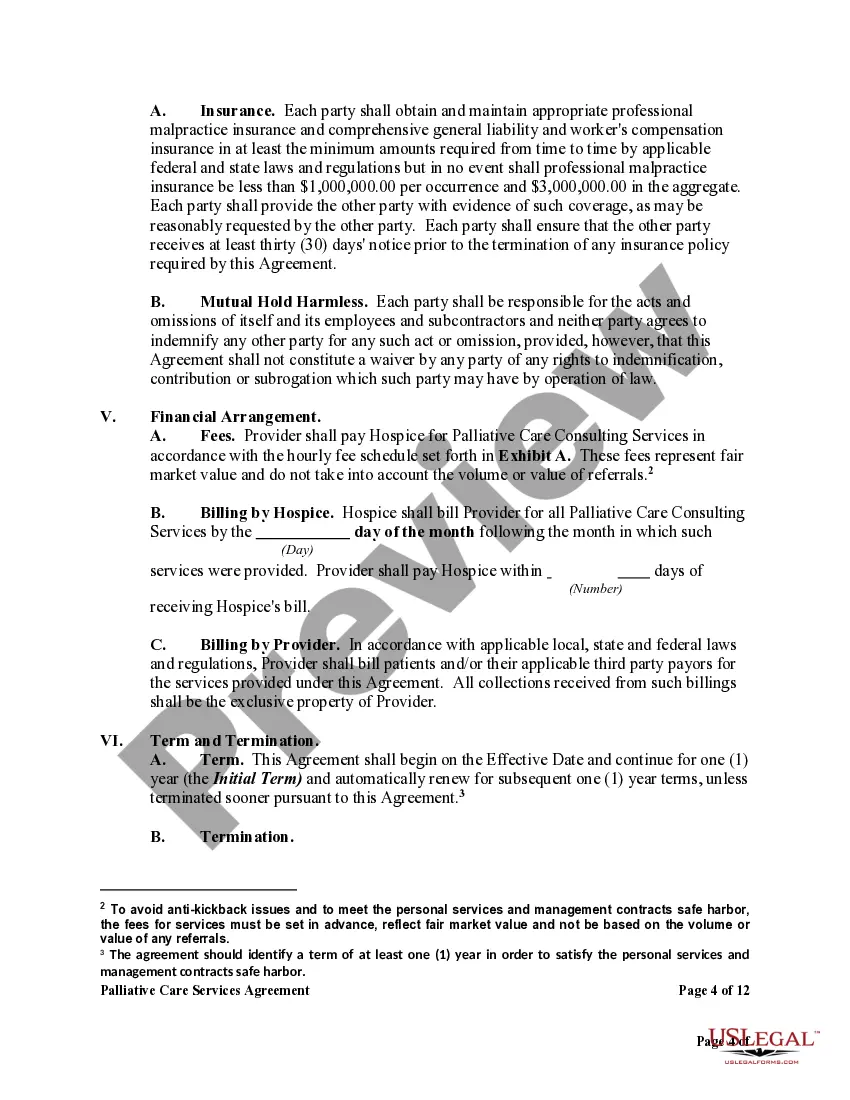
- Insurance requirements for both parties, including malpractice and liability coverage.
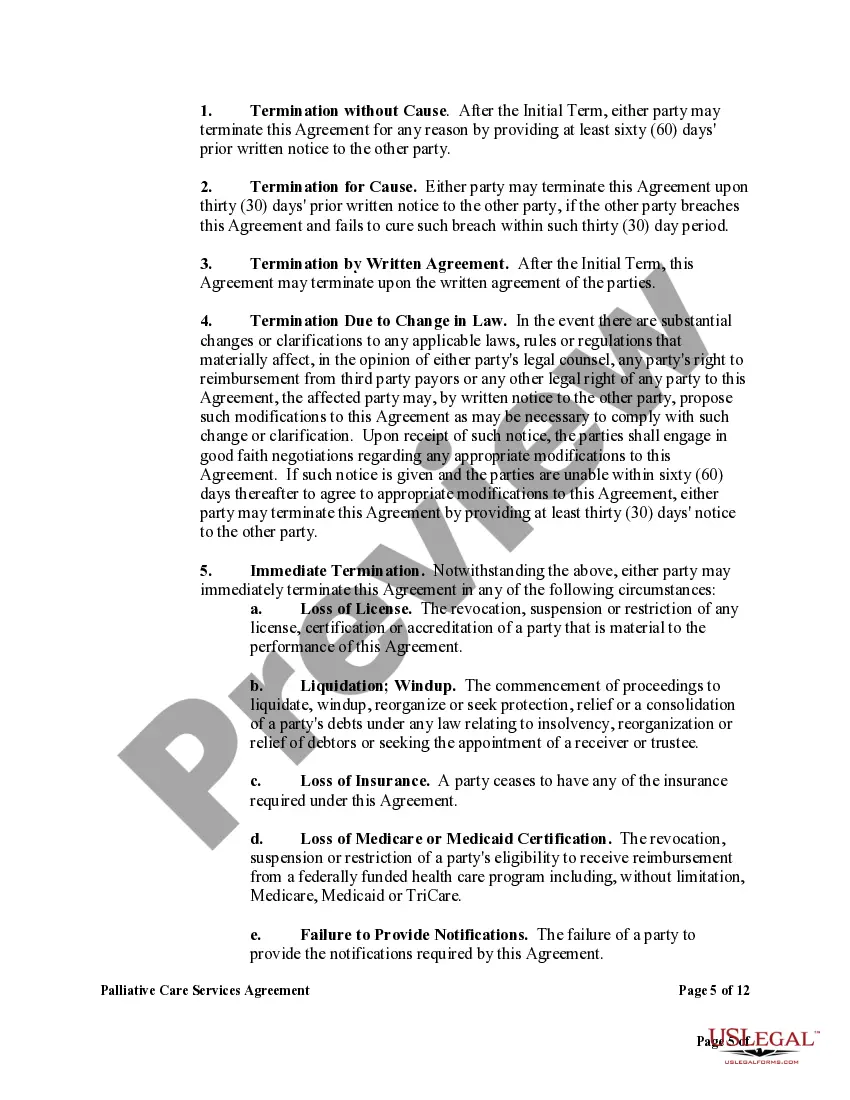
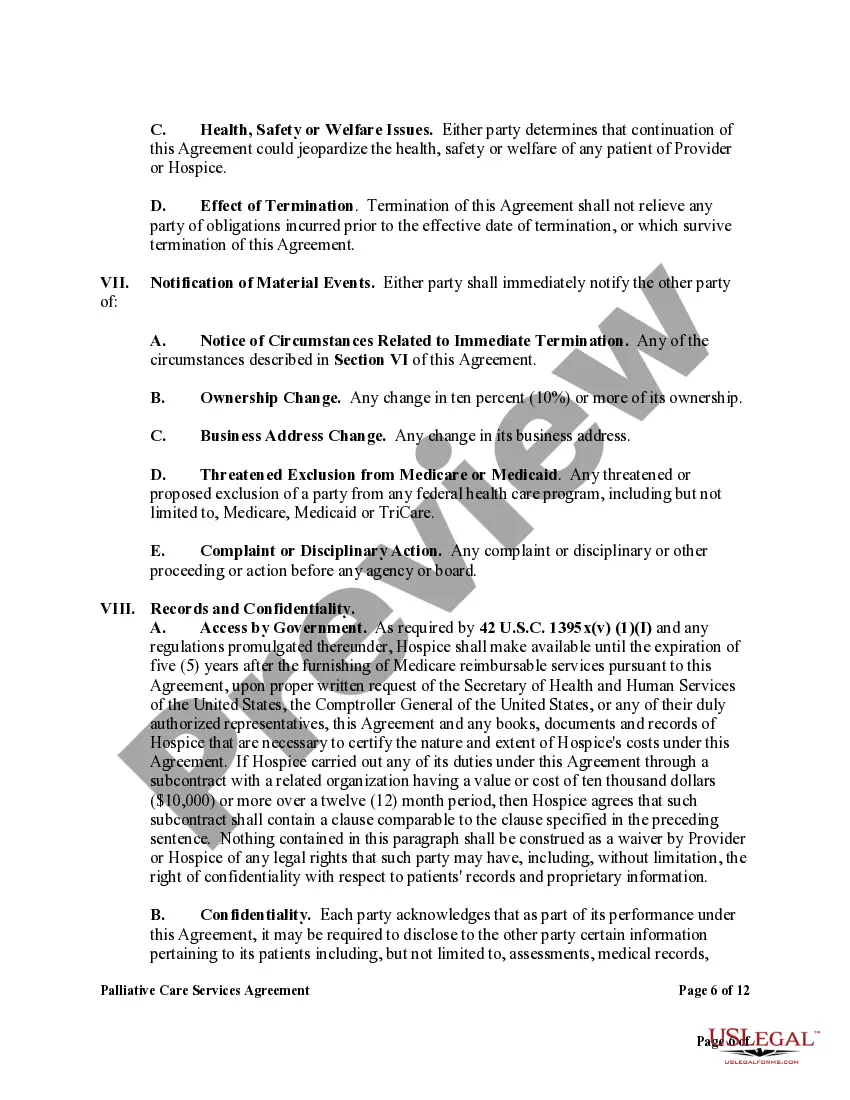
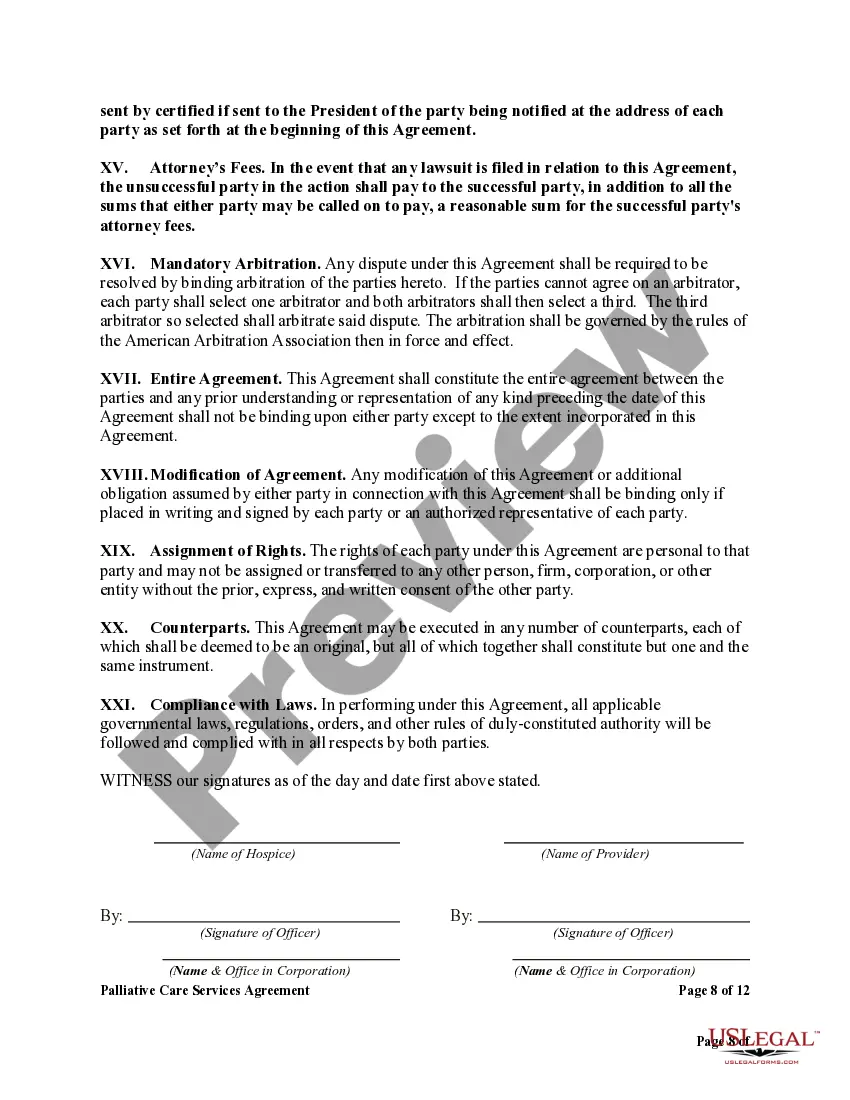
- Termination conditions detailing how and when the agreement can be ended.
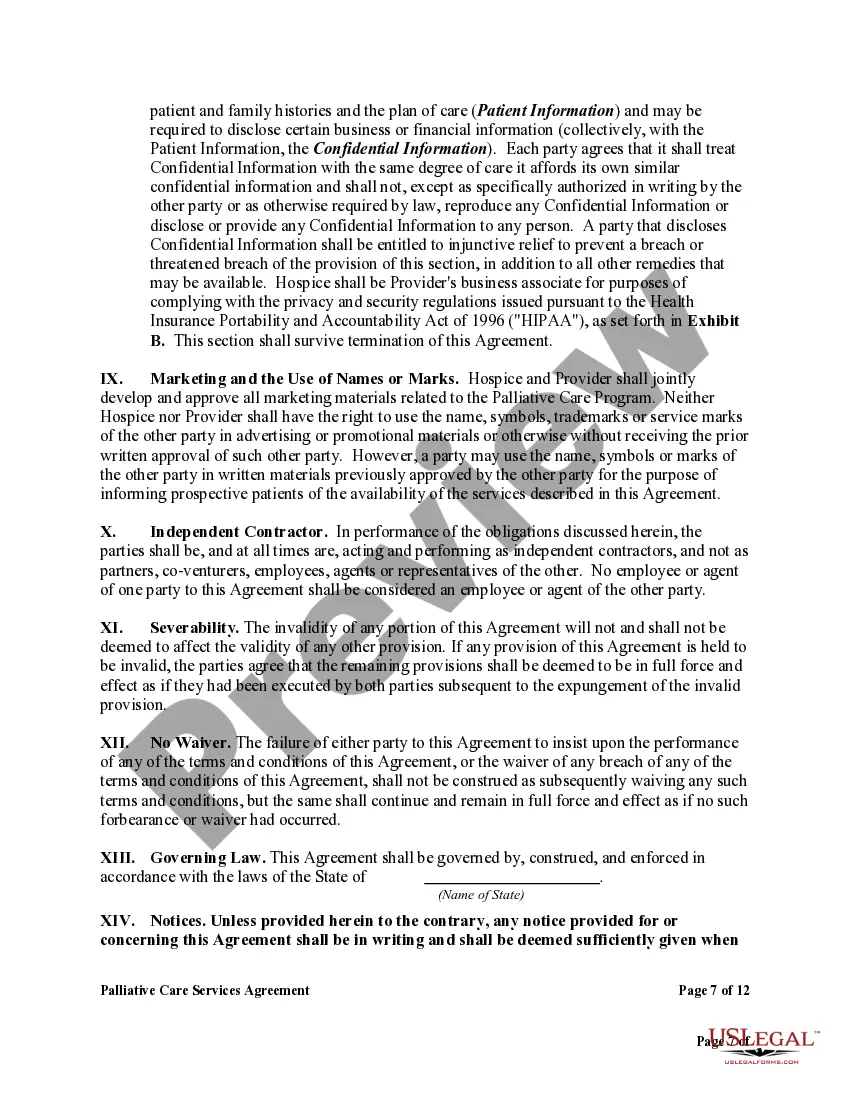
- Confidentiality clauses protecting patient information and data sharing protocols.




Common use cases
This form should be used when a hospice organization wishes to provide palliative care services to a provider managing patients with serious illnesses. It is essential when establishing a collaborative arrangement to ensure all parties understand their roles, responsibilities, and regulatory compliance in delivering comprehensive care aimed at symptom management and patient comfort.
Intended users of this form
- Healthcare providers seeking to partner with hospices for palliative care services.
- Hospices looking to define their roles and responsibilities in a palliative care program.
- Administrators involved in the development and oversight of palliative care initiatives.
How to complete this form
- Identify the parties involved, including the hospice and the service provider.
- Clarify the scope of services to be provided under the palliative care program.
- Outline the responsibilities of both the hospice and the provider.
- Specify the insurance and liability requirements for both parties.
- Include the terms and conditions for contract termination and modification.
Is notarization required?
Notarization is not commonly needed for this form. However, certain documents or local rules may make it necessary. Our notarization service, powered by Notarize, allows you to finalize it securely online anytime, day or night.
Get your form ready online
Our built-in tools help you complete, sign, share, and store your documents in one place.
Make edits, fill in missing information, and update formatting in US Legal Forms—just like you would in MS Word.
Download a copy, print it, send it by email, or mail it via USPS—whatever works best for your next step.
Sign and collect signatures with our SignNow integration. Send to multiple recipients, set reminders, and more. Go Premium to unlock E-Sign.
If this form requires notarization, complete it online through a secure video call—no need to meet a notary in person or wait for an appointment.
We protect your documents and personal data by following strict security and privacy standards.

Make edits, fill in missing information, and update formatting in US Legal Forms—just like you would in MS Word.

Download a copy, print it, send it by email, or mail it via USPS—whatever works best for your next step.

Sign and collect signatures with our SignNow integration. Send to multiple recipients, set reminders, and more. Go Premium to unlock E-Sign.

If this form requires notarization, complete it online through a secure video call—no need to meet a notary in person or wait for an appointment.

We protect your documents and personal data by following strict security and privacy standards.
Common mistakes to avoid
- Failing to clearly define the roles and responsibilities of each party.
- Not adhering to state-specific regulations regarding patient care documentation.
- Overlooking necessary insurance requirements mandated by law.
- Neglecting to establish a clear termination process, leading to disputes.
Advantages of online completion
- Convenience of downloading and customizing the agreement as per specific needs.
- Accessibility to legal templates drafted by licensed attorneys, ensuring reliability.
- Streamlined process for completing and filing necessary documentation.
- Ability to save and store forms securely for future use or modifications.
Legal use & context
- This agreement is legally binding once signed, assuming all parties have the legal authority to enter into such contracts.
- It must comply with local, state, and federal healthcare regulations, particularly those related to Medicare and Medicaid.
- Documentation of responsibilities and confidentiality enhances legal protection for all parties involved.
Summary of main points
- The Palliative Care Services Agreement is essential for formalizing partnerships in delivering palliative care.
- Clear definition of roles prevents misunderstandings and promotes effective collaboration.
- Compliance with relevant laws and regulations is crucial for the legality and effectiveness of the agreement.
Looking for another form?




Form popularity
FAQ
Results: Six essential elements of quality palliative homecare were common across the studies: (1) Integrated teamwork; (2) Management of pain and physical symptoms; (3) Holistic care; (4) Caring, compassionate, and skilled providers; (5) Timely and responsive care; and (6) Patient and family preparedness.
Principle 1: Care is patient, family and carer centred.Principle 2: Care provided is based on assessed need.Principle 3: Patients, families and carers have access to local and networked services to meet their needs.Principle 4: Care is evidence-based, clinically and culturally safe and effective.Principles Palliative Care Blueprint - Agency for Clinical Innovation\naci.health.nsw.gov.au > Home > The Blueprint
Hospice Care at Home. At VITAS we offer several key services that support patients and their families so we can provide hospice care in the place that's most comfortable: home.Continuous Hospice Care.Inpatient Hospice Care.Respite Care.
Principle 1: Care is patient, family and carer centred. Principle 2: Care provided is based on assessed need. Principle 3: Patients, families and carers have access to local and networked services to meet their needs. Principle 4: Care is evidence-based, clinically and culturally safe and effective.
Provides relief from pain and other distressing symptoms. Affirms life and regards dying as a normal process. Intends neither to hasten or postpone death. Integrates the psychological and spiritual aspects of patient care. Offers a support system to help patients live as actively as possible until death.
Hospitalists providing palliative care can report initial hospital care codes (99221-99223) for their first encounter with the patient.
Areas where palliative care can help. Palliative treatments vary widely and often include:Social. You might find it hard to talk with your loved ones or caregivers about how you feel or what you are going through.Emotional.Spiritual.Mental.Financial.Physical.Palliative care after cancer treatment.Types of Palliative Care Cancer.Net\nwww.cancer.net > physical-emotional-and-social-effects-cancer > types-pall...
Areas where palliative care can help. Palliative treatments vary widely and often include: Social. You might find it hard to talk with your loved ones or caregivers about how you feel or what you are going through. Emotional. Spiritual. Mental. Financial. Physical. Palliative care after cancer treatment.