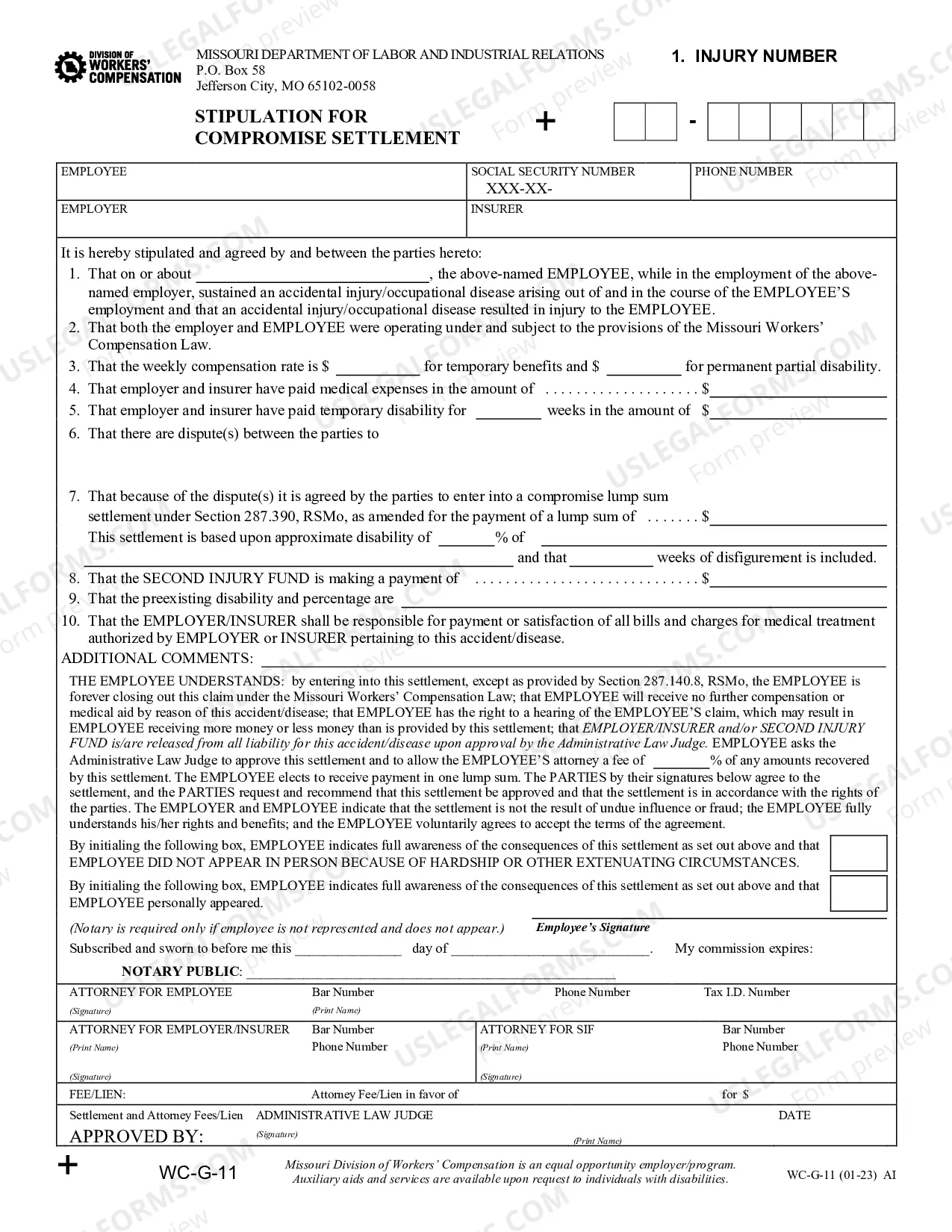
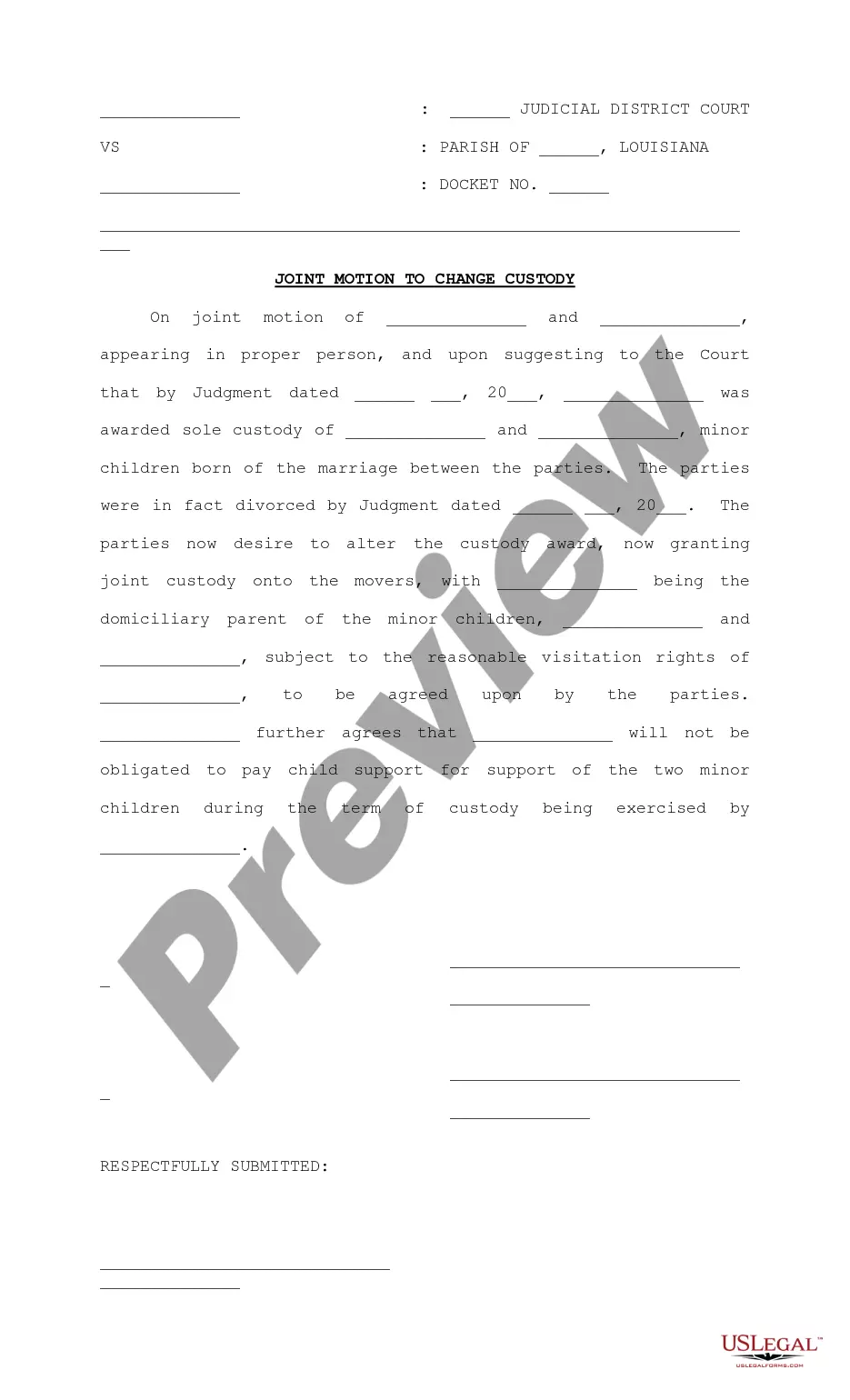
Louisiana Joint Motion to Change Custody
Understanding this form
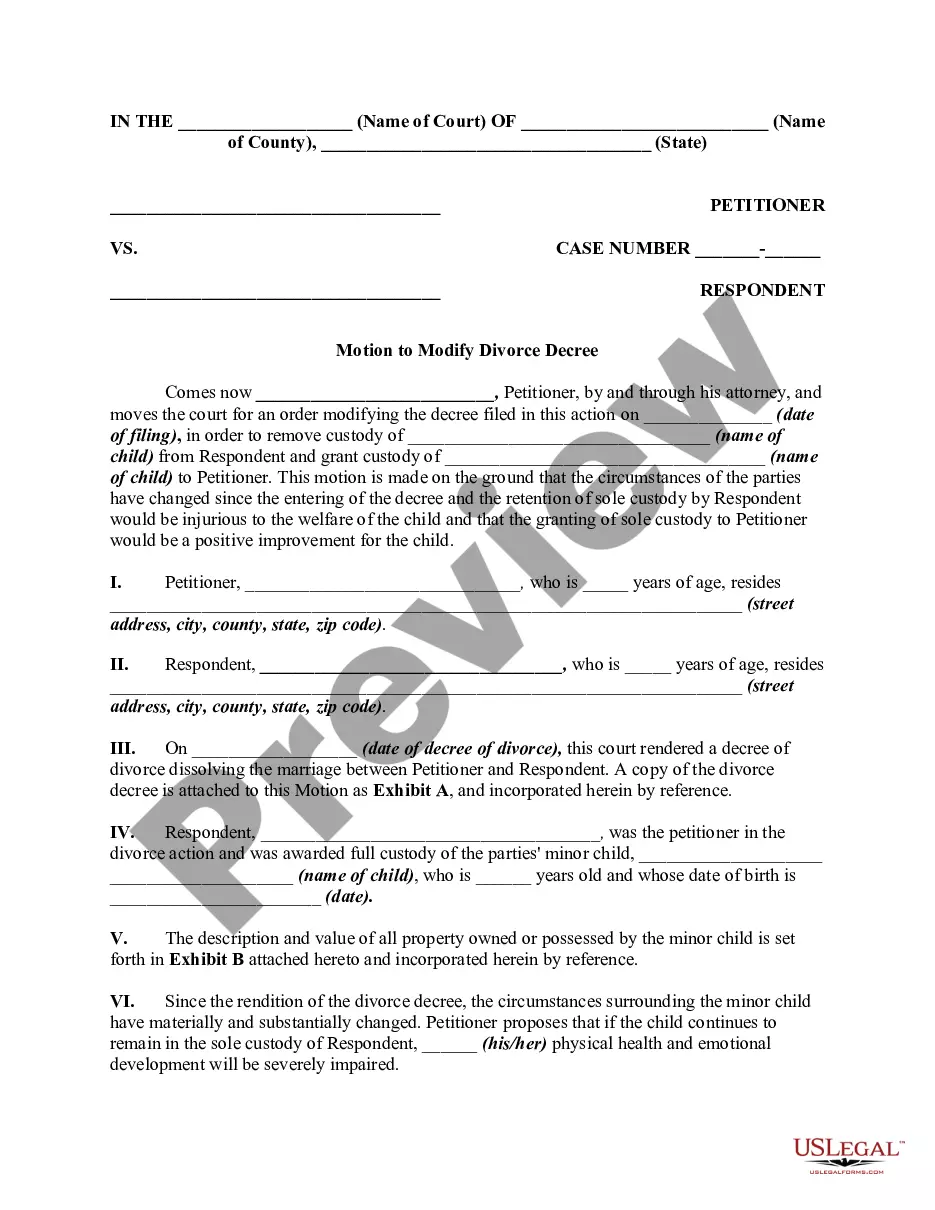
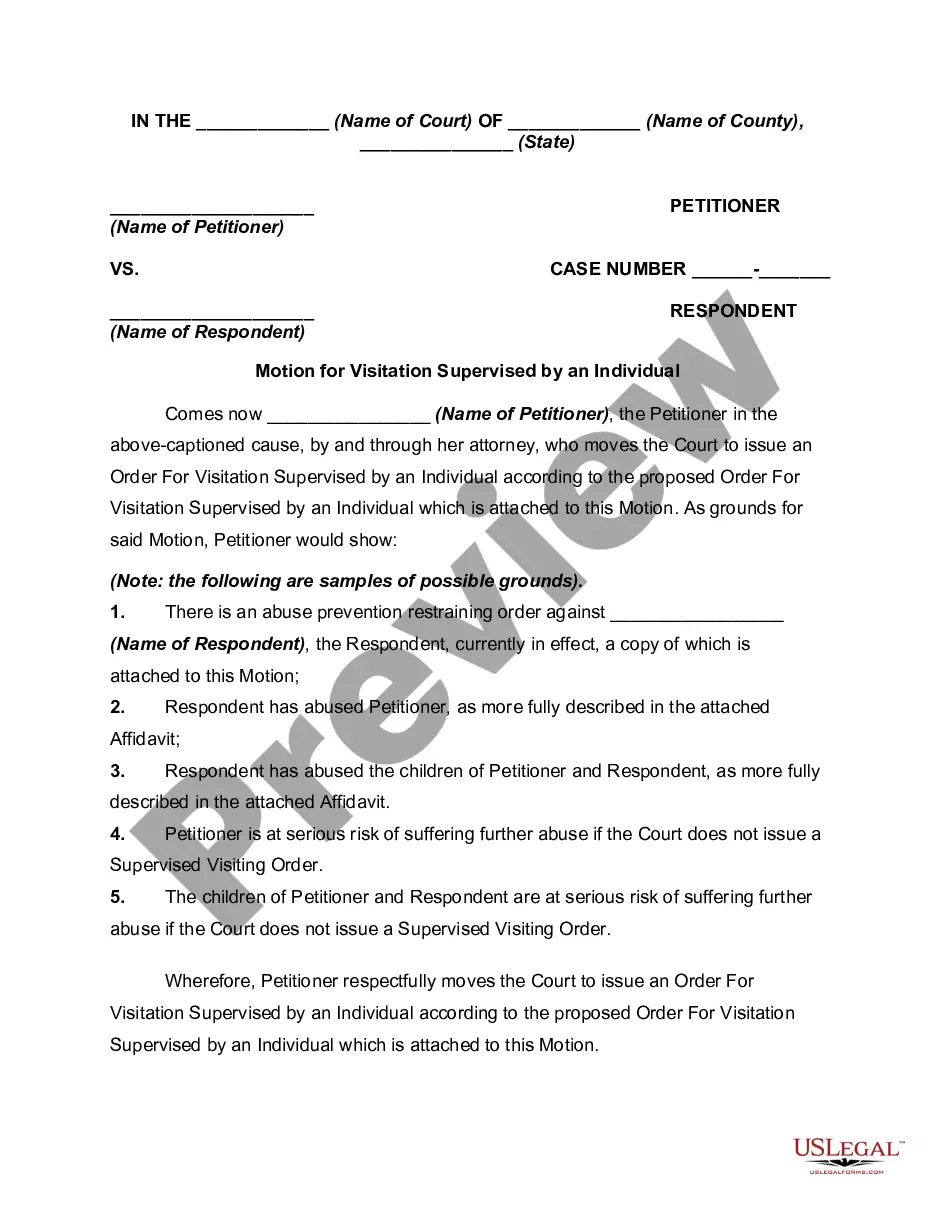
The Joint Motion to Change Custody is a legal document used by parents who wish to modify an existing custody arrangement awarded by a court. Unlike initial custody forms, this motion is filed jointly by both parents to request a transition from sole custody to joint custody, specifying one parent as the domiciliary parent and outlining reasonable visitation rights for the other parent. This form facilitates a collaborative approach to custody management, ensuring that both parents agree on the changes being requested.
Form components explained
- Identification of the parties involved in the custody arrangement.
- Details about the original custody order and the desired changes.
- Designation of one parent as the domiciliary (primary) parent.
- Outline of visitation rights for the other parent, to be mutually agreed upon.
- Agreement regarding child support obligations, if applicable.
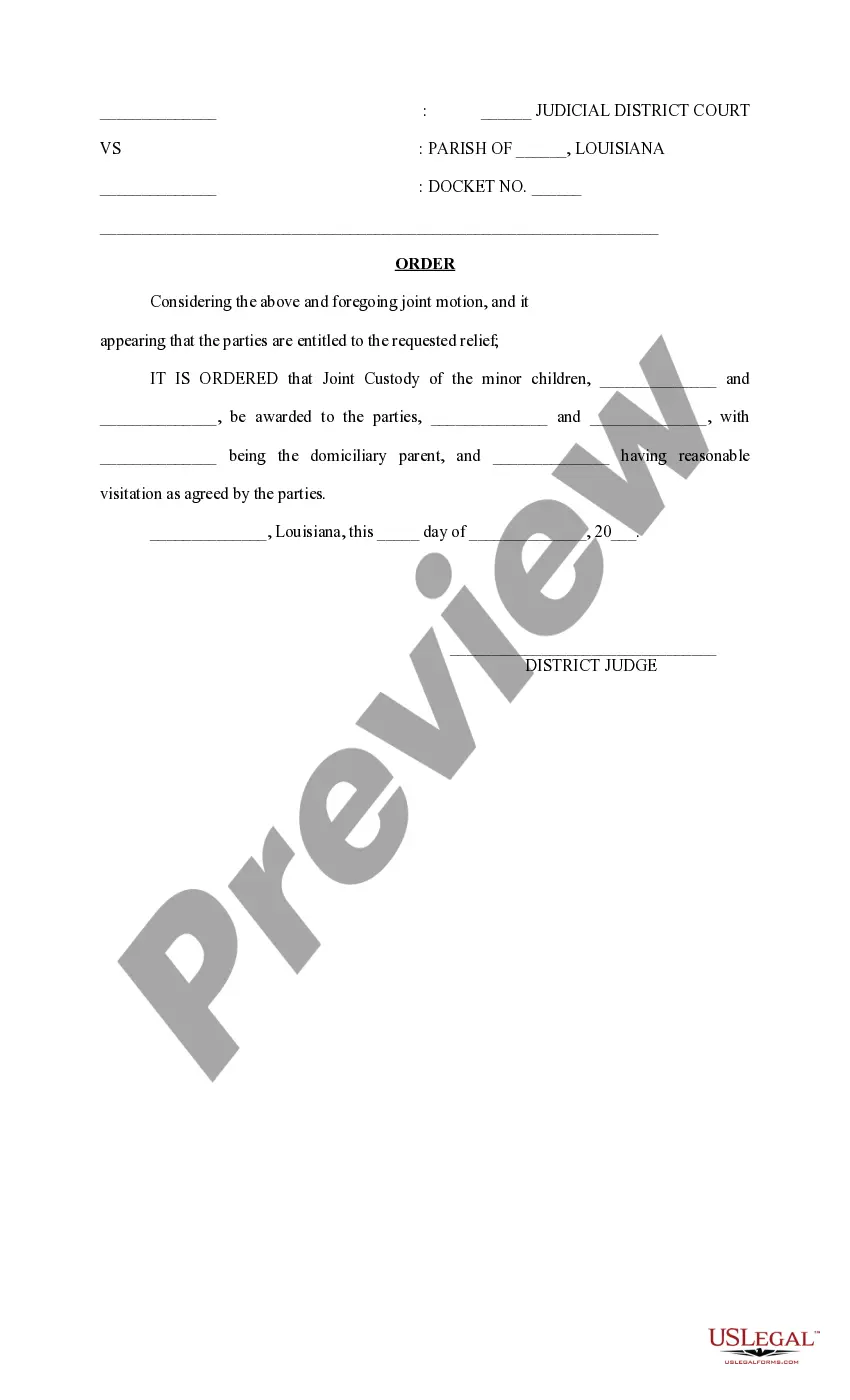
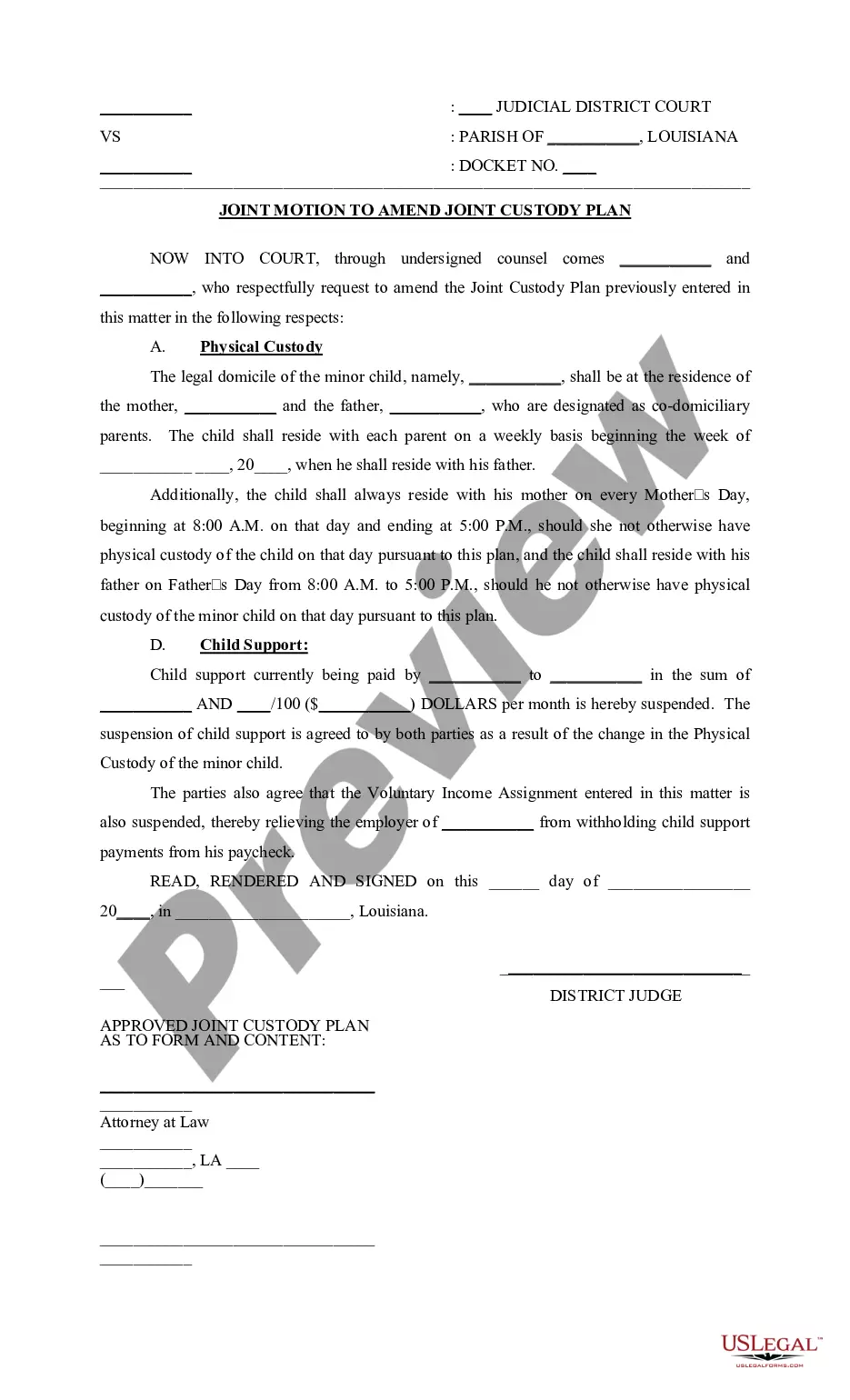

When this form is needed
This form is commonly used in situations where both parents agree that a change in custody is in the best interest of their children. It is suitable when one parent previously had sole custody and both now wish to share joint custody. Circumstances might include a positive change in the living conditions of one parent or their ability to take on shared responsibility for the children's upbringing. It is important that both parents consent to the motion for the process to proceed smoothly.
Intended users of this form
This form is intended for:
- Parents who currently share custody and wish to change the agreement.
- Parents who previously agreed to sole custody and now seek joint custody.
- Individuals representing themselves in court, without an attorney.
How to complete this form
- Identify both parents by filling in their names at the beginning of the form.
- Provide the original custody judgment details, including the date and court docket number.
- Specify who will be the domiciliary parent and outline the visitation rights agreed upon.
- Include any agreements regarding child support as part of the motion.
- Sign and date the form in the presence of a witness or notary, if required.
Is notarization required?
This form does not typically require notarization unless specified by local law. However, it's advisable to confirm requirements with your local court or an attorney to ensure compliance with all legal standards.
Get your form ready online
Our built-in tools help you complete, sign, share, and store your documents in one place.
Make edits, fill in missing information, and update formatting in US Legal Forms—just like you would in MS Word.
Download a copy, print it, send it by email, or mail it via USPS—whatever works best for your next step.
Sign and collect signatures with our SignNow integration. Send to multiple recipients, set reminders, and more. Go Premium to unlock E-Sign.
If this form requires notarization, complete it online through a secure video call—no need to meet a notary in person or wait for an appointment.
We protect your documents and personal data by following strict security and privacy standards.

Make edits, fill in missing information, and update formatting in US Legal Forms—just like you would in MS Word.

Download a copy, print it, send it by email, or mail it via USPS—whatever works best for your next step.

Sign and collect signatures with our SignNow integration. Send to multiple recipients, set reminders, and more. Go Premium to unlock E-Sign.

If this form requires notarization, complete it online through a secure video call—no need to meet a notary in person or wait for an appointment.

We protect your documents and personal data by following strict security and privacy standards.
Mistakes to watch out for
- Failing to provide complete and accurate details of the original custody judgment.
- Not obtaining both parents' signatures on the form.
- Neglecting to specify visitation terms clearly.
- Overlooking local court rules on filing procedures.
Advantages of online completion
- Convenience of accessing and downloading the form from home.
- Editability allows parents to tailor the document to their specific situation.
- Reliability of having professionally drafted forms reviewed by licensed attorneys.
Quick recap
- The Joint Motion to Change Custody is essential for parents wanting to modify existing custody arrangements to joint custody.
- Both parents must agree and file the motion together for it to be valid.
- It is important to ensure all information entered reflects the needs and best interests of the children.
Looking for another form?
Form popularity
FAQ
Petition. The first step involves filling out a form with the court. Service. This the legal term that refers to actually giving the other parent notice that you are requesting a change. Filing. Once all the paperwork is completed, it must be filed with the court. Scheduling. Court.
Fill out your court forms. Have your forms reviewed. Make at least 2 copies of all your forms. File your forms with the court clerk. Serve your papers on the other parent. File your Proof of Service. Go to your court hearing.
Fill out your court forms. Have your forms reviewed. Make at least 2 copies of all your forms. File your forms with the court clerk. Serve your papers on the other parent. File your Proof of Service. Go to your court hearing.
Modifying Child Support Without Going to Court It is possible to have your child support order modified without having to go to court--but only in very limited circumstances. Some judges include a Cost of Living Adjustment (COLA) clause in all of the child support orders they issue.
Understand Your State's Child-Custody Laws. Stockbyte / Getty Images. Understand the Better-Parent Standard. Morsa Images / Getty Images. Bring the Right Documents to Court. Learn Proper Courtroom Etiquette. Know What to Expect During the Hearing. Dress Appropriately.
Ongoing drug or alcohol abuse. Child abuse or neglect. Domestic violence. Mental health issues. Jail time. Relocation.
Physical Relocation. The noncustodial parent can reach out to the court to modify custody if the custodial parent moves. One Parent Refuses to Follow the Custody Terms. The Child's Needs Have Changed. A Parent's Situation Has Changed. The Child Is in Danger. 9 Secrets the Insurance Adjuster Doesn't Want You to Know.
In order to request a modification to the child custody agreement, the parent requesting the change must file a petition with the court. Each side gets the opportunity to present their arguments as to whether the current arrangement should or should not be changed.
Winning child custody means getting final orders for the custody arrangement that you want and that serves your child's best interests. You can win child custody by negotiating a settlement agreement with the other parent and having the court approve it or by convincing a judge to rule in your favor in a trial.