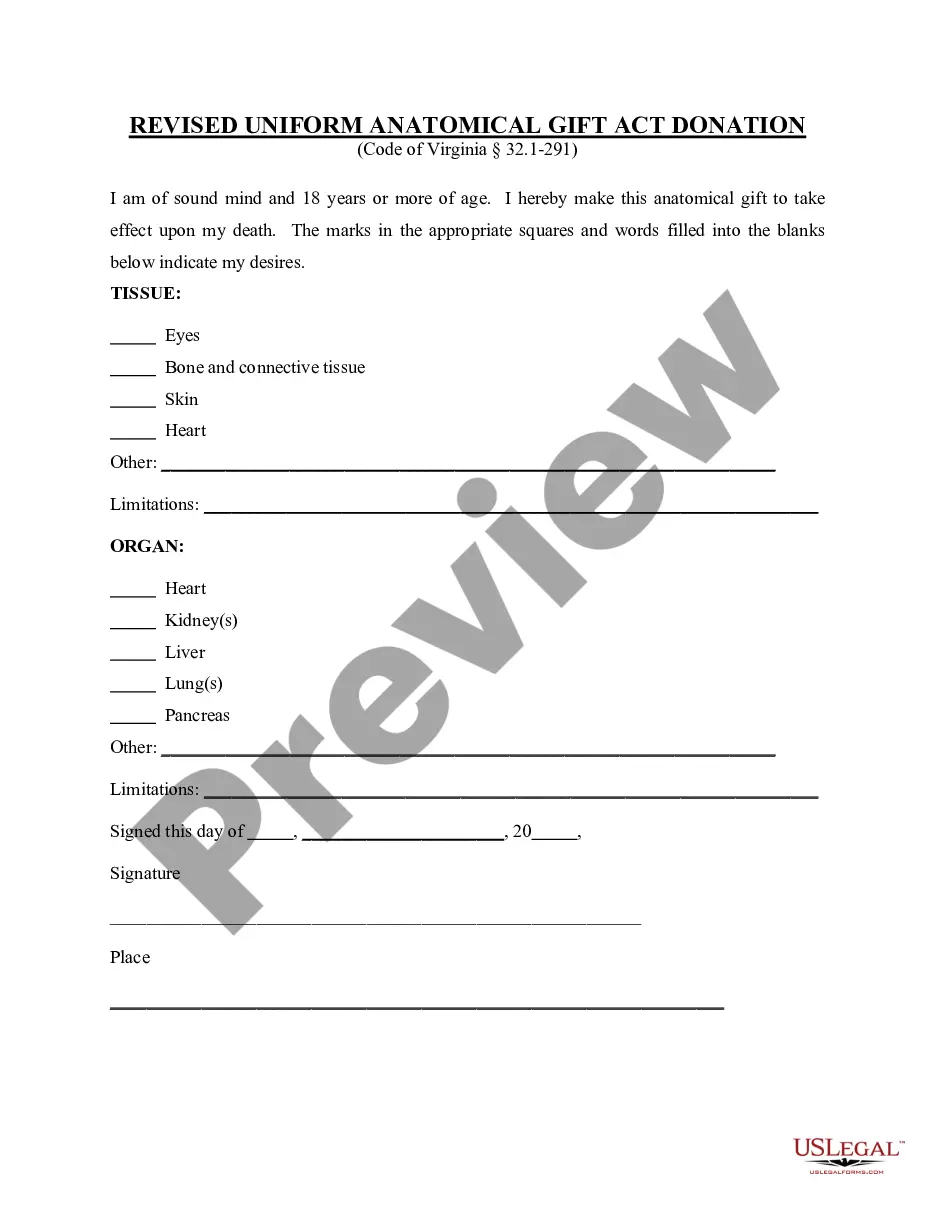
Motion for Modification or Amendment of Prior Custody Order in Divorce Decree to Obtain Sole Custody of Minor Child Due to Unfitness of Custodial Parent
Understanding this form
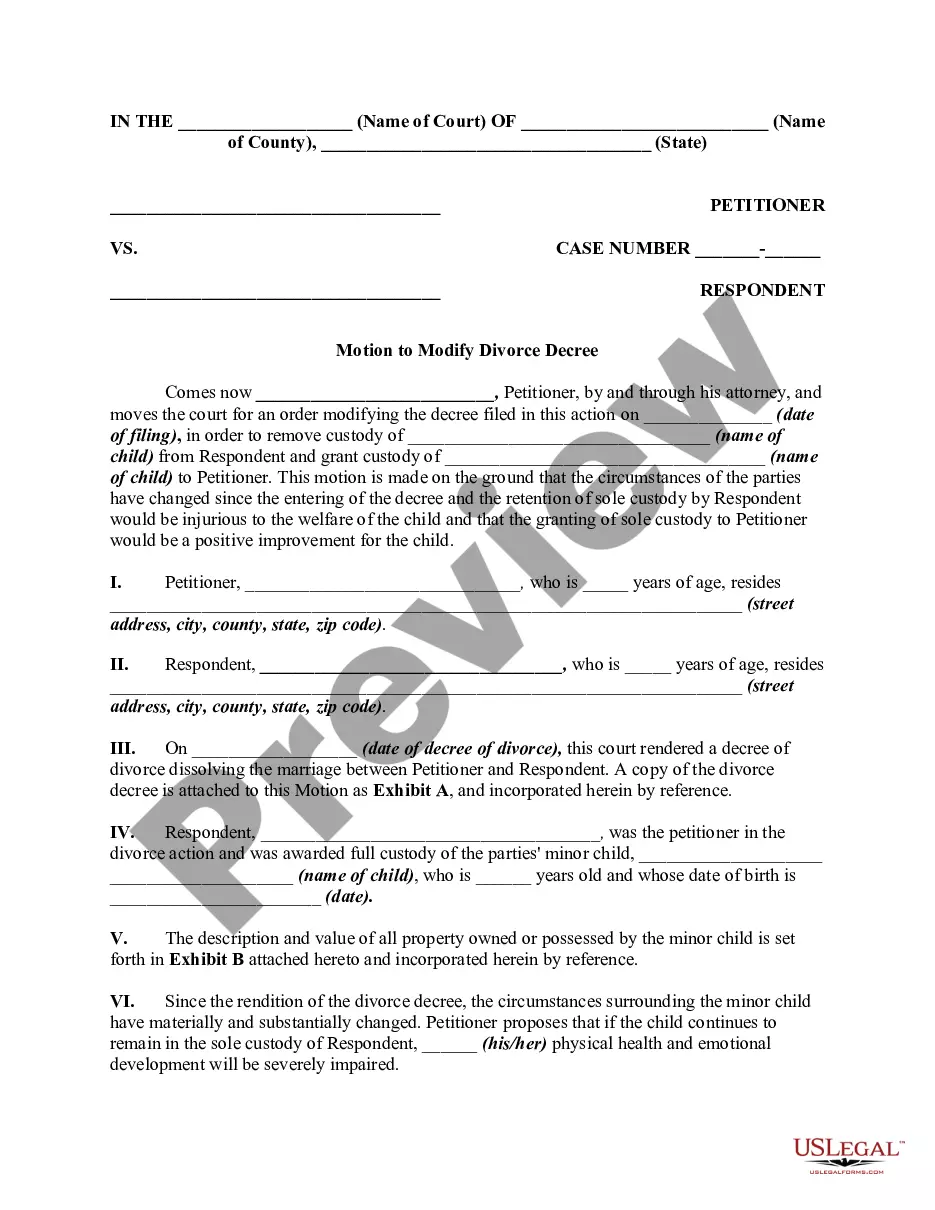
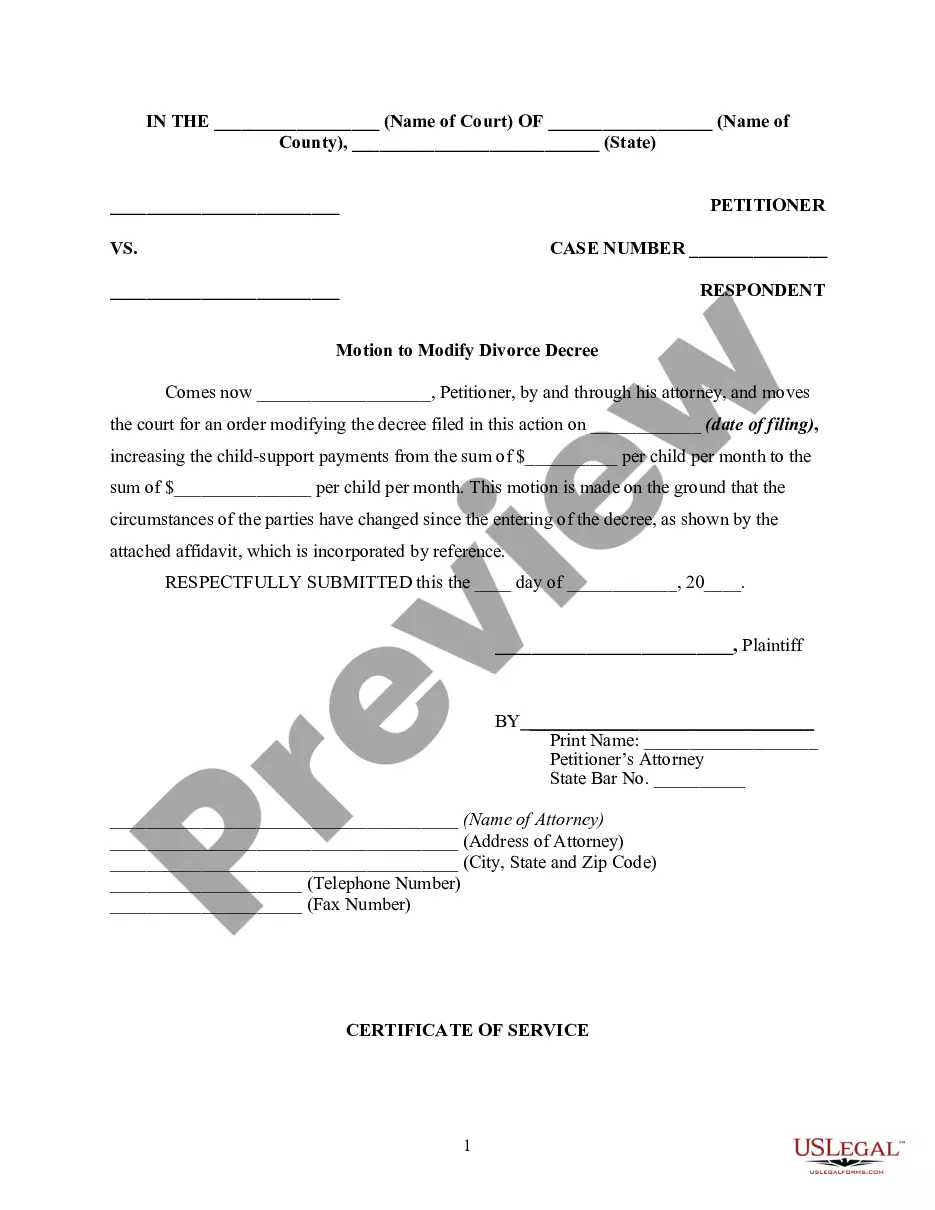
The Motion for Modification or Amendment of Prior Custody Order in Divorce Decree is a legal document used to request a change in a prior custody order. This form is specifically designed for situations where one parent seeks sole custody of a minor child, citing the unfitness of the current custodial parent. It serves as an essential tool for parents who wish to ensure the well-being of their child when existing custody arrangements are deemed inadequate or harmful.
Key parts of this document
- Information about the Petitioner and Respondent, including names and addresses.
- Details of the original custody decree, including filing date and circumstances of the divorce.
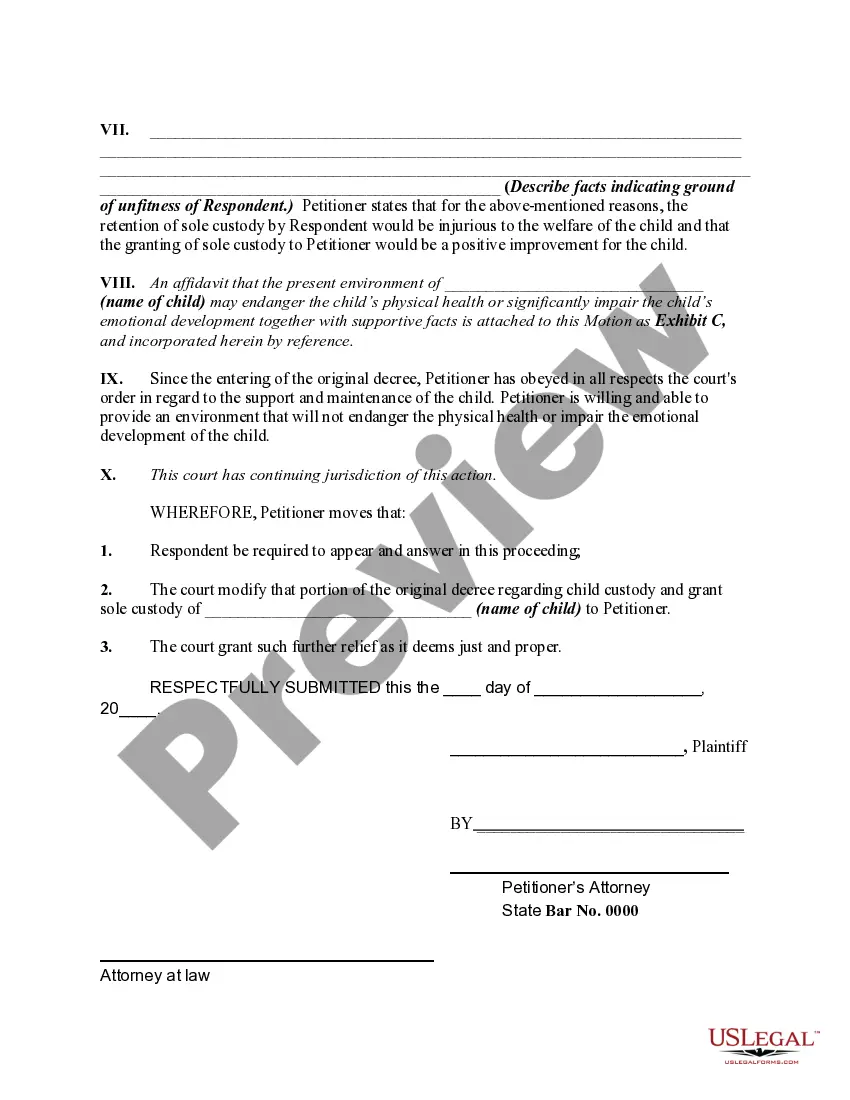
- Grounds for requesting modification, including evidence supporting claims of unfitness.
- An affidavit outlining potential dangers to the child's health and development.
- Requests for the court to modify the custody order and grant sole custody to the Petitioner.
Situations where this form applies
This form should be used when a parent believes that the circumstances surrounding the child's well-being have changed significantly since the original custody order was issued. Common scenarios include situations involving neglect, abuse, substance abuse, or other circumstances that affect the custodial parent's ability to care for the child properly. If you are concerned about your child's safety and believe that a change in custody is necessary, this form can help you initiate that process.
Who should use this form
- Parents who are seeking to modify an existing custody order.
- Individuals who believe the current custodial parent is unfit to provide a safe environment for the child.
- Parents involved in custody discussions or litigation who need to present their case to the court.
- Legal representatives assisting clients with custody modifications.
How to prepare this document
- Identify the parties by entering the names and addresses of the Petitioner and Respondent.
- Specify the details of the original custody decree, including the date and any relevant case numbers.
- Describe the grounds for modification, including facts showcasing the unfitness of the current custodial parent.
- Provide an affidavit detailing risks to the child's health and development due to the current custody situation.
- Sign and date the form, ensuring it complies with your jurisdiction's filing requirements.
Does this document require notarization?
This form does not typically require notarization unless specified by local law. However, check your local court rules to confirm any notarization requirements that may apply to your specific situation.
Get your form ready online
Our built-in tools help you complete, sign, share, and store your documents in one place.
Make edits, fill in missing information, and update formatting in US Legal Forms—just like you would in MS Word.
Download a copy, print it, send it by email, or mail it via USPS—whatever works best for your next step.
Sign and collect signatures with our SignNow integration. Send to multiple recipients, set reminders, and more. Go Premium to unlock E-Sign.
If this form requires notarization, complete it online through a secure video call—no need to meet a notary in person or wait for an appointment.
We protect your documents and personal data by following strict security and privacy standards.

Make edits, fill in missing information, and update formatting in US Legal Forms—just like you would in MS Word.

Download a copy, print it, send it by email, or mail it via USPS—whatever works best for your next step.

Sign and collect signatures with our SignNow integration. Send to multiple recipients, set reminders, and more. Go Premium to unlock E-Sign.

If this form requires notarization, complete it online through a secure video call—no need to meet a notary in person or wait for an appointment.

We protect your documents and personal data by following strict security and privacy standards.
Typical mistakes to avoid
- Failing to provide adequate evidence or documentation to support claims of unfitness.
- Not stating the specific changes in circumstances since the original custody order.
- Omitting necessary signatures or failing to date the motion properly.
- Not following local court rules regarding formatting and filing this motion.
Benefits of completing this form online
- Convenient access to legal forms tailored to your needs, available for download anytime.
- Editable templates that allow you to fill in the required information easily.
- Forms prepared by licensed attorneys, ensuring they meet legal standards and requirements.
- The ability to complete the form at your own pace, minimizing stress and confusion.
Looking for another form?
Form popularity
FAQ
You have only 14 days to respond to a regular motion. The time to respond runs from the date the motion was filed. Check the certificate of service, which should be included with the Motion papers. If you need to respond to an Administrative Motion, you have only 4 days.
Evidence of parenting ability: Courts look for evidence that the parent requesting custody is genuinely able to meet the child's physical and emotional needs, including food, shelter, clothing, medical care, education, emotional support, and parental guidance.
Fill out your court forms. Have your forms reviewed. Make at least 2 copies of all your forms. File your forms with the court clerk. Serve your papers on the other parent. File your Proof of Service. Go to your court hearing.
Understand Your State's Child-Custody Laws. Stockbyte / Getty Images. Understand the Better-Parent Standard. Morsa Images / Getty Images. Bring the Right Documents to Court. Learn Proper Courtroom Etiquette. Know What to Expect During the Hearing. Dress Appropriately.
The Reigning King of What Can Be Used Against You in a Custody Battle: Verbal or Physical Altercations. Exposing Your Children to New Partners. Criticizing the Other Parent to Outside Parties.
Fill out your court forms. Have your forms reviewed. Make at least 2 copies of all your forms. File your forms with the court clerk. Serve your papers on the other parent. File your Proof of Service. Go to your court hearing.
Write clearly, and use your own words. Use bulleted lists for your major points. Don't insult or bash your ex. Attach evidence such as pay stubs or bank statements, but redact SSN and account numbers. Affirm that you are making your statement under oath, and under penalty of perjury.
Overview. If one party to a case has filed a motion with the court, the other side can file an opposition. An opposition is a written statement explaining to the judge why the other side is not entitled to whatever he is asking for in his motion. It is your opportunity to oppose the other side's request.
Thus, the requesting party must show that a change is justified. Common substantial changes in circumstances may include: a loss or gain of employment, a sudden change in either party's finances, a relocation of the parties or children, a death, a change in the child's wishes, etc.