Motion to Require Drug Testing of Parent in a Proceeding to Modify Child Custody Award
What this document covers
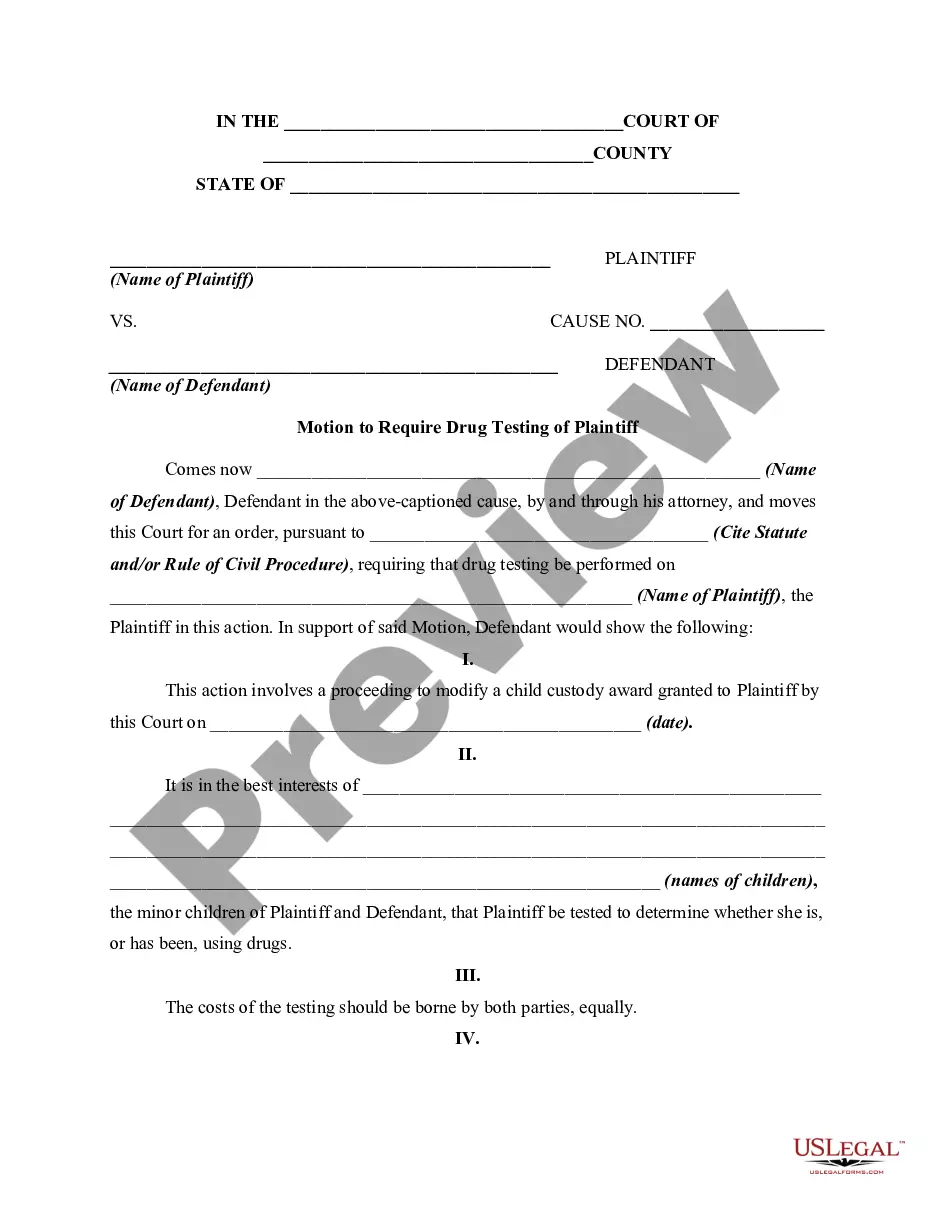
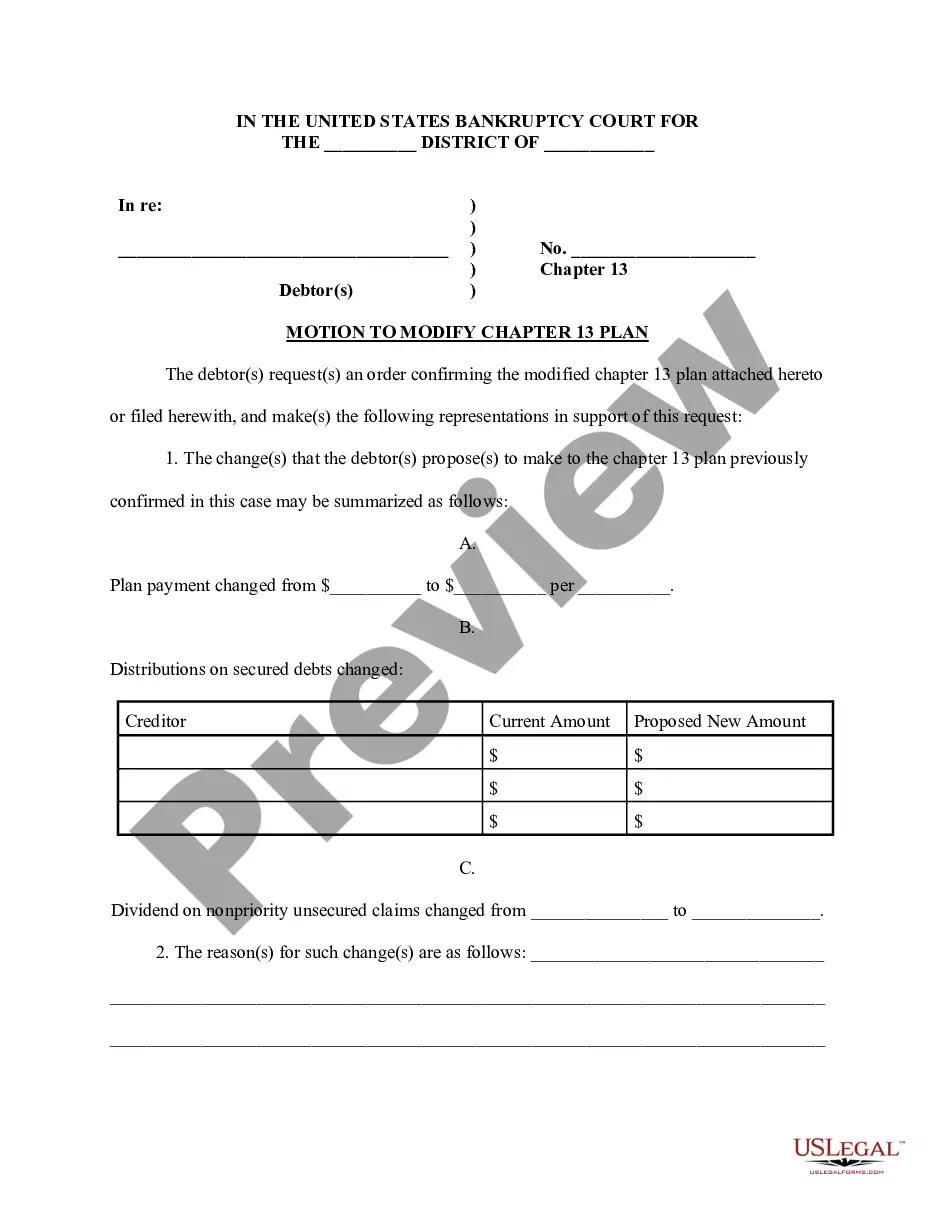
This Motion to Require Drug Testing of Parent in a Proceeding to Modify Child Custody Award form is a legal document used to request the court to mandate drug testing for a parent involved in a child custody dispute. This form is essential when there are concerns about a parent's substance use that may impact the well-being of the child. It provides a structured approach to address these concerns through formal legal mechanisms, distinguishing it from other custody or parenting forms that may not involve testing related to drug use.
Key components of this form
- Caption: Lists the parties involved and the case number.
- Motion Introduction: States the request for drug testing and identifies the involved parties.
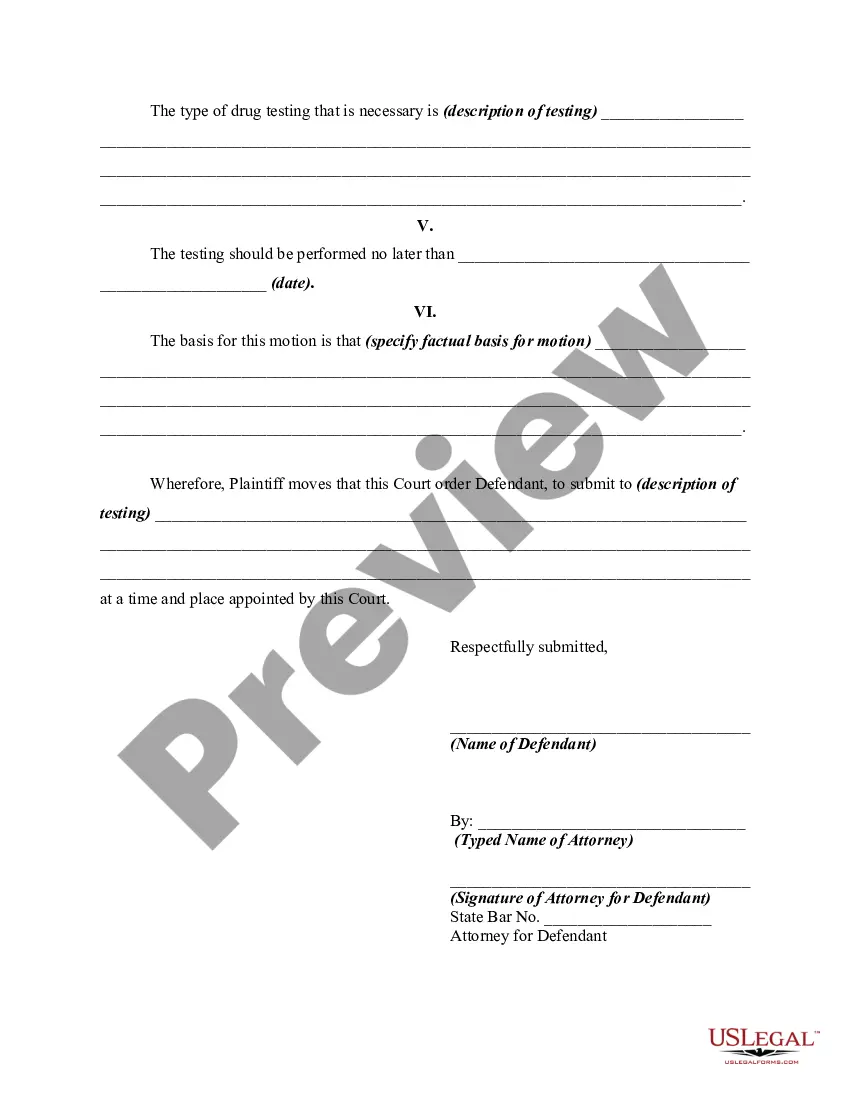
- Reason for the Motion: Details the basis for requesting drug testing.
- Testing Details: Specifies the type of drug testing and when it should occur.
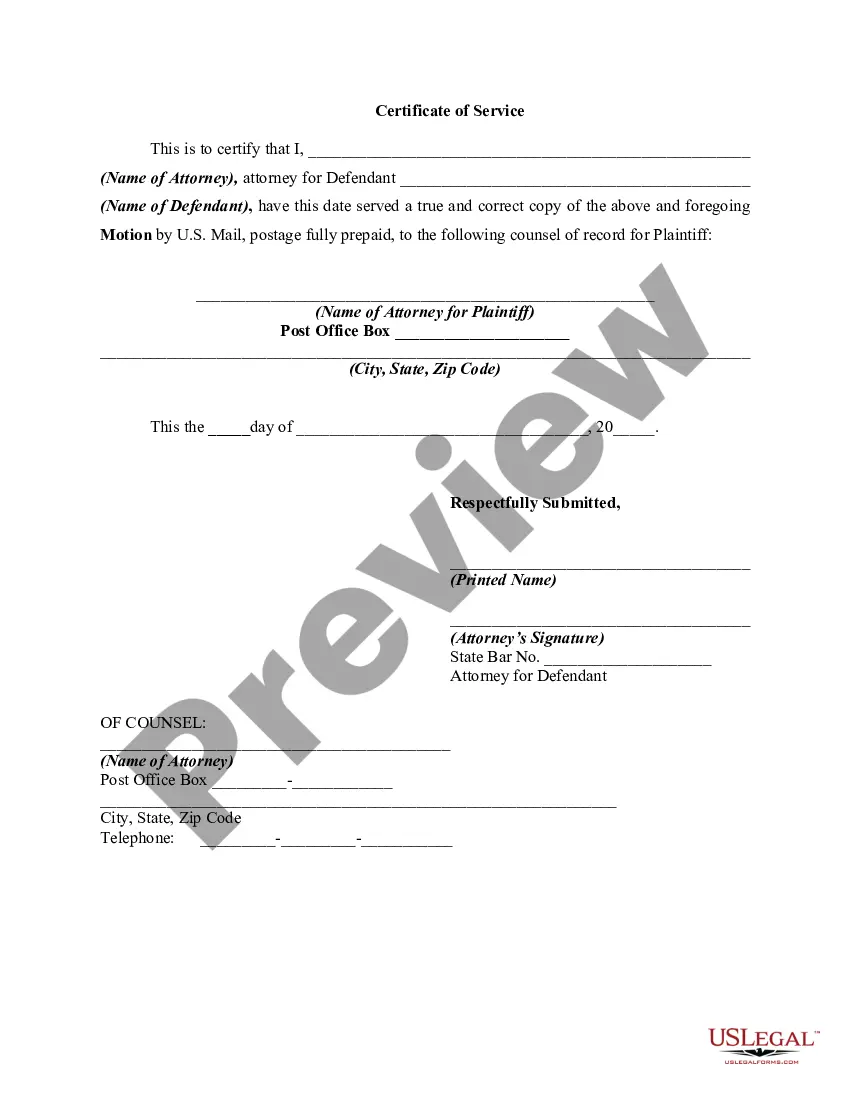
- Certificate of Service: Confirms that the opposing party has been notified of the motion.
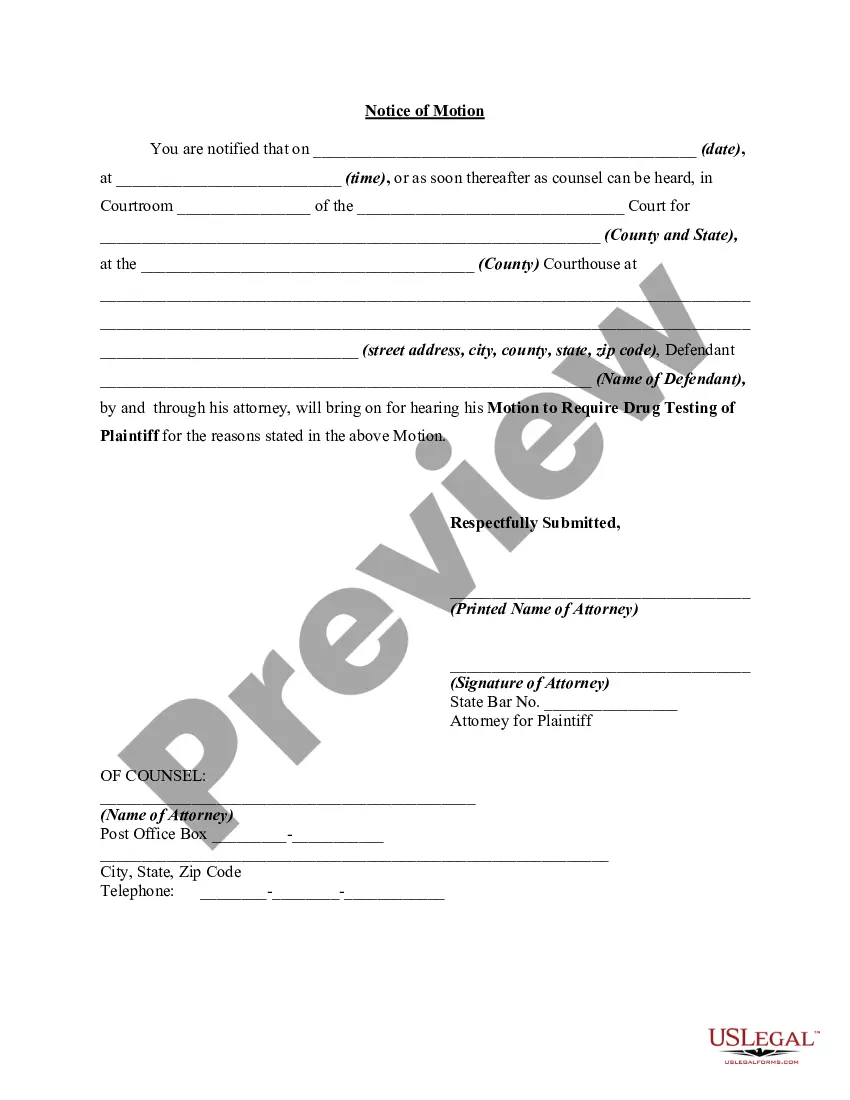
- Notice of Motion: Informs the court and involved parties about the hearing date and time.

When this form is needed
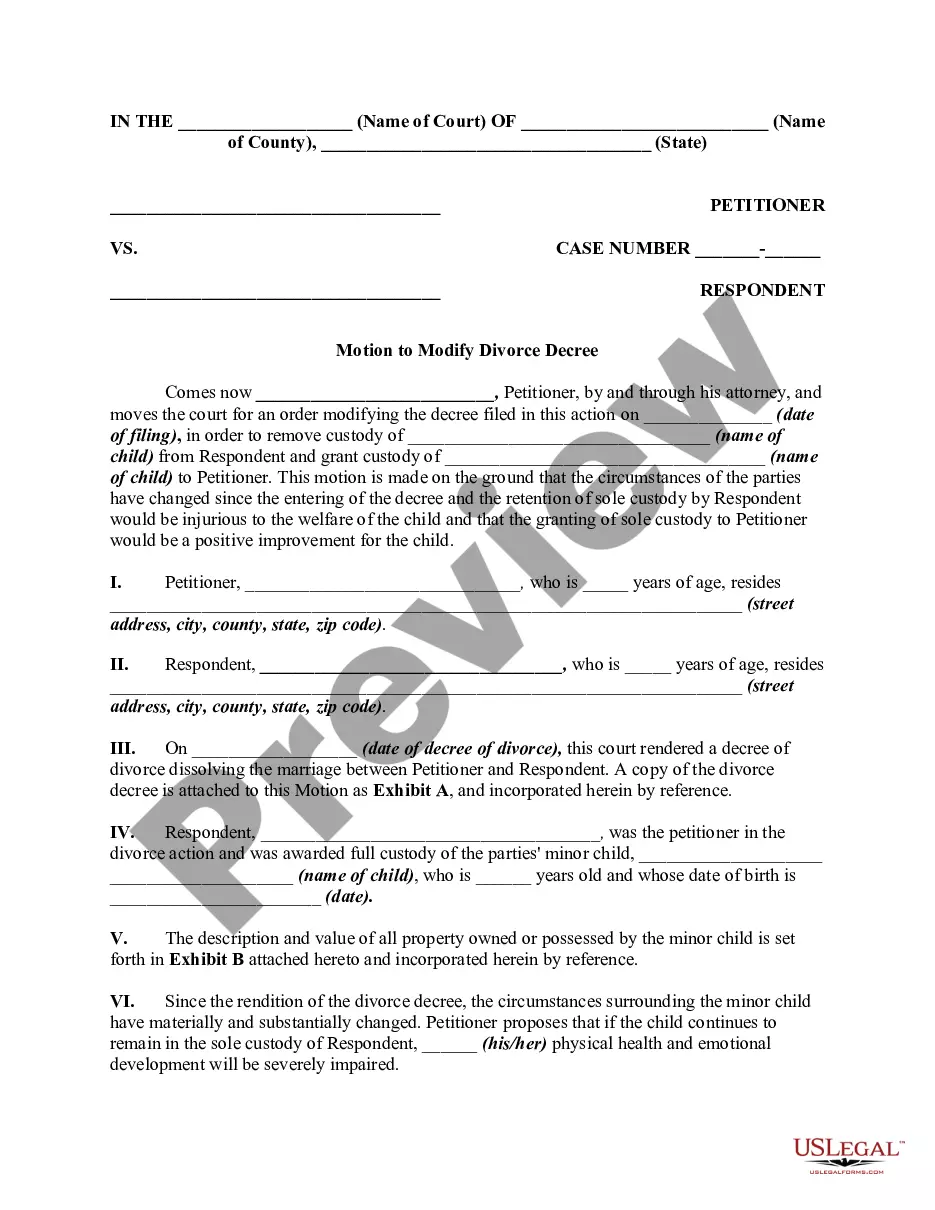
This form should be used when a parent petitions the court to modify an existing child custody arrangement due to concerns about the other parent's drug use. Situations may include a perceived impact of substance use on parenting ability or safety concerns for the children involved. It is typically filed in conjunction with custody modification proceedings, particularly when evidence or suspicion of drug use may affect custody decisions.
Intended users of this form
- Parents involved in child custody proceedings where drug use is a concern.
- Legal representatives advocating for the best interests of children regarding custody issues.
- Guardians or relatives involved in custody disputes seeking court intervention for testing.
Completing this form step by step
- Identify the parties: Clearly state the names of the plaintiff and defendant.
- Cite applicable law: Reference the specific statute or rule that supports the drug testing request.
- Detail the reasons: Provide a factual basis for the concerns regarding drug use.
- Specify testing requirements: Describe the type of drug testing needed and proposed timeline.
- Complete certificate of service: Ensure the opposing party is notified about the motion.
Does this form need to be notarized?
This form does not typically require notarization unless specified by local law. It is recommended to check the requirements in your jurisdiction for any specific submission rules.
Get your form ready online
Our built-in tools help you complete, sign, share, and store your documents in one place.
Make edits, fill in missing information, and update formatting in US Legal Forms—just like you would in MS Word.
Download a copy, print it, send it by email, or mail it via USPS—whatever works best for your next step.
Sign and collect signatures with our SignNow integration. Send to multiple recipients, set reminders, and more. Go Premium to unlock E-Sign.
If this form requires notarization, complete it online through a secure video call—no need to meet a notary in person or wait for an appointment.
We protect your documents and personal data by following strict security and privacy standards.

Make edits, fill in missing information, and update formatting in US Legal Forms—just like you would in MS Word.

Download a copy, print it, send it by email, or mail it via USPS—whatever works best for your next step.

Sign and collect signatures with our SignNow integration. Send to multiple recipients, set reminders, and more. Go Premium to unlock E-Sign.

If this form requires notarization, complete it online through a secure video call—no need to meet a notary in person or wait for an appointment.

We protect your documents and personal data by following strict security and privacy standards.
Typical mistakes to avoid
- Failing to provide sufficient evidence to support the need for drug testing.
- Not serving the motion to the involved parties correctly, leading to delays.
- Leaving out critical details, such as the date for testing or the type of tests requested.
Benefits of using this form online
- Convenient access to the form that can be downloaded and completed at any time.
- Editability allows users to customize the form to fit their local jurisdiction's requirements easily.
- Reliable templates drafted by licensed attorneys ensure legal sufficiency.
Legal use & context
- This motion serves as a formal request to a judge for drug testing.
- It is enforceable once approved by the court, impacting custody decisions.
- Limitations may apply based on state law regarding testing procedures and privacy rights.
What to keep in mind
- This motion is crucial in custody cases where drug use is in question.
- The form emphasizes the welfare of children as paramount in custody modifications.
- Proper completion and filing are essential to ensure the motion is legally effective.
Looking for another form?
Form popularity
FAQ
If you fail the drug test, it's likely the judge won't give you the same rights as a parent who tested negative for any of these substances. This often includes severely limiting the amount of time you have with your child, often requiring supervision of some form in order to protect the child.
In order to prove alcoholism or drug abuse, the evidence presented can include such things as medical reports, DUI arrests, drug arrests, court-ordered or voluntary treatment programs that then failed, witness testimony, job loss or difficulty maintaining one's job due to substance abuse, random drug tests, remote
Evidence of parenting ability: Courts look for evidence that the parent requesting custody is genuinely able to meet the child's physical and emotional needs, including food, shelter, clothing, medical care, education, emotional support, and parental guidance.
According to the Equal Employment Opportunity Commission (EEOC), "if the results of a drug test reveal the presence of a lawfully prescribed drug or other medical information, such information must be treated as a confidential medical record." As a best practice, all drug test results should be filed in a confidential
CPS will intervene into a situation where it is reported to them (through anonymous intake phone calls) that your use of drugs or alcohol are either placing your child into a dangerous situation or where you have abused your child. These reports may well be false, or at the very least mislead.
When the law considers substance abuse to be child abuse Because drugs can completely alter a person's state of mind, it is possible for parents to lose their best judgment when under the influence. The court could consider drug use to be child abuse if it led a parent to neglect his or her child's needs.
If one parent has a significant criminal history or there are signs of substance abuse, those issues can definitely play into a custody determination. A history of alcohol or drug abuse can significantly affect your custody agreement and influence the Court's decision when granting access to your child.
Alcohol test Parenting orders can specify that drug testing or alcohol testing occur at particular times or that a drug test be performed at the request of a party. This can mean that where one parent develops the suspicion that the other parent has been using drugs, they can request the test to be done.
A history of child abuse. A history of substance abuse. A history of domestic violence. The parent's ability to make age-appropriate decisions for a child. The parent's ability to communicate with a child. Psychiatric concerns. The parent's living conditions. The child's opinion.