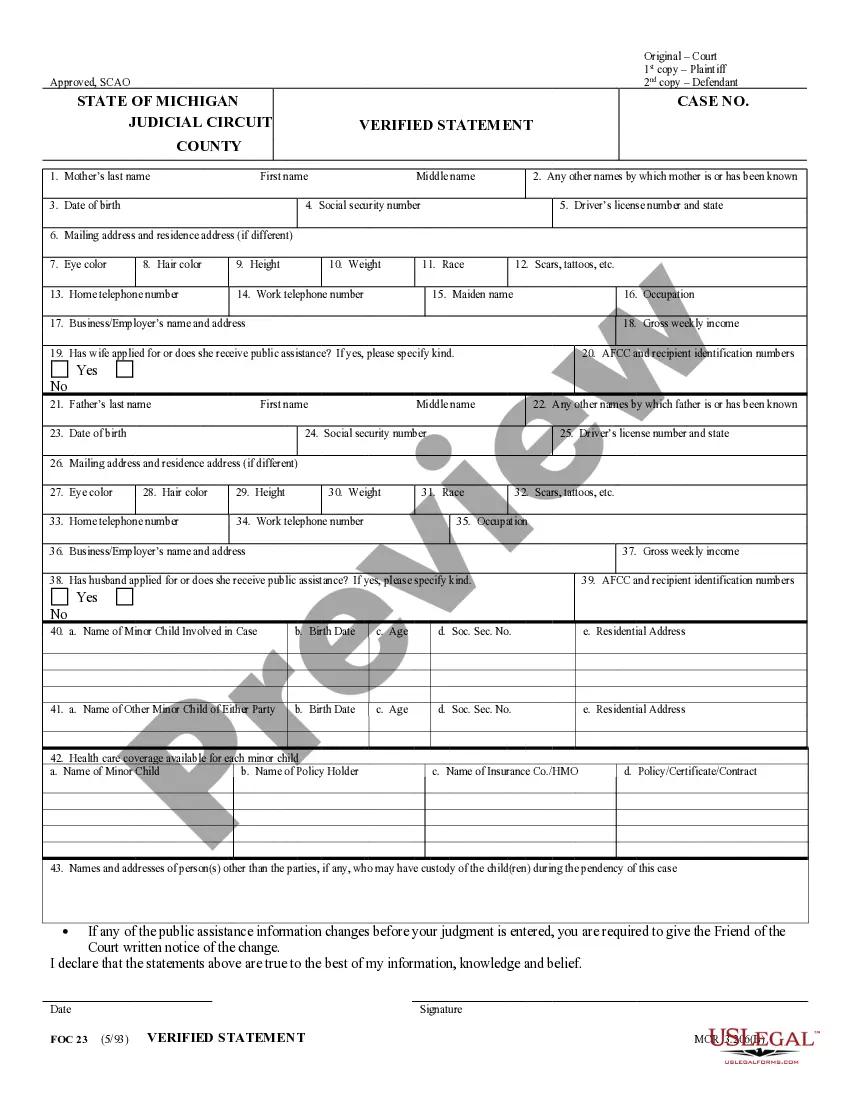
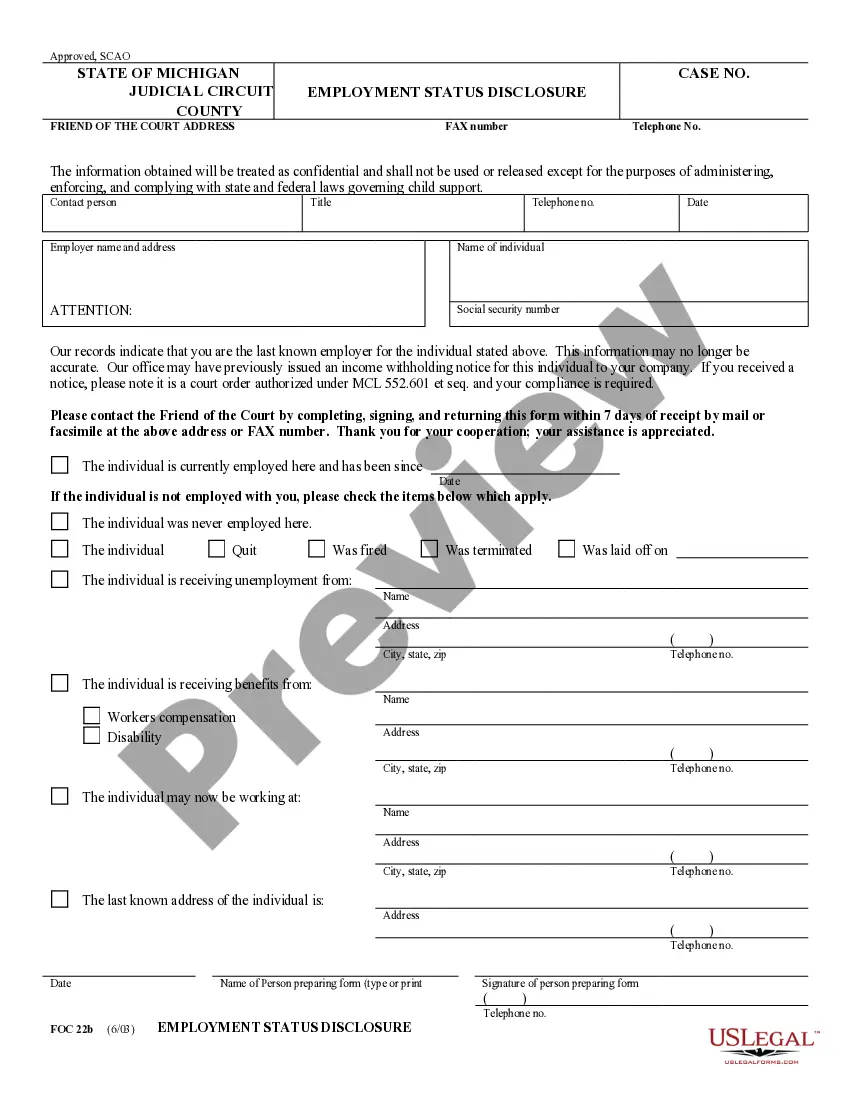
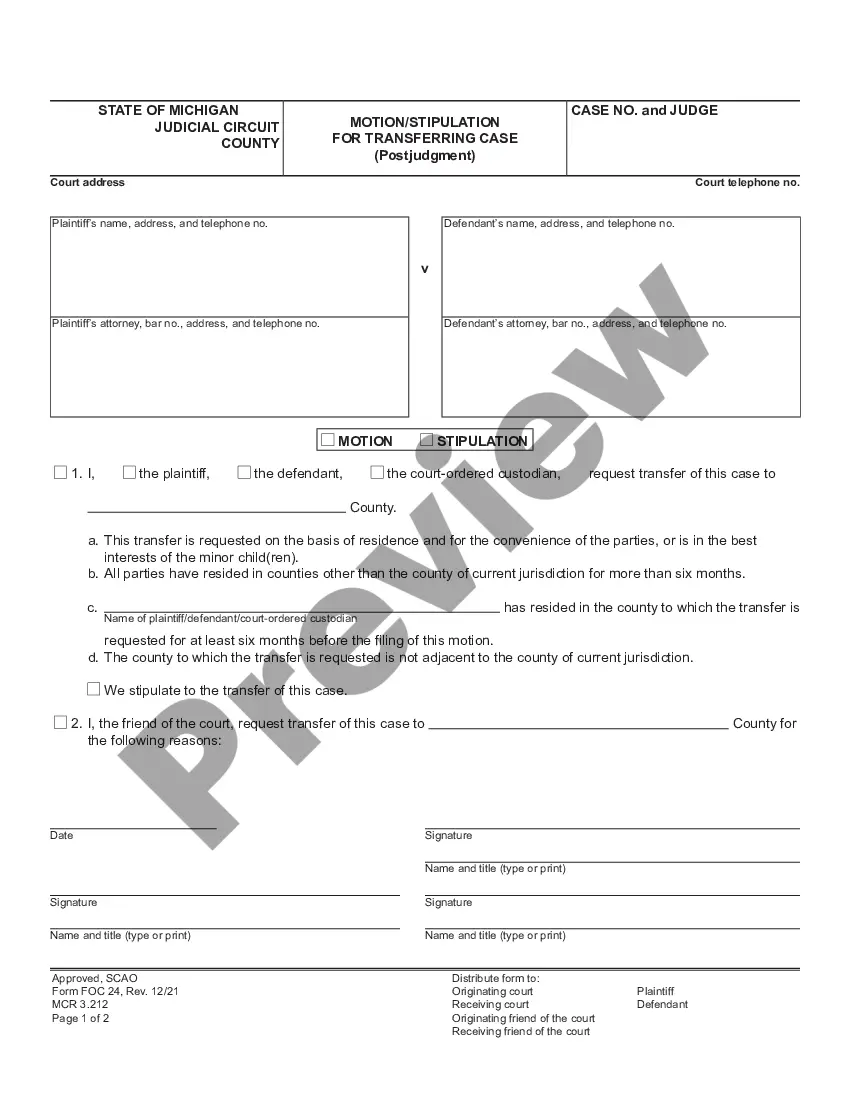
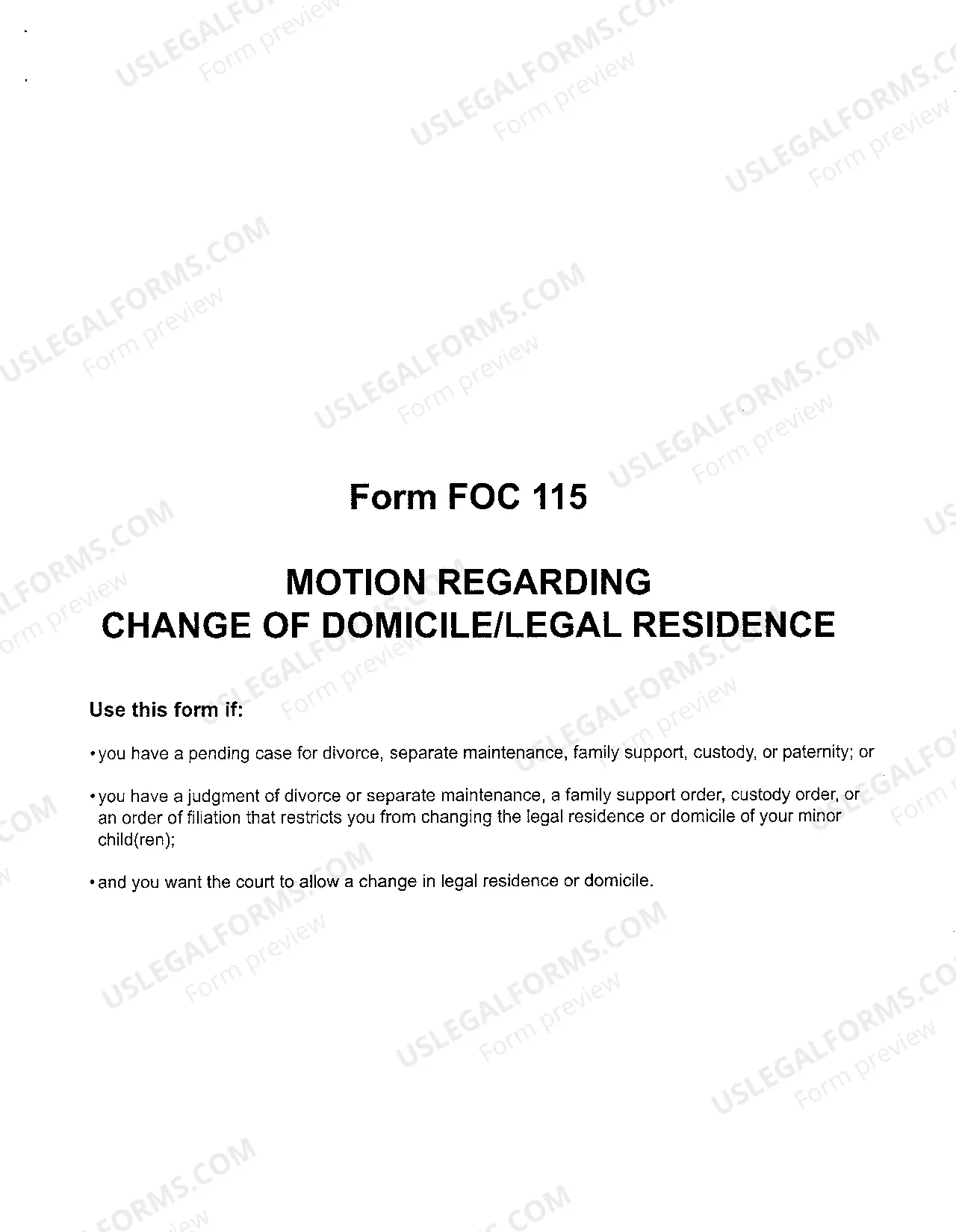
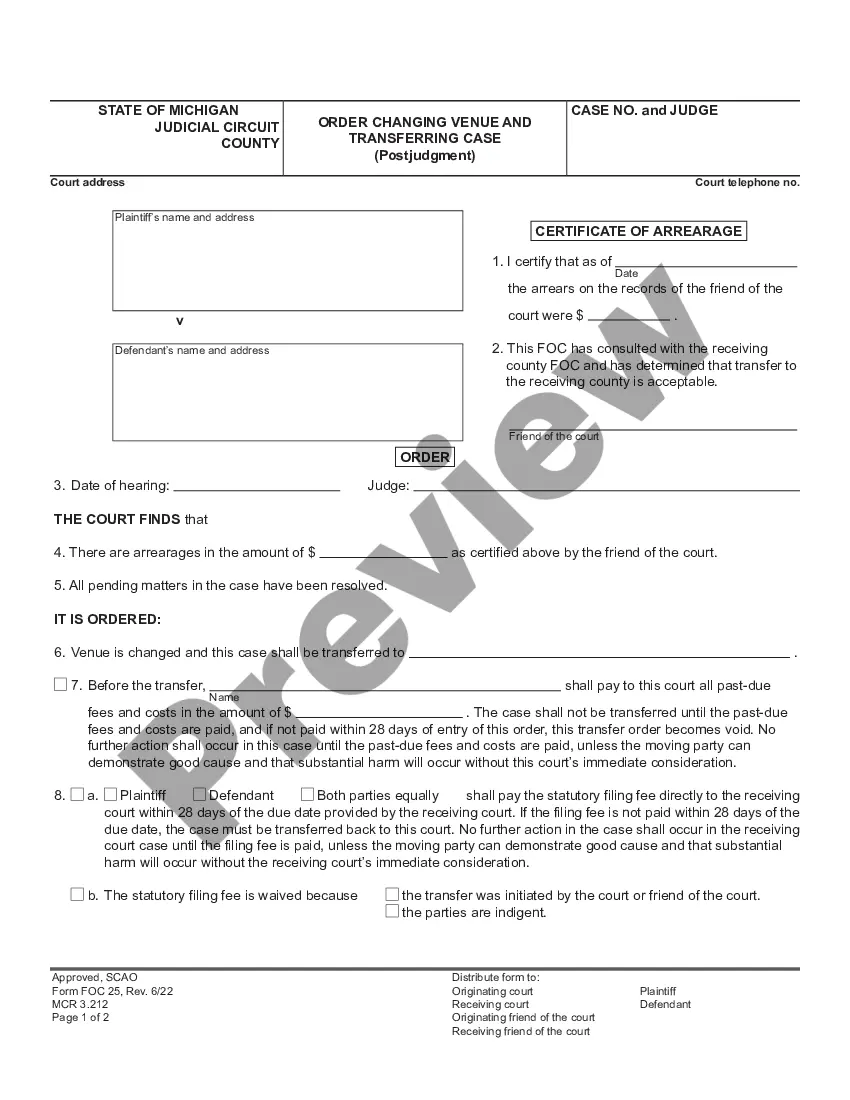
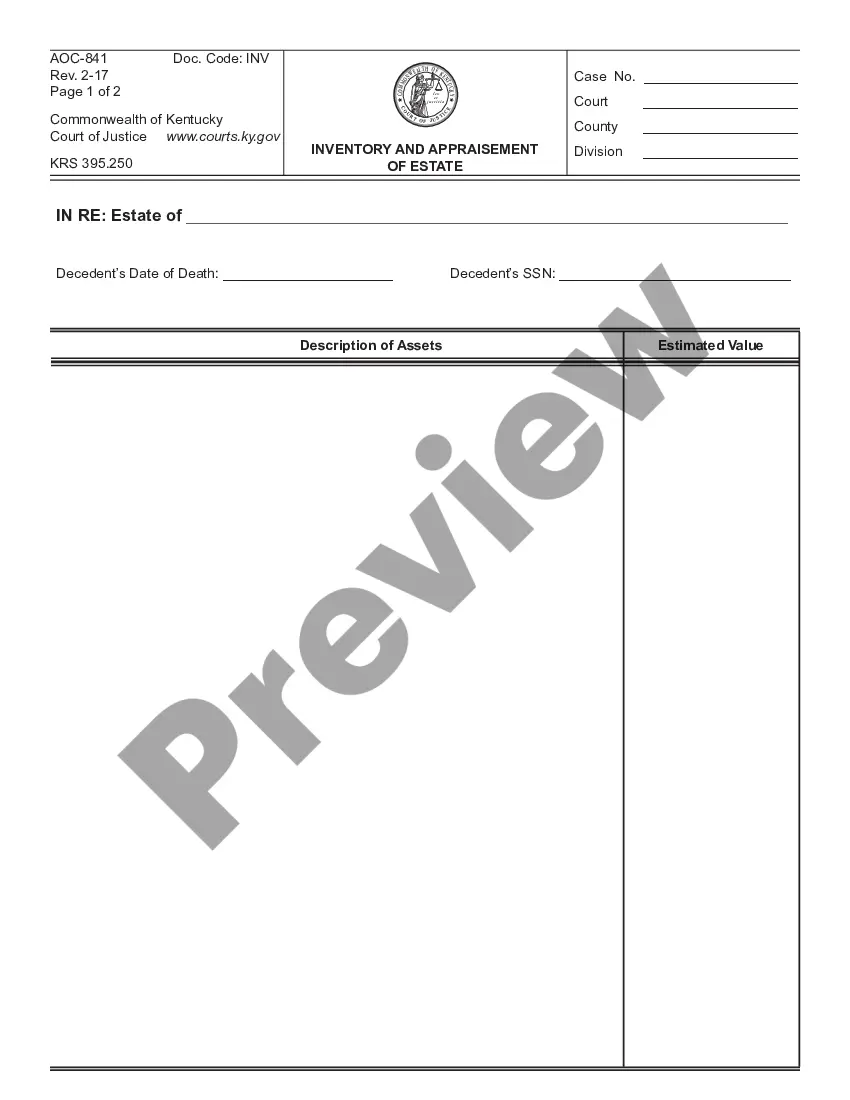
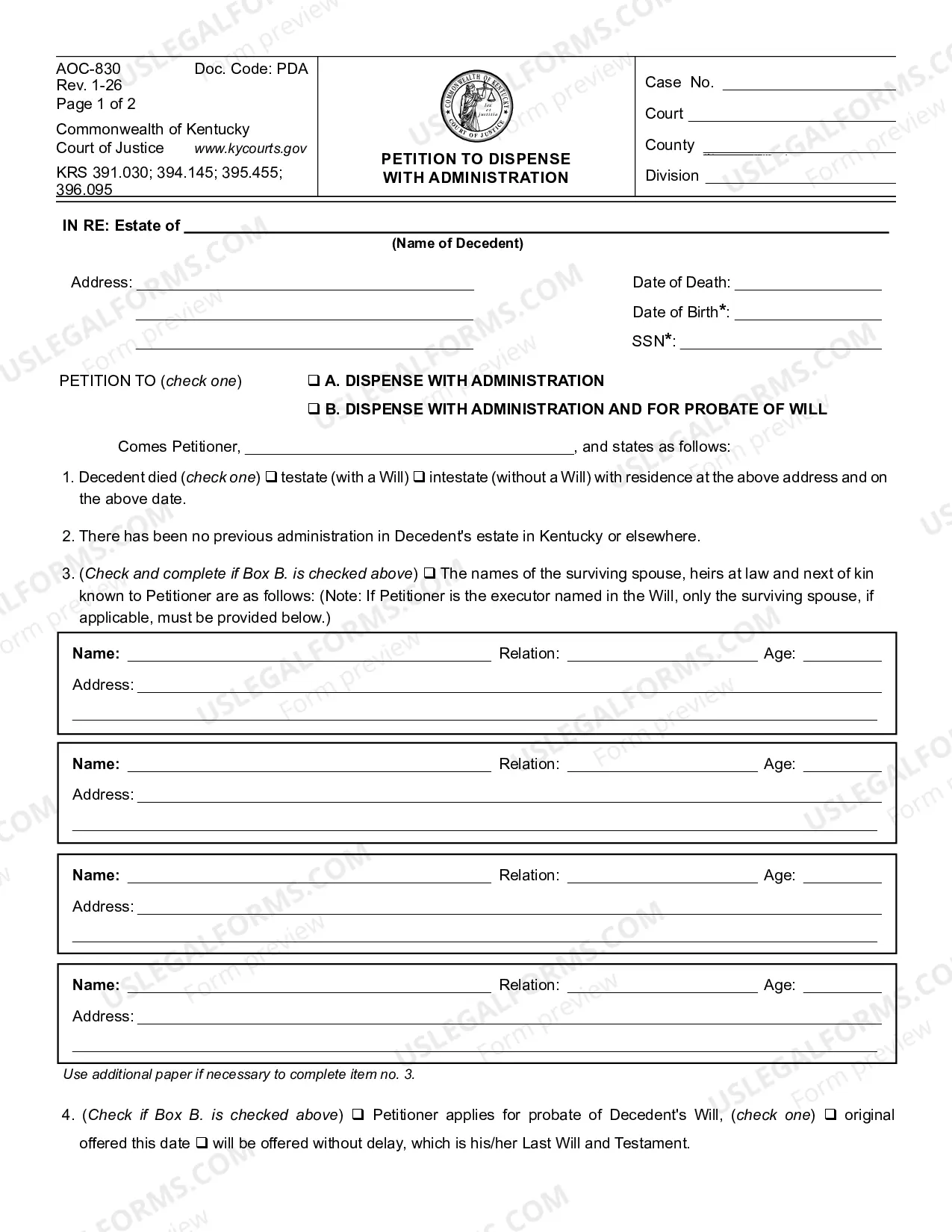
This Settlement of Estate is an official form used by the Commonwealth of Kentucky, and it complies with all applicable state and Federal codes and statutes. USLF updates all state and Federal forms as is required by state and Federal statutes and law.
Kentucky Settlement of Estate
Instant download
This website is not affiliated with any governmental entity
Public form
Description
Free preview

Get your form ready online
Our built-in tools help you complete, sign, share, and store your documents in one place.
Built-in online Word editor
Make edits, fill in missing information, and update formatting in US Legal Forms—just like you would in MS Word.
Export easily
Download a copy, print it, send it by email, or mail it via USPS—whatever works best for your next step.
E-sign your document
Sign and collect signatures with our SignNow integration. Send to multiple recipients, set reminders, and more. Go Premium to unlock E-Sign.
Notarize online 24/7
If this form requires notarization, complete it online through a secure video call—no need to meet a notary in person or wait for an appointment.
Store your document securely
We protect your documents and personal data by following strict security and privacy standards.

Make edits, fill in missing information, and update formatting in US Legal Forms—just like you would in MS Word.

Download a copy, print it, send it by email, or mail it via USPS—whatever works best for your next step.

Sign and collect signatures with our SignNow integration. Send to multiple recipients, set reminders, and more. Go Premium to unlock E-Sign.

If this form requires notarization, complete it online through a secure video call—no need to meet a notary in person or wait for an appointment.

We protect your documents and personal data by following strict security and privacy standards.
Looking for another form?

How to fill out Kentucky Settlement Of Estate?
Locating a Kentucky Estate Settlement template and completing it can be quite a task.
To conserve significant time, expenses, and effort, utilize US Legal Forms and select the appropriate template specifically for your state within a few clicks.
Our attorneys prepare every document, so you merely need to fill them out.
You can print the Kentucky Estate Settlement template or complete it using any online editor. There's no need to be concerned about errors since your template can be used, submitted, and printed as many times as necessary. Visit US Legal Forms and gain access to over 85,000 state-specific legal and tax documents.
- Log in to your account and return to the form's page to download the template.
- Your saved templates are stored in My documents and are available at all times for future use.
- If you haven’t yet signed up, you need to register.
- Follow our detailed instructions on how to obtain your Kentucky Estate Settlement template in just a few minutes.
- To acquire a valid template, verify its relevance for your state.
- Examine the template using the Preview option (if available).
- If there's a description, review it to grasp the key details.
- Click on the Buy Now button if you found what you're looking for.
- Select your plan on the pricing page and create an account.
- Choose your payment method by credit card or through PayPal.
- Download the template in your desired format.
Form popularity
FAQ
An executor in Kentucky can take as long as necessary to settle an estate, but they are encouraged to do so within a reasonable timeframe, typically up to one year. If delays occur, they must be justified to avoid complications. Understanding the Kentucky Settlement of Estate can help both you and the executor stay on track and ensure that the estate is settled efficiently.
In Kentucky, an estate must remain open for at least six months to allow time for creditors to submit their bills to the estate. Thus, a simple estate can be settled in as short a time as six months.
The first step in probating an estate is to locate all of the decedent's estate planning documents and other important papers, even before being appointed to serve as the personal representative or executor.
Your inventory should include the number of shares of each type of stock, the name of the corporation, and the name of the exchange on which the stock is traded. Meanwhile, you should note the total gross amount of a bond, the name of the entity that issued it, the interest rate on the bond, and its maturity date.
An executor in Kentucky is entitled to payment for his services on behalf of the estate. State laws limit the executor's compensation to 5 percent of the value of the deceased's total estate and 5 percent of the amount of the total income the executor collected for the estate.
In Kentucky, unless the will states otherwise, executor compensation is determined as a percentage of the estate value, not to exceed 5%. Typically, the larger the estate, the smaller the percentage.
Determine Your State's Laws Regarding Inventory Forms. Review the Instructions Provided. Identify Real Property. Identify Personal Property. Identify Bank Accounts. Identify Retirement Accounts. Identify Non-Probate Assets. File the Form With the Court.
When calculating the value of an estate, the gross value is the sum of all asset values, and the net value is the gross value minus any debts: in other words, the actual worth of the estate.
File the Will and Probate Petition. Secure Personal Property. Appraise and Insure Valuable Assets. Cancel Personal Accounts. Determine Cash Needs. Remove Estate Tax Lien. Determine Location of Assets and Secure "Date of Death Values" Submit Probate Inventory.
An inventory and appraisal is a required filing in California probate. The inventory and appraisal is a single document that (1) inventories the property in the decedent's estate and (2) contains an appraisal of the property in the inventory. California Probate Code § 8800(a).