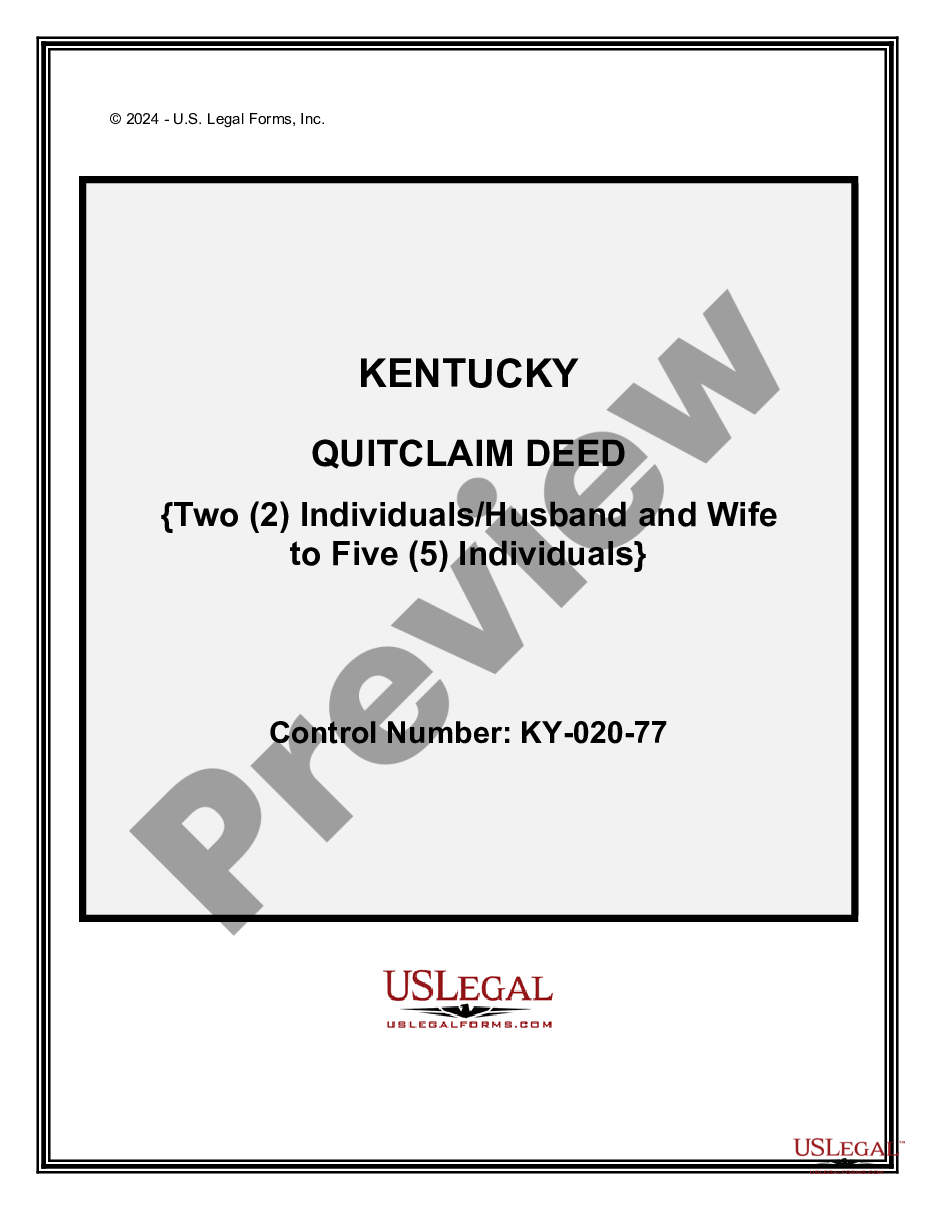
Kentucky Quitclaim Deed - Husband and Wife, or Two Individuals, to Five Individuals

Overview of this form
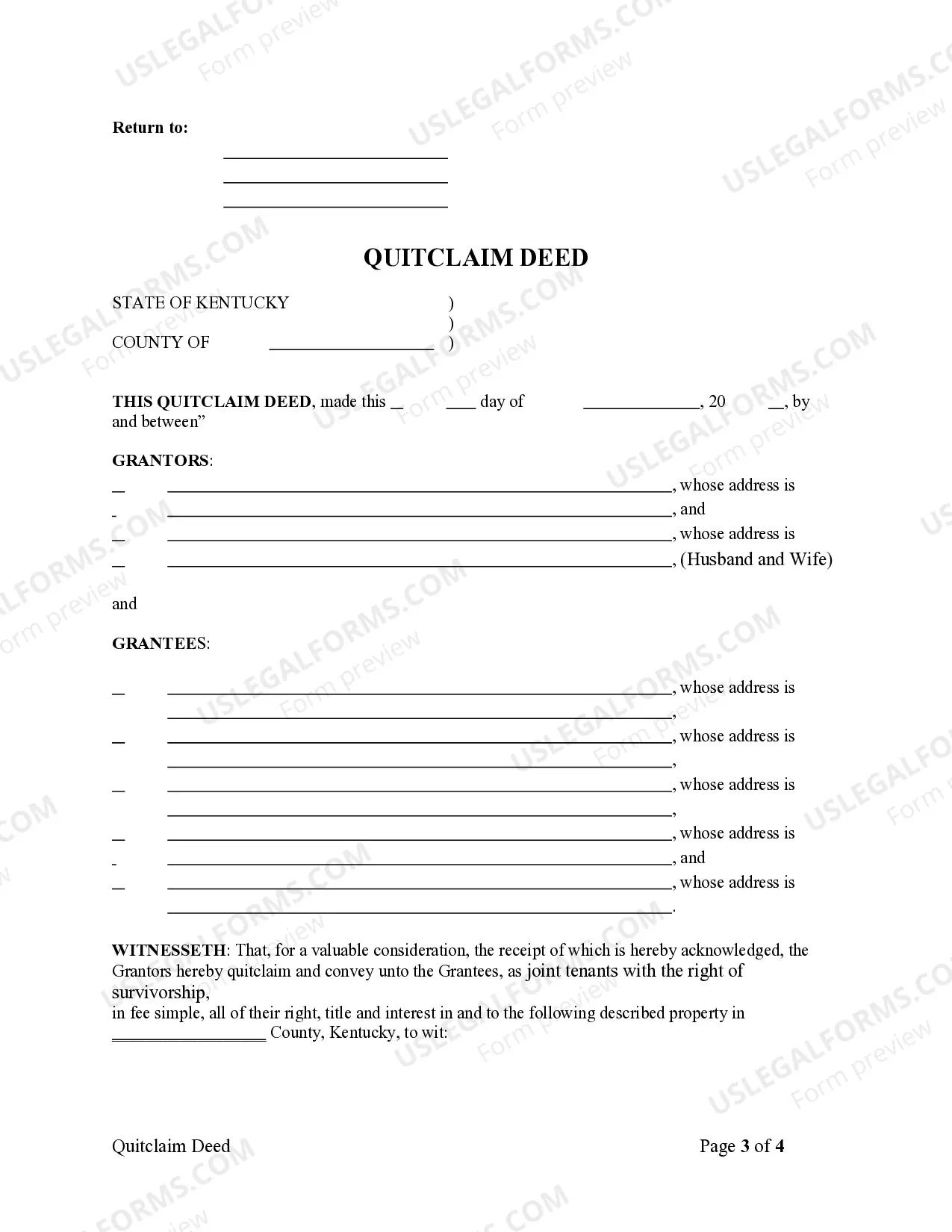
This form is a Quitclaim Deed designed for use when a husband and wife, or two individuals, wish to transfer property ownership to five individuals. This type of deed allows grantors to convey their interest in the property to the grantees without making any warranties regarding the title. Unlike other deeds that provide guarantees about ownership, a quitclaim deed effectively transfers whatever interest the grantors possess, making it suitable for situations where trust exists between the parties involved.
Form components explained
- Grantor information: Names of the individuals transferring property (husband and wife or two individuals).
- Grantee information: Names of the five individuals receiving the property.
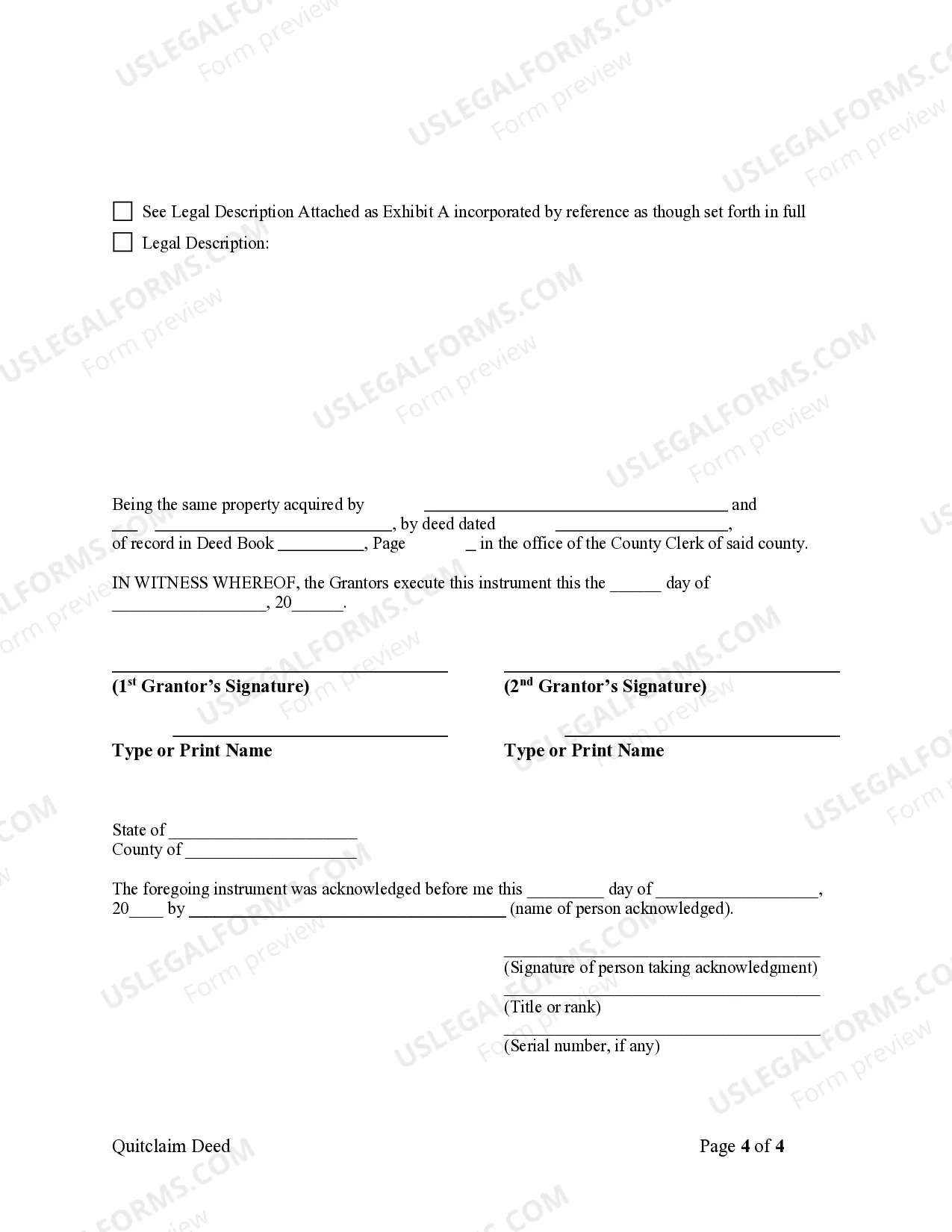
- Property description: Detailed description of the property being transferred, including legal borders.
- Tenancy option: Specifies if the grantees will hold the property as tenants in common or as joint tenants with the right of survivorship.
- Date of execution: The date when the deed is signed by the grantors.
- Signatures: Requires the signature of both grantors to execute the deed legally.





When to use this document
This form is commonly used when transferring property between family members, particularly among spouses or close friends. Scenarios that may warrant a quitclaim deed include divorce settlements, inheritance transfers, or gift transfers among loved ones. If you seek to update ownership records without extensive legal complications, this form is an efficient solution.
Who this form is for
This form is intended for:
- Married couples wishing to manage property ownership.
- Two individuals looking to transfer property to a group of five.
- Individuals involved in family estate planning.
- Those seeking to facilitate a quick transfer of property without the need for warranties.
How to prepare this document
Follow these steps to complete the Quitclaim Deed:
- Identify the parties: Clearly state the names of the husband and wife or two individuals as grantors.
- Specify the property: Provide a detailed legal description of the property being transferred.
- Enter grantees' names: List the five individuals receiving the property.
- Choose tenancy type: Indicate whether the grantees will hold as tenants in common or joint tenants with the right of survivorship.
- Sign and date: Both grantors must sign the document and include the date of signing.
Notarization requirements for this form
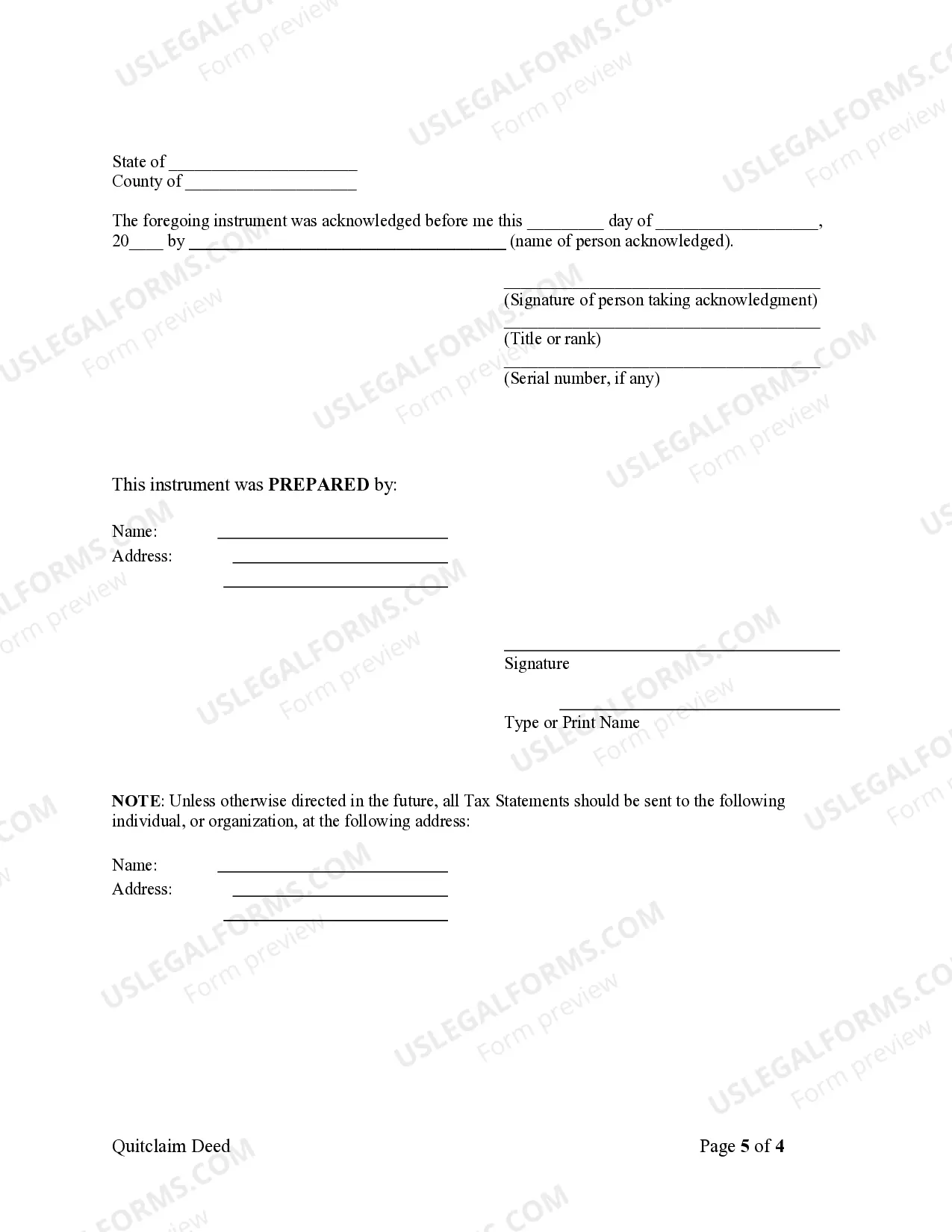
This form does not typically require notarization unless specified by local law. However, it is advisable to check with local regulations to determine if notarization is necessary for ensuring the deed's legal validity.
Get your form ready online
Our built-in tools help you complete, sign, share, and store your documents in one place.
Make edits, fill in missing information, and update formatting in US Legal Forms—just like you would in MS Word.
Download a copy, print it, send it by email, or mail it via USPS—whatever works best for your next step.
Sign and collect signatures with our SignNow integration. Send to multiple recipients, set reminders, and more. Go Premium to unlock E-Sign.
If this form requires notarization, complete it online through a secure video call—no need to meet a notary in person or wait for an appointment.
We protect your documents and personal data by following strict security and privacy standards.

Make edits, fill in missing information, and update formatting in US Legal Forms—just like you would in MS Word.

Download a copy, print it, send it by email, or mail it via USPS—whatever works best for your next step.

Sign and collect signatures with our SignNow integration. Send to multiple recipients, set reminders, and more. Go Premium to unlock E-Sign.

If this form requires notarization, complete it online through a secure video call—no need to meet a notary in person or wait for an appointment.

We protect your documents and personal data by following strict security and privacy standards.
Typical mistakes to avoid
- Forgetting to include all grantee names.
- Failing to provide a complete and clear legal description of the property.
- Not signing the deed, which can invalidate the transfer.
- Neglecting to check whether state-specific rules affect the deed's acceptance.
- Assuming the deed is final without confirming that necessary steps have been taken.
Why complete this form online
- Convenient access: Downloadable from U.S. Legal Forms for immediate use.
- Edit with ease: Fillable form fields allow for simple completion on your computer.
- Cost-effective: Provides legal documentation without the need for expensive attorney fees.
- Reliable format: Forms are drafted by licensed attorneys to ensure legal compliance.
Looking for another form?
Form popularity
FAQ
The only way to forcibly change the ownership status is through a legal action and the resultant court order. However, if an owner chooses to be removed from the deed, it is simply a matter of preparing a new deed transferring that owner's interest in the property.
But you might be wondering if an owner can transfer a deed to another person without a real estate lawyer. The answer is yes. Parties to a transaction are always free to prepare their own deeds.A quitclaim deed, for example, is far simpler than a warranty deed.
Two of the most common ways to transfer property in a divorce are through an interspousal transfer deed or quitclaim deed. When spouses own property together, but then one spouse executes an interspousal transfer or a quitclaim deed, this is known as transmutation.
A quitclaim deed will remove the out-spouse (or departing spouse) from the title to the property, effectively relinquishing their equity or ownership in the home. The execution of a quitclaim deed is typically a requirement of a divorce settlement in order to complete the division of assets.
A person who signs a quitclaim deed to transfer property they do not own results in no title at all being transferred since there is no actual ownership interest. The quitclaim deed only transfers the type of title you own.
Discuss property ownership interests. Access a copy of your title deed. Complete, review and sign the quitclaim or warranty form. Submit the quitclaim or warranty form. Request a certified copy of your quitclaim or warranty deed.
Fill out the quit claim deed form, which can be obtained online, or write your own using the form as a guide. The person giving up the interest in the property is the grantor, and the person receiving the interest is the grantee.
It usually takes four to six weeks to complete the legal processes involved in the transfer of title.
It will depend what state the property is in. For example, the minimum fee payable when changing the title to have someone removed from a property title in NSW is $133.48. This fee must be paid to the NSW Government Land & Property Information Department.