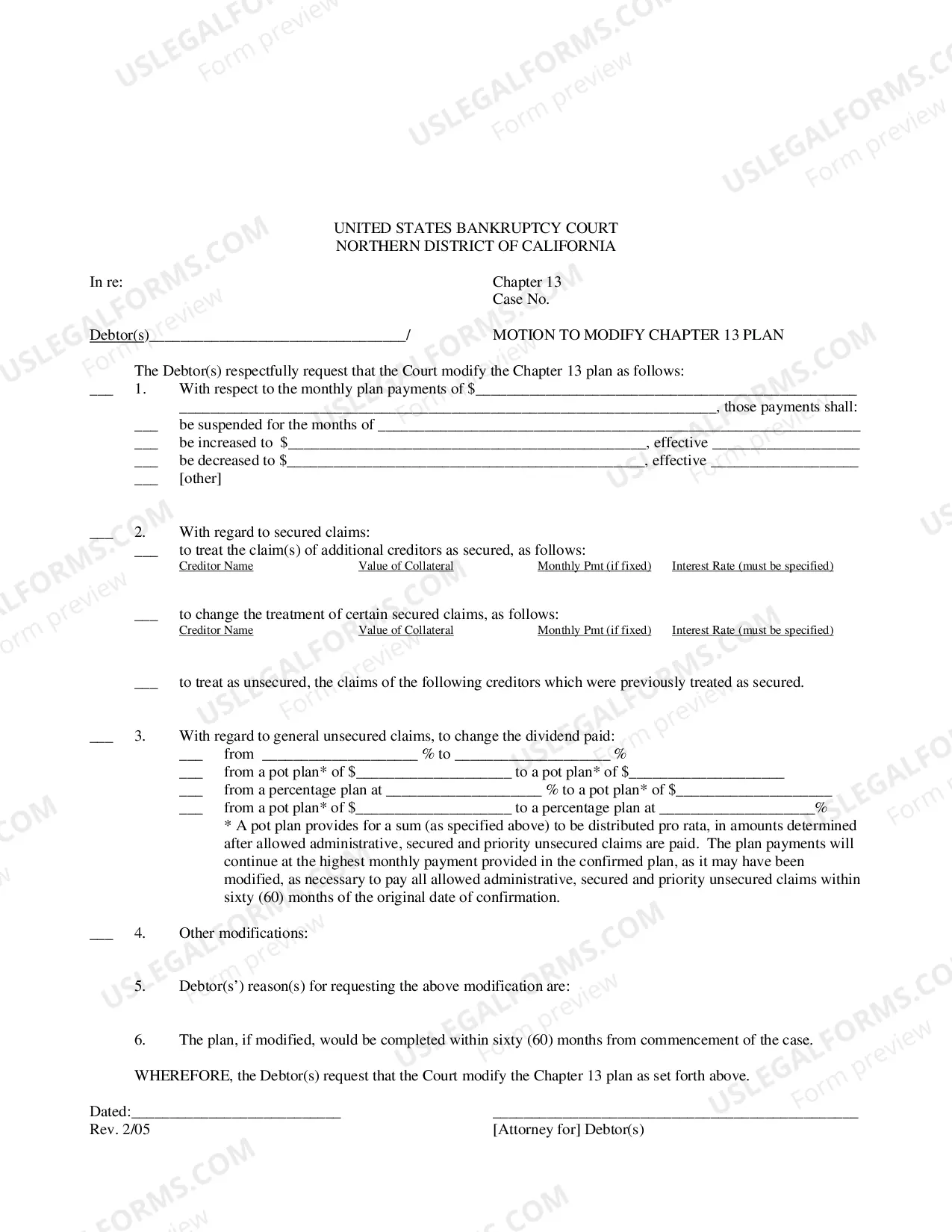
Lease of Computer Equipment with Equipment Schedule and Option to Purchase
What is this form?
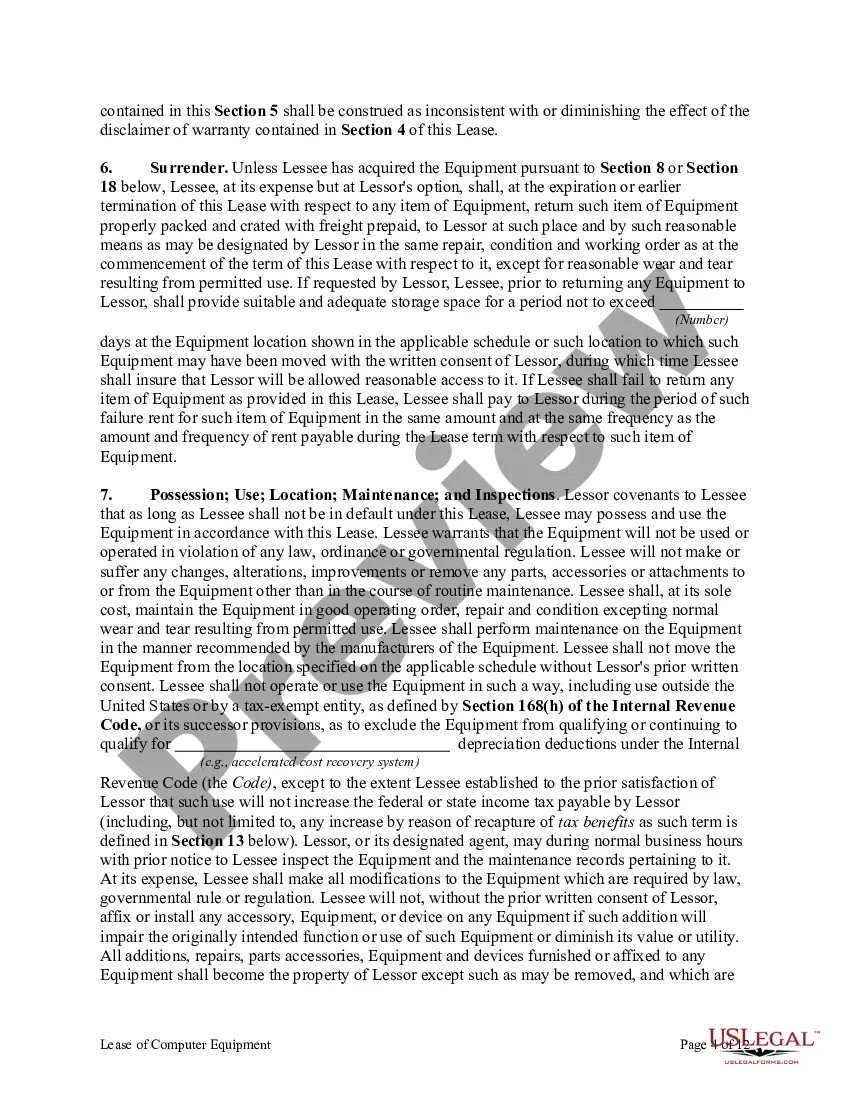
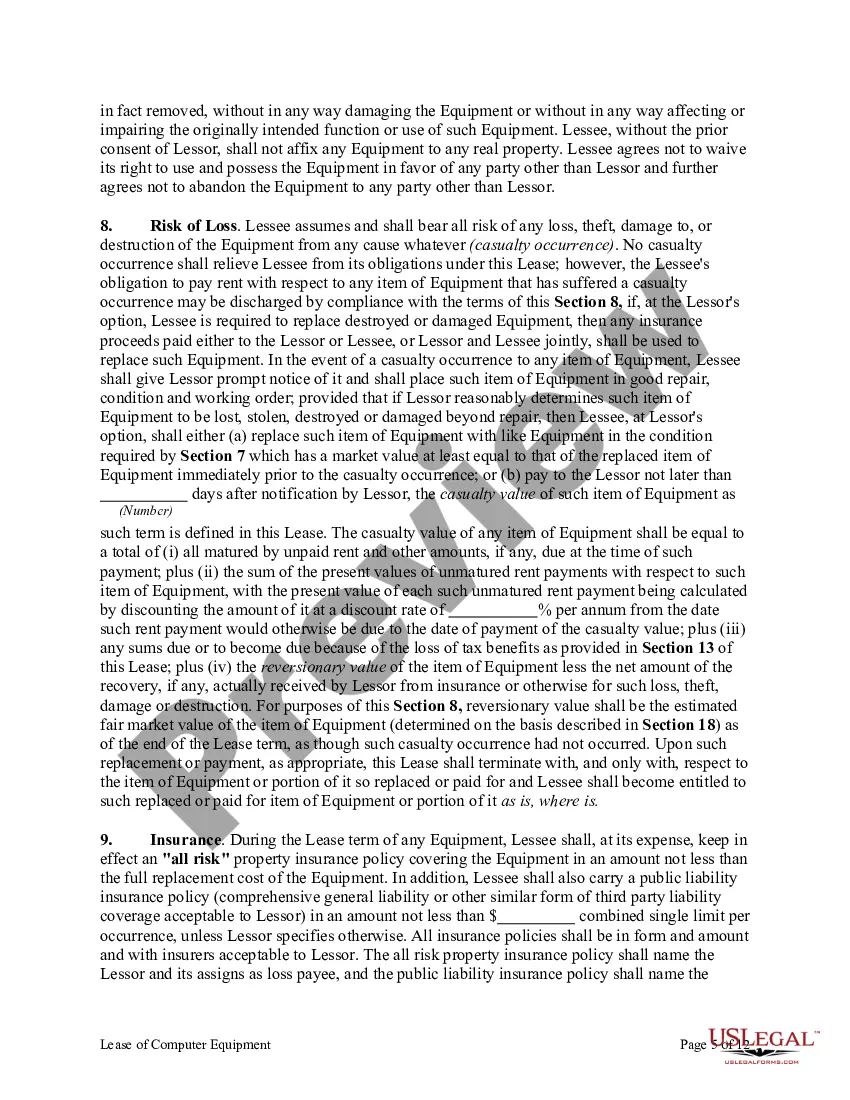
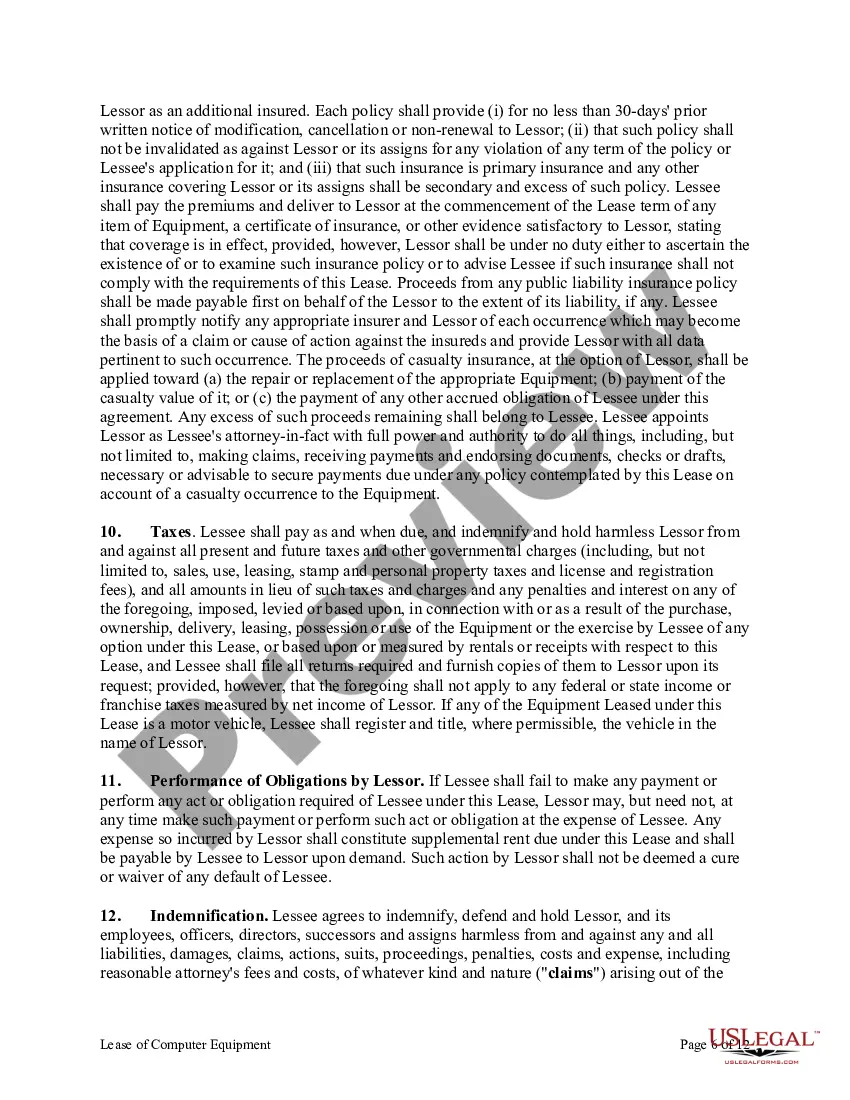
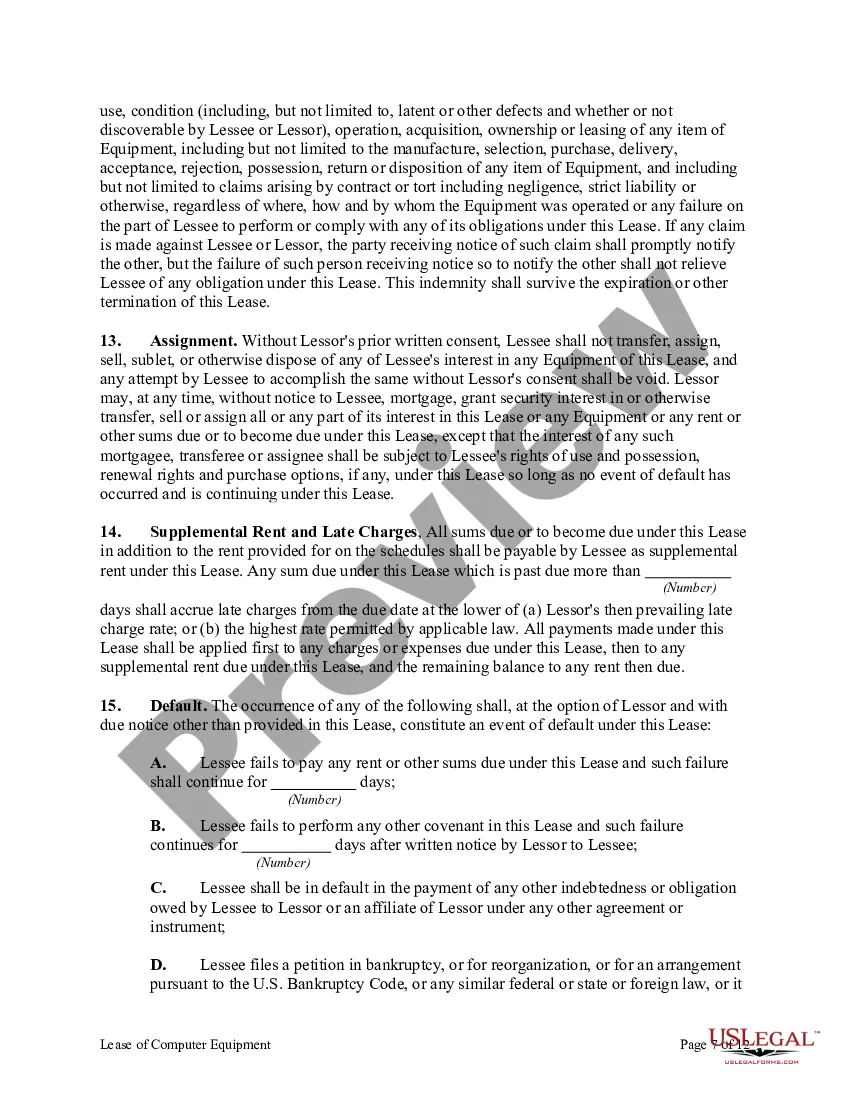
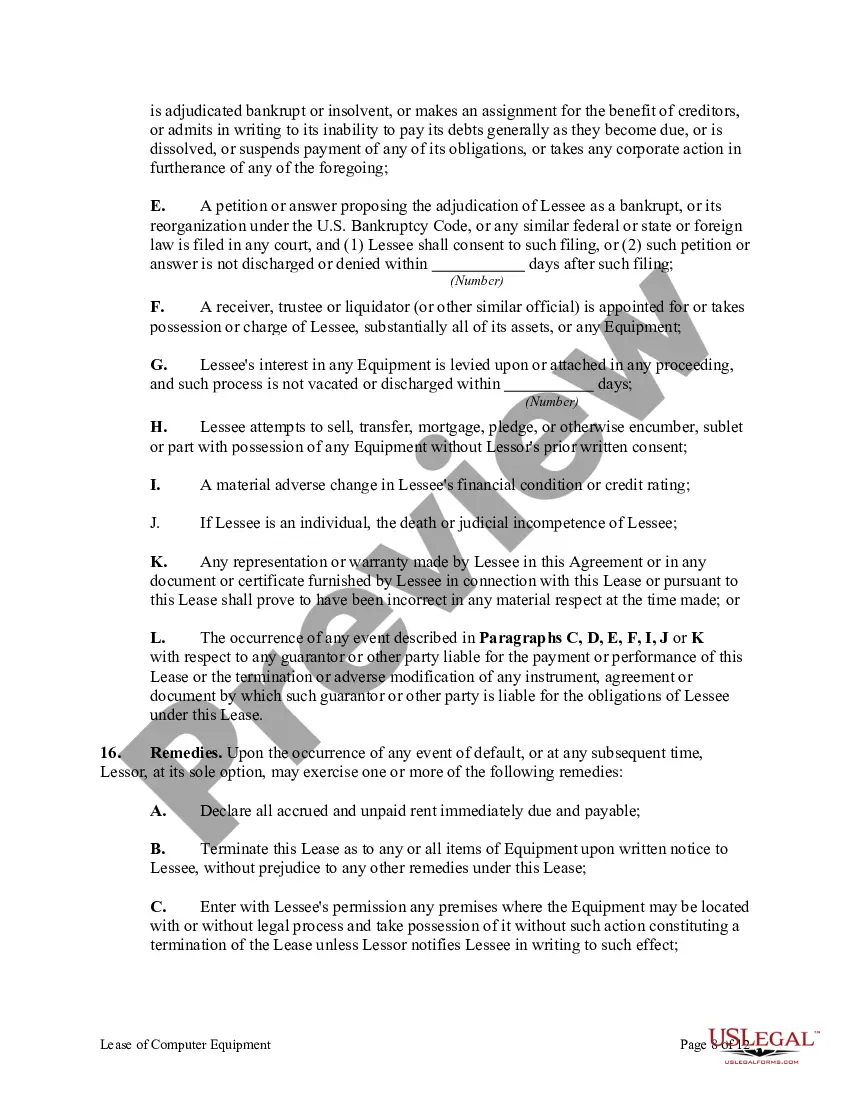
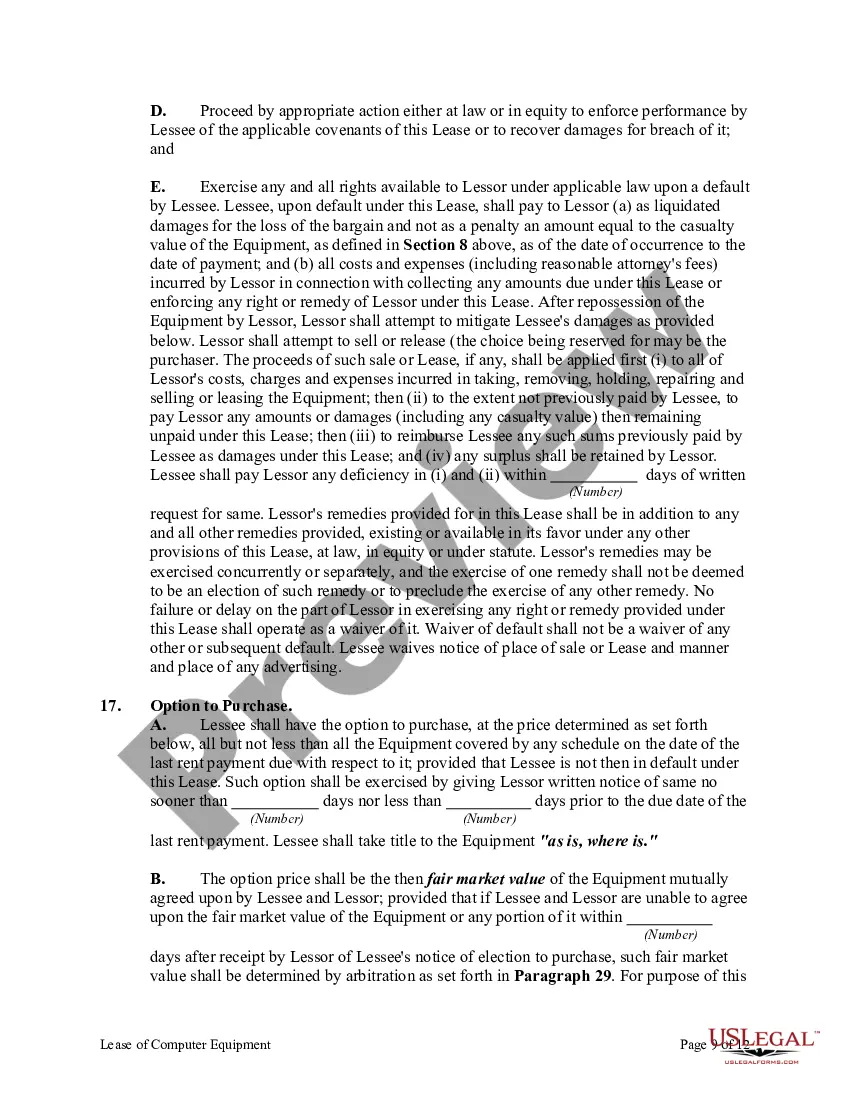
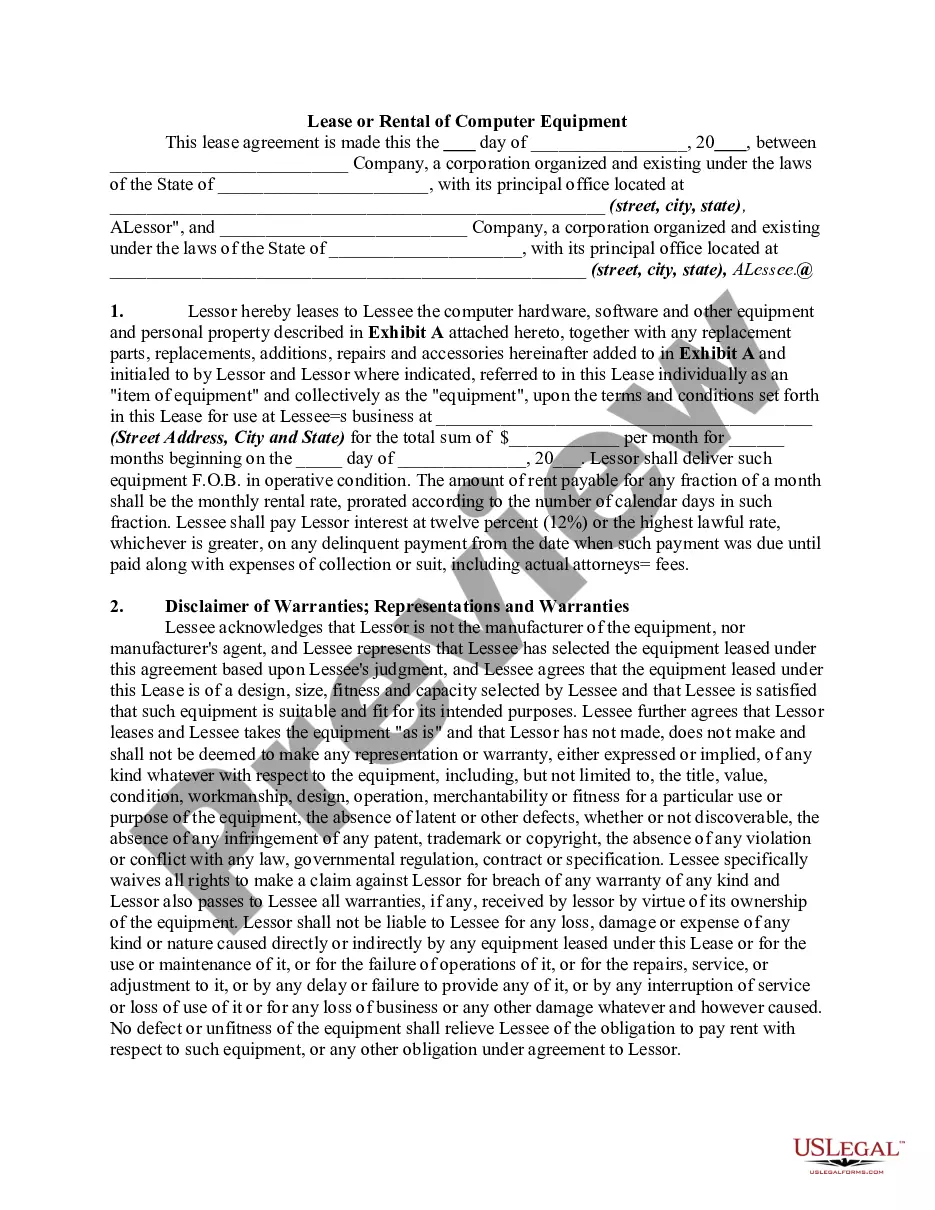
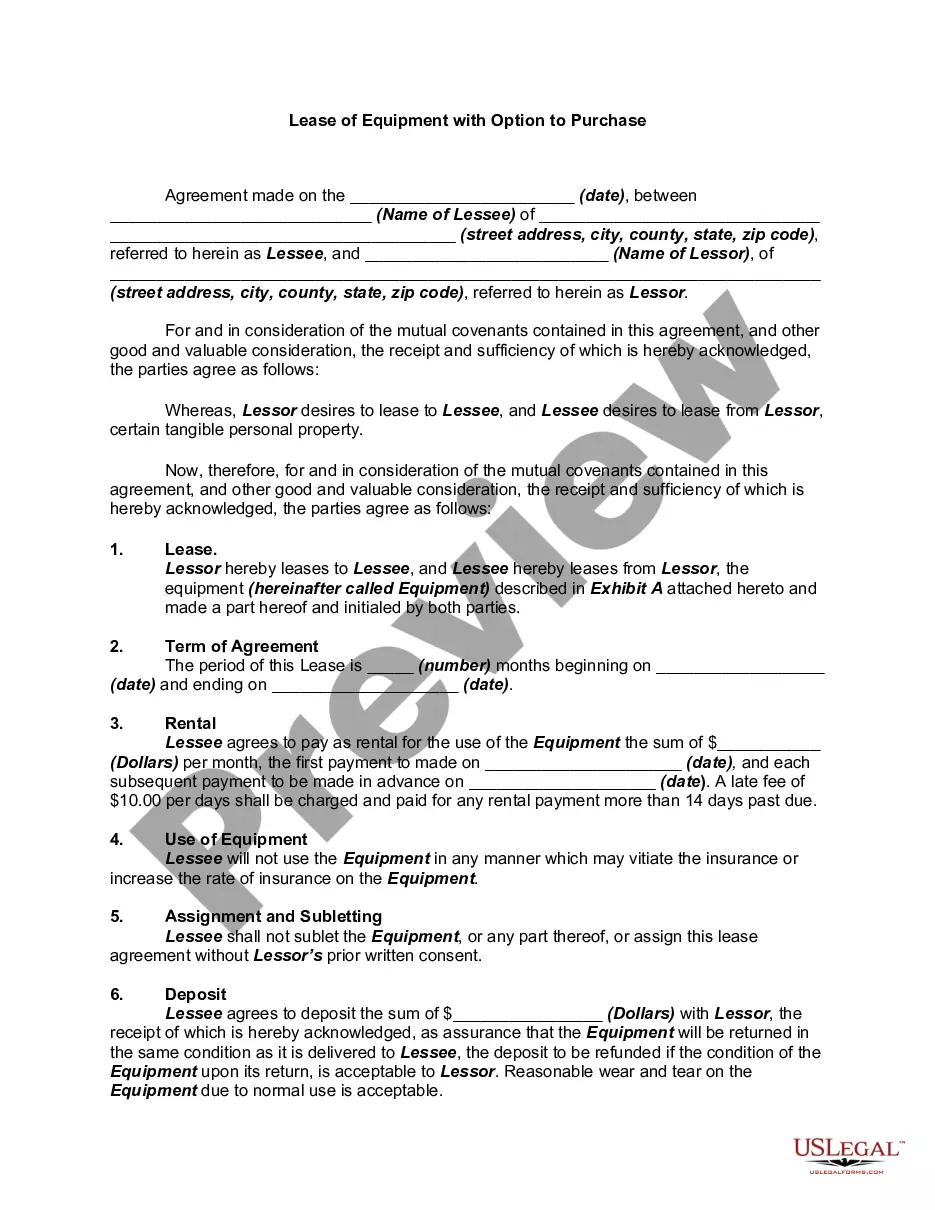
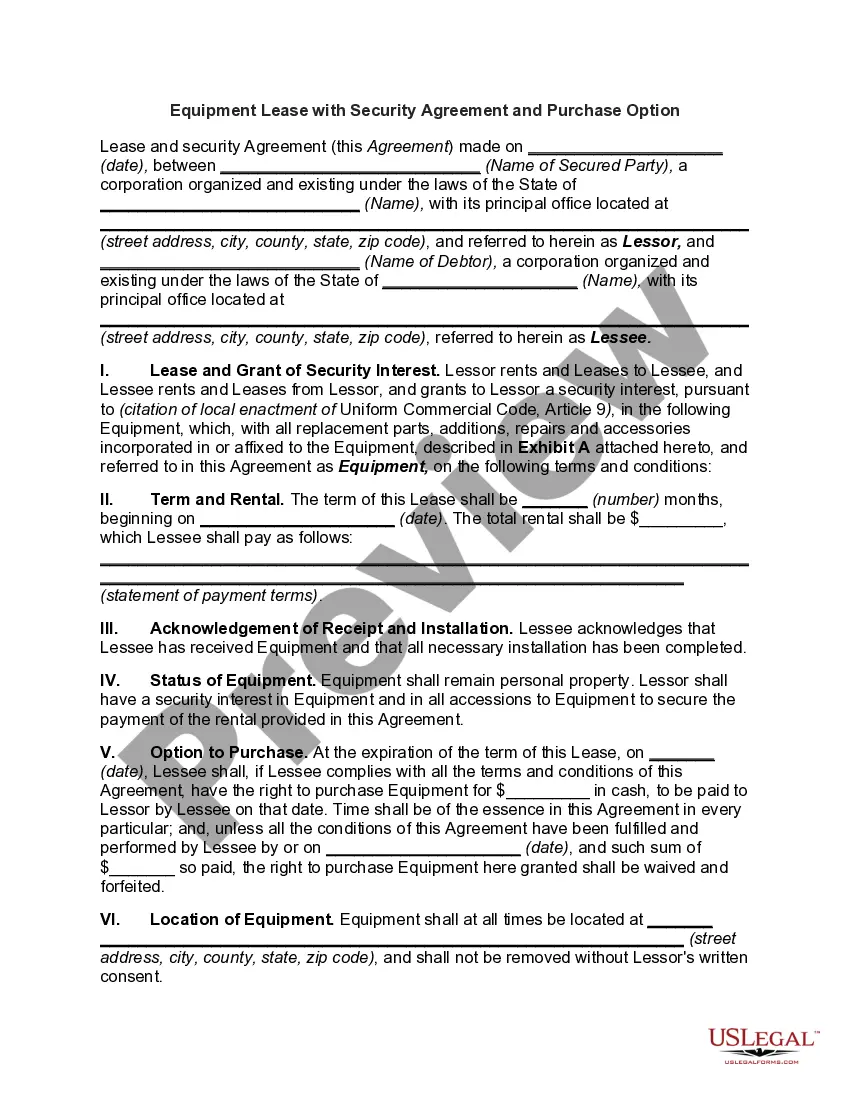
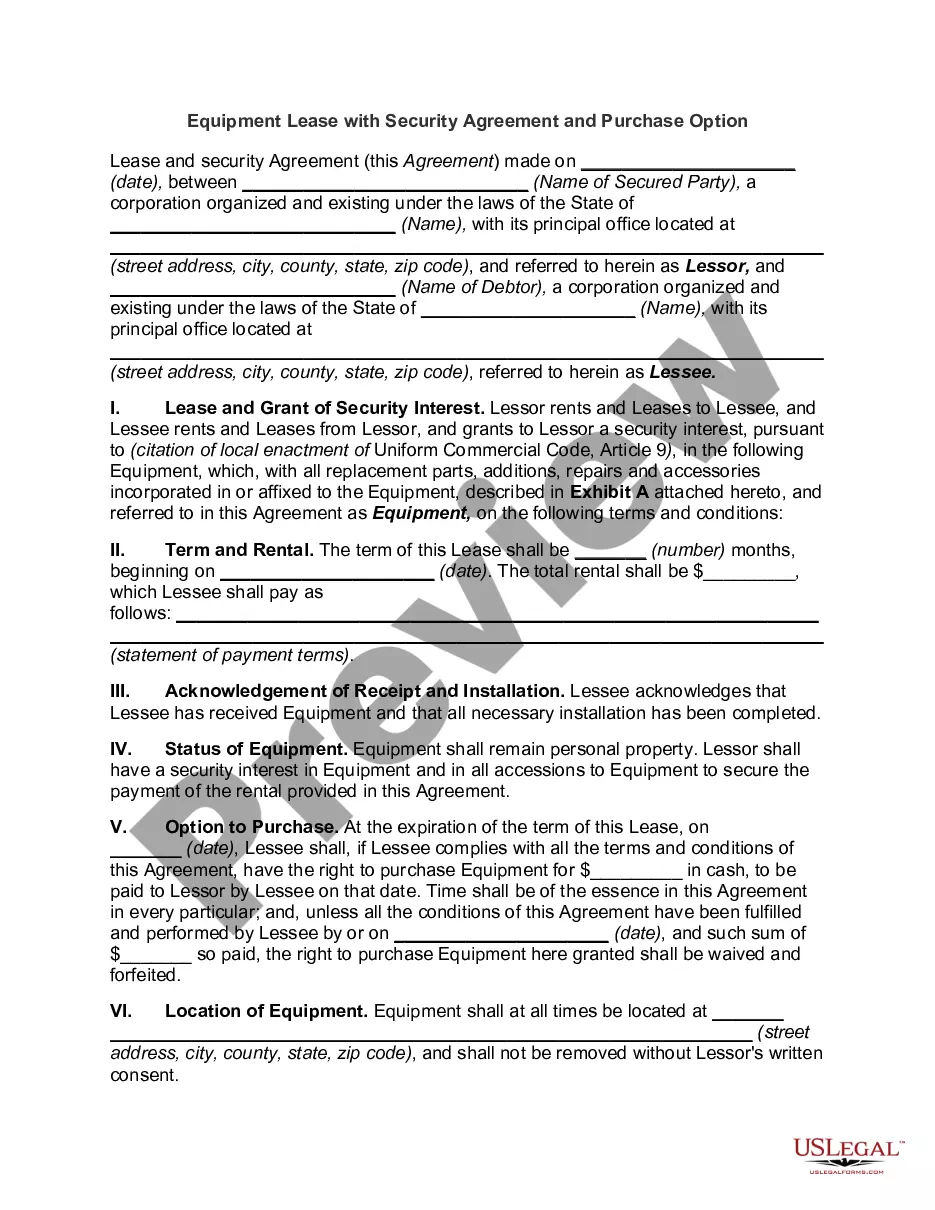
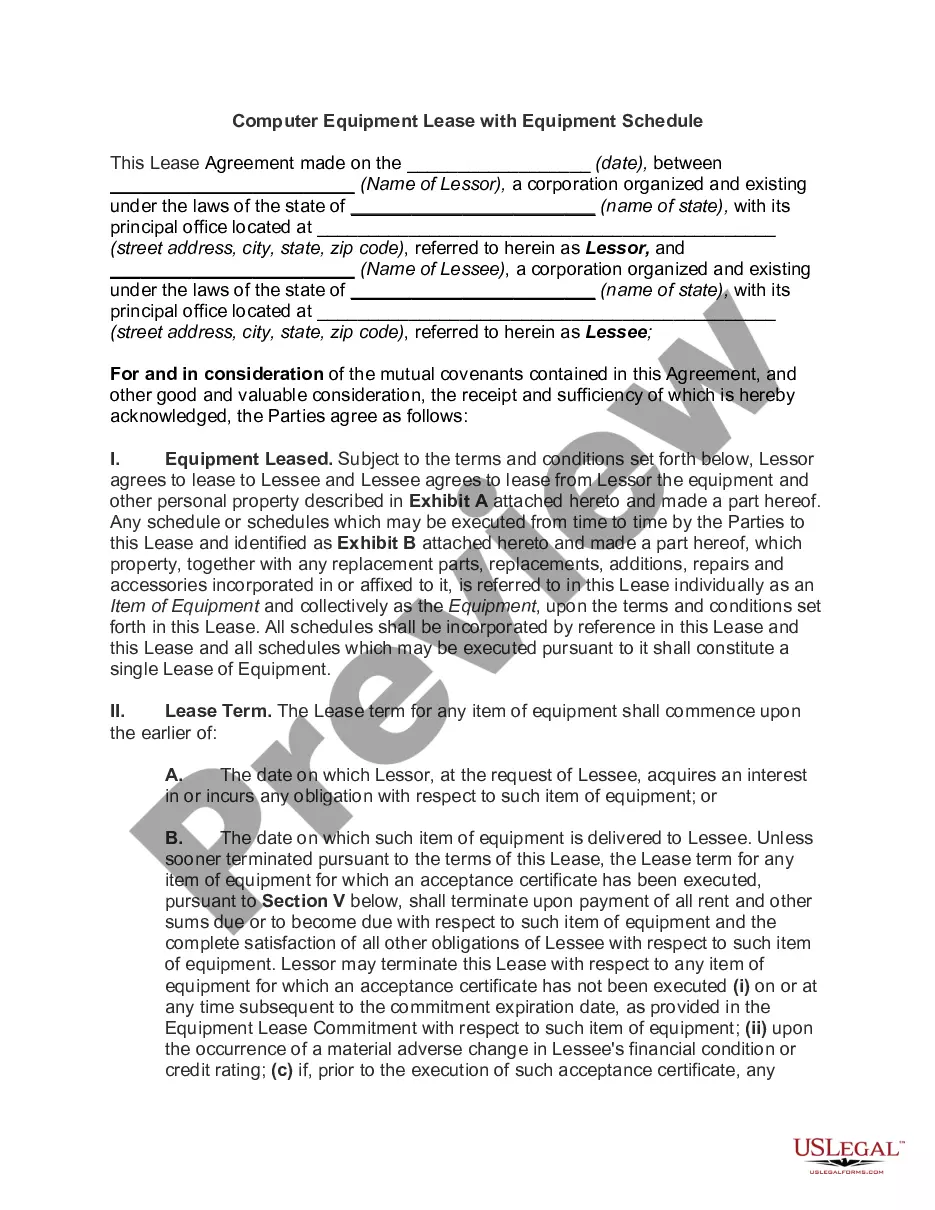
The Lease of Computer Equipment with Equipment Schedule and Option to Purchase is a legal document that allows one party (the lessee) to lease computer equipment from another party (the lessor) for a specific duration. This form sets forth the terms under which the lessee may use the equipment while providing an option to purchase it at the end of the lease term. Unlike standard rental agreements, this form includes an equipment schedule and specific clauses that address the option to buy the leased equipment.
What’s included in this form
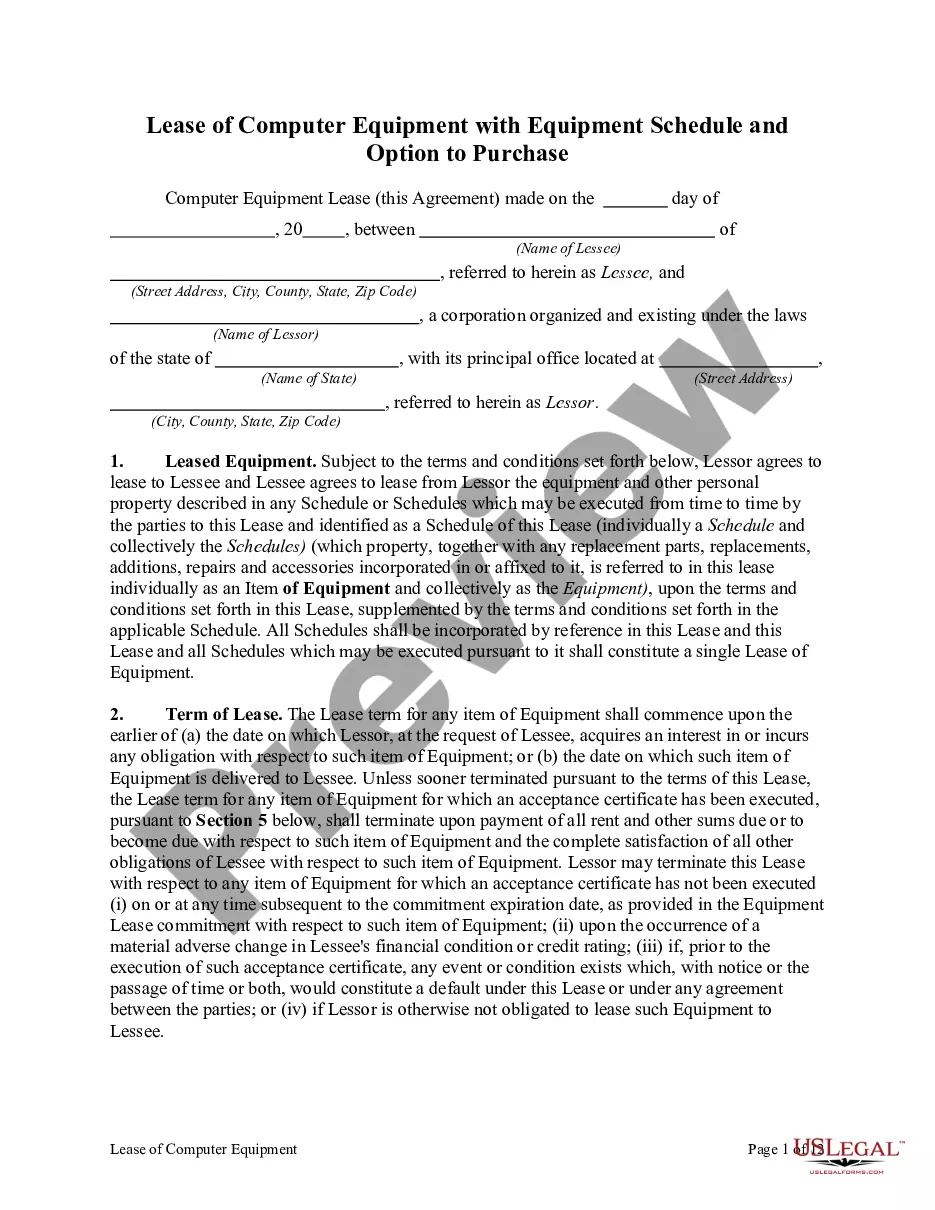
- Term of Lease: Outlines the duration of the lease and conditions for termination.
- Rent Payment: Specifies rental amounts and when payments are due.
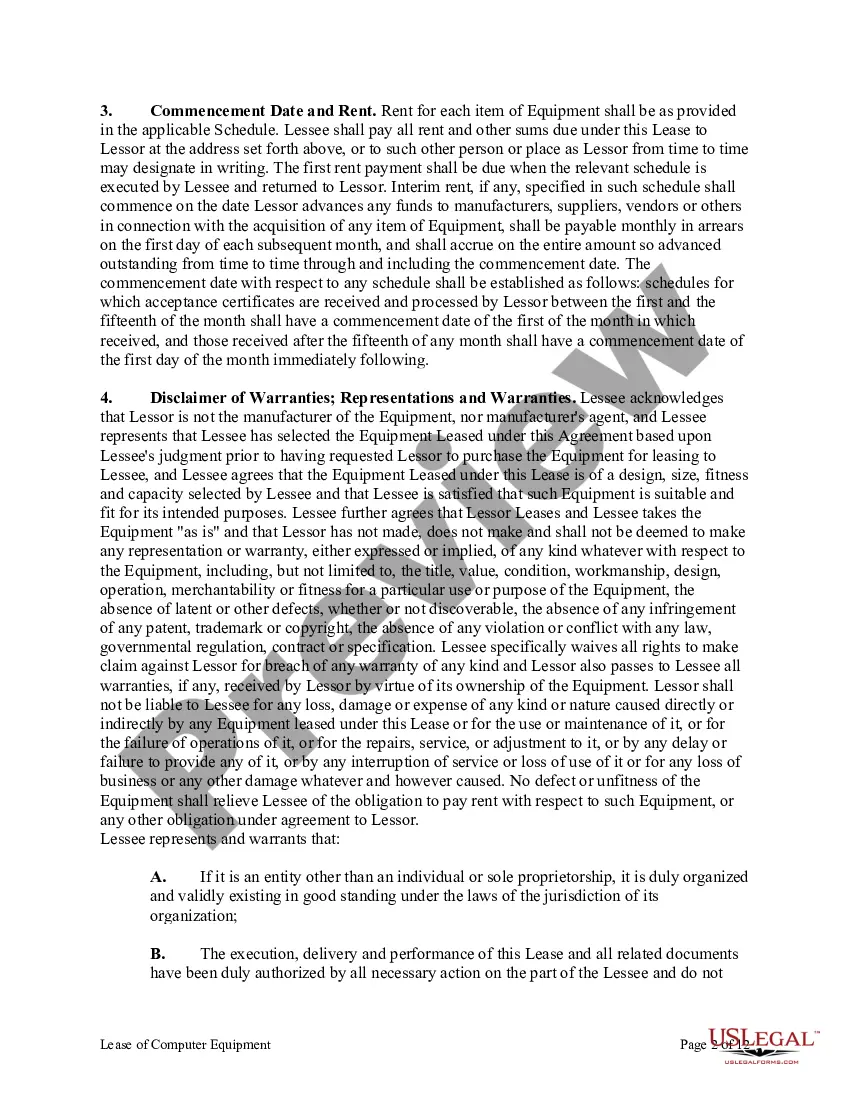
- Warranties and Disclaimers: States that the lessor does not provide warranties for the equipment.
- Indemnification Clause: Requires the lessee to cover costs related to claims or damages arising from the equipment rental.
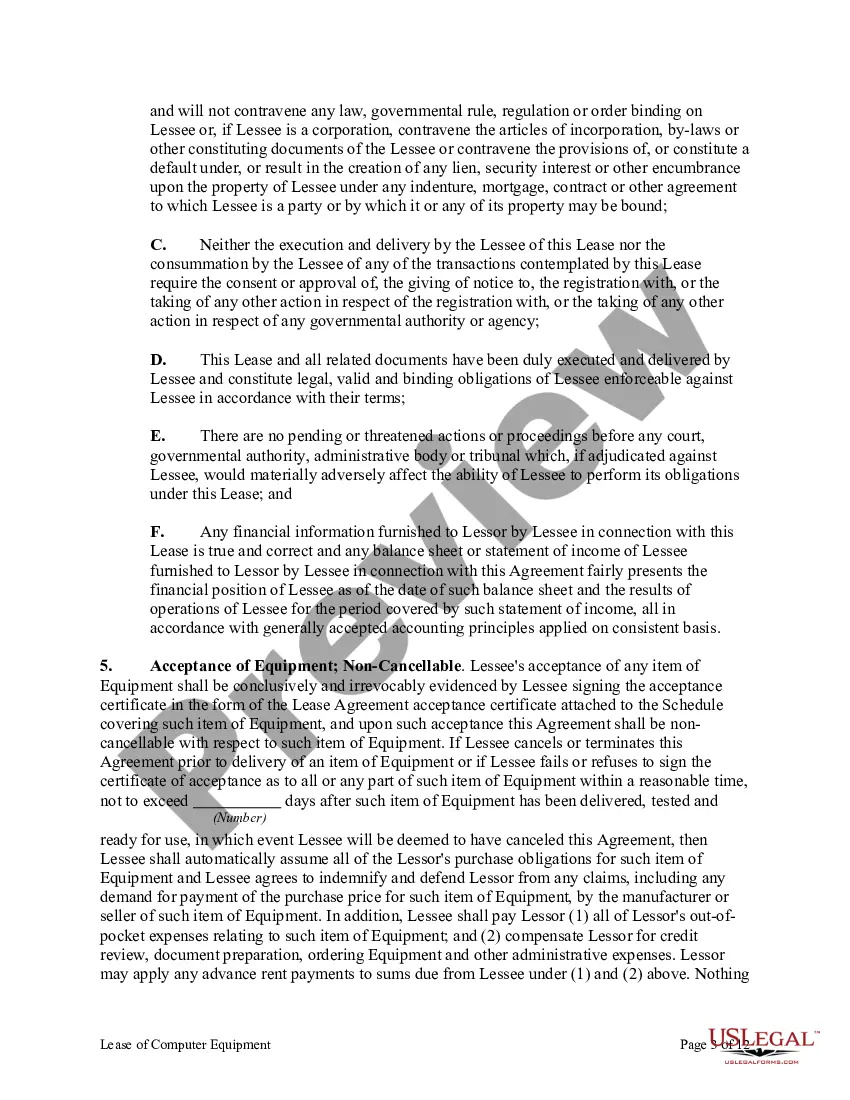
- Option to Purchase: Details the conditions under which the lessee can purchase the equipment at the end of the lease.
When to use this form
This form is useful when a business or individual needs to lease computer equipment without committing to a full purchase. It is particularly relevant when the lessee anticipates needing the equipment temporarily or wants the flexibility to purchase it later. Scenarios include upgrading technology, starting a new project, or managing cash flow by leasing rather than buying.
Who can use this document
- Businesses looking to acquire computer equipment without upfront purchase costs.
- Individuals who require temporary use of computer equipment for personal or professional purposes.
- Entities that want to retain the option to purchase leased equipment in the future.
How to prepare this document
- Identify the parties involved by filling in the names and addresses of the lessor and lessee.
- Specify the equipment being leased in the equipment schedule section.
- Enter the lease term, including the start and end dates.
- Detail the rental payment terms and the first rent due date.
- Review the option to purchase clause and indicate the desired terms.
Is notarization required?
This form does not typically require notarization unless specified by local law. It is always recommended to check with a legal professional for any specific requirements in your jurisdiction.
Get your form ready online
Our built-in tools help you complete, sign, share, and store your documents in one place.
Make edits, fill in missing information, and update formatting in US Legal Forms—just like you would in MS Word.
Download a copy, print it, send it by email, or mail it via USPS—whatever works best for your next step.
Sign and collect signatures with our SignNow integration. Send to multiple recipients, set reminders, and more. Go Premium to unlock E-Sign.
If this form requires notarization, complete it online through a secure video call—no need to meet a notary in person or wait for an appointment.
We protect your documents and personal data by following strict security and privacy standards.

Make edits, fill in missing information, and update formatting in US Legal Forms—just like you would in MS Word.

Download a copy, print it, send it by email, or mail it via USPS—whatever works best for your next step.

Sign and collect signatures with our SignNow integration. Send to multiple recipients, set reminders, and more. Go Premium to unlock E-Sign.

If this form requires notarization, complete it online through a secure video call—no need to meet a notary in person or wait for an appointment.

We protect your documents and personal data by following strict security and privacy standards.
Common mistakes to avoid
- Failing to accurately describe the equipment being leased.
- Not specifying payment due dates clearly.
- Neglecting to understand the implications of the indemnification clause.
- Overlooking state-specific regulations that may affect the lease.
Why use this form online
- Convenience of completing and storing documents from any location.
- Editability to customize the lease terms to fit specific needs.
- Reliability of forms prepared by licensed attorneys to ensure legal compliance.
Legal use & context
- This lease agreement is designed to be enforceable under applicable leasing laws.
- Both parties must adhere to the terms outlined to prevent disputes or legal issues.
- The option to purchase may have specific implications depending on the lease's jurisdiction.
Summary of main points
- This leasing form allows flexibility and an option to purchase computer equipment.
- Clear understanding of lease terms, including payment schedules, is crucial.
- Parties must ensure proper execution of the document to make it legally binding.
Looking for another form?

Form popularity
FAQ
The equipment account is debited by the present value of the minimum lease payments and the lease liability account is the difference between the value of the equipment and cash paid at the beginning of the year. Depreciation expense must be recorded for the equipment that is leased.
The equipment account is debited by the present value of the minimum lease payments and the lease liability account is the difference between the value of the equipment and cash paid at the beginning of the year. Depreciation expense must be recorded for the equipment that is leased.
Officially record the lease agreement and purchase option. The easiest way to do this is have the paperwork notarized and then recorded in your local public real estate records. Escrow the deed. Record a mortgage.
An equipment lease agreement is a contractual agreement where the lessor, who is the owner of the equipment, allows the lessee to use the equipment for a specified period in exchange for periodic payments. The subject of the lease may be vehicles, factory machines, or any other equipment.
Unlike an outright purchase or equipment secured through a standard loan, equipment under an operating lease cannot be listed as capital. It's accounted for as a rental expense. This provides two specific financial advantages: Equipment is not recorded as an asset or liability.
Lease-option contracts give you the right to buy the home when the lease expires, while lease-purchase contracts require you to buy it. You pay rent throughout the lease, and in some cases, a percentage of the payment is applied to the purchase price.
Assets being leased are not recorded on the company's balance sheet; they are expensed on the income statement. So, they affect both operating and net income.
A lessee must capitalize a leased asset if the lease contract entered into satisfies at least one of the four criteria published by the Financial Accounting Standards Board (FASB). An asset should be capitalized if:The lease runs for 75% or more of the asset's useful life.