Equipment Lease with Security Agreement and Purchase Option
What this document covers
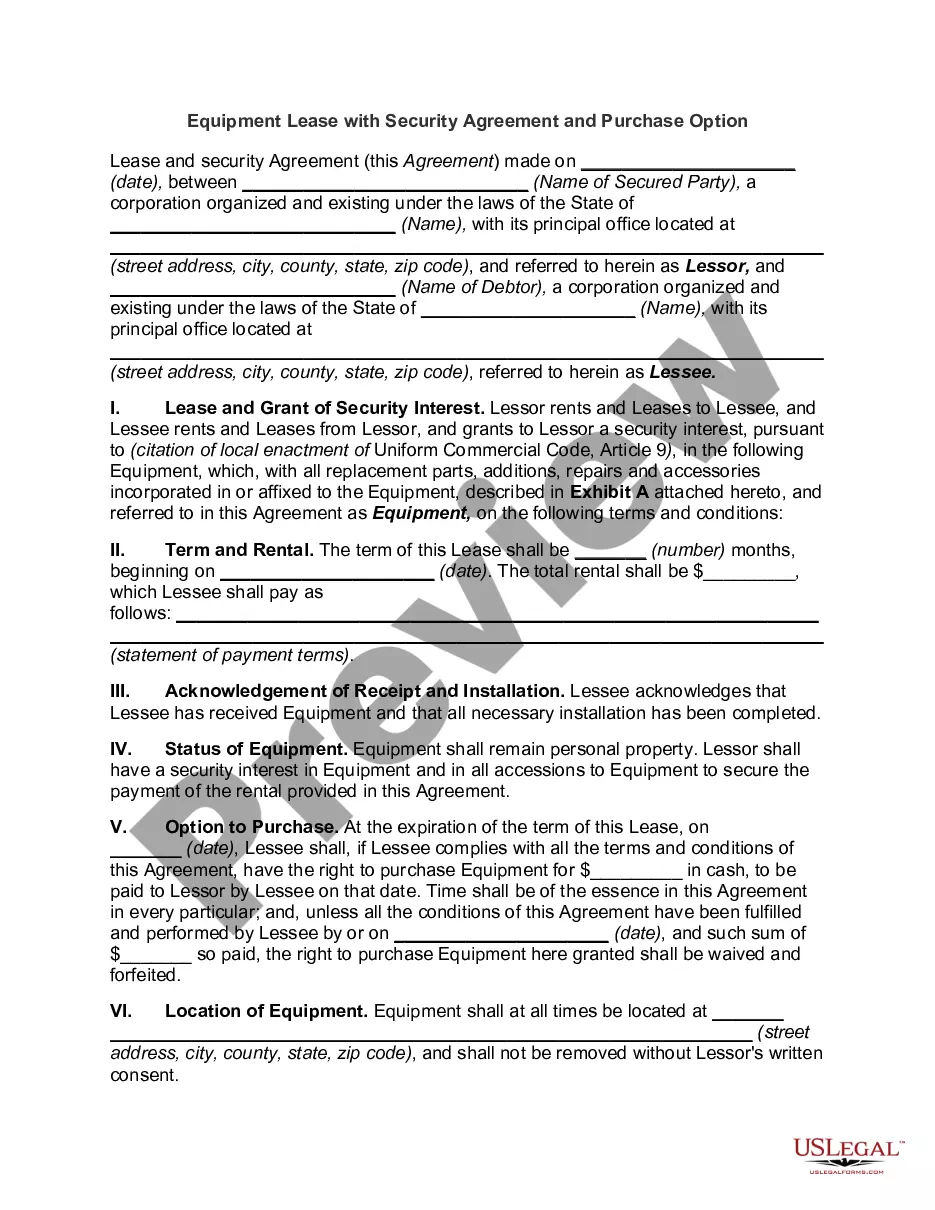
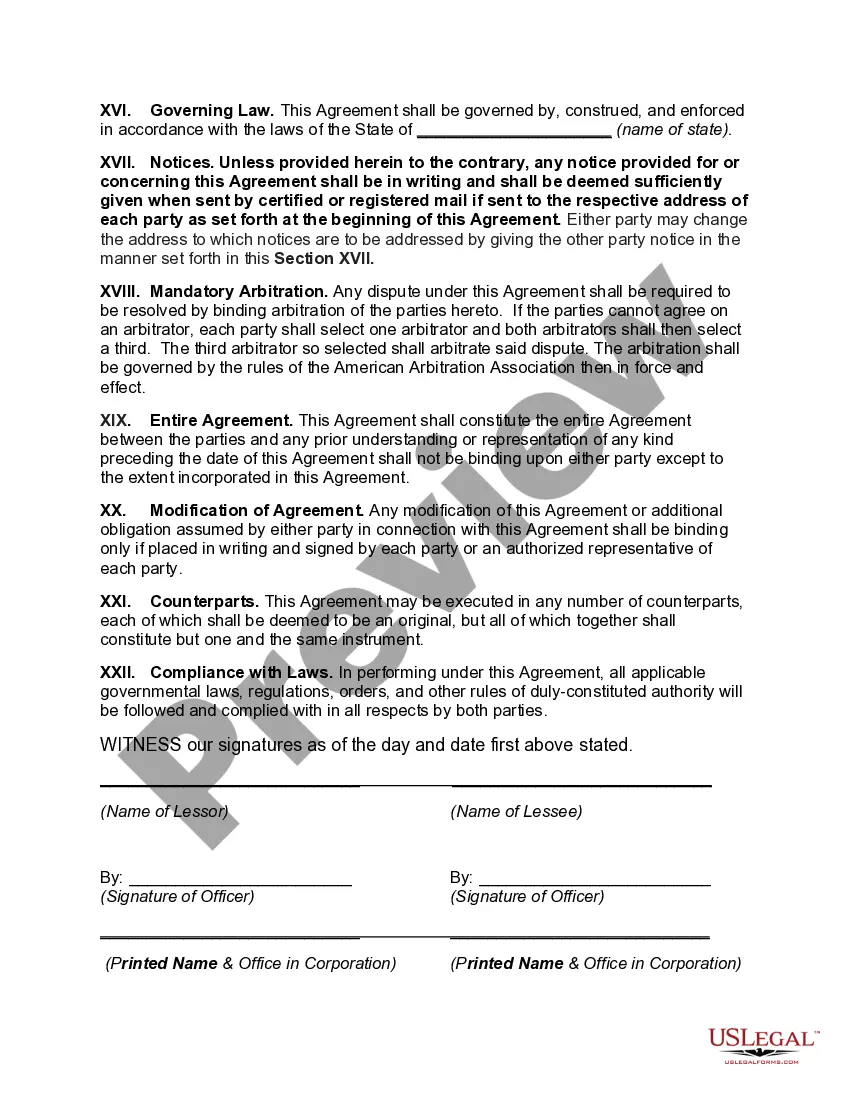
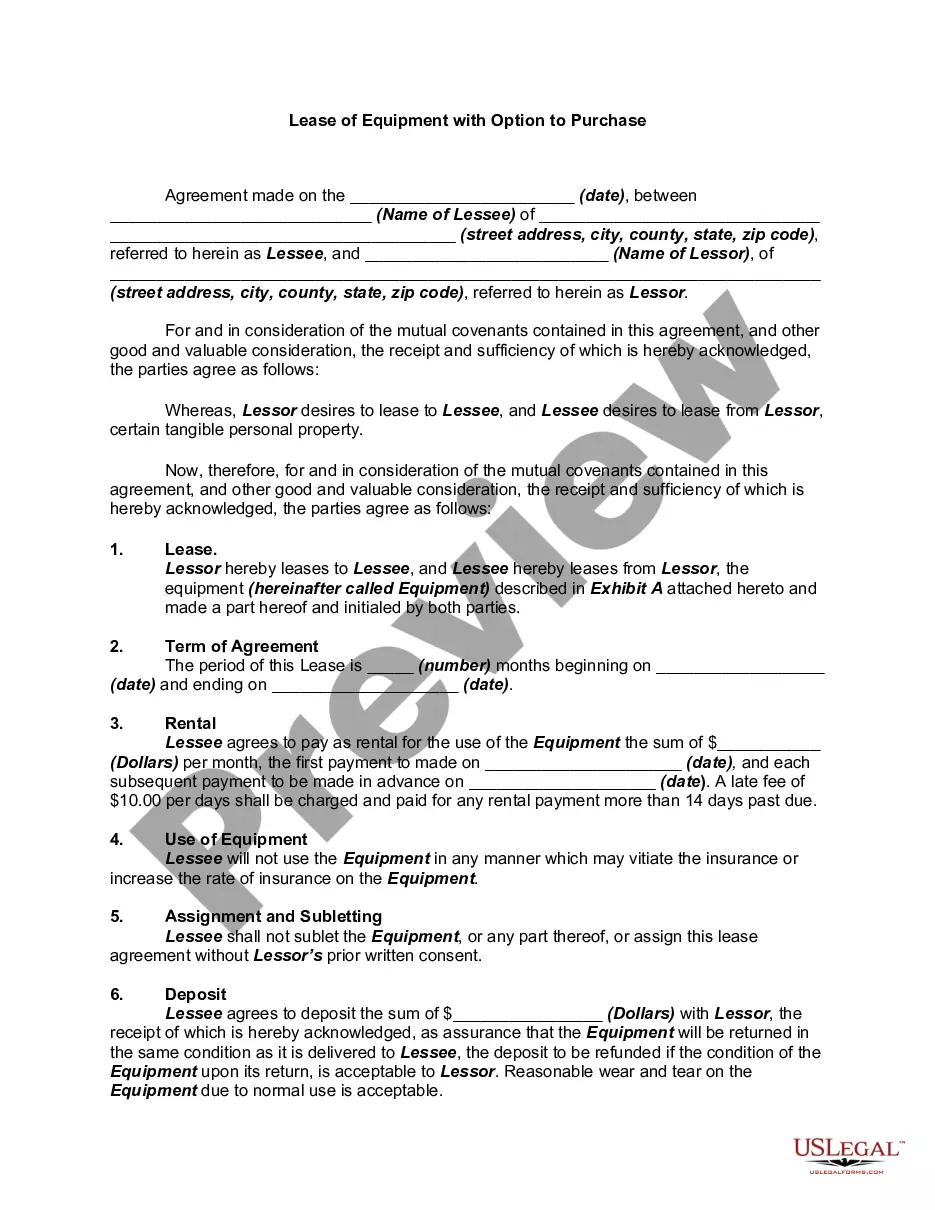
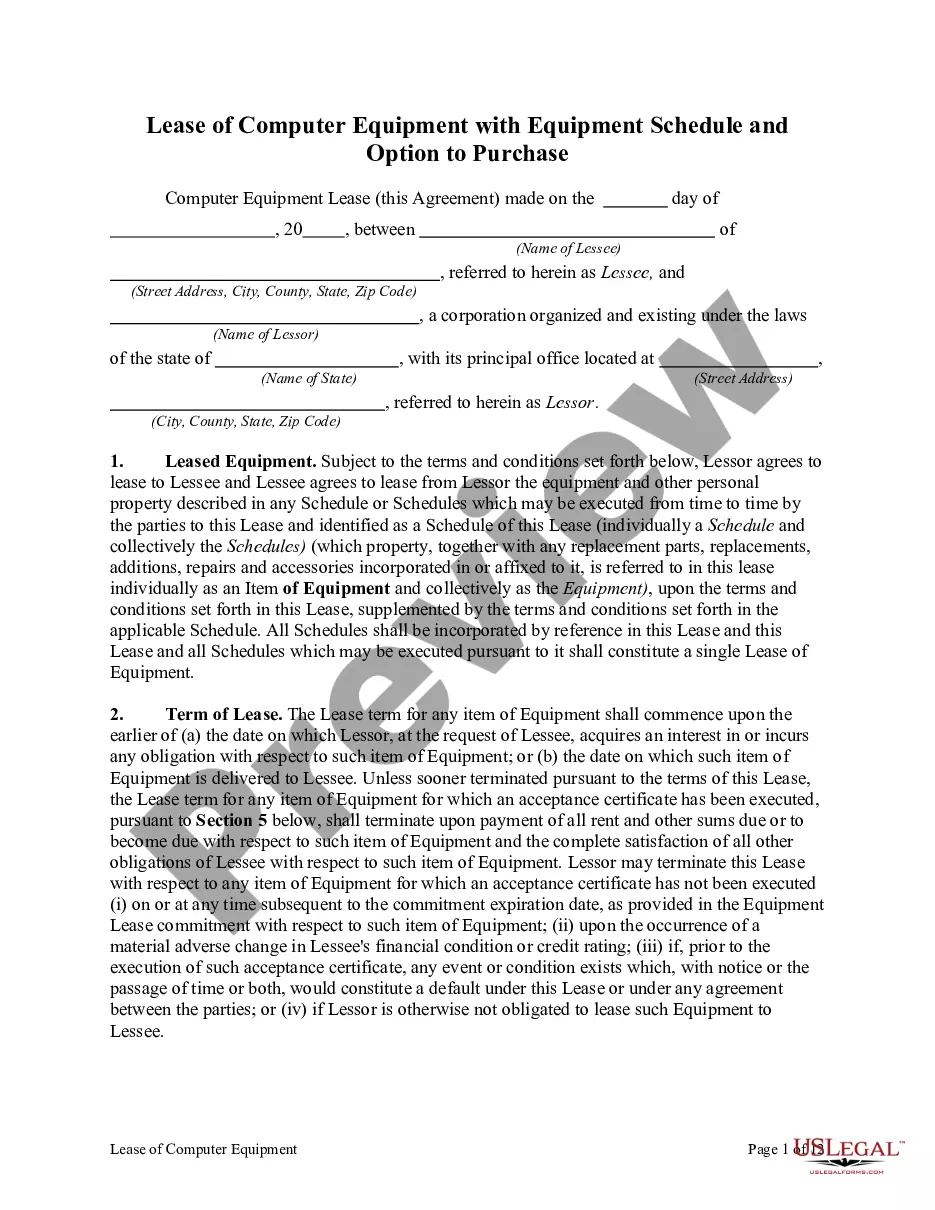
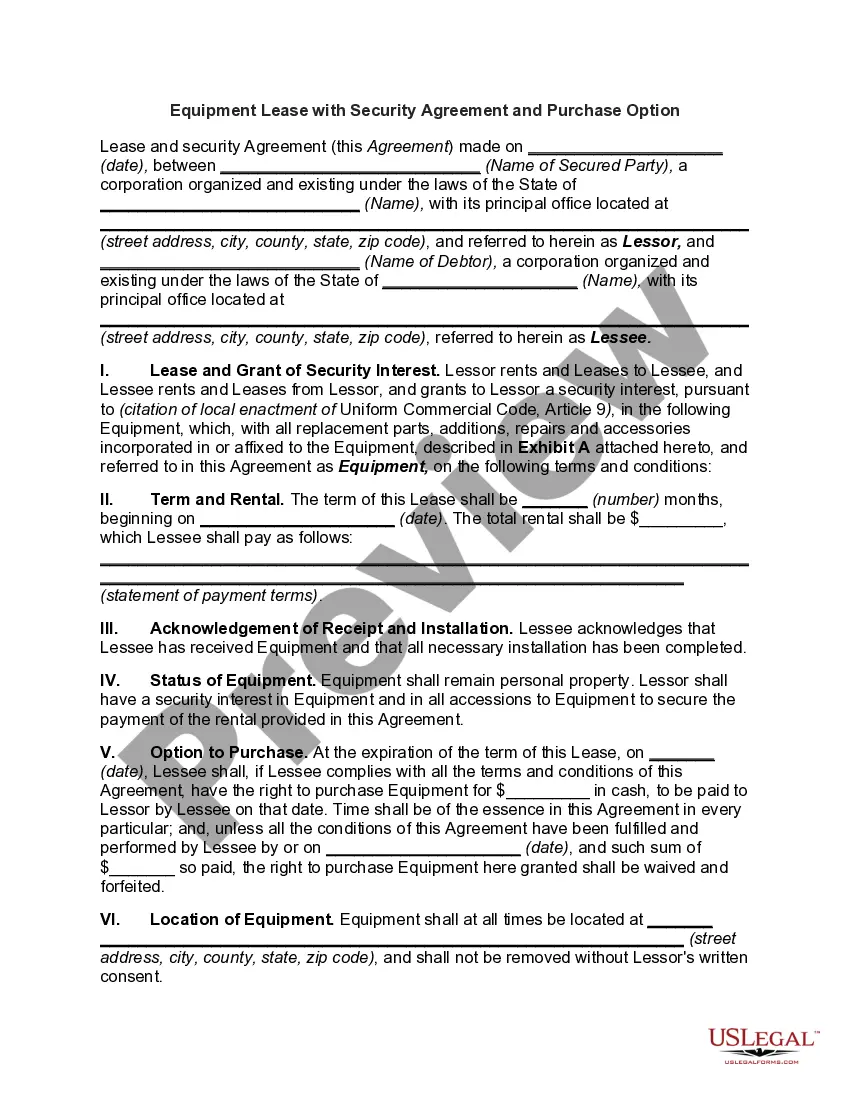
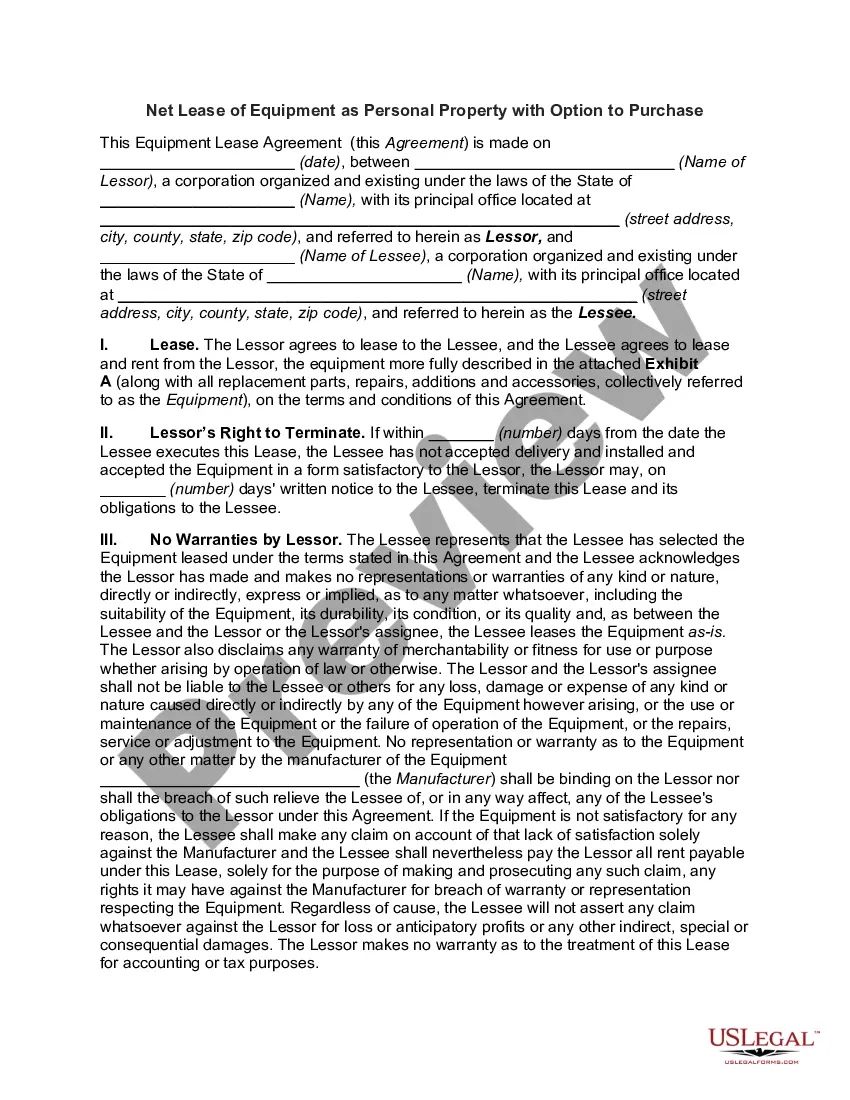
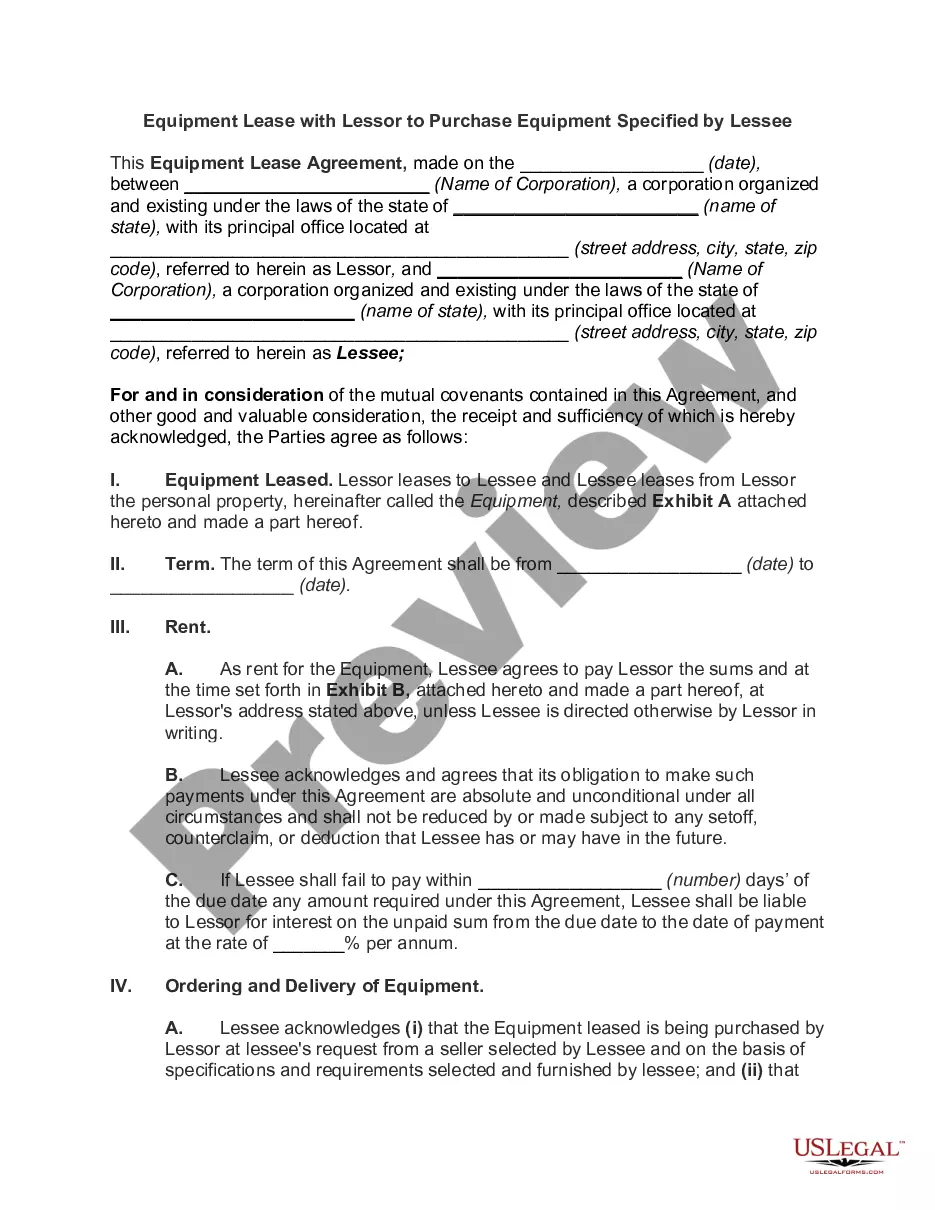
The Equipment Lease with Security Agreement and Purchase Option is a legal document that outlines the terms under which a lessor allows a lessee to use specific equipment in exchange for periodic payments. This form not only facilitates the rental of machinery, vehicles, or other equipment but also provides the lessee with the option to purchase the equipment at the end of the lease term. Unlike standard lease agreements, this form includes a security interest clause to protect the lessor's ownership rights, thereby ensuring both parties understand their responsibilities and rights throughout the lease period.
Key components of this form
- Identification of the lessor and lessee, including legal names and addresses.
- Detailed description of the leased equipment, along with security interest provisions.
- Lease duration and payment terms, including payment schedules.
- Conditions for the option to purchase the equipment at the end of the lease.
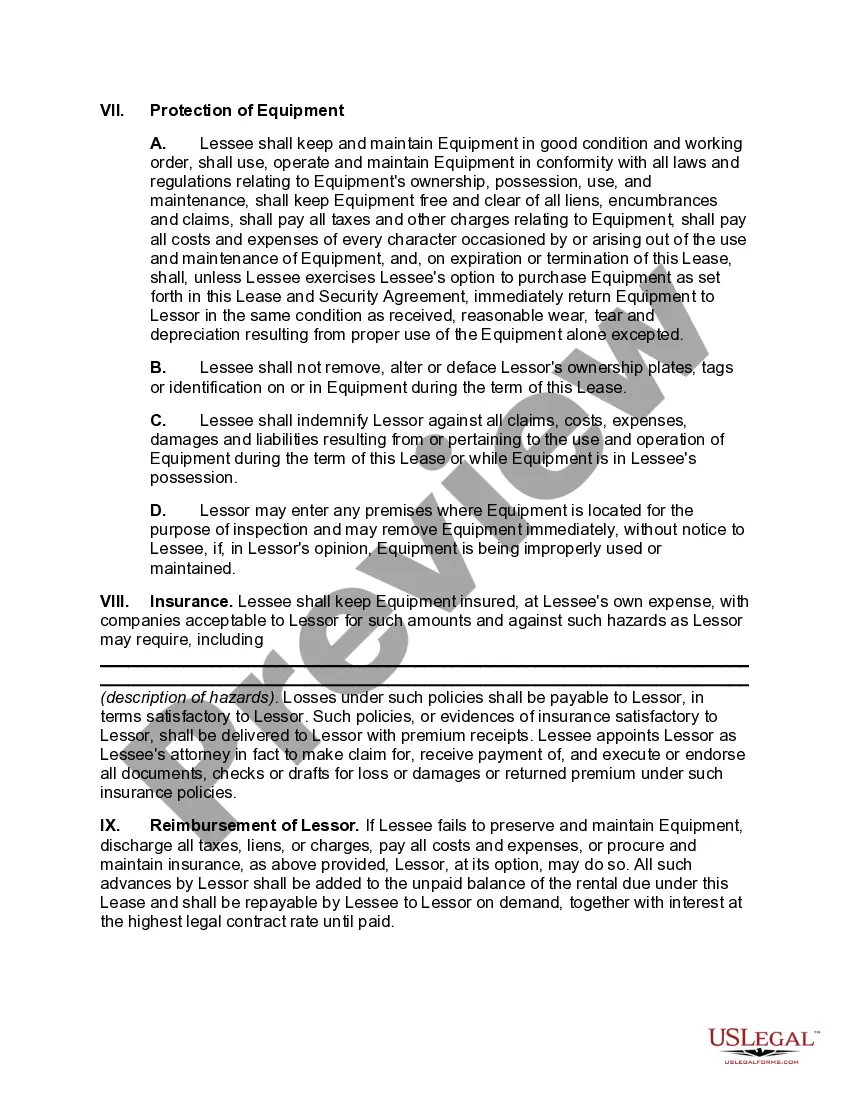
- Responsibilities of the lessee regarding the maintenance and insurance of the equipment.
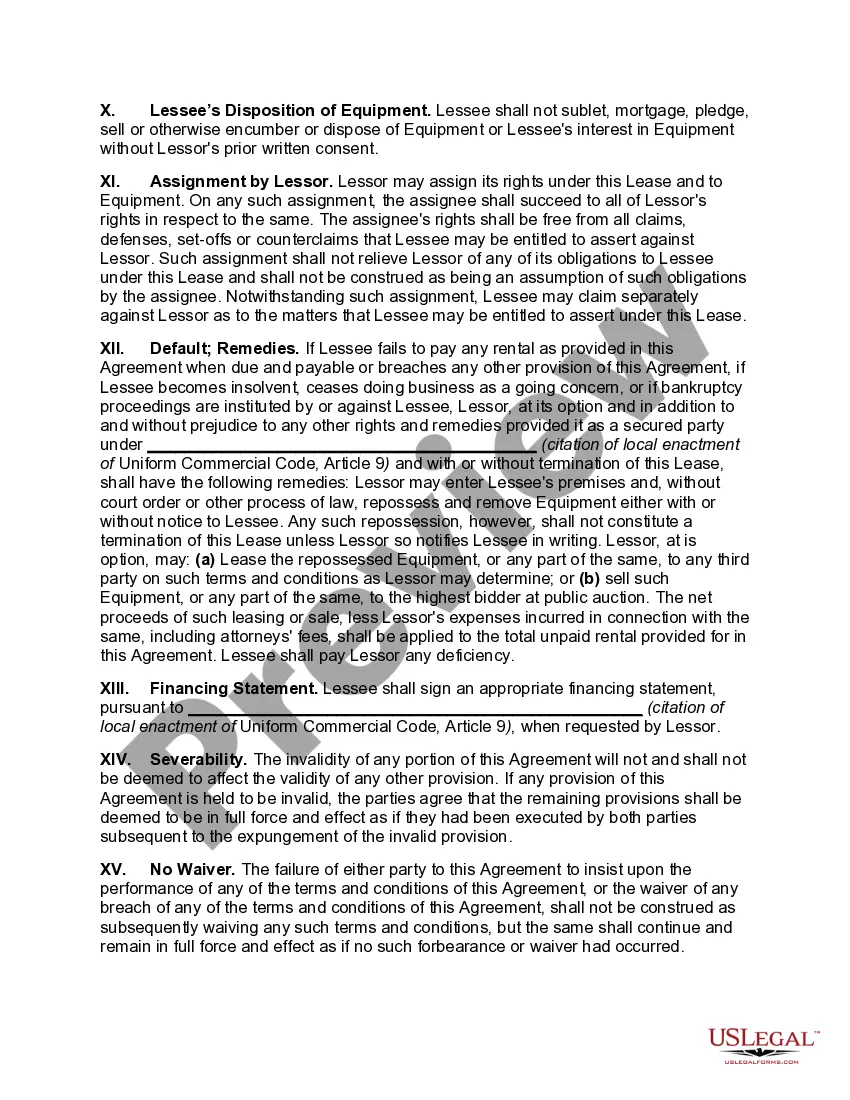
- Clauses addressing default remedies, including repossession by the lessor.
When to use this form
Use this form when you need to lease equipment for your business or personal use while retaining an option to buy it later. It is beneficial when you want to manage cash flow by making smaller payments instead of a large upfront purchase. This form is suitable for arrangements involving machinery, vehicles, or other significant equipment where security for the lessor is also essential.
Who should use this form
- Businesses looking to acquire equipment without a substantial initial investment.
- Individuals or companies requiring equipment for a defined period with an interest in purchasing it afterward.
- Equipment owners wanting to ensure their interest in the leased asset is legally protected.
How to prepare this document
- Fill in the names and addresses of both the lessor and the lessee in the designated sections.
- Describe the equipment being leased in detail, including any specifications or unique identifiers.
- Specify the lease term, including the start and end dates, and outline the payment terms clearly.
- Indicate the purchase option amount and the conditions under which it can be exercised.
- Ensure both parties sign and date the agreement, confirming their acceptance of the terms.
Does this document require notarization?
This form does not typically require notarization unless specified by local law. It is always recommended to check if your jurisdiction mandates any specific requirements for leasing agreements.
Get your form ready online
Our built-in tools help you complete, sign, share, and store your documents in one place.
Make edits, fill in missing information, and update formatting in US Legal Forms—just like you would in MS Word.
Download a copy, print it, send it by email, or mail it via USPS—whatever works best for your next step.
Sign and collect signatures with our SignNow integration. Send to multiple recipients, set reminders, and more. Go Premium to unlock E-Sign.
If this form requires notarization, complete it online through a secure video call—no need to meet a notary in person or wait for an appointment.
We protect your documents and personal data by following strict security and privacy standards.

Make edits, fill in missing information, and update formatting in US Legal Forms—just like you would in MS Word.

Download a copy, print it, send it by email, or mail it via USPS—whatever works best for your next step.

Sign and collect signatures with our SignNow integration. Send to multiple recipients, set reminders, and more. Go Premium to unlock E-Sign.

If this form requires notarization, complete it online through a secure video call—no need to meet a notary in person or wait for an appointment.

We protect your documents and personal data by following strict security and privacy standards.
Common mistakes
- Failing to provide a detailed description of the leased equipment.
- Not setting clear payment terms or dates, which may lead to disputes.
- Overlooking the insurance and maintenance responsibilities of the lessee.
- Neglecting to have both parties sign and date the agreement, which can affect enforceability.
Advantages of online completion
- Convenience of immediate access and download without needing to visit a lawyer.
- Editability allows for customization to fit specific lease arrangements.
- Time-saving process, allowing for quick completion and use compared to traditional methods.
- Reliability of forms drafted by licensed attorneys to ensure legal compliance.
Looking for another form?
Form popularity
FAQ
The lessee records the leased right as an item of property, plant, and equipment, which is then depreciated over its useful life to the lessee. The lessee must also record a liability reflecting the obligation to make continuing payments under the lease agreement, similar to the accounting for a note payable.
If a lease has a bargain purchase option, the lessee must record the asset as a capital lease in an amount equal to the present value of all minimum lease payments over the lease term. During the lease term, each minimum lease payment should be allocated between a reduction of the lease obligation and interest expense.
The equipment account in the balance sheet is debited by the present value of the minimum lease payments, and the lease liability account is the difference between the value of the equipment and cash paid at the beginning of the year.
The difference between a lease option and a lease purchase agreement is that the lease option only obligates the seller to sell. A lease purchase agreement commits both parties to the sale barring breach of contract or the buyer's inability to secure a mortgage.
Under ASC 842, leases containing a purchase option are accounted for as finance leases if the lease contains a purchase option the lessee is reasonably certain to exercise. Additionally, a title transfer at the end of a lease, designates the lease as finance.
Unlike an outright purchase or equipment secured through a standard loan, equipment under an operating lease cannot be listed as capital. It's accounted for as a rental expense. This provides two specific financial advantages: Equipment is not recorded as an asset or liability.
Leasing capital equipment: Lowers upfront costs, compared to buying equipment outright. Reduces the chance that your company gets stuck with obsolete equipment, if your contract specifies upgrades. Transfers the cost of equipment maintenance to the leasing company, again ing to the terms of your contract.
Accounting for an Operating Lease Click on the Create icon ?. In the Other column, choose Journal Entry. Add the relevant asset account for Operating Lease- Right-of-Use asset. Debit the present value of your lease payments. Choose the applicable liability account and input the present value of your lease payments.