Idaho Training Contract - Horse Equine Forms
What is this form?
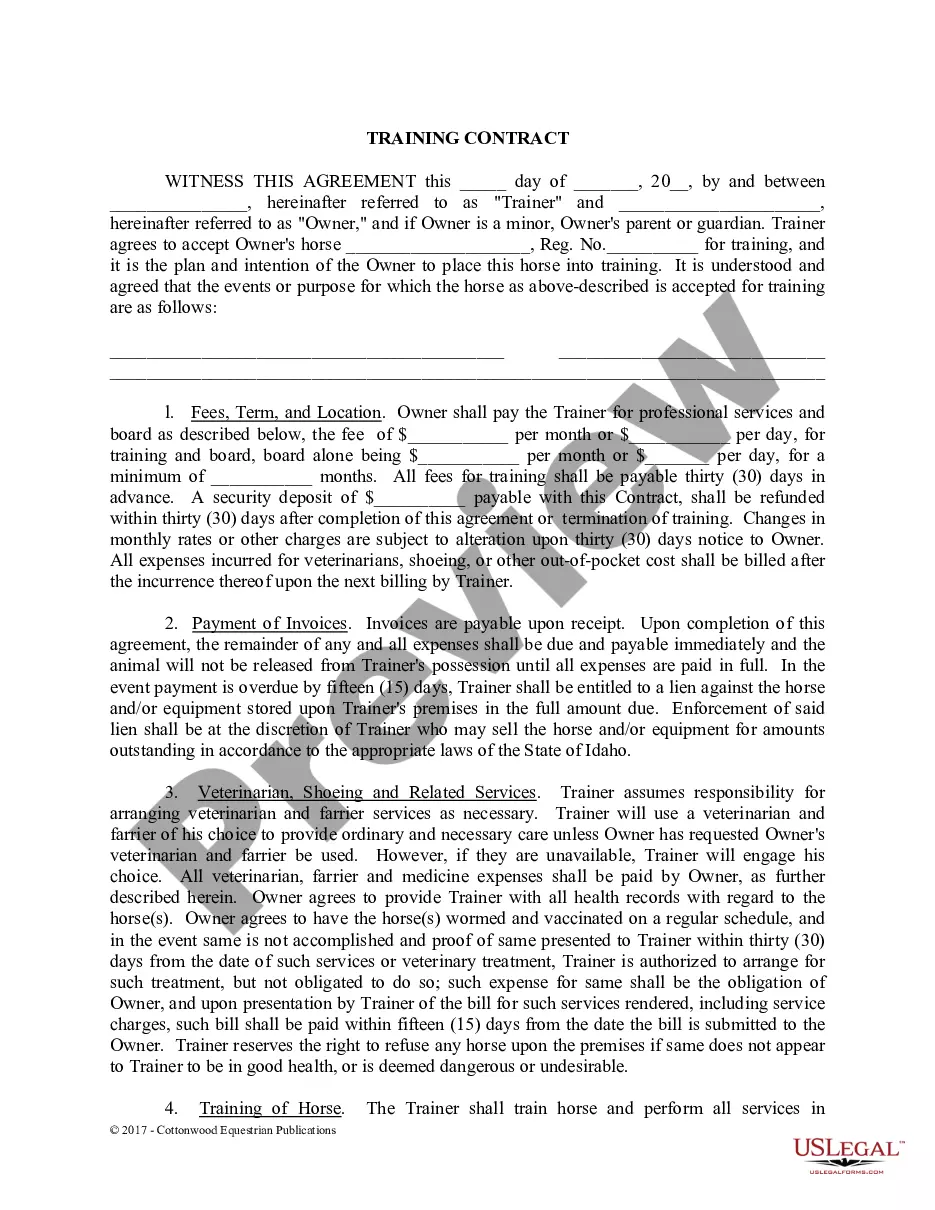
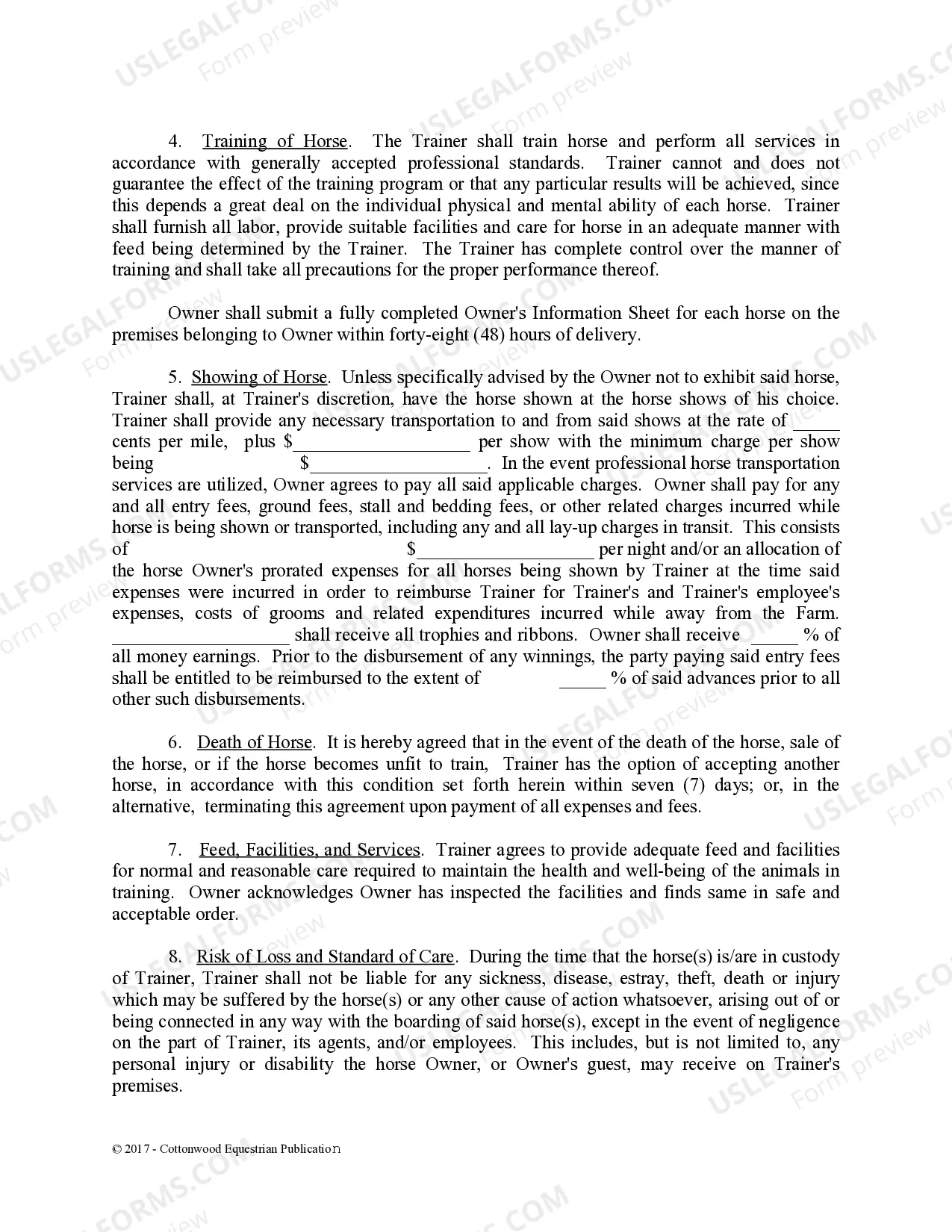
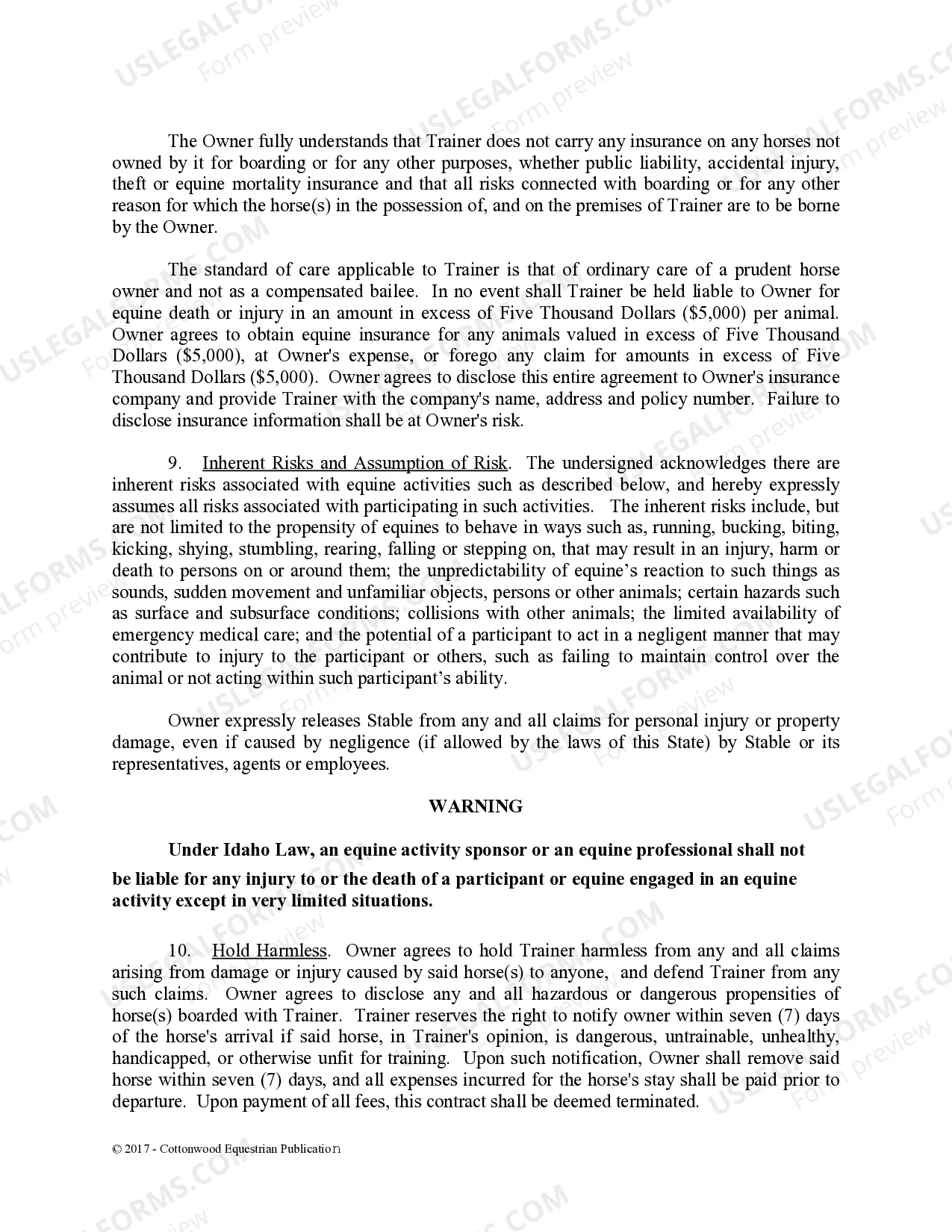
The Training Contract for Horse Equine Forms is a legal agreement between a horse trainer and a horse owner. This contract outlines the responsibilities of both parties, including training, boarding, veterinary care, and provisions for showing the horse. Unlike simpler agreements, this contract includes detailed terms and conditions that protect both the trainer and the owner, ensuring clarity and mutual understanding throughout the training process.
Key parts of this document
- Identification of the trainer and owner, including the horse's details.
- Fee structure for training services and boarding including advance payment terms.
- Responsibilities for arranging veterinary and farrier care.
- Provisions for showing the horse, including costs and earnings distribution.
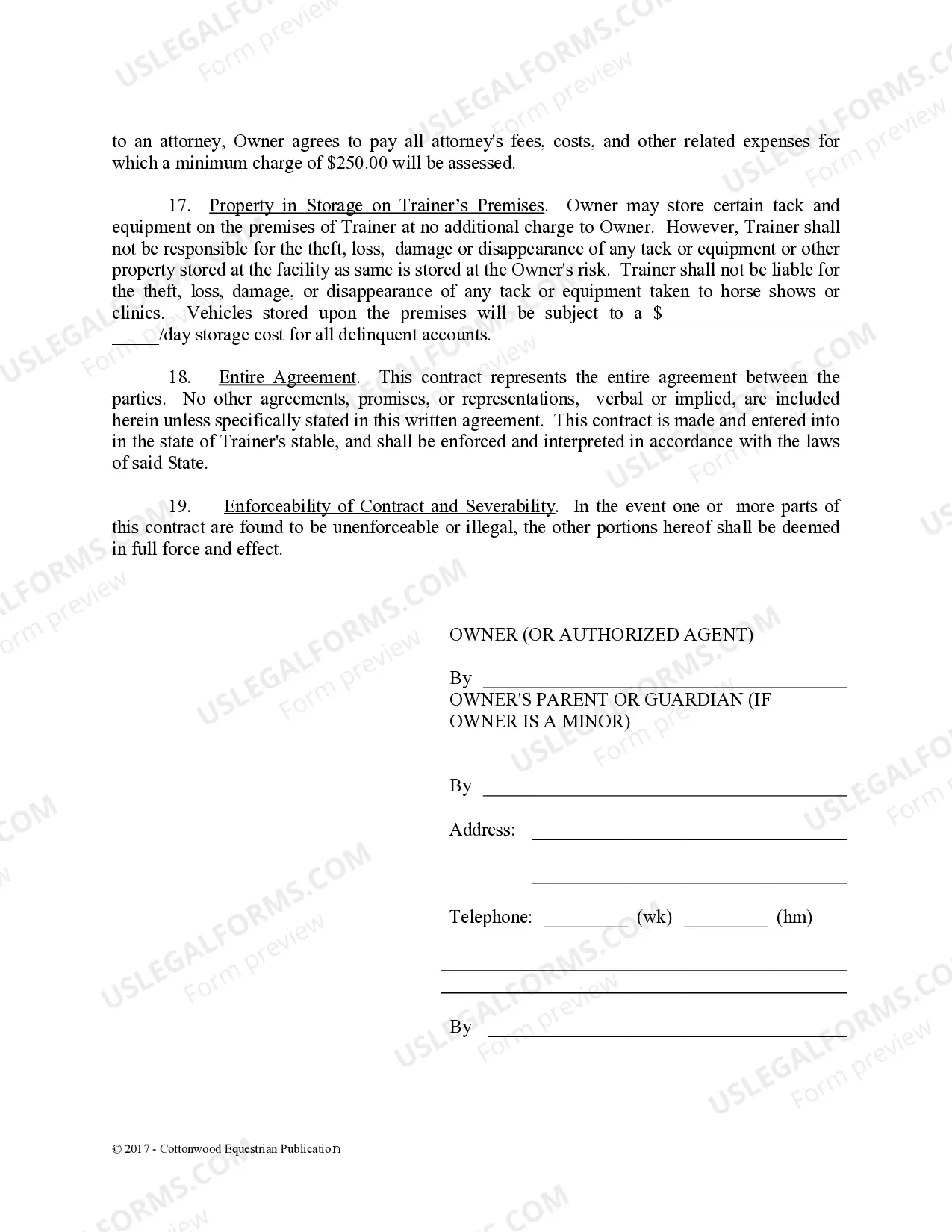
- Liability limitations and release of claims for damage or injury.
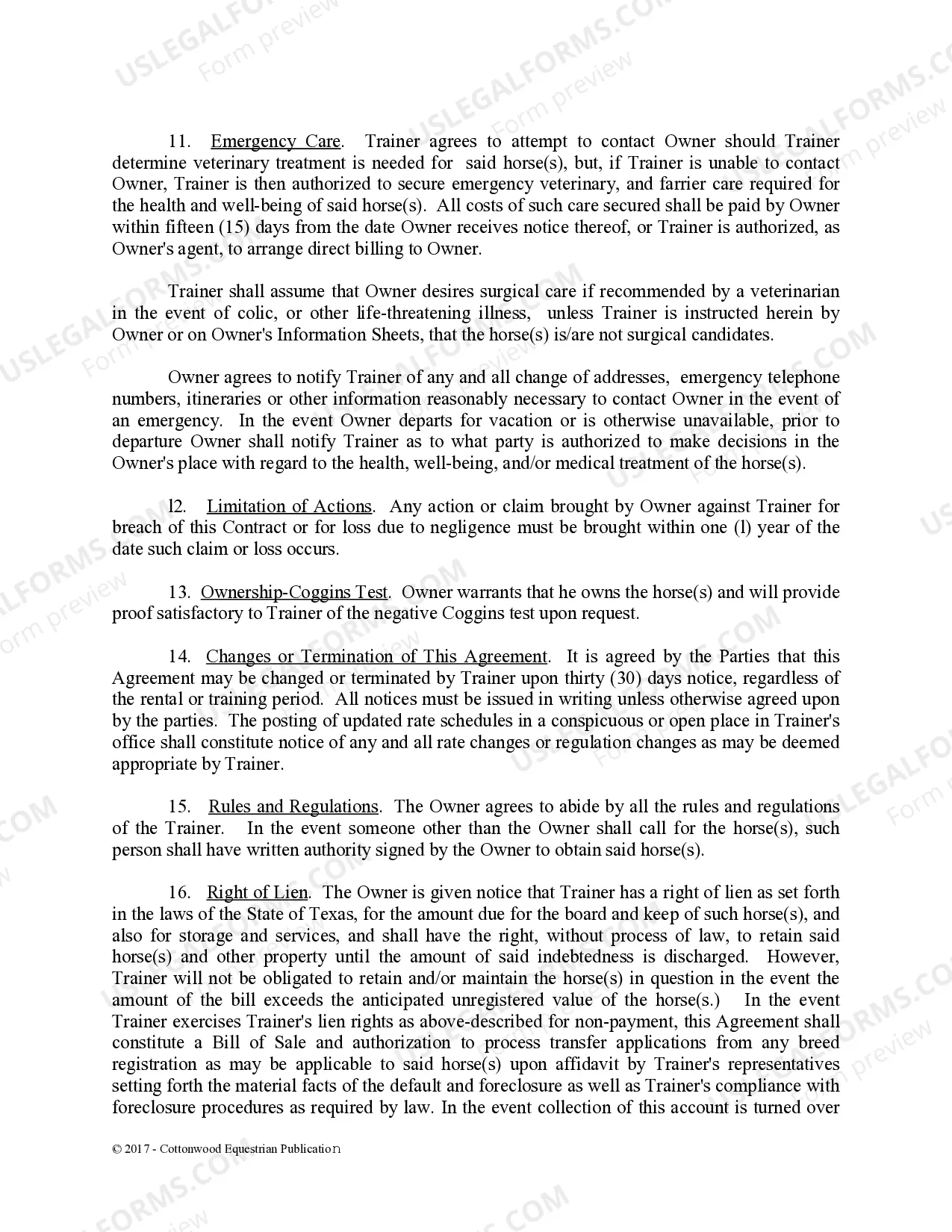
- Emergency care procedures and costs for unforeseen treatments.

When to use this form
This Training Contract should be utilized whenever a horse owner seeks to place their horse into the care of a professional trainer. It is essential for defining the terms of care, training expectations, and financial obligations, thereby reducing potential misunderstandings. Common scenarios for its use include competitive equestrian training, rehabilitation of horses, and when establishing a formal relationship for boarding and training services.
Who needs this form
- Horse owners looking to have their horses professionally trained.
- Trainers who require a formal agreement with horse owners.
- Guardians of minor owners who are engaging in training contracts.
Completing this form step by step
- Identify the trainer and owner by entering their names and contact information.
- Provide detailed descriptions of the horse, including registration number and condition.
- Specify fee amounts for training and boarding, including payment terms.
- Detail any arrangements regarding veterinary and farrier services.
- Include provisions for showing the horse and distribution of potential earnings.
- Both parties should sign and date the contract for it to be valid.
Notarization requirements for this form
This form does not typically require notarization unless specified by local law. It is advisable to check with local regulations or legal counsel regarding specific notarization requirements to ensure validity.
Get your form ready online
Our built-in tools help you complete, sign, share, and store your documents in one place.
Make edits, fill in missing information, and update formatting in US Legal Forms—just like you would in MS Word.
Download a copy, print it, send it by email, or mail it via USPS—whatever works best for your next step.
Sign and collect signatures with our SignNow integration. Send to multiple recipients, set reminders, and more. Go Premium to unlock E-Sign.
If this form requires notarization, complete it online through a secure video call—no need to meet a notary in person or wait for an appointment.
We protect your documents and personal data by following strict security and privacy standards.

Make edits, fill in missing information, and update formatting in US Legal Forms—just like you would in MS Word.

Download a copy, print it, send it by email, or mail it via USPS—whatever works best for your next step.

Sign and collect signatures with our SignNow integration. Send to multiple recipients, set reminders, and more. Go Premium to unlock E-Sign.

If this form requires notarization, complete it online through a secure video call—no need to meet a notary in person or wait for an appointment.

We protect your documents and personal data by following strict security and privacy standards.
Mistakes to watch out for
- Failing to complete all sections, which can lead to ambiguity.
- Not updating the contract if circumstances change, such as fees or services.
- Ignoring the importance of both partiesâ signatures, making the contract unenforceable.
Advantages of online completion
- Convenience of accessing and completing the form from any location.
- Instantly downloadable, allowing you to save and print as needed.
- Edit the template to customize for specific training agreements and services.
Legal use & context
- This contract is legally binding once both parties have signed it.
- It serves to protect the rights of both the trainer and the horse owner against potential disputes.
- Understanding the terms of liability is crucial to avoid future claims related to horse care or training outcomes.
Key takeaways
- Use this Training Contract to formalize the agreement between a horse owner and trainer.
- Pay careful attention to the detailed terms regarding fees and services.
- Ensure both parties understand their rights and responsibilities as outlined in the contract.
Looking for another form?


Form popularity
FAQ
Purse earnings can be a huge percentage of a trainer's income, and a trainer can really make the big bucks if their horses compete well in the more prestigious stakes races (which carry purses ranging from a few hundred thousand to several million dollars).
Just like schools and colleges, horse training fees vary greatly. The prices often vary from at least $200 every month, to more than a few thousand dollars a month. Some have also decided to send their horse to a private trainer, only to end up with a horse that has not been trained well at all, or even worse.
Longeing has many benefits for both horses and riders. For a young or green (inexperienced) horse, longeing is used to teach a horse to respond to voice commands and the trainer's body language, to accustom them to the feel of a saddle and bridle, and to begin their introduction to the feel of reins and bit pressure.