Idaho Horse Equine Forms Package
About this form
The Idaho Horse Equine Forms Package contains essential legal documents tailored for horse-related transactions and activities specific to Idaho. This package includes contracts for sales, leases, boarding agreements, and liability waivers, designed to protect both horse owners and service providers. Utilizing this comprehensive set of forms can help ensure legal compliance and clarity in any equine engagement.
What’s included in this form
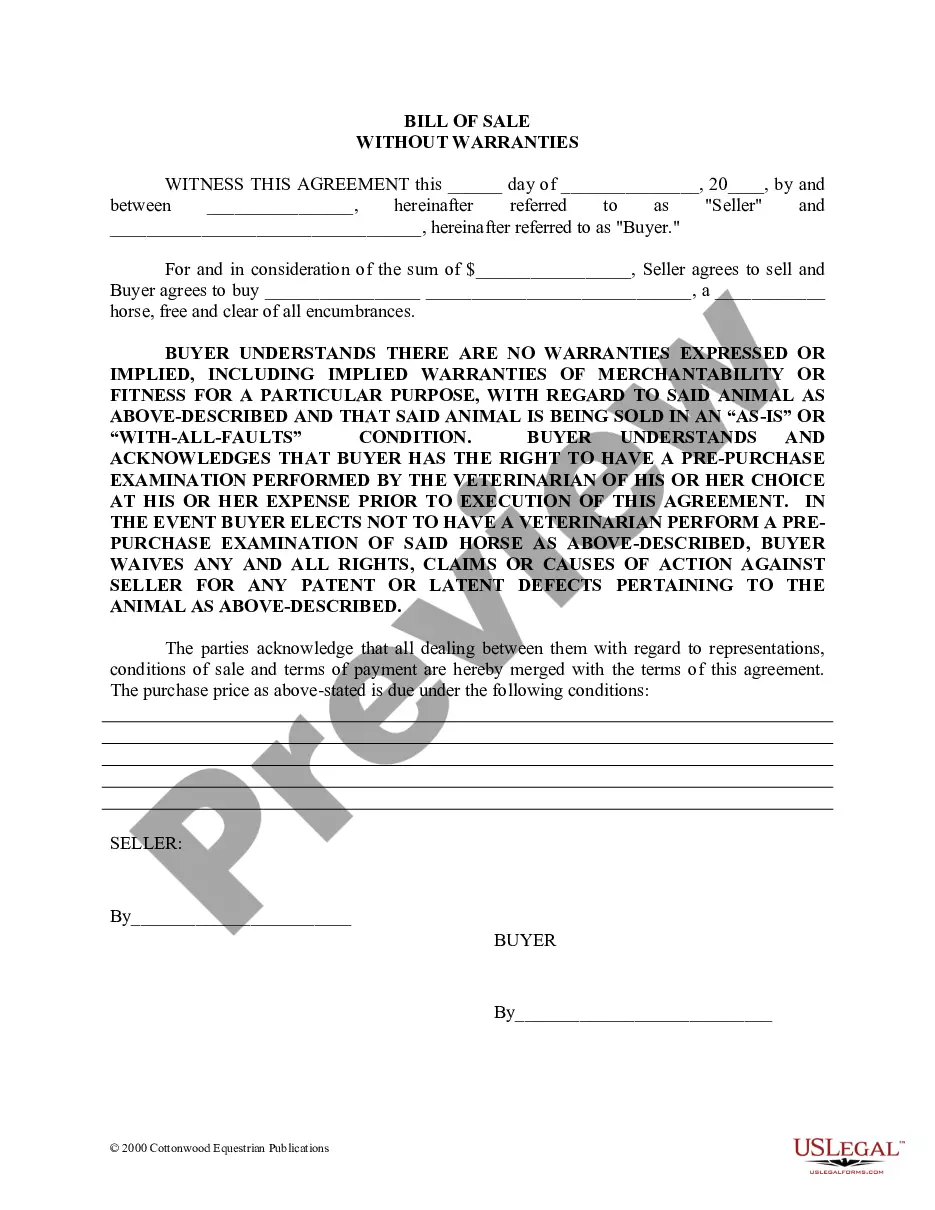
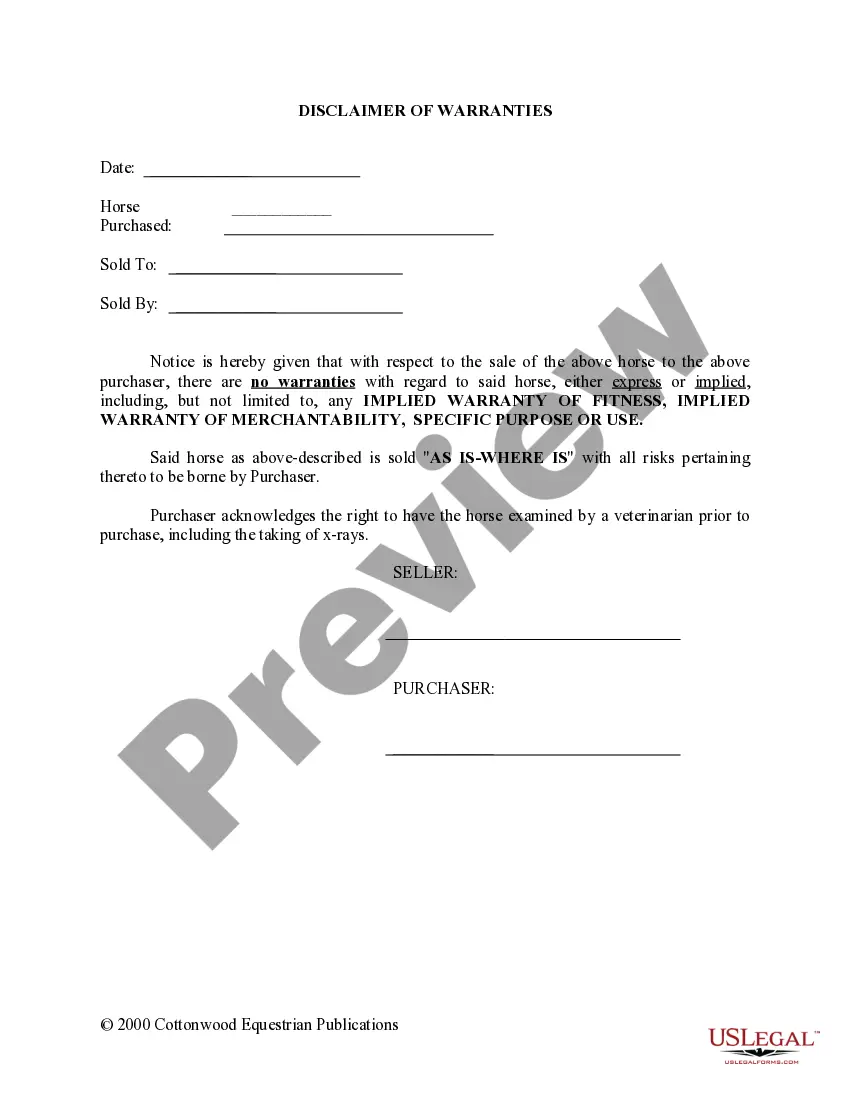
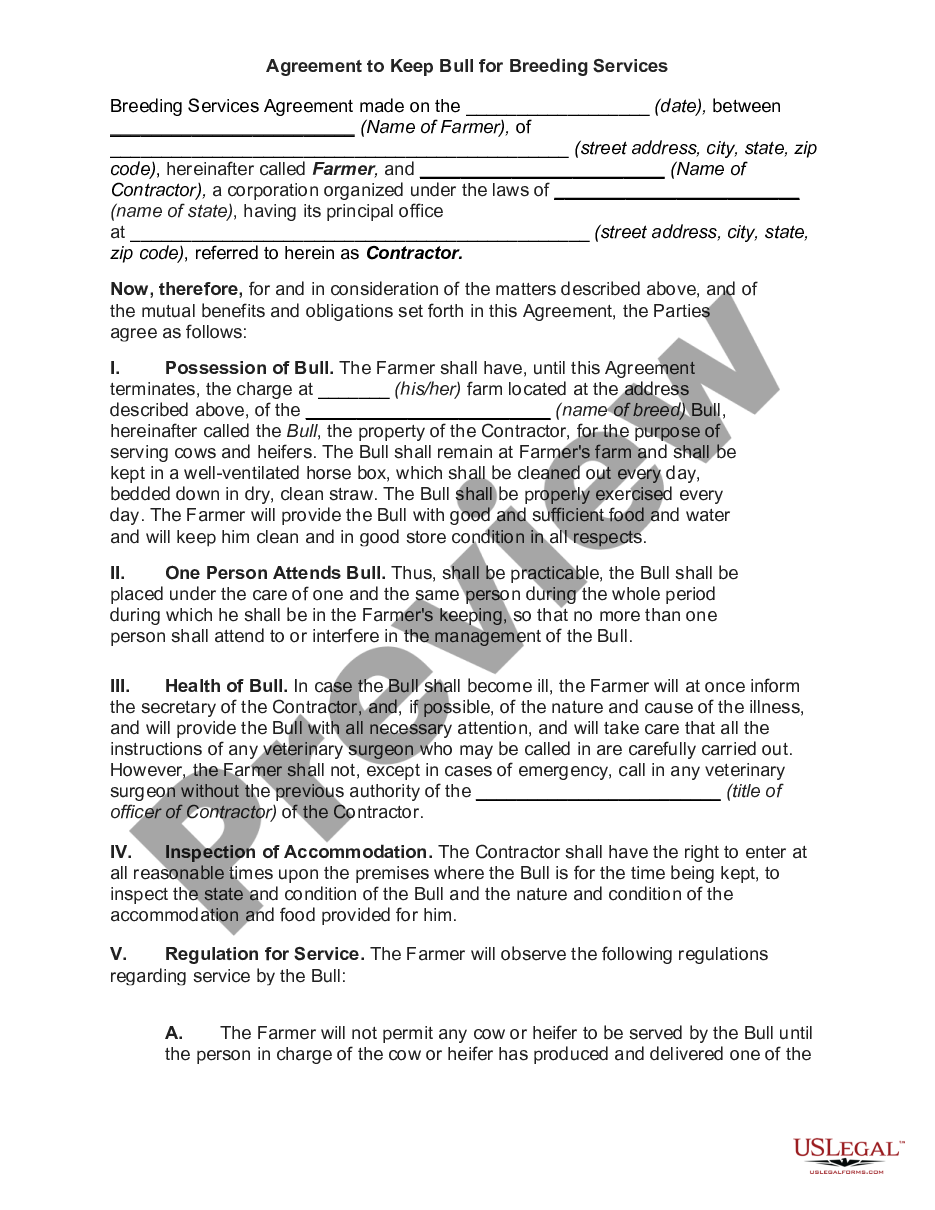
- Bill of Sale Without Warranties
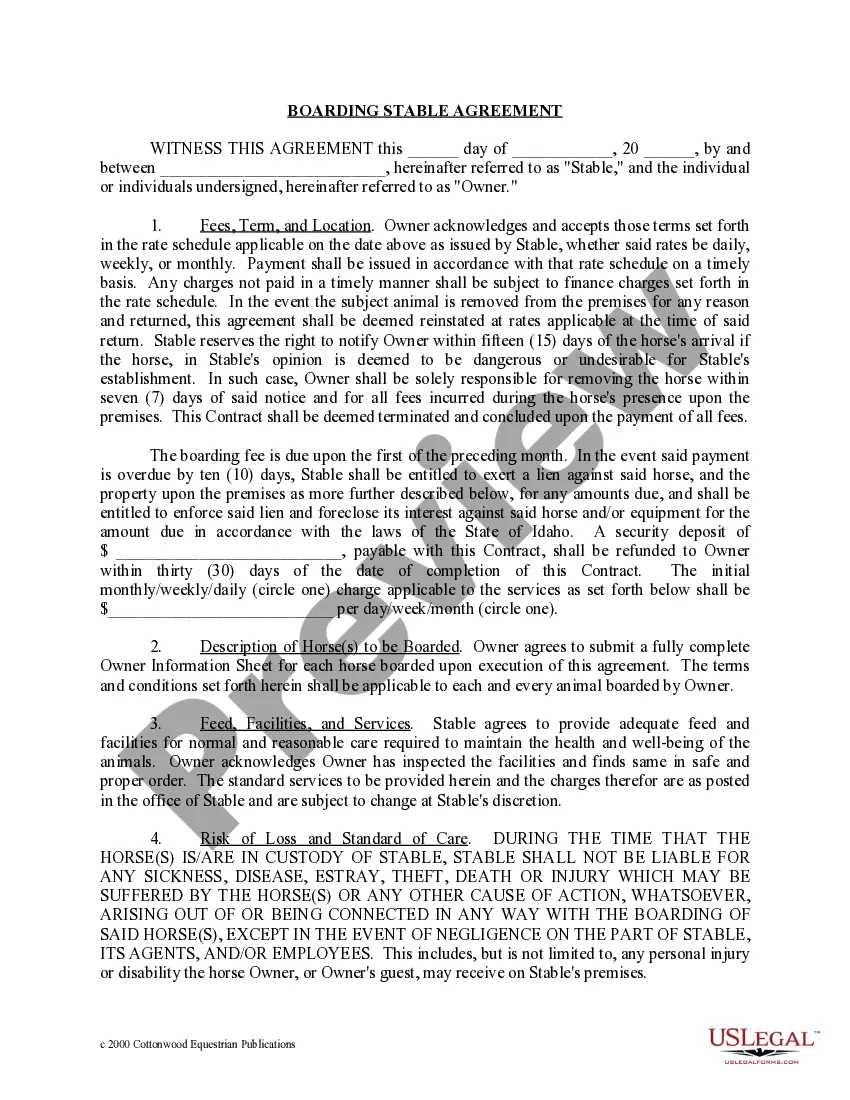
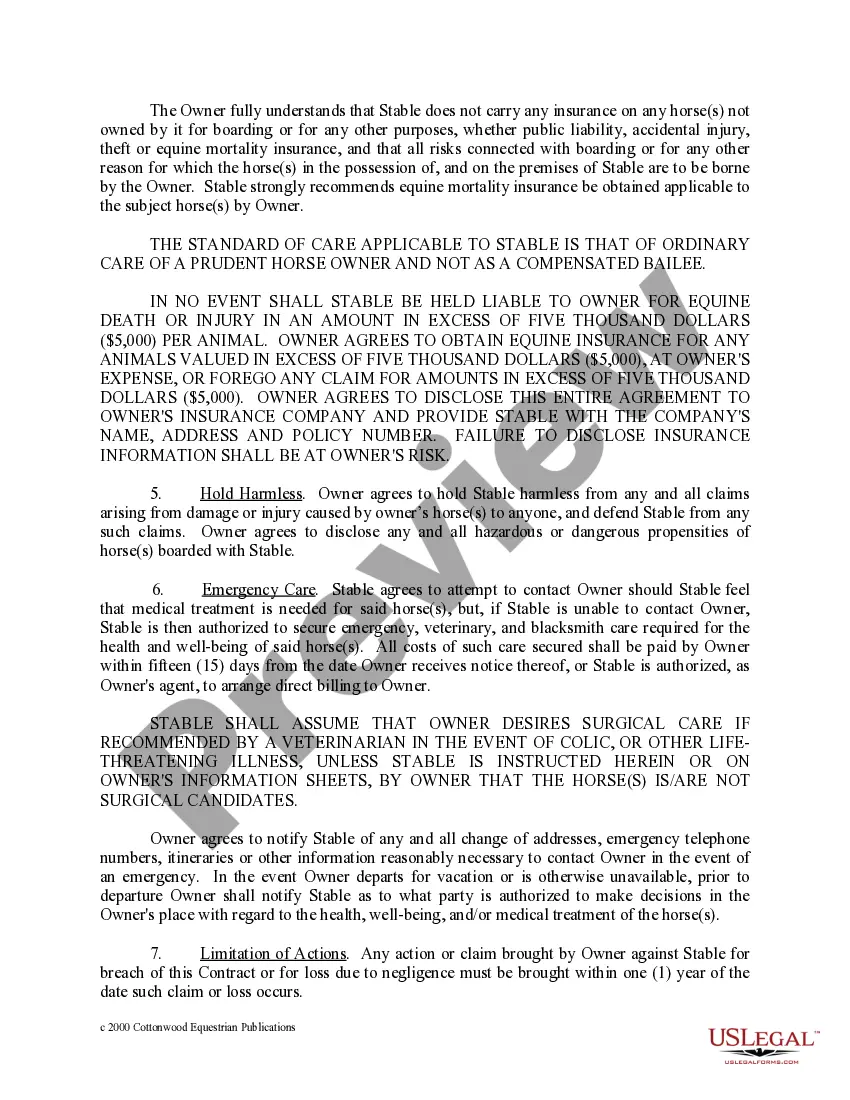
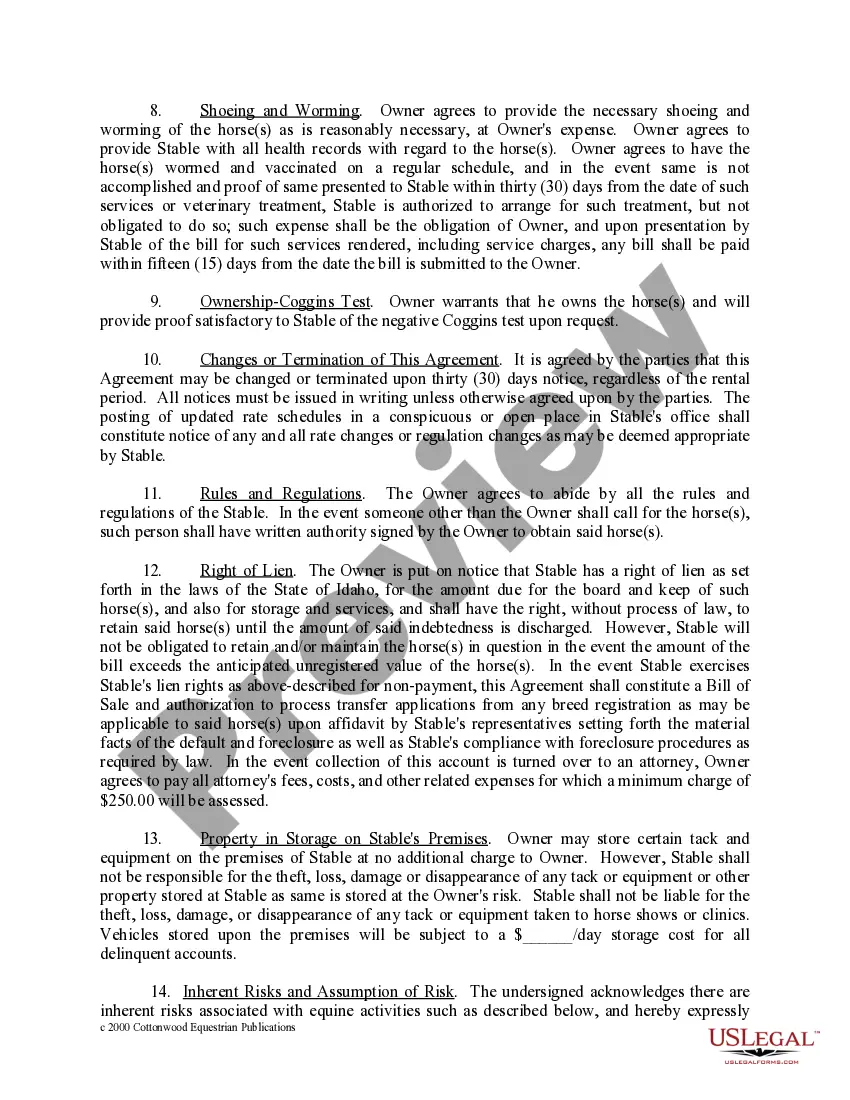
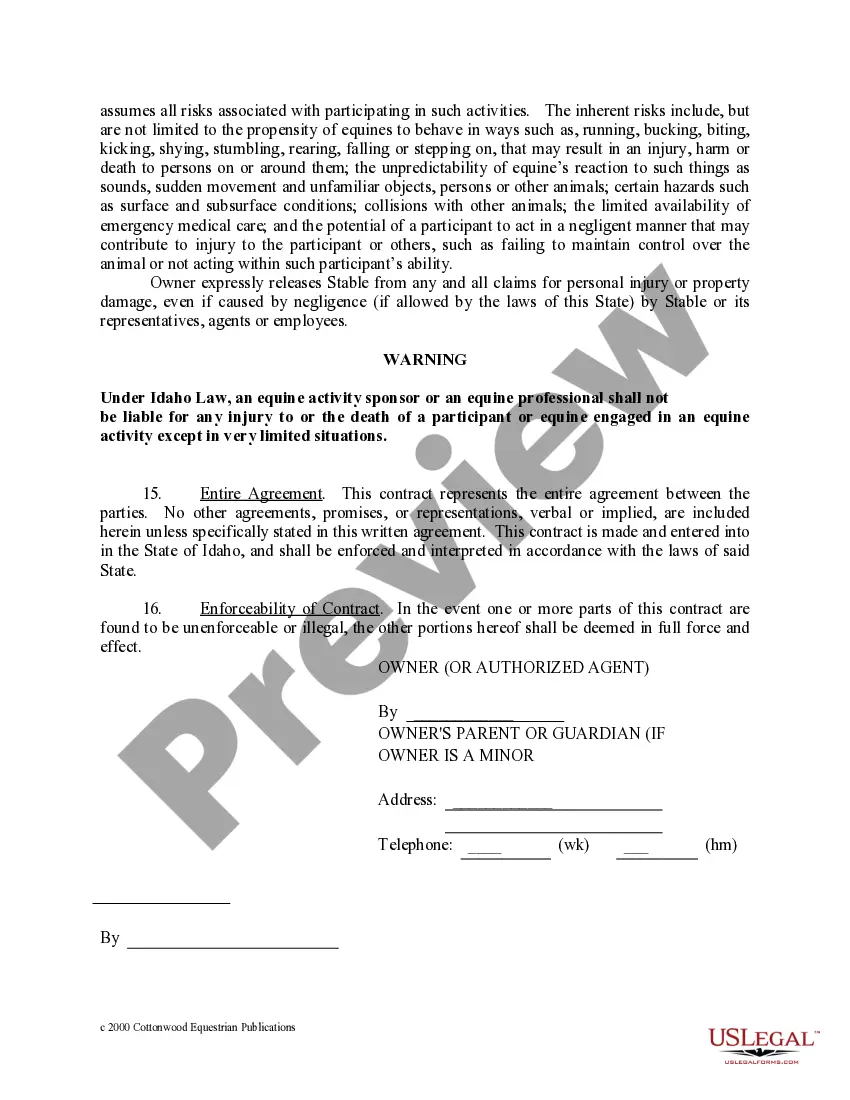
- Boarding Stable Agreement
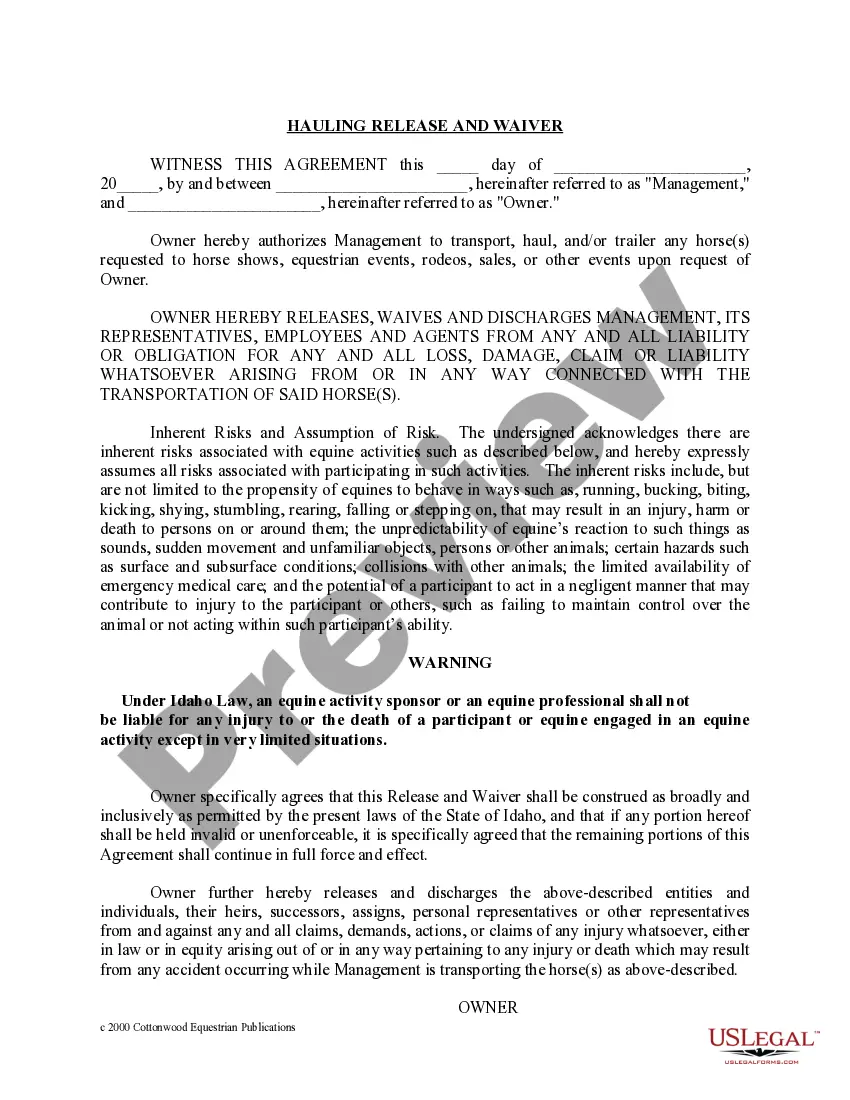
- Hauling Release and Waiver
- Release of Liability for Owner/Rider
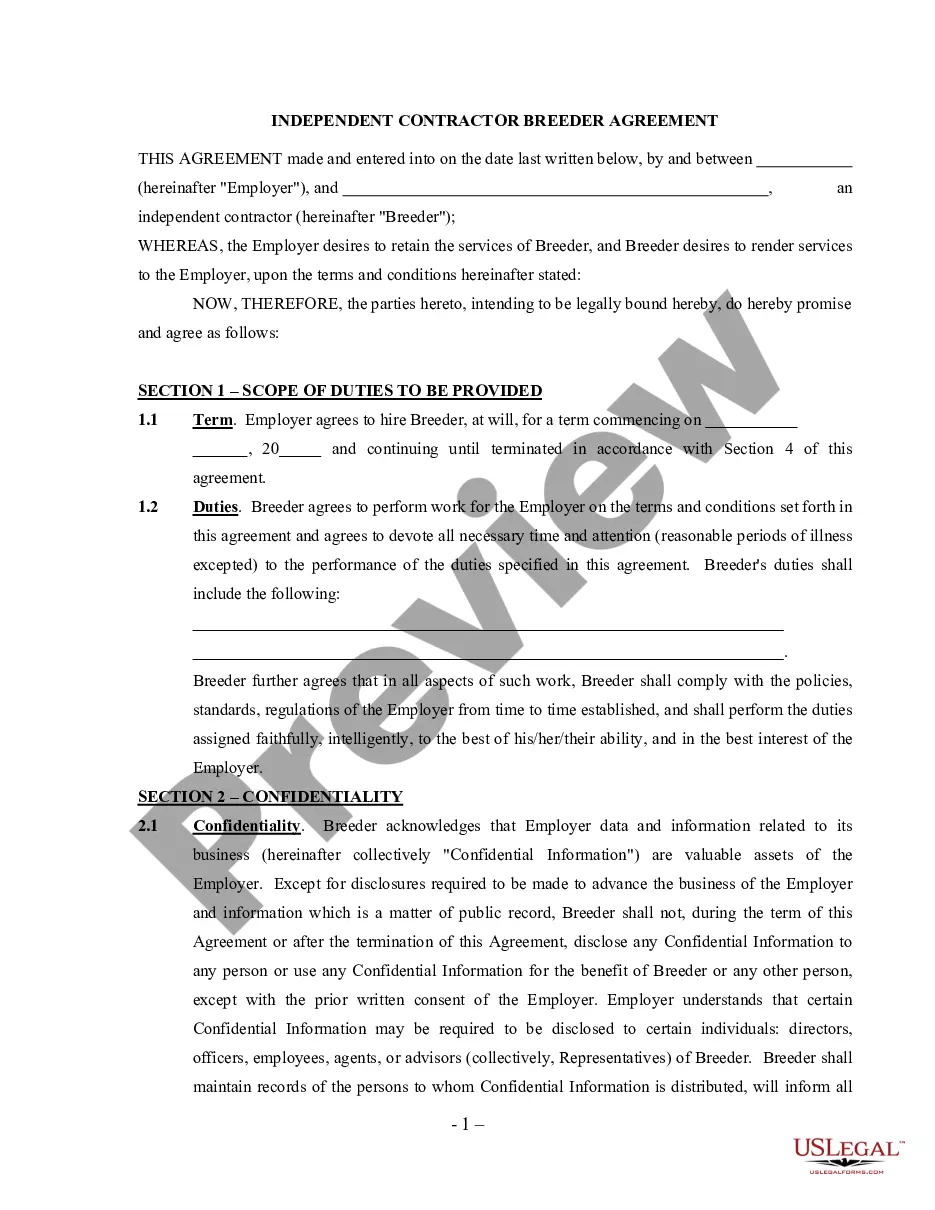
- Training Contract
- Stallion Service Contract
- Authorization to Obtain Medical Treatment for Minor Child
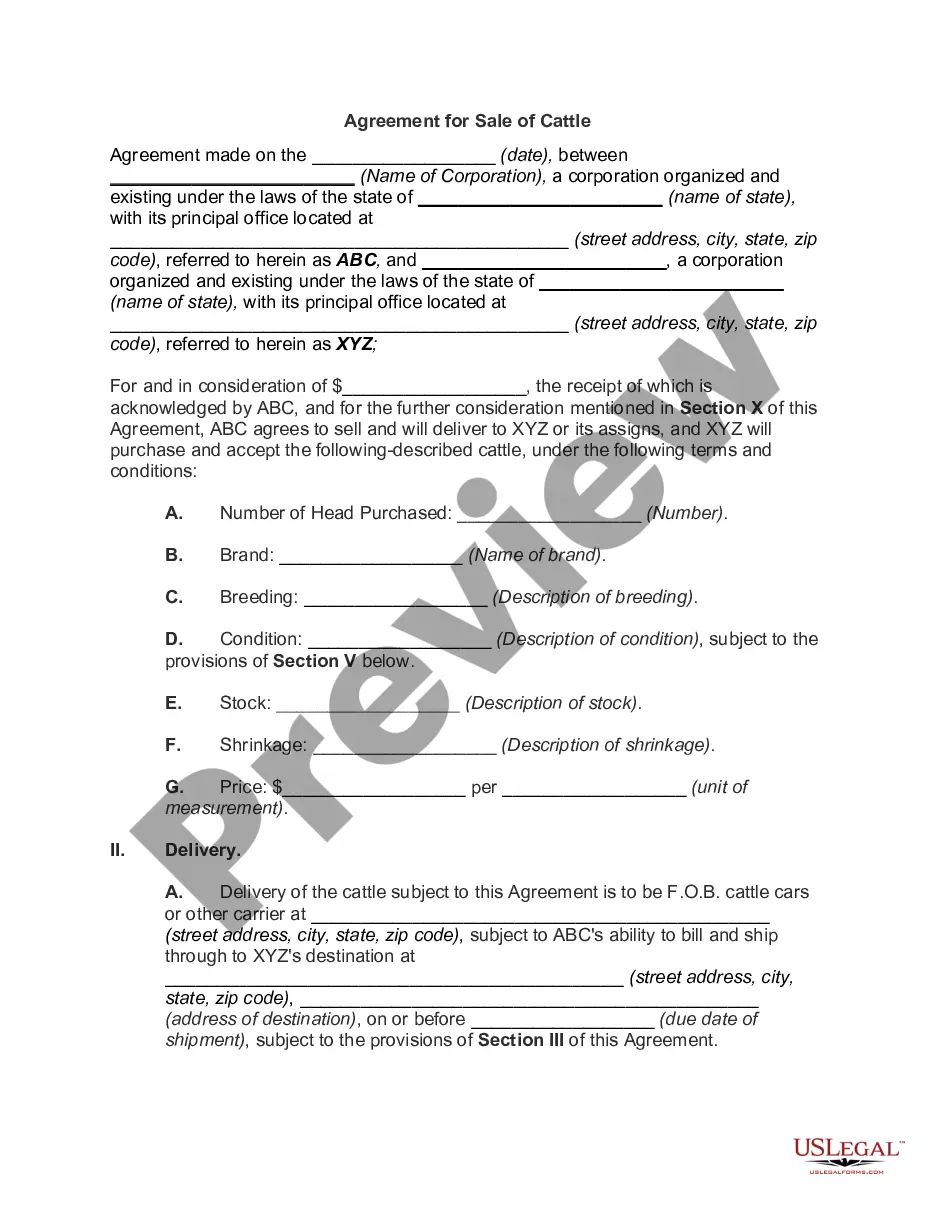
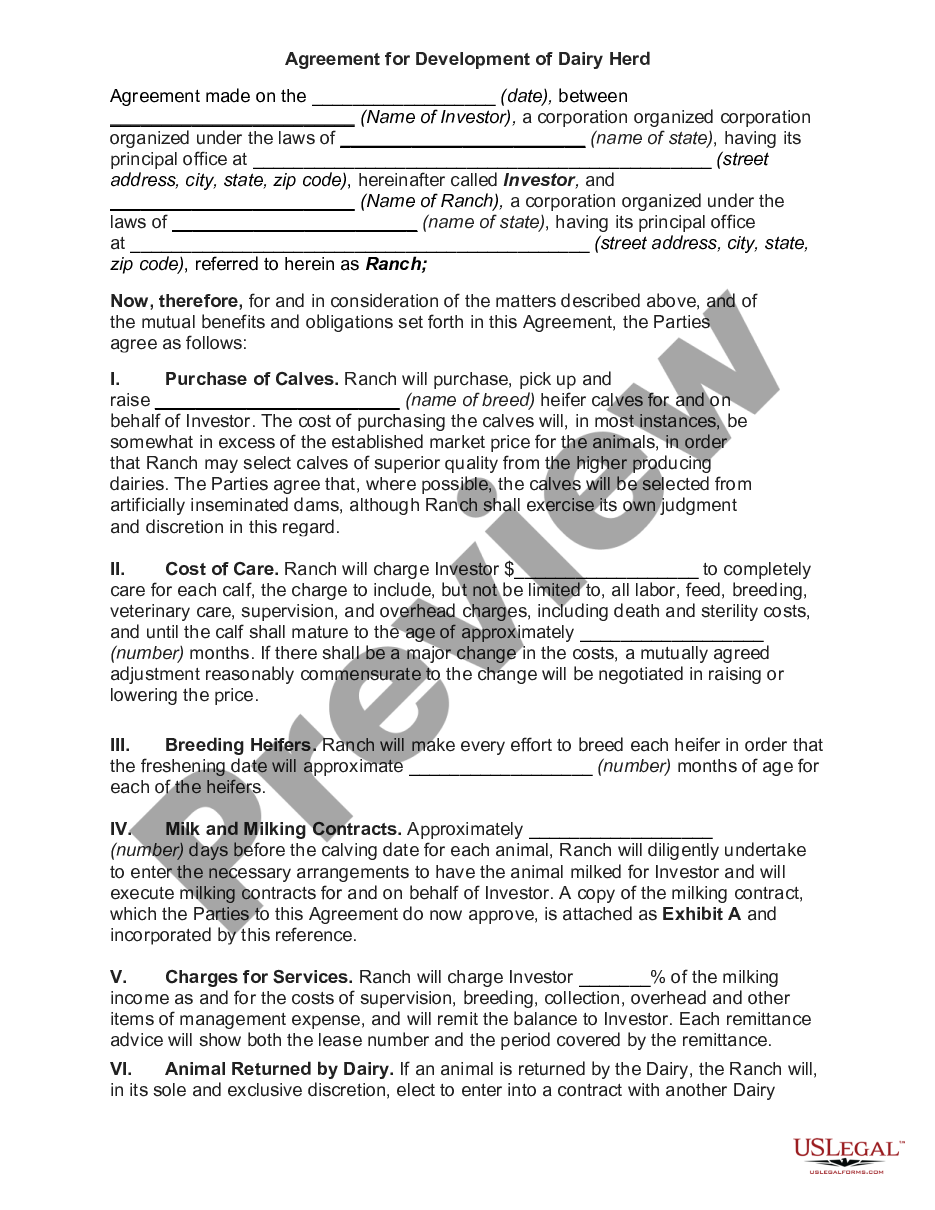
- Installment Purchase and Security Agreements

Situations where this form applies
This form package is useful when engaging in any equine-related activities in Idaho, such as selling or purchasing horses, boarding, providing training services, or facilitating events. Each form addresses specific needs and safeguards related to the ownership, leasing, or training of horses within the legal framework of the state.
Who should use this form
This package is ideal for a variety of individuals and entities including:
- Horse owners looking to sell or purchase horses.
- Stable owners providing boarding or training services.
- Equine professionals offering lessons or rentals.
- Parents of minors participating in equine activities.
- Anyone involved in horse shows, clinics, or similar events.
Instructions for completing this form
To complete the forms in the Idaho Horse Equine Forms Package, follow these steps:
- Identify the parties involved in the transaction or agreement.
- Fill in specific details such as horse descriptions, fees, and terms of the agreement.
- Include any necessary dates and signatures as required by the form.
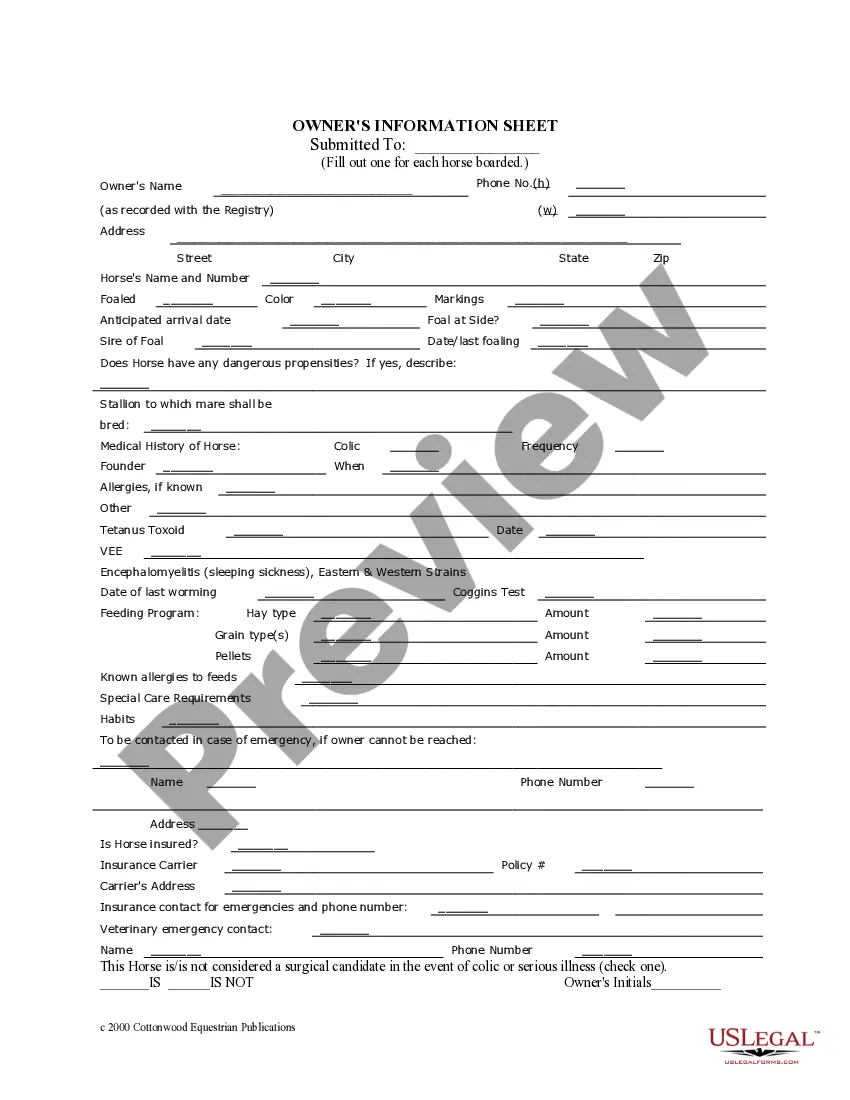
- Provide additional information as needed, such as health records or insurance details.
- Ensure all parties understand the terms and retain copies for their records.
Notarization requirements for this form
This form does not typically require notarization unless specified by local law. However, certain agreements, such as those dealing with significant transactions or liabilities, may benefit from notarization to enhance their legal standing.
Get your form ready online
Our built-in tools help you complete, sign, share, and store your documents in one place.
Make edits, fill in missing information, and update formatting in US Legal Forms—just like you would in MS Word.
Download a copy, print it, send it by email, or mail it via USPS—whatever works best for your next step.
Sign and collect signatures with our SignNow integration. Send to multiple recipients, set reminders, and more. Go Premium to unlock E-Sign.
If this form requires notarization, complete it online through a secure video call—no need to meet a notary in person or wait for an appointment.
We protect your documents and personal data by following strict security and privacy standards.

Make edits, fill in missing information, and update formatting in US Legal Forms—just like you would in MS Word.

Download a copy, print it, send it by email, or mail it via USPS—whatever works best for your next step.

Sign and collect signatures with our SignNow integration. Send to multiple recipients, set reminders, and more. Go Premium to unlock E-Sign.

If this form requires notarization, complete it online through a secure video call—no need to meet a notary in person or wait for an appointment.

We protect your documents and personal data by following strict security and privacy standards.
Typical mistakes to avoid
- Failing to include all necessary signatures, which can invalidate the agreement.
- Inadequately describing the horse's condition or any known issues, leading to future liability disputes.
- Not specifying payment terms clearly, which can result in misunderstandings about fees and due dates.
- Assuming all forms can be used interchangeably without considering their specific legal context.
Why use this form online
- Convenient access to all necessary legal forms in a single package.
- Documents created by licensed attorneys to ensure legal compliance.
- Efficient and time-saving process for horse-related transactions.
- Easy-to-complete templates that guide users through necessary fields and clauses.
Looking for another form?

Form popularity
FAQ
A Coggins Test can cost anywhere from about $20 to $100. It's really just a question of how long you're willing to wait and what other vet services you need for your horse. Some clinics have a testing lab onsite with quick turnaround times. Others send the samples out to a testing lab.
When a horse receives a positive Coggins Test, it is an industry-wide problem.Also known as swamp fever, malacial fever, and mountain fever, the death rate of infected equidae (horses, ponies, mules and donkeys, and zebras) ranges from 30-70%.
The Appaloosa breed became the state horse in 1975 following an introduction to the Legislature by sixth grade students from Eagle, Idaho.
Coggins tests are good for 6 months.
The 1988 legislature designated the Hagerman Horse Fossil as the official state fossil. Discovered in 1928, it was originally described as Plesippus shoshonensis. Subsequent research found the Hagerman horse to be the same as a previously described species and it is now known as Equus simplicidens.
The Coggins test is good for one year and must be done by a USDA certified veterinarian. Health Certificates are to ensure that horses being transported are healthy and not potentially exposing innocent horses to disease.
Removal of these test-positive subjects from the population by the beginning of the 1980s resulted in only around 0.5% test-positives; today the incidence is less than 0.01%. In 2001 testing identified 534 EIA-positive horses, whereas in 2015 only 69 horses of nearly 1.5 million tested were confirmed positive.
This disease remains active, at low levels, within the US horse population. Prior to introduction of routine testing, 3 in every 100 horses were positive for EIA. Since routine testing was introduced in 1973, the numbers have declined to 0.2% of horses testing positive.
In the United States anytime you cross state lines you are required by law to have a current negative coggins and health certificate on each horse that is traveling with you. This is true whether you are traveling for a horse show, trail ride, or relocation.Some states have developed a 6 month health certificate.