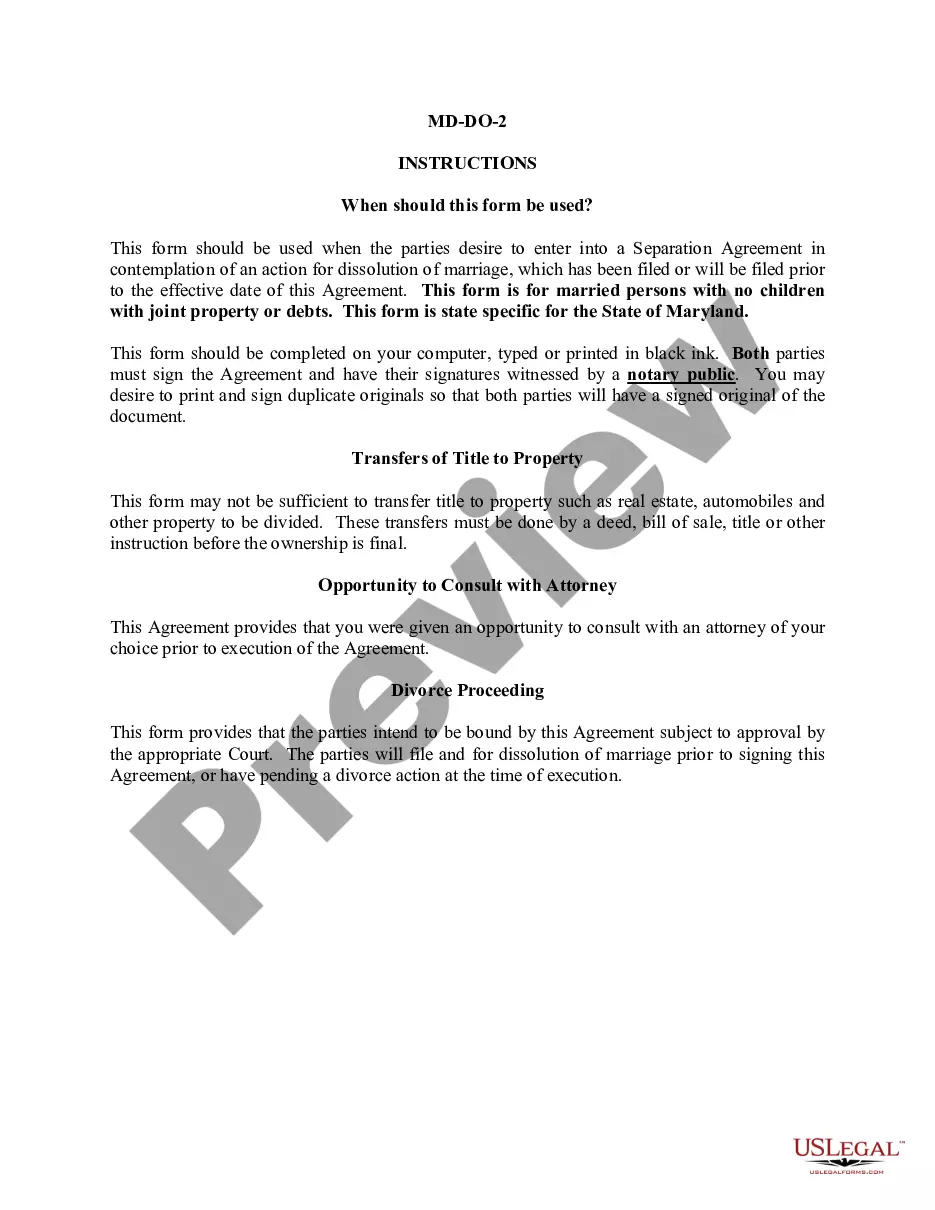
Kansas Fencing Contract for Contractor
What is this form?
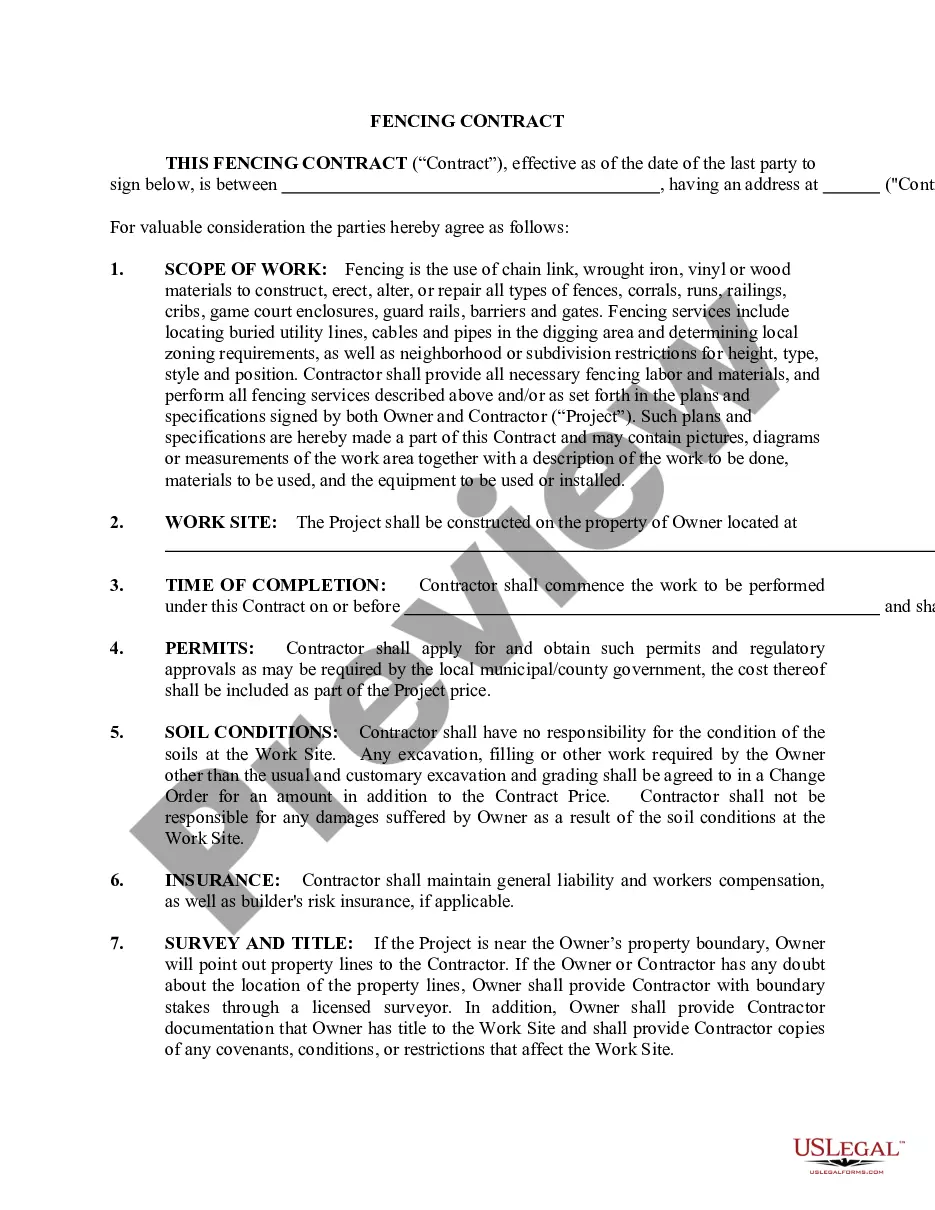
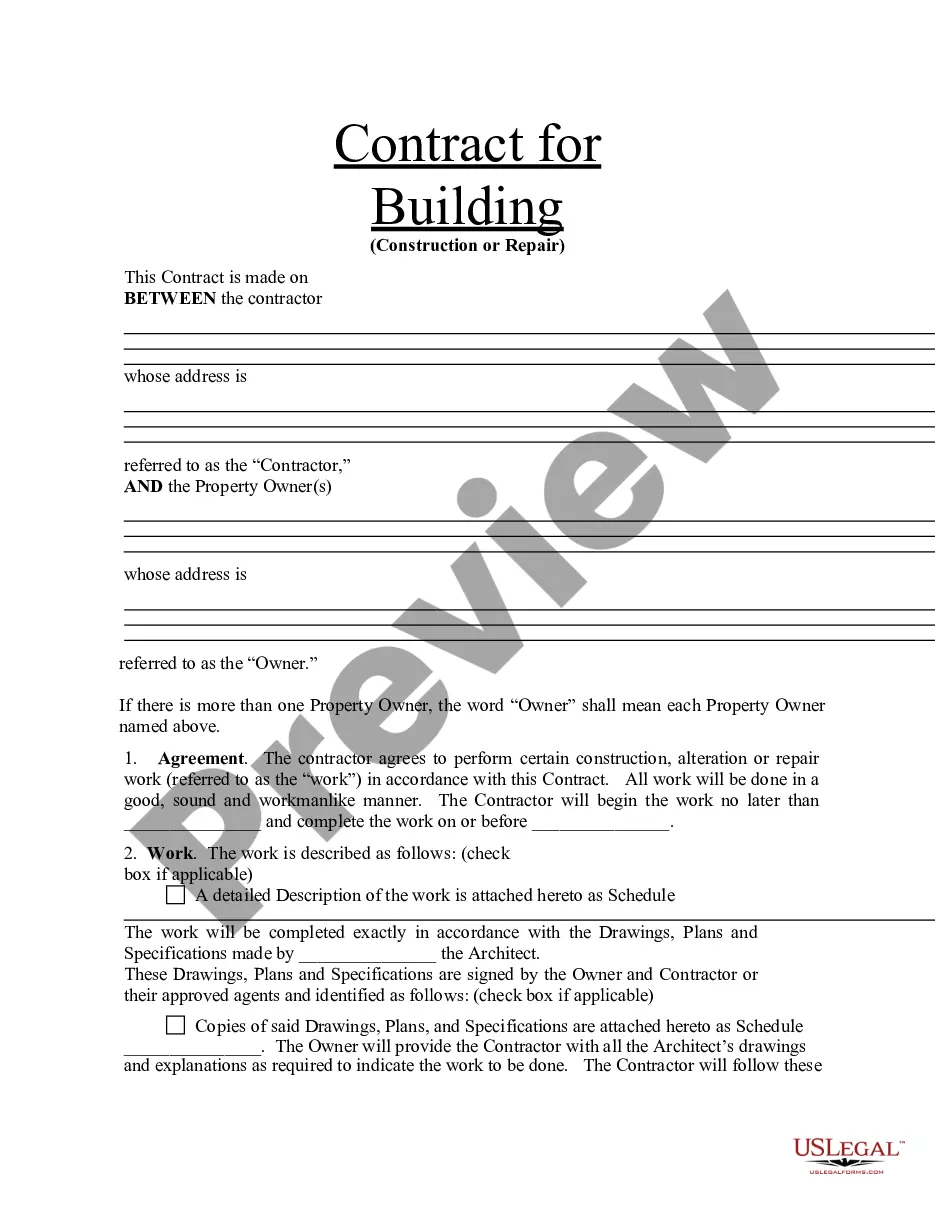
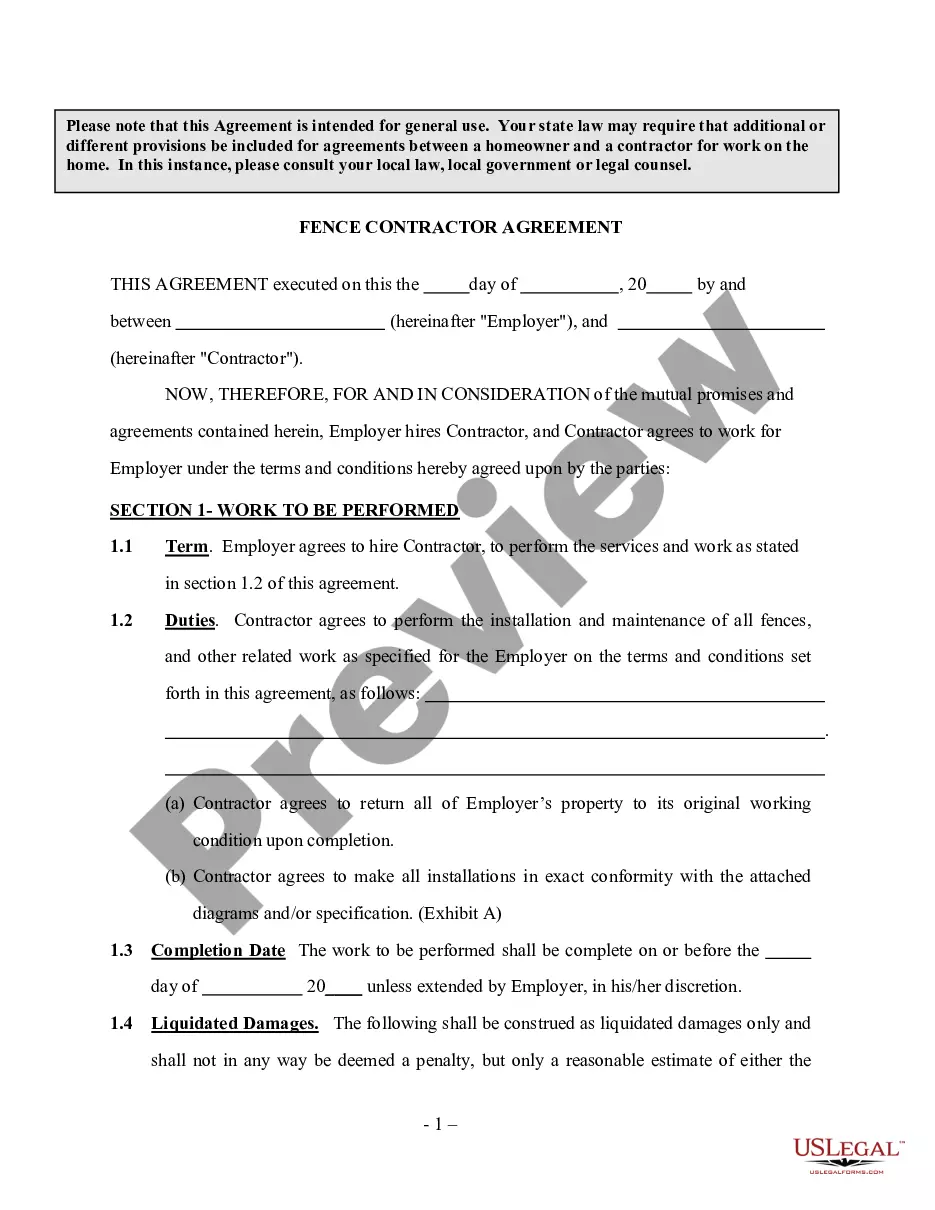
The Fencing Contract for Contractor is a legal document specifically designed for agreements between fencing contractors and property owners in Kansas. This contract outlines the terms related to payment arrangements, project specifications, permits, and warranties. It ensures that both parties understand their responsibilities and the legal implications of the fencing project, differing it from more generic construction contracts by focusing on fencing-specific issues.
Form components explained
- WORK SITE: Identifies the location for the fencing project.
- PERMITS: Specifies that the contractor is responsible for obtaining necessary local permits.
- SOIL CONDITIONS: Clarifies the contractor's lack of responsibility for soil-related issues at the work site.
- INSURANCE: Outlines insurance requirements for the contractor, such as general liability and workers' compensation.
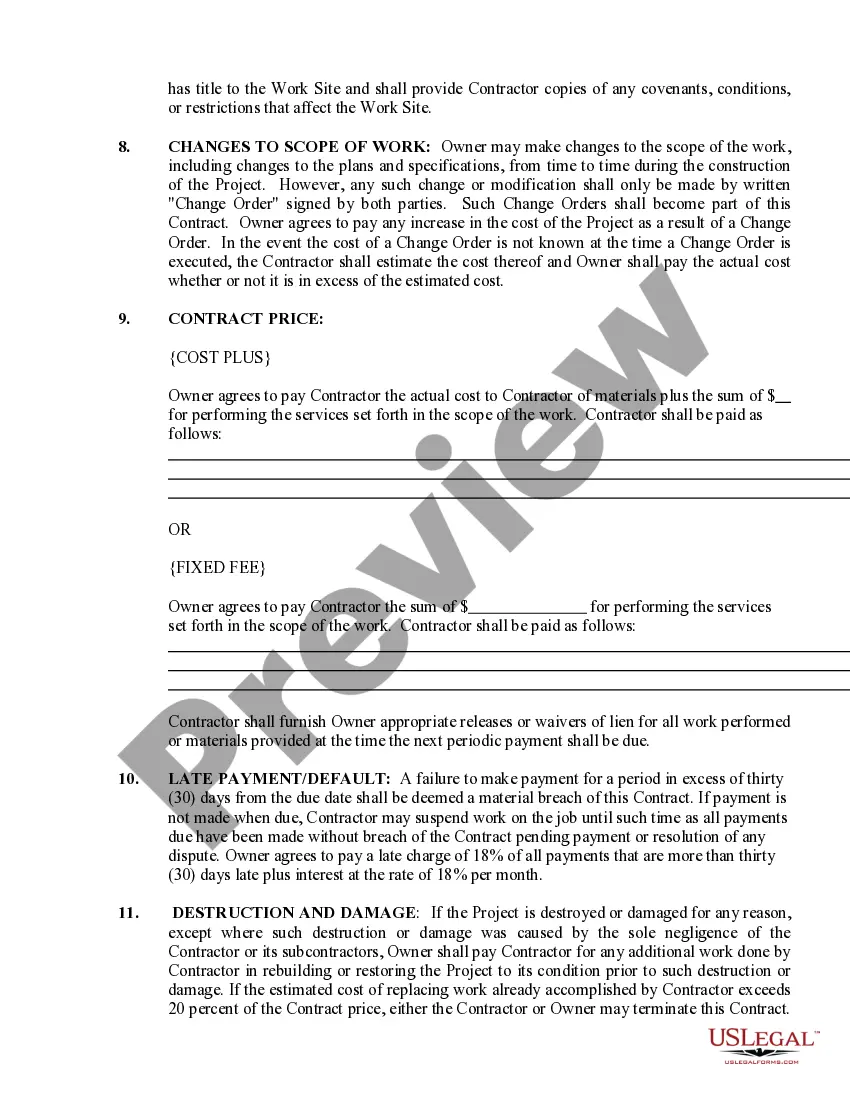
- CHANGES TO SCOPE OF WORK: Describes the process for making changes and the related costs.
- LATE PAYMENT/DEFAULT: Details consequences for late payments, including potential work suspension.
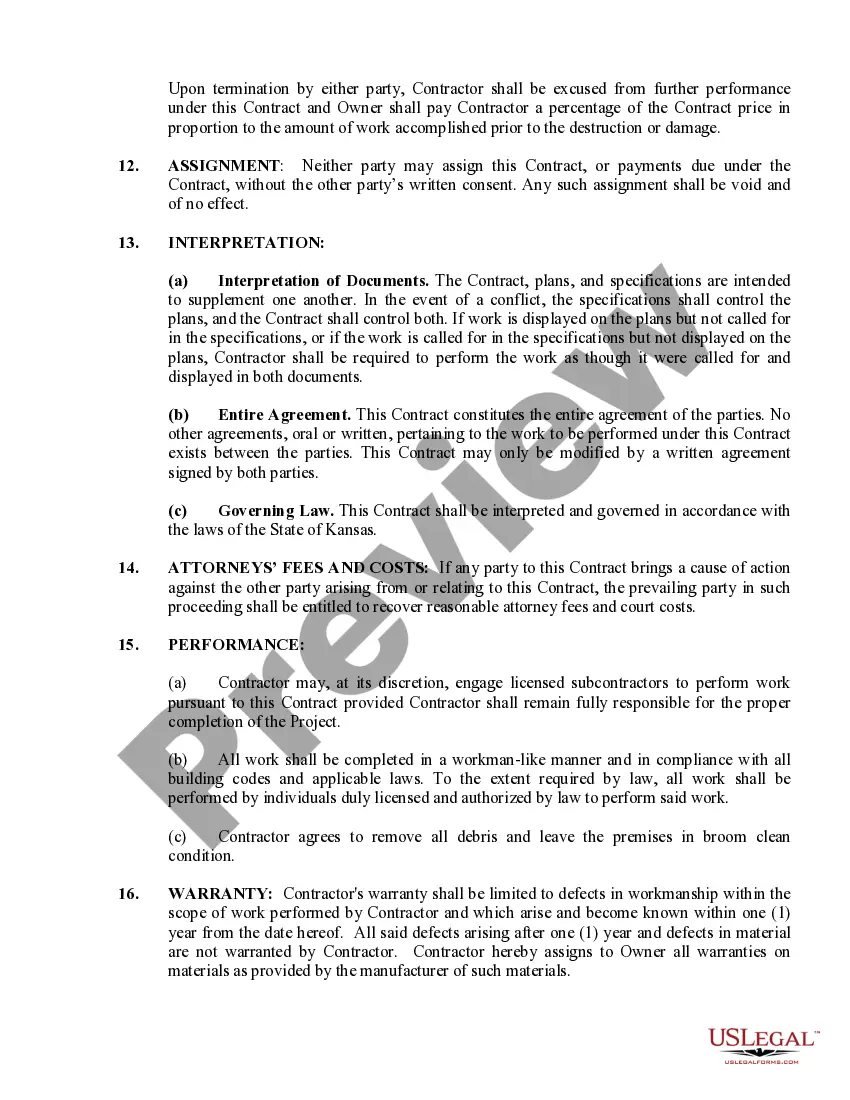
- WARRANTY: Specifies the contractor's warranty against defects in workmanship.

Common use cases
This form should be used when a property owner wishes to contract with a fencing contractor for installing or repairing a fence. It is essential to formalize the agreement, especially when multiple changes to the project may occur or when specific legal requirements must be met in the state of Kansas. The contract provides clarity on payment terms, project completion timelines, and responsibilities of both parties.
Intended users of this form
- Property owners looking to install or repair fencing on their property.
- Fencing contractors who need a formalized contract structure for their projects.
- Individuals or businesses in Kansas engaged in fencing projects that require clear legal agreements.
How to prepare this document
- Identify the parties involved: Include the full names and addresses of the property owner and the contractor.
- Specify the work site: Clearly define the address of the property where the fencing will be constructed.
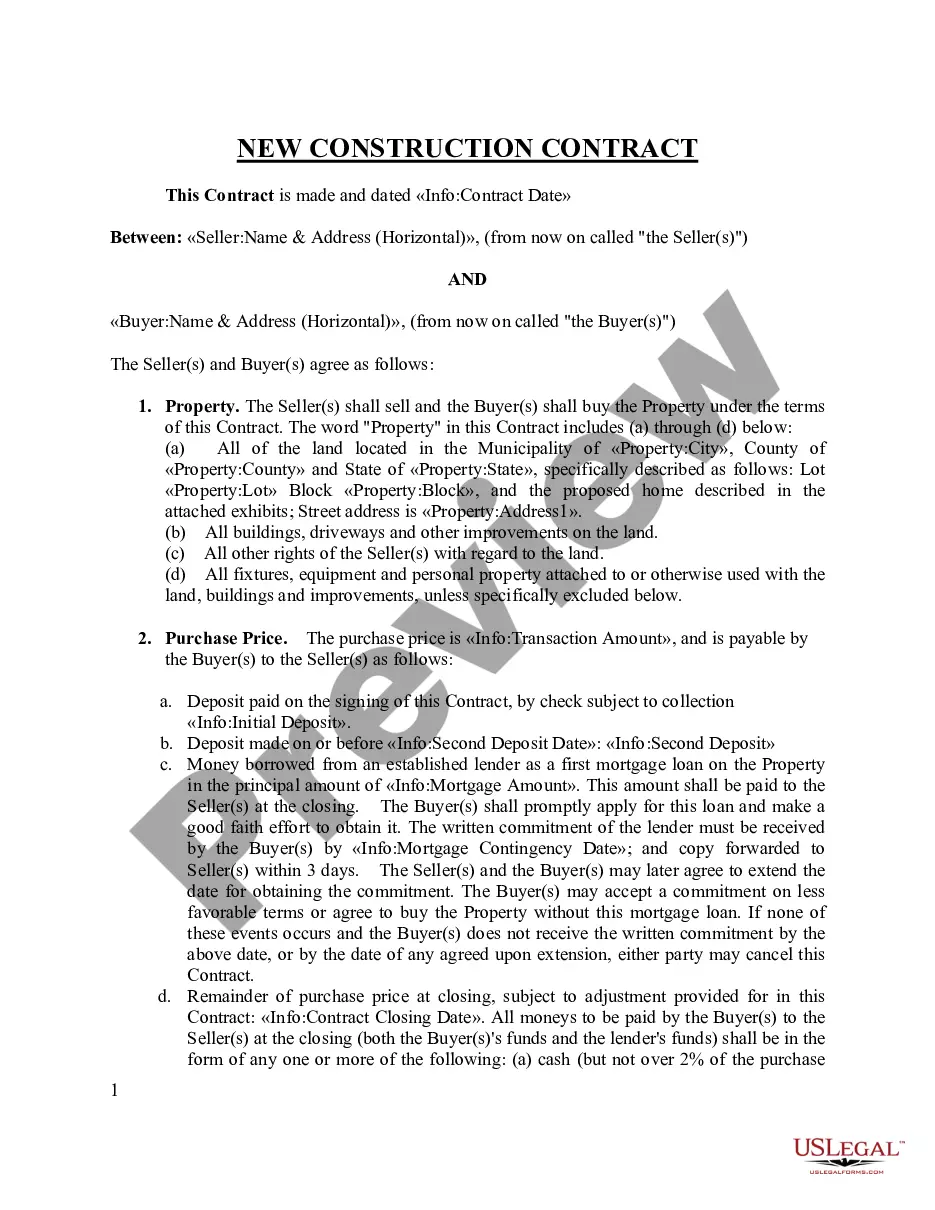
- Determine the payment method: Decide whether it will be a cost-plus or fixed-fee arrangement and fill in the relevant details.
- List necessary permits: Ensure that the contractor agrees to obtain all required permits for the project.
- Sign and date the contract: Both parties must sign and date the agreement for it to be legally binding.
Notarization guidance
Notarization is generally not required for this form. However, certain states or situations might demand it. You can complete notarization online through US Legal Forms, powered by Notarize, using a verified video call available anytime.
Get your form ready online
Our built-in tools help you complete, sign, share, and store your documents in one place.
Make edits, fill in missing information, and update formatting in US Legal Forms—just like you would in MS Word.
Download a copy, print it, send it by email, or mail it via USPS—whatever works best for your next step.
Sign and collect signatures with our SignNow integration. Send to multiple recipients, set reminders, and more. Go Premium to unlock E-Sign.
If this form requires notarization, complete it online through a secure video call—no need to meet a notary in person or wait for an appointment.
We protect your documents and personal data by following strict security and privacy standards.

Make edits, fill in missing information, and update formatting in US Legal Forms—just like you would in MS Word.

Download a copy, print it, send it by email, or mail it via USPS—whatever works best for your next step.

Sign and collect signatures with our SignNow integration. Send to multiple recipients, set reminders, and more. Go Premium to unlock E-Sign.

If this form requires notarization, complete it online through a secure video call—no need to meet a notary in person or wait for an appointment.

We protect your documents and personal data by following strict security and privacy standards.
Mistakes to watch out for
- Failing to accurately specify the work site, leading to disputes about project boundaries.
- Not obtaining necessary permits prior to starting the project, which can result in legal issues.
- Neglecting to document changes to the project scope with written Change Orders.
- Ignoring late payment terms, which can lead to financial penalties.
Benefits of using this form online
- Convenience of obtaining a legally sound contract quickly and easily.
- Editable templates allow for customization to fit specific project needs and parties involved.
- Access to professionally drafted forms ensures compliance with state laws.
Legal use & context
- By using this contract, both parties can avoid potential disputes regarding responsibilities and project expectations.
- The contract serves as a legally binding document, ensuring that both the contractor and property owner uphold their responsibilities.
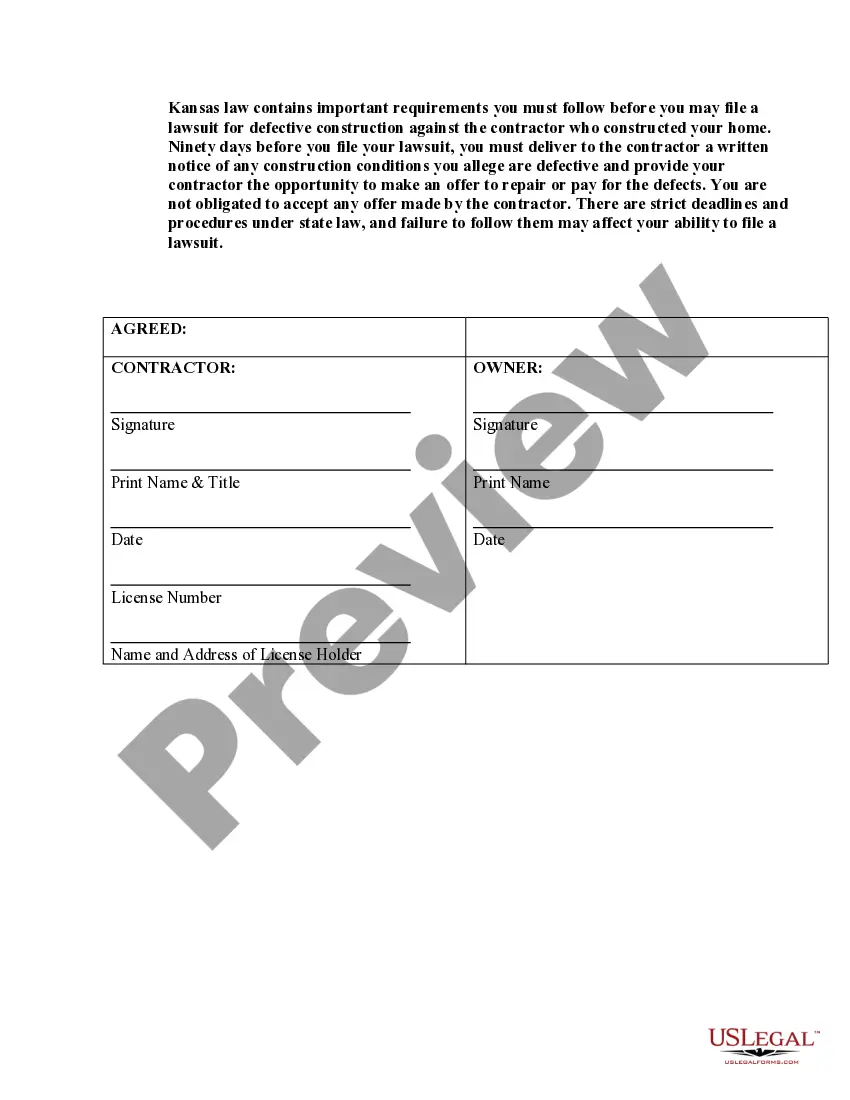
- It is advisable to follow the outlined procedures, such as providing written notice for any defects, to conform with Kansas law.
What to keep in mind
- The Fencing Contract for Contractor provides a clear framework for fencing agreements.
- It is essential for property owners and contractors in Kansas to formalize their duties through this contract.
- Both parties should pay close attention to change orders and payment terms to avoid disputes.
Looking for another form?





Form popularity
FAQ
Kansas imposes a 6.5 percent (effective July 1, 2015) percent state retailers' sales tax, plus applicable local taxes on the: Retail sale, rental or lease of tangible personal property; Labor services to install, apply, repair, service, alter, or maintain tangible personal property, and.
If the service involves the installation or application of tangible personal property, the service is generally TAXABLE. However, the installation or application of tangible personal property at a residence or in connection with the original construction of a building or facility is exempt.
Five U.S. states (New Hampshire, Oregon, Montana, Alaska and Delaware) do not impose any general, statewide sales tax on goods or services. Of the 45 states remaining, four (Hawaii, South Dakota, New Mexico and West Virginia) tax services by default, with exceptions only for services specifically exempted in the law.
Kansas Retailers' Sales Tax generally applies to: 1) the retail sale, rental, or lease of tangible personal property, and, 2) the sale of labor services to install, apply, repair, service, alter, or maintain tangible personal property.Sales tax is not imposed on the sale of real or intangible property.
Generally, if you are a service business that makes at least $100,000 in gross receipts, you are considered a "qualified purchaser" and will be required to register with the California Department of Tax and Fee Administration (CDTFA) and report and pay use tax due on purchases made from out-of-state retailers.
Business registration. Passing an exam. General liability insurance. Financial solvency/bond. Worker's compensation and unemployment insurance. You'll need a trade certificate. There are general and trade licenses. There are ten types of licenses.
Get it in writing. Keep it simple. Deal with the right person. Identify each party correctly. Spell out all of the details. Specify payment obligations. Agree on circumstances that terminate the contract. Agree on a way to resolve disputes.
Some goods are exempt from sales tax under Kansas law. Examples include farm machinery and equipment, prescription drugs, and some medical devices.
Identifying/Contact Information. Title and Description of the Project. Projected Timeline and Completion Date. Cost Estimate and Payment Schedule. Stop Work Clause and Stop Payment Clause. Act of God Clause. Change Order Agreement. Warranty.