13.1.2.2.1 Validity - Trademark - Inherent Distinctiveness -- Fanciful, Arbitrary, and Suggestive Marks
Understanding this form
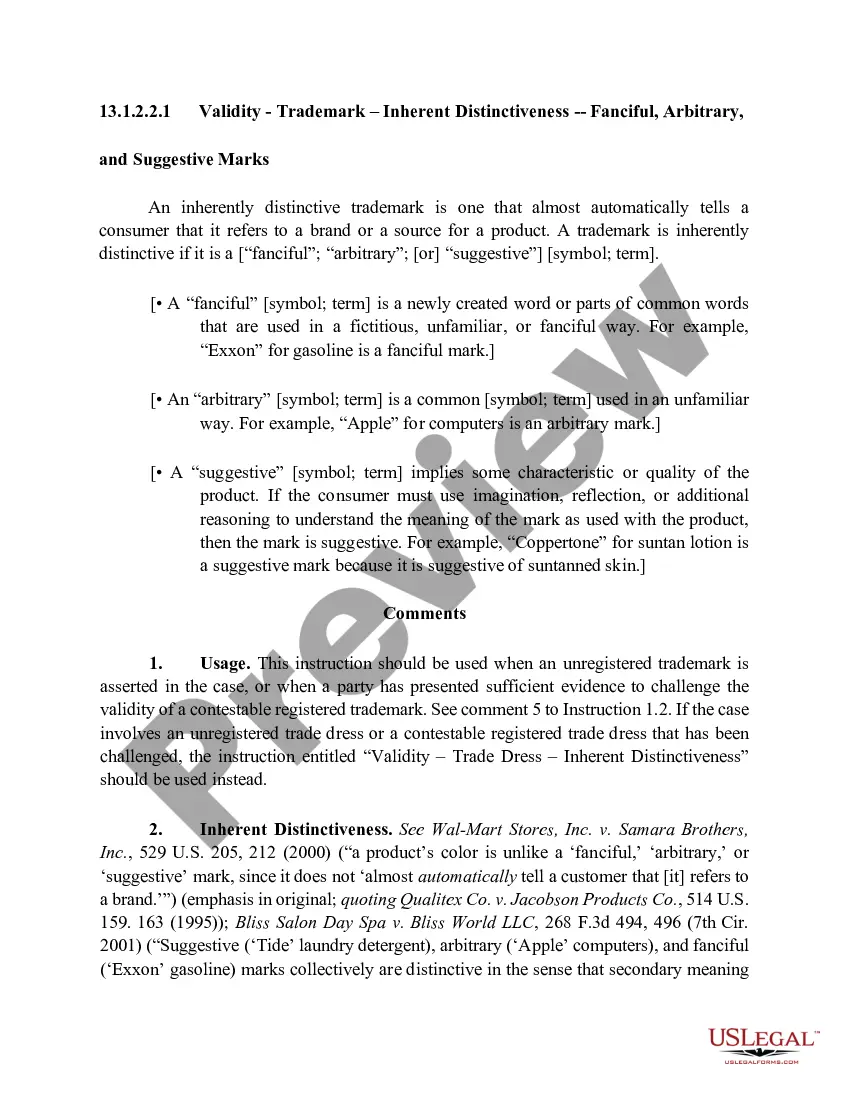
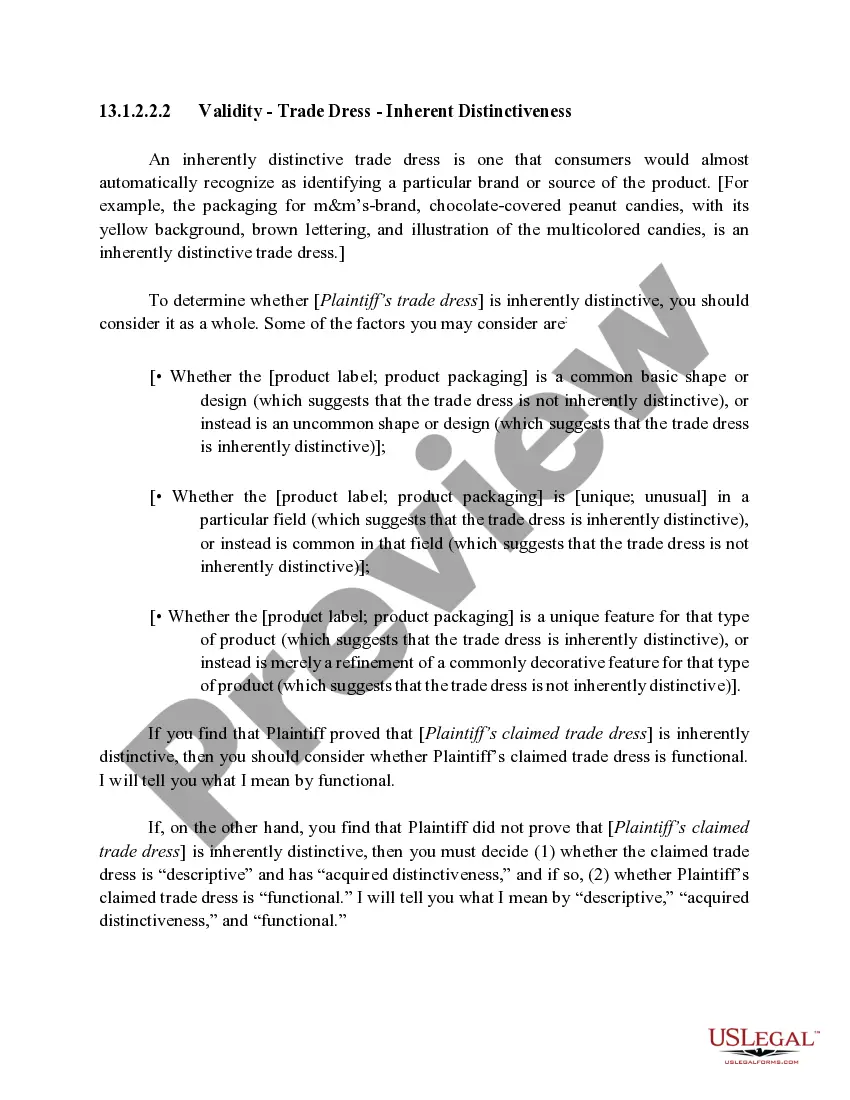
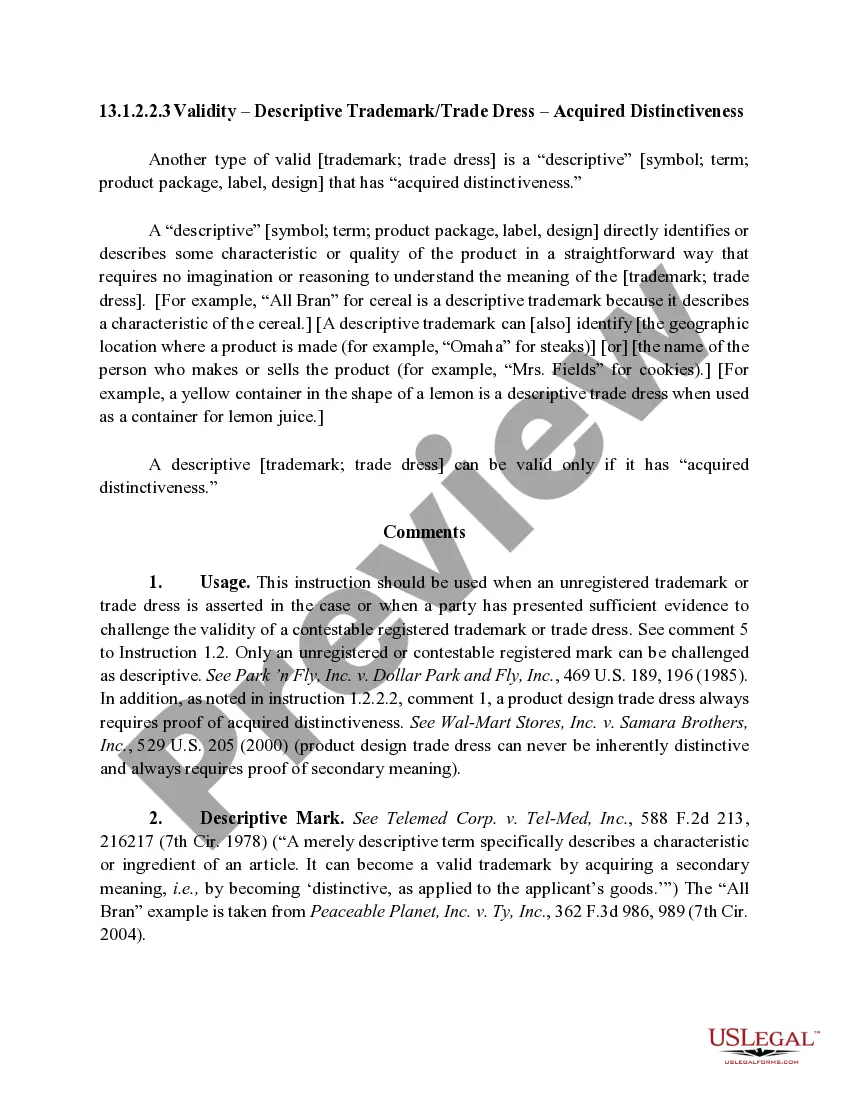
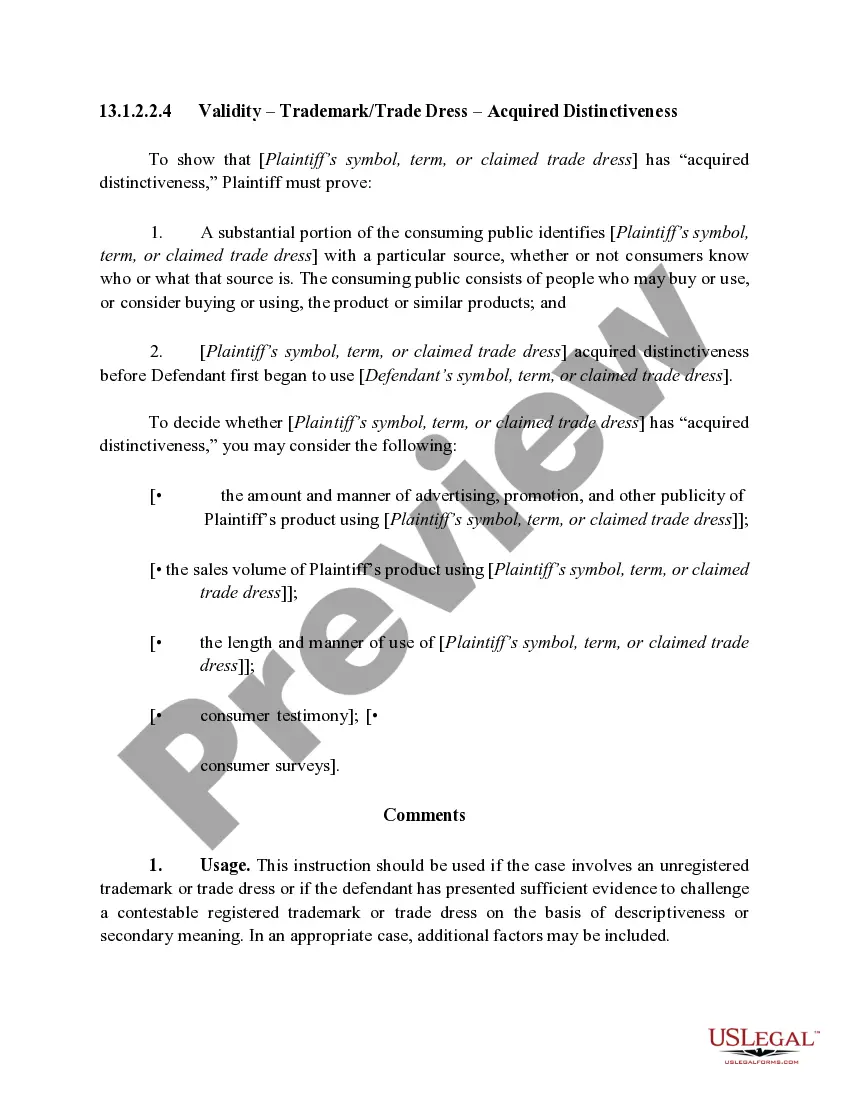
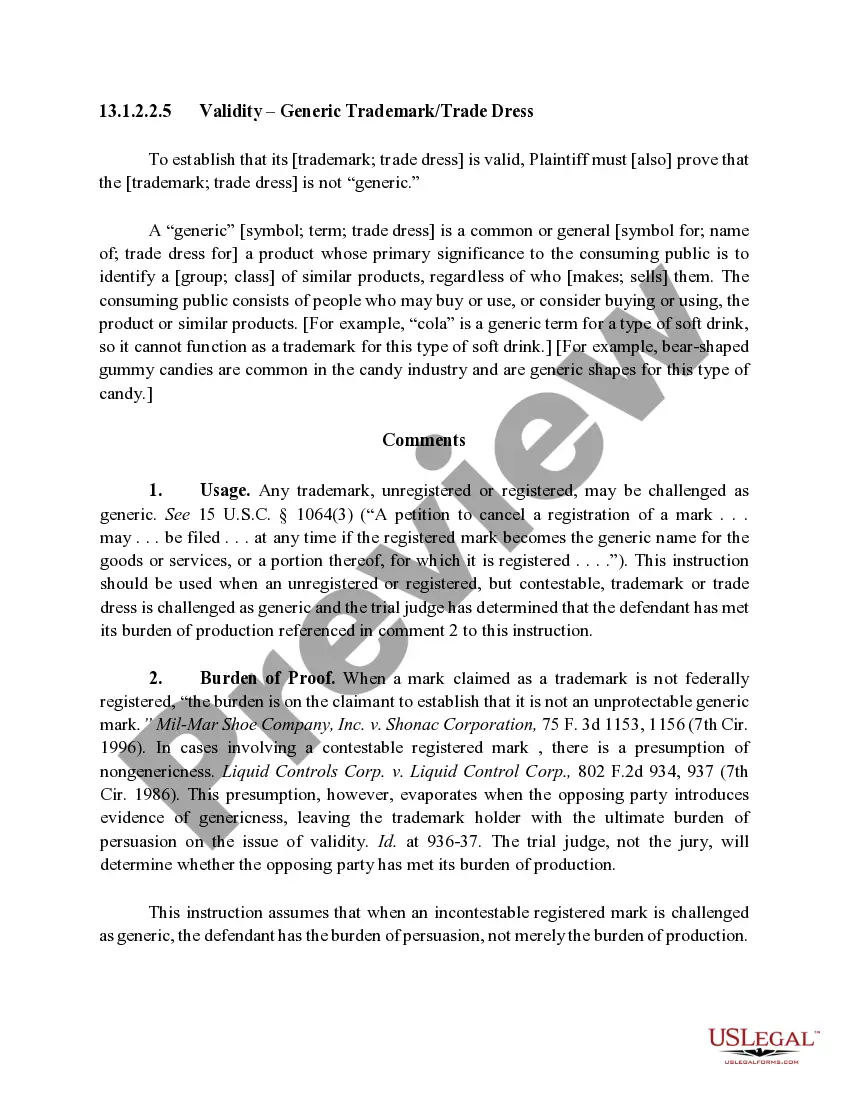
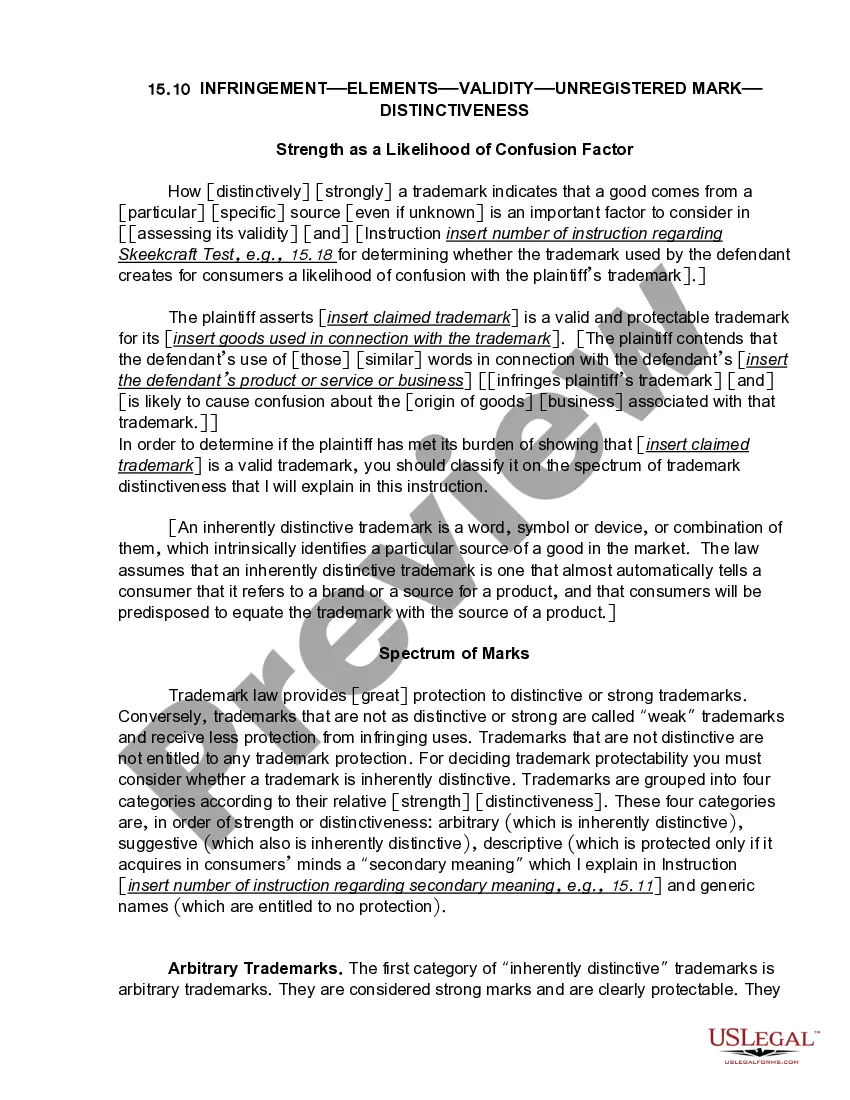
The 13.1.2.2.1 Validity - Trademark - Inherent Distinctiveness - Fanciful, Arbitrary, and Suggestive Marks form provides official pattern jury instructions adopted by the Federal 7th Circuit Court. This form specifically addresses trademarks that possess inherent distinctiveness and covers the definitions and legal standards for fanciful, arbitrary, and suggestive marks. It differs from other trademark forms by focusing on the automatic recognition of a trademark's brand association by consumers.
What’s included in this form
- Definitions of inherently distinctive trademarks, including fanciful, arbitrary, and suggestive terms.
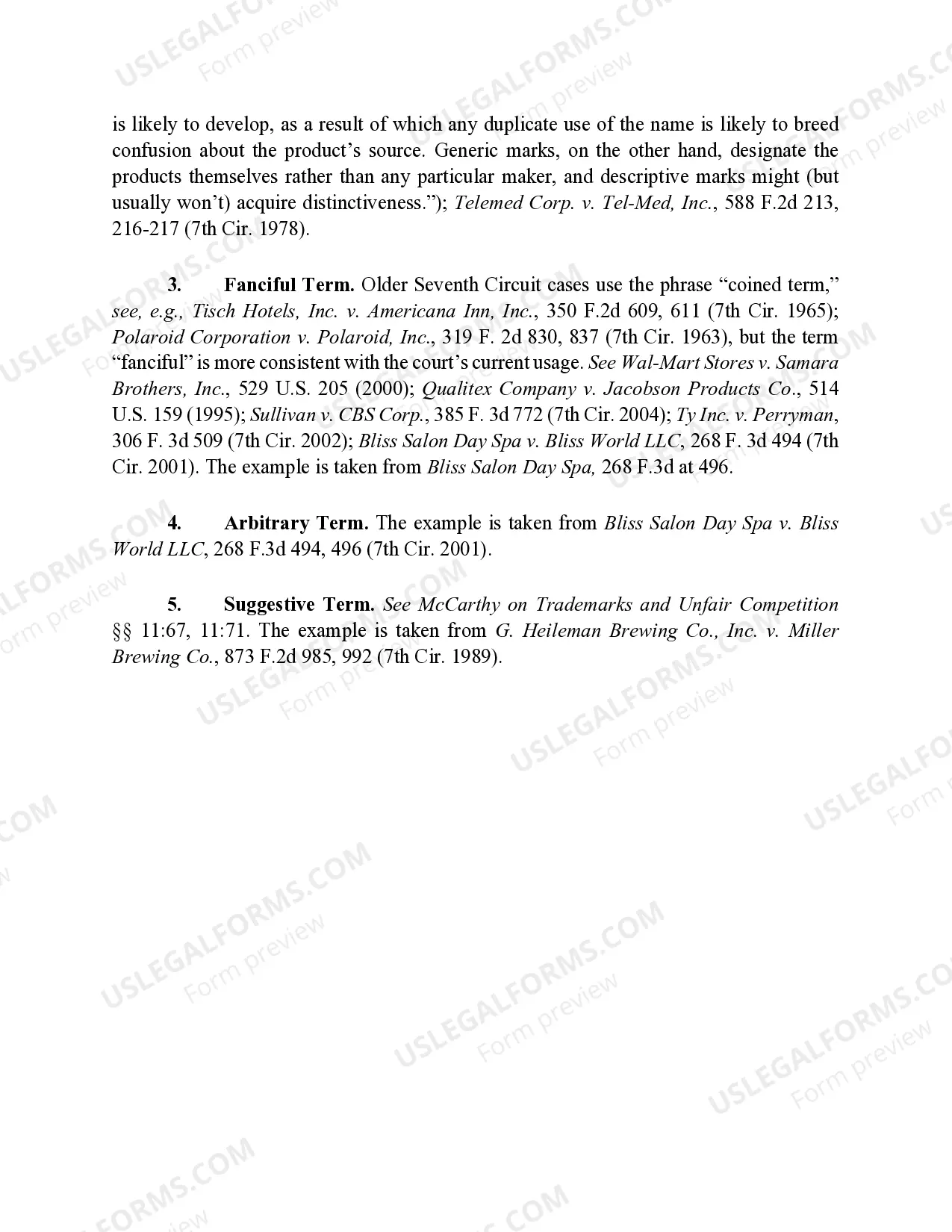
- Case citations supporting the legal definitions and standards for trademark distinctiveness.
- Comments regarding appropriate usage scenarios for the form.
- Guidance on trademarks that are unregistered or subject to challenge.
When this form is needed
This form is used in legal proceedings where the validity of a trademark is in question. It is particularly relevant when asserting an unregistered trademark or contesting a registered trademark. If there is a need to demonstrate the distinctive nature of a trademark, this form offers critical guidance for jurors and decision-makers.
Who this form is for
- Attorneys representing clients in trademark disputes.
- Parties involved in litigation over trademark validity.
- Business owners seeking to understand trademark rights or defend their trademarks.
Instructions for completing this form
- Identify the trademark being challenged or asserted.
- Review definitions for fanciful, arbitrary, and suggestive marks.
- Include supporting case citations relevant to the trademark's distinctiveness.
- Clarify whether the trademark is registered or unregistered.
- Review instructions for jurors if applicable.
Notarization requirements for this form
This form usually doesn’t need to be notarized. However, local laws or specific transactions may require it. Our online notarization service, powered by Notarize, lets you complete it remotely through a secure video session, available 24/7.
Get your form ready online
Our built-in tools help you complete, sign, share, and store your documents in one place.
Make edits, fill in missing information, and update formatting in US Legal Forms—just like you would in MS Word.
Download a copy, print it, send it by email, or mail it via USPS—whatever works best for your next step.
Sign and collect signatures with our SignNow integration. Send to multiple recipients, set reminders, and more. Go Premium to unlock E-Sign.
If this form requires notarization, complete it online through a secure video call—no need to meet a notary in person or wait for an appointment.
We protect your documents and personal data by following strict security and privacy standards.

Make edits, fill in missing information, and update formatting in US Legal Forms—just like you would in MS Word.

Download a copy, print it, send it by email, or mail it via USPS—whatever works best for your next step.

Sign and collect signatures with our SignNow integration. Send to multiple recipients, set reminders, and more. Go Premium to unlock E-Sign.

If this form requires notarization, complete it online through a secure video call—no need to meet a notary in person or wait for an appointment.

We protect your documents and personal data by following strict security and privacy standards.
Common mistakes to avoid
- Failing to clearly define the trademark in question.
- Confusing the types of marks (fanciful, arbitrary, suggestive).
- Omitting relevant case law that supports the argument.
Advantages of online completion
- Convenient access to expertly drafted legal instructions.
- Easy editability for specific case details.
- Time-efficient download and completion without the need for physical paperwork.
Legal use & context
- This form is intended for use in legal scenarios focusing on trademark distinctiveness.
- It helps establish the inherent qualities of a mark during litigation.
- Understanding trademark classifications can aid in preventing legal disputes.
Key takeaways
- The form provides crucial legal guidance on trademark distinctiveness.
- It addresses different categories of inherently distinctive trademarks.
- The form is useful for both litigation and understanding trademark rights.
Looking for another form?

Form popularity
FAQ
An arbitrary trademark is a word or image that already exists, but it has nothing to do with the business that uses it. Apple Computers is one of the classic examples, since iPhones and laptops have nothing to do with fruit or cider. Shell gas stations and Camel cigarettes are other good examples.
An inherently distinctive trademark is a mark that lacks descriptive wording in relation to your goods or services. It's tempting to choose a name or term that describes a quality or characteristic of your product. Resist that temptation and try to come up with a mark that is fanciful or imaginative.
Suggestive trademarks are words that suggest some quality of the goods or services, but don't state that quality of the goods or services outright. Consider Coppertone® for sun-tanning products.
Types of trademarks for products include five main categories: generic mark, descriptive mark, suggestive mark, fanciful, and arbitrary mark. A generic trademark actually doesn't qualify for a trademark unless it includes more specific detail.
Devices that are fanciful, arbitrary, or suggestive are considered distinctive enough to function as trademarks. On the other hand, if a device is descriptive, the device can function as a trademark or service mark only if it has obtained secondary meaning. Generic devices can never be a trademark.
The Four Types of Trademarks Generic. Descriptive. Suggestive. Arbitrary or Fanciful.
Like fanciful marks, arbitrary marks are those trademarks or service marks that consist of a word or symbol that has nothing to do with the products or services being offered. Unlike fanciful marks, an arbitrary mark is a real word, but the word is used such that there is no connection to the meaning.