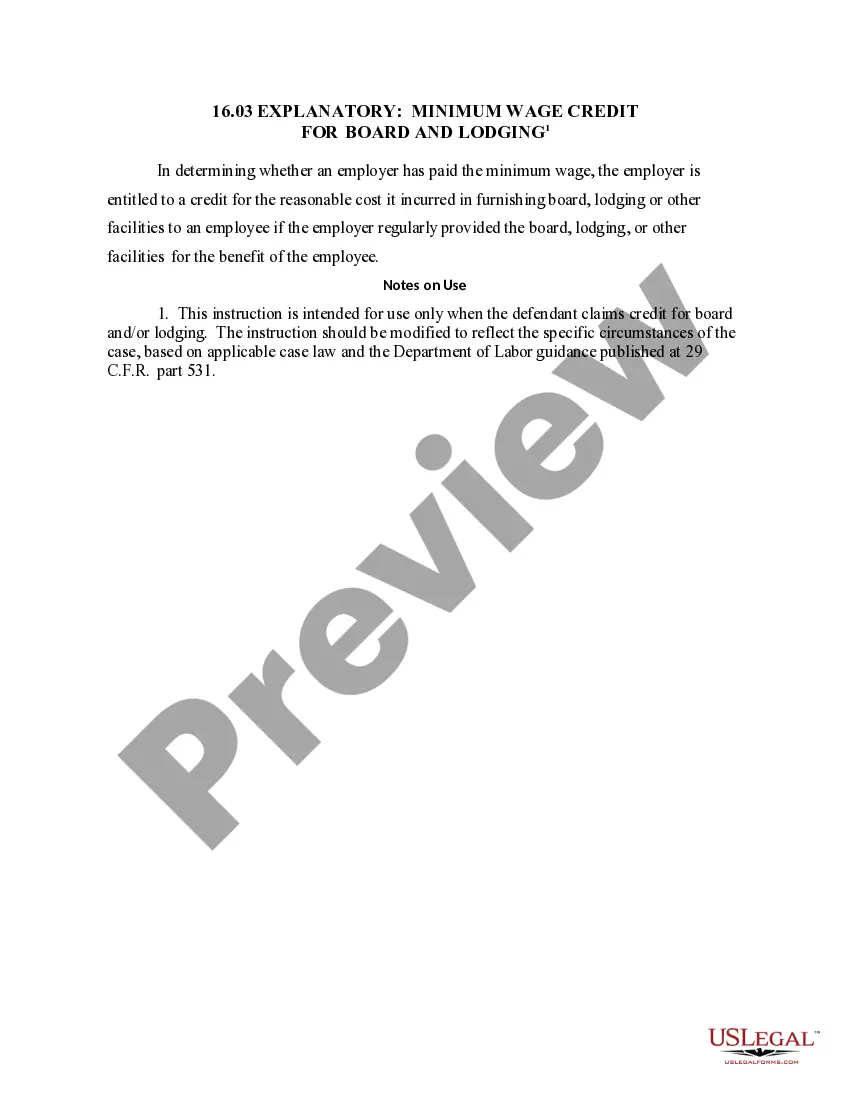
16.03 EXPLANATORY: MINIMUM WAGE CREDIT FOR BOARD AND LODGING
Overview of this form
The 16.03 Explanatory: Minimum Wage Credit for Board and Lodging form is used by employers to claim credit for the reasonable costs incurred in providing employees with board or lodging. This form is essential in determining whether an employer has paid the minimum wage, as it allows for these accommodations to be counted towards the wage obligations. Unlike other wage-related forms, this specific form provides a clear framework for employers seeking to offset earnings obligations due to in-kind benefits like housing and meals.
Main sections of this form
- Definition of reasonable costs for board and lodging
- Criteria under which the credit can be claimed
- Guidelines for how to determine eligibility for the credit
- Instructions for modifying the form based on specific case circumstances
- Citations to applicable case law and Department of Labor guidelines
When to use this document
This form is needed when an employer seeks to assert that the cost of board and lodging provided to an employee offsets the minimum wage they owe. Situations may include seasonal workers living on-site, employees provided with housing as part of their compensation, or any instance where in-kind benefits are regularly provided and the employer wishes to account for these when assessing minimum wage compliance.
Who this form is for
- Employers seeking to demonstrate compliance with minimum wage laws
- Employers providing board and lodging as part of employee compensation
- Legal professionals advising clients on wage-related matters
- Human resources personnel involved in employee compensation agreements
Steps to complete this form
- Identify the parties involved, including the employer and the employee.
- Specify the type and value of board or lodging provided to the employee.
- Determine the reasonable costs associated with the provided benefits.
- Clearly state the applicable case law or regulations justifying the claimed credit.
- Sign and date the form to affirm its correctness and legality.
Notarization requirements for this form
This form does not typically require notarization to be legally valid. However, some jurisdictions or document types may still require it. US Legal Forms provides secure online notarization powered by Notarize, available 24/7 for added convenience.
Get your form ready online
Our built-in tools help you complete, sign, share, and store your documents in one place.
Make edits, fill in missing information, and update formatting in US Legal Forms—just like you would in MS Word.
Download a copy, print it, send it by email, or mail it via USPS—whatever works best for your next step.
Sign and collect signatures with our SignNow integration. Send to multiple recipients, set reminders, and more. Go Premium to unlock E-Sign.
If this form requires notarization, complete it online through a secure video call—no need to meet a notary in person or wait for an appointment.
We protect your documents and personal data by following strict security and privacy standards.

Make edits, fill in missing information, and update formatting in US Legal Forms—just like you would in MS Word.

Download a copy, print it, send it by email, or mail it via USPS—whatever works best for your next step.

Sign and collect signatures with our SignNow integration. Send to multiple recipients, set reminders, and more. Go Premium to unlock E-Sign.

If this form requires notarization, complete it online through a secure video call—no need to meet a notary in person or wait for an appointment.

We protect your documents and personal data by following strict security and privacy standards.
Common mistakes to avoid
- Failing to properly document the cost of board or lodging.
- Not modifying the form to fit specific case circumstances.
- Overstating the value of in-kind benefits provided.
- Neglecting to reference applicable laws or guidelines in the submission.
Why complete this form online
- Convenience of fast downloading and printing.
- Editability to tailor the form to specific situations.
- Access to templates that are drafted by licensed attorneys, ensuring reliability.
- No need for in-person appointments or lengthy wait times.
Looking for another form?
Form popularity
FAQ
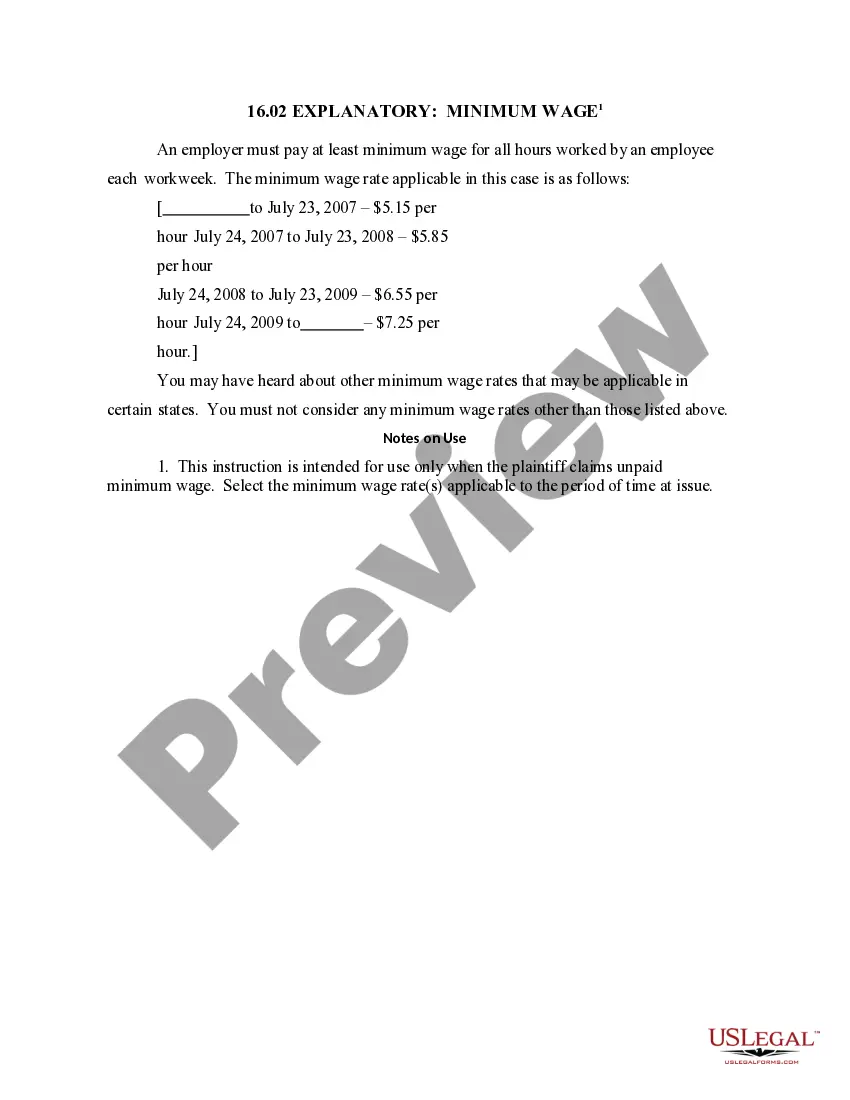
What is the minimum wage in each state for 2023? State2022 Minimum Hourly Wage2023 Minimum Hourly WageCalifornia$14.00 for employers with 25 or less workers; $15.00 for larger businesses.$15.50 for all employers.Colorado$12.56$13.65Connecticut$14.00$14.00Delaware$10.50$11.7547 more rows ?
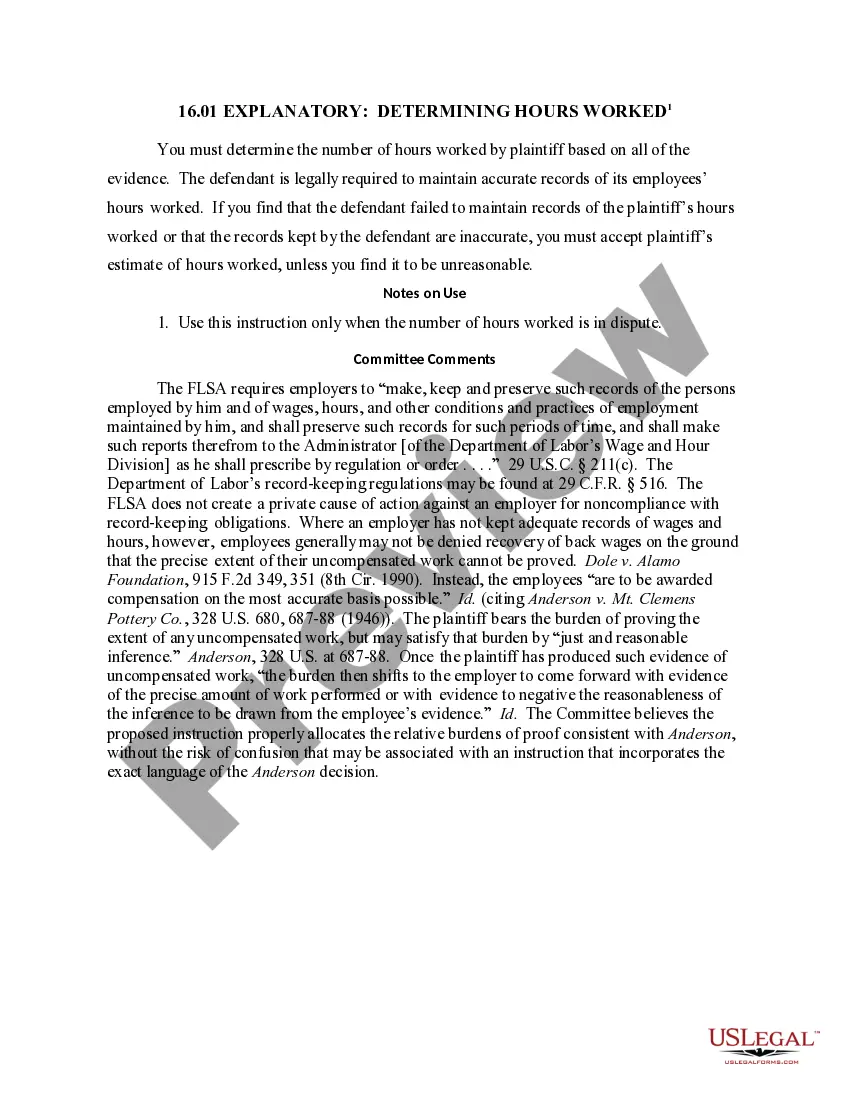
The average increase for 2023 will fall between 4% and 5%. Just 11% of companies (compared to 18% of companies last year) said they'll increase base pay by more than 5%, ing to the report.
The federal minimum wage is $7.25 per hour. This rate applies to covered nonexempt workers. The minimum wage for employees who receive tips is $2.13 per hour. The amount of tips plus the $2.13 must reach at least $7.25 per hour.
The California $18 Minimum Wage Initiative has qualified for the ballot in California as an initiated state statute on November 5, 2024. A "yes" vote supports increasing the state minimum wage to $18 per hour by 2026 for all employers and thereafter adjusting the rate annually by increases to the cost of living.
You can credit meals and lodging that you supply as part of an employee's compensation against state minimum wage obligations. Meals must include a variety of nutritious foods. Lodging must meet customary standards of adequacy and sanitation.
Section 3(m) of the FLSA allows an employer to count the value of food, housing, or other facilities provided to employees towards wages under certain circumstances.
The federal minimum wage for covered nonexempt employees is $7.25 per hour.
Which States are Increasing the Minimum Wage in 2023? Alaska. Arizona. California (all) Colorado. Connecticut. Delaware. Florida. Illinois.