Indiana Marital Legal Separation and Property Settlement Agreement Minor Children no Joint Property or Debts where Divorce Action Filed
What is this form?
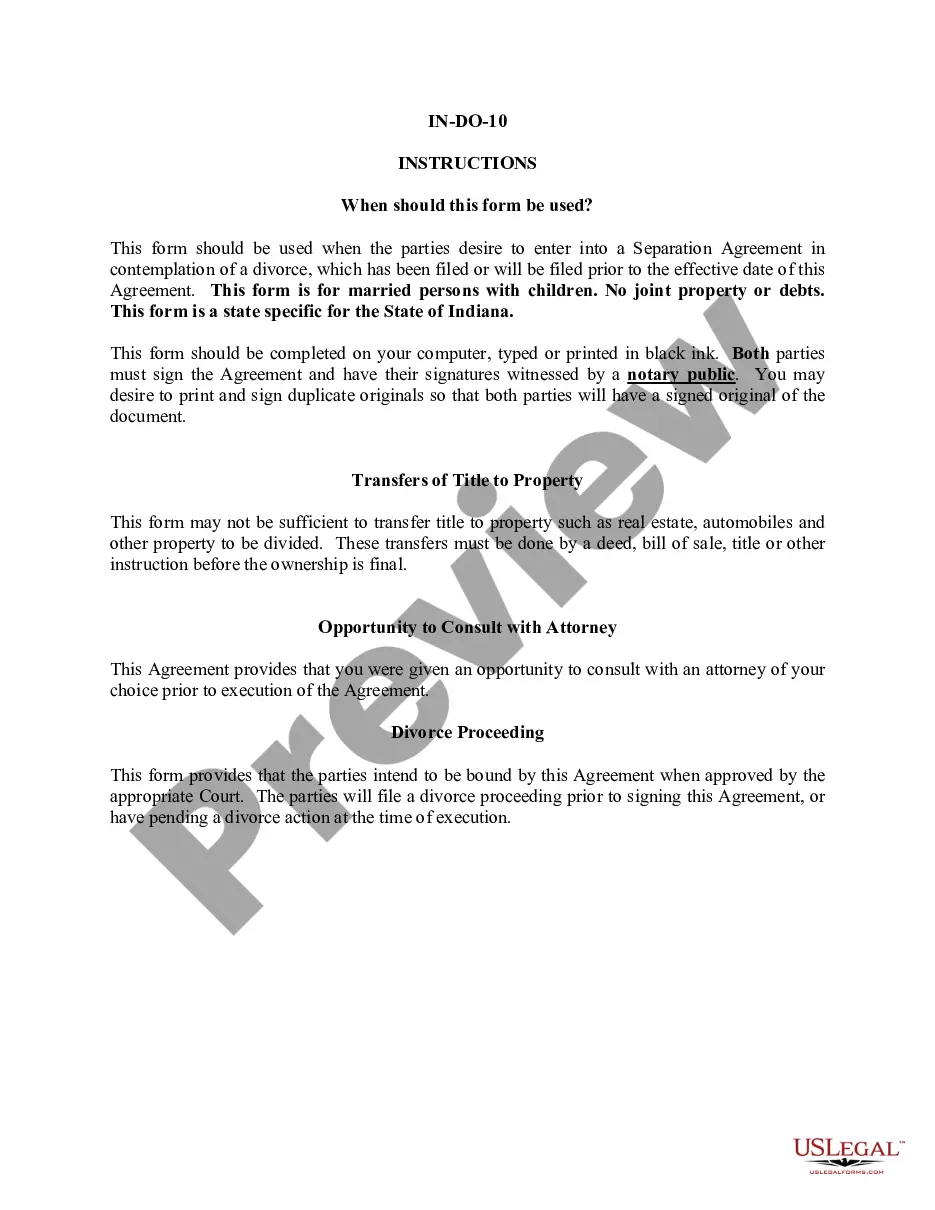
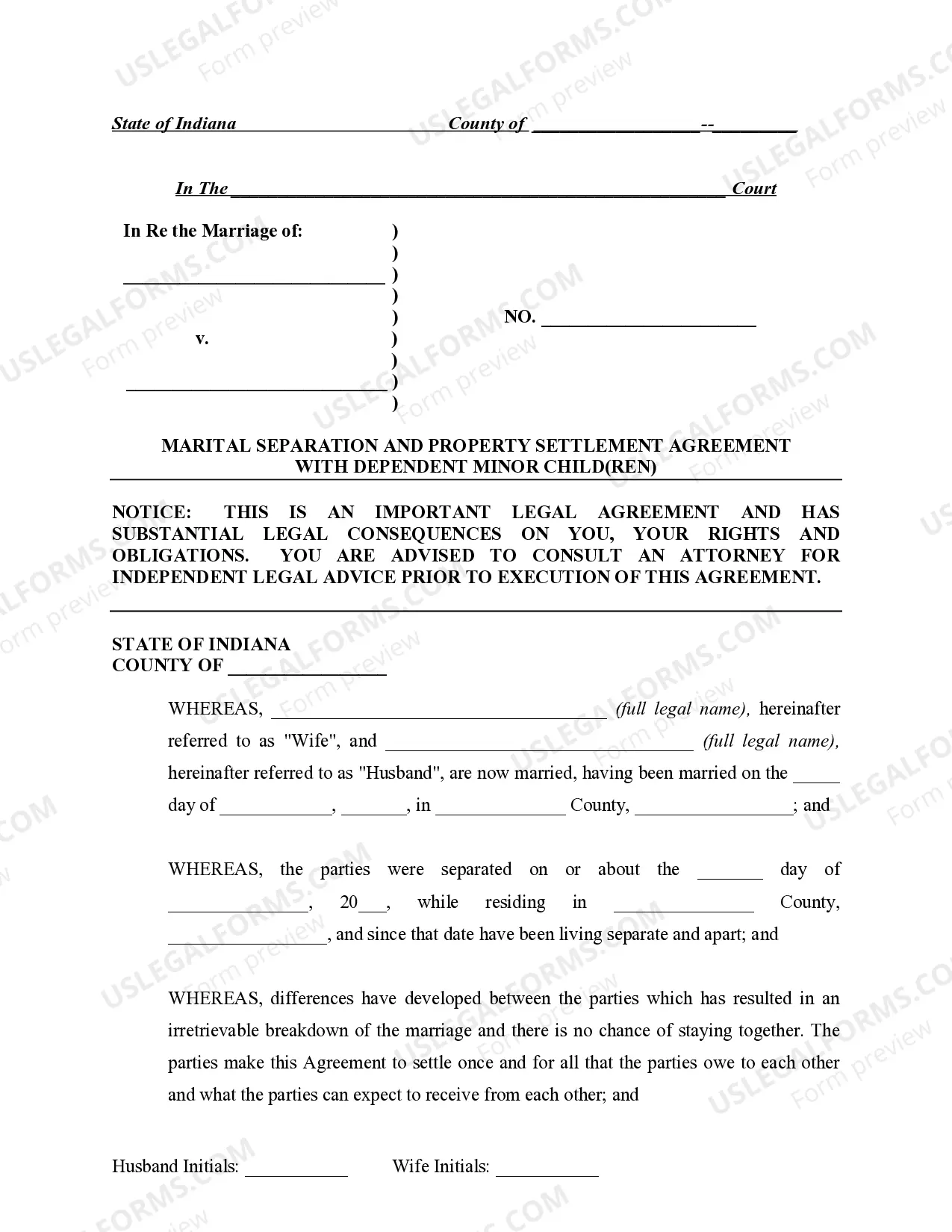
The Marital Legal Separation and Property Settlement Agreement is a legal document designed for couples with minor children who are preparing for divorce but do not have any joint property or debts. This form facilitates the resolution of custody, visitations, and child support issues while outlining potential spousal support options. Unlike other separation agreements, this form specifically caters to families handling divorce proceedings in Indiana, ensuring state-specific legal compliance.
What’s included in this form
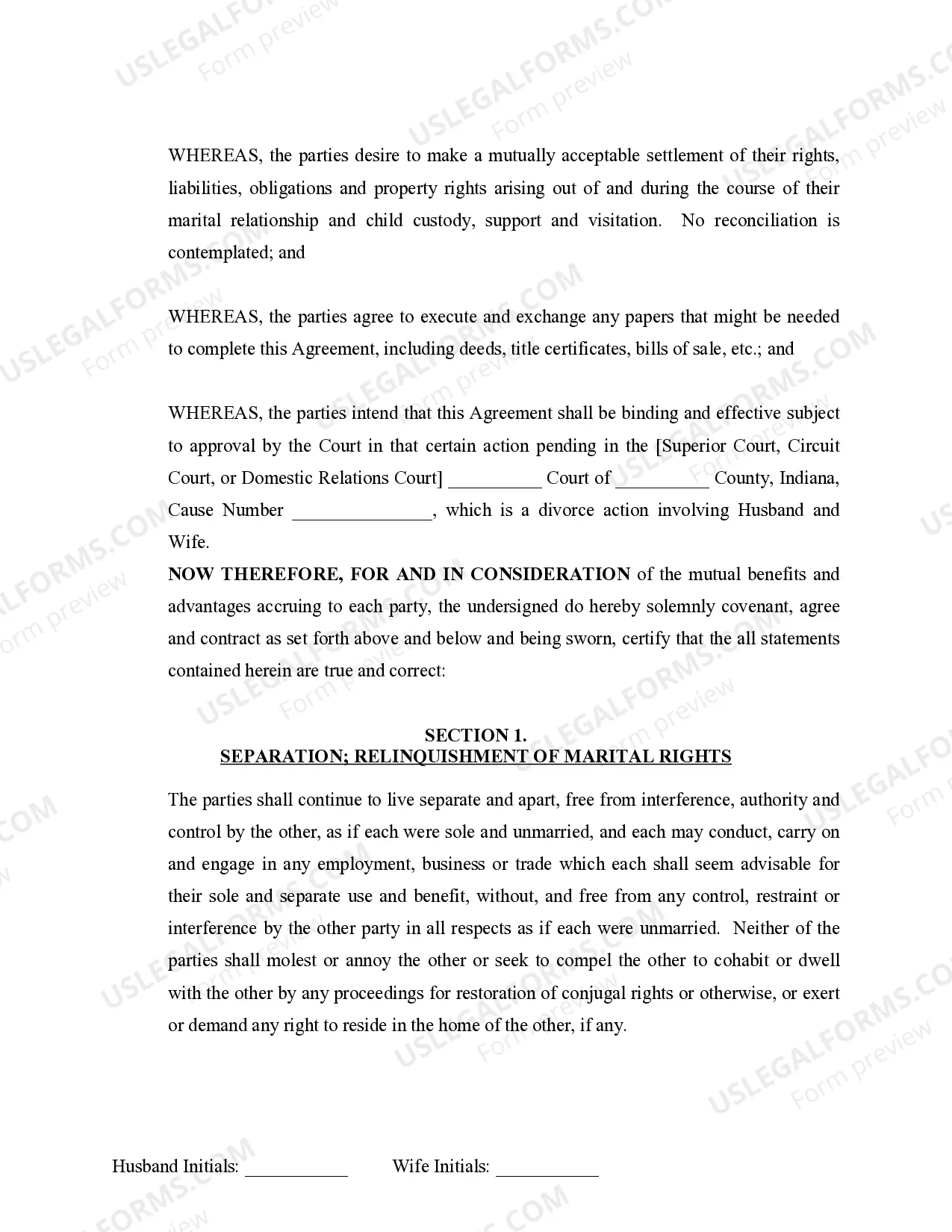
- Separation relinquishment of marital rights between parties.
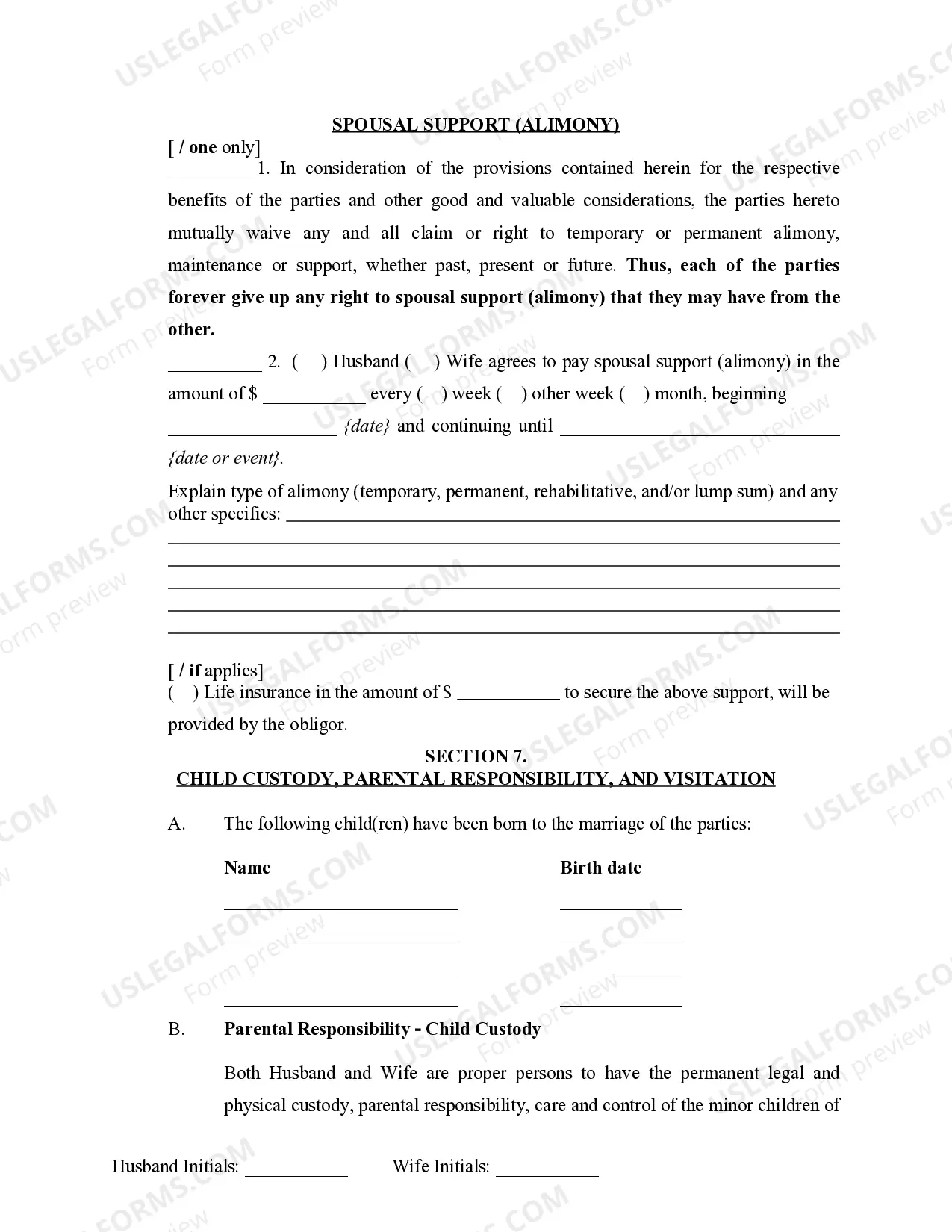
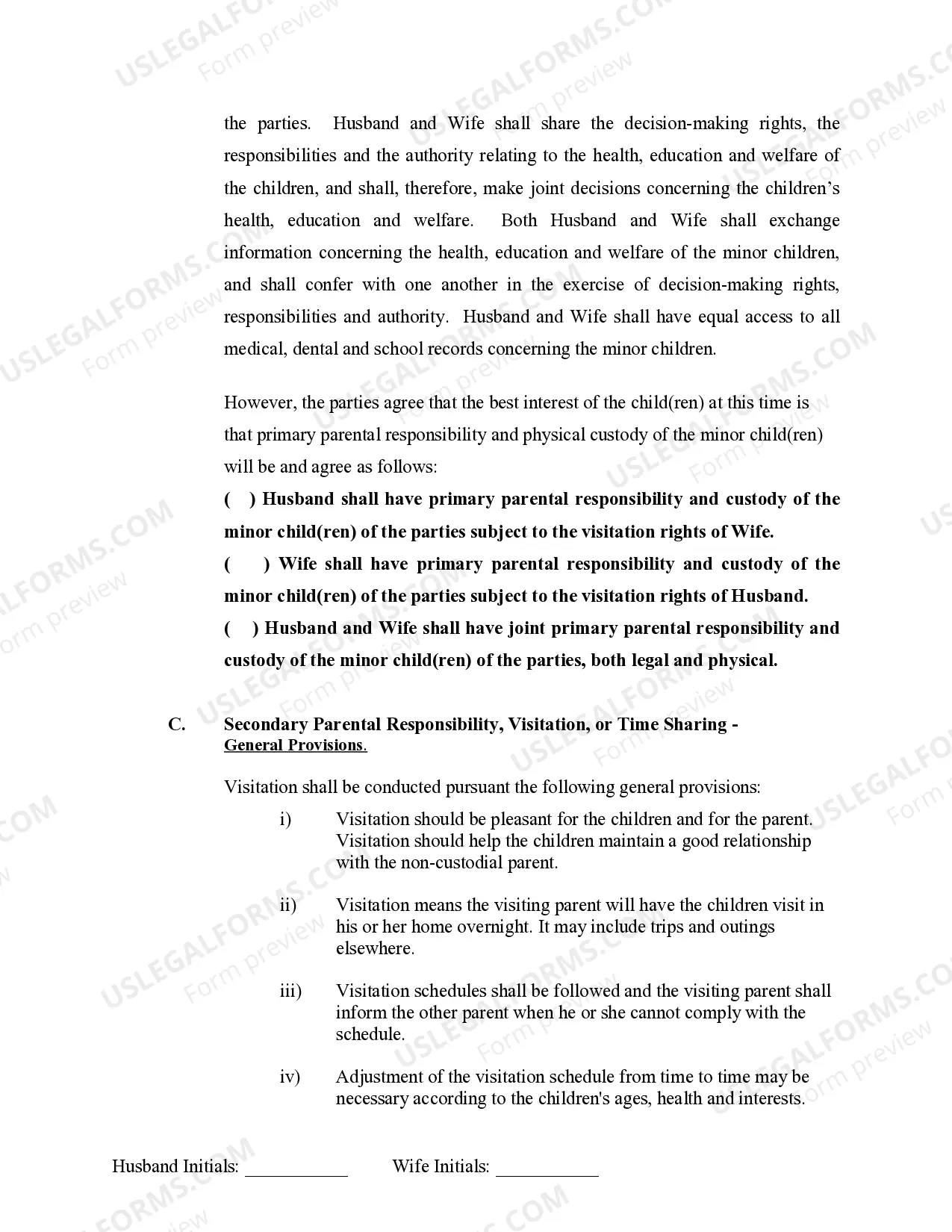
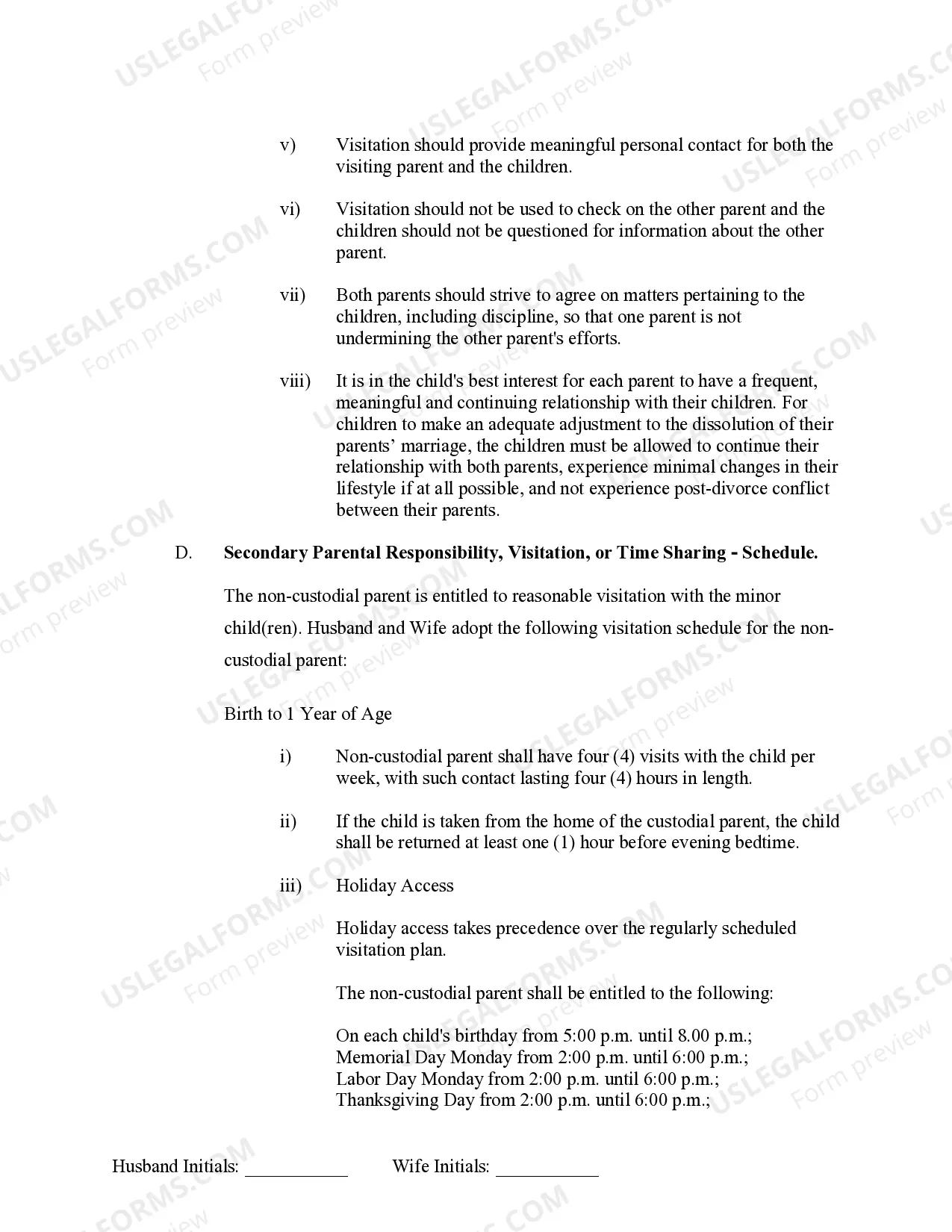
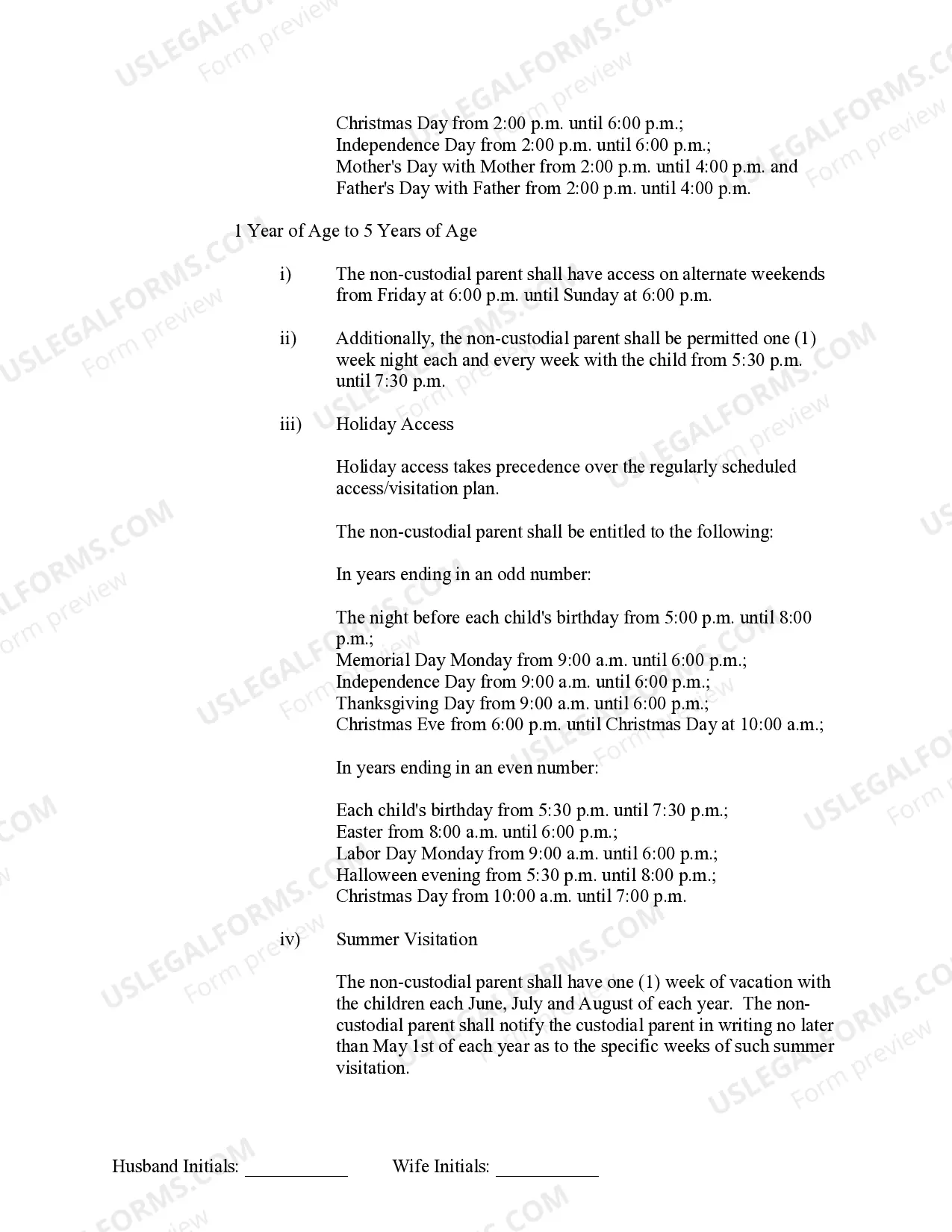
- Details regarding custody arrangements and parental responsibilities for minor children.
- Specifics on child support obligations and health care provisions.
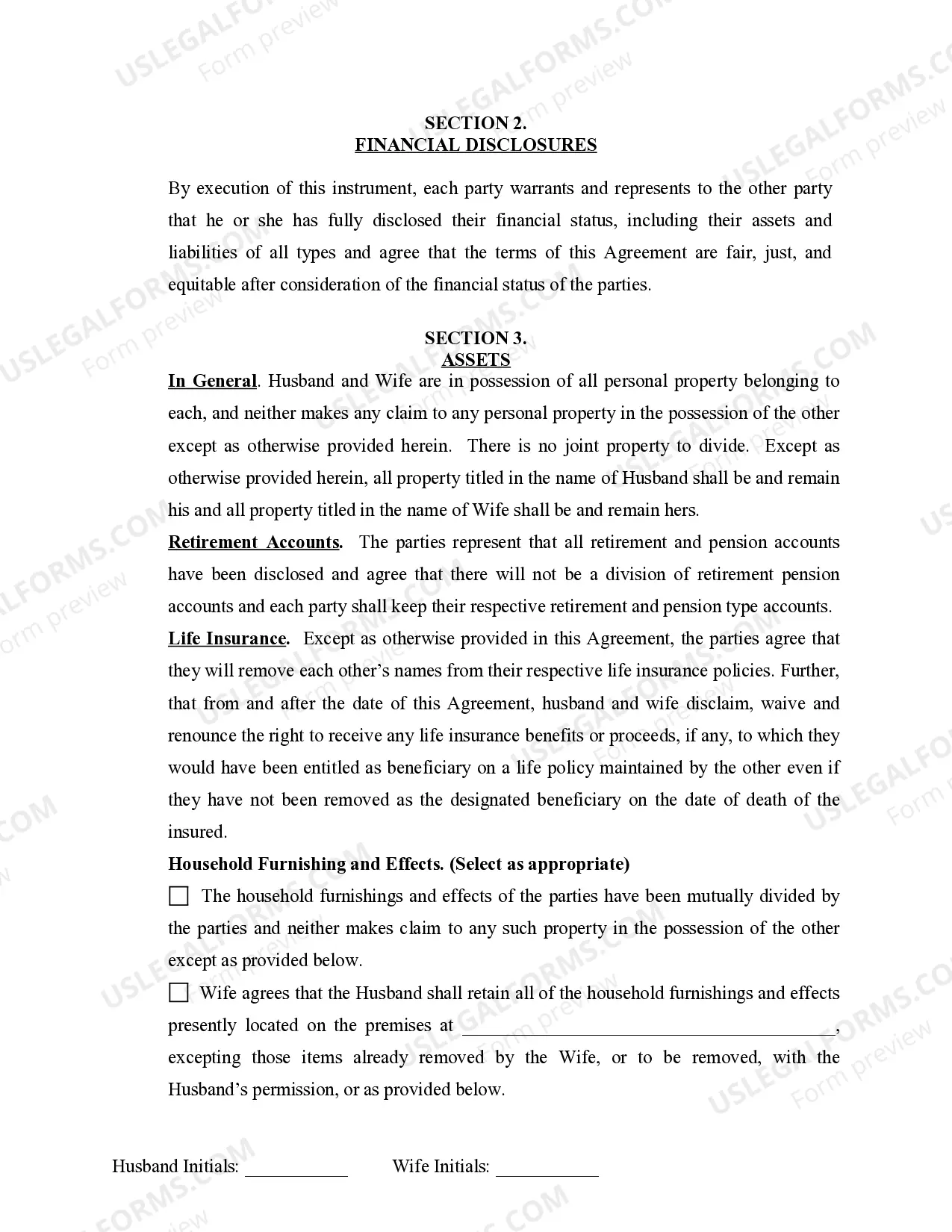
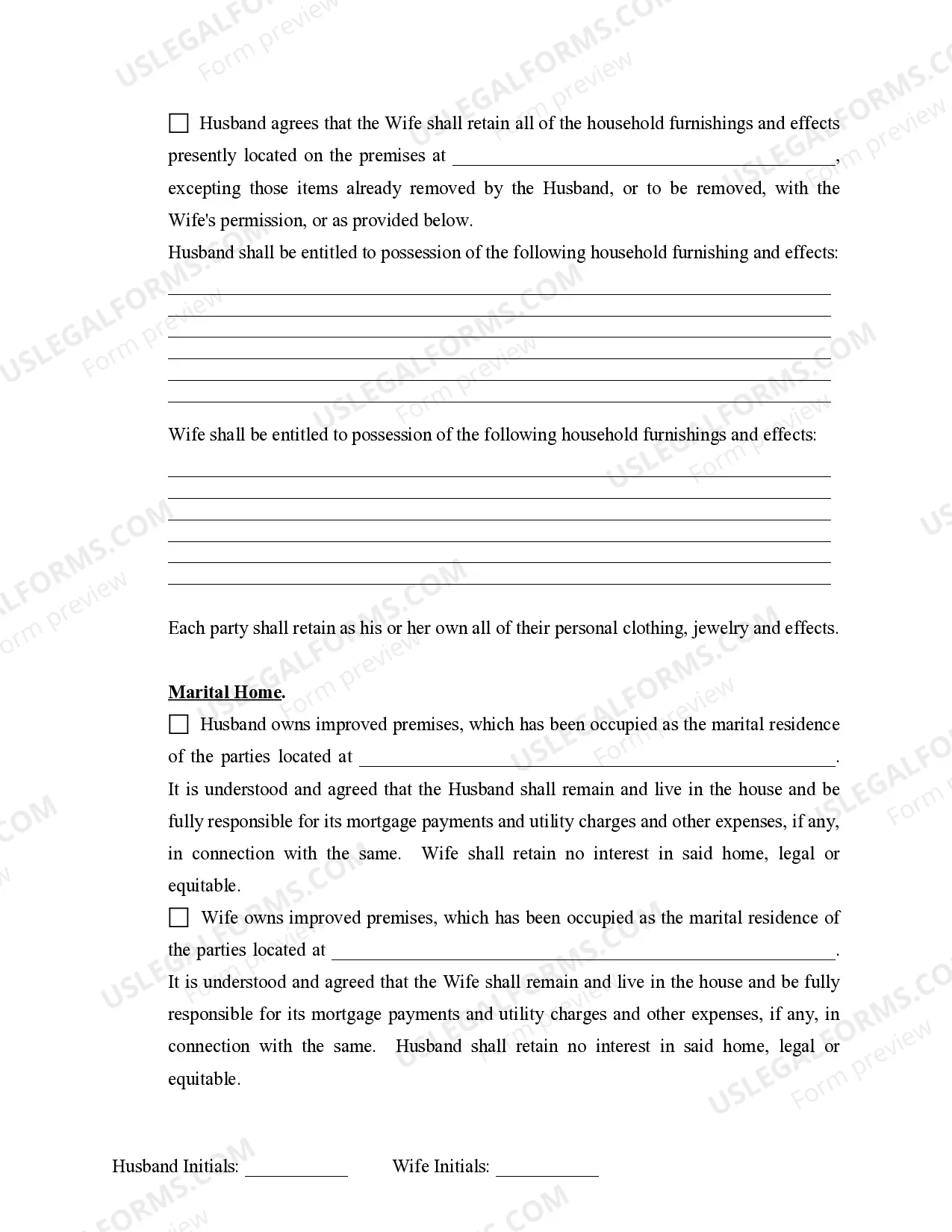
- Terms related to the division of individual property and debts.
- Provisions for spousal support, if applicable.
- Signatures from both parties and notarization requirements.
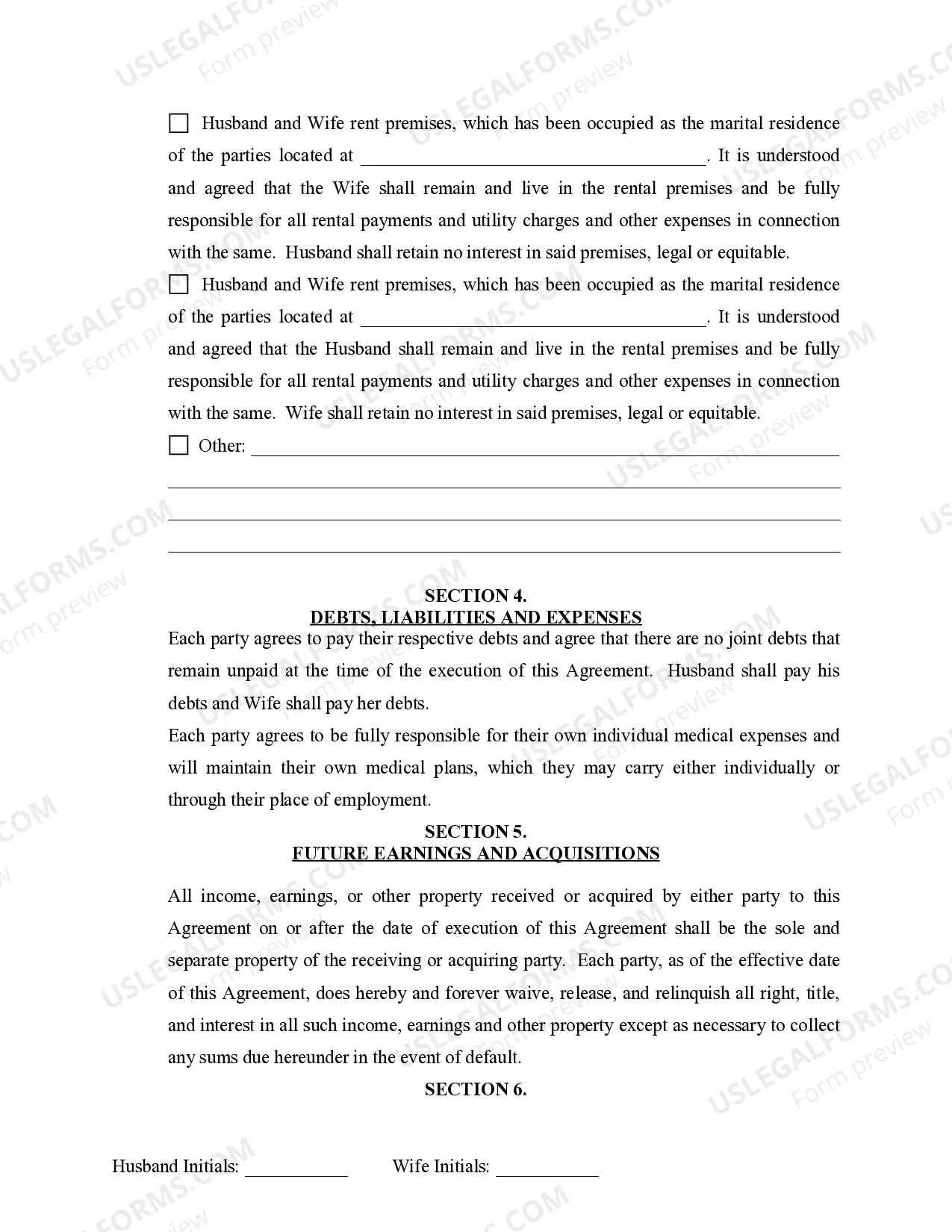

When to use this form
This form should be utilized when married couples with minor children wish to establish a formal separation agreement prior to or during the divorce proceedings. It is specifically relevant for couples in Indiana who do not have any joint property or unresolved debts, allowing them to outline child custody, visitation, and financial agreements comprehensively.
Who this form is for
- Married couples with minor children in Indiana who are seeking a legal separation.
- Parties who do not own joint property or have joint debts.
- Individuals preparing for divorce and looking to clarify parental and financial responsibilities.
How to prepare this document
- Identify the parties involved by providing their full legal names and contact details.
- Specify the custody arrangements and visitation schedules for the minor children.
- Outline any agreed-upon child support amounts and spousal support obligations.
- Ensure financial disclosures of assets and liabilities are accurately recorded.
- Both parties must sign the document in the presence of a notary public for it to be valid.
Notarization guidance
To make this form legally binding, it must be notarized. Our online notarization service, powered by Notarize, lets you verify and sign documents remotely through an encrypted video session.
Get your form ready online
Our built-in tools help you complete, sign, share, and store your documents in one place.
Make edits, fill in missing information, and update formatting in US Legal Forms—just like you would in MS Word.
Download a copy, print it, send it by email, or mail it via USPS—whatever works best for your next step.
Sign and collect signatures with our SignNow integration. Send to multiple recipients, set reminders, and more. Go Premium to unlock E-Sign.
If this form requires notarization, complete it online through a secure video call—no need to meet a notary in person or wait for an appointment.
We protect your documents and personal data by following strict security and privacy standards.

Make edits, fill in missing information, and update formatting in US Legal Forms—just like you would in MS Word.

Download a copy, print it, send it by email, or mail it via USPS—whatever works best for your next step.

Sign and collect signatures with our SignNow integration. Send to multiple recipients, set reminders, and more. Go Premium to unlock E-Sign.

If this form requires notarization, complete it online through a secure video call—no need to meet a notary in person or wait for an appointment.

We protect your documents and personal data by following strict security and privacy standards.
Common mistakes
- Failing to accurately disclose all financial information.
- Leaving sections on child custody or support incomplete.
- Neglecting to notarize the document, which is essential for its legal validity.
- Not having both parties read and understand the agreement thoroughly.
Benefits of using this form online
- Convenient download and completion from home, saving time and travel.
- Editability allows for easy adjustments before finalizing the agreement.
- Access to resources and legal frameworks that enhance understanding of the process.
Looking for another form?
Form popularity
FAQ
The 60-day divorce law in Indiana refers to the waiting period for couples filing for divorce. Once you submit your divorce petition, you must wait at least 60 days before the court will finalize the divorce. This period allows both parties to consider their options and any potential agreements regarding the Indiana Marital Legal Separation and Property Settlement Agreement Minor Children no Joint Property or Debts where Divorce Action Filed.
What Rights do Spouses Have During Separation? In a legal separation proceeding, a court can decide matters such as child custody and support, alimony and property division. However, as stated above, the spouses will remain legally married and cannot remarry unless and until they get a divorce.
Unlike other states, Indiana treats separate property as marital property and will include it in the division. Since Indiana is an equitable distribution state, the judge presiding over your divorce must divide your marital property in a just and reasonable manner.
Though the term non-marital property often refers to any personal or real property owned prior to, and brought into the marriage, it can also refer to things such as inheritances and gifts made to only one spouse.
Once an agreement has been reached, both parties will sign the settlement, and it will be forwarded to a judge who will incorporate the agreement into the final divorce decree.Usually, an attorney will need to file a motion immediately, and present an argument to the court about why the agreement should be rescinded.
A Marital Settlement Agreement, written and signed by both spouses, is a contract that defines the terms of their divorce.The Marital Settlement Agreement assures each parent's continued right to access medical and health related records as well as school related records.
Marital Settlement Agreements, reached between the parties in writing and signed by the parties, become legally binding when approved by the court at the time of the final court hearing.Once approved by the court, such post judgment stipulations do become legally binding and enforceable between the parties.
Related Content. Property that is unlikely to be shared between the parties on the breakdown of the marriage or civil partnership unless it is required to meet needs. Generally non-matrimonial property is: Acquired by one party before the marriage.
Enforcing an MSA must be done by filing a formal request or motion (legal paperwork) with the court. You will need to show the court how your ex-spouse failed to follow the terms of the agreement. There are many reasons you may need to ask the court to assist you with enforcing your agreement.
Things You Cannot Change in a Divorce Settlement Agreement In particular, California courts will not reconsider the original property or debt division. However, the parties can agree between themselves to change the terms of the property or debt division by stipulation and order to modify an earlier judgment.