Indiana Trim Carpenter Contract for Contractor
Overview of this form
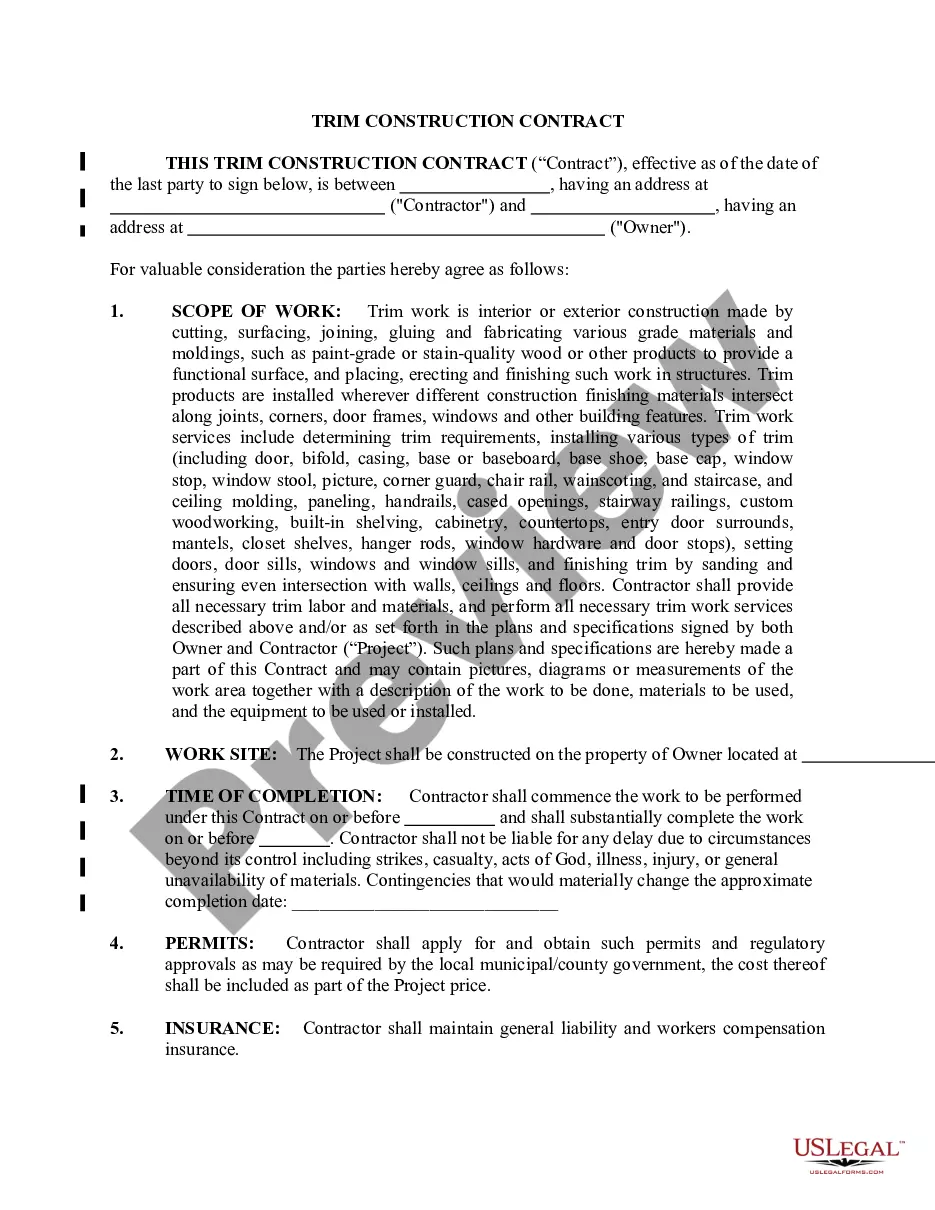
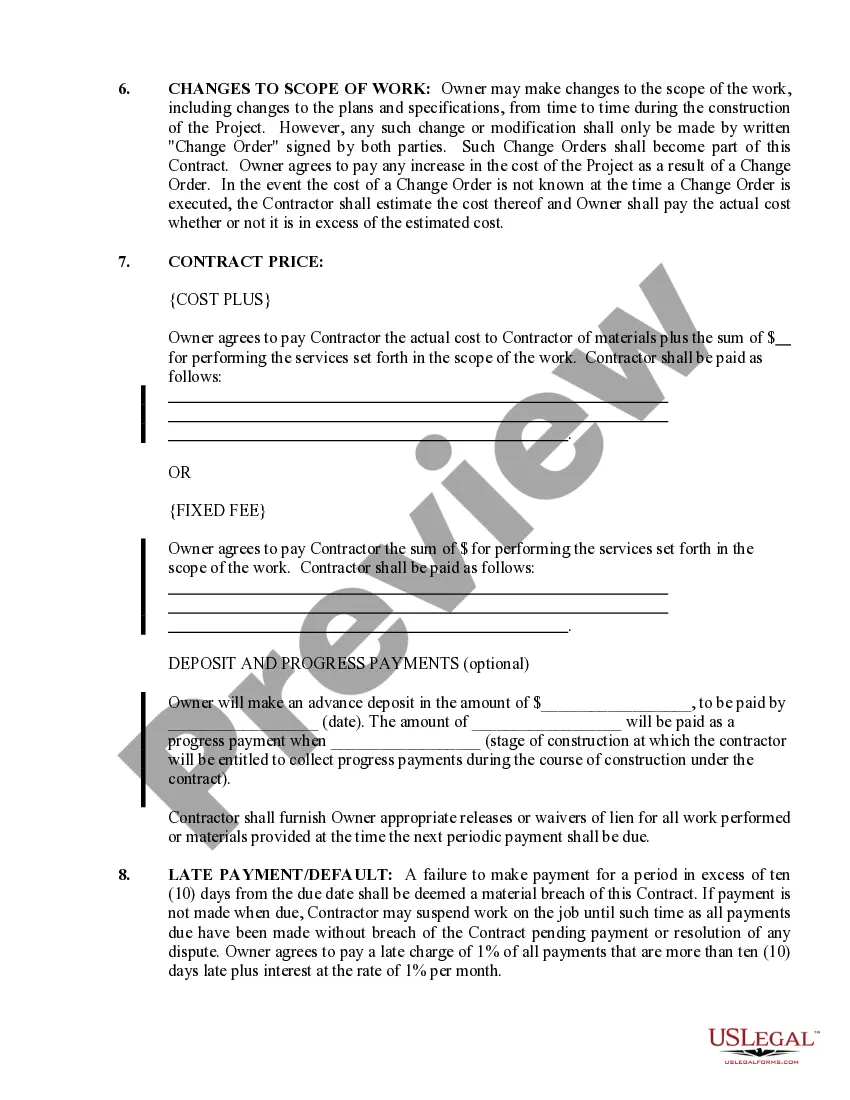
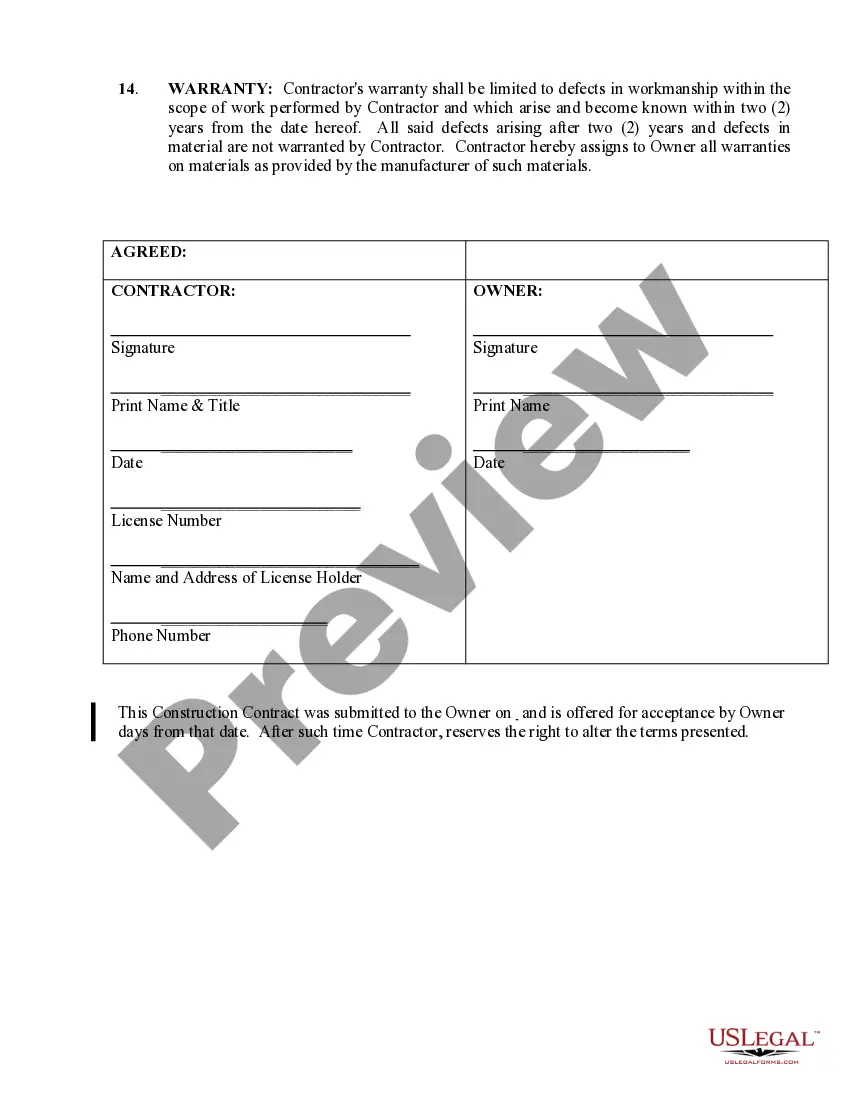
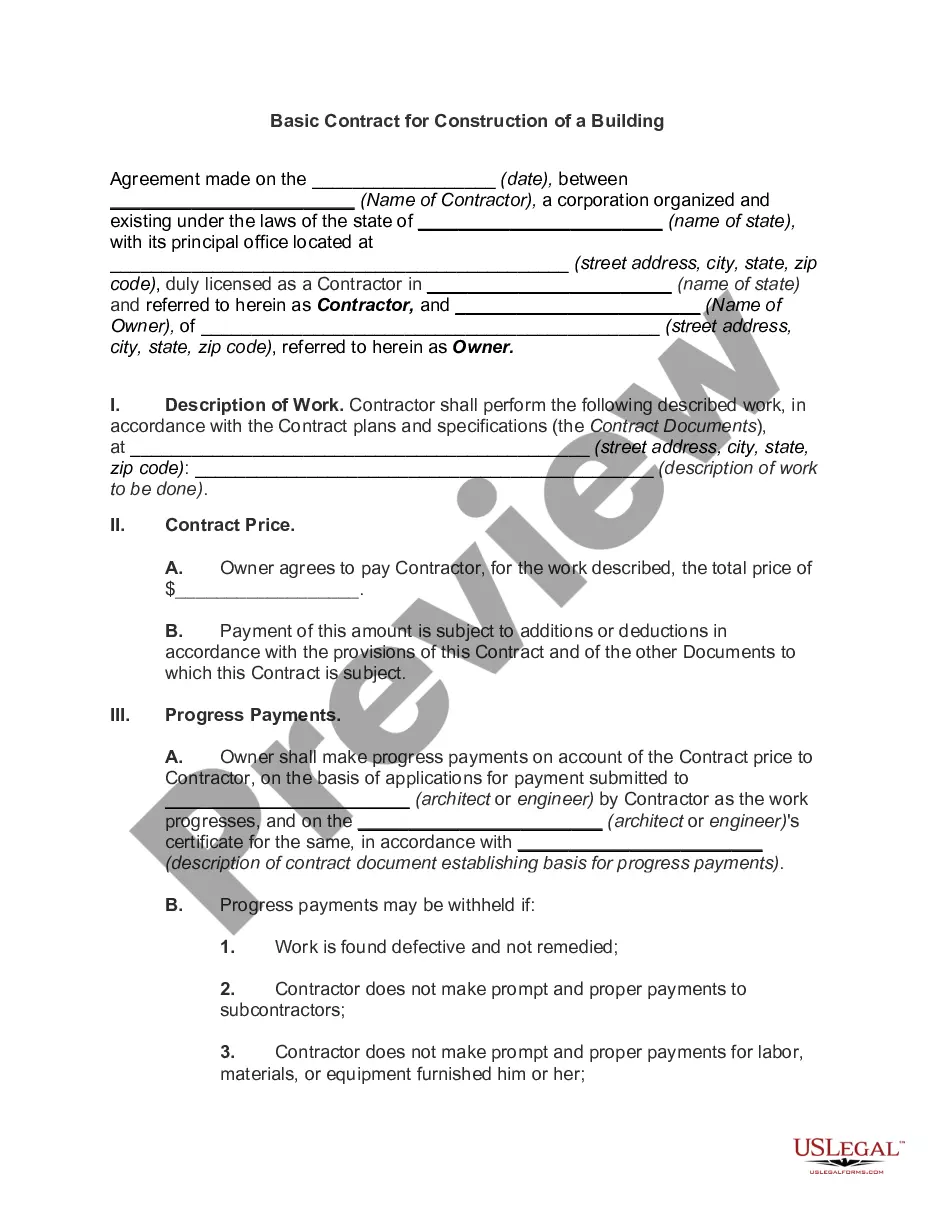
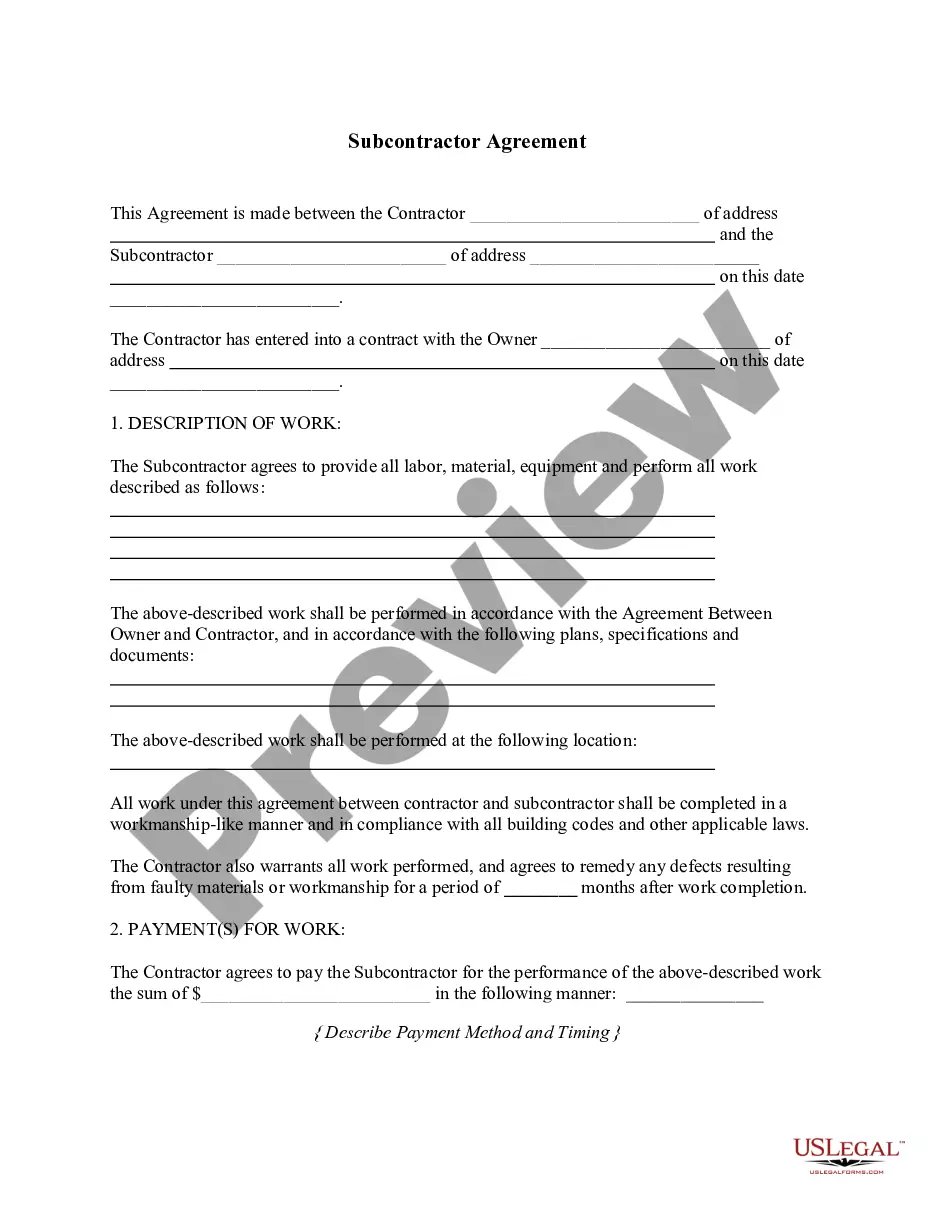
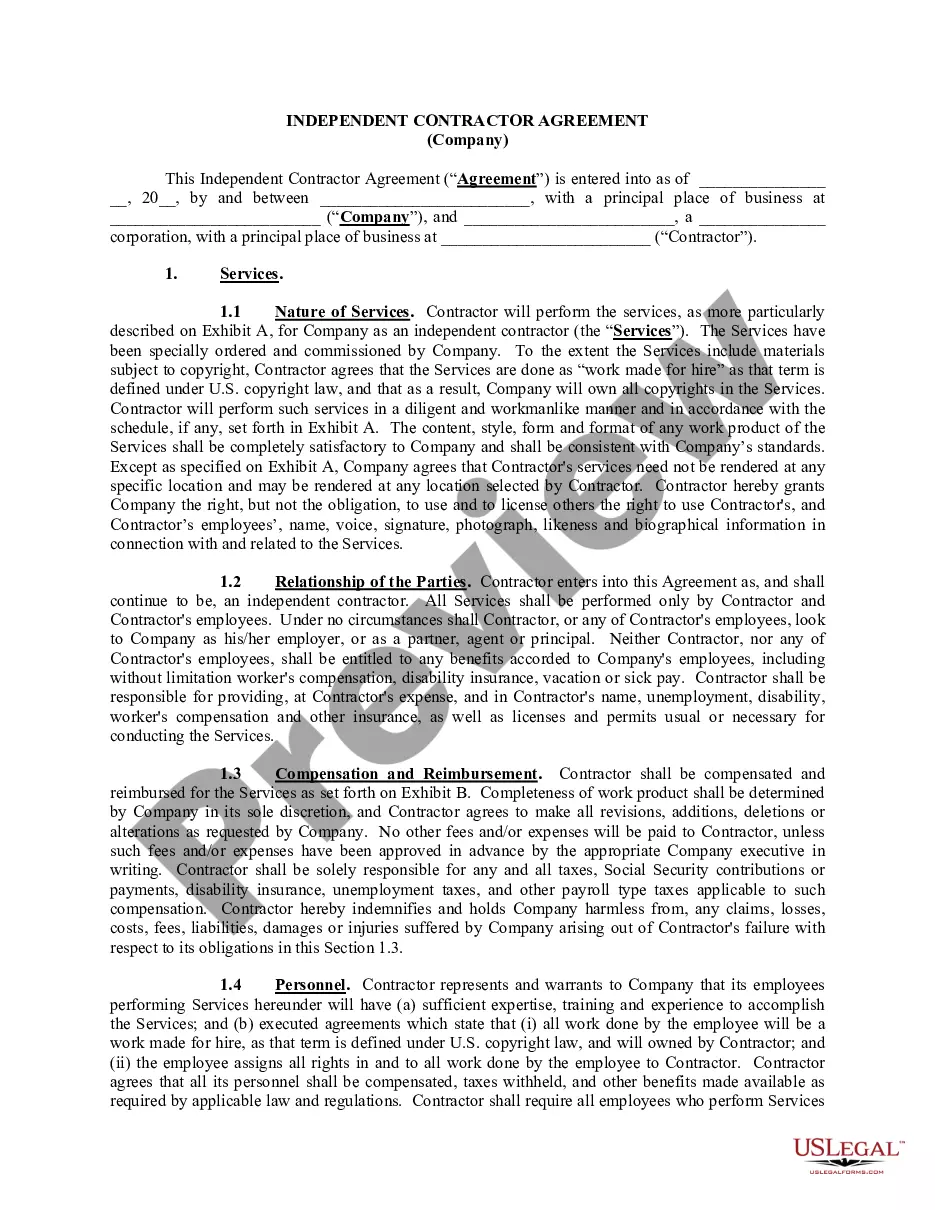
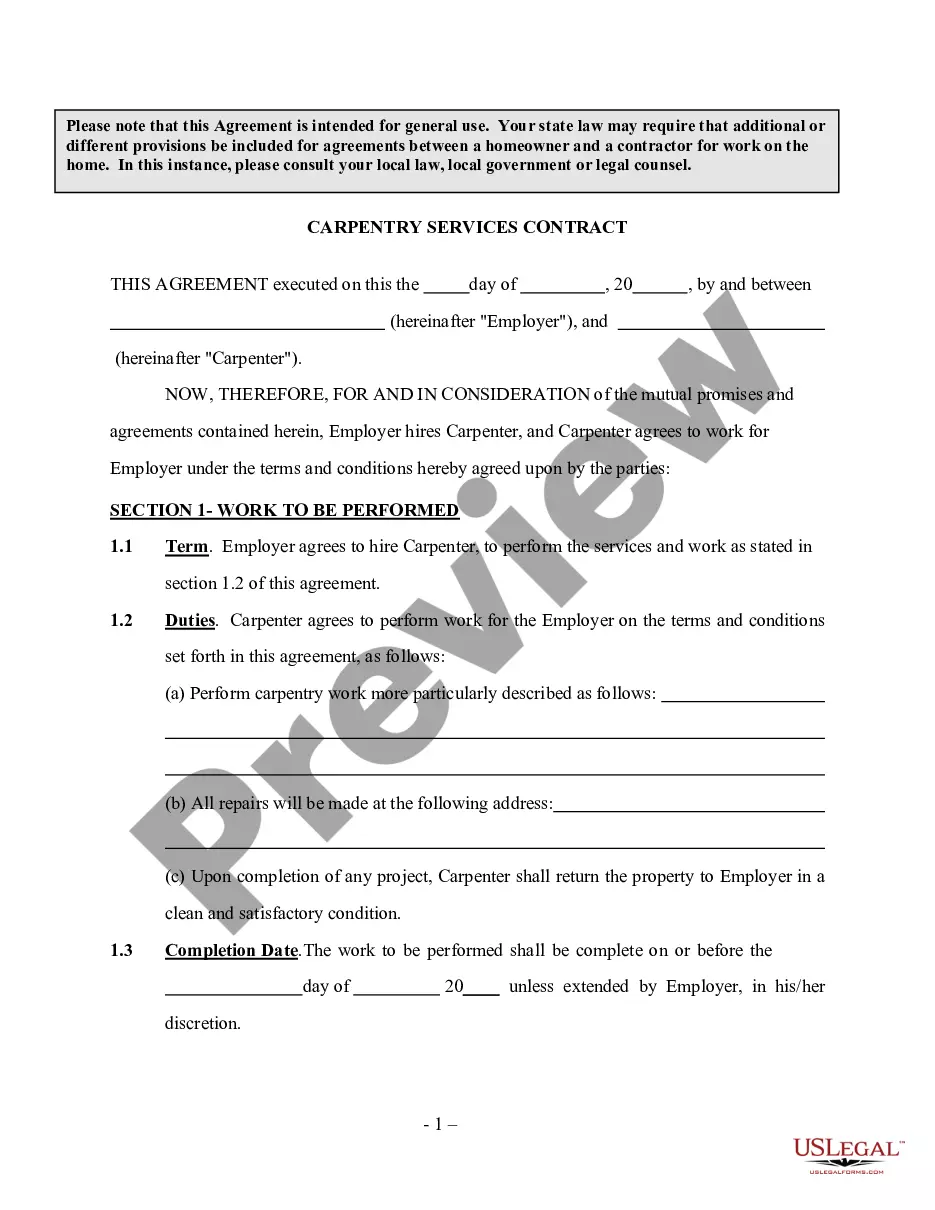
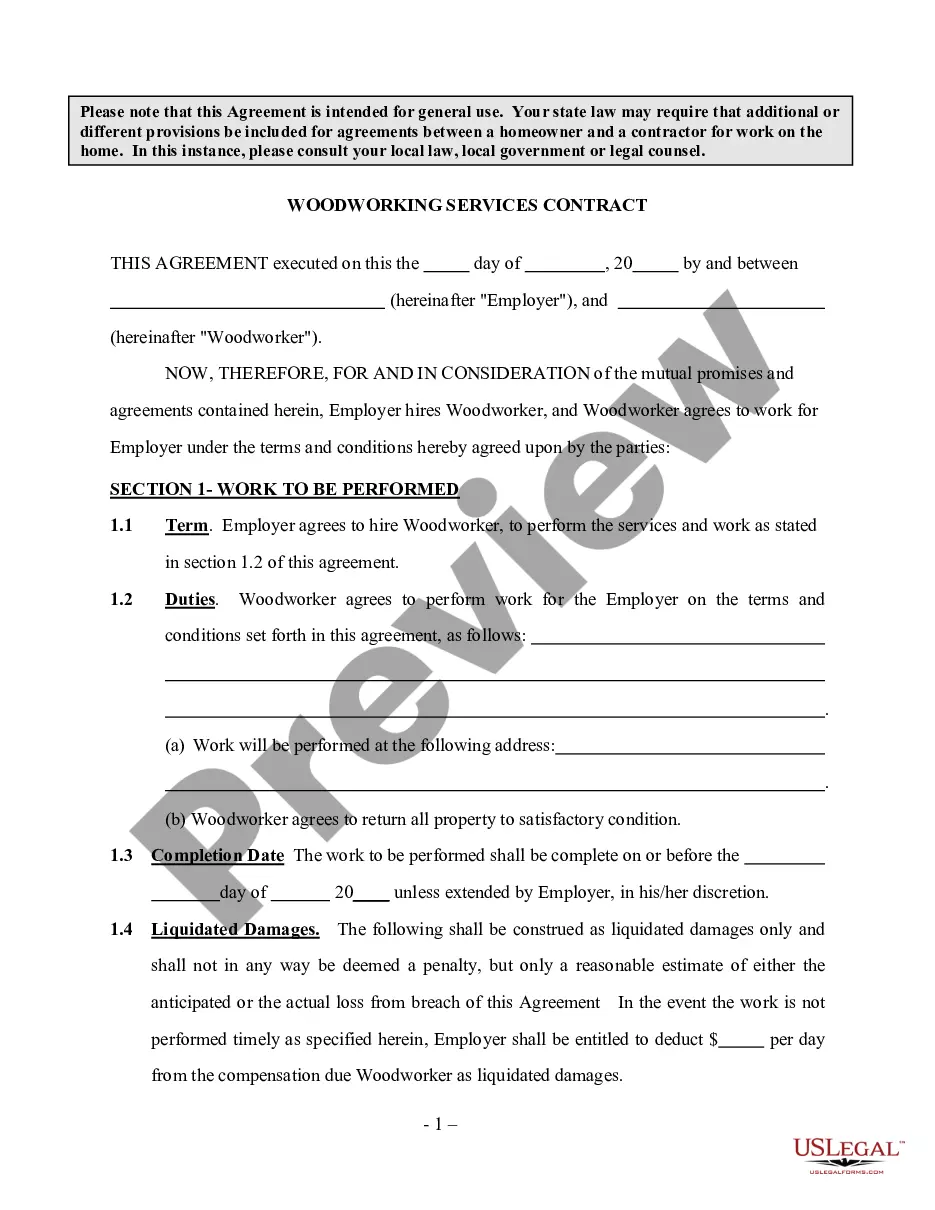
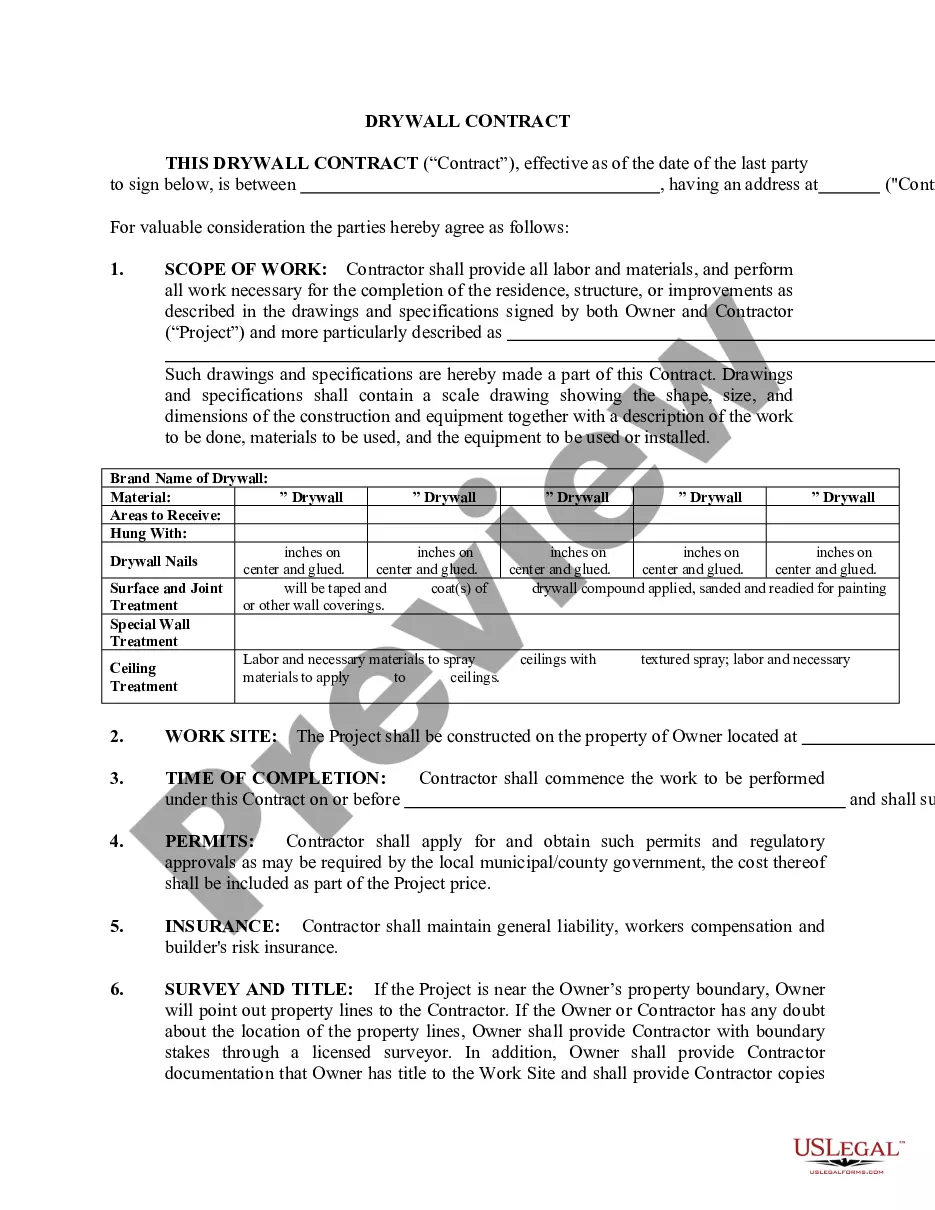
The Trim Carpenter Contract for Contractor is a legal agreement used between trim carpentry contractors and property owners. This contract outlines the terms of the project, including payment structuresâeither cost plus or fixed feeâand addresses critical aspects such as change orders, job site details, warranty provisions, and insurance requirements. It is specifically drafted to comply with the laws in the State of Indiana.
Key parts of this document
- Details regarding payment arrangements (cost plus or fixed fee).
- Requirements for obtaining necessary permits and regulatory approvals.
- Insurance obligations for liability and workers' compensation.
- Provisions for late payment and default by the owner.
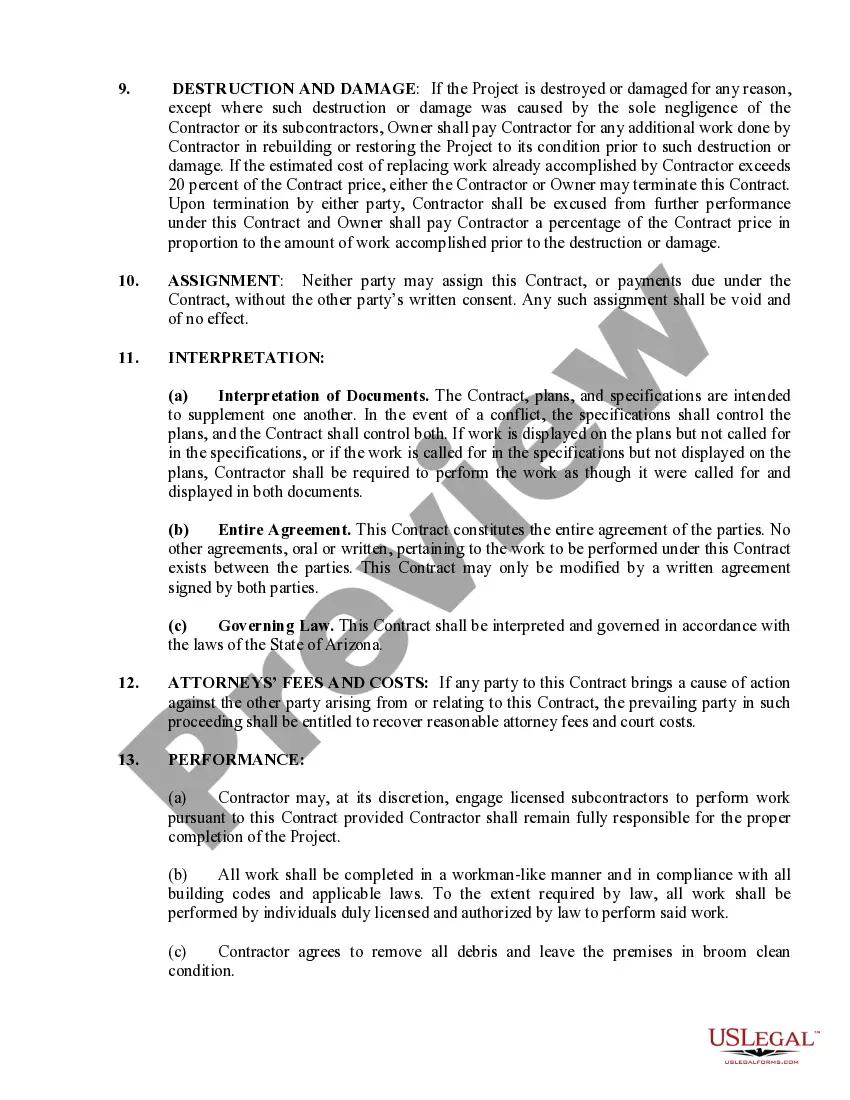
- Guidelines regarding destruction and damage of the project.
- Contractorâs rights to assign the contract and the conditions for termination.
When this form is needed
This contract should be used when a property owner hires a trim carpenter contractor for specific carpentry projects. Scenarios include home renovations, new home constructions, and repairs requiring detailed trim work. It provides a clear structure to facilitate the project from start to finish, protecting the interests of both parties involved.
Intended users of this form
- Property owners who are seeking to hire a trim carpenter contractor.
- Trim carpenter contractors who need a formal agreement for their services.
- Individuals or businesses engaged in construction or renovation projects that involve trim work.
Completing this form step by step
- Identify the contracting partiesâinclude names and addresses of both the contractor and the property owner.
- Specify the payment arrangementâindicate whether it is a cost plus or fixed fee.
- Enter details about the projectâinclude descriptions of the work to be done and any relevant timelines.
- Provide information about insurance coverageâensure the contractor states their liability and workers' compensation insurance details.
- Review and sign the contractâboth parties should read through the contract carefully and sign to indicate agreement.
Is notarization required?
Notarization is not commonly needed for this form. However, certain documents or local rules may make it necessary. Our notarization service, powered by Notarize, allows you to finalize it securely online anytime, day or night.
Get your form ready online
Our built-in tools help you complete, sign, share, and store your documents in one place.
Make edits, fill in missing information, and update formatting in US Legal Forms—just like you would in MS Word.
Download a copy, print it, send it by email, or mail it via USPS—whatever works best for your next step.
Sign and collect signatures with our SignNow integration. Send to multiple recipients, set reminders, and more. Go Premium to unlock E-Sign.
If this form requires notarization, complete it online through a secure video call—no need to meet a notary in person or wait for an appointment.
We protect your documents and personal data by following strict security and privacy standards.

Make edits, fill in missing information, and update formatting in US Legal Forms—just like you would in MS Word.

Download a copy, print it, send it by email, or mail it via USPS—whatever works best for your next step.

Sign and collect signatures with our SignNow integration. Send to multiple recipients, set reminders, and more. Go Premium to unlock E-Sign.

If this form requires notarization, complete it online through a secure video call—no need to meet a notary in person or wait for an appointment.

We protect your documents and personal data by following strict security and privacy standards.
Mistakes to watch out for
- Failing to specify payment terms clearly, leading to disputes later.
- Not obtaining necessary permits before beginning work.
- Neglecting to review the insurance requirements stipulated in the contract.
- Overlooking the implication of late payment clauses, which could result in project suspension.
Why use this form online
- Convenience of downloading and completing the form at your own pace.
- Editability to customize according to the specific project needs.
- Access to professionally drafted legal content that adheres to state law.
Legal use & context
- This contract is legally binding once signed by both parties.
- Enforceable under the laws of the State of Indiana, protecting both the contractor and property owner.
- Careful adherence to the terms outlined in the contract is essential to avoid disputes.
Looking for another form?

Form popularity
FAQ
Identifying/Contact Information. Title and Description of the Project. Projected Timeline and Completion Date. Cost Estimate and Payment Schedule. Stop Work Clause and Stop Payment Clause. Act of God Clause. Change Order Agreement. Warranty.
Finish carpentry encompasses all work done inside a house after framing, sheathing, wiring, plumbing, insulation and drywall have been installed. This includes door and window installation and trim, fitting interior doors, wood and laminate flooring installation, wainscoting, crown molding and cabinet installation.
How much does trim installation cost? The average total cost of trim installation projects ranges from $350 to $570 nationwide, and trim installation costs per linear foot can range from $4.50 to $6 for installation and painting of simple baseboards, chair rails and crown molding.
Materials: wood trim averages $2-$3 per linear foot. More detailed trim tends to be more expensive (around $3-$4 per linear foot). The total for this project would be $1000-$1500. Labor: carpenters typically charge $70 per hour and can take one to three days (8-24 labor hours or $560-$1700) to complete the project.
Finish carpenters are skilled professionals who perform the final touches on homes after the structure is fully built. These carpenters must carry out various tasks such as installing doors, building bookshelves, and adding designs to window and door trims.
The formal agreement should be titled Contract for Carpentry Work or something similar. Add the names of every party who is involved in the contract. Using either a paragraph format or a bulleted list, state all of the items you have agreed on, using the parties' last names as needed.
Begin with the Date and the Address of the Other Party. Start with the Basic Details of the Planned Work. Include Special Stipulations. State Whether There Will be a Further Agreement. Create an Area for Signatures. Sign and Date the Contract Letter.
Estimate the amount of hours it will take to complete the job, and multiply that by the amount you need to charge per hour (such as $30 per hour). Add the cost of the materials, and multiply this number by 15 percent. To get the total amount, add the cost of materials and the amount you are charging for labor.