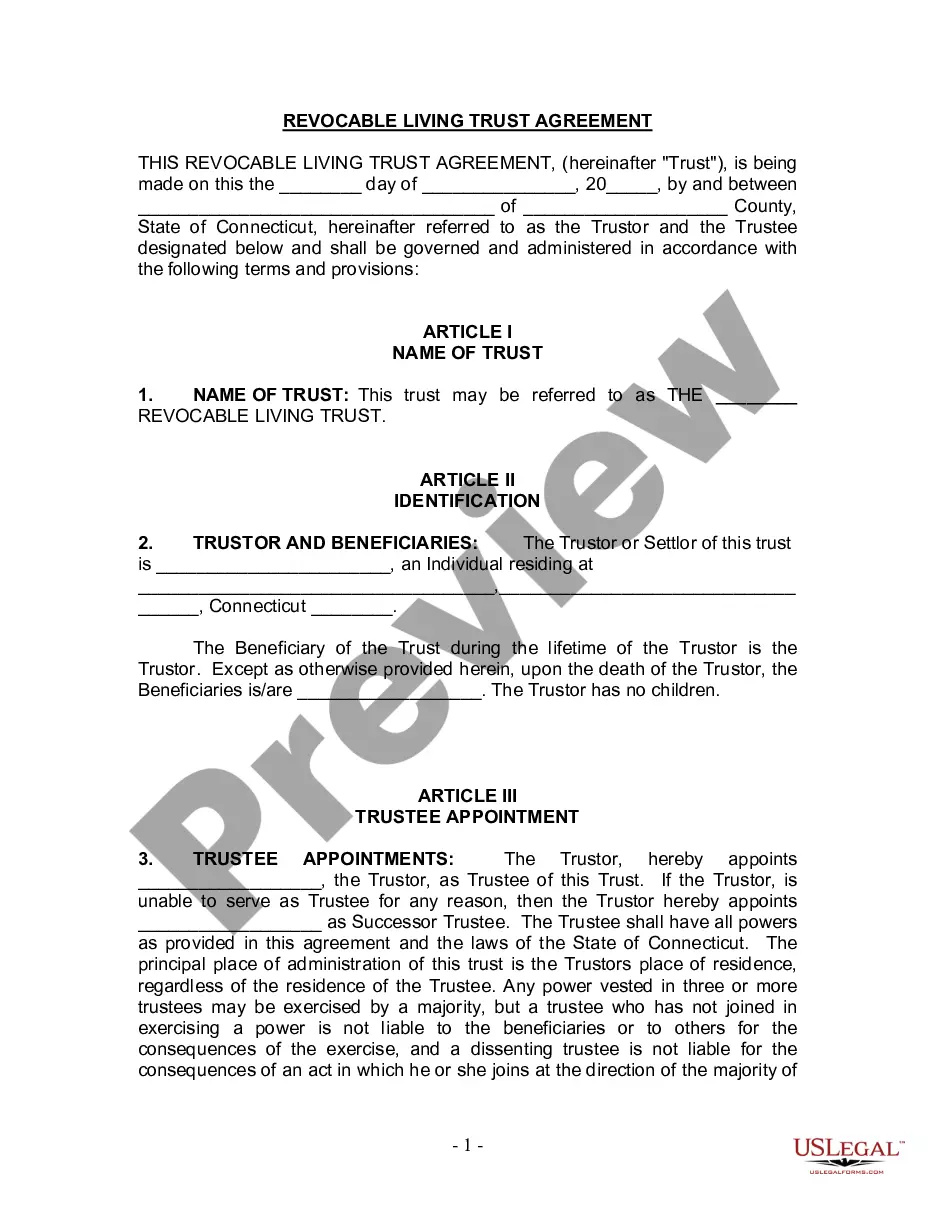
Illinois Right of First Refusal to Purchase
What is this form?
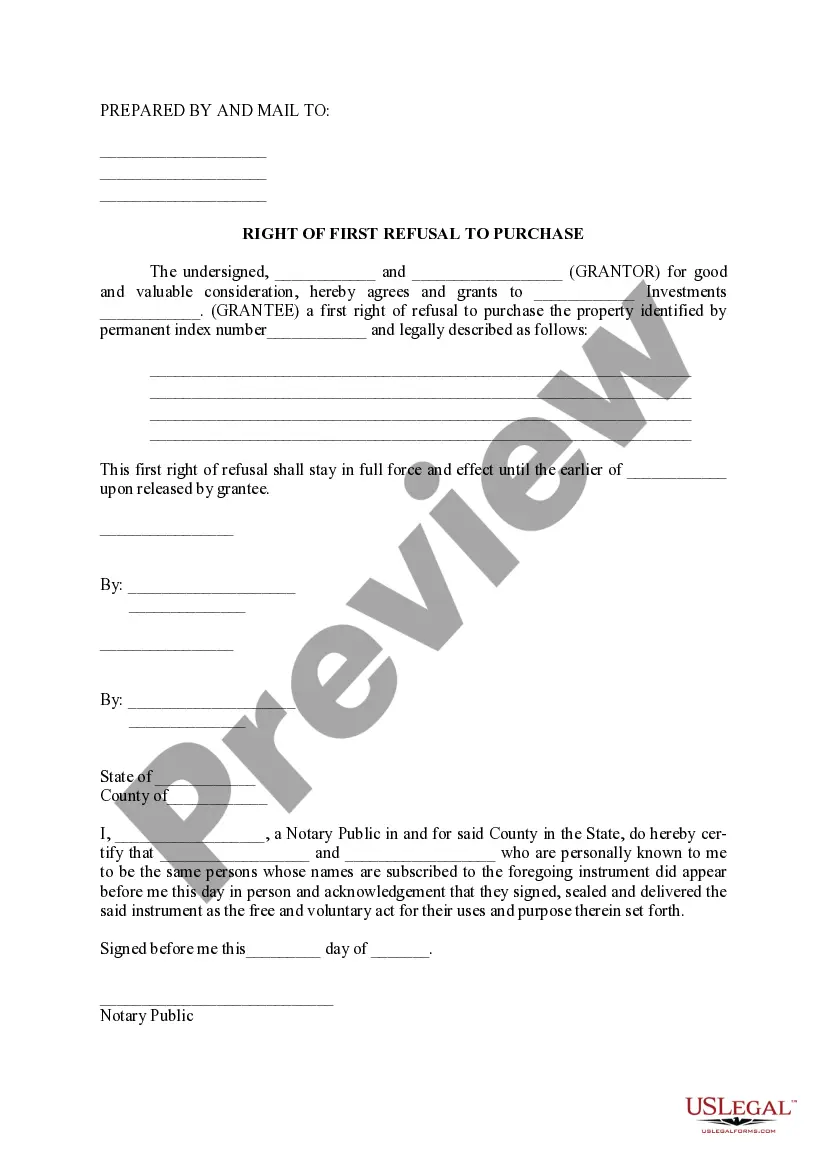
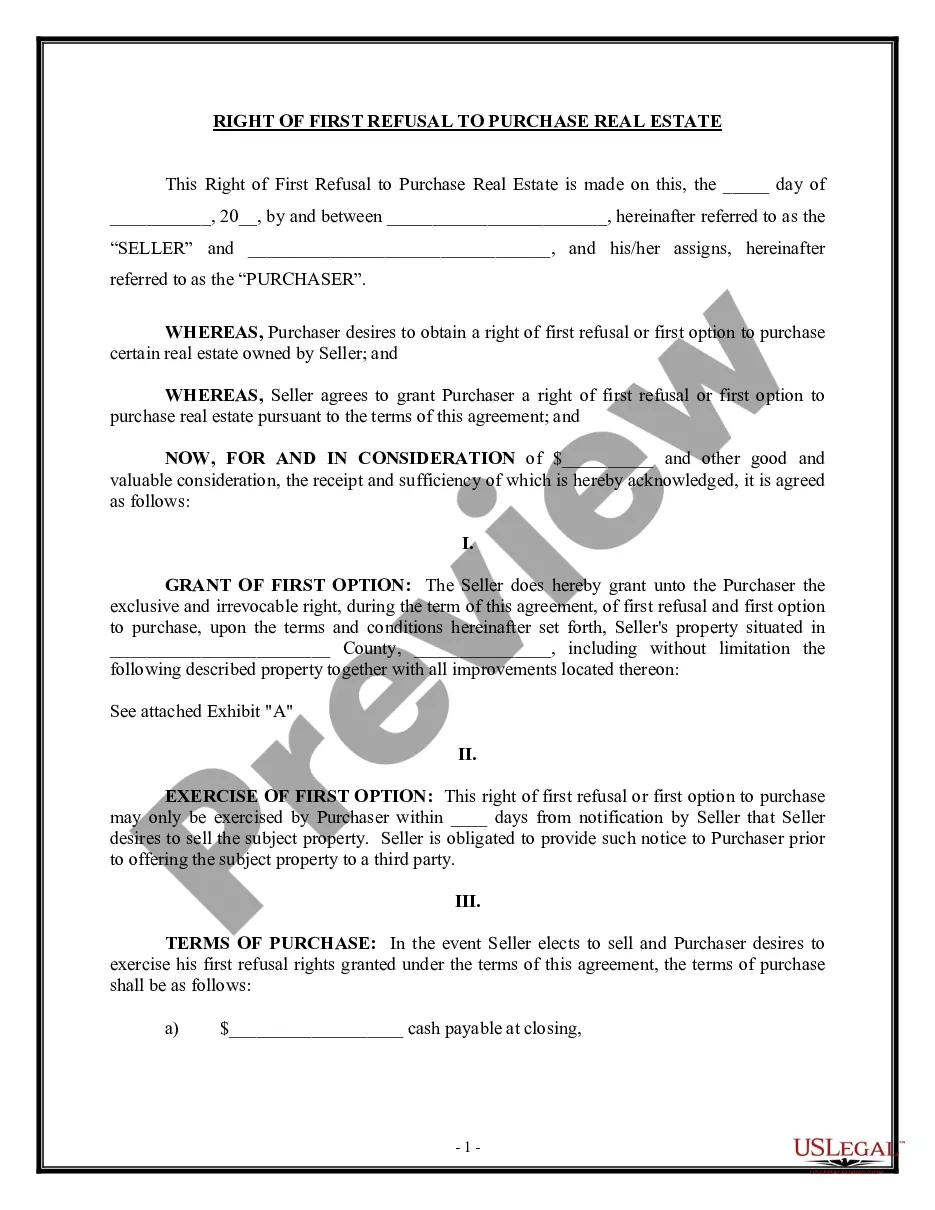
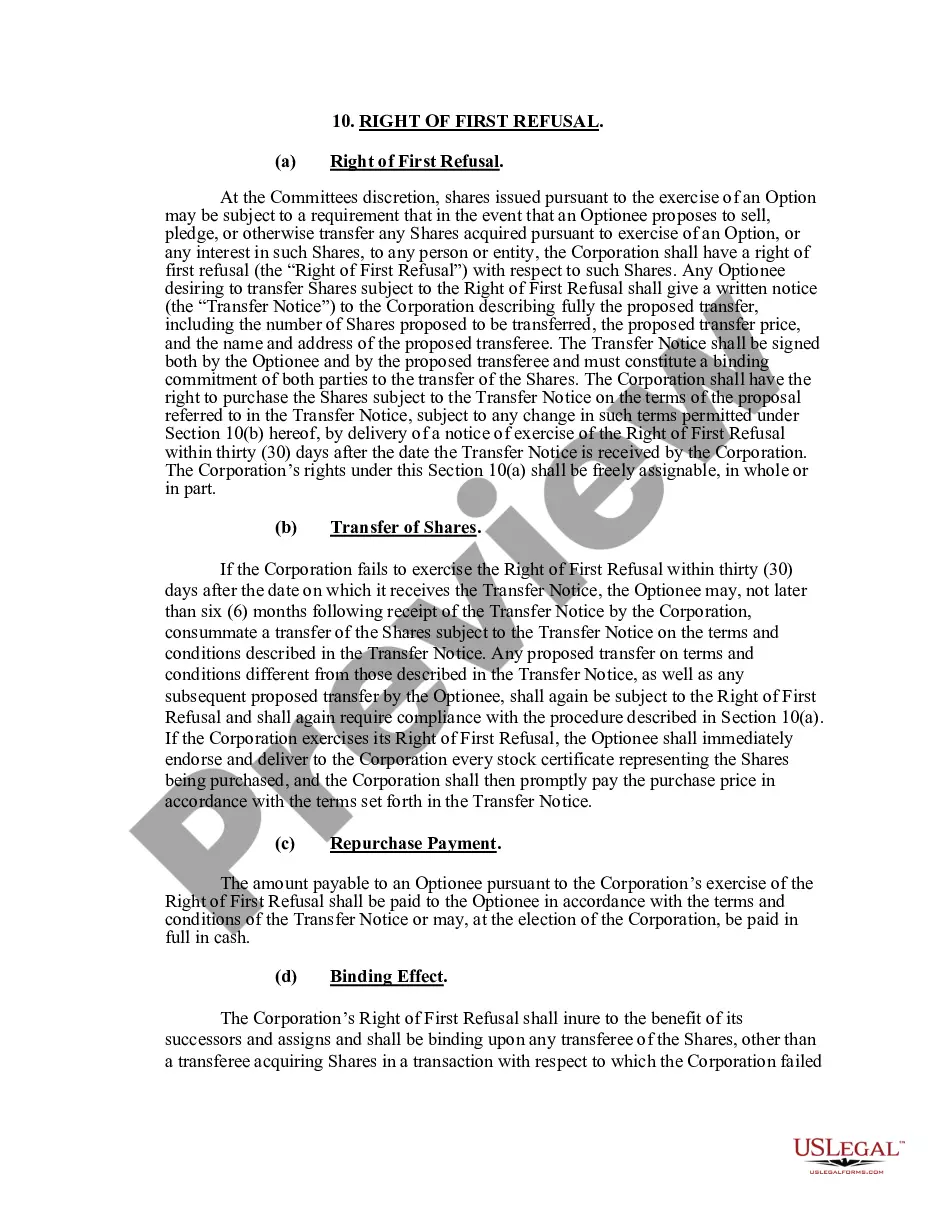
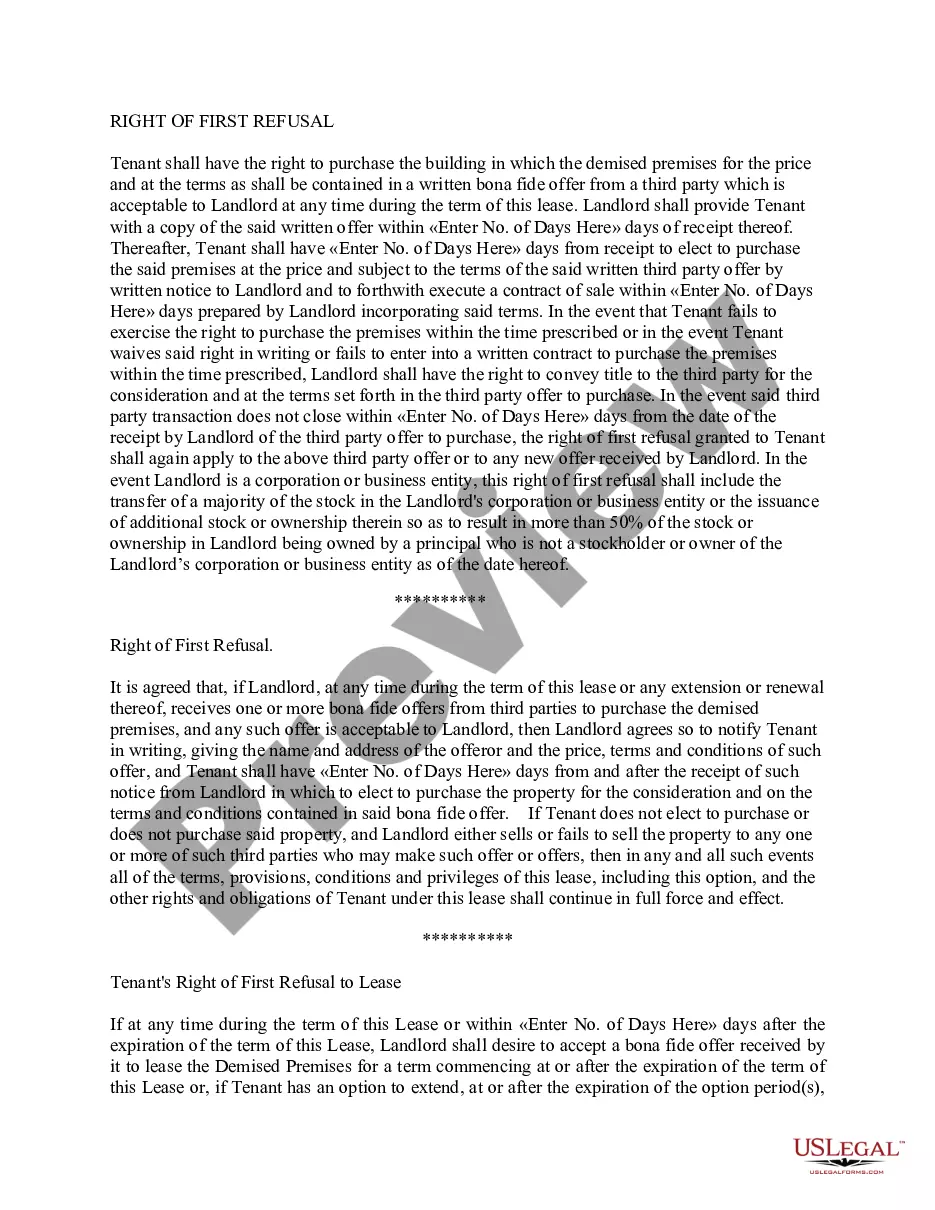
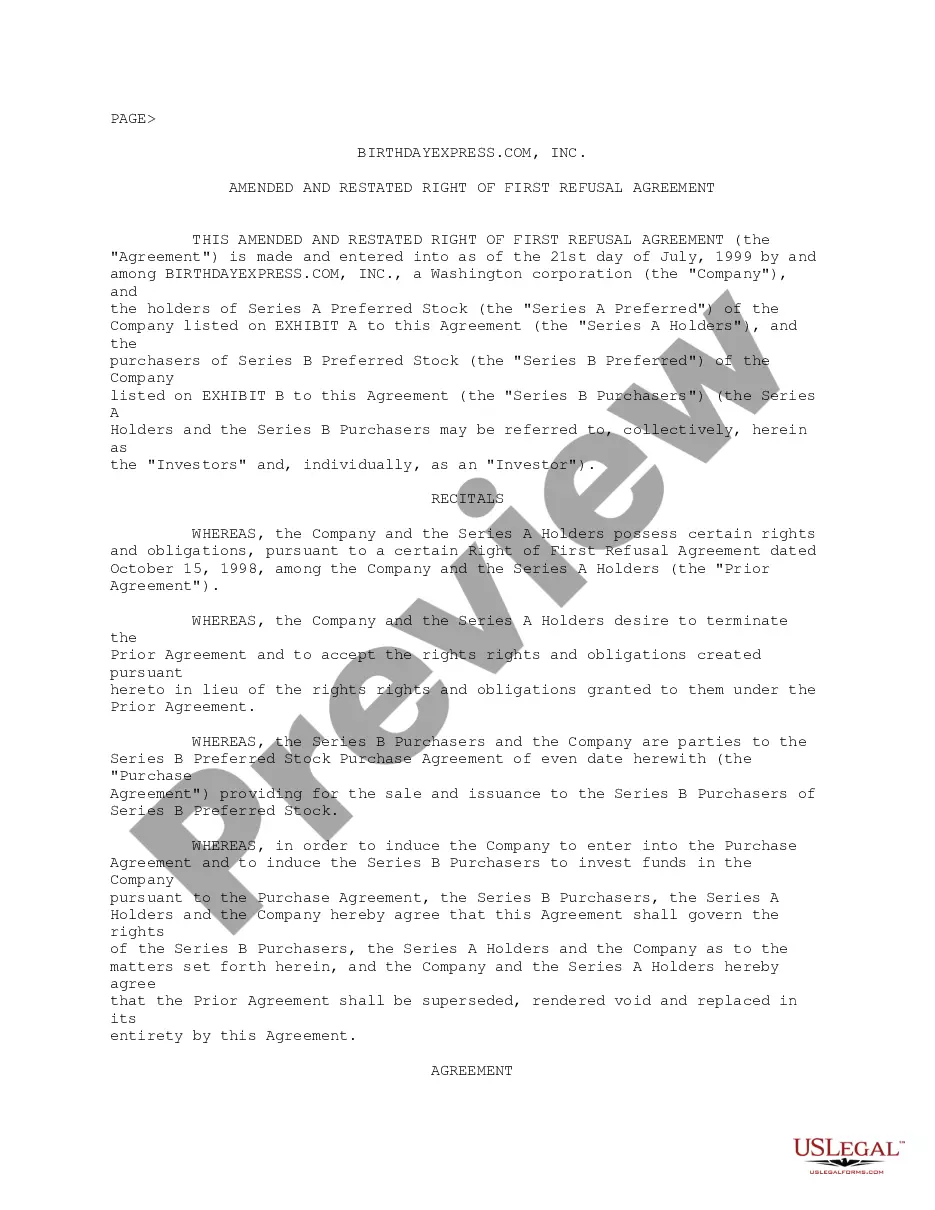
The Right of First Refusal to Purchase is a legal document that grants a purchaser the exclusive right to buy a specific property before the seller can accept offers from other buyers. This form is especially important in real estate transactions, as it protects the purchaser's interests by ensuring they have the first opportunity to acquire the property should the seller decide to sell. Unlike other purchase agreements, this form specifically outlines the conditions under which the purchaser can exercise their right, making it a vital tool for those looking to secure potential real estate investments.
What’s included in this form
- Identifies the grantor (seller) and grantee (purchaser) involved in the agreement.
- Details the property subject to the right of first refusal, including its legal description and index number.
- Specifies the duration of the right of first refusal and conditions for its release.
- Includes signature lines for both parties and a notary section for legal validation.
Situations where this form applies
This form should be used when a purchaser wishes to have the first opportunity to buy a property before it is sold to someone else. It is common in situations where the seller is considering multiple offers and wants to provide certain potential buyers with a competitive edge. Additionally, this form is useful in real estate investment scenarios where the investor seeks to secure preferential rights on properties they are interested in acquiring.
Who can use this document
This form is intended for:
- Real estate investors who want to secure the right to purchase properties they are interested in.
- Individuals or entities negotiating with sellers for exclusive purchasing rights.
- Property sellers who wish to offer a first right of refusal to a specific potential buyer.
How to prepare this document
- Identify the parties by filling in the names of the grantor and grantee.
- Clearly describe the property that is subject to the right of first refusal, including its index number and legal description.
- Specify the duration of the right of first refusal and any conditions for its release.
- Ensure both parties sign and date the document in the designated areas.
- Arrange for the document to be notarized to validate the agreement.
Is notarization required?
Yes, this form must be notarized to be legally valid. Obtaining notarization ensures that the identities of the signing parties are verified, adding an additional layer of authenticity to the agreement. US Legal Forms offers integrated online notarization services, allowing users to complete this step securely via video call at any time, ensuring compliance without the need to travel.
Get your form ready online
Our built-in tools help you complete, sign, share, and store your documents in one place.
Make edits, fill in missing information, and update formatting in US Legal Forms—just like you would in MS Word.
Download a copy, print it, send it by email, or mail it via USPS—whatever works best for your next step.
Sign and collect signatures with our SignNow integration. Send to multiple recipients, set reminders, and more. Go Premium to unlock E-Sign.
If this form requires notarization, complete it online through a secure video call—no need to meet a notary in person or wait for an appointment.
We protect your documents and personal data by following strict security and privacy standards.

Make edits, fill in missing information, and update formatting in US Legal Forms—just like you would in MS Word.

Download a copy, print it, send it by email, or mail it via USPS—whatever works best for your next step.

Sign and collect signatures with our SignNow integration. Send to multiple recipients, set reminders, and more. Go Premium to unlock E-Sign.

If this form requires notarization, complete it online through a secure video call—no need to meet a notary in person or wait for an appointment.

We protect your documents and personal data by following strict security and privacy standards.
Mistakes to watch out for
- Failing to accurately describe the property, which can lead to enforceability issues.
- Not specifying the duration of the right of first refusal, leaving ambiguity about how long it remains in effect.
- Neglecting to have the form notarized, which can affect its legality.
- Omitting signatures or dates, which are essential for validating the agreement.
Benefits of completing this form online
- Convenient access to legal forms that can be customized to your specific needs.
- Editable templates that allow users to input their information easily.
- Reliable sources of legal documents drafted by licensed attorneys.
Looking for another form?

Form popularity
FAQ
What is a Right of Last Refusal? A right of last refusal gives one party to a contract the right to accept any bona fide offer made by a third party for some right.Then, if that time, expires and the parties haven't reached any agreement, she's free to offer the stage rights to others.
The right of first refusal is usually triggered when a third party offers to buy or lease the property owner's asset. Before the property owner accepts this offer, the property holder (the person with the right of first refusal) must be allowed to buy or lease the asset under the same terms offered by the third party.
By choosing a right of first refusal versus an option, the owner of the property has more control over the sale of their property, whereas with an option the holder can force the sale at will. With a Right of First Refusal, the holder must wait until the owner decides to sell the property.
How is This Clause Enforced? Both parents have to state and agree that they want the right of first refusal clause placed into the child custody agreement. Once it is included in the agreement, the parent who has custody of the children will have to contact the other parent to see if they can watch the kids.
The Right of First Refusal is a court-ordered right, usually negotiated in an agreement between the parties, granting the non-custodial parent an option to care for the child or children during the custodial parent's designated time, when the custodial parent is otherwise unavailable, instead of placing that child in
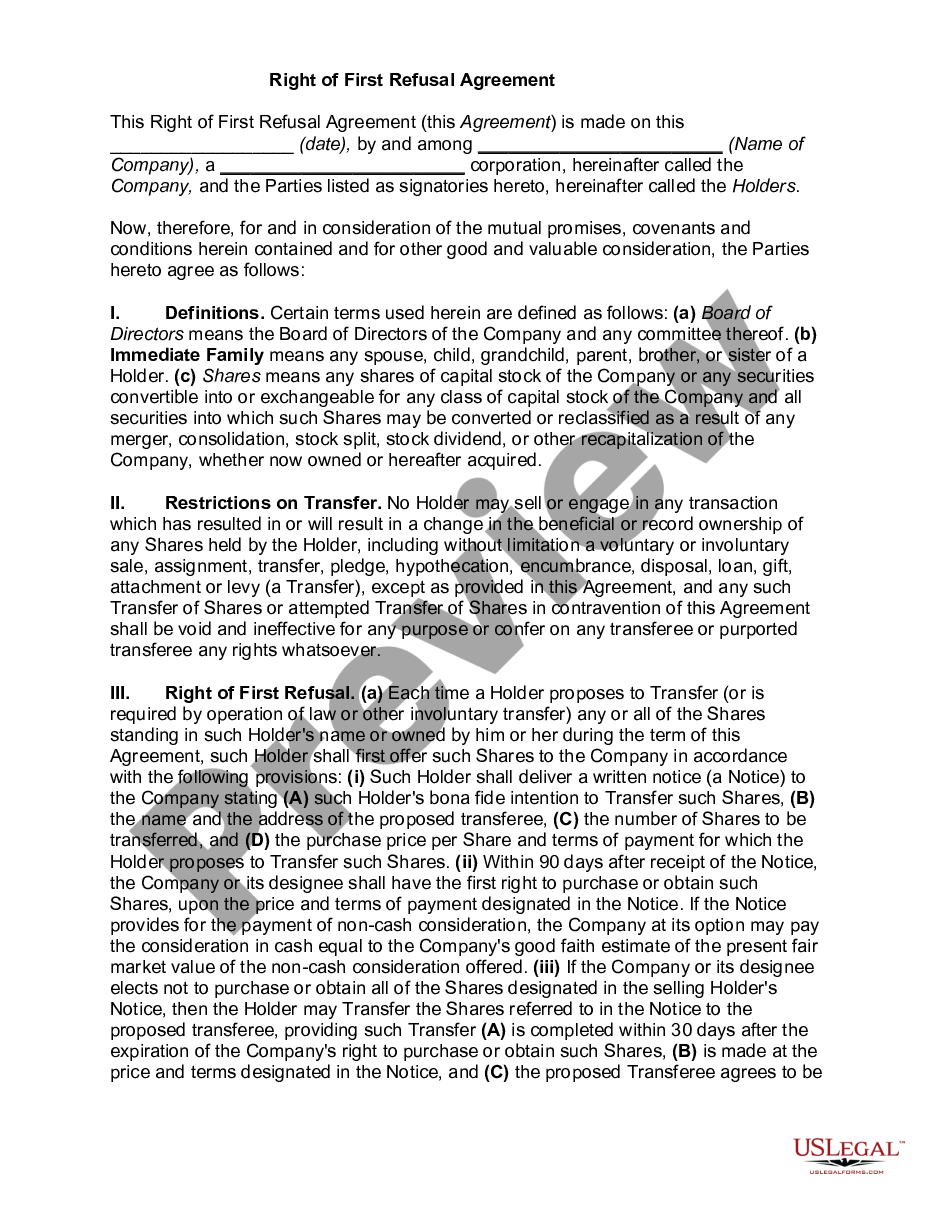
A right of first refusal agreement allows a buyer and seller to enter into an arrangement by which the potential buyer is given the first crack at a property when it goes up for sale.
One or two years is the typical range. Some RFRs allow either seller or buyer to invoke the RFR at any point during its term. Others give the buyer the right to make an offer only at the end of the specified term.