Connecticut Living Trust for Individual Who is Single, Divorced or Widow or Widower with No Children
What this document covers
This Living Trust for an Individual Who is Single, Divorced, or a Widow or Widower with No Children is a revocable trust established during your lifetime to manage your assets. Specifically tailored for individuals without children, it allows you to maintain control over your property while outlining how your assets will be distributed upon your death. Unlike a last will, a living trust avoids the probate process, offering more privacy and potentially quicker asset transfers to your beneficiaries.
Form components explained
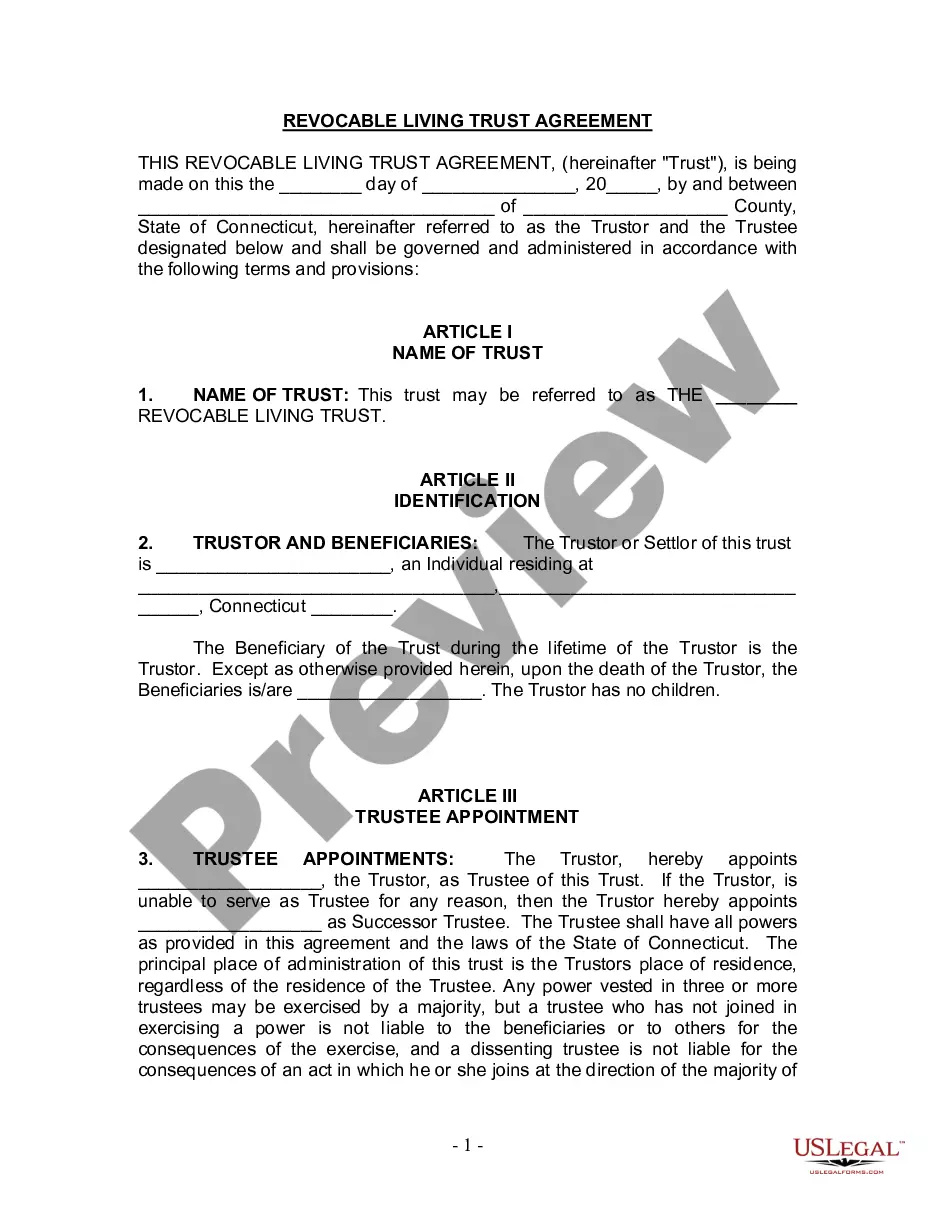
- Name of the trust, which allows you to designate a specific title.
- Identification of the Trustor and beneficiaries, identifying who creates the trust and who benefits from it.
- Appointment of the Trustee, establishing who will manage the trust assets during your lifetime.
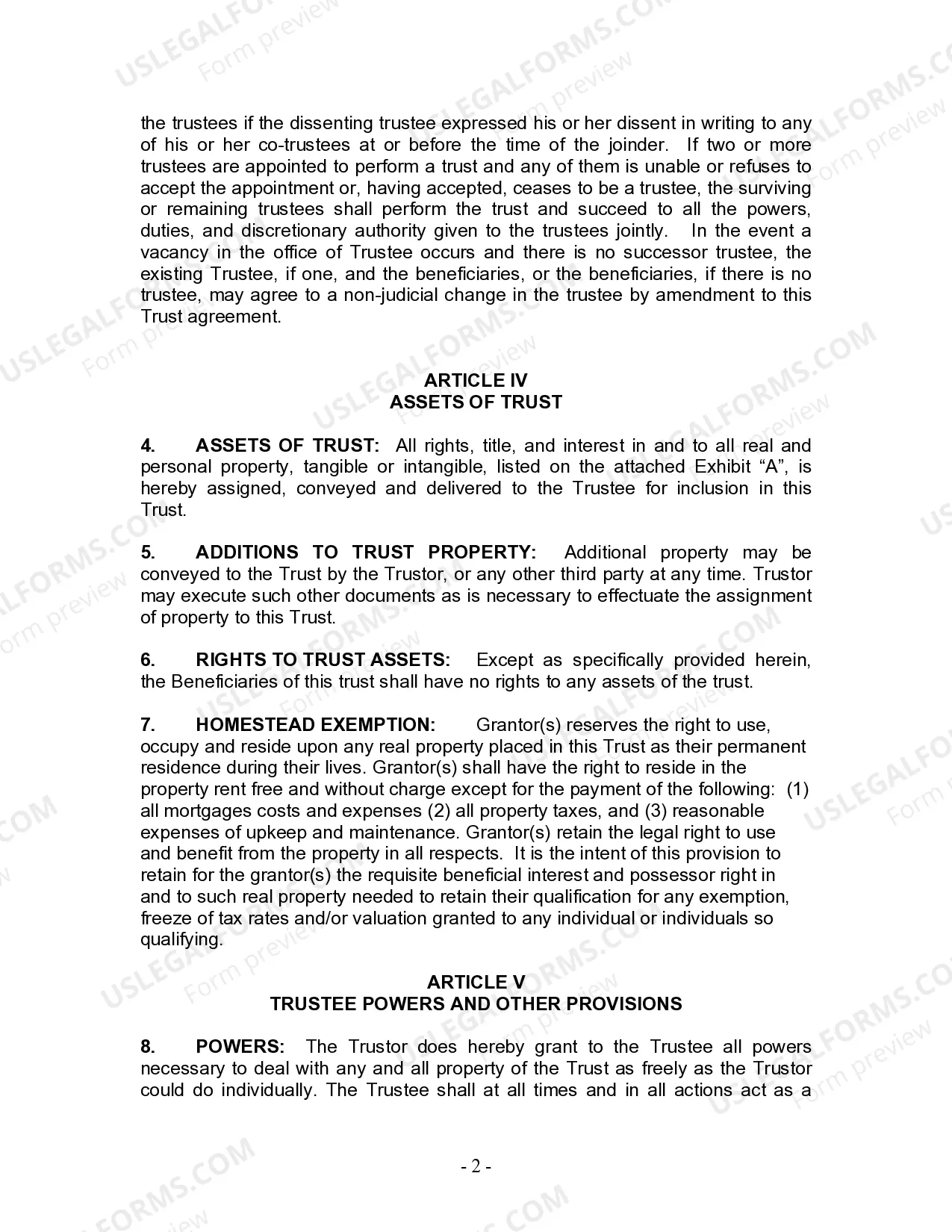
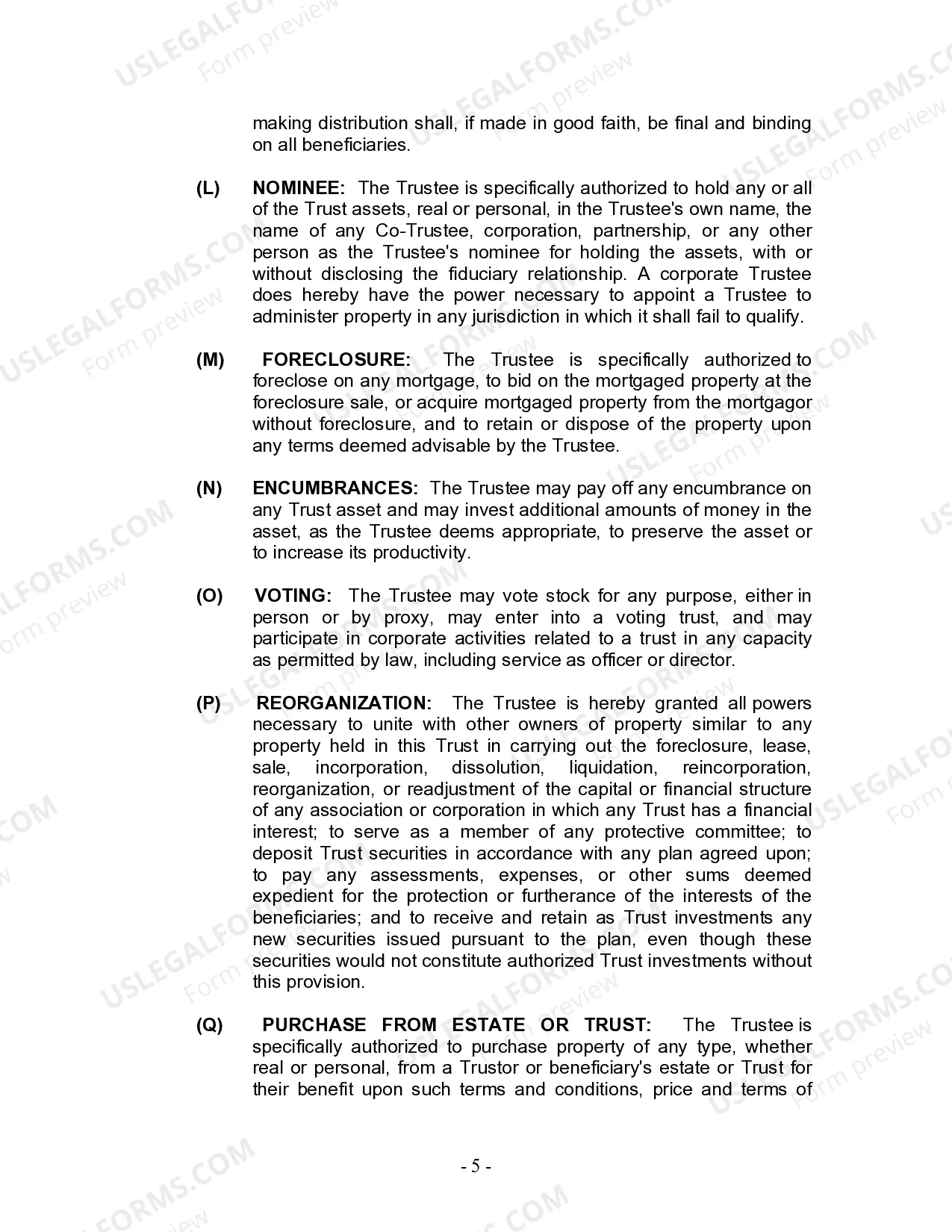
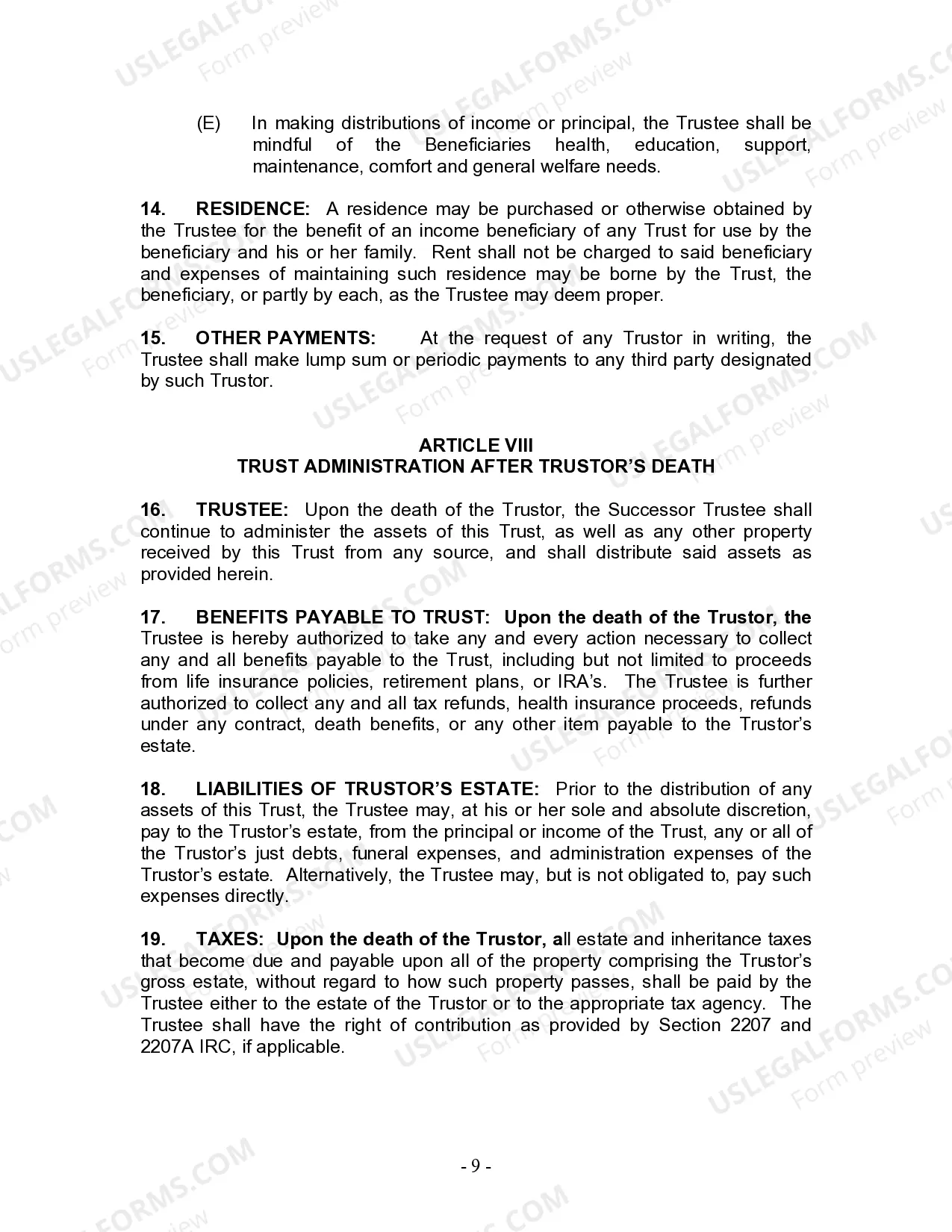
- Provisions regarding trust assets, including the management and transfer of property.
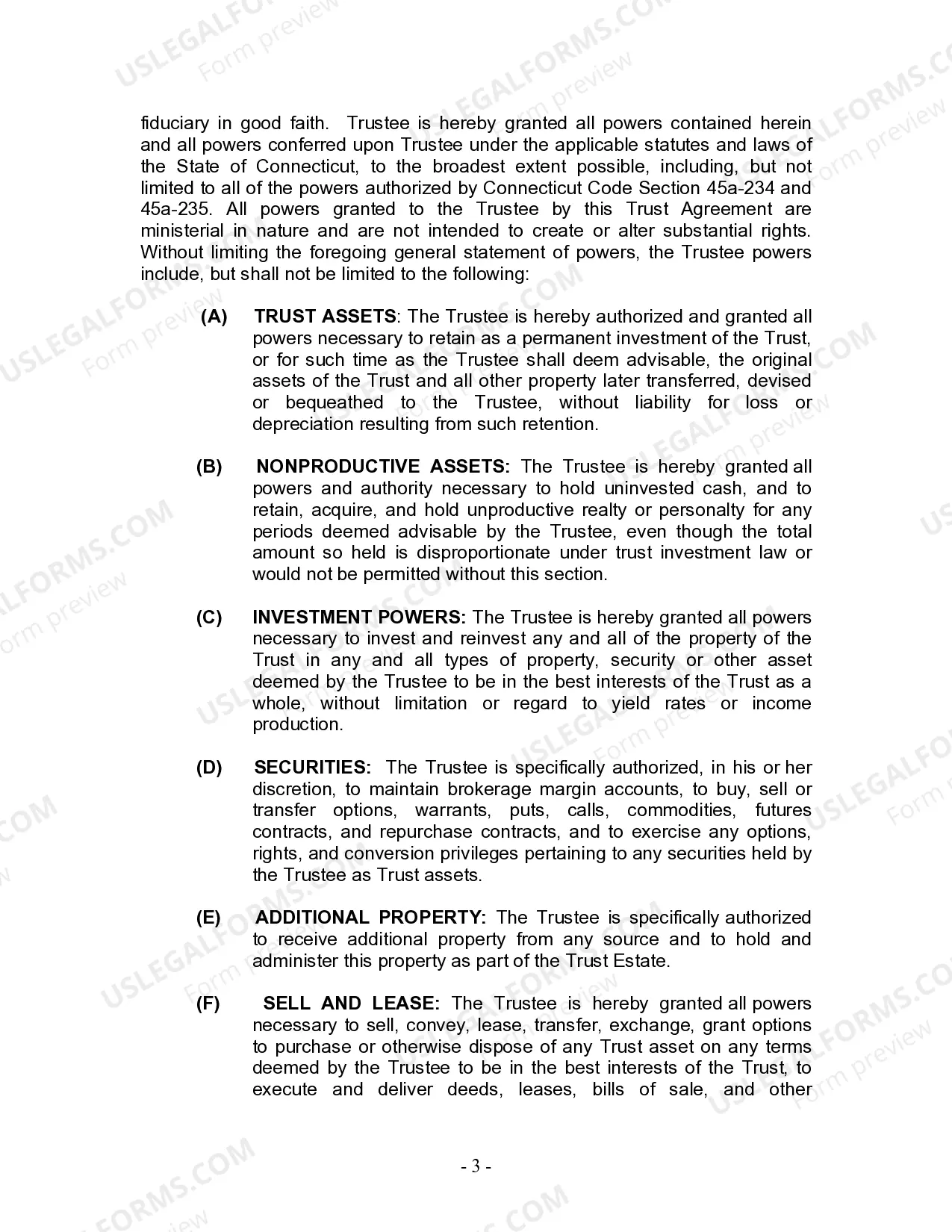
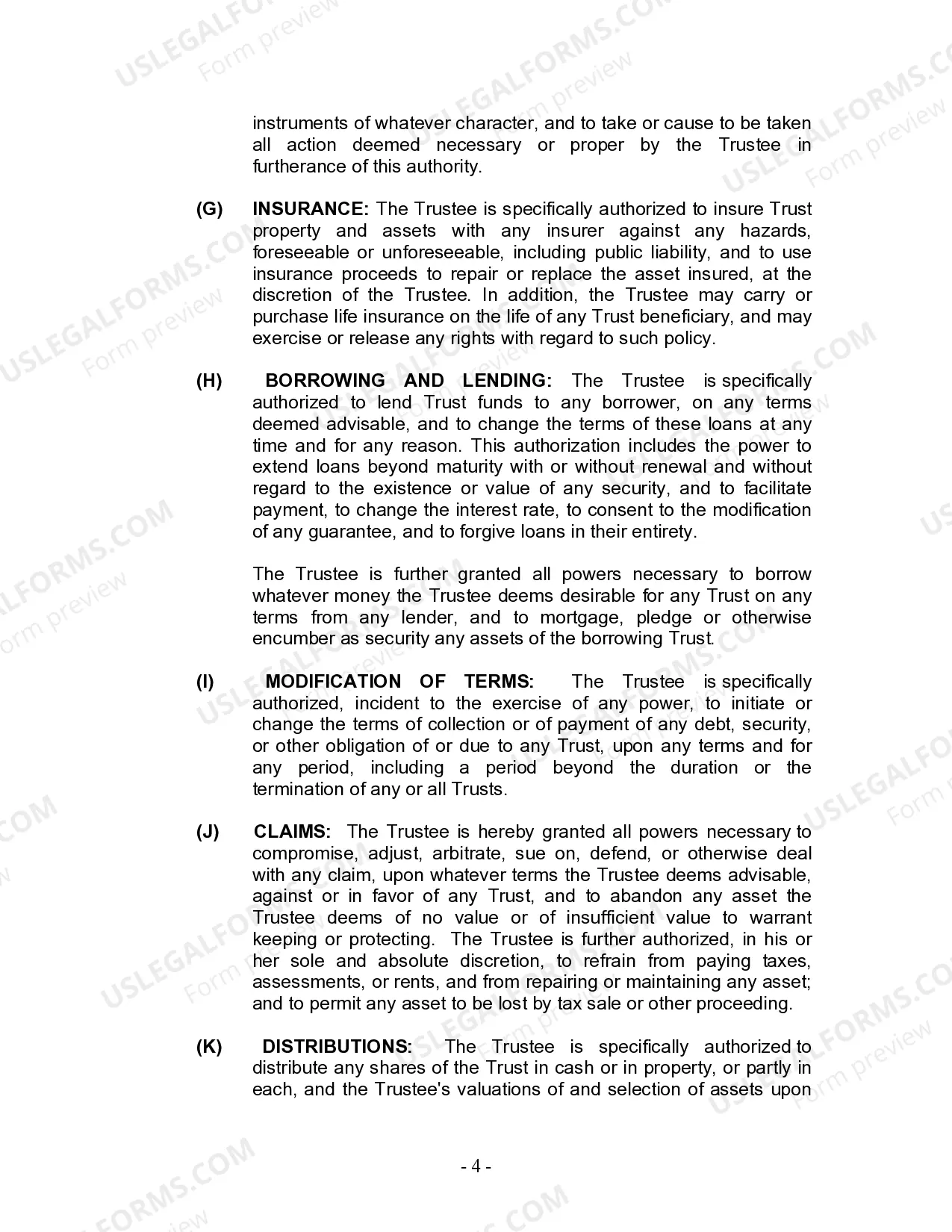
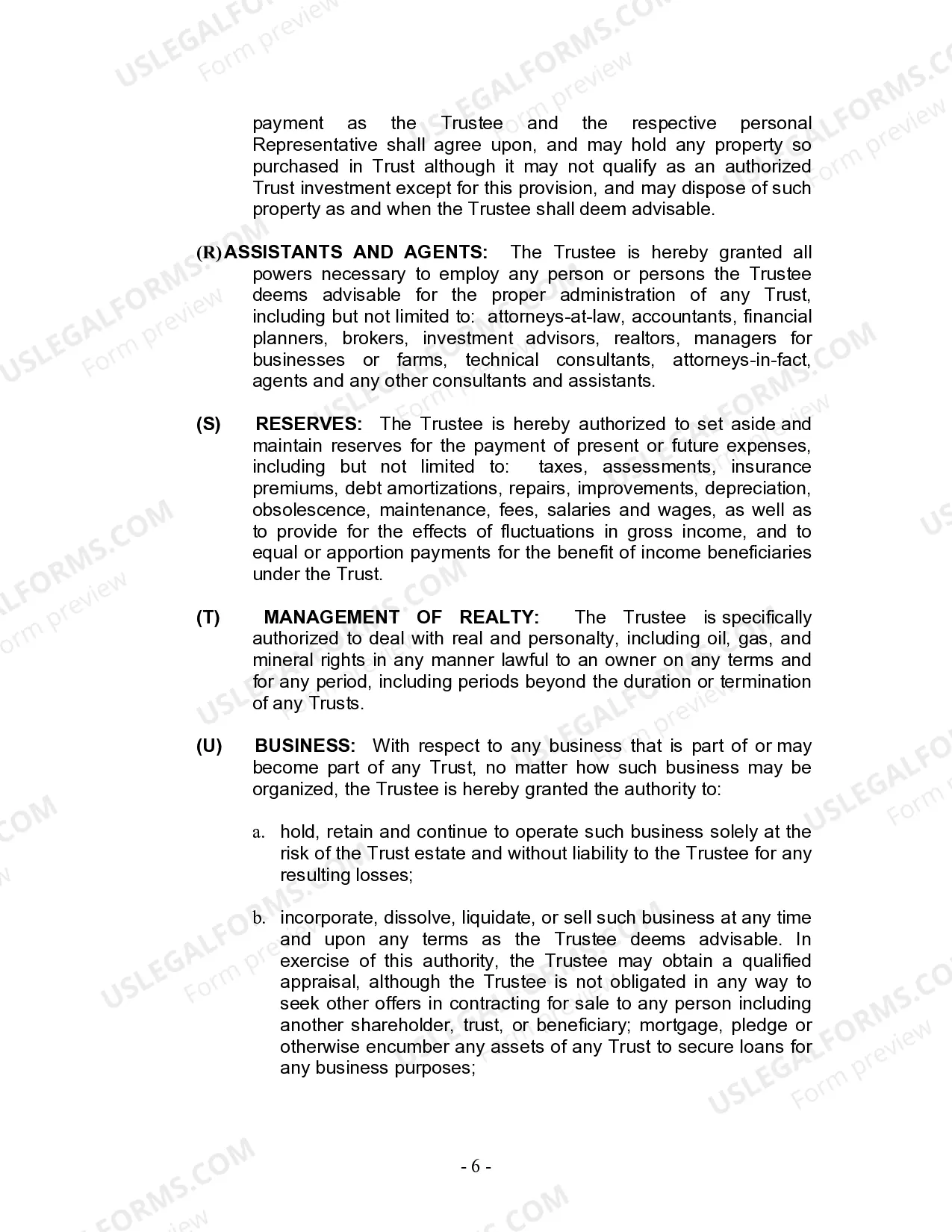
- Detailed powers of the Trustee, outlining their authority and responsibilities for managing assets.
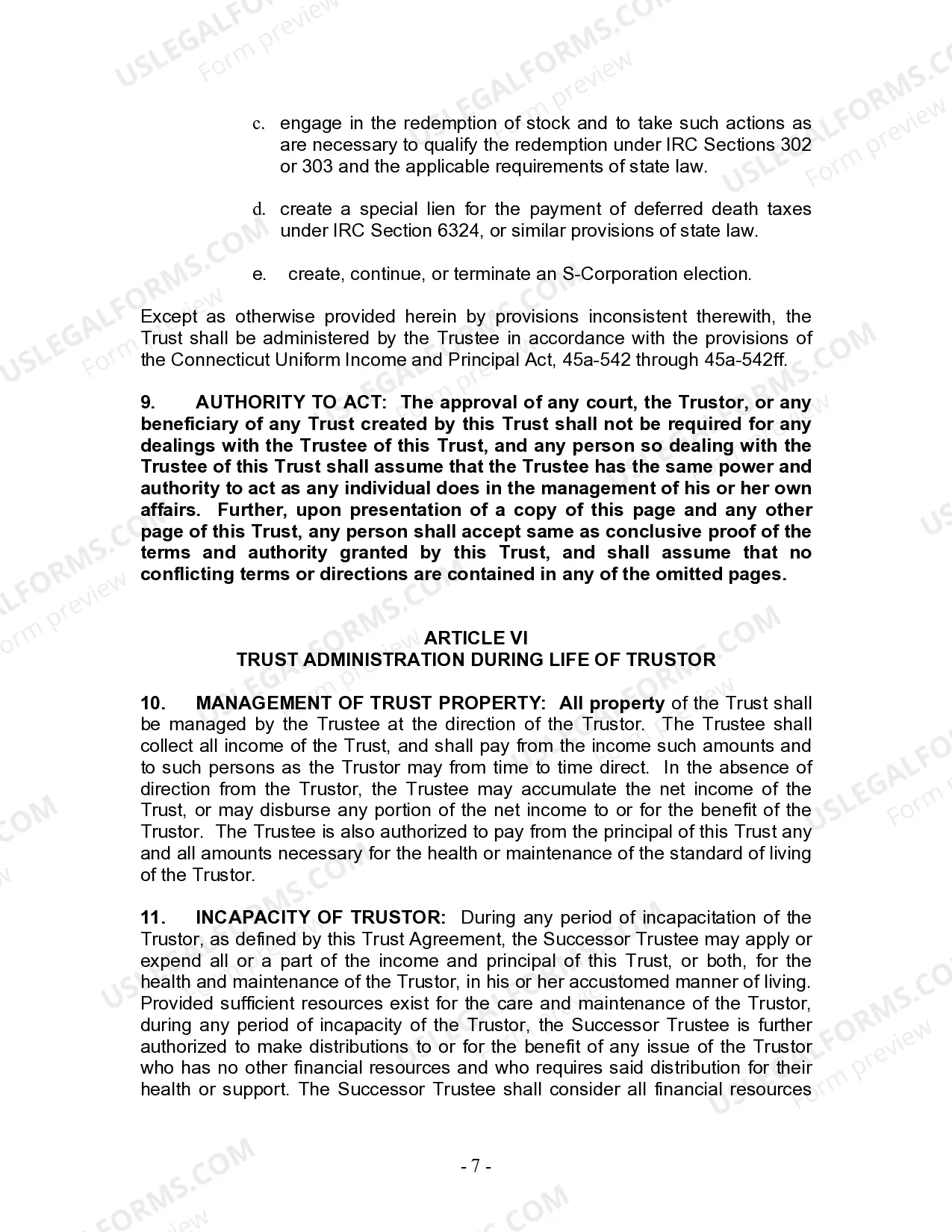
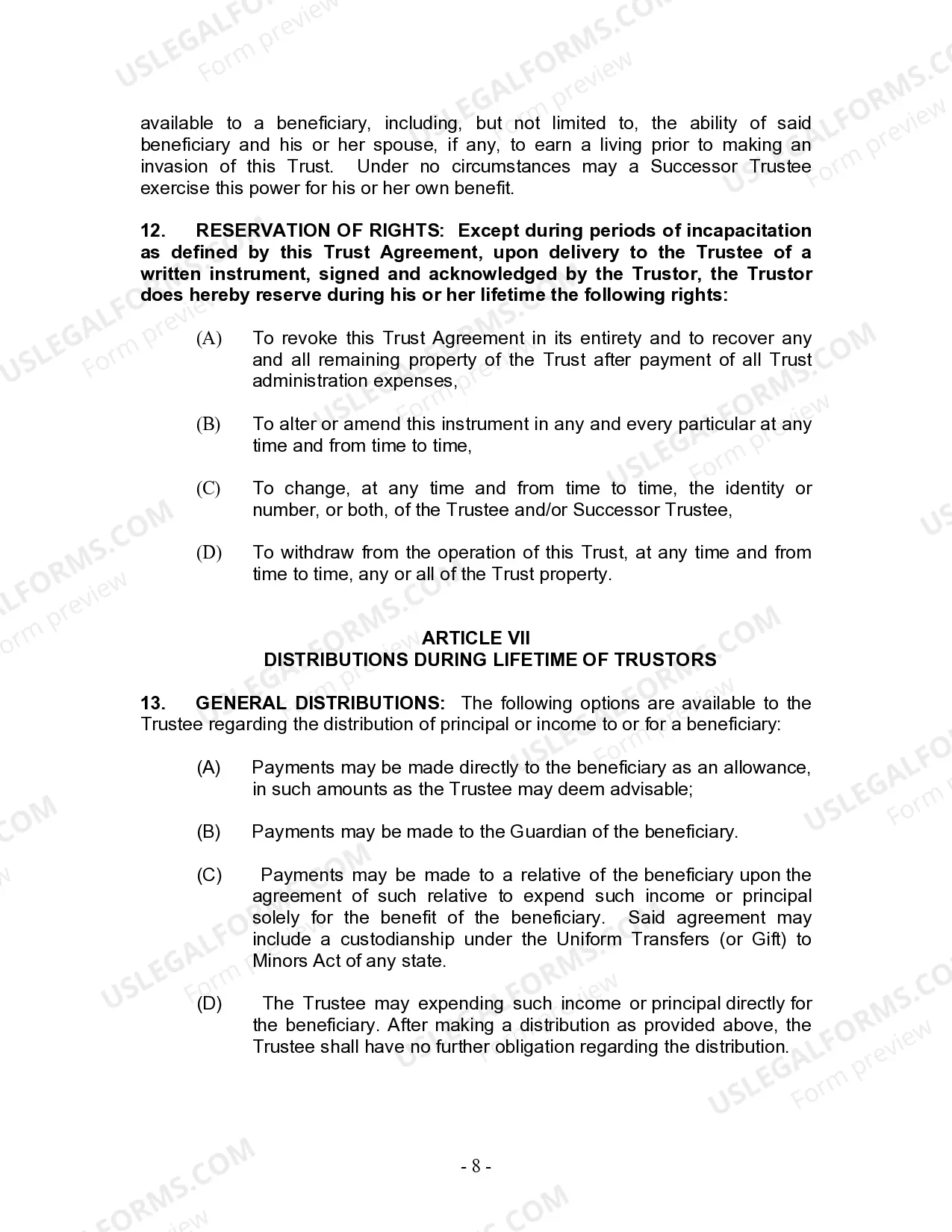
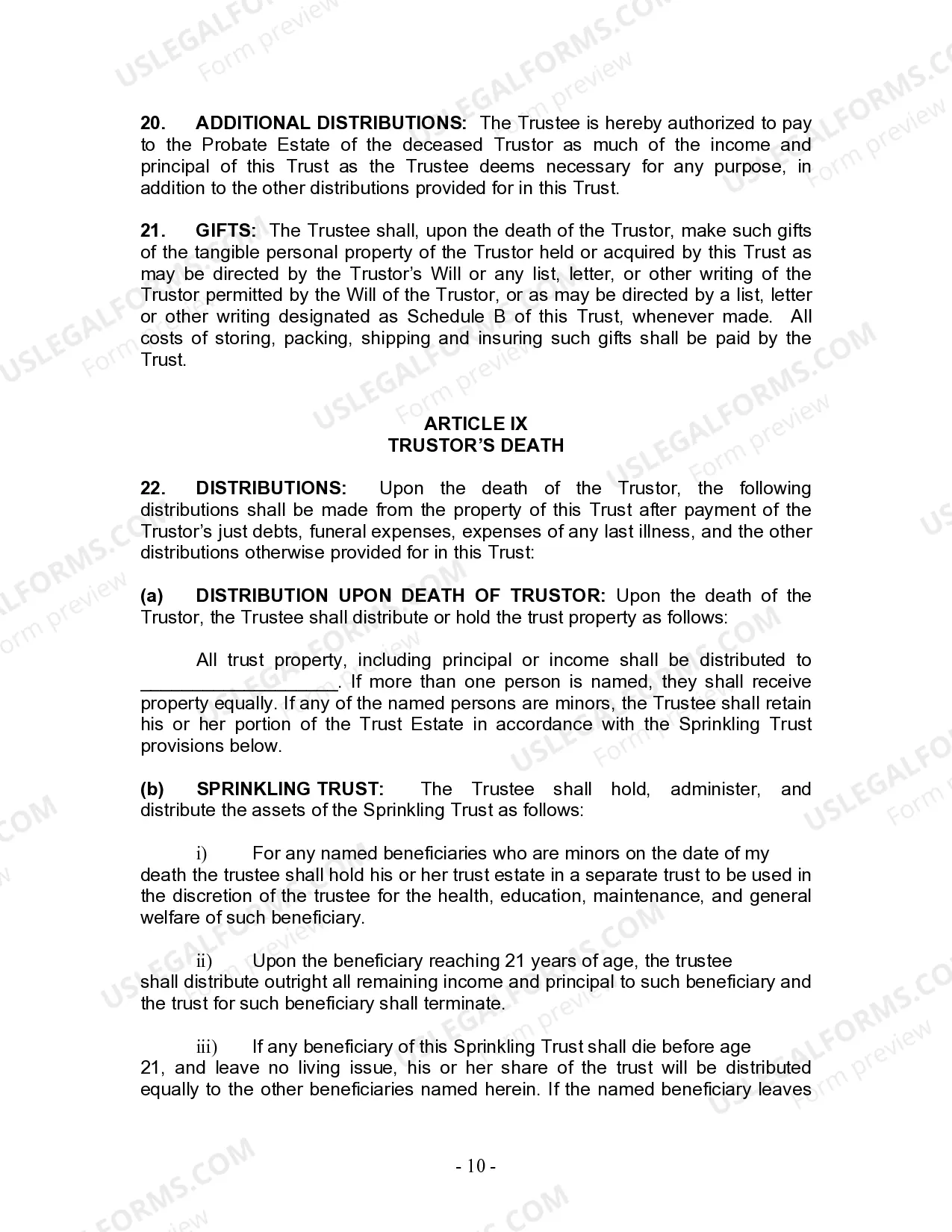
- Instructions for asset distribution upon the Trustor's death, specifying how your assets will be divided.




When to use this form
This living trust is most beneficial for individuals who are single, divorced, or widowed and who want to ensure that their assets are managed effectively during their lifetime and seamlessly transferred after death. It is particularly useful for those without children, as it allows you to specify your preferred beneficiaries without the complexities associated with your estate going through probate.
Who should use this form
- Single individuals seeking to manage their assets more effectively.
- Divorced individuals wanting to ensure their estate is handled according to their wishes.
- Widows or widowers with no children who wish to designate beneficiaries.
- Individuals looking to avoid the probate process for their estate.
Instructions for completing this form
- Identify the parties involved: the Trustor (you) and the Trustee.
- Specify the name of the trust as you wish it to be known.
- List all assets you wish to place into the trust, detailing their ownership information.
- Designate your beneficiaries, indicating who will receive the trust assets upon your death.
- Sign the document in the presence of a notary if required by state law.
Does this form need to be notarized?
This form must be notarized to be legally valid. US Legal Forms provides secure online notarization powered by Notarize, allowing you to complete the process through a verified video call.
Get your form ready online
Our built-in tools help you complete, sign, share, and store your documents in one place.
Make edits, fill in missing information, and update formatting in US Legal Forms—just like you would in MS Word.
Download a copy, print it, send it by email, or mail it via USPS—whatever works best for your next step.
Sign and collect signatures with our SignNow integration. Send to multiple recipients, set reminders, and more. Go Premium to unlock E-Sign.
If this form requires notarization, complete it online through a secure video call—no need to meet a notary in person or wait for an appointment.
We protect your documents and personal data by following strict security and privacy standards.

Make edits, fill in missing information, and update formatting in US Legal Forms—just like you would in MS Word.

Download a copy, print it, send it by email, or mail it via USPS—whatever works best for your next step.

Sign and collect signatures with our SignNow integration. Send to multiple recipients, set reminders, and more. Go Premium to unlock E-Sign.

If this form requires notarization, complete it online through a secure video call—no need to meet a notary in person or wait for an appointment.

We protect your documents and personal data by following strict security and privacy standards.
Common mistakes
- Failing to specify all assets intended for the trust.
- Not updating the trust to reflect changes in beneficiaries or assets.
- Neglecting to properly execute the trust document, such as not having it notarized when required.
- Confusing the roles of Trustor and Trustee, potentially leading to mismanagement of assets.
Benefits of completing this form online
- Convenience of completing your living trust from home at your own pace.
- Editability allows you to make changes easily before finalizing your trust.
- Access to professionally drafted legal forms that comply with your state law.
Looking for another form?




Form popularity
FAQ
Yes, a single person with no children should consider having a trust. A Connecticut Living Trust for Individual Who is Single, Divorced or Widow or Widower with No Children can clarify how your assets are managed and distributed, avoiding probate delays. Moreover, it allows you to appoint a trusted person to handle your affairs, ensuring that your intentions are upheld, even if your life takes unexpected turns.
One common mistake parents make is failing to properly fund the trust after it is established. Without funding, a trust has no assets to distribute or manage. For those considering a Connecticut Living Trust for Individual Who is Single, Divorced or Widow or Widower with No Children, understanding the importance of funding your trust is crucial to avoiding complications later on.
If you are single and have no children, you may greatly benefit from a trust. A Connecticut Living Trust for Individual Who is Single, Divorced or Widow or Widower with No Children can help you manage your assets, provide instructions for your estate, and designate someone to make decisions on your behalf. This could alleviate uncertainties and ensure that your wishes are honored in the event of incapacity or death.
If you get divorced, your living trust may need updates to reflect your new circumstances. In Connecticut, a living trust will generally remain intact unless the divorce decree specifies otherwise. It is wise to consult with a legal expert who specializes in creating a Connecticut Living Trust for Individual Who is Single, Divorced or Widow or Widower with No Children to ensure your trust aligns with your new marital status and protects your interests.
While many couples establish living trusts to avoid probate, a Connecticut Living Trust for Individual Who is Single, Divorced or Widow or Widower with No Children can still benefit married individuals without children. This type of trust can help manage assets, provide clear instructions for distribution, and protect your spouse in the event of your passing. Therefore, even if you are married and childless, consider creating a trust to maintain flexibility with your estate plans.
If your parents are considering a Connecticut Living Trust for Individual Who is Single, Divorced or Widow or Widower with No Children, they may benefit from the protection and flexibility a trust offers. It allows for clearer distribution of assets and may help avoid probate. However, this decision should be made after thorough discussions about their financial situation and goals. Consulting with professionals or utilizing uslegalforms can provide them with the information needed to make a confident choice.
A potential downfall of a Connecticut Living Trust for Individual Who is Single, Divorced or Widow or Widower with No Children lies in the complexity involved in managing the trust. If you do not keep your trust updated with changes in your assets or personal circumstances, it may not function as intended. Moreover, some individuals may struggle with the responsibilities that come with trust management. Engaging with a trustworthy platform like uslegalforms can simplify this process and ensure your trust reflects your wishes.
One downside of a Connecticut Living Trust for Individual Who is Single, Divorced or Widow or Widower with No Children is that it may involve initial setup costs and ongoing maintenance fees. Additionally, creating a trust requires careful planning to ensure it meets your specific needs. If not done correctly, you might inadvertently create complications with your estate. It's crucial to consult with professionals who can guide you through the process effectively.