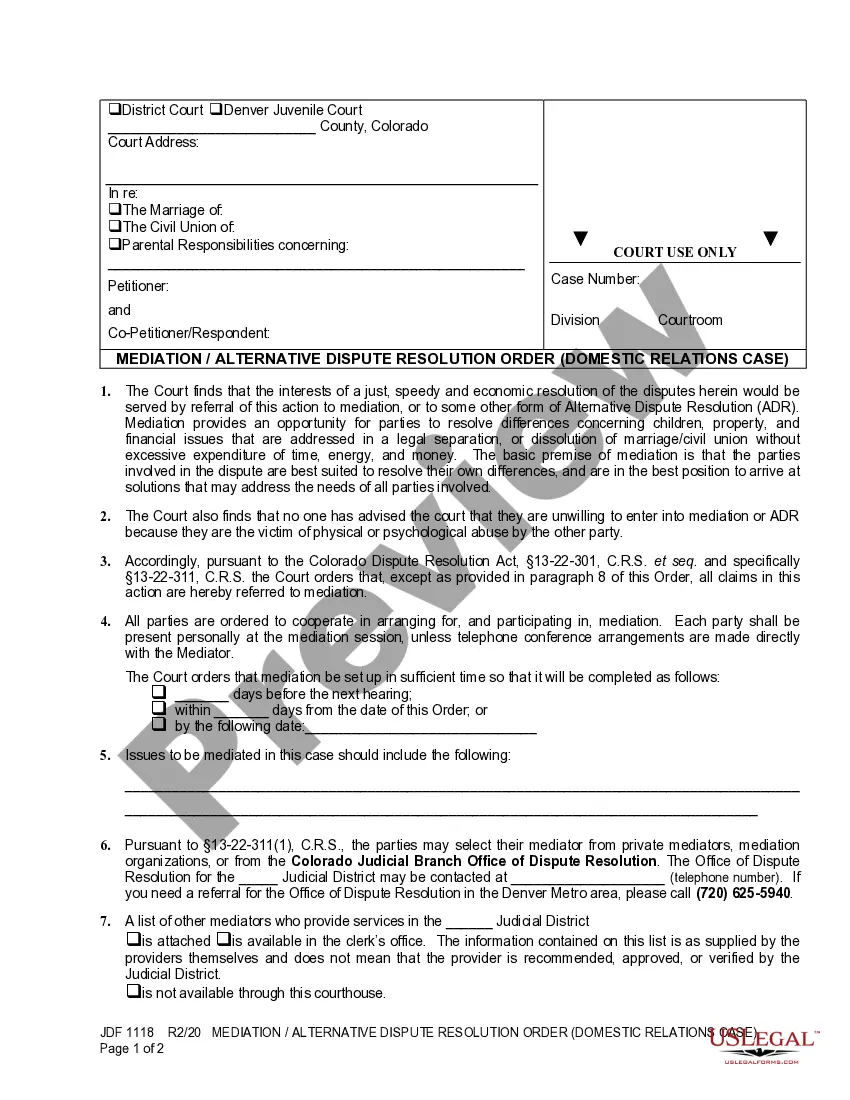
Illinois Marital Legal Separation and Property Settlement Agreement for persons with no Children, no Joint Property, or Debts Effective Immediately
What this document covers
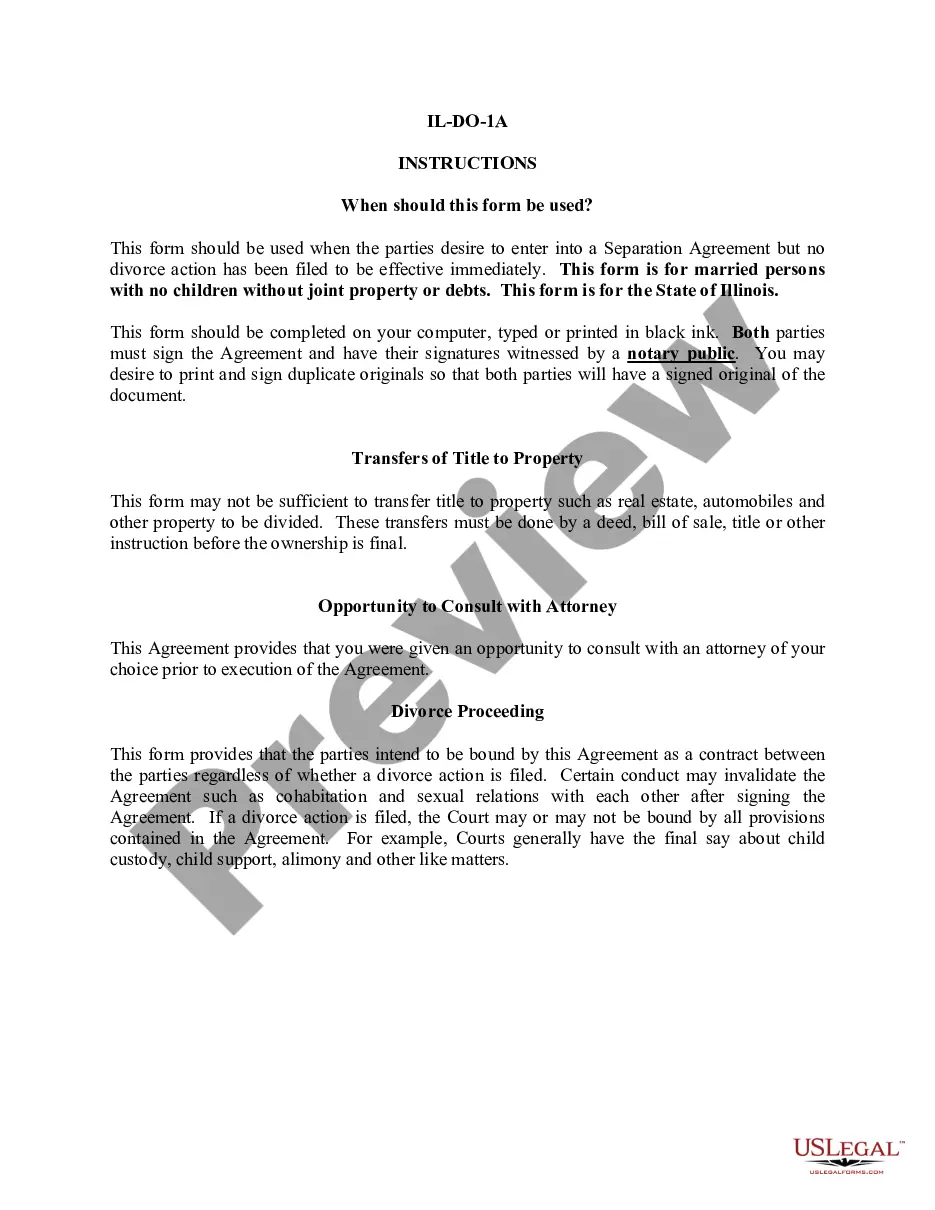
The Marital Legal Separation and Property Settlement Agreement for persons with no Children, no Joint Property, or Debts serves to formalize the separation of spouses who do not have any children or shared debts. This agreement outlines the terms for dividing assets and addresses any financial obligations. It is a critical document for couples wishing to establish their individual rights and responsibilities while remaining married but living apart.
What’s included in this form
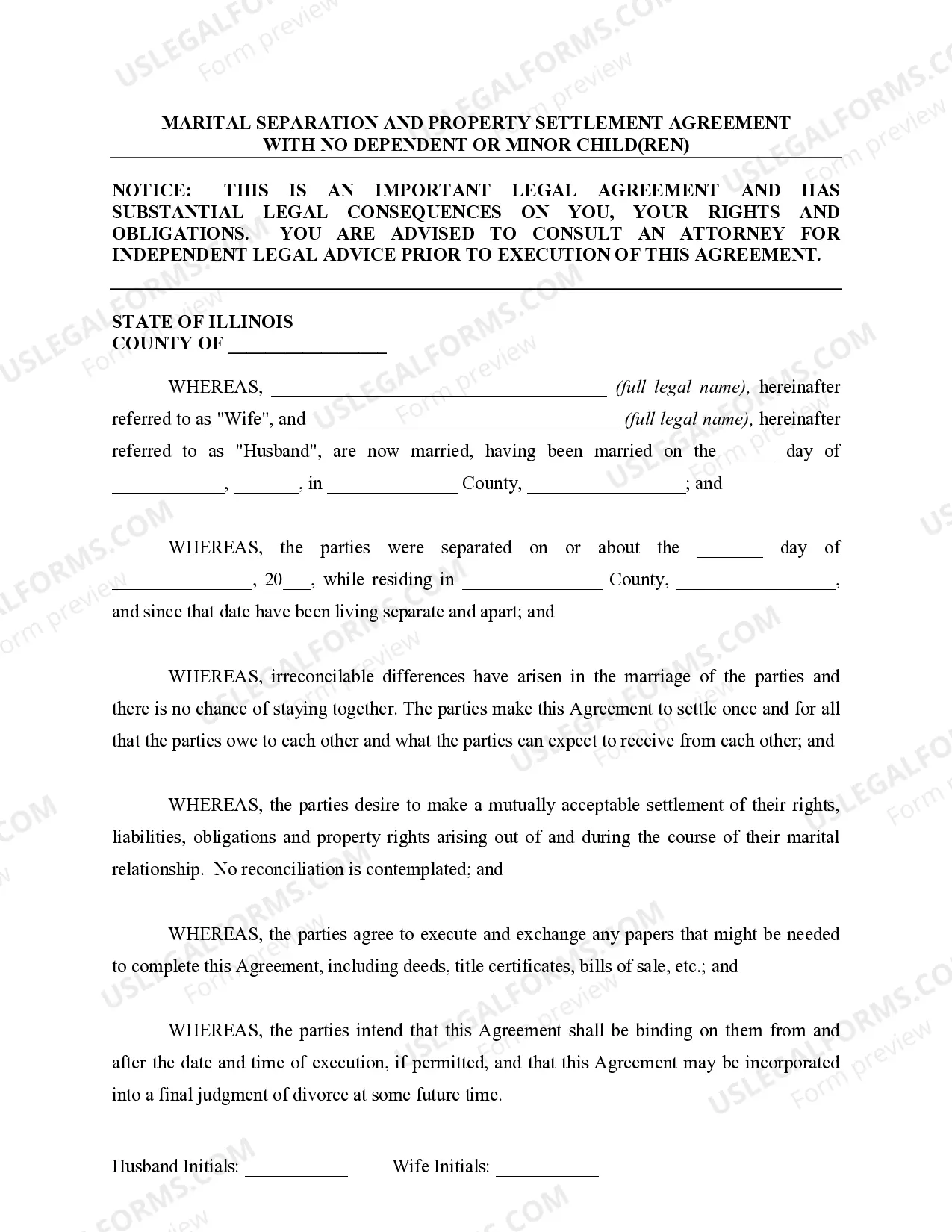
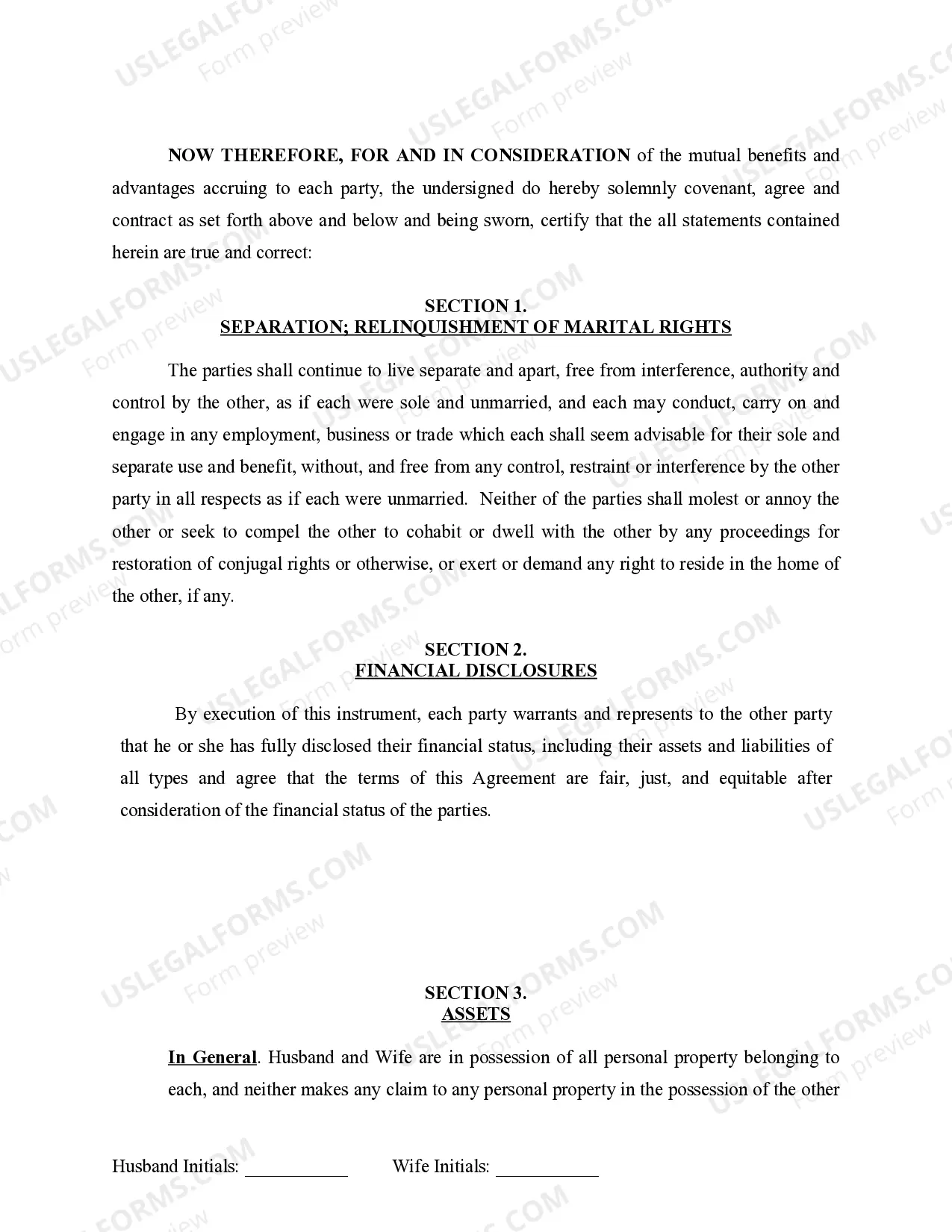
- Section 1: Details the agreement to live separately and relinquish marital rights.
- Section 2: Requires full financial disclosure from both parties.
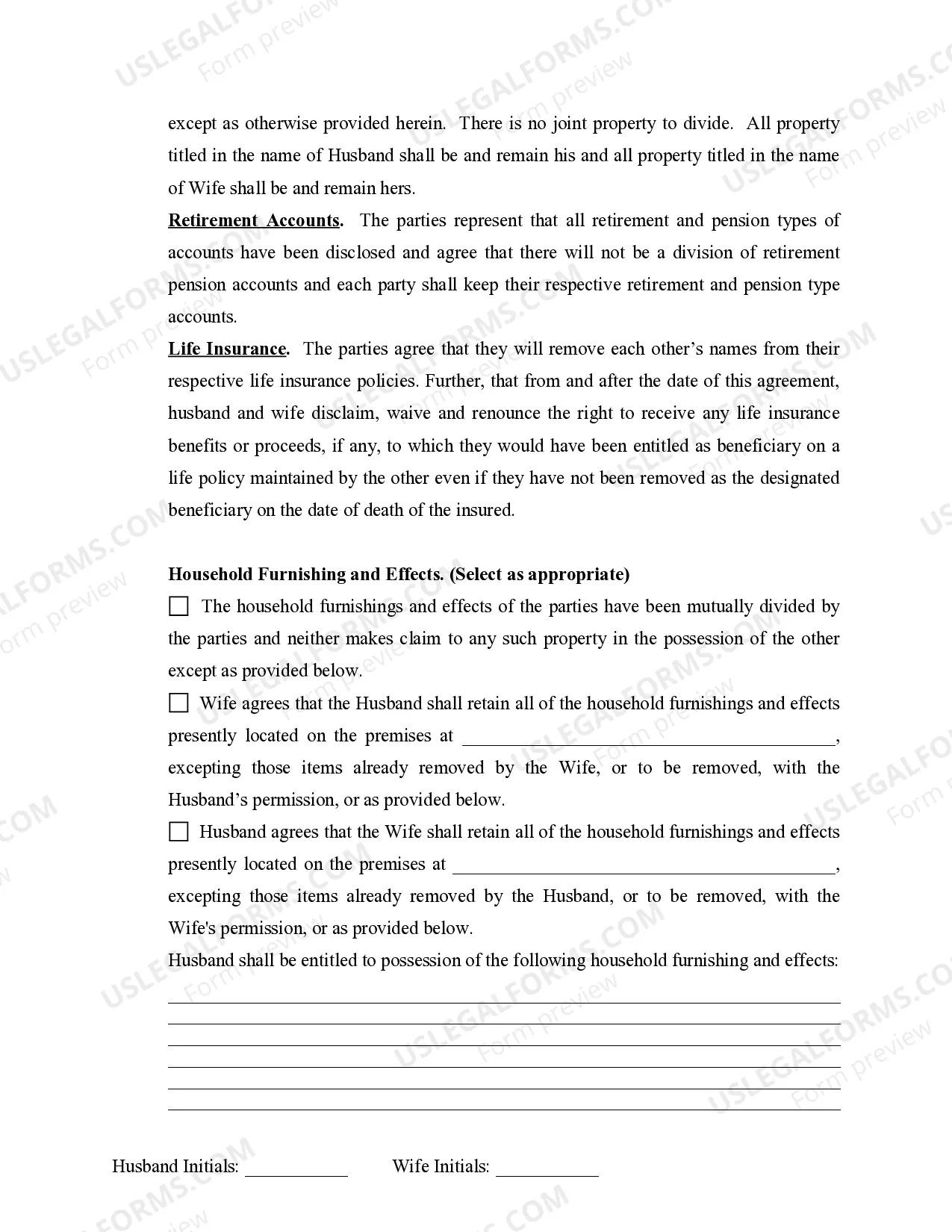
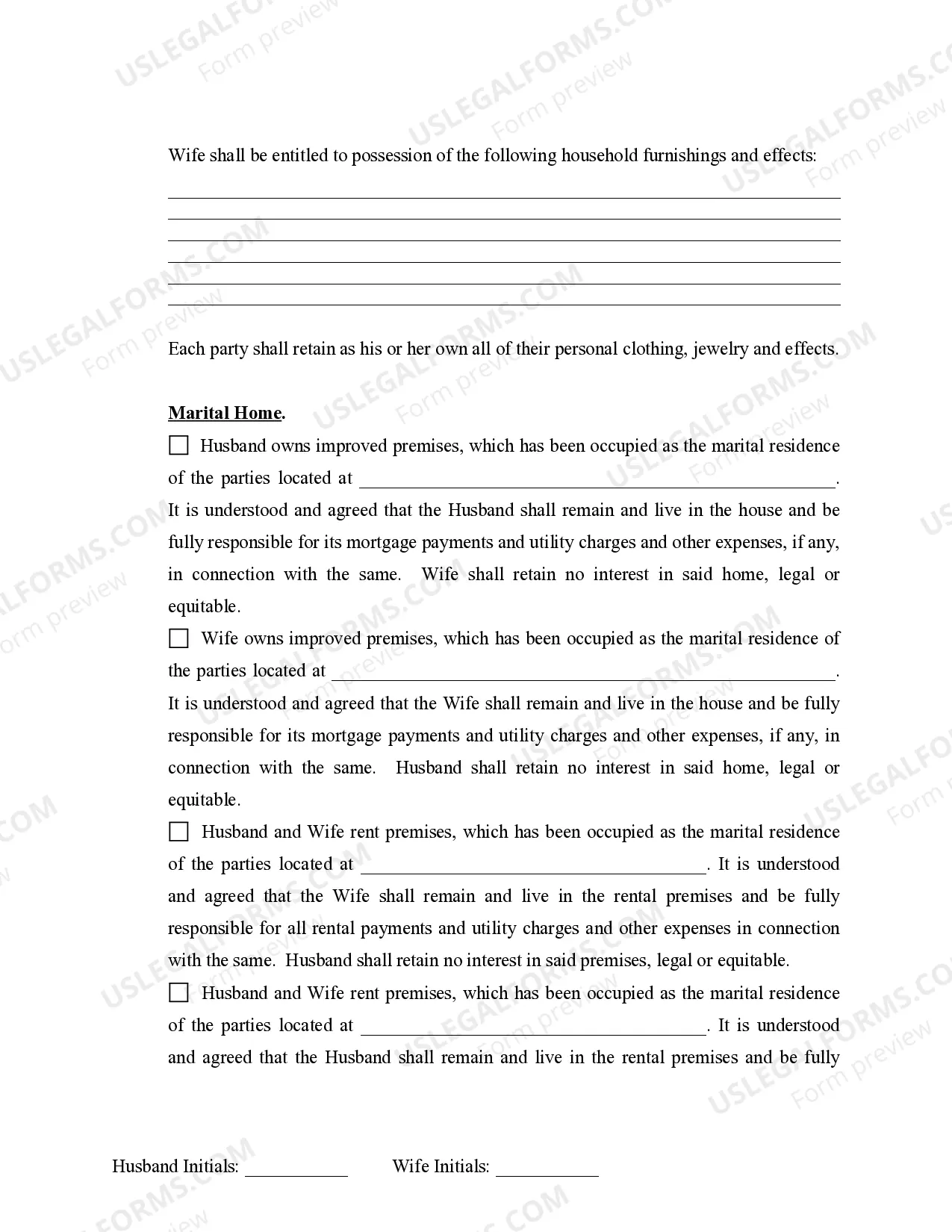
- Section 3: Outlines the division of personal property and assets owned individually.
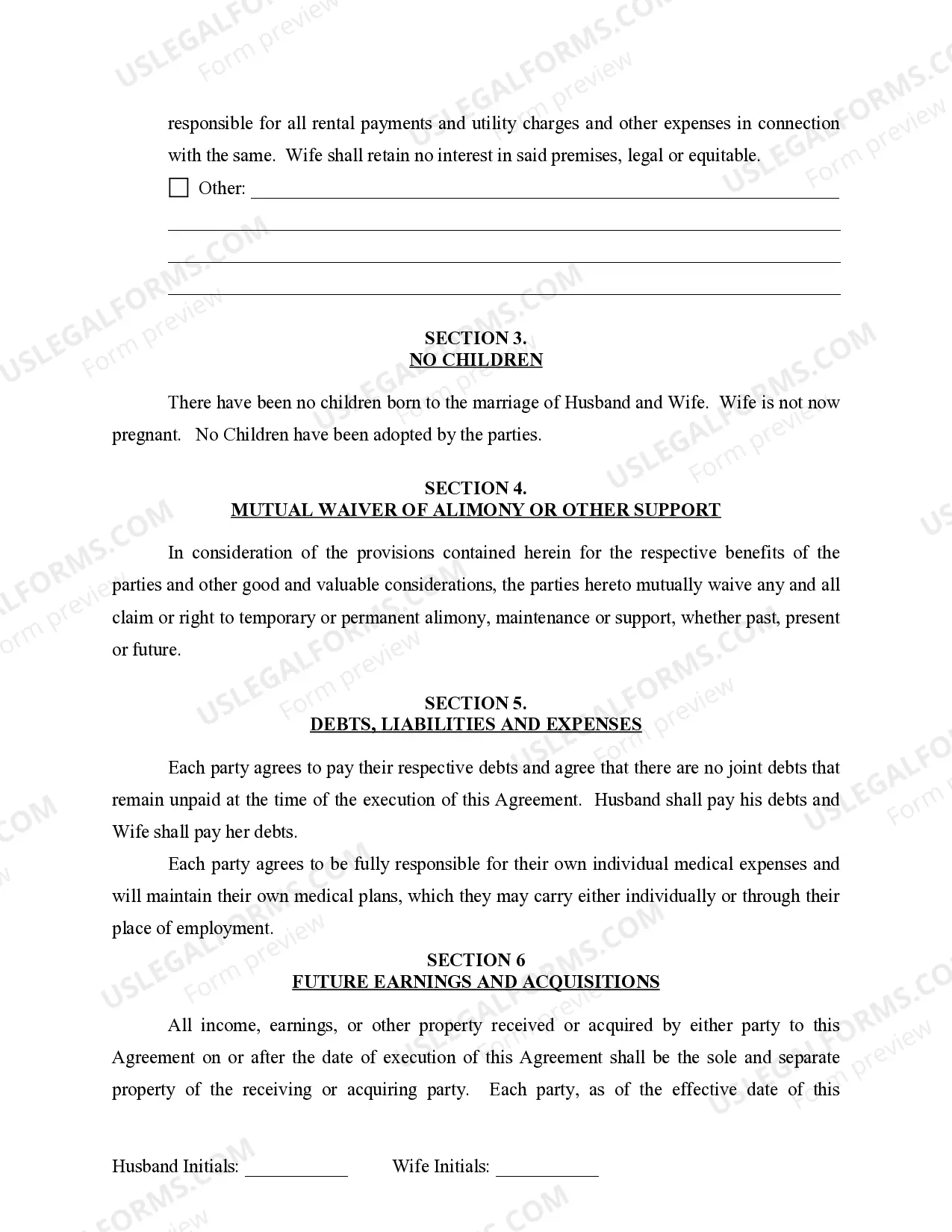
- Section 4: States mutual waiver of alimony or support claims.
- Section 5: Clarifies the handling of debts and liabilities, confirming no joint debts exist.
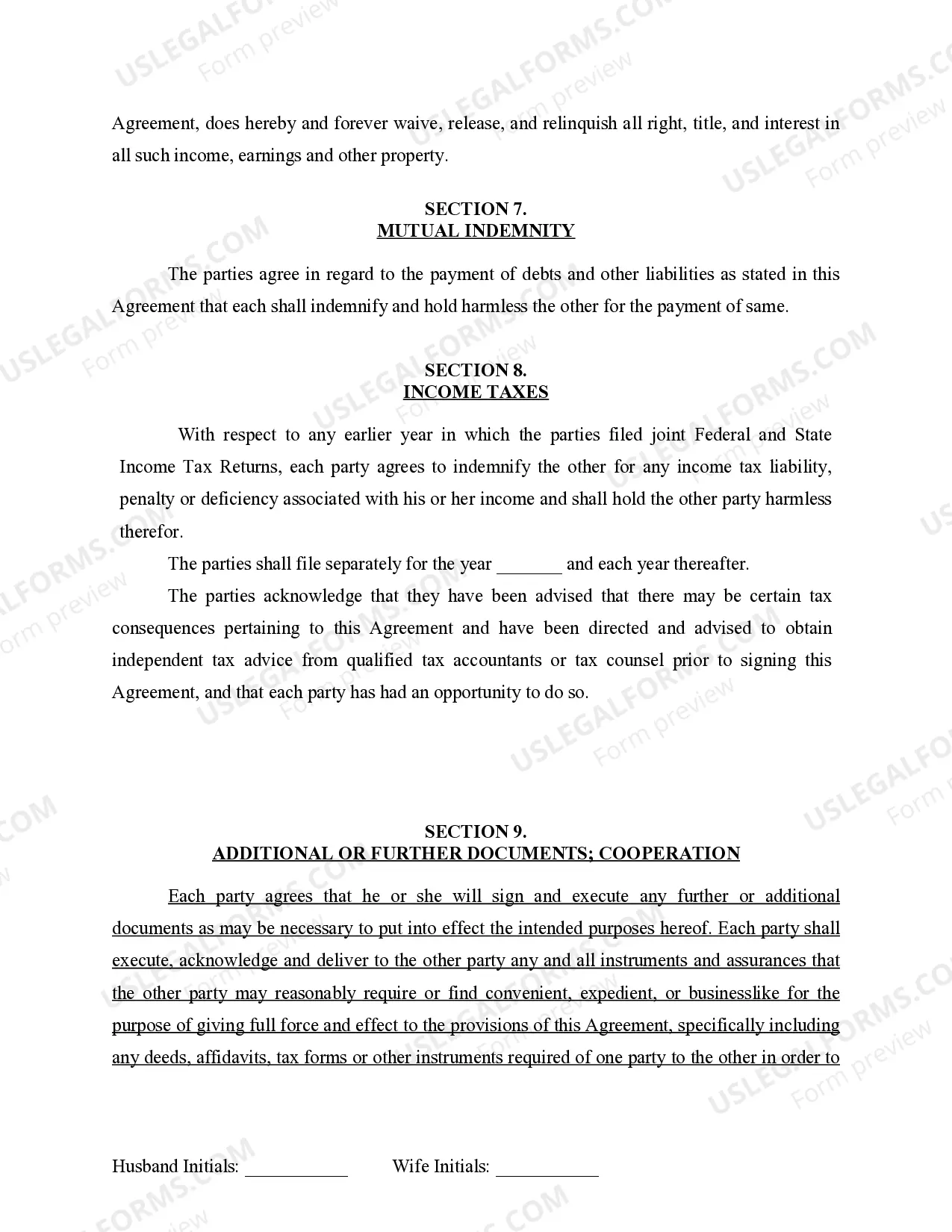
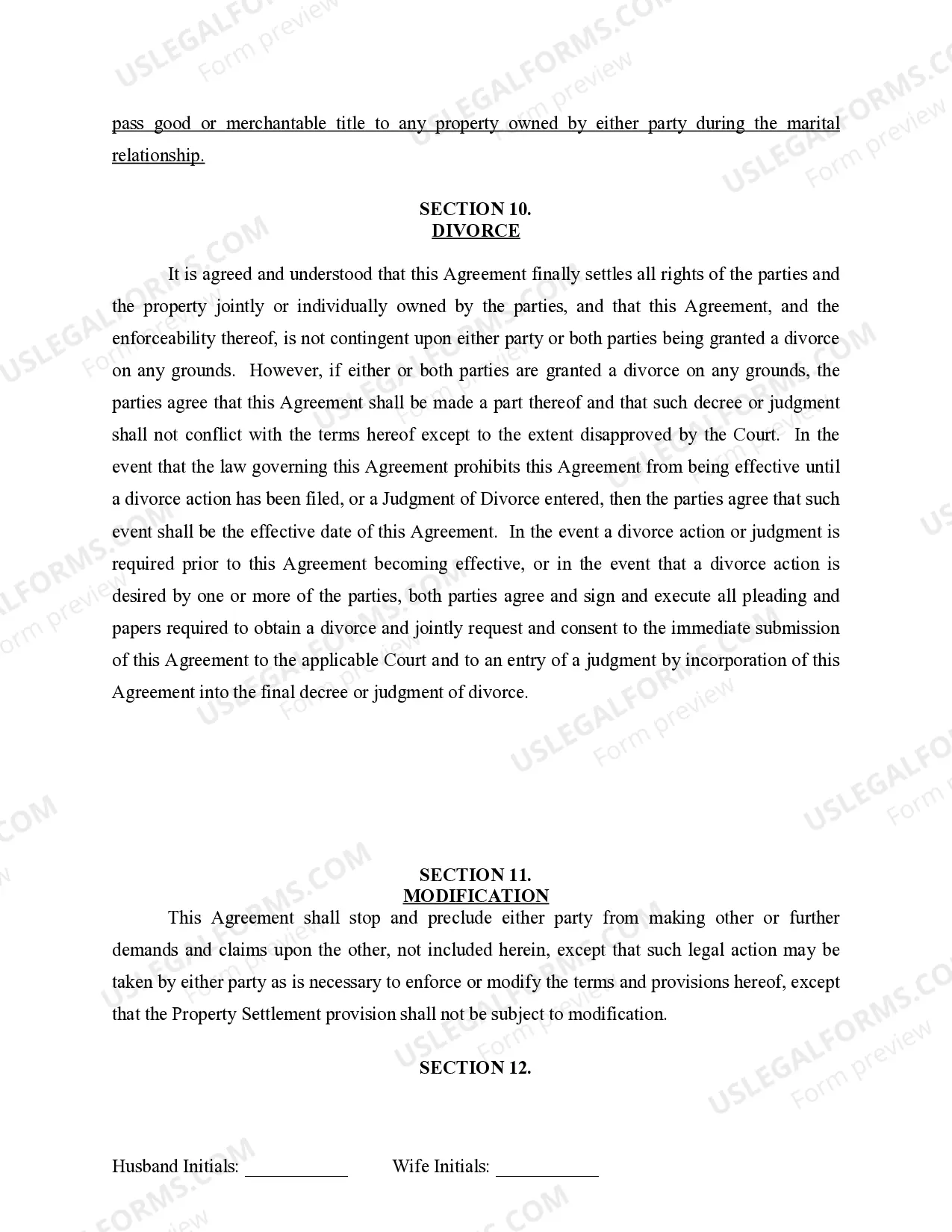
- Section 10: Emphasizes that the agreement holds even if a divorce is not finalized.


When to use this form
This form is ideal for couples in Illinois who wish to enter into a mutual separation agreement while remaining married. It is particularly applicable when both parties have agreed on their individual financial responsibilities and wish to outline the separation without filing for divorce at this time.
Who can use this document
- Married individuals in Illinois with no dependent or minor children.
- Couples who have no joint property or debts to settle.
- Spouses wishing to formalize their separation without filing for divorce immediately.
How to prepare this document
- Identify the parties involved by inputting full legal names and other identifying information.
- Specify the property owned by each spouse to clearly outline individual ownership.
- Enter the date of the separation along with relevant financial disclosures.
- Sign the agreement in the presence of a notary public to ensure its validity.
- Consider printing duplicate originals for each party to retain a signed copy.
Notarization guidance
Yes, this form must be notarized to be legally valid. Both parties are required to sign the document in the presence of a notary public, ensuring that their signatures are verified and the agreement is officially recognized.
Get your form ready online
Our built-in tools help you complete, sign, share, and store your documents in one place.
Make edits, fill in missing information, and update formatting in US Legal Forms—just like you would in MS Word.
Download a copy, print it, send it by email, or mail it via USPS—whatever works best for your next step.
Sign and collect signatures with our SignNow integration. Send to multiple recipients, set reminders, and more. Go Premium to unlock E-Sign.
If this form requires notarization, complete it online through a secure video call—no need to meet a notary in person or wait for an appointment.
We protect your documents and personal data by following strict security and privacy standards.

Make edits, fill in missing information, and update formatting in US Legal Forms—just like you would in MS Word.

Download a copy, print it, send it by email, or mail it via USPS—whatever works best for your next step.

Sign and collect signatures with our SignNow integration. Send to multiple recipients, set reminders, and more. Go Premium to unlock E-Sign.

If this form requires notarization, complete it online through a secure video call—no need to meet a notary in person or wait for an appointment.

We protect your documents and personal data by following strict security and privacy standards.
Avoid these common issues
- Failing to fully disclose financial information, which can lead to disputes later.
- Not having the document notarized, which may affect its legal standing.
- Neglecting to specify possession of personal items, leading to misunderstandings.
Why use this form online
- Convenient access allows for easy editing and personalization of the agreement.
- Secured storage ensures that the agreement is reliably saved for future reference.
- Drafted by licensed attorneys, providing assurance of its legal validity.
Looking for another form?
Form popularity
FAQ
Though the term non-marital property often refers to any personal or real property owned prior to, and brought into the marriage, it can also refer to things such as inheritances and gifts made to only one spouse.
Marital Property and Separate Property in IllinoisMarital property includes most assets and debts a couple acquires during marriage. Property is separate if a spouse owned it before marriage or acquired it during marriage by gift or inheritance.
: not of, relating to, or occuring within marriage or the married state : not marital nonmarital childbearing nonmarital cohabitation nonmarital sexual relations.
Marital, or community property, is defined as assets and debt newly acquired during the marriage, either jointly or by one party, other than by a gift or inheritance to one spouse. Nonmarital, or separate property, are the assets and debts owned prior to the marriage that remain unchanged.
Illinois is not a community property state, and everything from money to assets and estate acquired during the time a couple was married is presumed to be part of the marriage. However, what is considered as equitable may vary in different cases based on their unique circumstances.
Illinois law about possessing the marital home There are two ways that a person can force his or her spouse to leave the marital home in Illinois. A person can file a petition for exclusive possession of the home under the Illinois Marriage and Dissolution of Marriage Act.
Related Content. Property that is unlikely to be shared between the parties on the breakdown of the marriage or civil partnership unless it is required to meet needs. Generally non-matrimonial property is: Acquired by one party before the marriage.
Only marital property is divided during an Illinois divorce. Marital property generally includes property obtained by either spouse during the marriage.For example, if a spouse receives an inheritance from a relative during the marriage, those funds are typically considered separate property.
Couples who established bank accounts after the marriage began must divide these accounts equally when seeking divorce. Specific accounts that contain marital funds are the marital property of both parties.Meanwhile, couples who each own separate property keep their specific accounts or property.