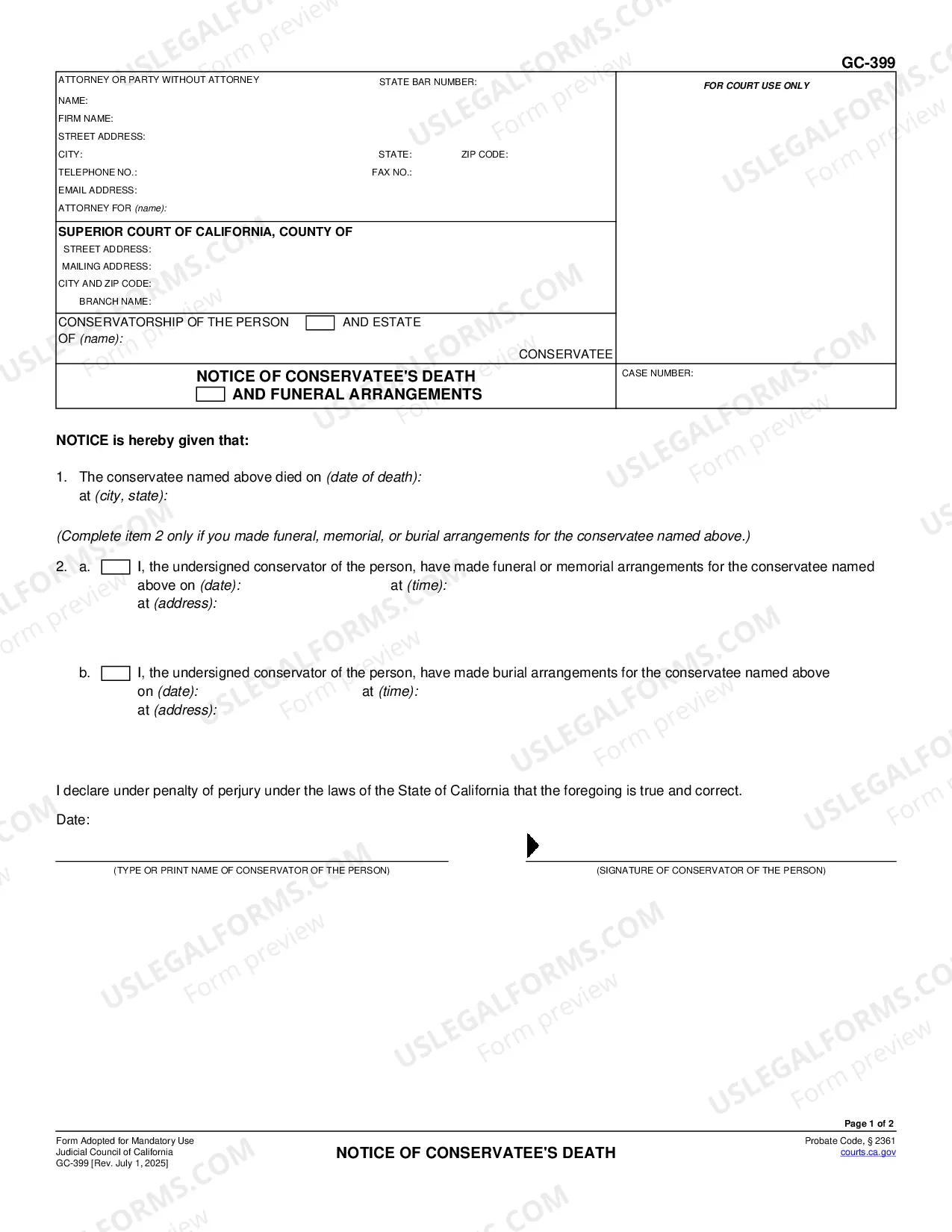
Illinois Affidavit for Service by Publication
Understanding this form
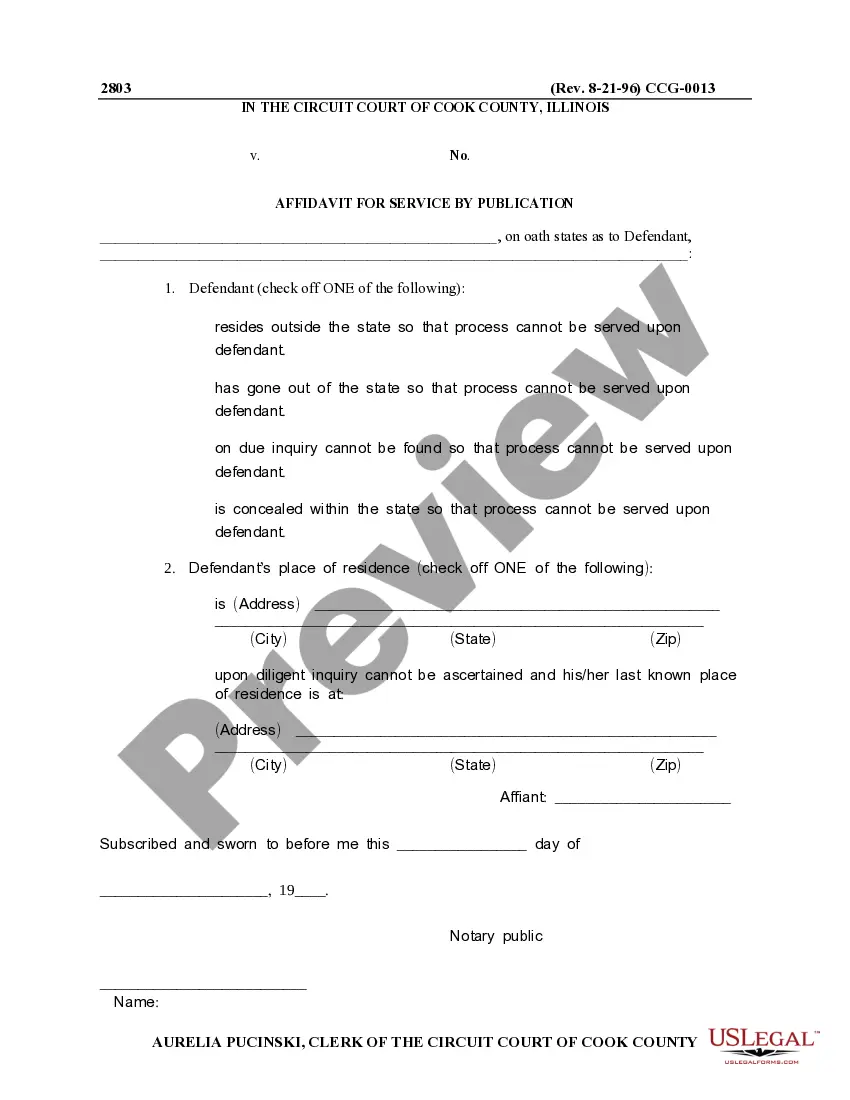
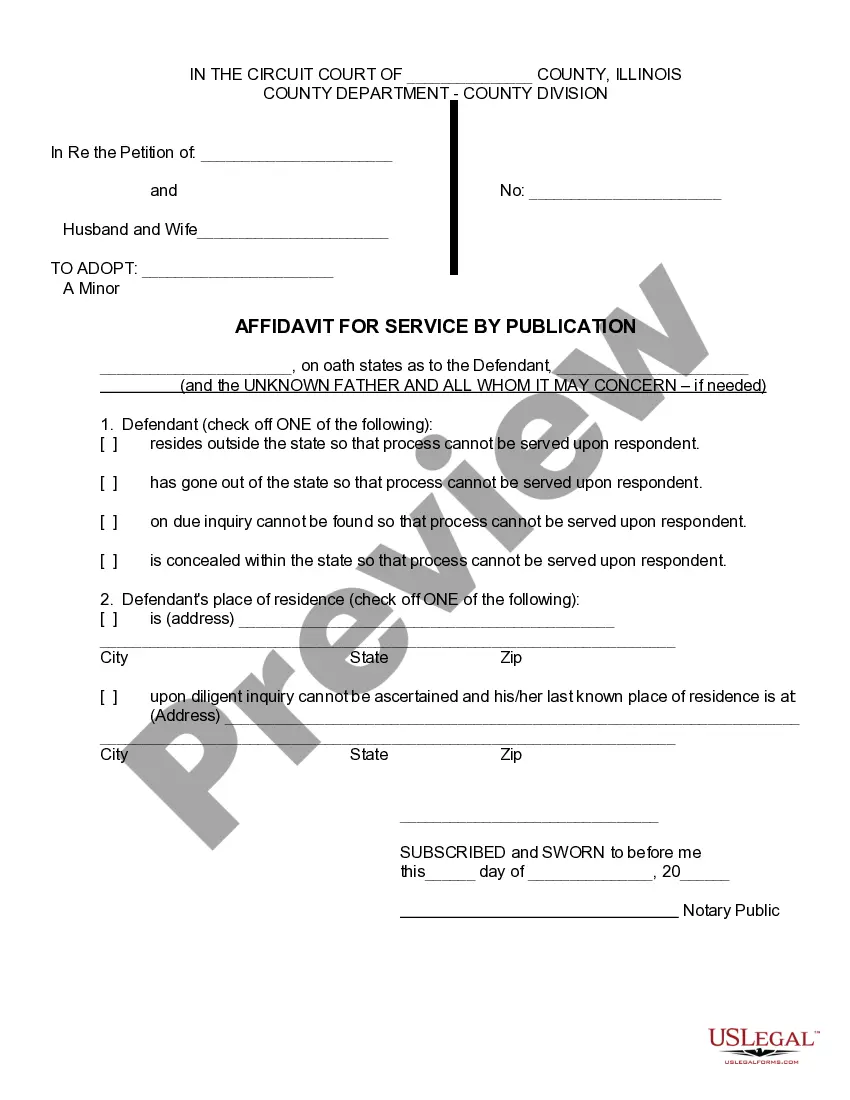
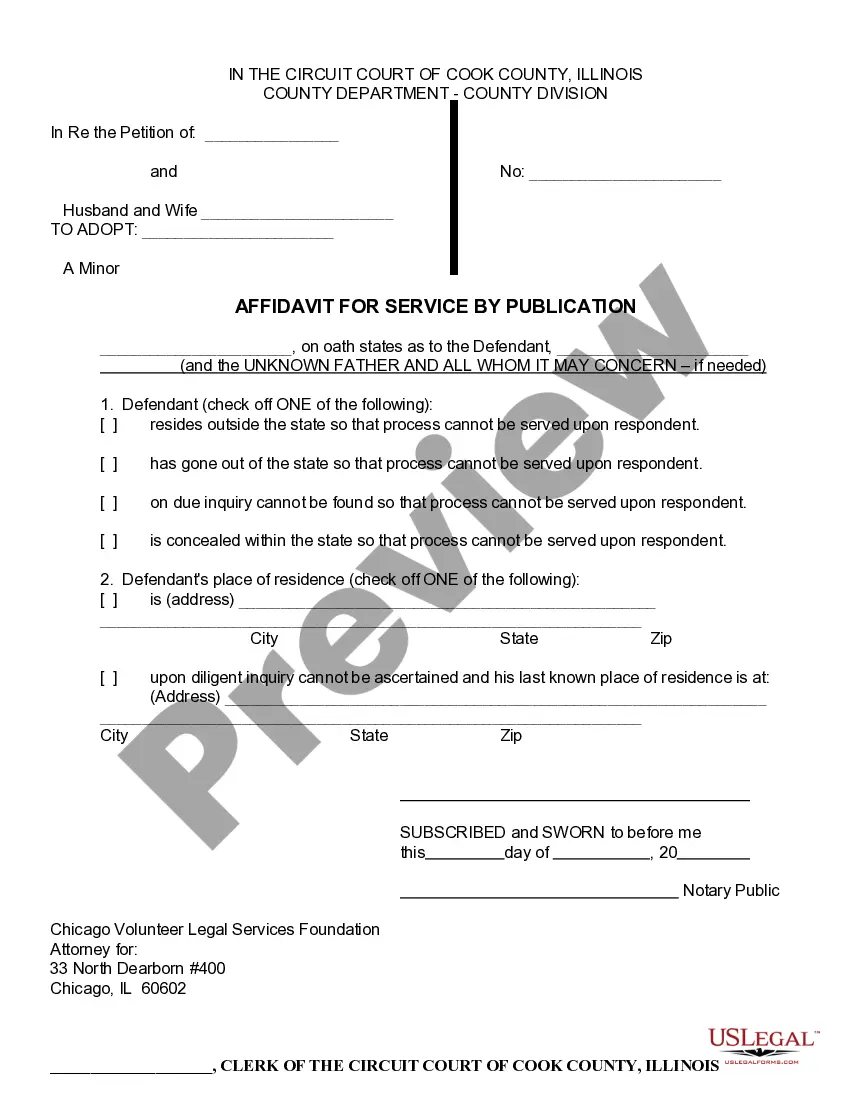
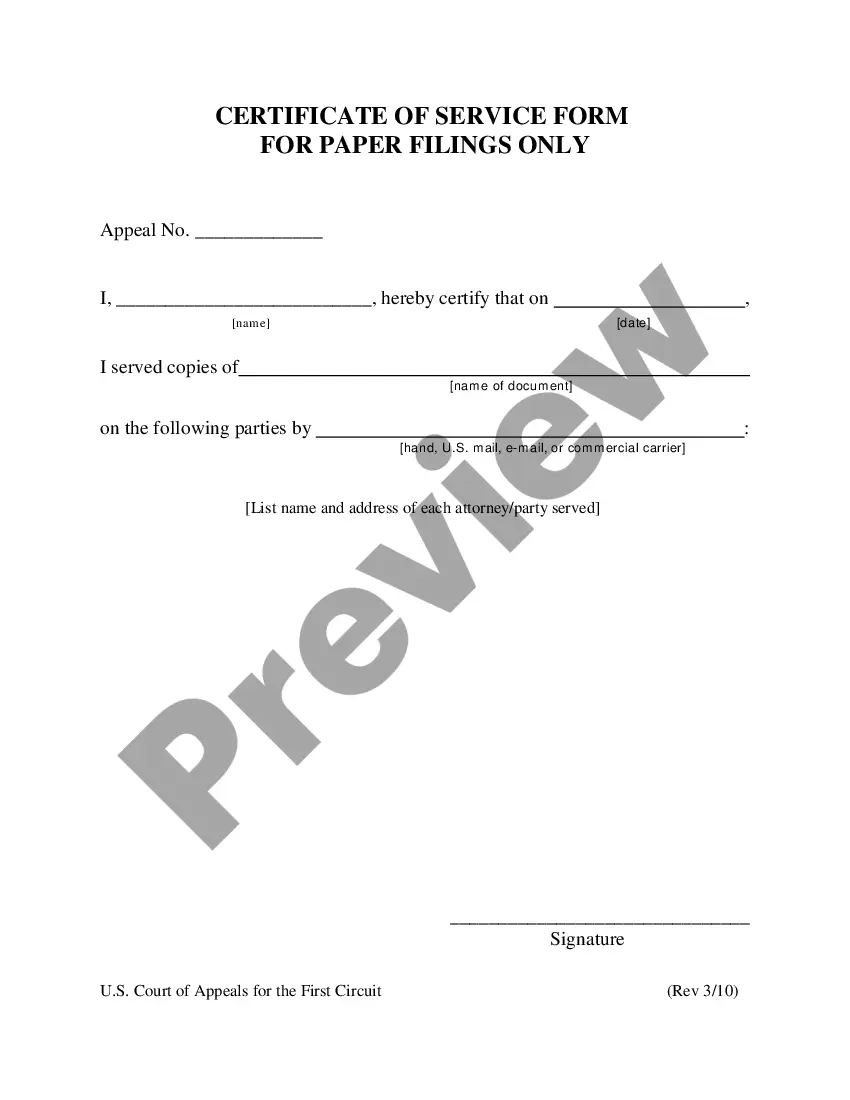
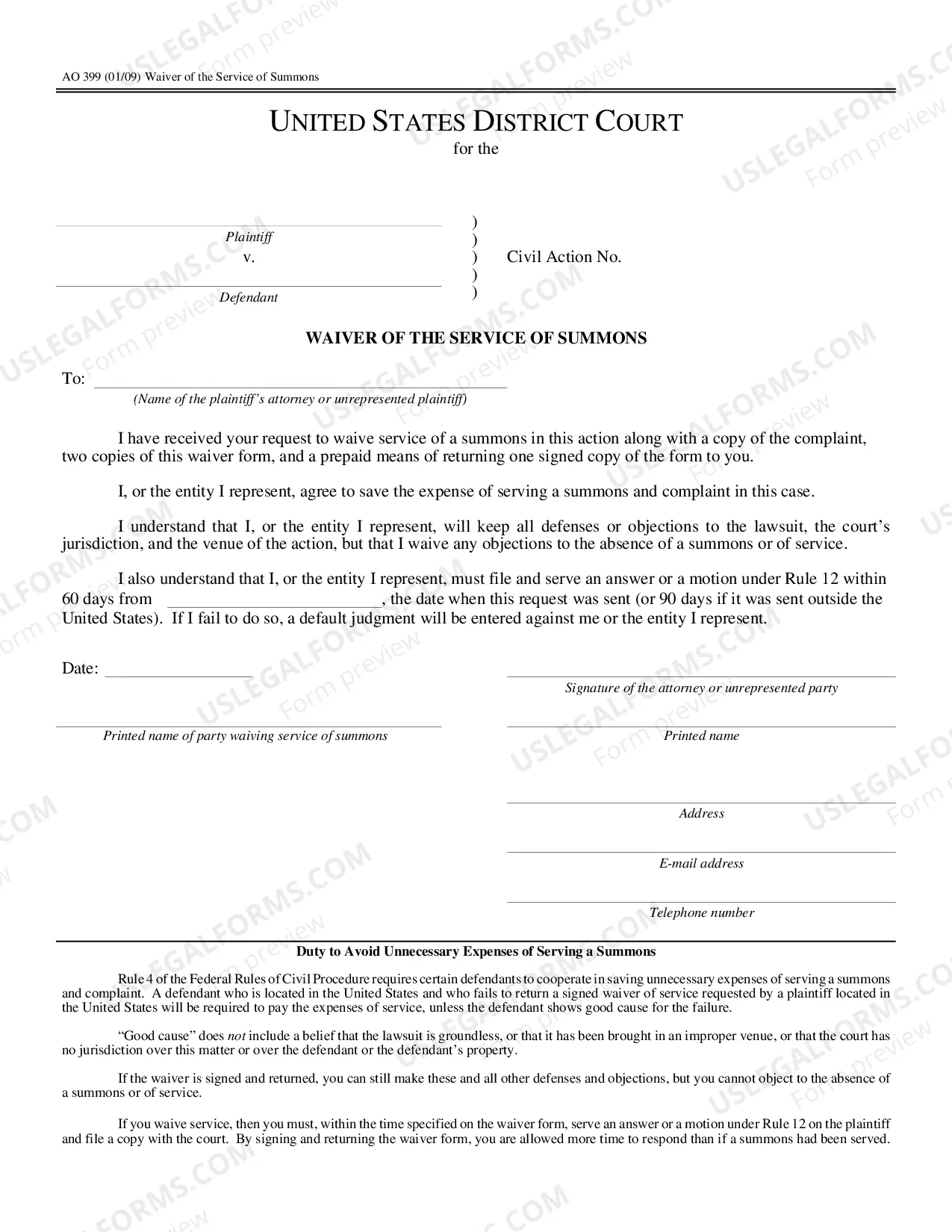
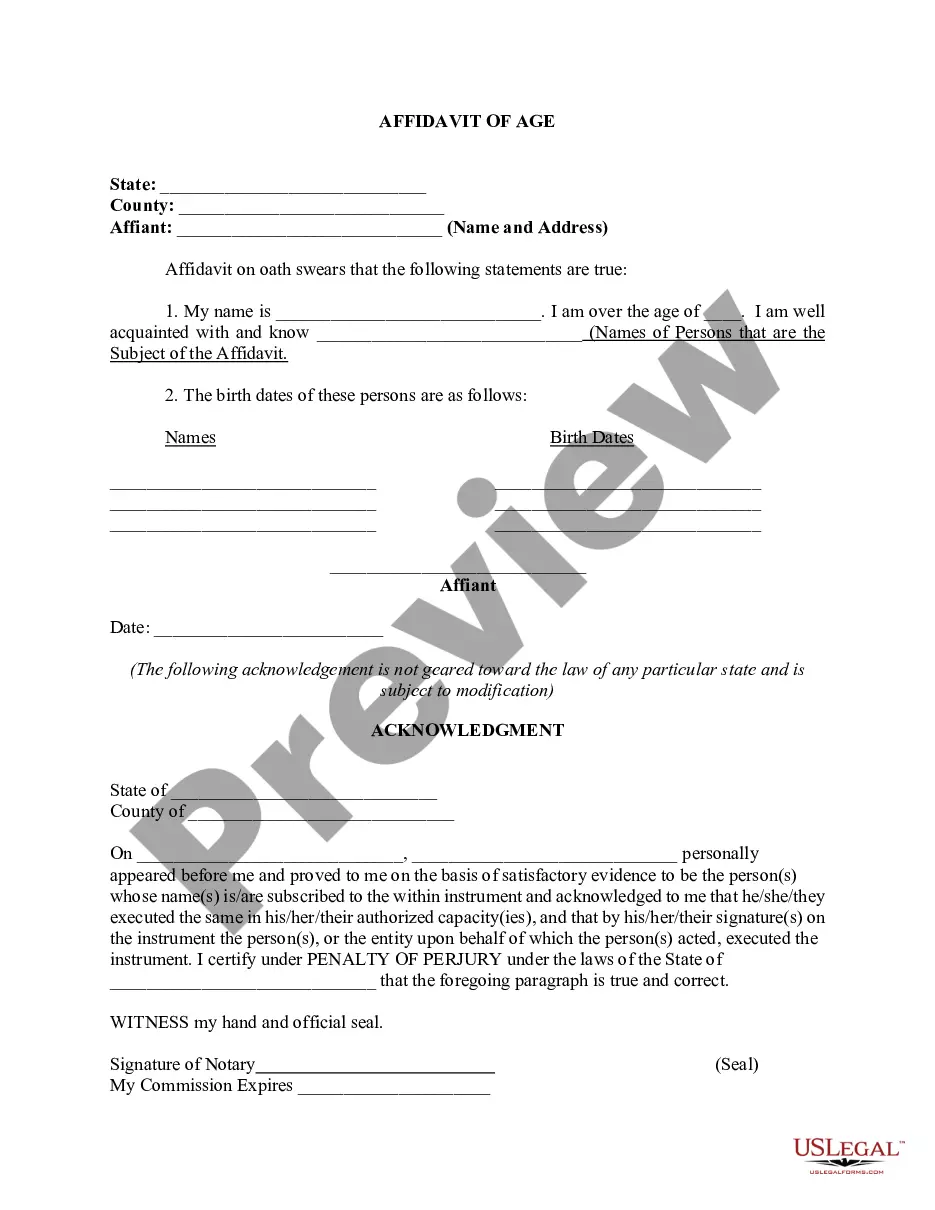
The Affidavit for Service by Publication is a legal document that allows a party to notify a defendant of a legal action when they cannot be served in person. This sworn statement outlines the circumstances that justify service by publication, differentiating it from standard service methods by demonstrating that the defendant is unreachable through common means. This form is crucial in ensuring that a defendant receives notice of legal proceedings, even when their whereabouts are unknown.
Main sections of this form
- Identification of the affiant (the person making the statement).
- Details regarding the defendant's attempts to be located.
- Checkboxes to indicate reasons why the defendant cannot be served.
- Affiant's statement under oath about the validity of the claims.
- Notary section for official witnessing of the affidavit.

When this form is needed
This form should be used when a plaintiff is unable to serve a defendant through conventional means, such as personal delivery or mail. Situations may include when the defendant lives out of state, is out of the state temporarily, cannot be found despite reasonable efforts, or is deliberately concealing their location. It can be crucial in divorce cases, civil lawsuits, or any legal matters requiring notification of parties who are difficult to locate.
Who should use this form
- Individuals or attorneys involved in legal proceedings needing to notify a defendant.
- Anyone who has made diligent attempts to serve a defendant but has been unsuccessful.
- Parties engaged in civil litigation, such as divorce or debt collection, where defendants are hard to locate.
How to complete this form
- Identify yourself as the affiant and clearly state your name.
- Provide the relevant information regarding the defendant, including attempts to locate them.
- Select the appropriate checkbox that reasons why the defendant cannot be served.
- Complete the address section for the defendant if known, stating the last known residence if necessary.
- Sign the affidavit in front of a notary public to validate the document.
Notarization requirements for this form
Yes, this form must be notarized to be legally valid. It requires the affiant to sign the affidavit in the presence of a notary public, who will then acknowledge the signature. US Legal Forms offers integrated online notarization services, providing secure video calls and ensuring your document is legally binding without the need for travel.
Get your form ready online
Our built-in tools help you complete, sign, share, and store your documents in one place.
Make edits, fill in missing information, and update formatting in US Legal Forms—just like you would in MS Word.
Download a copy, print it, send it by email, or mail it via USPS—whatever works best for your next step.
Sign and collect signatures with our SignNow integration. Send to multiple recipients, set reminders, and more. Go Premium to unlock E-Sign.
If this form requires notarization, complete it online through a secure video call—no need to meet a notary in person or wait for an appointment.
We protect your documents and personal data by following strict security and privacy standards.

Make edits, fill in missing information, and update formatting in US Legal Forms—just like you would in MS Word.

Download a copy, print it, send it by email, or mail it via USPS—whatever works best for your next step.

Sign and collect signatures with our SignNow integration. Send to multiple recipients, set reminders, and more. Go Premium to unlock E-Sign.

If this form requires notarization, complete it online through a secure video call—no need to meet a notary in person or wait for an appointment.

We protect your documents and personal data by following strict security and privacy standards.
Common mistakes to avoid
- Failing to fully complete the reason for inability to serve the defendant.
- Not having the form notarized, which can invalidate the affidavit.
- Providing inaccurate information regarding the defendantâs last known address.
Why use this form online
- Easy access to the Affidavit for Service by Publication in standard formats.
- Quick and straightforward download process ensures you have the necessary form at your fingertips.
- Templates drafted by licensed attorneys, ensuring legal validity and compliance with state laws.
Legal use & context
- This document is used in legal proceedings where traditional service methods have failed.
- It signifies that all reasonable efforts to serve the defendant have been made.
- Using this form helps comply with legal requirements for public notice in court actions.
Main things to remember
- The Affidavit for Service by Publication is crucial when defendants cannot be personally served.
- Completing the affidavit accurately is essential for legal compliance.
- Notarization is a required step in the process.
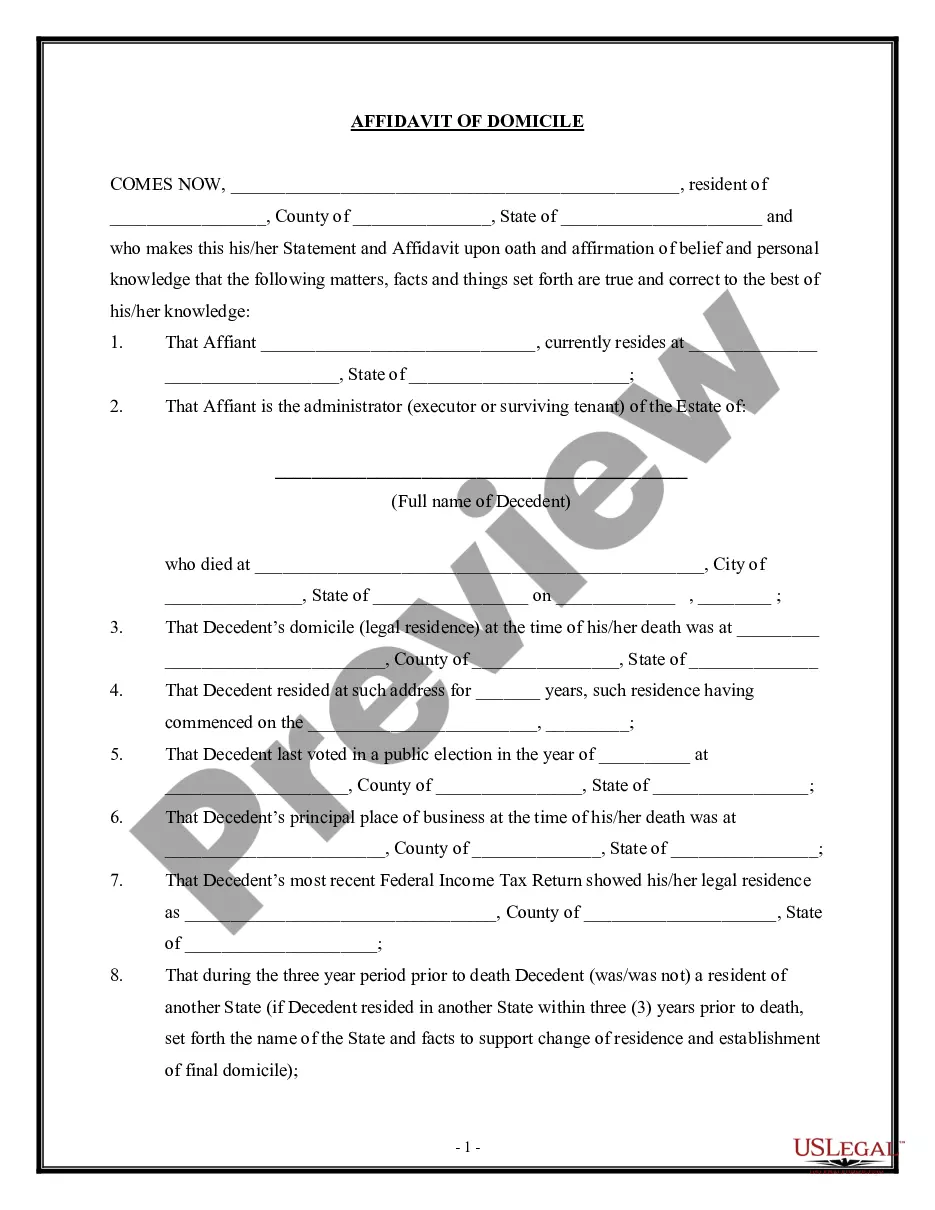
Looking for another form?


Form popularity
FAQ
A judge must issue an order appointing the server before they can serve the defendant. After serving the defendant, the person must complete a signed and notarized affidavit describing how they did it, and attach it to the original summons. They must then file it with the court.
You can ask anyone over 18 (not yourself) to serve the divorce papers. Your server may be a friend, family member, the local Sheriff or a professional process server. If you are asking a friend or family member to serve the documents, make sure the person is familiar with the rules of special service.
Now, in many states, any US citizen that is not a party to the case, over the age of 18, and residing in the state where the matter is to be tried in court can serve papers. Keep in mind that process serving laws differ from state to state and may change.
"Service by publication" means that you publish the Summons or other document in a newspaper of general circulation in the area where your spouse or partner is likely to be. For service by publication, you will have to pay the newspaper a fee to publish the document.
Present legal photo identification. Complete an application for appointment at the county court in which you reside. Undergo a criminal background check and get fingerprinted. Pay processing fees. This may include payment for process server training but this depends on the county and court.
Illinois Process Server Licensing Requirements. Process shall be served by a sheriff, or if the sheriff is disqualified, by a coroner of some county of the State. A sheriff of a county with a population of less than 2,000,000 may employ civilian personnel to serve process.
If the defendant is a private corporation, it can be served by leaving a copy of the legal documents with the agent that is registered with the state or with any officer or agent of the corporation located in the state. It can also be served by publication and mail like individuals.
The cost depends upon the publication you use for notice. It's usually under $200.